Captain Corelli’s Mandolin – There’s Always Love And Music

Captain Corelli’s Mandolin

Captain Corelli’s Mandolin Rating

★★★★★

Click if you liked this article

3

“Captain Corelli’s Mandolin”, originally a novel written by Louis der Bernieres in 1994, was adapted for stage by Rona Munro. The Genesian Theatre Company are no strangers to presenting a diverse genre of plays and has been a staple in Sydney’s theatre scene delighting audiences since its first play in 1945, notably after the war and the time period this play was set. I have tremendous respect for The Genesian Theatre, having seen many of their productions at their previous home in Kent St, inside a church built in 1868, where they had performed for 70 years. Their new era began at their new home in Rozelle in 2025.

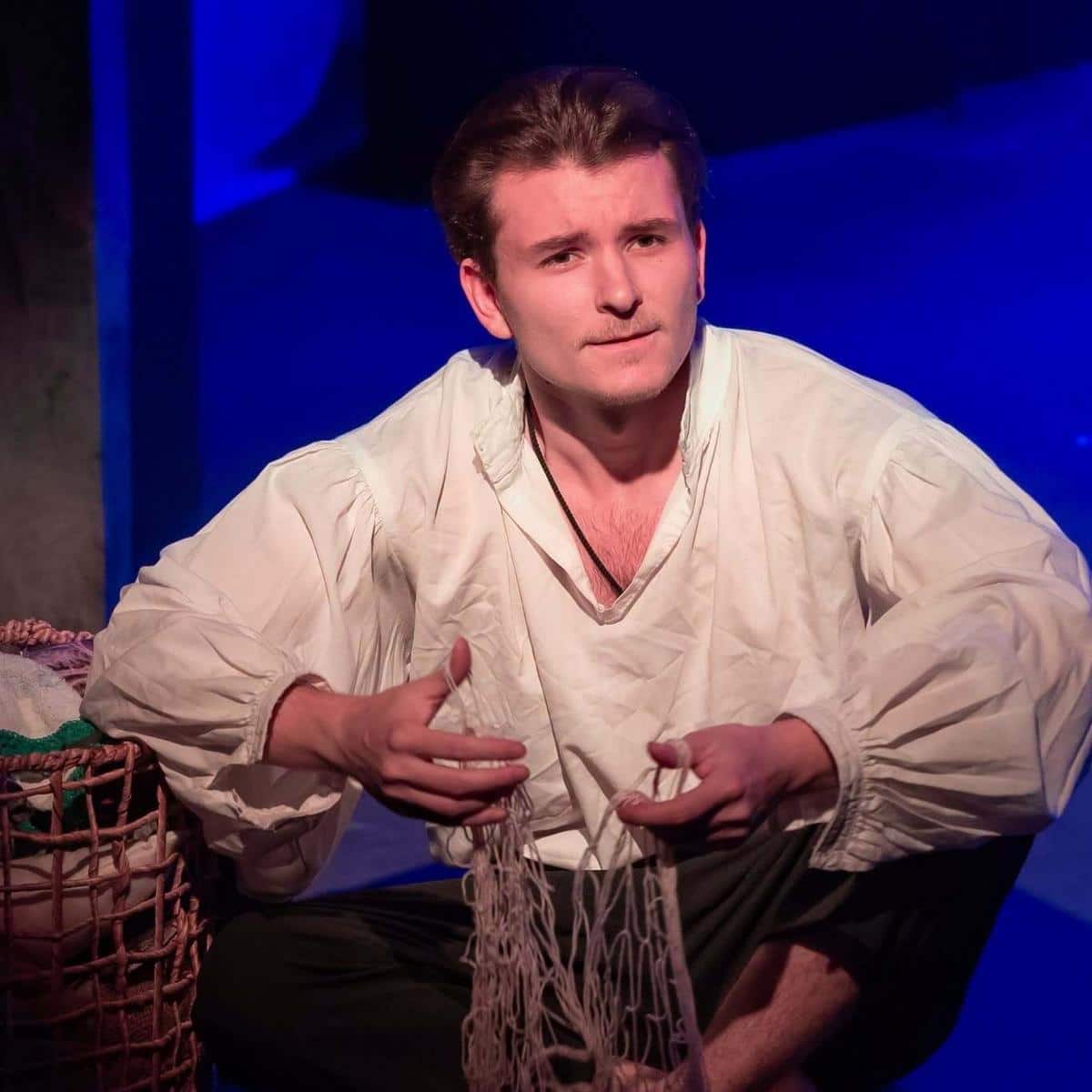
“Captain Corelli’s Mandolin” takes the audience back in history to 1941, set during the second world war on a beautiful Greek island, Kefalonia. Opening to a peaceful seaside scene, people are living a happy life, unaware that their lives are about to be changed. Dr Iannis (David Stewart-Hunter) and his daughter Pelagia’s goat (Hope Selim) are breathing in the ocean’s fresh air. The goat proceeds to nibble on his paper while Dr Iannis’ back is turned, and Selim’s wide eyed goat was very amusing as Dr Iannis continued to berate the animal, who clearly did not understand a word he was saying. I wondered if this was a prelude to the following hardships of war, where the oppression and suffering of innocent people fall on deaf ears of those responsible.

Dr Iannis’s daughter Pelagia (Isabelle Serafim) is engaged to Mandras (Maximillian Choma). Her character is feisty and headstrong; she is a character with strong opinions. The first act builds up to the arrival of Captain Corelli, and lays the historical foundation and significance of the war. It shows traditional Greek life on the island and the importance of family, with scenes showing Mandras’ relationship with Pelagia and with his mother, Drosoula (Phillipa Coleman).

The background to the arrival of Captain Corelli and his soldiers is told through the relationships of the people living on the island and also through the character Carlo (Brodie Chong). Chong’s Brodie addresses the audience directly and through scenes onstage, and tells of his own experiences in the war as an Italian soldier, and his relationship with Francesco (David Newton). There are touching scenes showing simple joys amongst the horrors of fighting in the war, these being with Francesco keeping a pet mouse secretly in his pocket and the importance of companionship between the two soldiers, and with the pet mouse, as well.
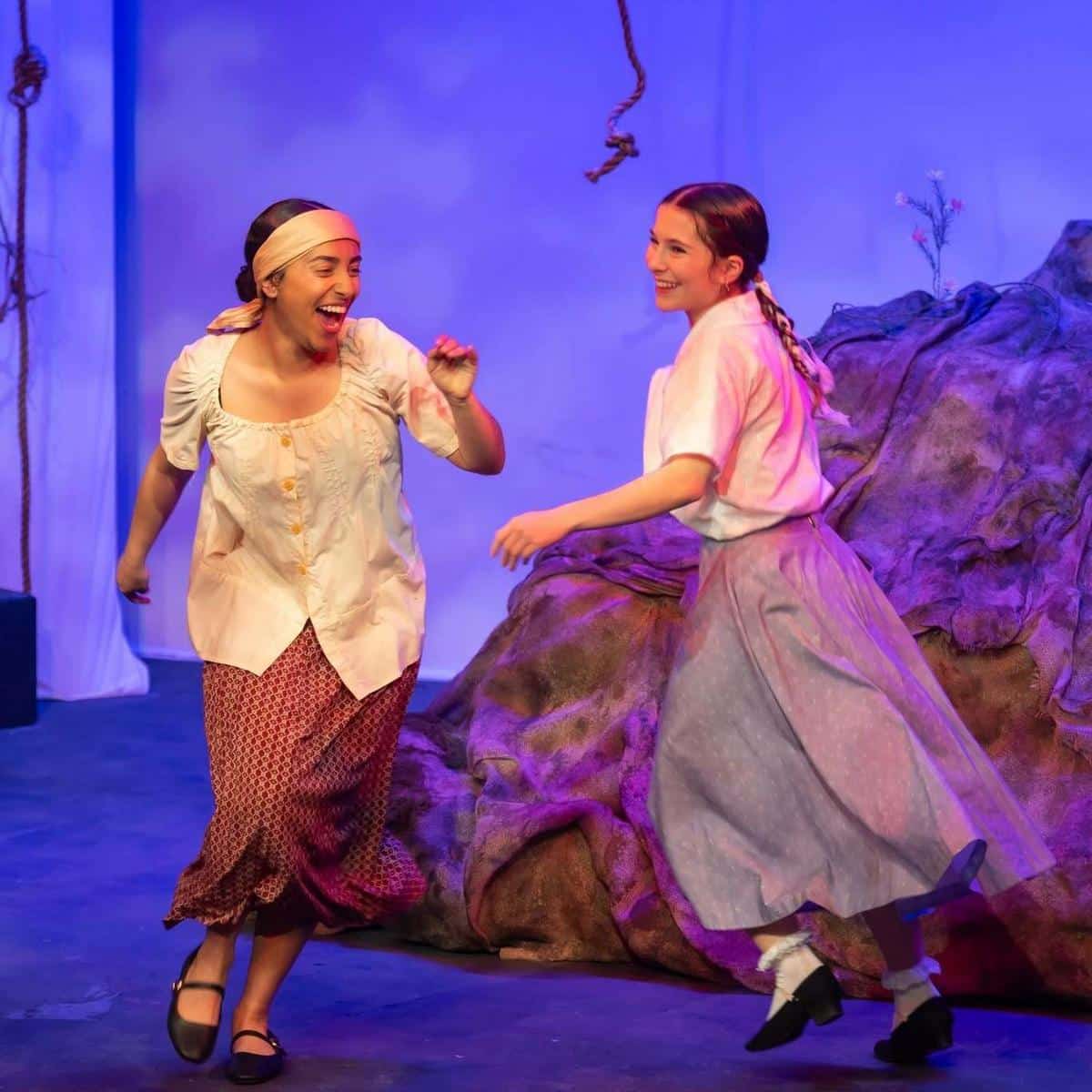

 

The second act was longer than the first act, which felt like it dragged a little, and moved at a faster pace. It told the story featuring human relationship elements, with Captain Corelli and the Italian soldiers who invaded the island, and were living inside the Greek islander’s houses. Mandras had left Kefalonia to fight in the war. Captain Antonio Corelli (Dimitri Armatas) arrived with a rather easygoing manner, and appeared as a breath of positivity with his love of music and his mandolin, in a time of wartime struggles. Food was scarce and the Greek people were under occupation. At first reluctant and hostile towards Captain Correli, Pelagia begins to soften and eventually a romance begins. This of course brings complications and Stewart-Hunter embodies the caring father role fully as he delivers advice to Pelagia. He warns that although he does like Captain Corelli as a person, she is betrothed to Mandras and by her being with the “enemy” it will likely bring negative judgements and make her a social outcast in their community. One of his lines was poignant and was delivered by Stewart-Hunter perfectly. “Love is a temporary madness. It erupts like a volcano and then it subsides. And when it subsides you have to make a decision. You have to work out whether your roots have been so entwined together that it is inconceivable that you should ever part.”

Captain’s mandolin, which he named Antonio, from the play’s title, had a starring and important role, particularly towards the end which I won’t disclose. Not only was the mandolin a star, but music itself and the power of it to lighten and transport people away, if only for a short while. Well done to the sound and lighting designer Michael Schell, for creating the atmosphere of not only the sounds of the bombs and frightening aspects of wartime in red flashes and strong white headlight lighting, but also for the gentler parts of the play such as the ocean waves, and the understated spotlight on Carlo to highlight his heroism during an important scene. The music chosen throughout the play and during the many scene changes immersed the audience into the 1940’s. The song “Pelagia’s March” was touching and represented the depth of love Captain Correlli had for Pelagia. Kudos to Armatas for playing the mandolin live onstage. I liked how the song he wrote for Pelagia started so simply with a few plucks, and then we were able to hear the full orchestral song later when he became a successful musician.

Susan Carveth’s costume design brought the characters alive out of the page into wartime and showed the traditional Greek culture on the island.

The script was quite wordy and I am sure it was not an easy task to incorporate the complexities of many themes into one play. Well done to the main and supporting cast! Co-Directors Rose Frasca and Roger Gimlett pulled together both the large 24 person cast and crew cohesively to create a serious play showing the frail balance of life on a beautiful Greek island, how families and relationships are forever affected by forces out of their control and the struggles of putting love before loyalty. And music. Always the beauty of music.

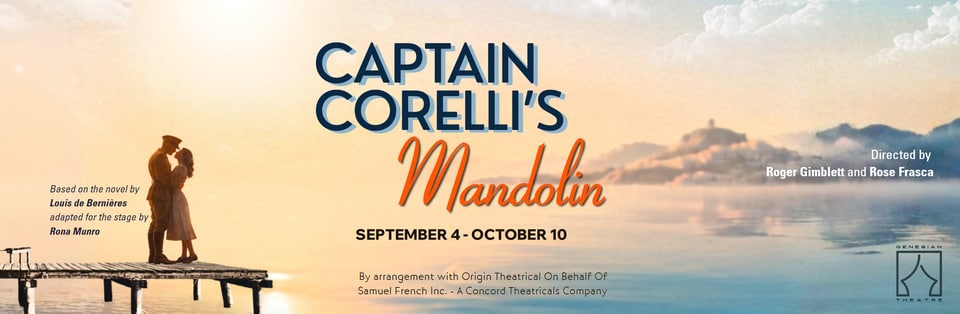
Captain Correlli’s Manolin is playing from 4 September – 10 October 2025 at The Genesian Theatre. 2B Gordon St, Rozelle Sydney

Running time: 2.5 hours, including a 20 minute interval

Tickets: www.genesian.sales.ticketsearch.com/sales/salesevent/156354

To book tickets to Captain Corelli’s Mandolin, please visit https://genesiantheatre.com.au/events/captain-corellis-mandolin/.
Spread the word on your favourite platform!

All Things Must Pass: A Play About The Beatles

All Things Must Pass

All Things Must Pass Rating

★★★★★

Click if you liked this article

1

When we think back in history to musicians who have had a profound influence in their industry, and an even greater effect on people who love them, there are a handful of people. George Harrison, John Lennon, Paul McCartney and Ringo Starr were The Beatles, and at the height of their career in the mid to late 1960’s, they caused what was coined, “Beatlemania”.

It is during this time when “All Things Must Pass”, a play performed by the Lane Cove Theatre Company, focuses on. Written by David Potter and directed by Luke Derrick, this play takes its name as a nod to one of the solo albums released by George Harrison in 1970. This title makes sense on two fronts. One reason being that the play, although featuring all four Beatles, does have a steady focus on George (Matt Clayton). The other reason I think the title suits, was a bit of a play on words. Following John Lennon’s death, the play examined the aftermath of a friend’s murder, and the grief of the remaining members. Towards the end, George mused, “Life doesn’t conclude, it just stops. What does it mean to us?” thinking that everyone passes and “death is taking off your suit”, so life is one thing that simply passes.

The play opens with George in his living room, silent and upset. It has only been a short while since John Lennon was shot. Ringo, (Blake Nicholas), comes to visit and we quickly see the dynamics of these two friends. Nicholas plays Ringo with natural charm, showing his character’s optimism as his tries to gently cheer up his friend. Paul (Rachel Benedict) arrives and soon they are visited by the memory of John (Clayton Moss).

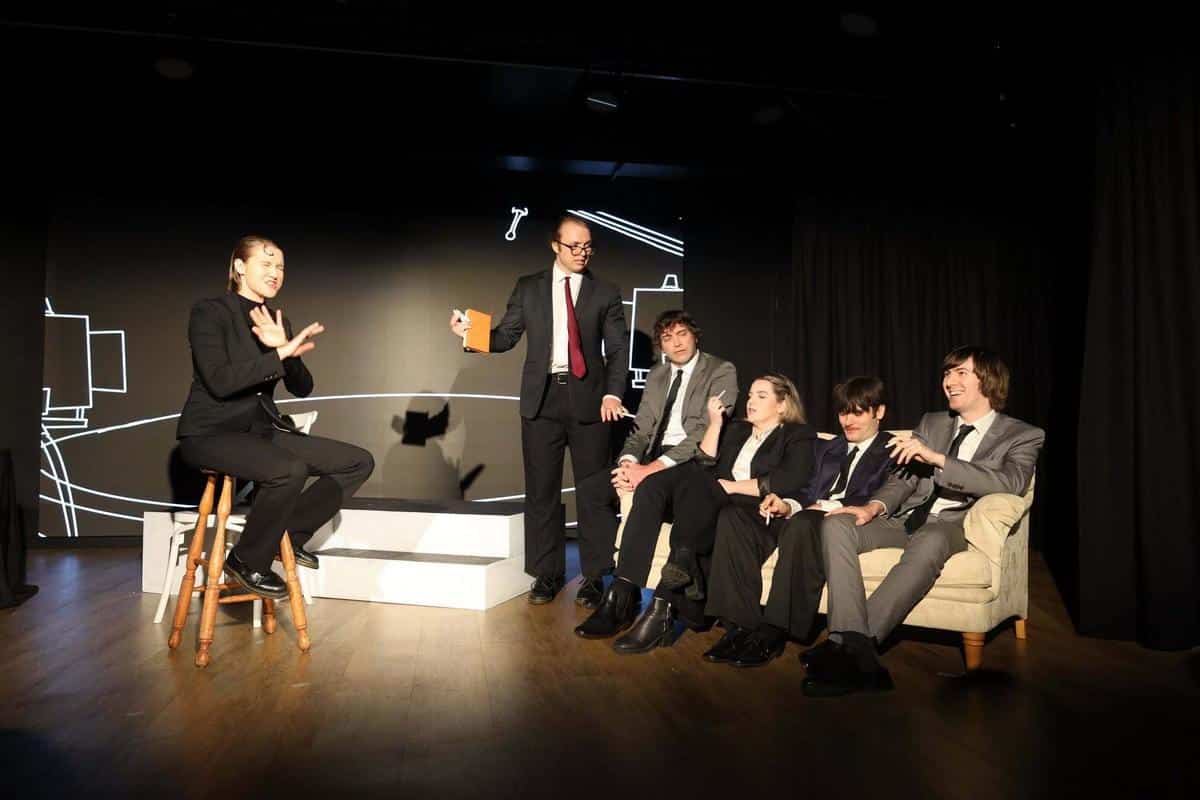
They are soon transported in time back to the 1960’s where all four band members are being interviewed and filmed – bantering on the couch. All four are sitting in a row, squeezed together and completely at ease with each other and with the media. I would say that this scene represented that it was as good as it would get between the band members, and relationships appeared to fracture after this point.

“All Things Must Pass” takes a deeper look into the strained relationships between the four, most notably between Paul and George. It appeared that Benedict’s character Paul was mostly terse and unhappily snarky throughout the entire play, and it may have been purposeful, although this did make him unlikeable. One of his quotes showed arrogance – he snaps at George, “I was the one who made you!” after George brings up that he was unhappy that Paul was suing him. Paul completely refuses to take responsibility for the legal action, blaming his lawyer.


Ringo remained level headed and patient, even playing chess with himself (three games!) as Paul and George recorded in the Abbey Road studios. Nicholas did a great job of portraying Ringo and his laid back character. John, re-joining the three at different times to show the audience what life was like back before he died, appeared later on to take himself away on “trips” (of the pharmaceutical non-legal kind).

Brian Epstein (Nat Jenson) was The Beatles manger and whenever he came onto the stage, he did so in a whirlwind of exuberance, if not a bit over the top. He guided their career and was said to have made their commercial success by putting them into matching suits, securing their record contract and guiding them.

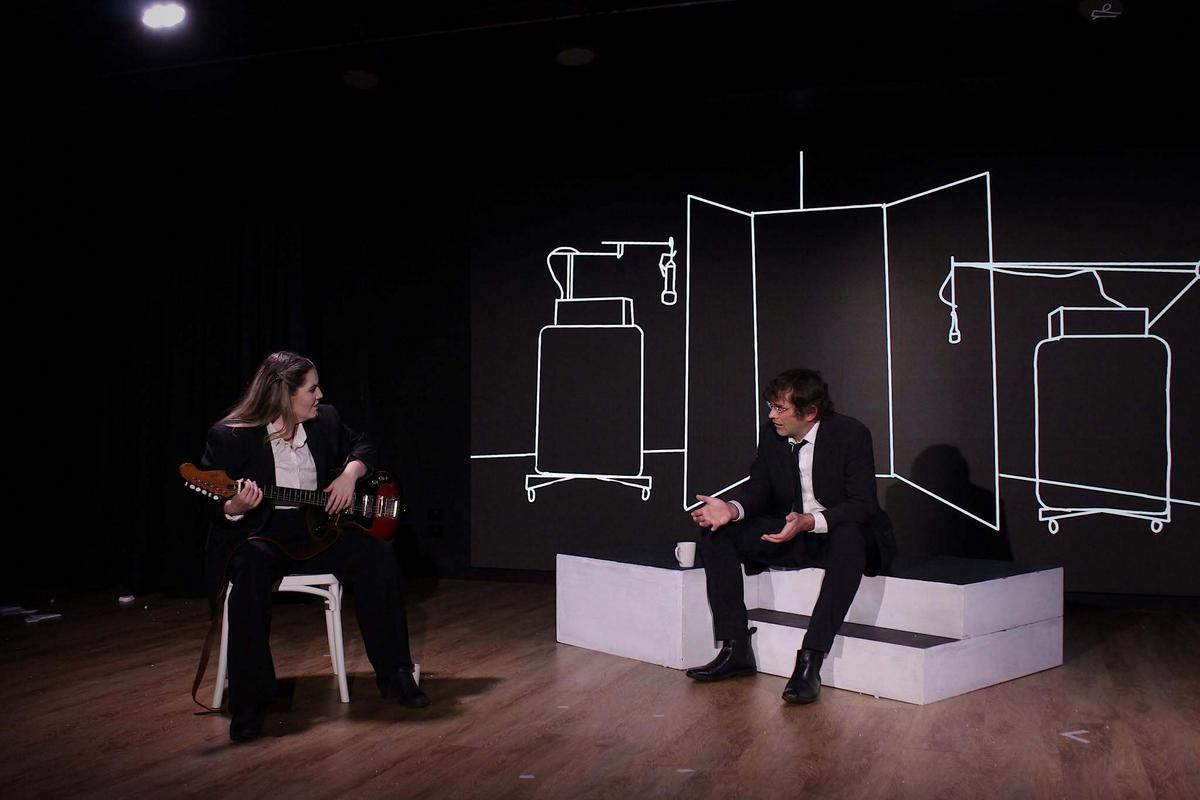
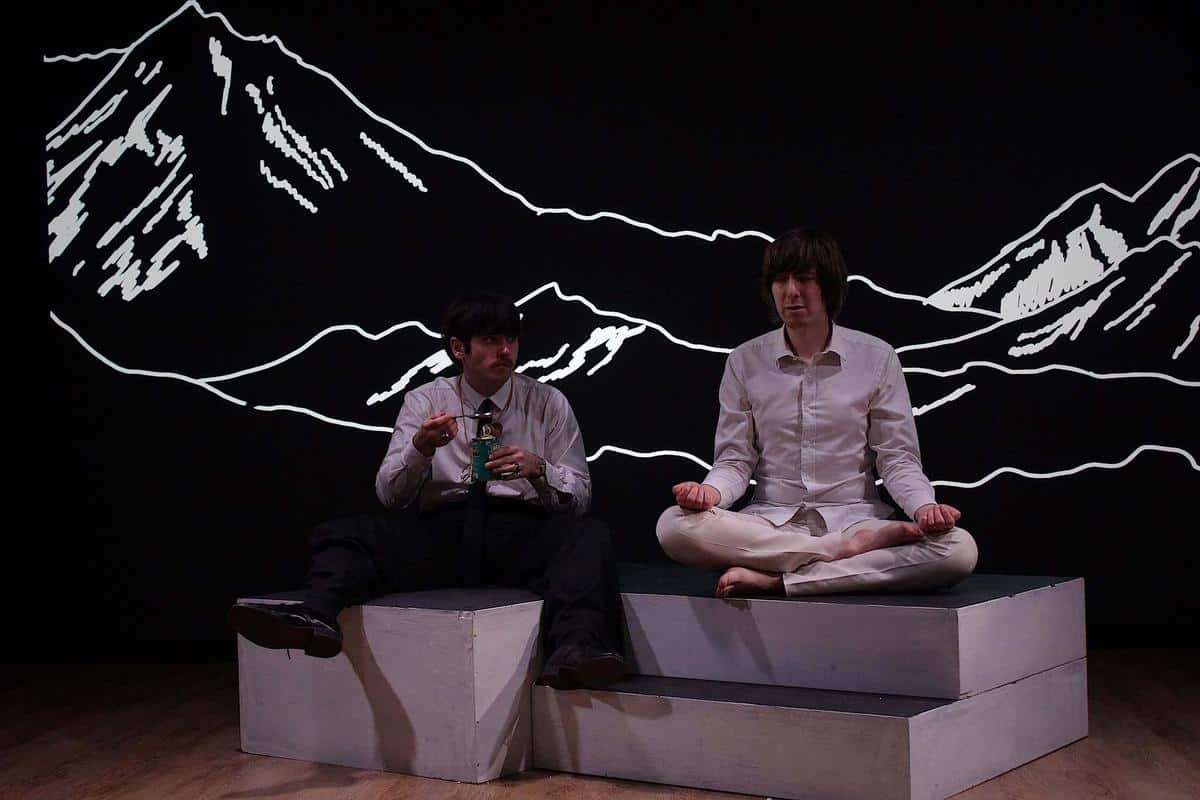
The time periods skipped back and forth throughout the 1960’s and upward, with the intended date projected onto the screen behind the actors. The set was very simple, with a minimalistic look. The screen showed black and white sketches of where they were, sometimes in George’s living room, other tines in the Abbey Road Studio or on a rooftop in London. Costumes were also streamlined. The characters wore suits, with no change of costume.

Matt Clayton was a standout in this play. His Liverpool accent never dropped and his portrayal of George Harrison kept the audience riveted. I was impressed by the monologues that George said, which often gave us an insight into his mental health. His way of coping with life after John died was to become immersed in spirituality. In one scene, he was meditating, repeating the “Hare Krishna” mantra over and over, all the while being drowned out by the increasing volume of noise and chaos of the outside world. In this intense scene, it seemed to be a catalyst for the other times where it was mentioned that the screaming and attention of fans were unwelcome. It culminated in George shouting, “Leave me alone with my thoughts! Just let me die!”

Sara Vencalkova and Anastasia Vokhmyakova completed the cast, playing different roles; the reporters, photographers and other characters which added to this story. This is an original play about another side of The Beatles, about being famous, and mostly about friendship, life and grief.

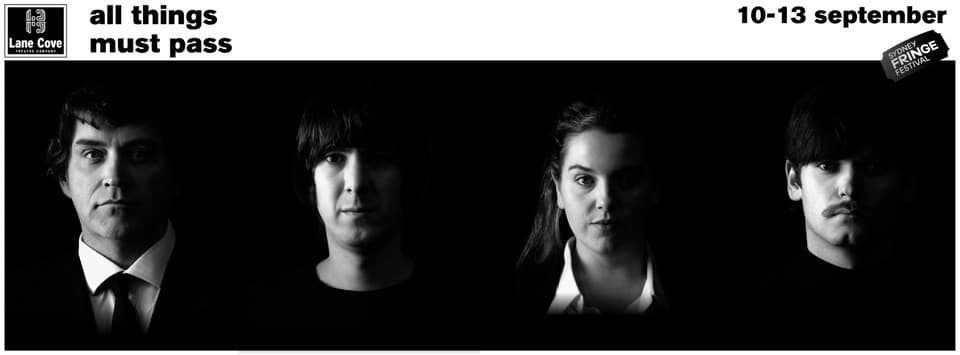
“All Things Must Pass” is in partnership with The Fringe Festival and is on from 10 -13 September 2026 at Pottery Lane Performance Space.

Time: Approximately 100 minutes with a 15 minute interval.

Tickets: www.sydneyfringe.com/events/all-things-must-pass-a-play-about-the-beatles

To book tickets to All Things Must Pass, please visit https://sydneyfringe.com/events/all-things-must-pass-a-play-about-the-beatles/.

Spread the word on your favourite platform!

Savages: Drama Below The Decks

Savages

Savages Rating

★★★★★

Click if you liked this article

2

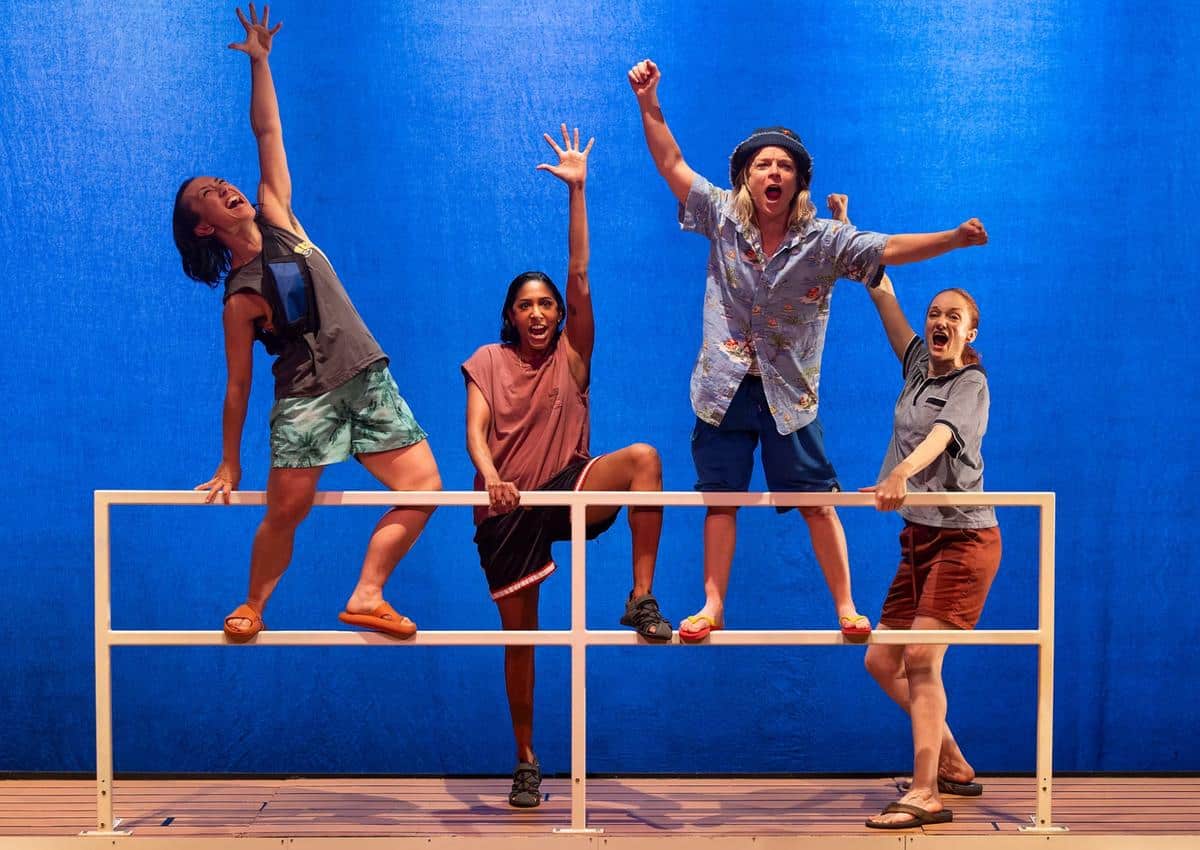
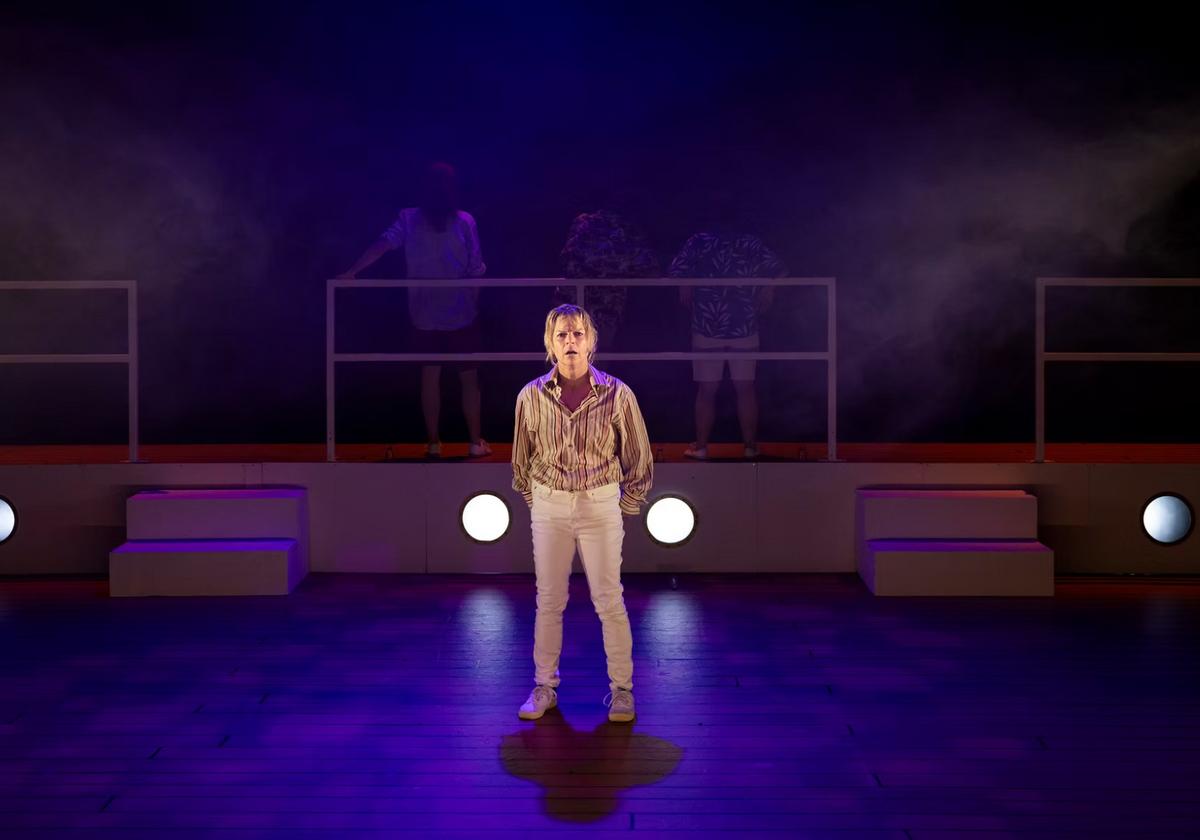
When a dramatically-drawn stage, set impressively as a stark deck of a cruise ship is cast in blue lighting, with unnerving music pounding from the speakers, I know I have arrived immediately in an undercurrent of something I can’t quite put my finger on. A backward feeling descending on my conscience; that once this cruise ship sets sail, there is nowhere I can escape from.

For this feeling of unbreathable submersion is Patricia Cornelius’ brilliant reimagined work, Savages, a play about four men immersed in tight mate-ship, climbing aboard a cruise and leaving their worries behind – heading off on ‘a holiday of a lifetime’, not yet knowing how their yearning for liberation will slowly spill out of control and descend into a night of chaos.

Thirteen years after this play originally took the stage, the decision to cast this show with women and non-binary people takes this piece to a whole other level, particularly where we currently sit with toxic masculinity and misogyny. How, in 2026, we still hear of men, particularly those ranking in high positions, still feeling entitled to disrespect women. How women still have to be guarded, even on cruise ships. Where there may lie a toxic breeding ground of expectation, ire, and unfathomable disrespect when it comes to our gender.

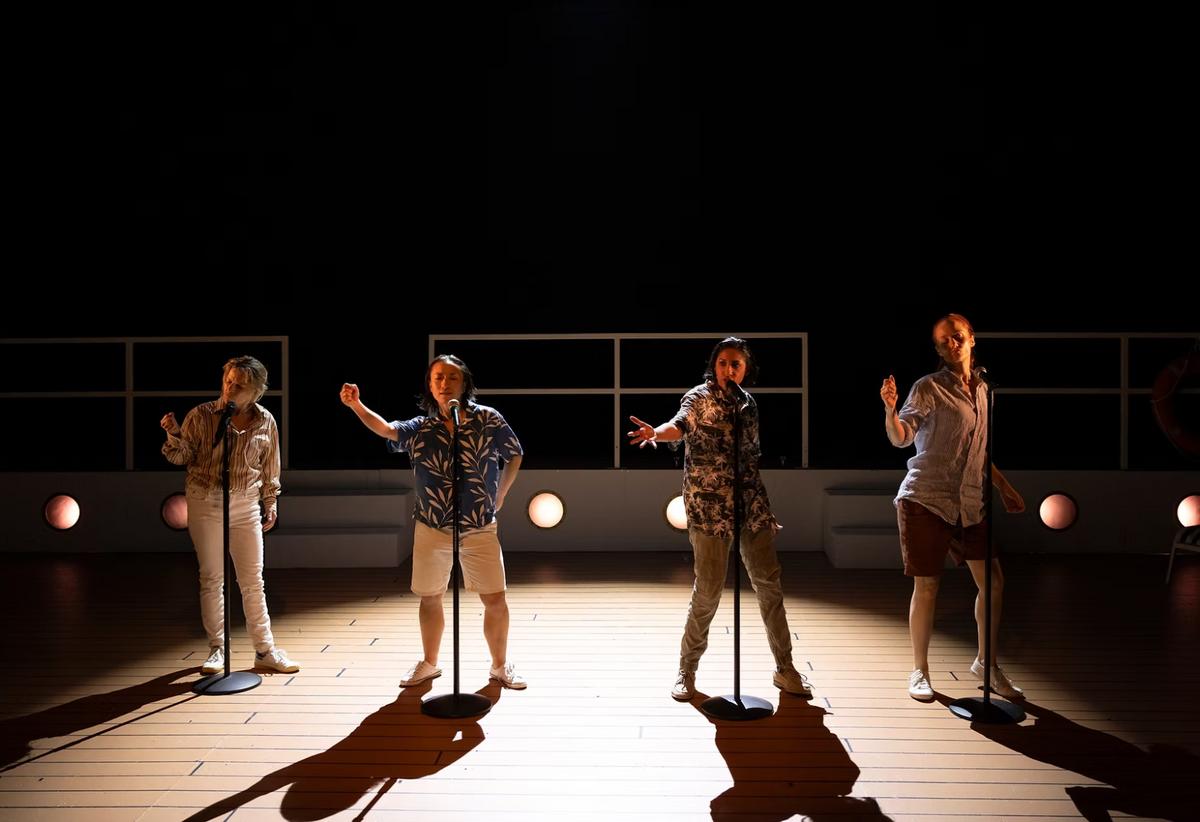
To examine the seemingly complex wiring of savage behaviour in 2026, Cornelius and the show’s director, Kitan Petkovski, thought to cast four incredibly agile women and non-binary actors, who symbolically leave their identities behind at the dock. Who immediately transform into four male characters with great humour, precise physicalities, and emotional complexities; exposing how underneath bravado and immoral behaviour, may lie simmering undercurrents of sadness and depression. Keen to liberate themselves from these emotional waves, these men continue to fight their way through: choosing pure self-satisfaction over what is morally right.


The cast all do a brilliant job of taking on their individual roles. Nicci Wilks is the humorous pick of choice, playing Runt with great comedic timing, delivering the performance of an Aussie bloke with a growl and groan, giving as much as he gets.

But AYA, delivers the level of acting not seen in years. Conveying the despicable character such as Rabbit is no easy feat, and AYA takes it to an expansive level – blending low-brow waywardness with complex pathos and vulnerability. For AYA is the epitome of what I would define as a gifted vessel, for any trued-and-true storyteller.

The set and lighting, both designed by Bianca Pardo and Harrie Hogan respectively, is novel and innovative. Minimal, clean, and with very few props, this set is paired beautifully with the tones of light weaving in and out through the show – symbolising a ‘sea of emotions’, setting the tone of each character’s mood— spotlighting the colour blue for sadness and depressive thoughts; red for anger and aggression; and even the colour pink, celebrating women.

The key to great writing, especially in the case of Patricia Cornelius, is in the simplicity of her language, how so few words can mean so much. How, in much of the play, it sounded sung, like poetry. A call to arms perhaps, in light of what women are still struggling with.

Thankfully, by its rousing end, we see beams of pink light shining through the cracks of toxic culture, a stark vision of hope – in highlighting the vulnerabilities all genders share. That sometimes they can rule our lives in the most harmful of ways. That only time will tell – when old ideas of women will disappear and re-emerge triumphantly. Where entitled misogyny will be a thing of the past.

To book tickets to Savages, please visit https://www.theatreworks.org.au/2026/savages.

Photographer: Pia Johnson

Spread the word on your favourite platform!

Like A Bird Who Longs To Fly: A Woman’s Road To Freedom

The Deplorables

The Deplorables Rating

★★★★★

Click if you liked this article

5

In today’s world, what does it mean to be free? Is it a feeling of liberation from the rules that society dictates, or is it a fire of truth within us that refuses to simmer down?

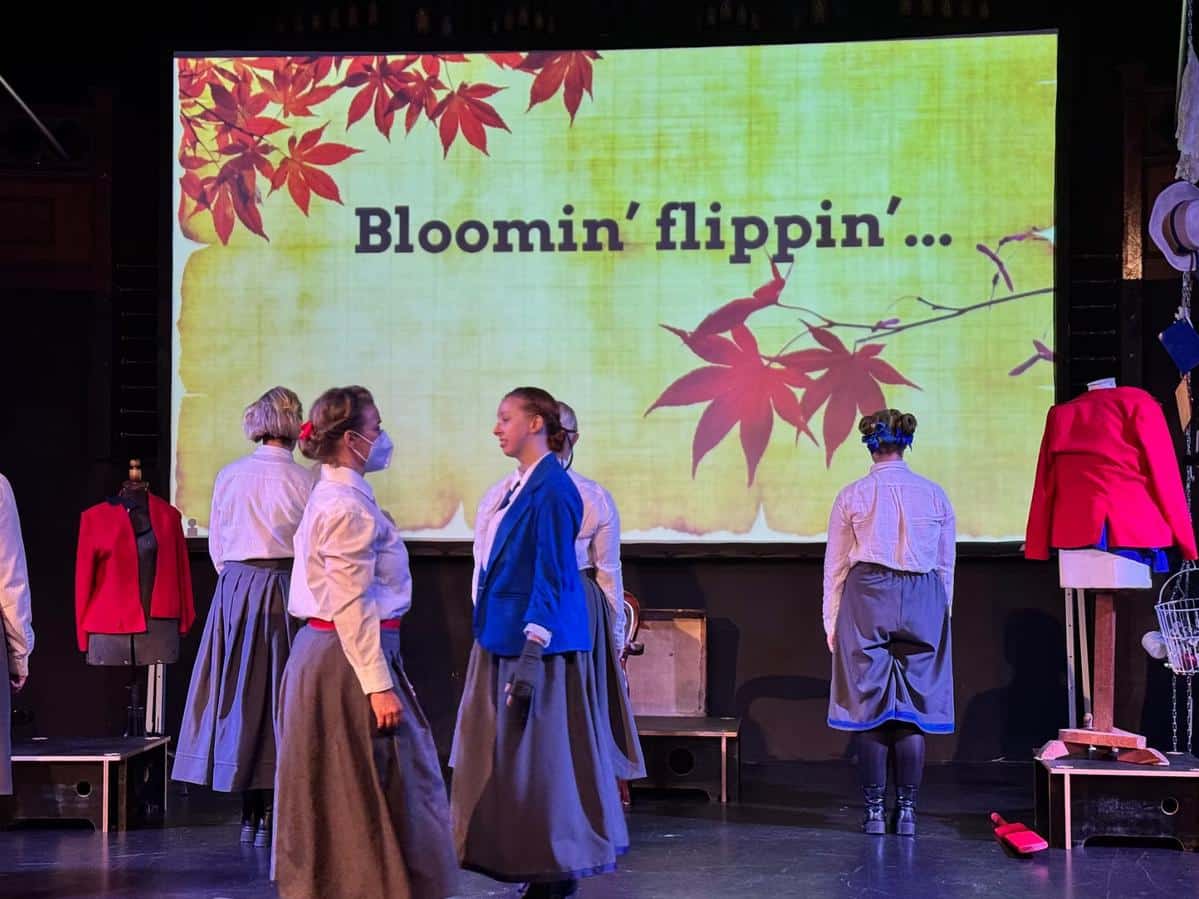
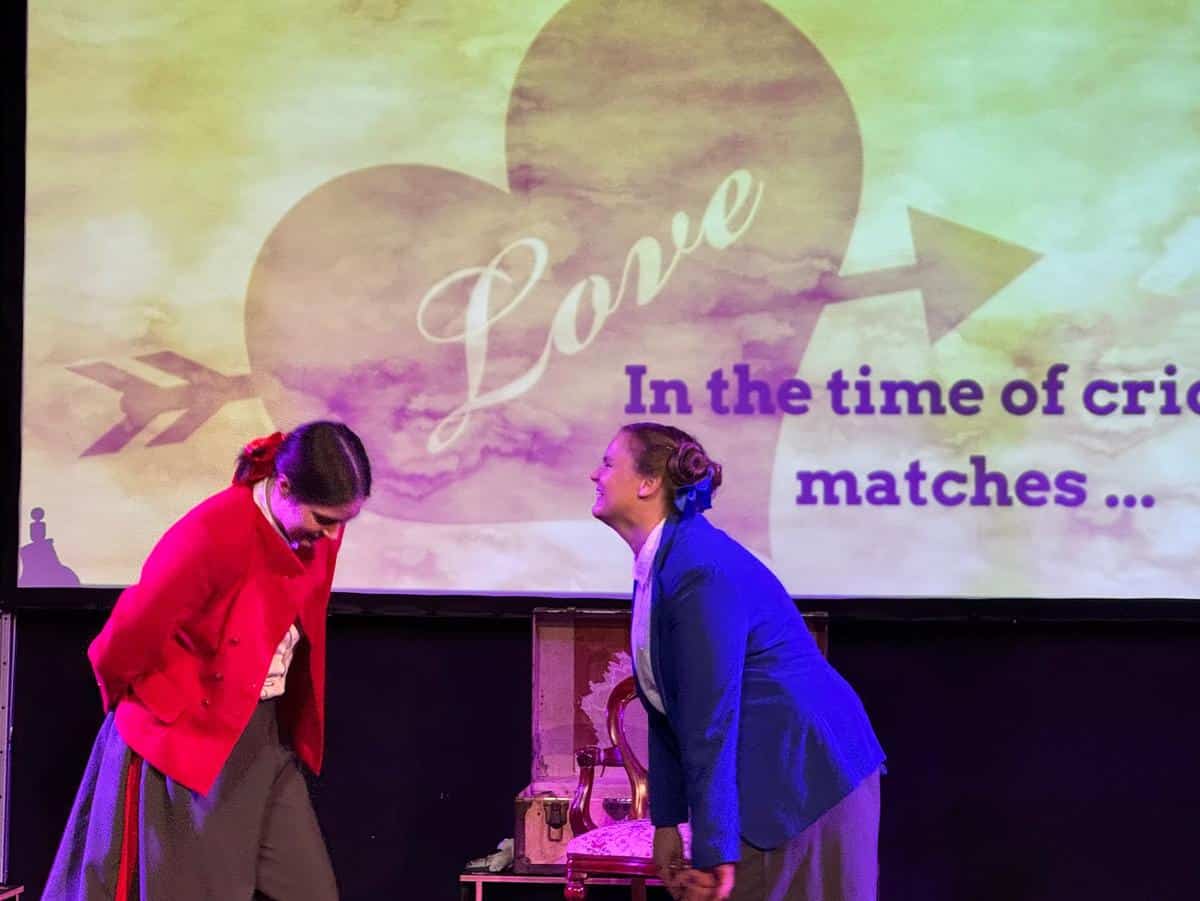
Marking a 2-year benchmark, ‘The Deplorables’, an award-winning production by female-led regional theatre company Skin of our Teeth Productions, marks its final inning at Theatre Works with empowered pride and pure, theatrical joy. Where in a span of 70 minutes, the audience is fully immersed into a no-holds-barred historical tale of female bravery and resilience set in 1874 in Bendigo, where an all-women’s cricket charity match takes place to great communal acclaim with lots of money raised and 22 women praised for their sporting prowess.

As they celebrate their joy and liberation, chaos and backlash ensue – when the press declares that these women are ‘Deplorable’ for playing a male-dominated game, and should instead ‘know their place’ and ‘stay home’. As the story unfolds, we experience the courage and resilience these women face – to fight for their sense of freedom: to be who they are without limitation.


Written and directed by Christine Davey, and composed and choreographed by the very multi-talented
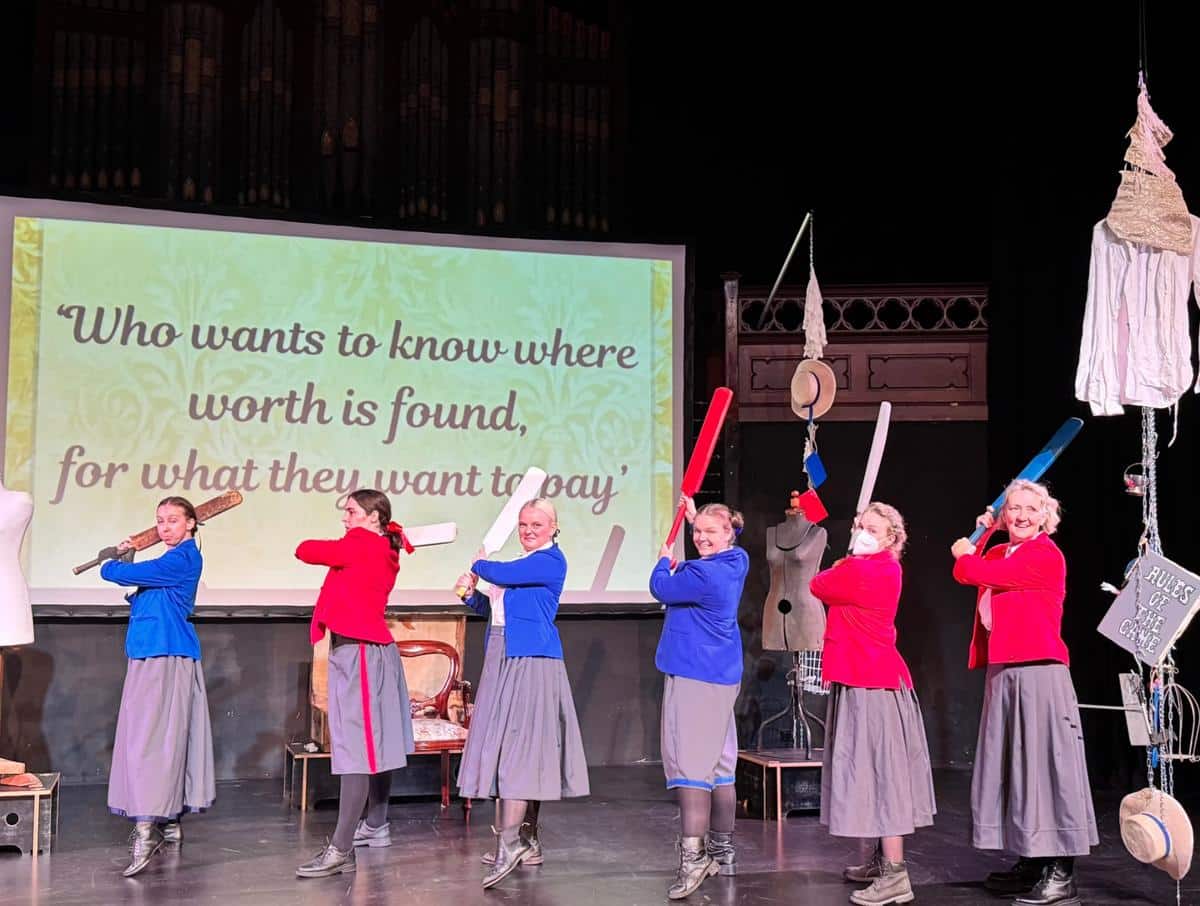
 Tess Parker, this heart-warming story begins with a minimal yet highly-symbolic set framed around this 19th-century period. Four descending pillars of chains cleverly embellished with stage props used throughout, in particular; a hand-held 19th-century moustache to depict the male-roles. Birds resting in cages near signs that say ‘Rules Of The Game’. Red and blue uniformed blazers displayed on sewing bodices marking the juxtaposition of identity; of the changing roles that are budding in that society. A curvy armchair depicting a feminine world in which they must sit quietly. While behind, in a trunk marked with the word ‘Hope’ – colourful cricket bats rest in anticipation – hoping to get a game, or perhaps hoping that society changes its tune.

Blending engaging Australian music and striking physical movement, this delightful, quick-witted, show consists of six highly-talented women who bring commitment to their roles with immense energy and enthusiasm; each bringing different layers to tell this courageous tale.

Marie-Claire Tchernomoroff stuns as Barbara Rae with such tender emotion, immediately connecting to the audience with dreams – of achieving more than just sitting still. Of harbouring a secret wish: to fly freely like the bird she tenderly holds in her hands, away from its stilted cage. Danae Reid as Miss Gerber and Aeonie Ostik-Smith as Katie Petrie bring the musical comedy elements of this show to new heights, with beautiful, heartfelt singing and added flavour, displaying their loving relationship with subtle sensitivity. But Tess Parker, stepping into the role of Miss Murdoch? Absolutely steals the show. With her ball of blazing comedic energy, she combines the exact ingredients of humour, storytelling and sass that engaged me thoroughly. Tess Parker managed to entangle me into a world of a 19th-century woman, who despite her limitations, continued to fight for momentary joys – in humour and in sadness. For in watching her, I too was able to embody the feeling of inner-sovereignty, in a world that perhaps even today, seeks to halt the path of what it truly means to be free, for all of us.

To book tickets to ‘The Deplorables’, please visit
 https://www.theatreworks.org.au/2026/the-deplorables

Photographer: Mary Steuten

Spread the word on your favourite platform!

Subscribe to What's The Show

Reviews, show news and what is on, straight to your inbox.