The Book Of Everything

The Book of Everything

The Book of Everything Rating

Click if you liked this article

0

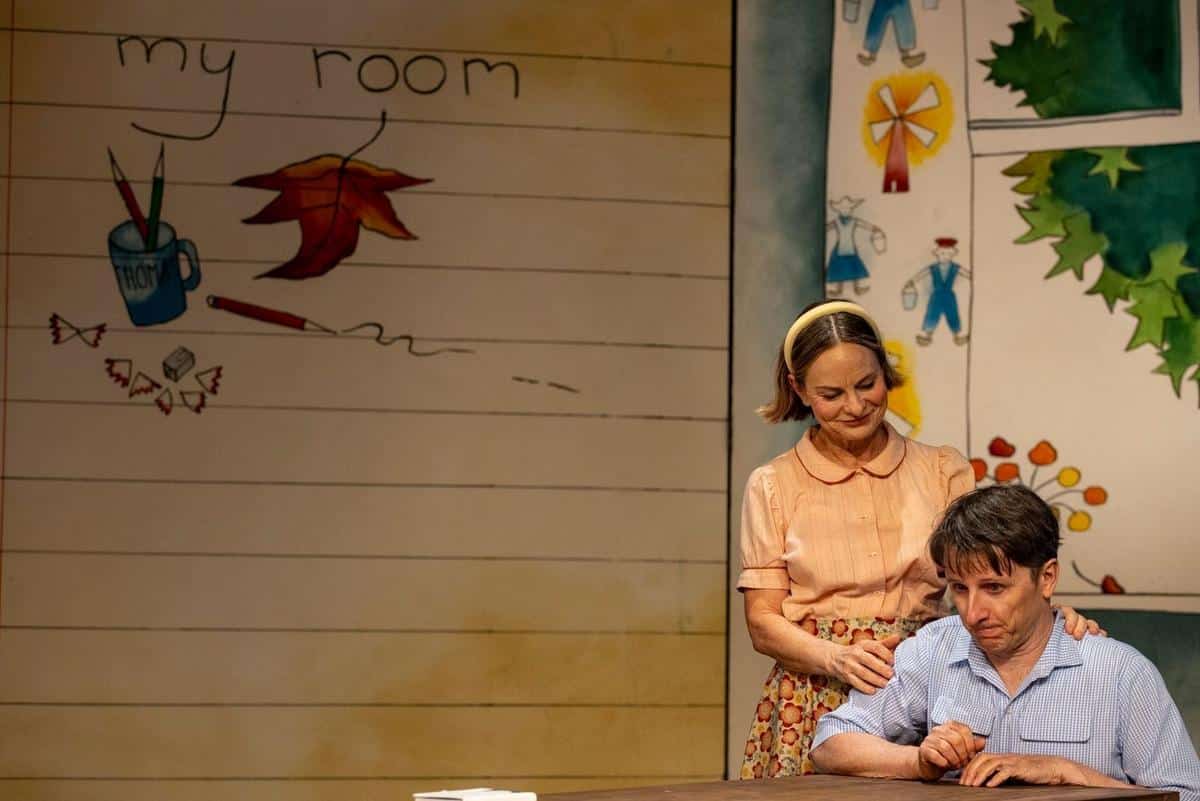
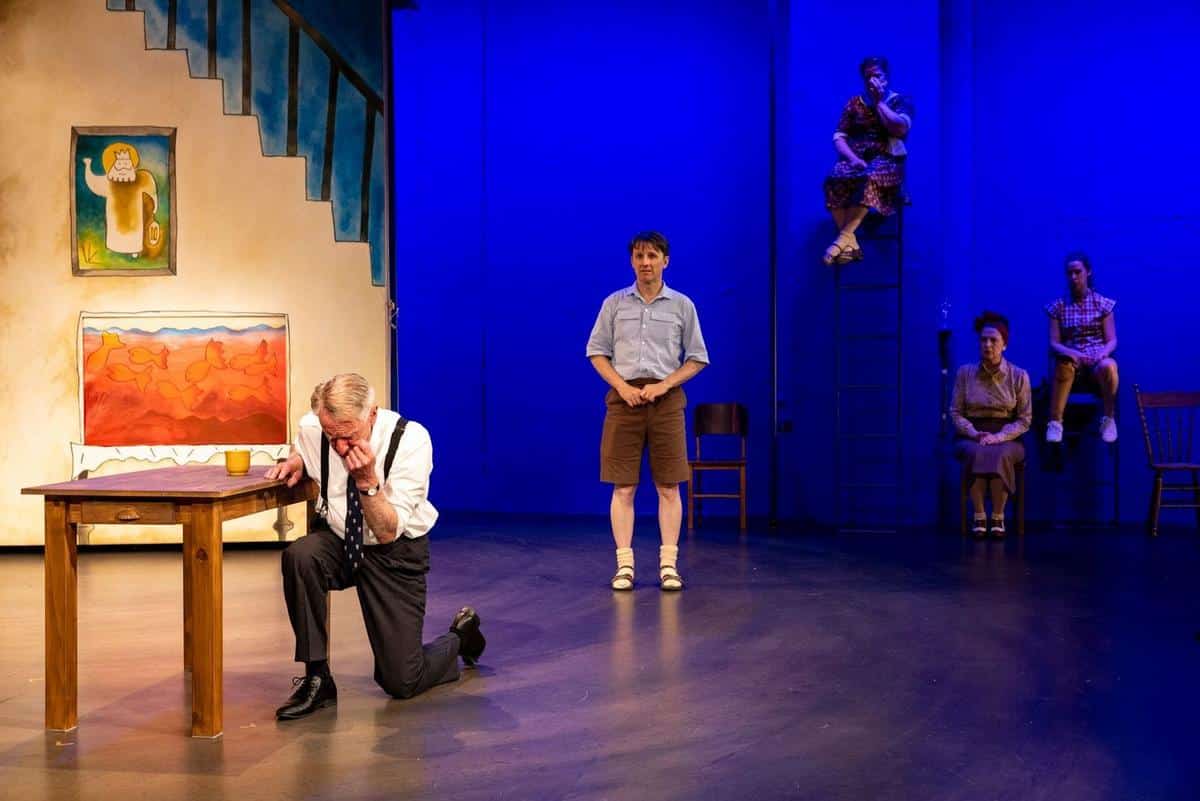
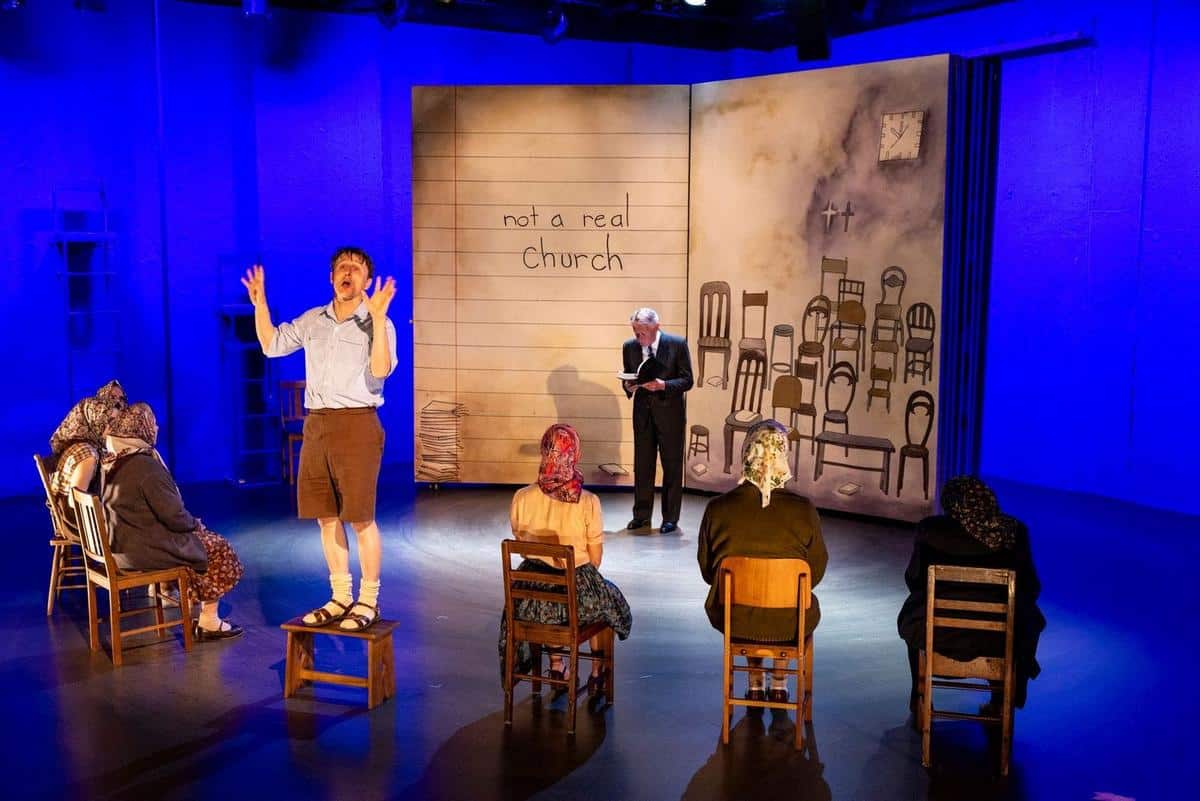
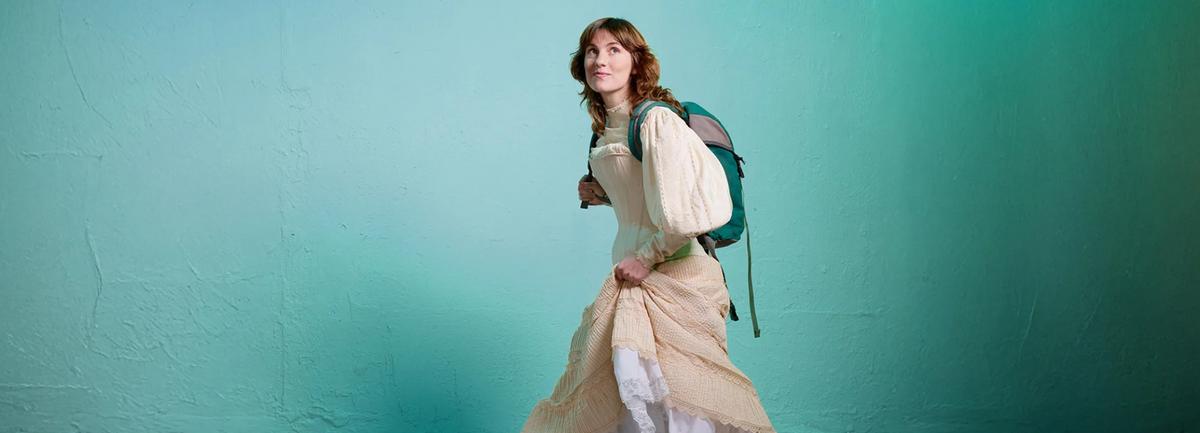
“What I want to be when I grow up? Happy!” said Thomas Klopper, aged ‘nearly 10’. The audience was young and old and instantly charmed by Thomas played by a grown up Matthew Whittet. We were let into his imaginary world of tropical fish in the canal, his joy of reading and talking to a very present and comical Jesus (John Leary). He is also part of a post-war family dealing with just about everything.

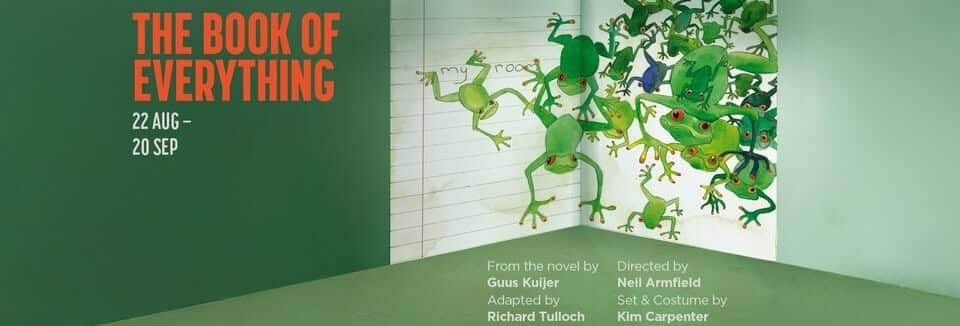
The set of a giant book that was opened and re-opened with dreamy cartoon-like scenes was another character that took on a life of its own and provided a backdrop to each event. A musician (Jack Ward) playing music beautifully, added emotion with a range of instruments providing a childlike understanding of life and sound. The cast members also contributed to the ‘soundtrack’ by playing instruments themselves.

We were engaged within five seconds being brought into the world and gentle naivety of children pushing back the past dark war years and its impact on what is left of life. The script (Guss Kuijer) is full of witticisms and the audience responded with laughter and joy. The team of Richard Tulloch, Neil Armfield and Kim Carpenter produced a play that was delightful, funny, thoughtful and uplifting. This play, which addresses serious themes skilfully balanced with humour, is highly recommended for the young and young at heart.


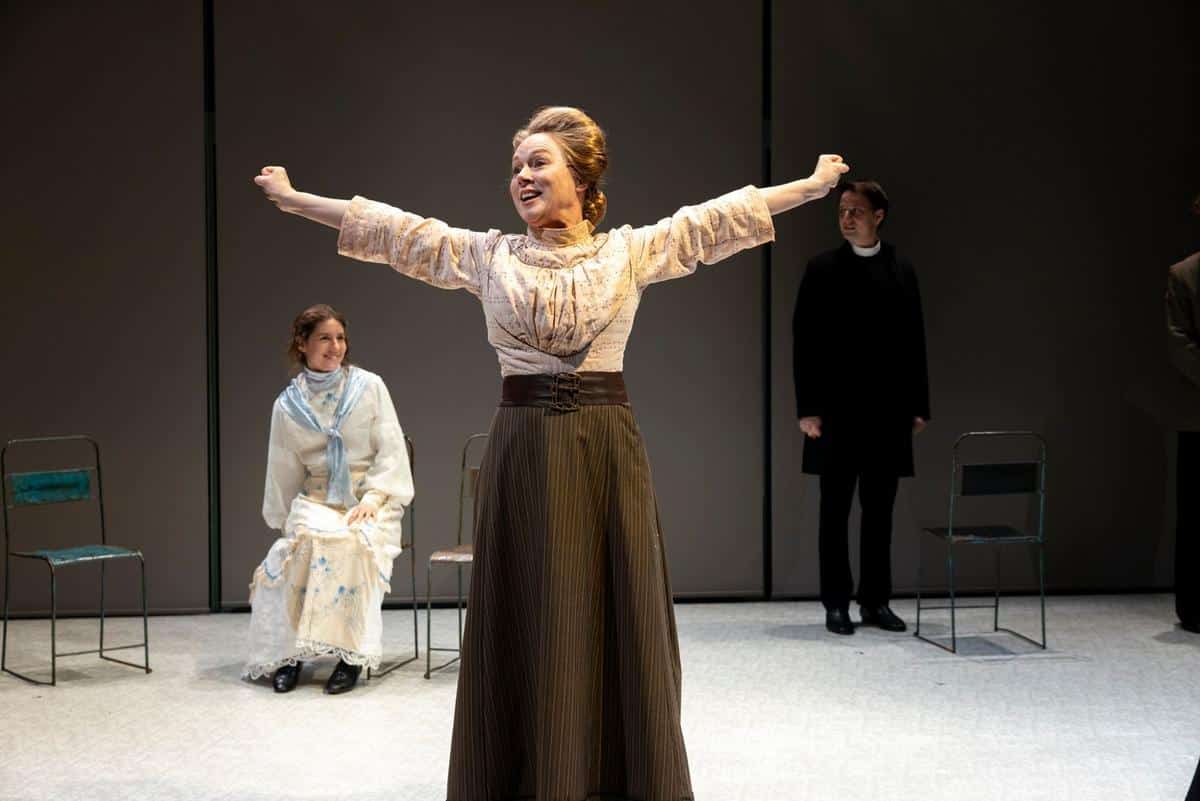
Thomas’ father (John Gaden), a dry, deeply religious and angry man, his mother (Claire Jones), a weary and loving mother and Margot (Rebecca Massey), a sprightly teenager coming into her own, form a family living in Amsterdam and dealing with family secrets. On the sidelines is the observant neighbour, Mrs Van Ammersfoort, (Julie Forsyth), with the look and panache of the neighbourhood witch but who is really a war resistance survivor. Aunty Pie (Pamela Rabe), rebels by wearing trousers and Eliza (Bridie McKim), is Thomas’ love, despite being 16 years old and having a leather and hinged leg.

The lesson is about kindness and how Thomas’ gentle and whimsical heart breaks open the community as he desperately tries to resolve his father’s violence towards his mother. It is a journey of discovery around loneliness, fear and finding a sense of self. As each character breaks open, new life reveals itself and in a childlike manner, the adults discover their innocence and desires.

Audience participation was included with one hilarious action and young people are invited on to the stage. Serendipitously, a large group of schoolboys was in the audience and they bounded down the steps to joyfully join the cast and be ‘nearly 10 years old’ again. They took a group photo after to celebrate. And that was what the play was about; the celebration of kindness, innocence and people’s dreams, even if all it really amounts to is being happy.

To book tickets to The Book of Everything, please visit https://belvoir.com.au/productions/the-book-of-everything-3/.

Photographer: Brett Boardman
Spread the word on your favourite platform!

The Jungle And The Sea

The Jungle And The Sea

The Jungle And The Sea Rating

Click if you liked this article

1

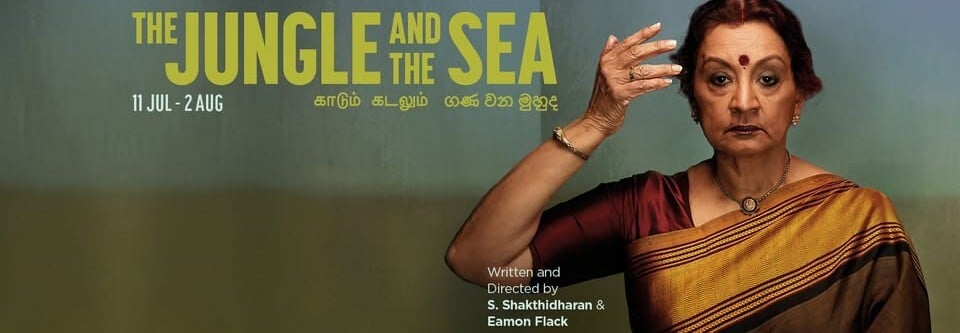
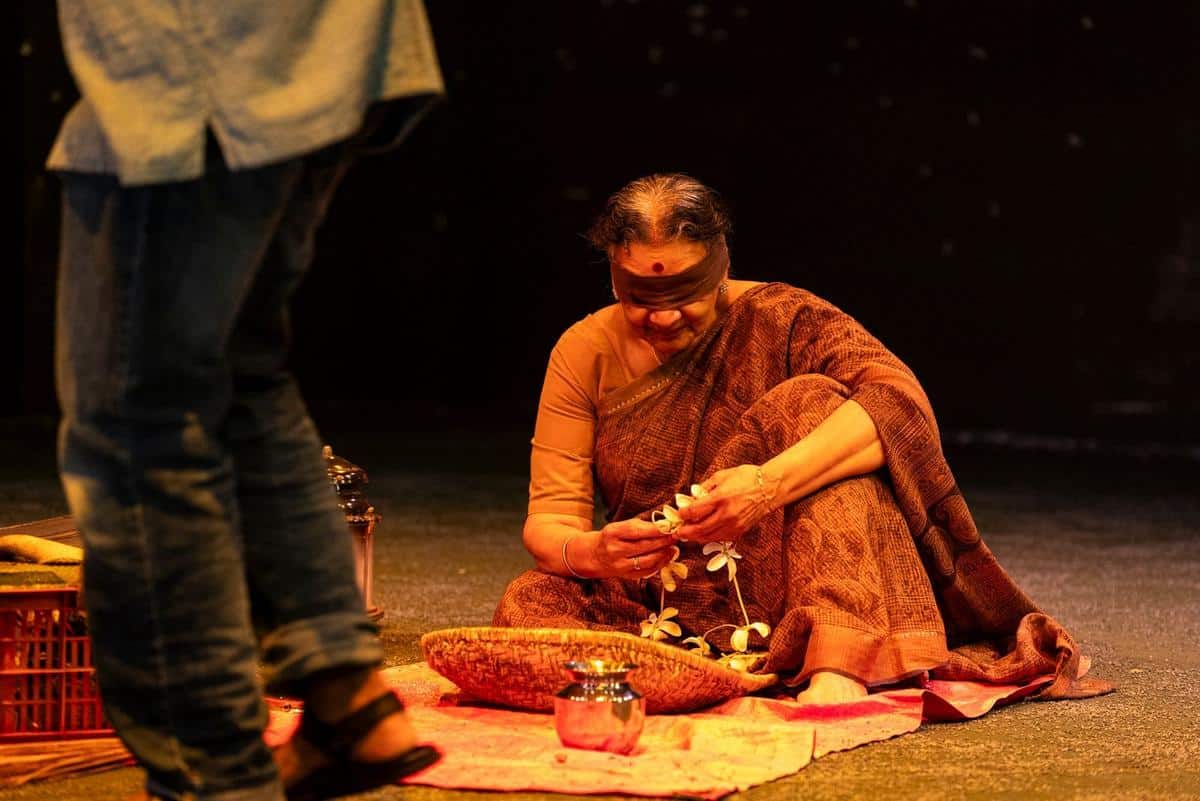
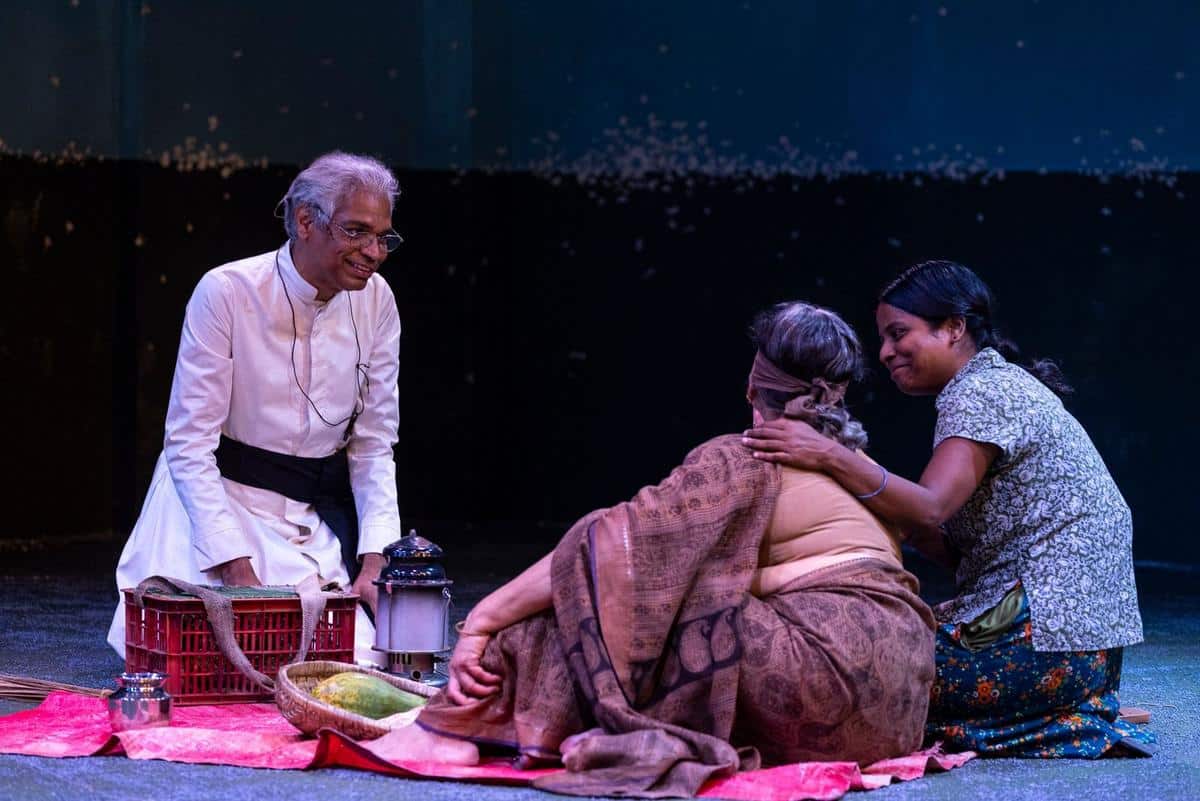
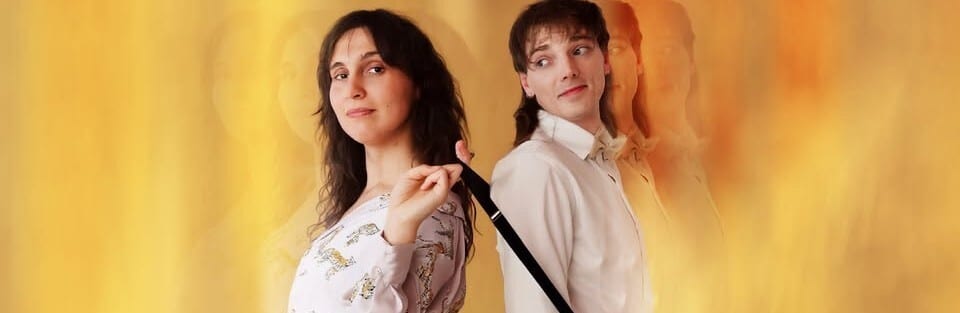
It was a three hour journey and worth every minute of it. Written and directed by S. Shakthidharan and Eamon Flack, the audience travelled with a Sri Lankan family who represented all aspects of the country’s differing religions, cultures and approaches to conflict, family and life. Backed by haunting live music, sensitively and beautifully played and sung by Indu Balachandran and Arjuna Puveendran, we were immersed in the conflict between the Sri Lankan government and the Tamil Tigers (1983 to 2009), as the family rushed back and forth between so-called safe zones seeking security, home and peace.

The cast of Prakash Belawadi, Emma Harvie, Nadie Kammallaweera, Shiv Palvar, Dushan Philips, Kalieaswari Srinivasan and Rajan Velu told the story of a hidden war often forgotten. All were superb as witnesses to their own tragedies and to those other travellers on the same road looking for safety. The mother, played by Anandavalli, who eloquently and delicately expressed her grief and desires through dance, chose only to see her whole family regardless of the consequences. The father gently living in a civilised past with his own belief system shattered by tragedy. The three sisters all with one foot in past traditions, seeking to move forward into the future of science and modernity, all acted with intensity and truth. There is a splitting of the family as the father and one daughter manage to escape to Sydney while a brother is brain-washed in a time of anger leading to a family searching to recover him. As each faces their destiny, the final dance and mournful song left the audience silent for seconds followed by a standing ovation.


The set was a simple revolving stage with props cleverly representing change. The actors stepped on and off as they needed to walk to the next safe zone and also when their emotions were heightened. Small props representing buses, planes and even the Sydney Harbour Bridge symbolised the passing of time or arriving at a new place. A signpost alerted the audience to the year and the length of the war. The actors carried suitcases and baggage representing their changing circumstances and life including a chicken, all remnants of their previous identity and peaceful existence.

Inevitably, without giving the story away, each character questions his or her belief system and who is to blame for it. Which side caused the issue and how had the war been triggered? What was the actual role of the UN who left their local employees behind and of course, the use of weapons. As the son-in-law states perfectly to his father trying to justify his government and actions, “order is just violence done neatly” and each character presented a different facet of who created the conflict and who was complicit.

To book tickets to The Jungle And The Sea, please visit https://belvoir.com.au/productions/the-jungle-and-the-sea-2026/.

Photographer: Brett Boardman
Spread the word on your favourite platform!

Still Sitting In The Afterglow

Afterglow

Afterglow Rating

Click if you liked this article

2

Belvoir was buzzing with an eclectic mix of people heading towards two different shows. It was difficult to discern who was headed where, but it was a delightful mix from varied walks of life, all excited for a night of theatre.

Afterglow was in the downstairs theatre, one I hadn’t yet visited, and I was immediately put at ease by the intimacy of the space. I love intimate theatre.

I had seen two songs from this show at Homo Grown, and I am also a massive fan of Cassie Hamilton. I had been wilfully declining theatre trips due to my own rehearsals making this an incredibly busy time for me, but I was already getting FOMO seeing it advertised when the review request came in, and my arm was officially twisted. Let’s just say, thank God for that.

The space is black box style and the set is a lounge bar we come to know as Afterglow. This theatre is warm and welcoming, but it has some limitations. As a singer, I was initially concerned for the performers singing without microphones, but they were so exceptional at their craft that you quickly forgot it. I imagine they are being given some great coaching to help with this challenge. However, there is a unique privilege in seeing a show like this in such an intimate setting while knowing, without doubt, that future runs will be on a much bigger scale.

Afterglow is a world premiere by Purple Tape Productions, presented as part of Griffin Theatre Company’s Lookout program. Written by playwrights Sheanna Parker Russon and Dr Lillian M. Hearne, and co-directed by Cassie Hamilton and Lily Hayman, it is a barbershop rom-com following Michael through a coming-of-age, and the unlikely community of people that play a part in it.

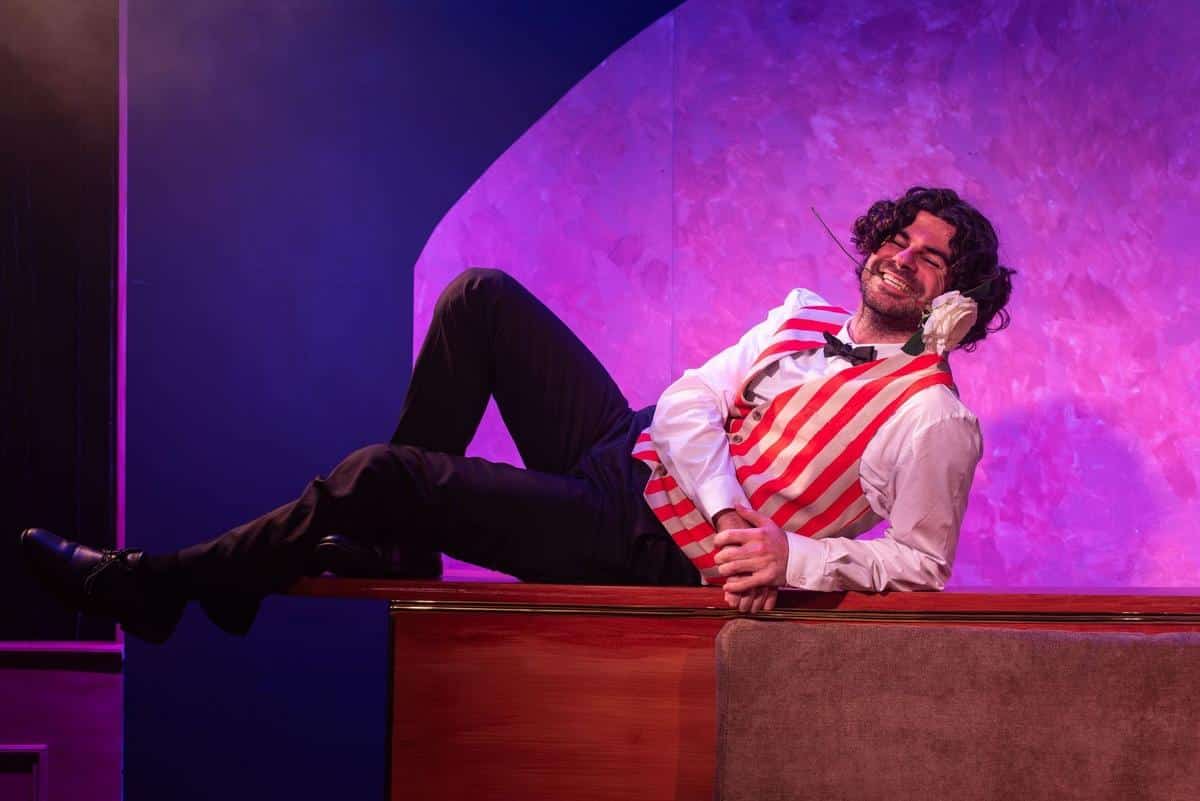
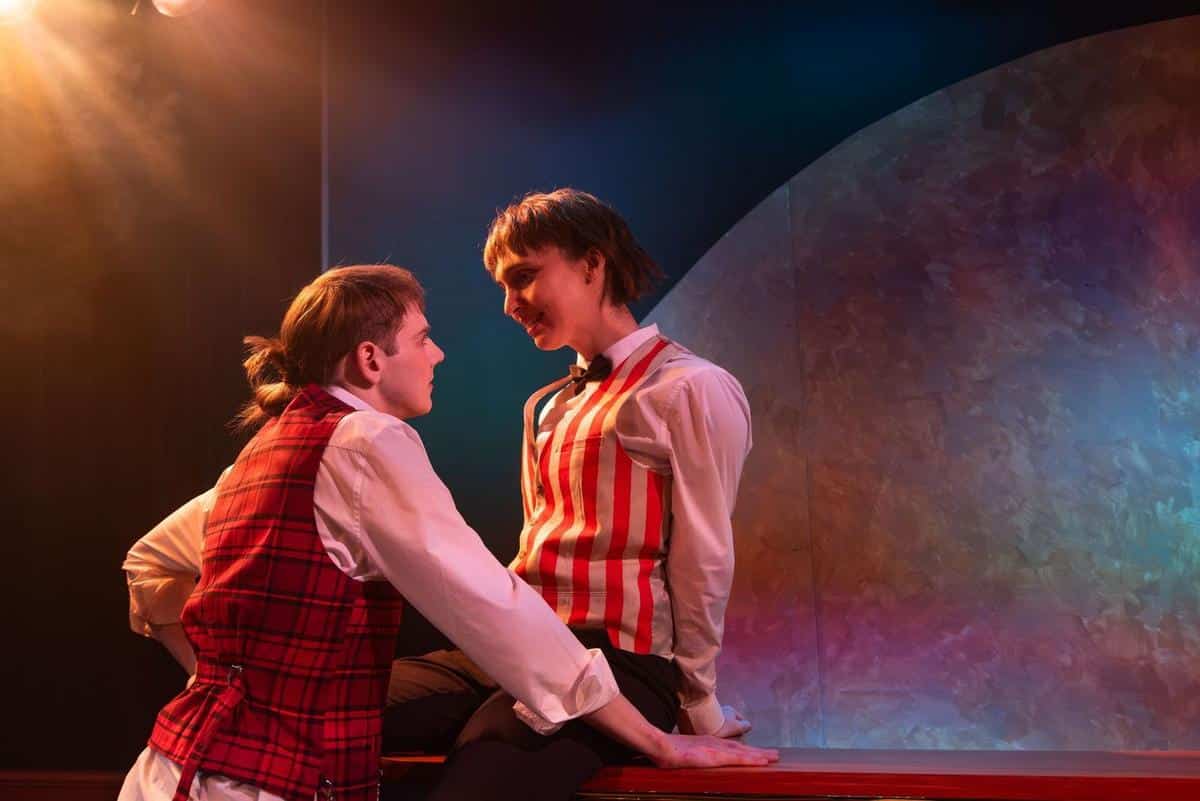
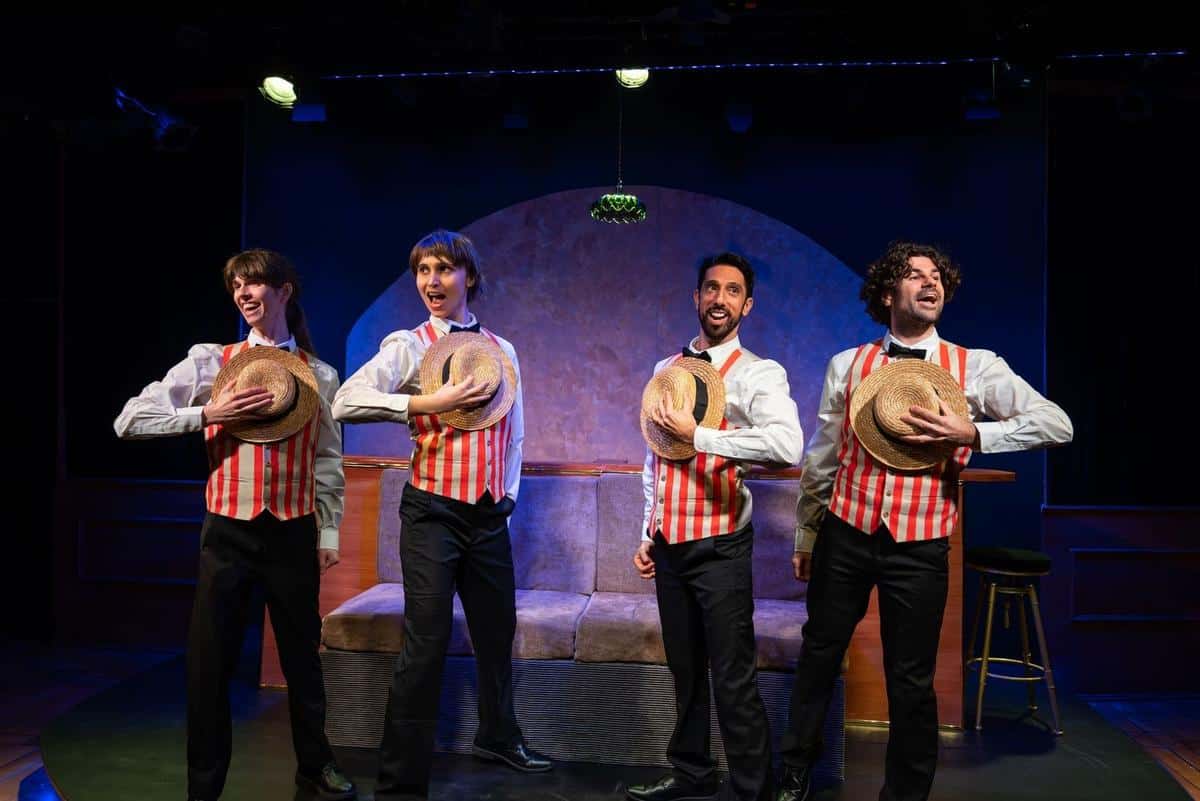
We begin with the barbershop quartet singing about manliness and the importance of keeping barbershop purely for the boys. We note Michael, played by Cassie, is uncomfortable, making small mistakes then berating himself through a song about the desire to be normal. It’s 2012, he’s 21, and this is his only aspiration.


Nat Jobe leads the quartet as the old-skool male who is a feminist purely by virtue of having married a woman, yet believes fiercely in upholding traditional male spaces. The character becomes the vehicle for exploring what it means to be a man and the awkwardness of trying to connect when social norms keep restricting you. Jobe plays it with tremendous warmth and comic precision.

There is beautiful a-cappella accompaniment scattered throughout in the barbershop style, with Dr Hearne playing Trevor and taking to the keys at poignant moments. The harmonies are infectious.

Nic Prior’s character T gets a stunning solo that takes us into the depths of an interior world that is tender and enormous. The voice is breathtaking; there is a fragility to the emotional delivery that sits in complete contrast to its power. When Michael and T reconnect two years later, the connection deepens, and Cassie delights with a goofy, gorgeous spiral as Michael tries to navigate T’s vulnerability while still performing what it means to be “one of the boys.”

The lighting design by Tyler Fitzpatrick feels deceptively simple, but the choices are anything but. Moving from the full wash which made us all visible to one another (leaning into the metaphor of trying to blend in), to a single spotlight when characters turned inward was quietly brilliant. Clare Hennessey’s sound design holds the space with equal care.

I’ve said it before and I’ll say it again: Cassie Hamilton is a powerhouse, and her character’s big solo moment is elevated by the voice belting behind it, leaving me teary. The first of many times.

By 2016 things have gotten messy, and the boys are doing their best to show up for their friend while not quite knowing how to communicate outside of messy metaphors. The important thing is that they are trying, and learning that vulnerability might actually make them better.

Lincoln Elliott as Matt is great fun, and I genuinely do not know how Elliott manages to be in so many wonderful things at once. The whole ensemble moves together with a generosity that speaks to the room Cassie Hamilton and Lily Hayman have created.
Afterglow is a bittersweet, joyful, poignant romp; full of heartache and, most importantly, trans joy. Sheanna and Lillian’s joint journey and shared heart make this a uniquely beautiful story.

I was in tears at the end. Tears of sadness, hope, joy, and just the deep appreciation of a wonderful shared experience.
Go share in it. You will sit in the afterglow for days.

To book tickets to Afterglow, please visit https://griffintheatre.com.au/whats-on/afterglow/.

Photographer: Lucy Parakhina

Spread the word on your favourite platform!

The Birds: Gothic Horror At Belvoir

The Birds

The Birds Rating

Click if you liked this article

Feathers fly and beaks pierce in this contemporary take on Daphne du Maurier’s horror classic.

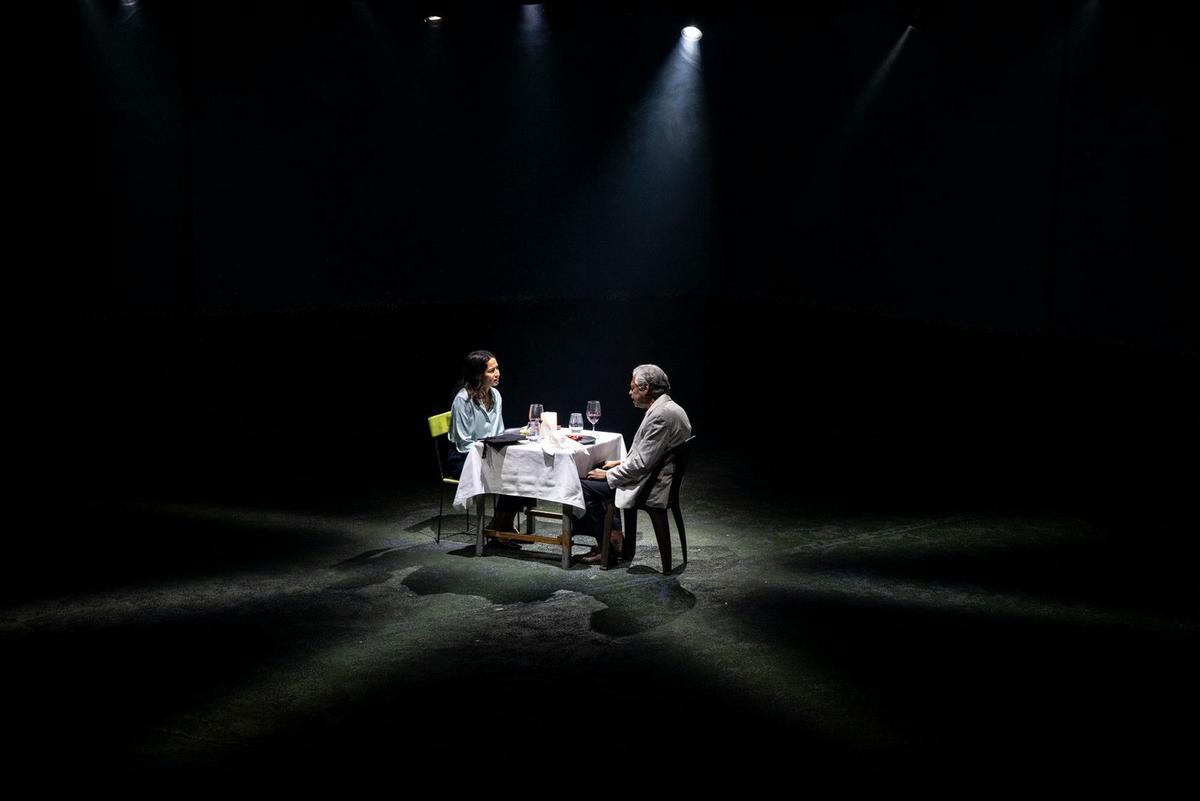
Gothic horror is officially having a revival. Nosferatu by Robert Eggers. Guillermo del Toro’s Frankenstein. Emerald Fennell’s Wuthering Heights. STC’s production of Dracula, starring Cynthia Erivo, on London’s West End. Daphne du Maurier’s novel Rebecca is revered within the gothic horror canon, alongside her short story The Birds.

Du Maurier’s ‘The Birds’ is a tight, terrifying tale written and set in Cornwall, in the 1950s. This is post-war England. Men and women that fought against fascism and survived the blitz. The story focuses on Nat, his unnamed wife and their children, Johnny and Jill.

Without warning, the birds begin to flock, and attack. They gather, out to sea, in the winter fields. Driven by the east wind. Besieging the family. Drawing blood with stabbing beaks.

Nat is more prepared that his distant neighbours. He observes and acts. Others fall victim to the birds, their bodies left lying in and around their homes.

Alfred Hitchock’s classic chiller ‘The Birds’ followed in 1963, shifting the action to Bodega Bay, California. Hitchcock took the title and the concept and had Evan Hunter (better known by his pen name, Ed McBain) rewrite the story.

Hitchcock’s movie centres on socialite Melanie Daniels (Tippi Hedron’s debut) and lawyer Mitch Brenner (Rod Taylor) as the birds attack and they struggle to survive and keep Brenner’s mother Lydia and young sister Cathy alive. (Interesting side note: Cathy is played by teen Veronica Cartwright, who went on to play Lambert in Ridley Scott’s classic sci-fi horror, Alien.)

In 2026, Belvoir presents Malthouse Theatre’s production of ‘The Birds,’ directed by Matthew Lutton (The Return, Picnic at Hanging Rock, The Bloody Chamber) and adapted Louise Fox (Glitch, Tartuffe, The Trial)

Lutton and Fox decided to transpose the story to Australia, to a small seaside town somewhere in Victoria, bringing the action up to date with mobile phones, pandemics and conspiracy theories.

Australia is the only country in the world to fight, and lose, a war against birds. In 1932, the military, armed with Lewis machine-guns, were sent to Western Australia to defend the wheatbelt in the Great Emu War. Australia is legendary for its deadly fauna from funnel web spiders and red-bellied black snakes to sharks and stonefish. Birds and quokkas are among the few things that aren’t trying to kill you.

Despite the Australian setting, the attacking birds are predominantly the gulls and gannet of Du Maurier’s short story. I’ve seen sulphur-crested cockatoos eat a trampoline and hack through wire screen doors with hooked beaks and talons. We never hear these natives in the soundscape. No screeching cockatoos or menacing kookaburra laughter. I’m afraid that if Australia’s birds suddenly turned murderous, we wouldn’t survive the 80-minute duration of the play.


Lutton and Fox’s decision to make this a one-woman show, casting Paula Arundell (The Master and Margarita, Harry Potter and the Cursed Child) was a masterstroke.

Arundell leads as Tessa. She is Nat’s unnamed wife from Du Maurier’s short story given the name of Melanie Daniel’s unseen aunt from Hitchcock’s movie. Arundell shifts roles and voices as Tessa talks to her husband, children and neighbours. This is a choice – and like Vegemite you may love or hate it. For me this jumping between roles was a misstep, dragging us out of the building tension, throwing the focus away from Tessa to other characters that will never be fully realised. In an 80-minute show, every moment away from that central character is a loss and the zig zagging was distracting.

The adaption introduces other issues. Australianisms and moment of humour pierce the rising tension, deflating the horror. We lose the gradual building terror of Du Maurier’s original story, where she deftly escalates from waves of small birds to gulls and gannet, and the grim finality of the birds of prey with their sharp beaks and deadly talons. There was no light comedy to dull that horror. Do 2026 audiences need respite or giggles?

Warnings in the programme include coarse language, and graphic descriptions of violence, harm and death. The coarse language is grating. Does a play really need the F-word and C-word thrown around to be contemporary or authentic? They added nothing but took a lot. Likewise, Fox’s graphic and gory descriptions of the dead and dying add little but shock value. The audience’s imaginations can conjure these horrors without a list of brutal injuries and mutilated body parts.

This is a production with no actual birds. No animatronics, no puppets, no projections. The bird attacks are conjured with stabbing sound and fierce white light. The effect is visceral and nothing short of brilliant. Lighting Designer, Niklas Pajanti, and Composer and Sound Designer, J. David Franzke’s collaboration is breathtaking.

Kat Chan’s set appears minimalist at first glance. Three white windows and pitch-black staging. The outline of Tessa’s house as a raised platform. The inclusion of a treadmill felt like a gimmick. When Arundell is running for her life, it sadly looks more like she’s jogging at a 24-hour gym. (Useless fact: Hitchcock used a treadmill on a soundstage for the scene where the schoolchildren flee the crows. They ran on a treadmill, in a cage, while handlers threw live birds at their heads!) Chan’s set extends above Arundell’s head as the roof threatens to cave in on Tessa. I may have imagined it but there seem to be black bird boxes hiding among the stage lights. Black roofs, holes cut in their sides, like little gothic haunted bird houses.

Paula Arundell is a force to be reckoned with. Horror is often looked down on as a genre. But Australian actors have taken horror roles as an opportunity to shine. Nicole Kidman in The Others. Toni Collette in Hereditary. Samara Weaving in Ready or Not. Naomi Watts in The Ring. Essie Davis in The Babadook. Paula Arundell appeared in Late Night with the Devil. She plays Tessa as the final girl, initially confused and afraid but gradually adapting and finding her power, fighting back to protect the ones she loves.

Arundell’s barnstorming performance, and the lighting, sound and set design lift this production, creating a gothic horror for the post-pandemic, post-truth age.

To book tickets to The Birds, please visit https://belvoir.com.au/productions/the-birds/.

Photographer: Brett Boardman
Spread the word on your favourite platform!

Subscribe to What's The Show

Reviews, show news and what is on, straight to your inbox.