Red Herrings and Sinister Secrets – Agatha Christie’s The Murder of Roger Ackroyd

The Murder of Roger Ackroyd

The Murder of Roger Ackroyd Rating

Click if you liked this article

1

Agatha Christie was a prolific author, one of most well-known novelists in history. (In fact, she is considered the third best-selling author of all time, behind William Shakespeare and the Bible) Her 66 detective and 14 short story books have sold over 2 billion copies.

When What’s the Show sent me to review “The Murder of Roger Ackroyd”, I was looking forward to seeing the performance. Adapted by Philip Grecian, directed by Ali Bendall and presented by the Genesian Theatre Company, the play delivered a performance that would make Agatha Christie smile. It was a great choice to have as the first Agatha Christie play in 2026 at their new home in Rozelle.

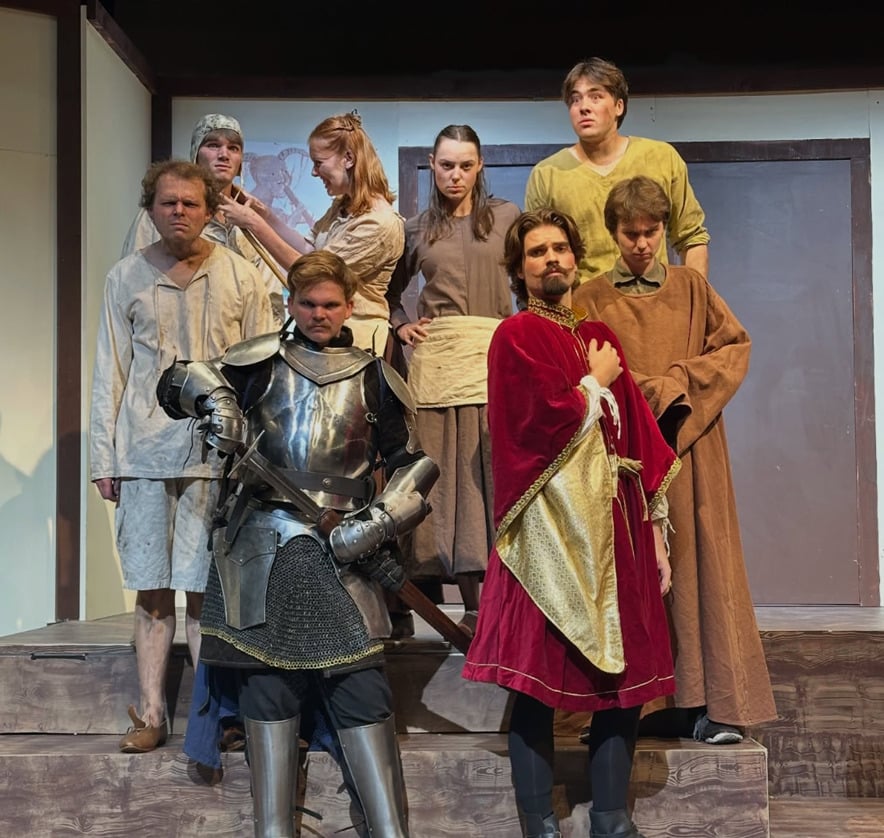
The Murder of Roger Ackroyd is a play with a large cast. There are fourteen characters played by thirteen people. The first act of the show was dialogue heavy and had me playing catchup with Who’s Who. By the intermission though, I had a grasp on the relationships between the characters. The layout and design of the program was one of the most gorgeous I have seen – well done to the graphic designer. There was a Murder Mystery Bingo page for fun, a list of Possible Suspects and their role, and a Suspects / Motives Evidence Board which helped consolidate the characters for me during the intermission.

The play centres on Dr. James Sheppard (Nathan Moss), a local doctor in the quaint English village of King’s Abbot. He narrates the events surrounding the startling murder of the affluent Roger Ackroyd. A neighbour, known to Dr Sheppard’s sister Caroline (Roslyn Hicks) for throwing marrow over the fence, is the renowned Belgian sleuth Hercule Poirot (Peter David Allison). The famous detective known for his sharp mind and methodical approach becomes entangled in this mystery, even though he is retired. Through clever questioning and careful observation, Poirot works to reveal the real story beneath the surface, interviewing possible suspects and employing his “little grey cells” as he likes to put it, to lead the audience in a suspense-filled classic play.


Director Ali Bendall had the daunting task of creating a set with many different locations, and she successfully brought them all to the stage clearly with the use of lighting (Lighting Design by Cian Byrne) props (including a real antique Dictaphone) and variations in using the whole front theatre space. The cast were dynamically moving, including below the stage, in front and to the sides of the audience. The effect of this surprisingly brought the audience close to the action and encompassed us, making us feel a part of the story. Ali was also the Sound Designer and the ominous, dark music during the scene changes added to the whole atmosphere of mystery and threatening going-ons.

The script had some very witty moments throughout the show. Peter shone as bow tie wearing Poirot, the character delivering many lines and play on words which had us laughing. “The game is afeet!” “Hercule Poirot knows!” Roslyn as Caroline, the village gossip, held the audience from the beginning, her cheeky confidence as she bantered with her brother about all the happenings in the village was very funny. She is forgiven when she says, “I don’t pry things out of people!” indignantly, and then proceeds to ask personal questions to another character, indeed prying! John Parker (Peter Hoekstra-Bass) played The Butler who found the murdered Roger Ackroyd. On request from Poirot, his re-enactment with Ackroyd’s niece Flora Ackroyd (Jen Manoogian) was played with great over-enthusiasm, so much so that I thought, “John Parker has just discovered what he wants to do after he finishes his employment as a butler – acting!”

The cast and their British accents were impressive. Combined with Susan Carveth’s costume design, they put just the right emphasis on reeling the audience in and making us wonder who amongst these group of people was responsible for Roger Ackroyd’s death. Particularly during the second act, the red herrings were scattered everywhere, clues were looked for by me, and this became part of the game. It’s typical of an Agatha Christie novel – twisty, sinister secrets revealed slowly, blackmail, with a great ending. I won’t spoil the whodunnit, but when you see this play, (and you definitely should!), look out for the murderer’s pace and delivery – kudos to that actor, and to the whole cast.

The Murder of Roger Ackroyd is playing 16 January – 28 February 2026 at the Genesian Theatre. 2B Gordon Street, Rozelle.
Run Time: 2 hours 30 minutes (including a 20-minute interval)
Tickets: www.genesiantheatre.com.au/events/the-murder-of-roger-ackroyd

To book tickets to The Murder of Roger Ackroyd, please visit https://genesiantheatre.com.au/events/the-murder-of-roger-ackroyd/.

Photographer: Anthony Burns

Spread the word on your favourite platform!

Those Life Changing Three Little Words – Elanora Players

Three Little Words

Three Little Words Rating

Click if you liked this article

1

Australian Playwright Joanna Murray-Smith’s choice of “Three Little Words” for a title about two couples’ friendship is an interesting one. Initially I assumed that those three little words alluded to “I Love You”. However by the end of the play I realised that those three little words could be interpreted as to whatever the audience thinks – and this was a very clever prelude to a witty script performed by four engaging actors from the Elanora Players.

Tess (Tracey Keene) and Curtis (Paul Sheldon) have invited their long-time besties for dinner on their 20-year anniversary. After reminiscing good naturedly about the many good times and the way they met, Tess and Curtis announce a bombshell in the form of three little words, “We’re Splitting Up”. Bonnie (Karen Oughtred) and her partner Annie (Chantal Harrison) are disbelieving and shocked. The shaking up of what they thought was an unbreakable bond between the four friends sets off a split between all of them, and we are witness to the devastation that unravels.

Tess wants to explore her own identity, apart from being a daughter, wife and mother and yearns for something other than domesticity. She is highly critical of Curtis’ occupation as a teacher (“overqualified and underpaid”) and is constantly irritated by her husband’s habits. Tess is a self-centred woman who desperately wants out of the marriage to see what she could evolve into. She believes that Curtis will be there for her afterward. Tracey portrayed Tess’ selfish character that was quite unlikeable very successfully to the audience.

Initially I found myself feeling sorry for downtrodden Curtis, with his gentle manner and complacency. However, his immediate behaviour following the separation sparks some controversy, as Paul effectively expands his character’s complexity by swiftly entering the dating scene to be with a significantly younger woman. His actions suggest that an amicable separation might be unlikely, and his pointed, hurtful remarks towards Tess diminish my sympathy for him.


The split is a catalyst for Annie, a masseuse and Bonnie, a high-end art dealer, to suddenly explore their own relationship. Bonnie’s warm and younger partner Annie, who feels Bonnie’s condescending words deeply, was played with a sweet, quiet strength by Chantal.

Karen’s character Bonnie had a mix of forthrightness and vulnerability. Kudos to Karen who held the stage with convincing conviction – Bonnie was a standout character to me.

There’s a recurring reference to and even a custody battle for Tess and Curtis’ tantalus, a wooden lockable stand, which holds whiskey and is inaccessible without a key, to keep it safe from children or from servants in the old days. This heirloom is a gentle representative of how Tess feels, alluding to the Greek myth of Tantalus, who was eternally tempted by food and water just out of reach.

Director Kerrie King’s set was simple and effective, showing two living rooms side by side, their own spaces represented and separated by the use of different coloured walls and furniture. Lighting designer Wayne Chee and Lighting Operator Thomas Van der Plaat highlighted the rooms and characters well, bringing attention to where it was needed. Sound Design and Operator Walter Opdam’s choice of music brought the right atmosphere to the play, especially with his choices of songs such as George Michael’s “Freedom” as Tess was dancing and singing on the couch, and a song I’d never heard about IKEA as Tess attempted (and failed) to put together something from IKEA, after boasting to her friends that she never wanted to have anything personal again!

“Three Little Words” is a portrait of the aftermath of a breakup, of how the dissolving of one couple’s marriage affects their friends unexpectantly. How the dynamics of situations change in ways that are unpredictable because we are human. It is certainly a thought-provoking play, but not a play that is completely sad. In parts yes, but this clever script was laden with so many light moments sprinkled in, delivered by the characters’ wry and quick dialogues which made me and the audience laugh often, and quite a lot!

I loved the Elanora Players’ production of Three Little Words! Perhaps those Three Little Words from the title may have been “I See You” or Annie’s wisdom of “It’s About Kindness”. Or maybe it is meant to mean something else altogether; the audience can make up their own minds and there is creative beauty leaving it like that.

“Three Little Words” run time: approximately 90 minutes, with a 20 minute interval
Jan 9 – Jan 17 2026 at North Narrabeen Community Centre, 2-10 Woorarra Avenue, North Narrabeen
www.elanoraplayers.com.au

To book tickets to Three Little Words, please visit https://elanoraplayers.com.au/.

Spread the word on your favourite platform!

Much Ado About Nothing

Much Ado About Nothing

Much Ado About Nothing Rating

Click if you liked this article

1

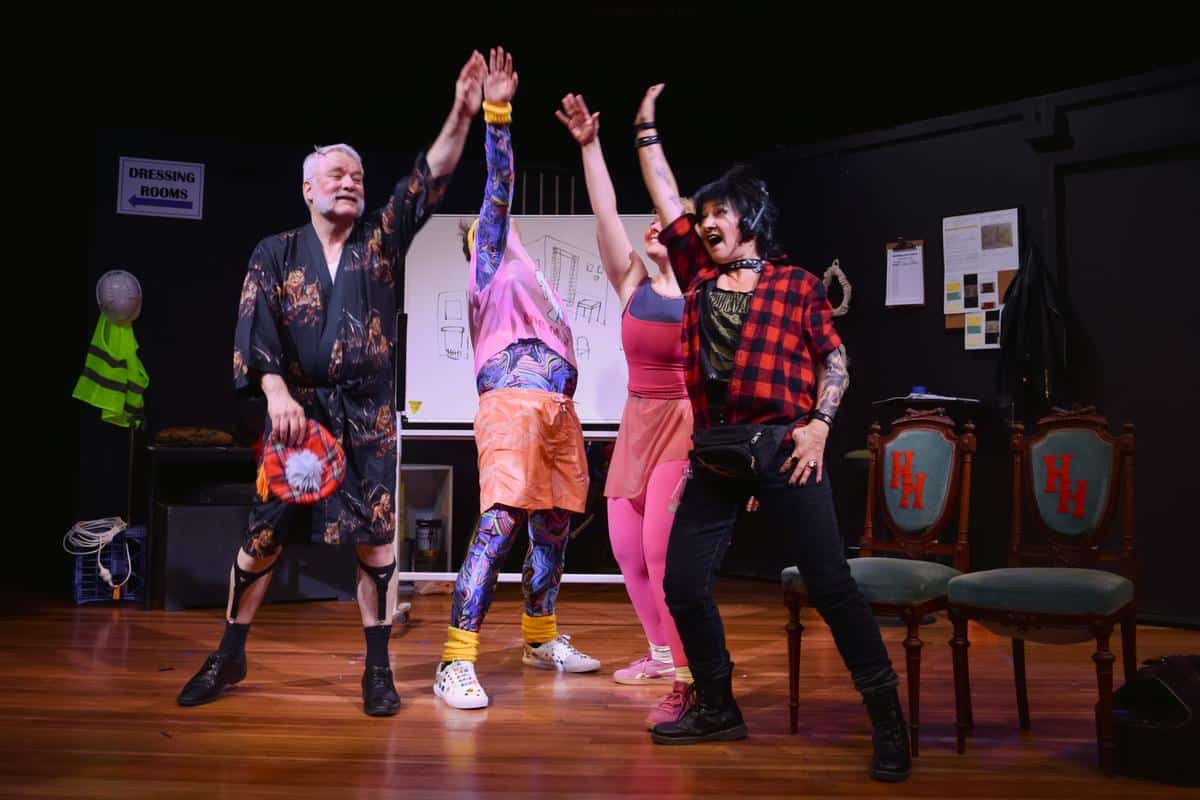
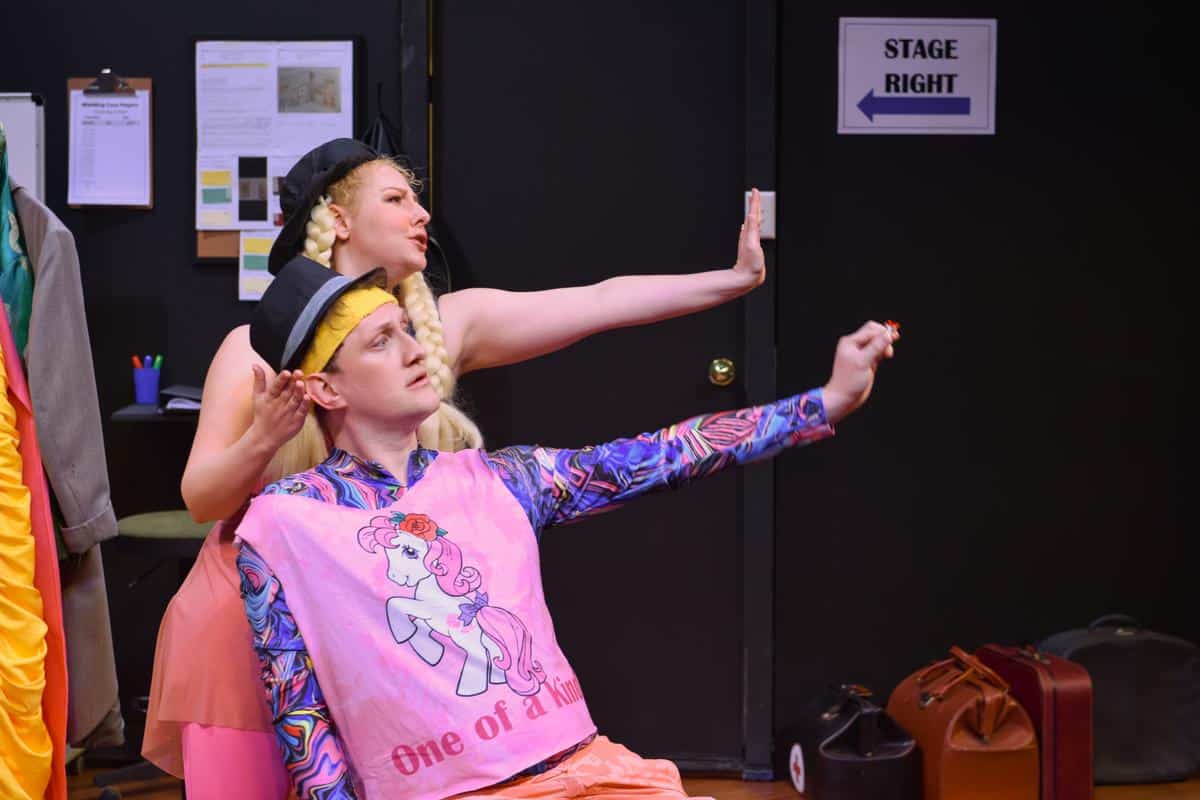
This Much Ado About Nothing is set on the South Coast in the week before Christmas, and the choice is not cosmetic. From the moment Don Pedro, Claudio and Benedick enter wheeling a battered esky, the world is established: this is a family gathering, loud, sunburnt, faintly daggy, and thick with history. The cicadas hum, So Fresh Summer Hits blare, and the audience—seated in the round, sometimes beside the actors themselves—is folded directly into the social fabric of the play.

The production leans into deliberate dagginess. Costumes are bright, mundane, occasionally ugly. The set is minimal: a Christmas tree, a party table, a CD player, tinsel slung over exits. Popular music and unpolished dancing create the feeling of a real holiday gathering rather than a theatrical abstraction. In a space this small, there is nowhere to hide—and the production knows it.

Theo Rule’s Benedick is an Australian bloke we recognise instantly. His loud vows of eternal bachelorhood are funny because they’re defensive, half-brag and half-shield. What makes the performance quietly impressive is the vulnerability Rule allows in. As Benedick overhears that Beatrice may love him, the change is gradual, almost reluctant. Armour loosens in stages. Pauses lengthen. Hope creeps in. By the time Benedick acts, his earnestness feels earned, not performative.

Madison Chippendale, who also directs the production, gives Beatrice a different kind of armour. Her wit reads as learned self-protection, shaped by disappointment rather than disdain. When she overhears Benedick’s supposed love, curiosity flickers—but caution holds the line. Her later demand that he prove himself lands not as cruelty but principle. That insistence becomes the moral spine of the play, aligning directly with Benedick’s decision to believe Hero when others will not.


Andrea Magpulong’s Hero emerges slowly, but when she speaks there is no ignoring her. That restraint makes the wedding scene genuinely shocking. In such close quarters, Claudio’s public shaming feels brutally intimate. James Papadakis plays Claudio as someone painfully familiar: good-natured, not too bright, easily led. His cruelty comes not from malice but weakness, which makes it harder to excuse.

James Yeargain’s doubling of Don Pedro and Don John is smartly executed, though the production’s trimmed structure means Don John’s plot is never fully resolved. This Much Ado prioritises emotional truth over narrative closure, and that trade-off is visible.

The true heart of the production lies in the Beatrice and Benedick scenes. Calling it “chemistry” is inadequate. What plays is collision—two guarded people meeting at force. Love doesn’t bloom here; it crashes.

There is something quietly principled in these choices. Shakespeare did not write for high culture; he wrote for crowded rooms, for people eating, drinking, laughing, and sometimes being cruel to one another. Chippendale’s direction understands this instinctively. By embracing the familiar — the bad taste, the pop music, the awkward dancing, the Christmas rituals everyone recognises — the play is returned to its natural habitat. In this exposed, communal space, the language doesn’t arrive as something precious, but as something overheard. And that is where it belongs.

To book tickets to Much Ado About Nothing, please visit https://www.trybooking.com/events/landing/1493684.

Photographer: Jamie Simmons

Spread the word on your favourite platform!

Opera For The Uninformed: In The Presence of Light

In The Presence of Light

In The Presence of Light Rating

Click if you liked this article

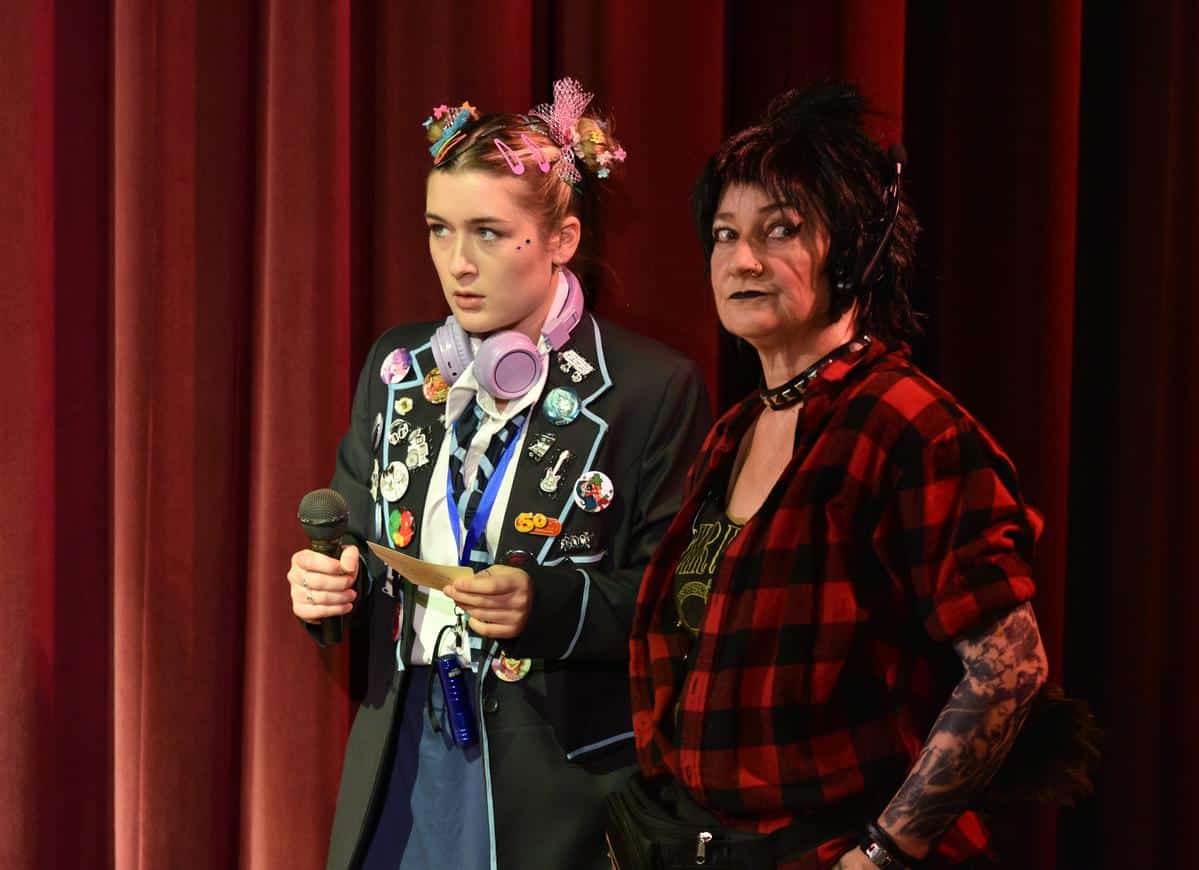
There’s something rather intimate about being invited to a dress rehearsal of a show. The creatives are milling around you buzzing in nervous excitement. The show is still in bits and pieces on the floor, not yet solid. The world they’ve created is in its teenagehood — not infant in its conceptualism, but not yet fully grown. You feel much like a wildlife photographer, sitting, observing, noticing, but still distinctly on the outside; our presence as critics is both cruelly invasive and fundamentally necessary. In The Presence of Light was my first dress rehearsal invitation, and it offered me entirely new parts of the critic’s experience. Principally, I got to feel how the show was actively coming together around me, and I got to ask a little about what I was walking into.

Spark Sanders-Robinson, creative-lead and the only live speaking (and singing) voice says, when I confess to her I have no experience writing for opera, that this experience is “opera for the uninformed” — that is, it is an operatic experience for those who don’t want to be spoken down to, but instead connected with. She tells me the experience is a deliberation of love, an exploration of what it is in its truest form, instead it being trapped within the bonds of the human experience.

“It’s about death,” she says, then, when Mia Rashid, their dancer prompts, “is it about death?” she responds, “no. It’s about love.” I am, admittedly, prepared for the experience to be completely incomprehensible after this conversation. I have never been so glad to be proven right.

We are tucked into the M2 Gallery in Surry Hills — an itty bitty space, unconventional, echoey, with what almost looks like a frame surrounding the elevated platform this team is using as a stage. The “stage” is bare, ‘cept for a white sheet at the back. Robinson wears a flowy, airy, blue wrap dress — which, with Rashid’s simple white tulle, almost shapeless dress, creates an eerie dreamlike atmosphere, allowing them to become one with the space around them. The space itself is generally unsupportive, and I look up to the ceiling to see what they will do with lighting, because there’s certainly no view-blocking from-home lights milling about. On the floor, there sits a singular projector, surrounded by indistinguishable frames I don’t yet understand. Nathaniel Kong joins us in the room, sits behind the piano.

I ask, upon finding out that Robinson and Rashid will be the only two interacting on stage: “is it a two-hander?” Robinson responds, “kinda a two-hander. Unless you count the piano as a third character.”

We begin.

Recorded responses from what must be over ten or fifteen people fill the room with their overlapping responses, talking about what it is that they love. Although each answer is interesting and beautiful, we cannot catch a single one as they become jumbled and chaotic. Robinson takes the stage and the glow of her projector light snaps on as she begins to talk to the audience (me and their photographer, mind you) about what she defines as love. Or rather, how difficult she finds love to define. She leaves us on a rumination about the use of defining it at all, and the lights go out. Rashid replaces her on stage, taking us through the first of many classical pieces of music in the show. Her movements are wide and grounded, translating the impossible hugeness of love, what it is as a force of nature. Then, as she connects to its fragility and its grief, they go miniscule and wineglass-thin in turn.

Robinson is generally well-known for her use and manipulation of light, no different in this production. Indeed, what makes this light work so interesting across Robinson’s catalogue is the matter in which it interacts with itself, as well as the people on stage. As Rashid becomes something more human, she catches and releases the light in her hand, and love goes from being something that possesses and consumes her, to something akin to hope, a slight glimmer. Different frames of colour over the projector take us from softer yellows, to bright, high-contrast whites that throw sharp, dangerous shadows behind Robinson. Then, as our dancer rejoins us, she is bathed in a pink light that makes her almost inhuman. It is at this moment I understand the deliberation about the piano. Kong and Rashid seem to not just legitimately communicate, but have entire conversations through the call and response of music and dance. Later, when Robinson’s mezzo-soprano rings out through the almost-empty room, I remember this relationship in its more traditional form as the opera and the orchestra interact, representing entire sections through these two individuals.


As a production, I cannot tell you that there was an overlapping narrative to this piece. Rather, it functioned as a series of images, more performance art or a film sequence than a piece of theatre. In one moment, shadow puppets creep over the projector, two faces in profile, then meet in the middle for a kiss. Rashid collapses in between them, bathed in, yet shadowed by their love. To that point, the piece doesn’t attempt to ask or answer something, it invites you to feel the full scope of an emotive experience in all its beauty and wickedness. The performers are all viscerally facing something through their chosen art form, and the size of the space as well as the passion of their performances makes the whole experience incredibly intimate. In Rashid’s rare moments of pause, we can hear the heaving of her breath. In between Robinson’s clear notes, we can feel the sound still bouncing around the room. The body-ness of it all provides us with the raw erotic lens of their conversation.

In a technique I’ve certainly never seen before, a glass bowl is placed over the projector, and Robinson and Rashid take turns dripping water, oil, and ink into it, throwing curling and whispering colour across the stage, bleeding and changing the light. As both performers are in white or almost-white, these moments of colours stain not just the background, but them as well. In one particularly effective moment, an explosion of purples appear across Robinson’s body on stage, as ink is dripped into the centre of the bowl.

In many ways, our fourth character is the continued reappearance of the voices. Although jumbled and confusing through the beginning, they spread out and become clearer. We listen to them talk about their lived experience of love, of grief, of heartbreak, of redemption, of life. This tether of realism affirms the path of images we tiptoe through, as well as providing an edge of human vulnerability to the piece that can sometimes escape a performer.

Although I was invited to the dress rehearsal, I must briefly play the part of the wicked critic and remind the world that no art can be perfect. Indeed, the performance as a whole was brilliant, and my only moments of nitpicking are as follows. Robinson, despite being an incredible mezzo-soprano and having strong monologues, has moments of struggling to sit in her body and relaxing. This, when compared with how viscerally one must be in their body as a dancer, is thrown into rather sharp contrast next to Rashid. Further, each of the three performers had moments of sneaking worried glances at one another, which although can be understood as working through the anxieties and uncertainties of dress rehearsal, manifested as drops in concentration through the show. However, other than this, I truly cannot fault anything else. The light work was inspired and beautifully done; Robinson’s performance both as an actor and a singer was beautiful;, Rashid took my breath away as a dancer; and Kong brought old music to new light through his work on the piano. The last moments of the show, a Joni Mitchell cover, floated through the more conceptual work of the rest of the piece and touched base with the audience, giving us a tether to hold onto even as the stage swan with an iris of pink spinning light.

In a topic so broad and difficult to fathom such as love, sometimes connecting to the conceptual and visual serves the explorative process more than the grounded and naturalistic ever could. In The Presence of Light shows its audience that the emotional experience is not a logical one, but a visual and physical one, and if we can embrace letting go of our need to understand, we, ironically, come much closer to knowing what that emotion truly is. The team, in this tucked away gallery, have in a way presented something that matched my early anxieties of being incomprehensible. But then, can’t we say the same thing about love itself?

To book tickets to In The Presence of Light , please visit https://www.lightsontheatre.com/.

Photographer: Samuel Herriman

Spread the word on your favourite platform!