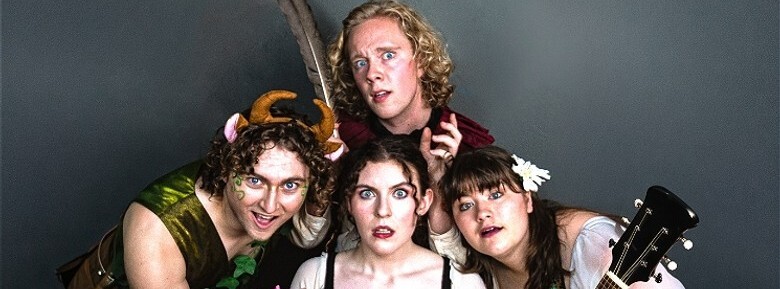
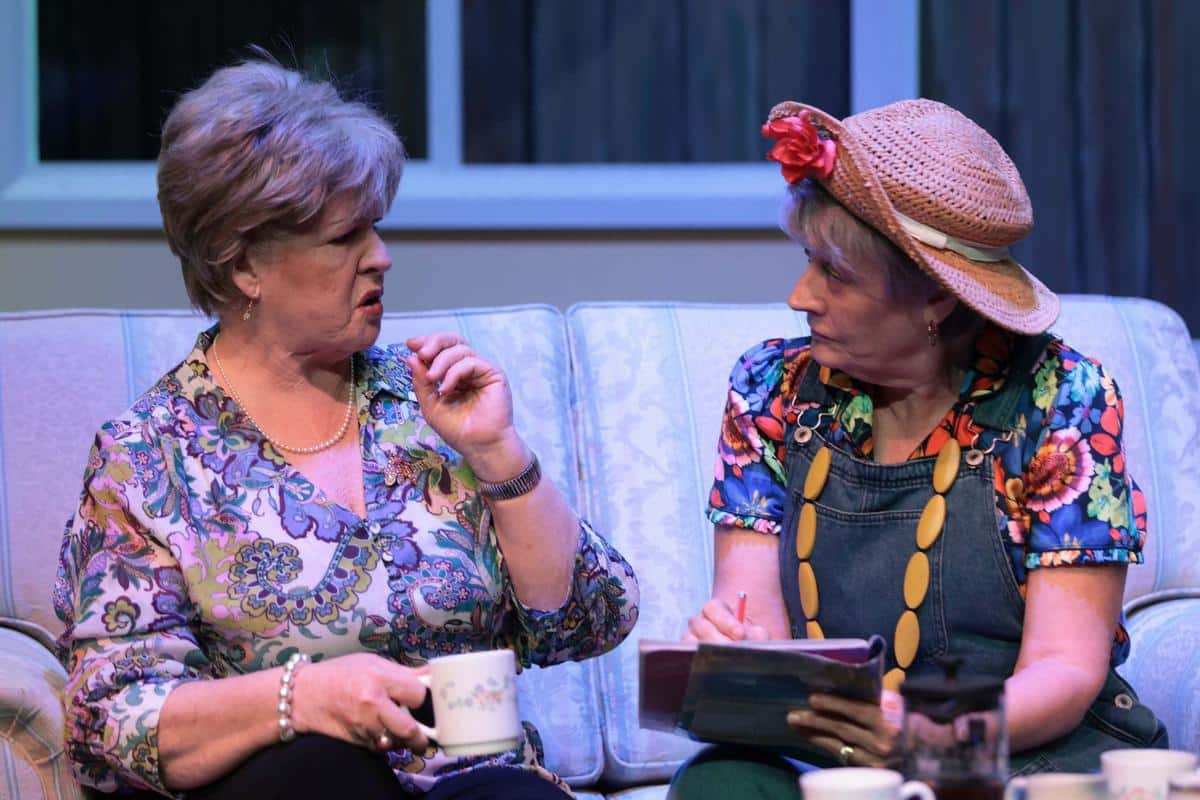
Shakespeare left his wife the “second best bed” in his will, and for four centuries that one line has been most of what history remembers about Anne Hathaway. Mae McCubbin, a RAW Comedy finalist, has taken that famous slight and turned it into Second Best Bed. It’s a warm and very funny new Australian musical about grief, legacy and the indignity of being a footnote in someone else’s story.
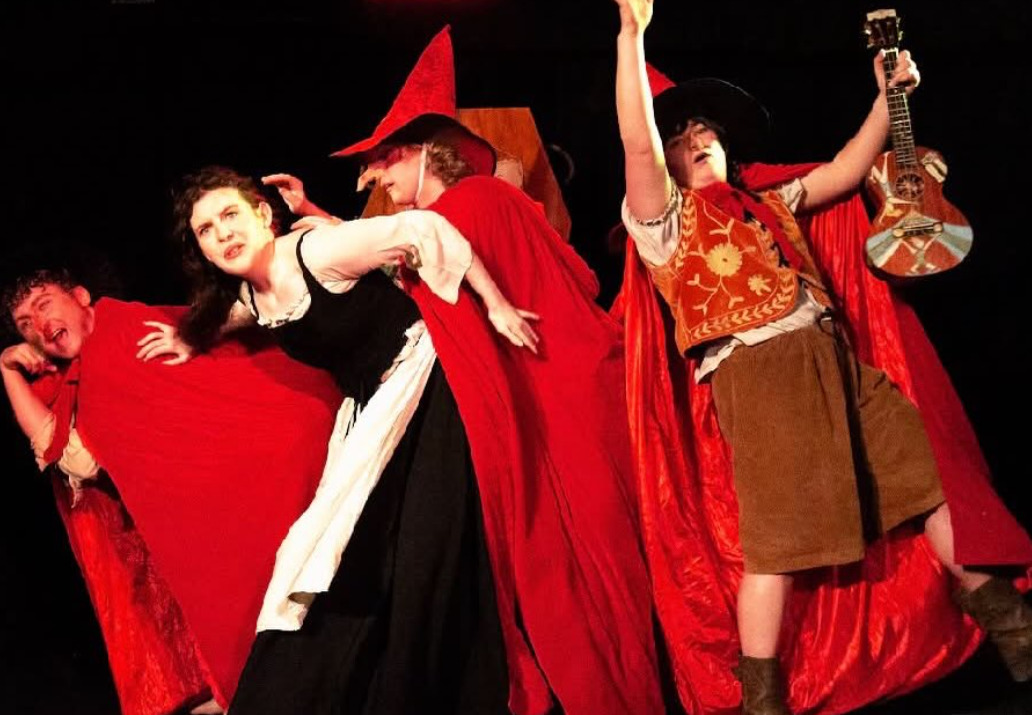
The premise is delightfully absurd. Newly widowed Anne is still reeling when Shakespeare’s most famous creations start dropping in uninvited, from mischievous fairies to chaotic witches, to guide her through the five stages of grief. Along the way, she begins to suspect her husband saved his best emotional work for iambic pentameter rather than their marriage.
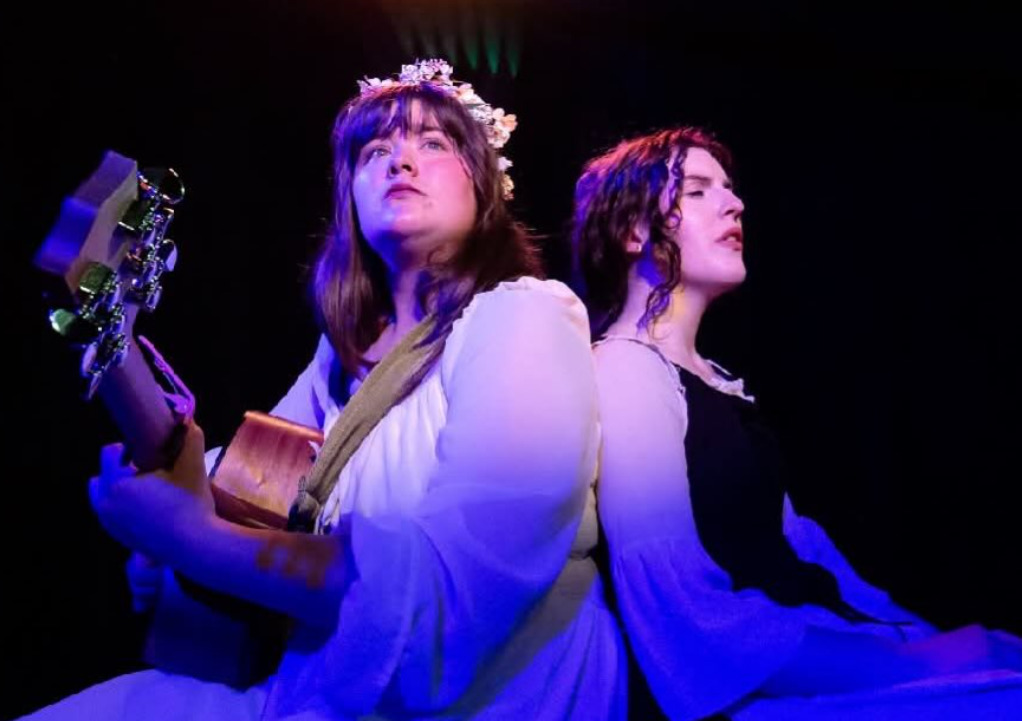
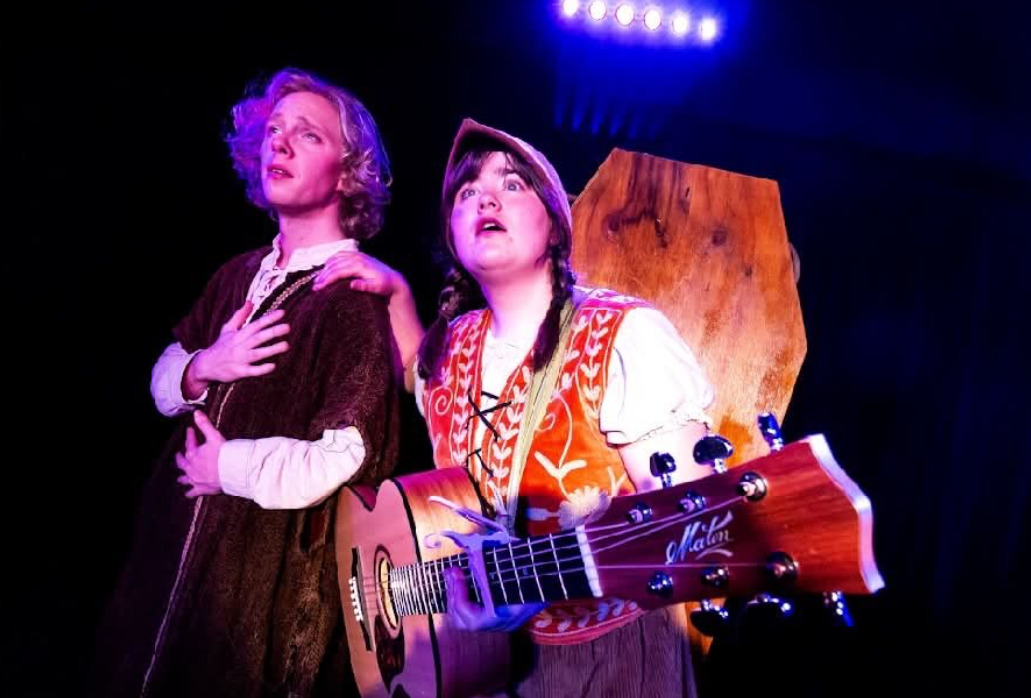
The music is the real triumph here. McCubbin’s songs are bright, catchy and upbeat, the kind you find yourself humming on the walk home, and the cast layers them with gorgeous harmonies. Live music adds to the charm, with one performer moving between boys’ and women’s roles while also playing ukulele and guitar on stage.
The ensemble works beautifully together. They play off each other with obvious delight and happily mug for the audience, which suits the show’s cheeky energy. Beneath the fun sits a sharp feminist question about how Shakespeare treated the women he wrote. He loved to play with gender, yet Desdemona dies at her husband’s hands, Juliet takes her own life, Ophelia drowns, and Kate in The Taming of the Shrew ends up tamed. The show also has a playful go at the longstanding theory that Shakespeare loved men as well as women. These ideas arrive with a light touch, so the laughs keep coming while the point still lands.
The venue is part of the pleasure. The Motley Bauhaus Cabaret Stage shows Melbourne’s independent theatre scene at its best: a small, cosy room where you sit close enough to feel part of Anne’s world. That intimacy makes the comedy sharper and the tender moments hit harder.
Second Best Bed is cute, clever and generous with its jokes. It’s a fun way to spend an hour, and it’s well worth a night out in Carlton before the season wraps on 21 November. You’ll laugh a lot, and you may even wish you’d paid more attention in Year 10 English.
Second Best Bed Motley Bauhaus Cabaret Stage, 118 Elgin Street, Carlton Thursday 19 November, 8:30pm Saturday 21 November, 6pm
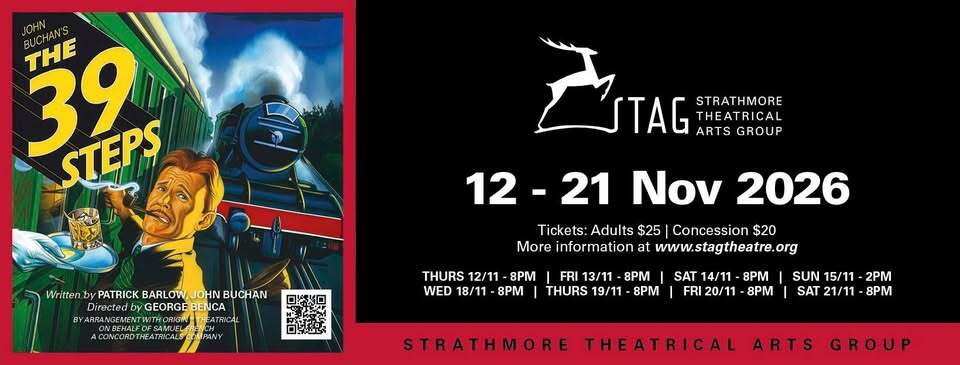
Coming to the end of another fabulous 2026 season for STAG is the 1930’s play The 39 Steps. A fast-paced, hilarious, spoof-heavy, suspenseful spy thriller. Blending Hitchcockian tropes, absurdist Python-isms, and the deliciously evil dashings of James Bond villainery. And on opening night, The 39 Steps pulled out all the stops. From the get-go, it took the audience on a fast-paced ride of round-the-world intrigue, featuring a satirical plot, laugh-out-loud silliness and farcical adventures.
Based on Scottish writer John Buchan’s hit 1915 spy adventure novel, (an immediate commercial and critical hit of that time),The 39 Steps, historically speaking, cleared the benchmark for the beginnings of the spy-tale genre we know of today. It became a 5-book series, and then, in 1935, was loosely adapted by Alfred Hitchcock (his 20th feature film) which was not only declared by the British Film Institute ‘as the fourth greatest British film of all time,’ but cemented Hitchcock's international reputation as well. It was then adapted multiple times for radio, most famously by Orson Welles's Mercury Theatre in 1938, alongside later film and TV versions.
But by 1995, a thrilling stage adaptation of The 39 Steps was devised by Simon Corble and Nobby Dimon. And finally, in 2005, rewritten by Patrick Barlow, it premiered at the West Yorkshire Playhouse before enjoying long-running successes in the West End and on Broadway.
And for good reason.
The 39 Steps follows Richard Hannay, a world-weary, well-travelled 37-year old British gentleman, who returns to London in 1935 after roaming the world and living in Canada. Filled with a tremendous sense of boredom, he decides to go to the London Palladium in the West End to attend a night at the theatre, to seek some much-needed thrills n’ spills.
His wishes come to pass, when he comes into contact with a mysterious woman, Annabella Schmidt, who seats herself next to him. Gunshots are fired and panic breaks out. Annabella then acts fearful and convinces Hannay to let her come home with him. Once they arrive at his flat, she admits that she fired the shots herself as a diversion. She then explains that she is a secret agent being pursued by assassins who are trying to steal vital British military secrets. This is how Hannay unknowingly gets dragged into a chaotic case: of international espionage.
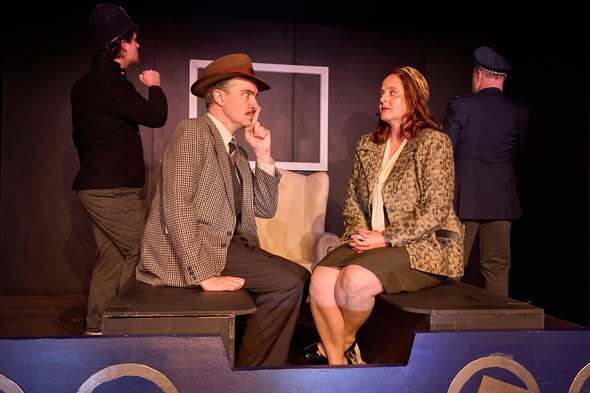
As they drink scotch back at Richard’s West End apartment, and things start to get cosy, Annabella returns with a knife literally stuck in her back. Quickly, she informs him that the foreign spy ring is called "The 39 Steps". Before she collapses and dies, she leaves him a clue alluding to a contact and a location in Scotland called ‘Alt-na-Shellach’, and warns him that a master spy resides there. As she dies on top of him, Richard finds himself the prime suspect - painted as a murderer, and thus, becomes an accidental fugitive on the run, taking the audience on a spy-filled adventure aboard the Flying Scotsman Train up to the Scottish Highlands, on a mission to find this international enemy, save England and thus clear his name. All this, while evading both the police and international agents on every corner who fail to capture him, with hilarious results.
On this pursuit through the highlands of Scotland, he finds himself encountering an array of absurdist Scottish characters, somehow being able to escape their evil clutches. All the while, trying to discover the meaning of the 39 Steps, and stop this evil faction from destroying the world.
But in between this adventurous rogue-ish romp? Lies intrigue. There are romantic entanglements thrown in. Hilarious unforgettable characters, including bizarre innkeepers, entertaining prop playfulness thanks to the brilliant direction by George Benca that literally stop-the-show with uncontrollable laughter, and the truly evil spy-dom that would much satisfy the inner James Bond fan in all of us.
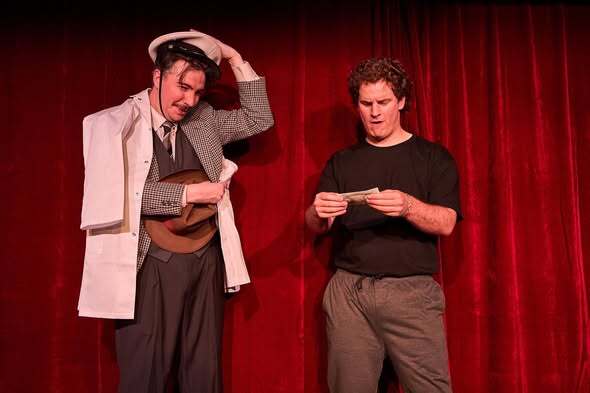
The cast is equally brilliant in this clever masterpiece, many of whom take on a variety of clown roles with classic fluidity, and with gusto. Drew Mason as Clown 3 plays the Sheriff in Scotland convincingly and with a great American drawl, just as he enthusiastically plays a West End variety host at the London Palladium, a mischievous thug, and an ‘overly-excitable’ Monty-esque train inspector.
Oscar Mikic, as Clown 4, doubles in many roles and is suited to the hapless Benny Hill-style British comedy club, if there ever was one. He embodied a plethora of the absurd, including the unforgettable portrayal of humanoid Mr. Memory, a radio announcer with a particular crush, a member of the British police in full Monty-garb, and a humorous lampoon-y Scottish Highlands inspector alongside the sheriff.
Jack Lees, a truly committed actor as Clown 2, was also simply a joy to watch. Understanding the need to morph into larger-than-life satirical characterisation from the get-go. From his arrival as a imposing thug wielding a baton, to a married salesman with a particular fetish for ladies undergarments, to a ghoulish evil spy bringing the house down with a five-minute dramatic death sequence, with ‘Palin-like prowess.’
In this piece, the actresses also took centre-stage, and were the perfect fodder for their male counterparts. Del Jordan was enigmatic and playful as Annabella Schmidt, and equally hilarious as a human fireplace prop that spoke. Sarah Deering as Mrs Higgins & Mrs Jordan played the roles of ‘Bates-like’ sinister housekeeper and evil chatelaine to perfection, as she did attempting to blow a tiny Scottish ‘bagpipe’ while holding an Edinburgh sign at the train station, to the delight of the audience. Kirsten Hennessey as Pamela, had great chemistry with Richard Hannay, her leading man, matching his physicality and wills to great depth.
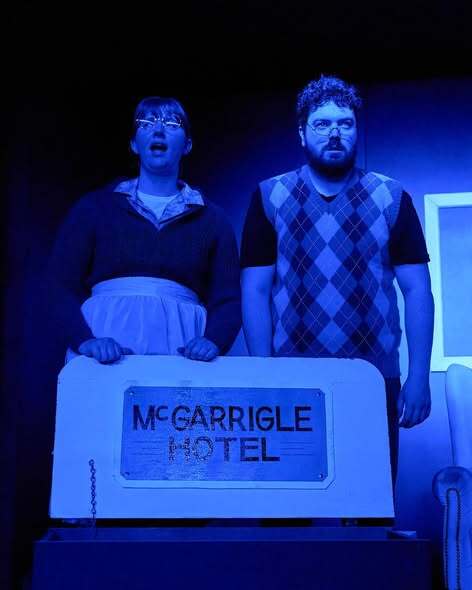
But Kirsty Taylor as Margaret & Mrs McGarrigle? Had that quality of a great British comedienne. Playing ‘quietly-oppressed’ churchy Glaswegian character Margaret with a deadpan mousy energy, to the extremely funny ‘pepperpot-voiced’ Mrs McGarrigle, a classic female Monty Python archetype - sent the audience into absolute stitches.
The lead actor and narrator, Richard Hannay, played by Sean Paisley Collins, carried the show with confidence, cultivated wit, and clever quips. His depiction of a benign brit on-the-run outwitting danger from the authorities time and again was equally hilarious as it was brazen. His sly cheekiness and love of adventure worked beautifully with his onstage entanglements, appearing playful yet comfortably alone, even while handcuffed: set in his ways as a seasoned strait-laced bachelor in an unpredictable world.
But Broderick McDonald? Was by far my favourite of the bunch. As Clown 1, he played his roles to precision. His versatility shone. His ability to rapidly switch between characters and adopt a range of accents in split-second comic changes was impressive to say the least. He paired well with other actors in scenes as he did on his own, and committed wholeheartedly to the process of veering from British stereotypical sketch comedy into leering, scruffy Scottish loonery. From a British lingerie salesman wearing ladies underpants on his head, to reciting church-going hymns as a Scottish highland madman, to slithering across the stage as a drunk-as-a-skunk detective, Broderick McDonald is the one to watch when it comes to comedy gold.
The slapstick direction by George Benca kept the audience in fits of giggles. In particular, his clever use of props being thrust upon the stage as cinematic staging, allowing them to not only actively drive the story forward; but to add stylised theatrical trickery to The 39 Steps.
My favourites included a bubble gun machine used for the train and airplane smoke, and to depict foggy weather; the airplane props being held by two actors to depict spy planes in flight, the 1930’s wall telephone being thrust out for the actors to pick up and answer, the stuffed lambs that are brought onstage that block the enemies’ get-away car, and the surreptitious way that various members of the cast come onstage to create a huge prop - like the Flying Scotsman Train for example, as if they are in a play-within-a-play.
Very python-esque, n’est-ce-pas?
If you are looking for a historically-minded mystery show that is full of jocular banter, satirical wit and parody-like stylisation, smack dab in the genre of espionage-driven spy films, then The 39 Steps is definitely the show for you to indulge in this week.
The 39 Steps is playing from the 12th - 21st November 2026 at the Strathmore Theatrical Arts Group in Strathmore.
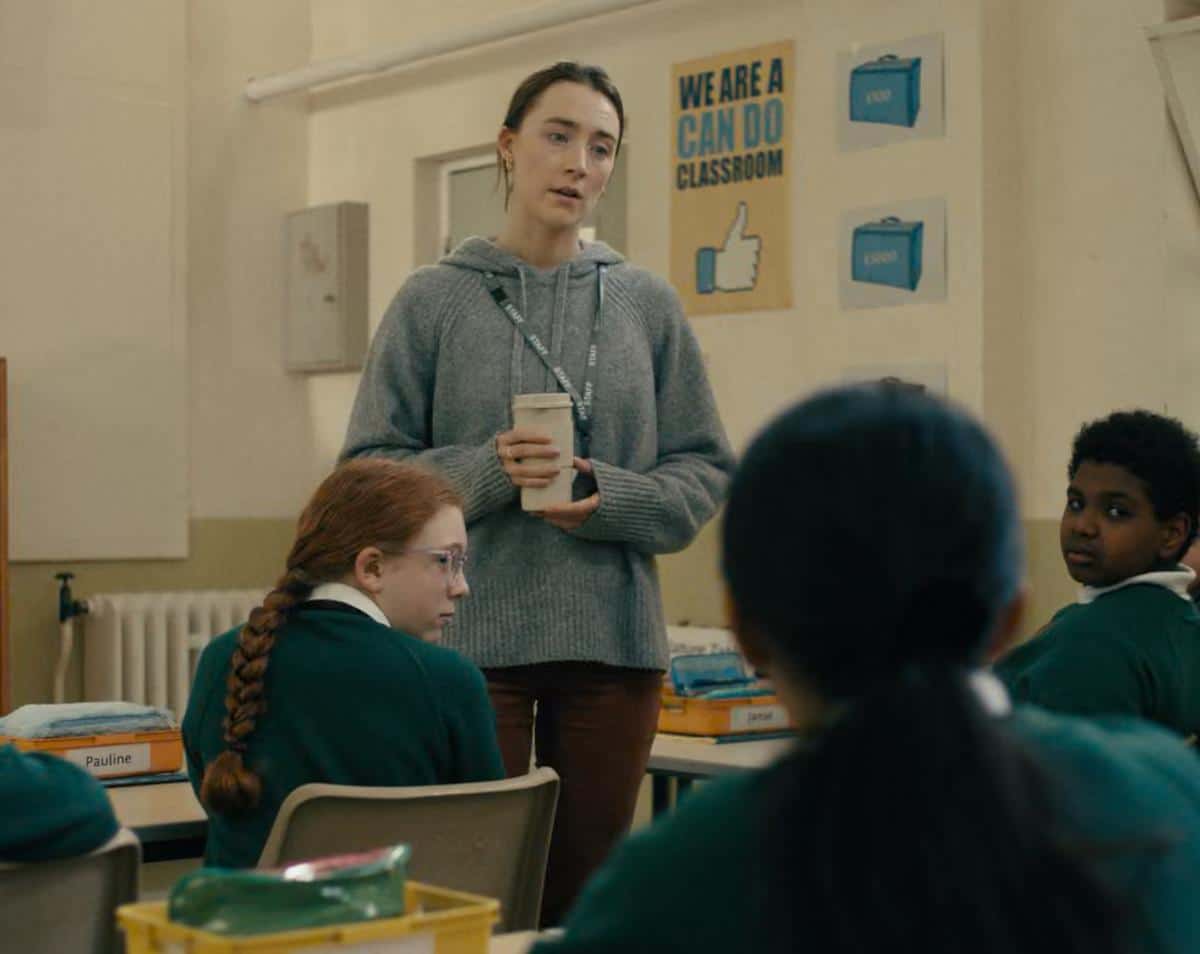
In a West Country town in Somerset, England, lies the Ashton Brook Primary School. From the outside, it seems like any other upstanding educational institution. The teachers are set at a high-standard. The children wear uniforms. There is nobility in singing the school anthem.
But, for primary school teacher Maria Spencer, something is simmering internally. An unwavering pressure that seems to have no solution in sight.
The problem? Her irate and unruly student, Danny. He disrupts her classroom constantly. He picks fights with other children. He can’t be trusted on fields trips. He even throws a fellow pupil down the stairs. And somehow, the pressure of keeping control of Danny always falls into Maria’s hands, with no support from the school’s administration. Even the principal wants to wipe her hands of it.
To make matters worse? Maria’s formal school evaluation is scheduled for the following day. If Danny is there in the classroom, she knows she will look incompetent.
So, in a moment of deep desperation, Maria takes this matter into her own hands.
She tries to speak with Danny’s father. She is again rebuffed. Sensing parental neglect, she then finds Danny nearby, angrily smashing cars. After having to restrain him from bashing her car, he falls unconscious. Fearful of the consequences of having hurt a pupil, Maria quickly herds Danny into the backseat of her car, and brings him safely to her home, where she lives alone.
And this is where this dark comedy thriller becomes truly interesting.
Well-meaning Maria Spencer? Well, she does the unthinkable. She locks Danny in her basement, so he is absent in the classroom during her appraisal.
And, as she had surmised, things go swimmingly well for her. She takes control of her classroom. She can actually do her job without distractions. And the children begin to respect her. She not only gets an outstanding result, but her whole life is starting to improve - all while kidnapping Danny and secretly keeping him under lock and key in her basement.
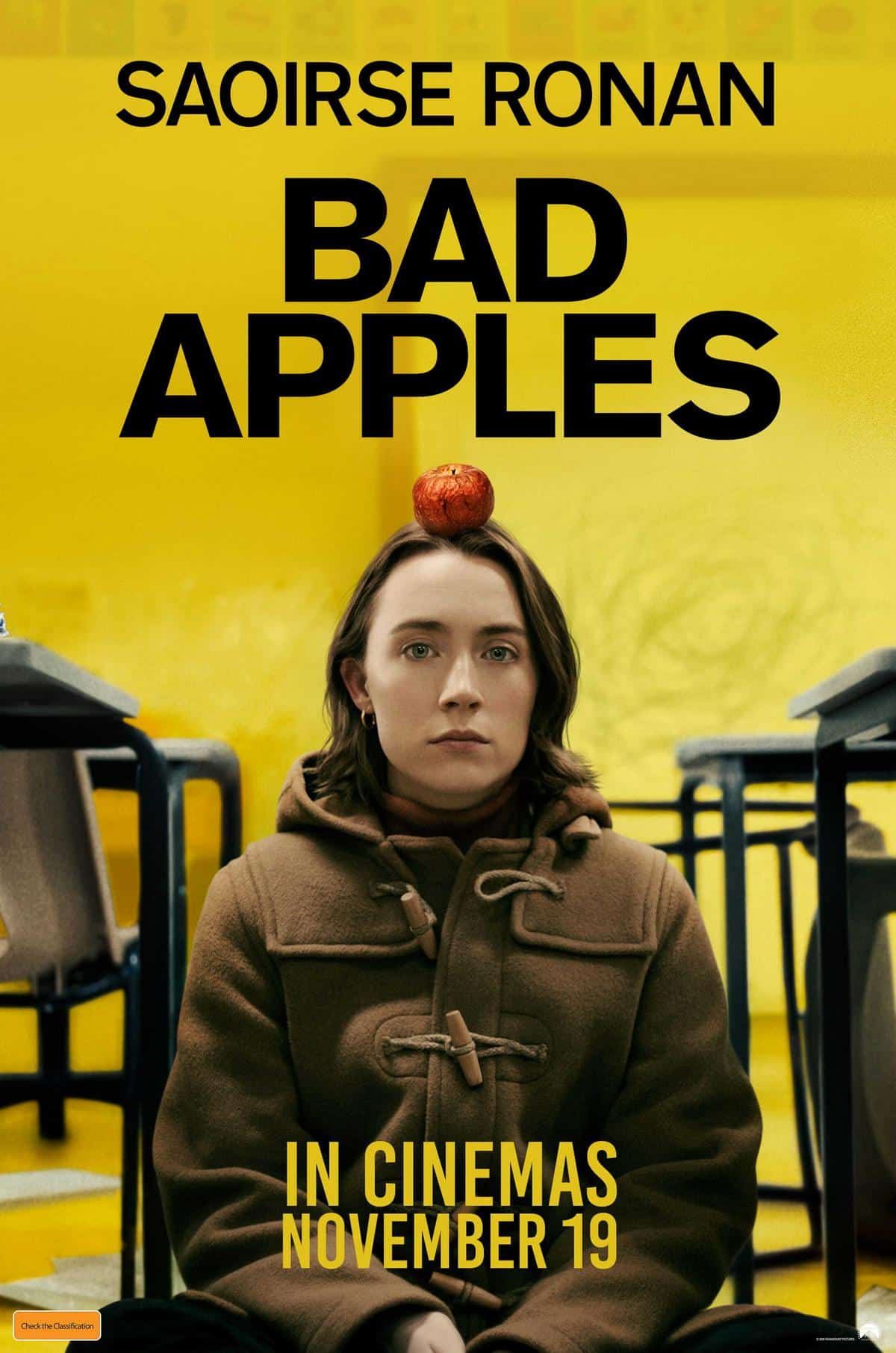
This is such an interesting story that is not only packed with dark comedy, but that plays with visual metaphors. Like the constant meaning of the rotten, bad apple.
That if it appears in an orchard, it has the power to ruin the whole bushel.
How one bad decision has the power to root out and spread further decay in its aftermath.
And moreover; how the dark and sinister behaviour of ‘every man for himself’ can sometimes spiral and twist itself, to surprising and thrilling consequences.
This film is based on the Swedish novel ‘De Oönskade’, by author Rasmus Lindgren. It’s not only a tale of the modern struggles of the teaching profession, and the complexities surrounding community educational systems; but about the moral dilemma of its central character, Maria Spencer, and her constant need to be in control of something in her life. In this case? It’s of the system that is sadly, constantly betraying her.
This film, directed by fellow Swede Jonatan Etzler, is part dark comedy, part satire, and contain a myriad of dark Swedish cinema tropes.
A clean, saccharine-like parental community, desperate to hide a secret that could undermine their lives. Even if it means letting one wayward child pay the price.
Wicked human behaviour? Is cleverly depicted through static, poker-faced mannerisms, typically used when trying to keep sinister secrets, and to bring out the more satirical moments of irony in this film.
The environment of this film? Is hostile and gloomy. There is thunder constantly brewing. Lashings of rain. Loud noises and banging. Ominous music foreshadowing the darkness within, especially amongst the main characters in this film.
Academy Award nominee Saoirse Ronan is wonderfully astute as the artful dodger Maria, whose character arc moves from a level of a hapless and desperate teacher, to a shrewd and slick champion of deception.
Eddie Walker, as disruptive pupil Danny, has the perfect look of a stunted child, having fallen into the cracks of a broken system, a train-wreck of outdated belief systems unable to help him. He blends embittered anger with an underlying well of pity and vulnerability; that makes his performance all the more believable.
But the twisted role of little Pauline, excellently played by Nia Brown, cleverly hijacks the film in the most delicious of ways, particularly when singing her schools anthem with ‘dark lyrics’ while playing the keyboard at the parents/teacher meeting. A truer-than-true Boomtown Rat’s ‘I Don’t Like Mondays’ crescendo-peaking grab. A true cinematic delight for the mind-bending enthusiasts in the audience.
In all, Bad Apples, in all its irony, is a turbulent, suspenseful, see-saw ride of how twisted moments, however selfish, can sometimes provide even better outcomes. How the well-meaning seeds we may plant in our own orchard of life? May result in the greatest evolution: even within ourselves.
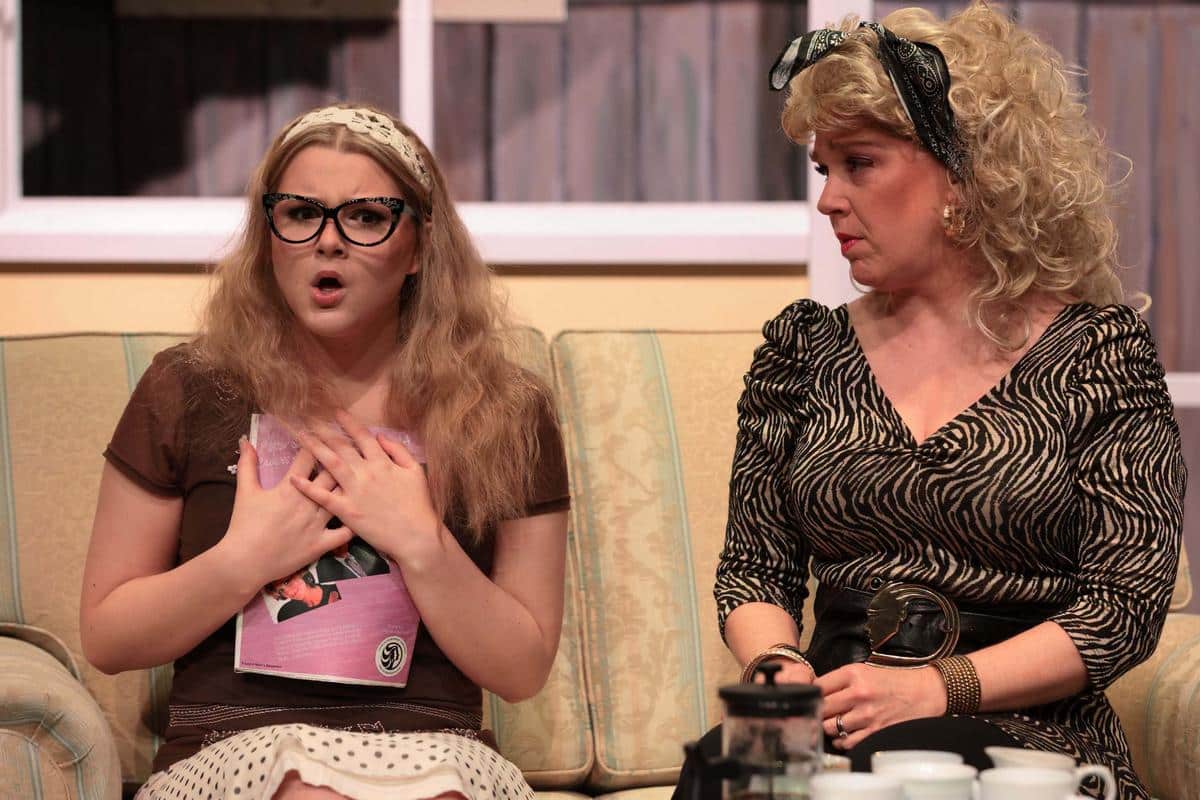
In 1985, in a fictional town called Chinquapin Parish, in Northwestern Louisiana, lies an at-home beauty salon owned by Truvy Jones, a happy-go-lucky local hairdresser. She’s young-at-heart, loves the local gossip, and makes women feel loved and cared for in her company.
But this tiny mecca is far more than the sum of its parts. For in this beauty nook, Truvy weaves together a circle of strong, sassy Southern women to gather, connect and socialise.
Women called Steel Magnolias.
In honour of Dolly Parton, who starred as Truvy in the film version of Steel Magnolias in 1989, Encore Theatre Company is proud to present its latest instalment, in an equally nookish theatrette at the Clayton Community Centre.
Where, inside, we are invited into a world of southern hospitality, starting with a gorgeous set design by Susan and Peter Rundle.
The show opens our senses into a bright and colourful space full of nostalgic hair and beauty posters, with a yellow, mint green, pink and turquoise colour scheme, much like a candy shop. Bold on the outside, and sweet and sugary on the inside.
In the first scene, Truvy is teaching Annelle Dupuy, a new employee and hairdressing student, the ins-and-outs of her hair and beauty biz. It is Saturday. A busy day to come. Annelle is nervous. We also learn she is a newcomer to town and seems quite sketchy about revealing facts about her personal life.
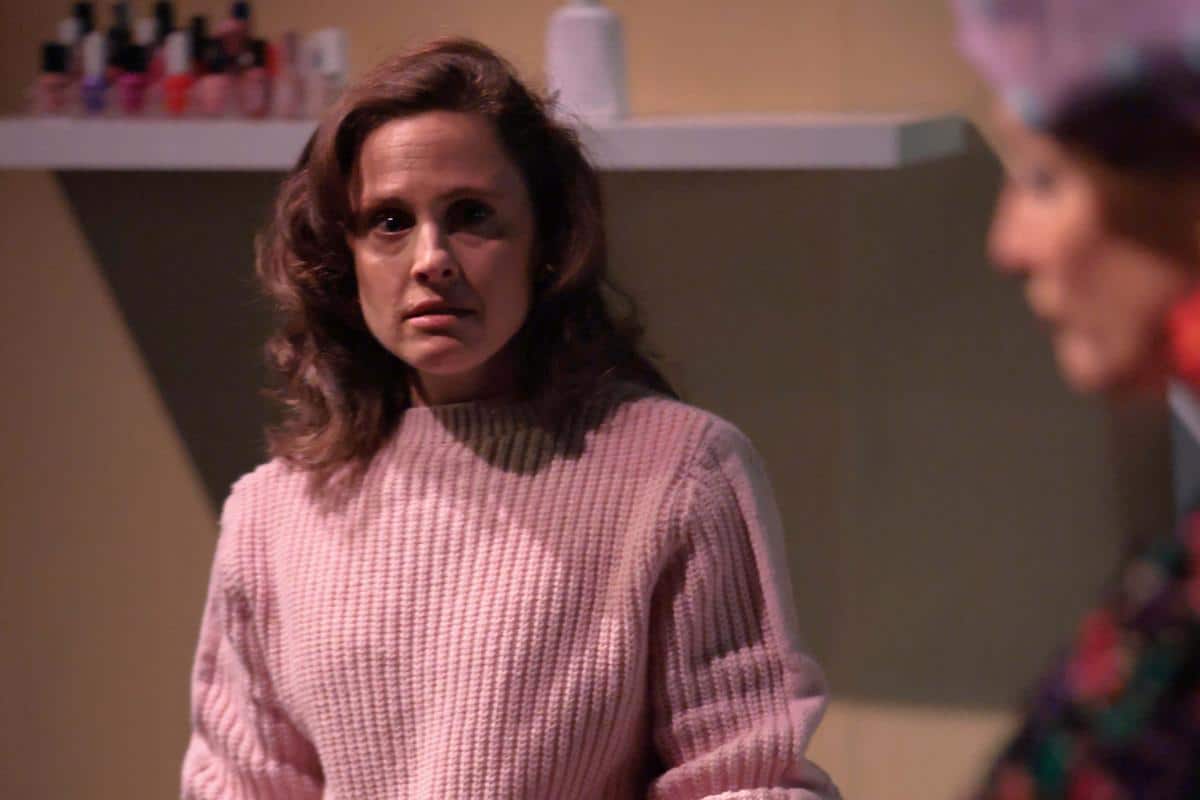
Then in walks Clairee Belcher, known as the town’s wealthy socialite. Then Shelby Eatenton, a young 20-something nurse who is getting married, and her sensitive mum M’Lynn, who’s a tad overprotective of her. Then, to round off the women, a human windstorm comes through the sliding door. It’s Ouiser Boudreaux, the old town crow, carrying on and complaining about well, just about everything in her life.
But one thing they can all rely on? Is each other, in good times and in bad.
Speaking of which; we learn that all is not as rosy as it seems. Shelby has Type 1 diabetes, and wants nothing more than to be a mum, but is told that her body is weak and cannot withstand a pregnancy. To prove this point, we are witness to her going into hypoglycaemic shock at the salon, as Truvy is styling her hair. She recovers, but this sparks a warning about her future health. A compelling thread of fear her mother M’Lynn carries throughout the duration of this production.
This show is about the strong friendships these women have with each other, through thick and thin. Through the light and the dark. As such; the six ladies in this cast are all brilliant in their own ways and portray their roles well, thanks to the wonderful direction by Susan Rundle.
Kirsty Hall brings Truvy’s joviality to life, and knows how to delicately balance humour with a great dose of realism. She seemed so natural in this role, and carried this show beautifully from start to finish with great aplomb.
Molly Spencer, as delightful, young Annelle, is instinctually clever in how she embodies this role. In every scene, she commits to every hilarious character moment, yet adapts her role with a great deal of sensitivity. Knowing exactly when to pace, pause, and finally, when to raise the stakes for greater laughs.
Lisa Upson, a late addition to the cast, shines as Clairee. Bringing the exact mix of steely strength, warm sarcasm, and an unwavering will that is required in this role. She is not only believable; but fiercely forthright, and brimming with class.
Glenda May is an absolute delight playing Ouiser, bringing the energy of a shrewish older lady to the fore; yet making her an absolute gem, encased in comedy gold.
Justine Garnes perfectly personifies her role as Shelby, exuding the essence needed to portray a steely Southern Belle. Charming and soft; yet unwaveringly strong. She is a joy to watch.
And finally, Gabby Llewelyn as M’Lynn is the absolute heart of this show, taking us through a roller coaster ride filled with the spectrum of motherly love. She takes ownership of her own emotional wheel - to drive home the experience of a Southern mother in crisis, with soft wings and nerves of steel.
In all, this production of Steel Magnolias was simply beautiful and heartfelt. The cast was superb and I would highly recommend it for a great night out.