
When the Healers Need Healing: A Tender Journey Through Trauma and Memory

The Memory Mirror

The Memory Mirror Rating

★★★★★

Click if you liked this article

8

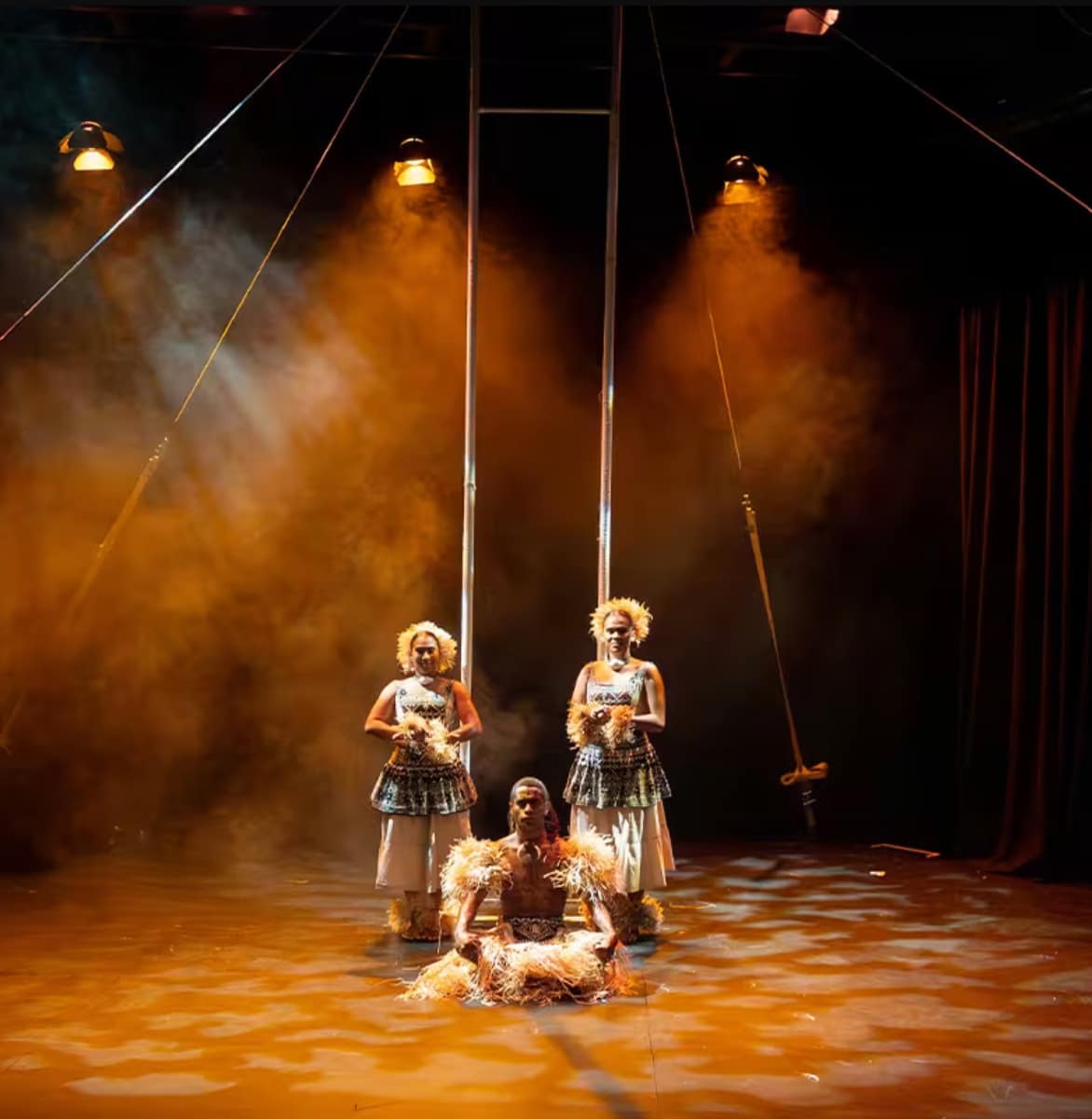
As I sit in my seat, a wave of tranquility fills my soul. I am transported to a place that feels rustic, with dry leaves scattered across the ground, basked in dreamy orange and blue light. Two walls on either side of the stage are layered in natural calico material and sage detailing, setting a countrified scene, with a gorgeous outline of trees peaking through. Teamed with light country music playing in the background, I immerse myself in nature’s sounds, save for a blue emergency light, that flashes on and off to my right.

The location? The lush landscape of the Blue Mountains, at a Mind, Body, Spirit festival, a yearly celebration, where a close-knit mountain community gather together to celebrate their traditional merrymaking.

To start, we are introduced to Banjo, the old town larrikin, who draws us in with his humour and entertaining antics. Dressed as a town jester, he promotes the festival’s mystical magic to all and sundry, even us, the audience, are made to clap and participate to become part of the town’s supportive populace. Where we feel the love and support of an entire community.

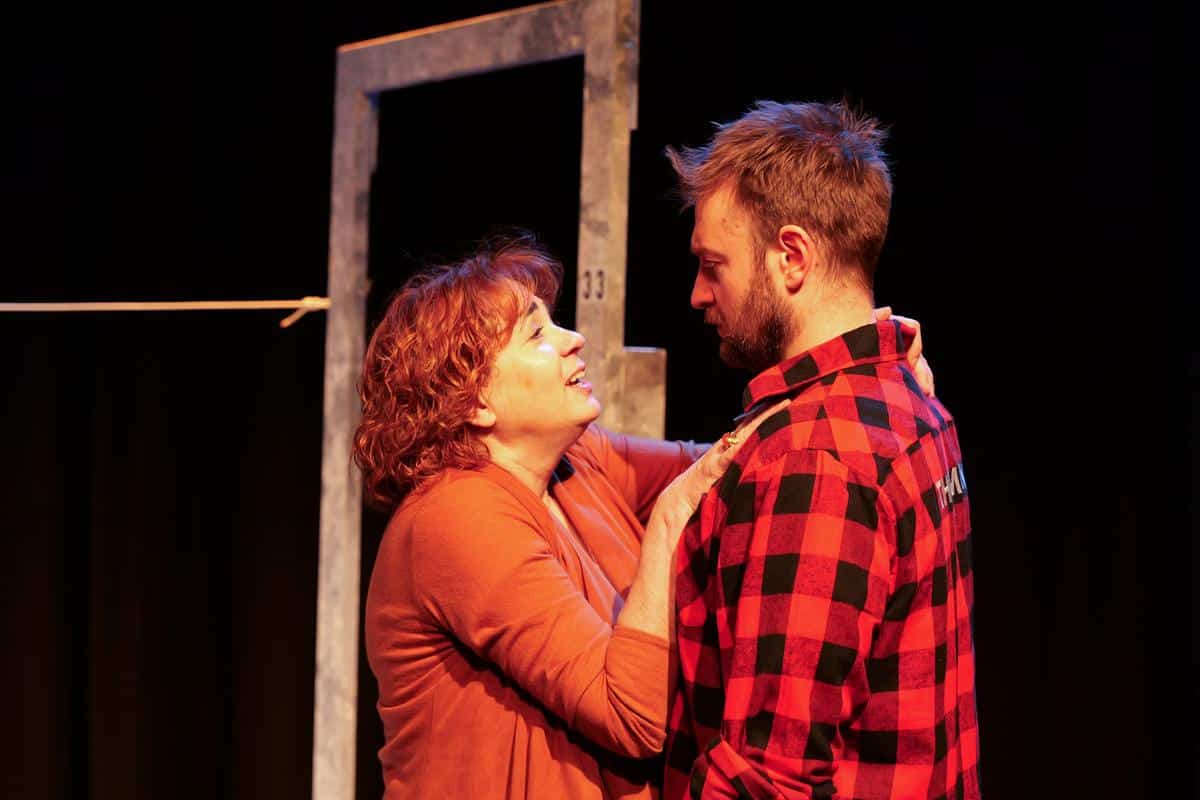
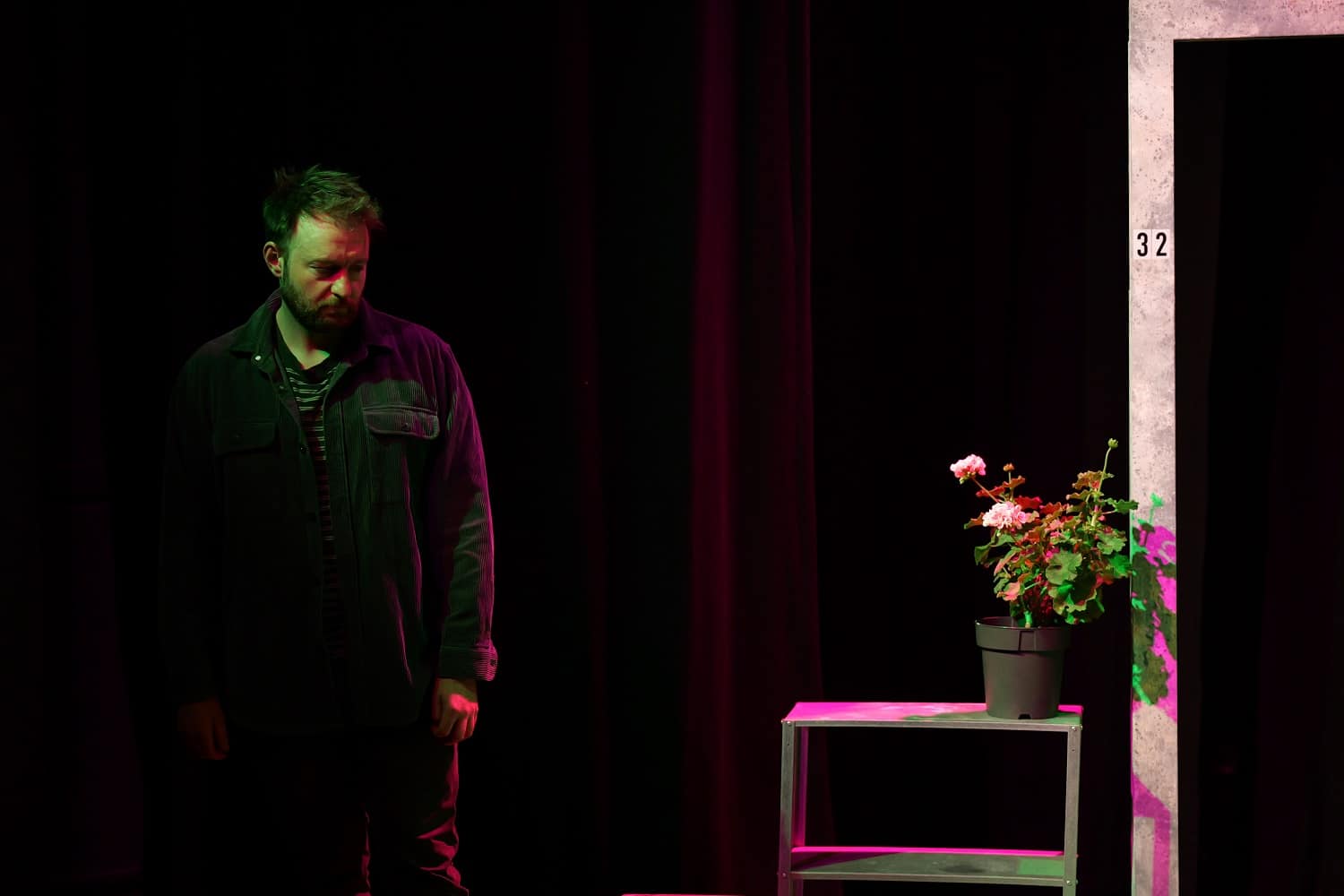
Yet, under all the ribbing and light-hearted silliness, lies Daniel – the protagonist, a local paramedic who is at his wit’s end, living in survival mode. Years of workplace trauma have taken their toll. He has given years of support to others, but has pent up emotions, clouded judgements and personal demons sitting on his psyche from the past that even he knows he has no more control over.

By a stroke of good fortune, a pair of beloved black cockatoos perched on a branch, Huggin (meaning ‘thought’) and Muggin (meaning ‘memory’), who usually face each other, symbolising balance, are suddenly out of synch. For Muggin is seen by Daniel, to be facing the other direction, away from Huggin. To Daniel and the rest of the townsfolk, this signifies a heavy omen, a mystical plea for help that sets of a chain of events in motion. Yet, it sends Daniel on his own unexpected hero’s journey to healing his inner demons. A vault of his long-buried memories starts to crack open, revealing fragments of trauma he had experienced in the past, down to a specific memory that he sought to erase, which he had spent a lifetime avoiding, and suffering in the process.


In dedicating his life to saving others, this play poses the ultimate universal question regarding these ‘angels on earth’. Who is there to pick up the pieces when they themselves are struggling with trauma and need support?

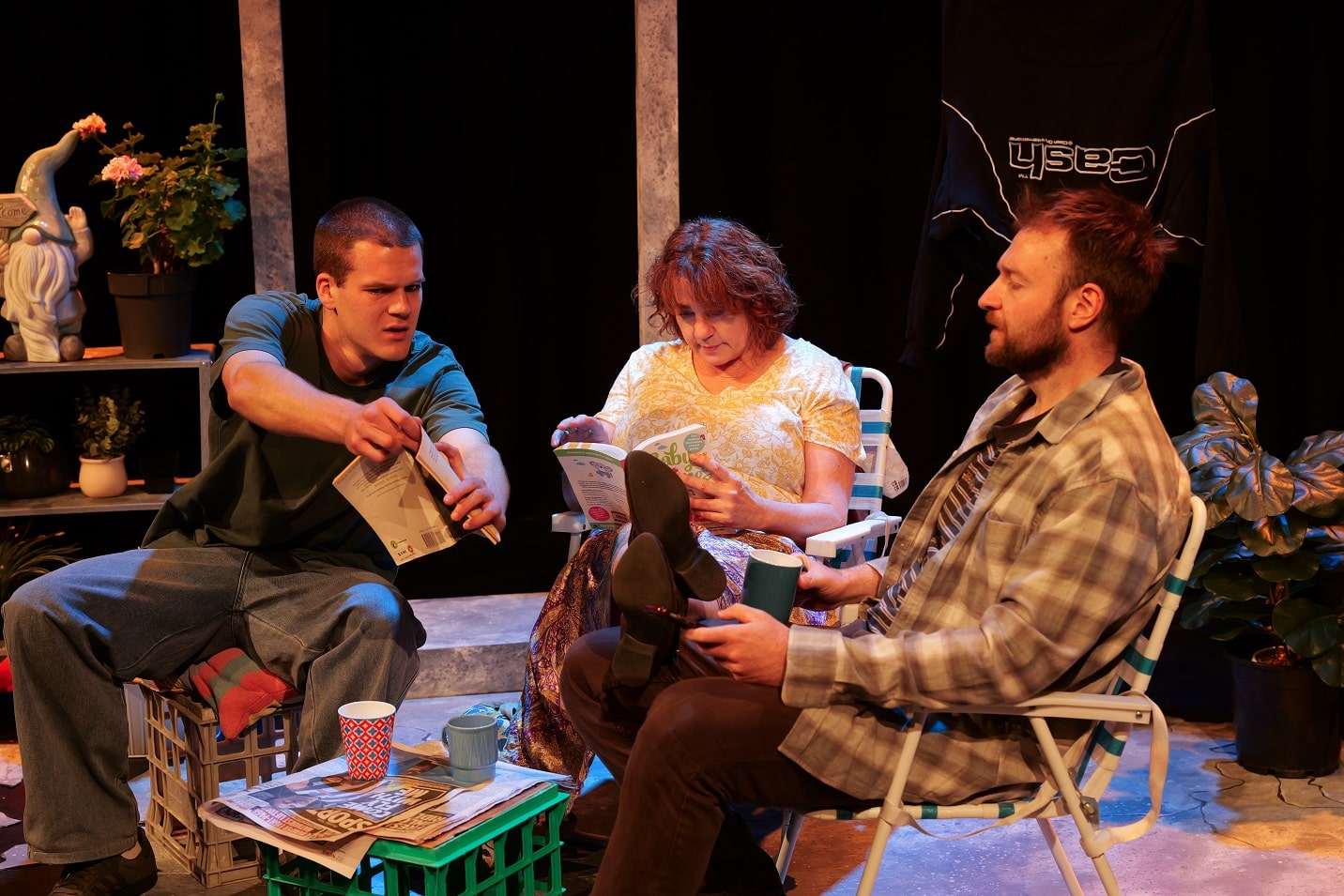
The answer in this show, is in the healing power of the community they keep. Under the superb direction of Drew Tingwell, this production is brought to life by an extraordinary cast of Australian stage and screen actors who are simply superb.

Notably, Don Bridges as Banjo is the show’s charismatic and eccentric welcome wagon, inviting us into a warm, whimsical mountain environment of open acceptance, with his rogue-ish antics and quick-witted, hilarious timing.

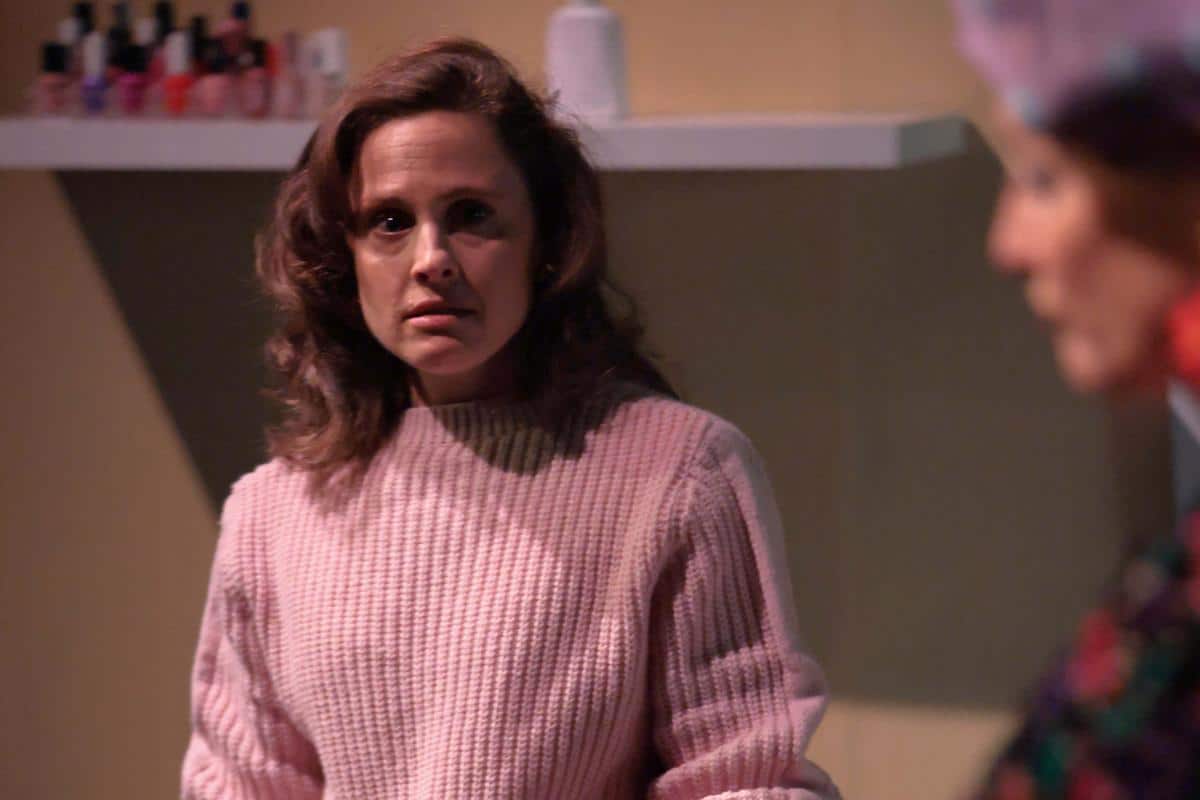
Gabriel Partington, as Daniel, brims with breathtaking emotion throughout the show, perfectly exemplifying the complex roller coaster ride of how suppressed trauma can infiltrate the mind, body and soul. For every nuance, every layer, every physical choice, was flawlessly played, and no doubt, an award-worthy, challenging role to master.

But Margot Knight, simply shines as Mrs. Munro, a wife and mother who balances her life’s complexities with admiration and courage – dedicating her life to her husband and community. Only an actress of her calibre can combine underlying, unimaginable grief with a majestic presence that shines from the inside-out, that invites an audience into her soul so seamlessly and so unapologetically – to feel her character’s unspoken burdens: a journey through the darkness back into the light.

Themes of trauma and the enigma around memory are woven brilliantly throughout this tender work, with flashbacks, memory competitions, and a mythical mirror thrown in, that when looked into, a repressed memory starts to appear. Written and conceived by award-winning playwright Georgina Luck, this world premiere struck me as a beautiful piece of heart-felt theatre that caters to all age groups, and defines the full spectrum of the human experience: including humour, grief, ageing and stress, and how our bodies and minds learn to (rightly or wrongly) adapt and survive through these difficult life transitions.

This show is a must-see for those who believe in something more than what they view in front of them. It is a story of how life can indeed rebalance itself; not by virtue of struggling alone, but with the power of a village behind us. To walk us on through, and bring us back to life.

To book tickets to The Memory Mirror, please visit https://events.humanitix.com/the-memory-mirror.

Spread the word on your favourite platform!

Turning Pain Into Power: The Radical Hope of How To Eat Rabbit

How To Eat Rabbit

How To Eat Rabbit Rating

★★★★★

Click if you liked this article

2

The world is coming to an end. Life feels inconceivably unfair and beyond your control. So how would you choose to cope?

Would you adopt ‘a survival of the fittest’ mentality? Would you suffer in silence? Or would you fall into despair in a constant state of lack?

In a bid to connect Australian audiences with human compassion and understanding, playwright Jamila Main excites us with her new production, ‘How To Eat Rabbit’, as part of La Mama’s Hope Punk Climate Festival.

In this independent dark comedy, we come upon a dystopian world suffering from climate change, where two friends, Alex and Cam, decide to bunk together in a burrow. There, they try to persist beneath a world that is literally caving in on them, inch by inch, and metre by metre.

Promising to keep one another safe and sane, they tackle their situation head-on – creating innovative ways to keep to a sound routine. The counting and recounting of tins of beans, stacking them in curious little piles all over the stage: like magical sandcastles. Handpainting pleasurable scenes on the walls of the cave. Daily training activities on repeat to keep boredom at bay. Frequent food and supply runs to keep their health intact.


As time rolls on, the atmosphere intensifies, for we are only human after all. A power struggle between the pair. Alex, wonderfully played by Nory Gretz, the more dominant of the pair, takes comfort in controlling the nest, while Cam, seamlessly portrayed by Jamila Main herself, is struggling to physically keep up, desperately hiding a secret about her health – internally collapsing to keep Alex comfortable.

In truth, this show is extremely spontaneous, confronting and radically shocking; depicting desperate, irrational behaviour at the hands of quiet desperation. Keeping us riveted from the get-go – even spotlighting the script onto the back wall of the stage – to not only guide the audience, but to digest and immerse us into the lived experience of these two characters.

But what is most impressive about this show? Is its revolutionary purpose beyond climate change. For Jamila Main is truly on a crusade – to make theatre a platform for greater understanding. For Main, theatre is more than a stage: it is the foundation of community. Where one can share personal struggles via inventive storytelling.

That we can still persevere despite the challenges one faces in life. That we can turn pain into power: with a courageous war cry, every single day.

To book tickets to How To Eat Rabbit, please visit https://www.lamama.com.au/whats-on/la-mama-hope-punk-climate-festival/how-to-eat-rabbit.

Photographer: Darren Gill

Spread the word on your favourite platform!

Savages: Drama Below The Decks

Savages

Savages Rating

★★★★★

Click if you liked this article

2

When a dramatically-drawn stage, set impressively as a stark deck of a cruise ship is cast in blue lighting, with unnerving music pounding from the speakers, I know I have arrived immediately in an undercurrent of something I can’t quite put my finger on. A backward feeling descending on my conscience; that once this cruise ship sets sail, there is nowhere I can escape from.

For this feeling of unbreathable submersion is Patricia Cornelius’ brilliant reimagined work, Savages, a play about four men immersed in tight mate-ship, climbing aboard a cruise and leaving their worries behind – heading off on ‘a holiday of a lifetime’, not yet knowing how their yearning for liberation will slowly spill out of control and descend into a night of chaos.

Thirteen years after this play originally took the stage, the decision to cast this show with women and non-binary people takes this piece to a whole other level, particularly where we currently sit with toxic masculinity and misogyny. How, in 2026, we still hear of men, particularly those ranking in high positions, still feeling entitled to disrespect women. How women still have to be guarded, even on cruise ships. Where there may lie a toxic breeding ground of expectation, ire, and unfathomable disrespect when it comes to our gender.

To examine the seemingly complex wiring of savage behaviour in 2026, Cornelius and the show’s director, Kitan Petkovski, thought to cast four incredibly agile women and non-binary actors, who symbolically leave their identities behind at the dock. Who immediately transform into four male characters with great humour, precise physicalities, and emotional complexities; exposing how underneath bravado and immoral behaviour, may lie simmering undercurrents of sadness and depression. Keen to liberate themselves from these emotional waves, these men continue to fight their way through: choosing pure self-satisfaction over what is morally right.


The cast all do a brilliant job of taking on their individual roles. Nicci Wilks is the humorous pick of choice, playing Runt with great comedic timing, delivering the performance of an Aussie bloke with a growl and groan, giving as much as he gets.

But AYA, delivers the level of acting not seen in years. Conveying the despicable character such as Rabbit is no easy feat, and AYA takes it to an expansive level – blending low-brow waywardness with complex pathos and vulnerability. For AYA is the epitome of what I would define as a gifted vessel, for any trued-and-true storyteller.

The set and lighting, both designed by Bianca Pardo and Harrie Hogan respectively, is novel and innovative. Minimal, clean, and with very few props, this set is paired beautifully with the tones of light weaving in and out through the show – symbolising a ‘sea of emotions’, setting the tone of each character’s mood— spotlighting the colour blue for sadness and depressive thoughts; red for anger and aggression; and even the colour pink, celebrating women.

The key to great writing, especially in the case of Patricia Cornelius, is in the simplicity of her language, how so few words can mean so much. How, in much of the play, it sounded sung, like poetry. A call to arms perhaps, in light of what women are still struggling with.

Thankfully, by its rousing end, we see beams of pink light shining through the cracks of toxic culture, a stark vision of hope – in highlighting the vulnerabilities all genders share. That sometimes they can rule our lives in the most harmful of ways. That only time will tell – when old ideas of women will disappear and re-emerge triumphantly. Where entitled misogyny will be a thing of the past.

To book tickets to Savages, please visit https://www.theatreworks.org.au/2026/savages.

Photographer: Pia Johnson

Spread the word on your favourite platform!

Between A Judge And Jury: A Company Of Twelve

12 Angry Actors

12 Angry Actors Rating

★★★★★

Click if you liked this article

5

From the moment I sit down, the minimal stage is set. A table and some chairs on one side, as well as on the other. Blaring music ensues, demanding attention. Anticipation. One does not know quite what to expect, so we sit in silence, waiting—for some serious action to take place.

And then, one by one, the actors emerge onstage. We, the audience, become voyeurs of an audition scene taking place at a local theatre group, where the actors jauntily greet one another and are excited about their upcoming show.

But little do they know, that 5 days from opening night, their eagerness will soon turn sour by some incriminating news about their fellow castmate. The show’s leading man named Matthew, who has a very tainted past.

And here is where the moral dilemma begins amongst the company of 12. Should one choose to stay and perform alongside this offending man? Or does one just carry on, as if the past has never happened? As judgement rears its ugly head, a wedge begins to form between the cast, and slowly, each actor reveals their thoughts and reasoning behind their decision to stay or go.


There are raw, powerful themes in this production involving the darkness of human behaviour, trauma, discrimination and the real-life moral ethics behind the criminal justice system when it comes forgiving offenders. At times, emotional eruptions awaken our senses and faces us to ponder what personal penance truly means, and whether someone that has already served time deserves to be integrated back into the arms of society, or be left to suffer in vain.

The show’s two leads, Kay and Ted, played by Celine Khoury and Alexander Given, rightly deserve to be greatly applauded, and really carry this show from start to finish.

Celine Khoury, a real-life criminal defence lawyer who co-wrote the show, takes us through the full range of her emotions, blending her raw level of experience with courage, bravery, heart, and passion; taking us through her journey that is, at times, such a Catch-22, it is so difficult to pick a side to lean on. As her compassion asks us not to necessarily decide, but rather to debate whether humans are indeed capable of change, and be granted a second chance at a normal life.

But Alexander Given, a gifted actor playing Kay’s love interest Ted, is truly the one to watch. From the moment he appeared on stage, his naturalistic energy and strength of character shone through. Every intent was clear. Every nuanced choice in every scene was so organic, innate and genuine, with a style all his own. Even in his most emotionally-charged scenes, he was able to build them slowly, taking us on his character’s complex journey with great aplomb, and to great effect.

In all, this show is an absolute must-see for those who are craving something different in modern Australian theatre. For this show was more than simply a drama. It kept us open-minded. It was thought-provoking, adding modern themes that will surely speak to fresh audiences for generations to come.

To book tickets to 12 Angry Actors, please visit https://meatmarket.org.au/event/12-angry-actors/2026-08-20/.

Spread the word on your favourite platform!

Subscribe to What's The Show

Reviews, show news and what is on, straight to your inbox.