
Red Herrings and Sinister Secrets – Agatha Christie’s The Murder of Roger Ackroyd

The Murder of Roger Ackroyd

The Murder of Roger Ackroyd Rating

★★★★★

Click if you liked this article

1

Agatha Christie was a prolific author, one of most well-known novelists in history. (In fact, she is considered the third best-selling author of all time, behind William Shakespeare and the Bible) Her 66 detective and 14 short story books have sold over 2 billion copies.

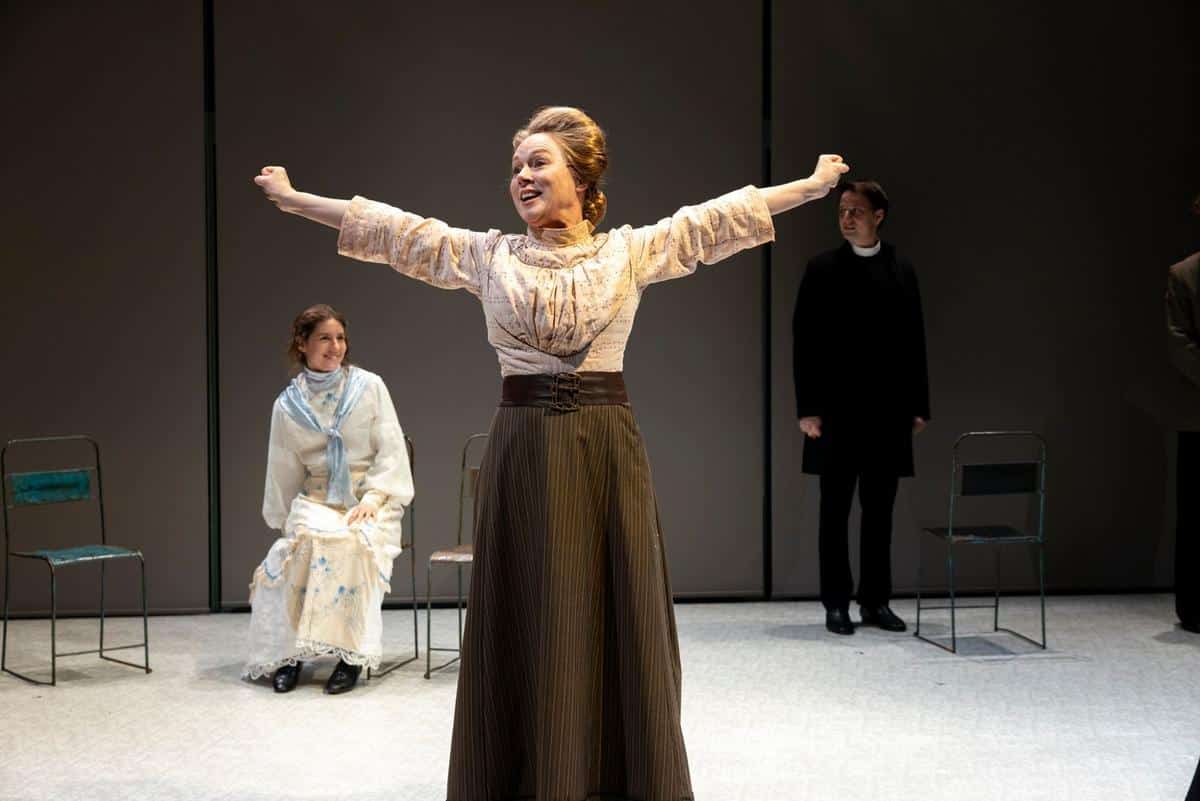
When What’s the Show sent me to review “The Murder of Roger Ackroyd”, I was looking forward to seeing the performance. Adapted by Philip Grecian, directed by Ali Bendall and presented by the Genesian Theatre Company, the play delivered a performance that would make Agatha Christie smile. It was a great choice to have as the first Agatha Christie play in 2026 at their new home in Rozelle.

The Murder of Roger Ackroyd is a play with a large cast. There are fourteen characters played by thirteen people. The first act of the show was dialogue heavy and had me playing catchup with Who’s Who. By the intermission though, I had a grasp on the relationships between the characters. The layout and design of the program was one of the most gorgeous I have seen – well done to the graphic designer. There was a Murder Mystery Bingo page for fun, a list of Possible Suspects and their role, and a Suspects / Motives Evidence Board which helped consolidate the characters for me during the intermission.

The play centres on Dr. James Sheppard (Nathan Moss), a local doctor in the quaint English village of King’s Abbot. He narrates the events surrounding the startling murder of the affluent Roger Ackroyd. A neighbour, known to Dr Sheppard’s sister Caroline (Roslyn Hicks) for throwing marrow over the fence, is the renowned Belgian sleuth Hercule Poirot (Peter David Allison). The famous detective known for his sharp mind and methodical approach becomes entangled in this mystery, even though he is retired. Through clever questioning and careful observation, Poirot works to reveal the real story beneath the surface, interviewing possible suspects and employing his “little grey cells” as he likes to put it, to lead the audience in a suspense-filled classic play.


Director Ali Bendall had the daunting task of creating a set with many different locations, and she successfully brought them all to the stage clearly with the use of lighting (Lighting Design by Cian Byrne) props (including a real antique Dictaphone) and variations in using the whole front theatre space. The cast were dynamically moving, including below the stage, in front and to the sides of the audience. The effect of this surprisingly brought the audience close to the action and encompassed us, making us feel a part of the story. Ali was also the Sound Designer and the ominous, dark music during the scene changes added to the whole atmosphere of mystery and threatening going-ons.

The script had some very witty moments throughout the show. Peter shone as bow tie wearing Poirot, the character delivering many lines and play on words which had us laughing. “The game is afeet!” “Hercule Poirot knows!” Roslyn as Caroline, the village gossip, held the audience from the beginning, her cheeky confidence as she bantered with her brother about all the happenings in the village was very funny. She is forgiven when she says, “I don’t pry things out of people!” indignantly, and then proceeds to ask personal questions to another character, indeed prying! John Parker (Peter Hoekstra-Bass) played The Butler who found the murdered Roger Ackroyd. On request from Poirot, his re-enactment with Ackroyd’s niece Flora Ackroyd (Jen Manoogian) was played with great over-enthusiasm, so much so that I thought, “John Parker has just discovered what he wants to do after he finishes his employment as a butler – acting!”

The cast and their British accents were impressive. Combined with Susan Carveth’s costume design, they put just the right emphasis on reeling the audience in and making us wonder who amongst these group of people was responsible for Roger Ackroyd’s death. Particularly during the second act, the red herrings were scattered everywhere, clues were looked for by me, and this became part of the game. It’s typical of an Agatha Christie novel – twisty, sinister secrets revealed slowly, blackmail, with a great ending. I won’t spoil the whodunnit, but when you see this play, (and you definitely should!), look out for the murderer’s pace and delivery – kudos to that actor, and to the whole cast.

The Murder of Roger Ackroyd is playing 16 January – 28 February 2026 at the Genesian Theatre. 2B Gordon Street, Rozelle.
Run Time: 2 hours 30 minutes (including a 20-minute interval)
Tickets: www.genesiantheatre.com.au/events/the-murder-of-roger-ackroyd

To book tickets to The Murder of Roger Ackroyd, please visit https://genesiantheatre.com.au/events/the-murder-of-roger-ackroyd/.

Photographer: Anthony Burns

Spread the word on your favourite platform!

Those Life Changing Three Little Words – Elanora Players

Three Little Words

Three Little Words Rating

★★★★★

Click if you liked this article

1

Australian Playwright Joanna Murray-Smith’s choice of “Three Little Words” for a title about two couples’ friendship is an interesting one. Initially I assumed that those three little words alluded to “I Love You”. However by the end of the play I realised that those three little words could be interpreted as to whatever the audience thinks – and this was a very clever prelude to a witty script performed by four engaging actors from the Elanora Players.

Tess (Tracey Keene) and Curtis (Paul Sheldon) have invited their long-time besties for dinner on their 20-year anniversary. After reminiscing good naturedly about the many good times and the way they met, Tess and Curtis announce a bombshell in the form of three little words, “We’re Splitting Up”. Bonnie (Karen Oughtred) and her partner Annie (Chantal Harrison) are disbelieving and shocked. The shaking up of what they thought was an unbreakable bond between the four friends sets off a split between all of them, and we are witness to the devastation that unravels.

Tess wants to explore her own identity, apart from being a daughter, wife and mother and yearns for something other than domesticity. She is highly critical of Curtis’ occupation as a teacher (“overqualified and underpaid”) and is constantly irritated by her husband’s habits. Tess is a self-centred woman who desperately wants out of the marriage to see what she could evolve into. She believes that Curtis will be there for her afterward. Tracey portrayed Tess’ selfish character that was quite unlikeable very successfully to the audience.

Initially I found myself feeling sorry for downtrodden Curtis, with his gentle manner and complacency. However, his immediate behaviour following the separation sparks some controversy, as Paul effectively expands his character’s complexity by swiftly entering the dating scene to be with a significantly younger woman. His actions suggest that an amicable separation might be unlikely, and his pointed, hurtful remarks towards Tess diminish my sympathy for him.


The split is a catalyst for Annie, a masseuse and Bonnie, a high-end art dealer, to suddenly explore their own relationship. Bonnie’s warm and younger partner Annie, who feels Bonnie’s condescending words deeply, was played with a sweet, quiet strength by Chantal.

Karen’s character Bonnie had a mix of forthrightness and vulnerability. Kudos to Karen who held the stage with convincing conviction – Bonnie was a standout character to me.

There’s a recurring reference to and even a custody battle for Tess and Curtis’ tantalus, a wooden lockable stand, which holds whiskey and is inaccessible without a key, to keep it safe from children or from servants in the old days. This heirloom is a gentle representative of how Tess feels, alluding to the Greek myth of Tantalus, who was eternally tempted by food and water just out of reach.

Director Kerrie King’s set was simple and effective, showing two living rooms side by side, their own spaces represented and separated by the use of different coloured walls and furniture. Lighting designer Wayne Chee and Lighting Operator Thomas Van der Plaat highlighted the rooms and characters well, bringing attention to where it was needed. Sound Design and Operator Walter Opdam’s choice of music brought the right atmosphere to the play, especially with his choices of songs such as George Michael’s “Freedom” as Tess was dancing and singing on the couch, and a song I’d never heard about IKEA as Tess attempted (and failed) to put together something from IKEA, after boasting to her friends that she never wanted to have anything personal again!

“Three Little Words” is a portrait of the aftermath of a breakup, of how the dissolving of one couple’s marriage affects their friends unexpectantly. How the dynamics of situations change in ways that are unpredictable because we are human. It is certainly a thought-provoking play, but not a play that is completely sad. In parts yes, but this clever script was laden with so many light moments sprinkled in, delivered by the characters’ wry and quick dialogues which made me and the audience laugh often, and quite a lot!

I loved the Elanora Players’ production of Three Little Words! Perhaps those Three Little Words from the title may have been “I See You” or Annie’s wisdom of “It’s About Kindness”. Or maybe it is meant to mean something else altogether; the audience can make up their own minds and there is creative beauty leaving it like that.

“Three Little Words” run time: approximately 90 minutes, with a 20 minute interval
Jan 9 – Jan 17 2026 at North Narrabeen Community Centre, 2-10 Woorarra Avenue, North Narrabeen
www.elanoraplayers.com.au

To book tickets to Three Little Words, please visit https://elanoraplayers.com.au/.

Spread the word on your favourite platform!

Brilliantly Emotive – Born on a Thursday at Old Fitz Theatre

Born On A Thursday

Born On A Thursday Rating

★★★★★

Click if you liked this article

1

Every family is different and unique; there’s no such thing as a cookie-cutter ‘perfect family’. What we can hope for in our own families, are harmonious and happy relationships. Born on a Thursday is a heartrending peeling back of the tough exterior of a mother/ daughter relationship and the deep complications that can arise in a family unit. Presented by New Ghosts Theatre at the Old Fitz Theatre, and written by Australian playwright Jack Kearney, Born on a Thursday had me hanging on to every word these characters spoke.

April (Sofia Nolan), a ballerina who had been working abroad in Denmark for some time, returns home to Western Sydney to see her Mum and younger brother. Her mum Ingrid (Sharon Millerchip) greets her with open hostility. She is a tough woman and has her own reasons for freezing April out with sharply worded barbs and icy stares. It’s uncomfortable to watch, so I imagine that being on the receiving end, April feels it deeply. Millerchips’ portrayal of an overworked, stressed mother – harbouring resentment towards her daughter and ultimately revealing her own vulnerability – demonstrates her talent as a performer.

Isaac (Owen Hasluck) has a brain injury from a sporting incident. He is a young adult and highly dependent on his mum. Isaac is on the cusp of needing independence and feeling the frustration of being unable to communicate easily. The initial introduction onstage of Isaac was powerful. Hasluck portrays Issacs’ disability with heart wrenching accuracy with his mannerisms and muddled speech that manages to capture the depth of his character. Two scenes where he has a ‘meltdown’, one with his mum and the other with his sister, brought tears to my eyes and I am sure others in the audience felt the emotion too.

April’s reason for coming home is slowly disclosed over four seasons as the audience witness building feelings of guilt and responsibility. Nolan fully embodied her character, guiding the audience through her journey into her inner demons and the way to healing her raw pain.


Howard was played by James Lugton, Ingrid’s affable neighbour. His friendship to the family brought stability and the relationship is explored through his interactions with Ingrid, Isaac and April. Lugton’s portrayal of Howard was done with realistic characterisation, particularly in the tender moments, showing Howard’s heart of gold.

Although there are serious scenes in the play, there are also parts which were lighter. Ingrid’s friend Estelle (Deborah Galanos), a gregarious extroverted woman, brought humour (and wine!) to the stage and showed that our support network of best friends can be family too.

Sound designer Sam Cheng’s music, particularly when indicating the seasonal period when the months on the calendar on the wall were being flipped up, added to the thoughtful ponderance of change. Costume designer Rita Naidu and set designer Soham Apte grounded the characters to the time period of 1998 – 1999, with a kitchen straight out of the late 90’s – I even think I owned a stove and tea towels exactly like the ones that were on set! The set was impressive by having a tap with running water. Being an avid tea lover, I certainly appreciated the cuppa always being offered between characters, and especially Howard’s turning of the teapot ritual before he poured out the tea. The working stove where April made pancakes added the perfect 4D experience and the smell of freshly made pancakes wafting out to the audience was divine! It showed that during these simple rituals of everyday life, big conversations can happen during these times.

Director Lucy Clements has brought together a cohesive team that successfully treads the fine balance that’s needed when presenting a play dealing with mental health illness, domestic violence and traumatic brain injury. Born on a Thursday is a raw and impactful play that explores family, the true priorities in life, and the need to be seen and loved for who you truly are—both by yourself and by those who care for you. I highly recommend it to gain a glimpse into the lives of ordinary people with layered lives. Book your ticket and watch Born on a Thursday in one of Sydney’s most tiny and intimate theatres – the Old Fitz!

Season run: 28 November – 21 December 2025
Run Time: 2 hours 25 minutes with a 15 minute interval
Theatre: Old Fitz Theatre 129 Dowling Street Woolloomooloo
Tickets: www.oldfitztheatre.com.au/born-on-a-thursday

To book tickets to Born On A Thursday, please visit https://www.oldfitztheatre.com.au/born-on-a-thursday.

Photographer: Phil Erbacher

Spread the word on your favourite platform!

Dial M for Murder – A Killer Thriller at the Ensemble Theatre

Dial M for Murder

Dial M for Murder Rating

★★★★★

Click if you liked this article

Where can you find yourself as an observer to a murder, a diabolical plot and the twists and turns of an inverted mystery? Onstage at the Ensemble Theatre’s Australian premiere of Dial M for Murder! Jeffrey Hatcher’s adaptation of Frederick Knott’s 1952 stage thriller masterfully explores classic motives for murder—fear, jealousy, revenge and greed—through a script that continuously kept me guessing about how the story would ultimately unfold.

Set in the 1950’s, two women reunite in London after an absence of time. Set and costume designer Nick Fry added small details which enhanced this period. There’s a rotary dial phone sitting on a wooden stand and art deco furniture in the loungeroom. Sitting together on the couch, a stylishly dressed Margot (Anna Samson) asks Maxine (Madeleine Jones) “How would you murder me?” Maxine begins to casually list, in alphabetical order, several ways that she could kill her. This was an intriguing start to the play, and we learn that Maxine is a writer of murder thriller novels. One of Hatcher’s changes to the original script features Maxine as a female (originally a male), giving a modern update to the story with these two characters being secret lovers in a lesbian relationship, even though Margot was married.

The cleverness of Hatcher’s script is hidden in the breadcrumbs of clues he leaves along the way. In this opening conversation, certain details are hinted at that the audience might not immediately notice but will later have an “aha” moment upon reflection. There is one method mentioned by Maxine highlighted in the characters’ conversation, and it is indeed used in a future scene which appears to throw some suspicion on Maxine.


There are many layers in Dial M for Murder, which could have gotten sticky if not for the wonderful way the director Mark Kilmurry kept the play at a suspenseful pace. Margot’s husband Tony Wendice (Garth Holcombe) wants his wife dead, Captain Lesgate (David Soncin) and Maxine find themselves involved in this situation and Inspector Hubbard (Kenneth Moraleda) is driven to discover the truth. Everyone finds themselves in a tangled web of misinformation and intrigue. As a ‘whodunnit’ mystery murder it is inverted because the audience knows exactly what happened and ‘who did it’ right from the beginning. Then we experience how the detective figures it out. Kenneth as the Inspector reminded me of Columbo and his almost bumbling way of cloaking what he was thinking to appear not so intelligent, until he lays out the crime and you realise how brilliantly logical his mind worked.

Anna Samson brought depth into her character Margot, showing her character’s vulnerability. Her stillness in the aftermath of a tragedy showed reality bleeding into her consciousness and it was powerful. Kudos to Madeleine Jones for Maxine’s broad New York accent.

Garth Holcombe was simply outstanding as Tony! Standing tall dressed impeccably in a dark suit, he appeared as an upper-class suave gentleman. However, it wasn’t long before the audience saw the real Tony; a smug, sneaky, and malicious man intent on carrying out ‘the perfect crime’ to kill his wife. It wasn’t so much in his dialogue, but in the quiet, small, almost imperceptible movements he made – such as a twitch of his mouth or a shift of his eyes that Garth performed which screamed loudly of Tony’s duplicitous and arrogant nature.

Madeleine Picard’s music and sound design during the play’s tense moments was atmospheric and evocative, reminiscent of the suspense found in a Hitchcock film. Combined with Matt Cox’s lighting design, especially during the storm where flashes of lightning dramatically illuminated the characters’ struggle in the life-and-death situation, the effect was truly exceptional.

Scattered throughout the play were some funny lines which were delivered perfectly by the cast to create some pockets of dark humour. Dial M for Murder was a tightly produced, fast paced play which was entertaining and had the audience at the edge of their seats. Although this is a ‘you-know-who-dunnit’ murder thriller, it’s one that keeps you guessing with numerous surprising twists and unexpected developments until the very satisfying conclusion. Don’t miss it!

Dial M for Murder is playing at the Ensemble Theatre. 78 McDougall St, Kirribilli
Season run: 28 Nov 2025 – 11 Jan 2026
Time: 2 hours 20 minutes, including interval
Tickets: www.ensemble.com.au/shows/dial-m-for-murder

To book tickets to Dial M for Murder, please visit https://www.ensemble.com.au/shows/dial-m-for-murder/.

Spread the word on your favourite platform!