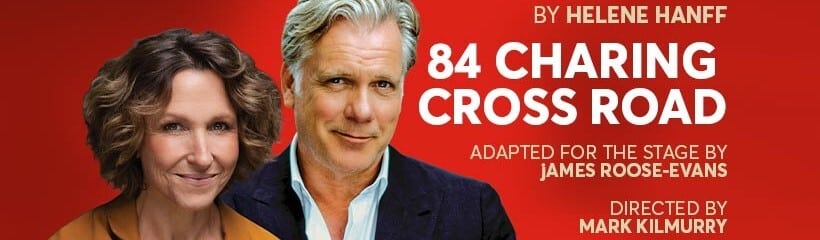
If you haven't read the book, and it is a true story, you have missed out but the second best thing is seeing the play. It captures post war Britain still recovering, short on food, living on coupons and making sense of the previous world war. As the play develops we are taken through England’s important historical moments including Queen Elizabeth’s coronation and celebration.
On the other side of the world, in fast-paced New York, a dollar-poor screen writer becomes a beloved contact to first one and then all in a small London vintage bookshop. It is a joy to hear such witty retorts but also to witness the gentle relationship between brash New York and formal London both in changing times for their countries and lives. Letters are exchanged as books are requested and as years go by, the audience witnesses changes in lifestyle and relationships from a formal correspondence to a warm and witty friendship. The audience audibly responded with laughter and sadness as the letters were read and reacted to.
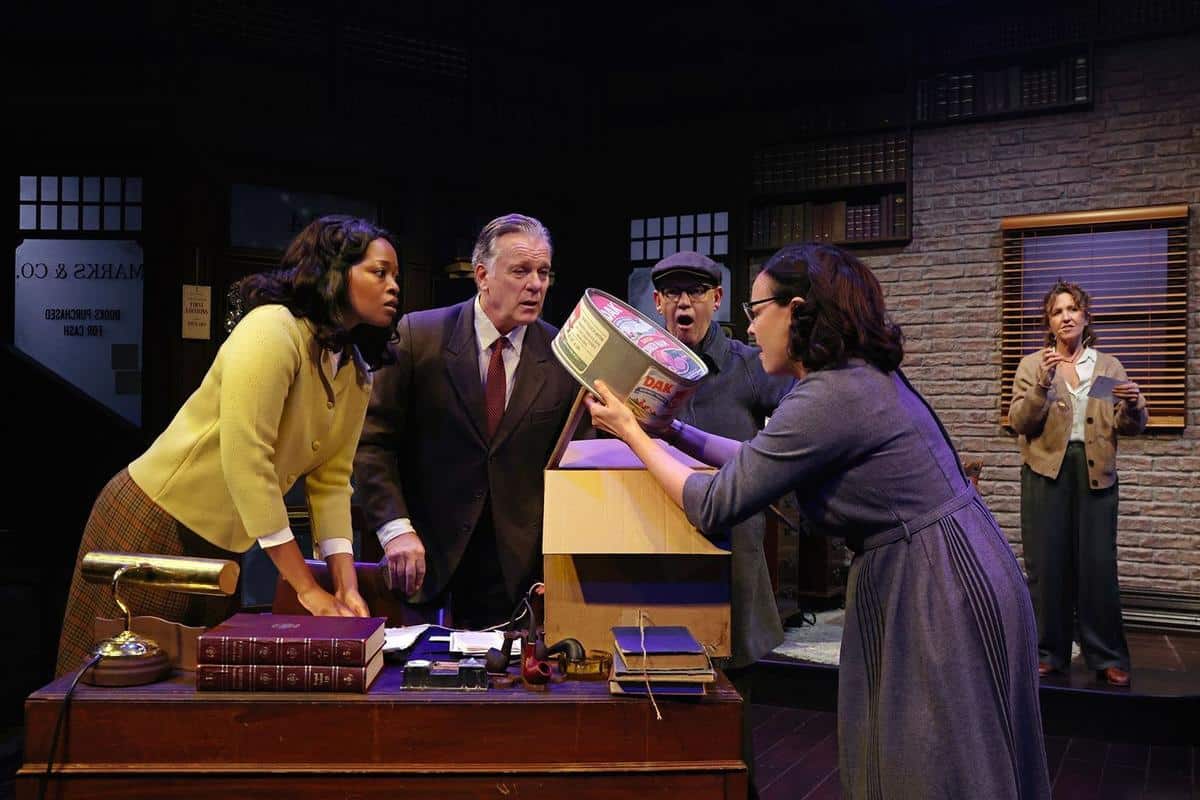
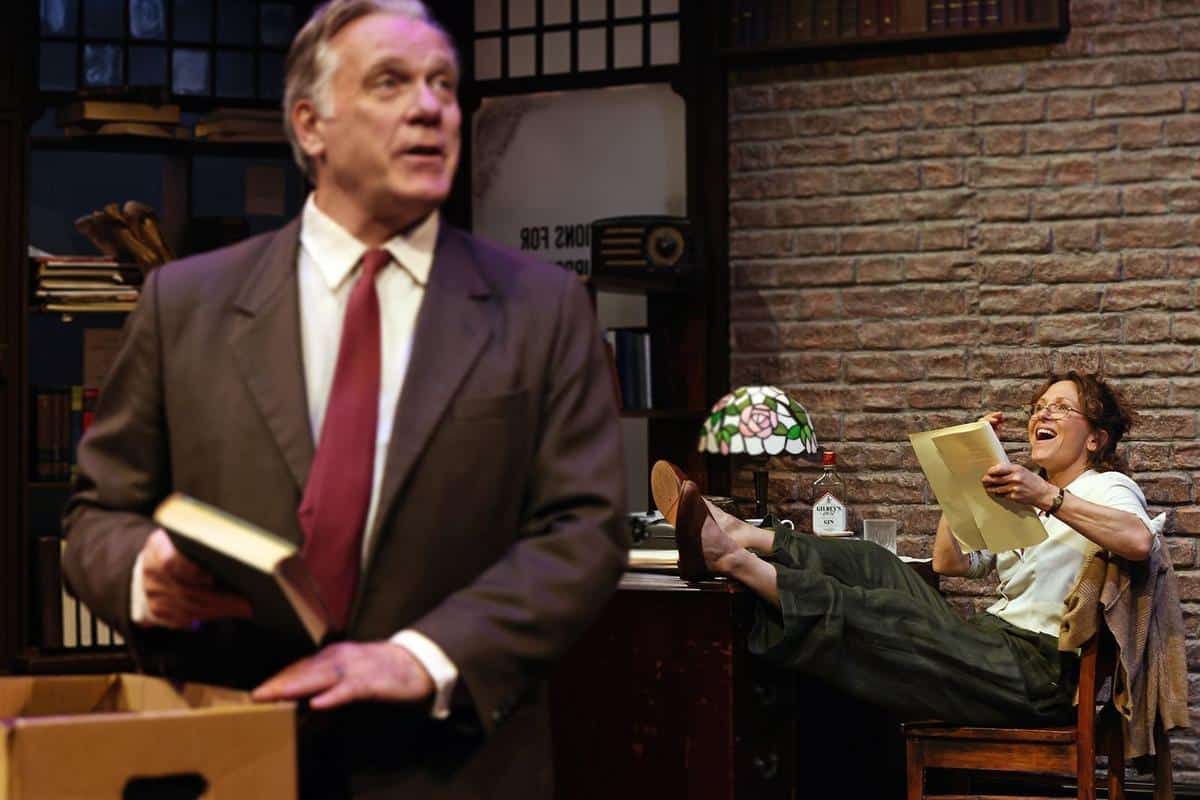
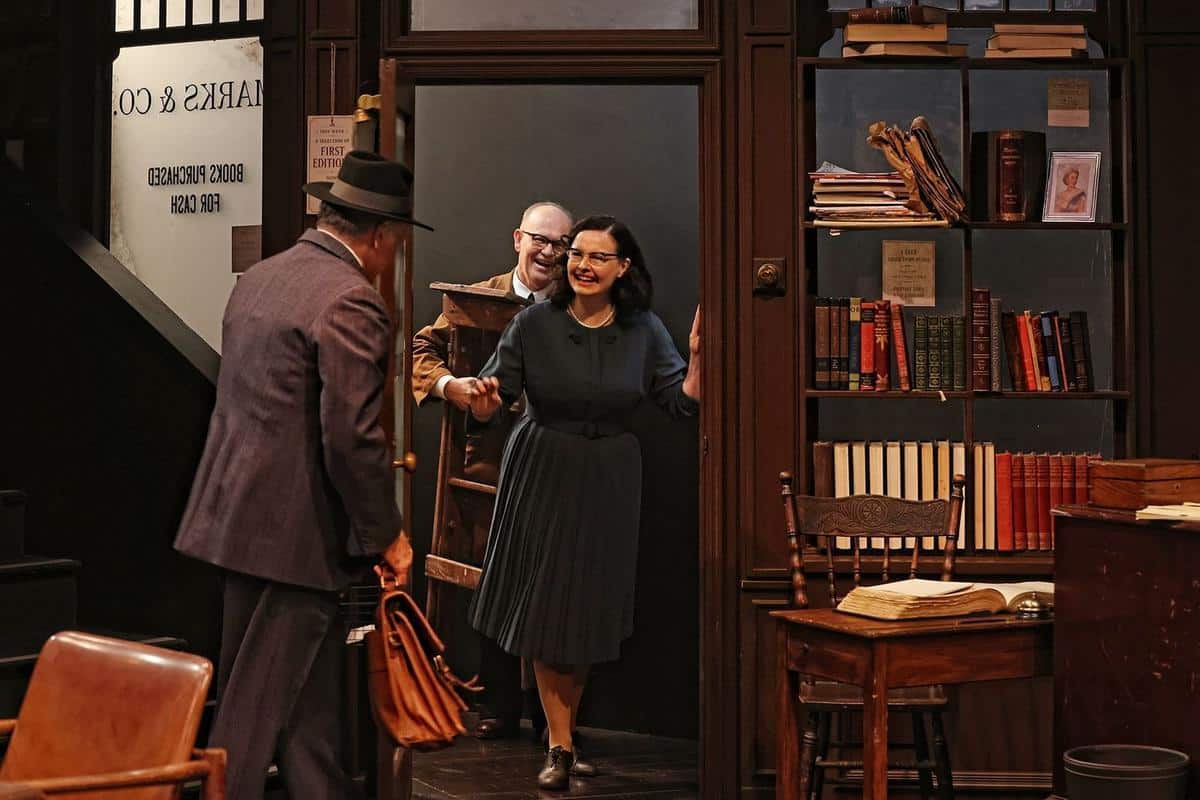
The set was wonderfully lit in warm tones with the bookshop and New York apartment juxtaposed to represent the changing lives of both cities and characters. The set and costume designer had sourced and found genuine or reproduction clothes, jewellery, hats and even seamed stockings that set the era and style so authentically. Floor to ceiling shelves of books enhanced the feeling of being in a bookshop whilst the New York apartment was decorated in a more modern style. There was an intimate connection between the audience and actors being in the round giving the feeling of entering each world.
All actors were believable but the two main actors representing the writer, Helene Hanff and Frank Doel, the bookstore manager, captured the audience's attention from the start. Helene presented a genuine New York strong accent and for those who have lived in New York, the body language, phrases and pace of delivery rang true. Frank wore the British suits and accent and politeness revealing a deeper side to him as their friendship evolved. The cameo actors were true to their time and the sense of a 'family' of colleagues revealed itself as each character interacted with Helene’s letters. Their non-verbal body language was at times funny and at other times, poignant but totally believable. The audience cared for each character and wanted to know about their dreams and aspirations. Knowing that the book is true made us want to find out what happened to each person in the future.
The play showed how well-written dialogue taken from genuine letters creates an atmosphere and audience connection with no clever props or actions required. It was the opening night and the actors and director were rewarded by a standing ovation and loud applause.
Ordinary Days, produced by Bold & Blunt Creative and performed at Flight Path Theatre, takes us on a journey to New York in the early 2000s. An off-Broadway success, the sung-through musical follows the stories of four characters working through the challenges of everyday life. The story touches on art, taking chances, dreaming big, building relationships and recovering after trauma. There is nothing too complex in the plot but there is joy to be found in interrogating smaller moments not usually portrayed on stage.
There were two main storylines; one was romantic and the other was about friendship, I loved this. It is beautiful to see a platonic relationship platformed and I found that Warren (played by Ethan Bourke) and Deb (played by Producer Chantal Elyse) had a lot of chemistry. The other two characters were a couple grappling with the difficulties that come with moving in together and taking the next steps – Claire (played by Associate Producer Jordan Berry) and Jason (played by Lachlan Ceravolo).
I was lucky enough to see the opening night show and he performances from the four cast members were very earnest. As the show went on, I felt the cast become more confident, and the characters more vulnerable. Bourke was a highlight for me; he was very charismatic and made the audience want to get to know him. Ceravolo gave us a very convincing, though at times, one-sided love story. Both Elyse and Berry had wonderful voices. I especially loved the duets, group numbers and the songs where the passion and frustration of the characters peeked through – this felt distinctly human!
The pianist was a highlight, tucked in the corner of the stage, playing for the full 90 minutes - no intermission. I enjoyed the music a lot and was surprised with how immersive the singing was with only the piano. Songs seamlessly connected as scenes changed, and at times I forgot that we had live accompaniment. Congratulations to the Musical Director – Joseph O’Reilly.
The set was simple but effective with the New York skyline created out of posters and flyers, and just a couple of desks. Both lighting and sound were used well to signpost the mood changes, which was essential with the pared back set design. The cast used the space masterfully, popping out from within the audience and the theatre door which aided the audience to feel engaged and part of the story. There were laughs at the funny quips and audible gasps when Warren tripped, we felt invested in Deb finding her thesis and Claire having a personal breakthrough.
Overall, this was a very wholesome production from a team who has clearly worked extremely hard. There are a lot of lyrics in this musical, it's impressive. For fans of RENT or Amélie who love whimsy, it’s worth a watch.
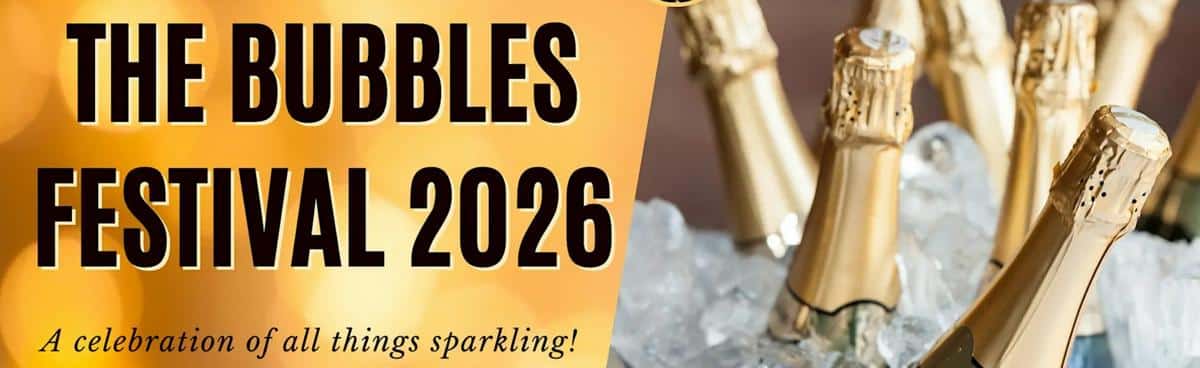
The Bubbles Festival Melbourne: A celebration of all things sparkling!
Natalie Pickett founded The Bubbles Review 10 years ago, when her first blog educated those who thought Moet was spoken like the end of the word, “ballet”, with a silent T, when really, it’s pronounced “Mo-wett.” Natalie should know. When working as a tour guide in Europe, on a guided trip to Moët et Chandon, she confirmed this exact fact.
Natalie’s ‘Bubbles Reviewers’ Club’ offers members monthly rewards, tasting technique masterclasses and more discoveries and invitations via www.thebubblesreview.com
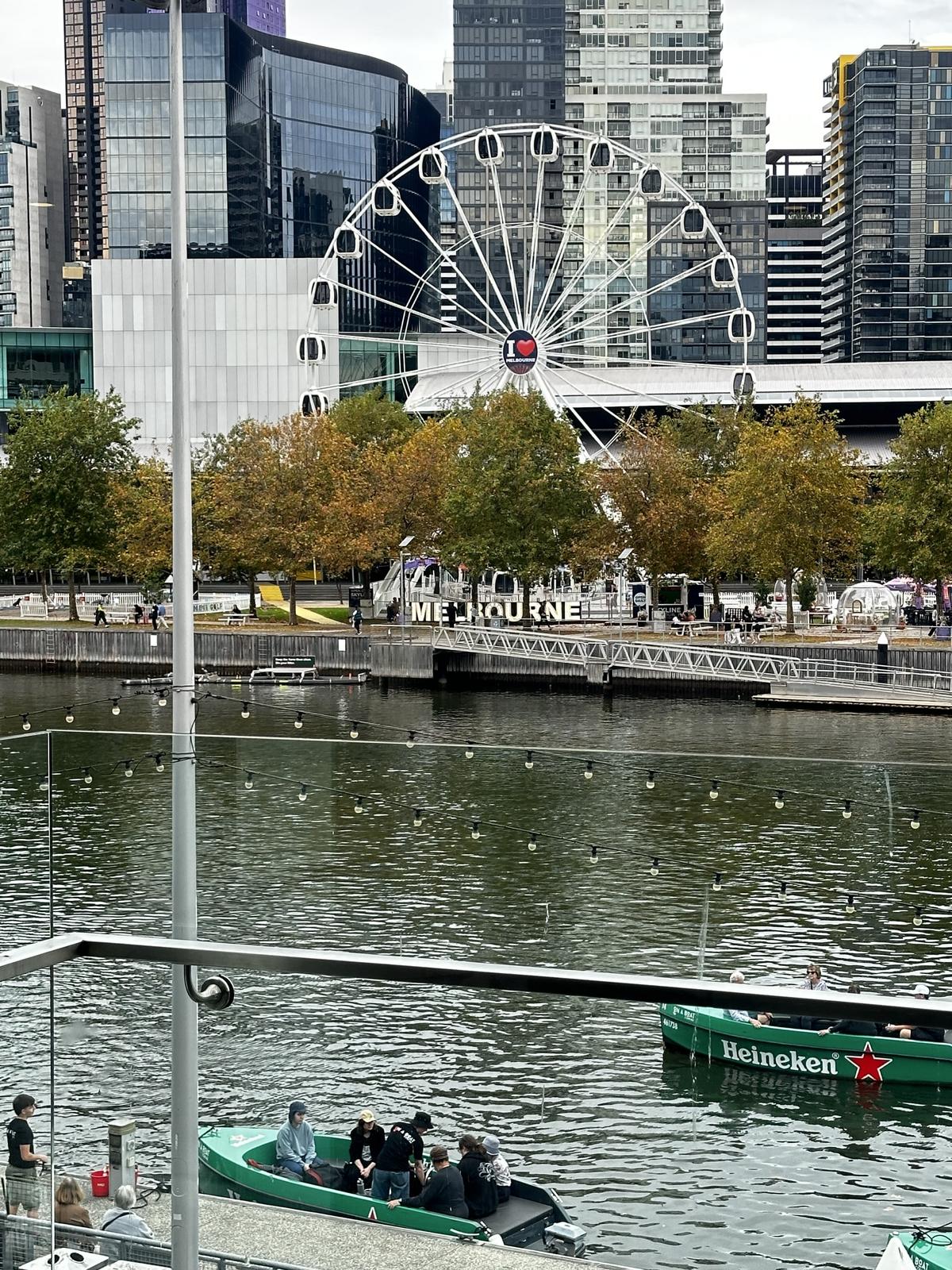
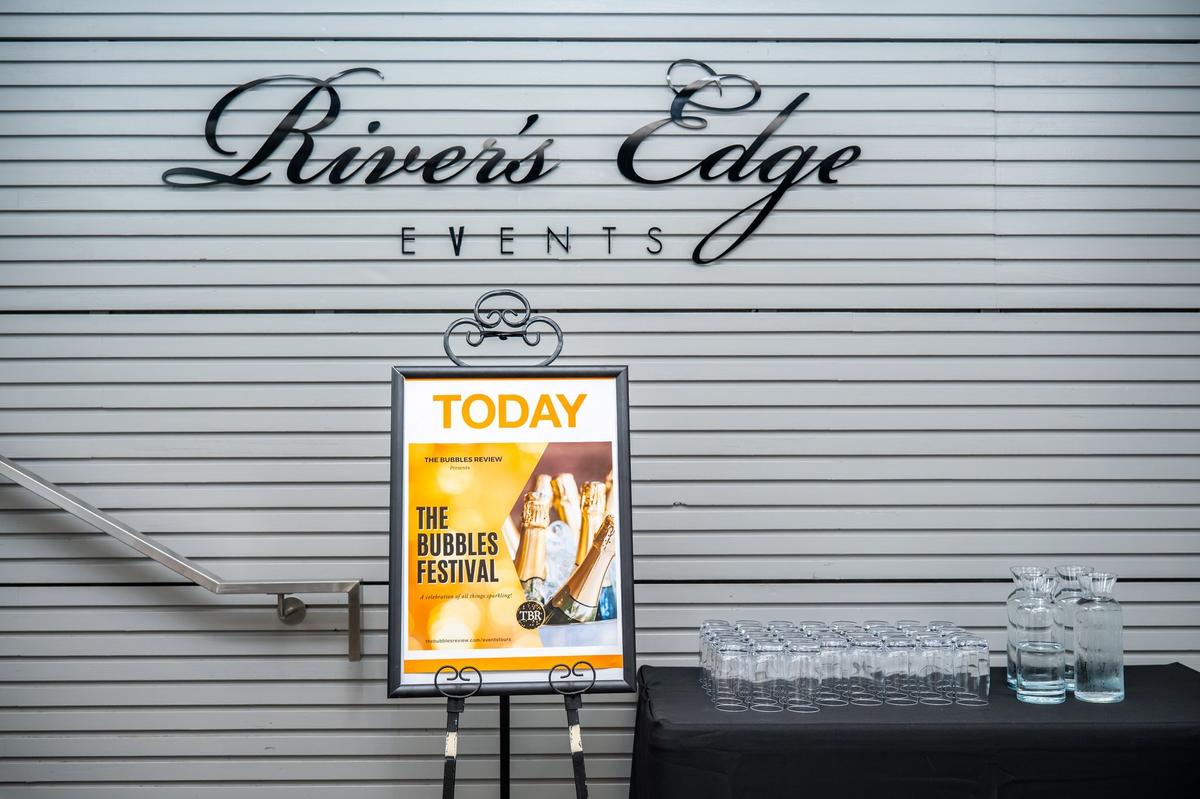
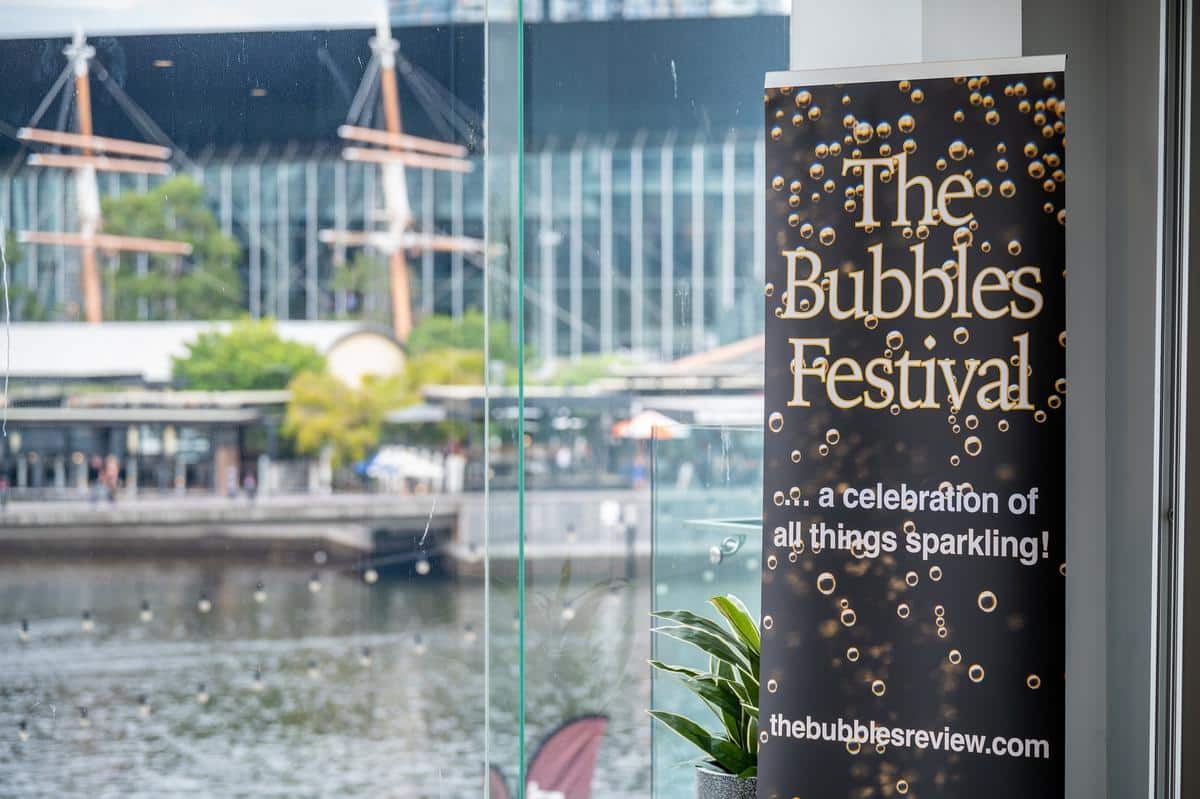
I met some of her club members on Saturday, 2nd May, for Bubbles Festival Melbourne, at River’s Edge Events in the World Trades Centre – in a room with a stunning view of the Skyline Wheel and Polly Woodside. Holding our complimentary Riedel sparkling glasses (included in our tickets), we were all thirsty to begin when Natalie welcomed our group and spoke about some important terms to remember before sampling the bubbles on offer. She reminded everyone to hold their glass by the stem, as best to view the bubbles in the middle. We were advised to enjoy the experience of each sparkling with each of our five senses; even holding the glass to our ears - as though listening to a seashell on the beach - and to take in the scent with our noses, as far as they’ll go into the glass before tasting.
“Bubbles – Just like a hug in a glass” and “ABC = Always Bring Champagne” slogans called to us from TV screens around the room. After this, we would visit all the Exhibitor tables to indulge in the exquisite selection.
In between tastings, we were served trays of various Canapés – including Truffle and Mushroom Arancini. We also indulged in a succulent seafood station and a cheese station – perfect bubbly food companions.
Ian was the friendly host from Clover Hill. He poured my first tasting with CLOVER HILL TASMANIA EXCEPTIONELLE MULTI-VINTAGE, (59% Chardonnay, 35% Pinot Noir, 6% Pinot Meunier) - a light straw/green hue in the glass, vibrant citrus and stone fruits on the nose and crisp acidity on the palette.
My second tasting was the CLOVER HILL TASMANIA ROSÉ MULTI-VINTAGE (66% Chardonnay, 29% Pinot Noir, 5% Pinot Meunier) with fresh vibrant strawberry notes upfront on the nose. The palate was layered and creamy with red forest fruits, to a balanced, long finish. This one was sweeter than the first and a little too perfumed for my taste - still a lovely sparkling.
My third taste was the CLOVER HILL BLANC DE BLANCS MULTI-VINTAGE – Tasmania with 100% Chardonnay. This one reminded me a tad of the lovely Billiecart-Salmon Blanc de Blancs Grand Cru NV from France. It too, is characterized by aromas of citrus, white peach, and brioche with a creamy texture.
Tasmanian cool-climate sparkling wines are dominating at the moment, having taken out all the trophies at the 2025 Australian Sparkling Wine Show and Clover Hill is no exception, having been recognised by The Real Review as one of the best producers in the country. They are consistently ranked among Australia's top producers with a 5-star Halliday rating.
Ian had a fourth offer in CLOVER HILL ROSÉ D’ASSEMBLAGE MULTI-VINTAGE (63% Chardonnay, 29% Pinot Noir, 8% Pinot Meunier), which I didn’t get to sample as I felt drawn to the French table while there was a lull in the crowd.
I met Jean Paul at the Philippe Fourrier table for a quick chat. Since 1847, this family Champagne house located in Baroville, is anchored in an exceptional terroir, the Côte des Bar, in the south of Champagne appellation area.
JP’s first French pour was the CHAMPAGNE PHILIPPE FOURRIER – ROSÉ DE SAIGNÉE (NV) (90% Pinot Noir, 10% Chardonnay) with a light red to deep rosé hue and orange reflections, its fine and persistent bubbles adding elegance in the glass. The nose opened with ripe raspberry and fresh red berry aromas.
JP’s second French pour was LOUIS PERDRIER FRENCH BRUT (NV) – Bordeaux – France (100% Chardonnay), an exceptional French Sparkling. Deliciously toasty notes melt into the scent of golden apples. Gentle and harmonious on the palate with some richness tempering the citrus finish. For me, this was the best sparkling of the day.
The third French pour was CHAMPAGNE PHILIPPE FOURRIER – PINOT MEUNIER BRUT (NV) – Champagne, France (100% Pinot Meunier), with a beautiful pale-yellow hue and fine bubbles bright in the glass. The nose offered fresh red fruit aromas of subtle blackberry, hints of peach and plum. This one seemed a tad light to me after the Brut.
Lastly, I met Kathy at the Sutherland Estate stand - a small, second-generation family-owned enterprise located at a picturesque location in Dixon’s Creek, a mountainous area, past Yarra Glen in the Yarra Valley. Her first pour was SUTHERLAND ESTATE – 2021 BLANC DE BLANC SPARKLING – Yarra Valley (100% Chardonnay). Made from 100% Chardonnay in the Méthode Traditionelle, with secondary fermentation and ageing in the bottle.
Kathy’s second pour was her SUTHERLAND ESTATE – 2023 SPARKLING TEMPRANILLO (100% Tempranillo.). This renowned sparkling red is unique because we don’t often see a Tempranillo here in Australia. Sutherland have been making it for more than 12 years, and it’s all grown onsite. It has spent twelve months in seasoned barriques before undergoing secondary fermentation on lees in the bottle made Méthode Traditionelle, having a powerful burst of mid-palate fruit of berries, dark cherries, a bit of liquorice, with peppery spice and earthy undertones to finish. The palate is medium-bodied and well structured, with fine tannins and a persistent bead. A great match with cheese and charcuterie. It had the power of a sparkling Shiraz and I’m keen to visit their Cellar Door for more.
I tried the SUTHERLAND ESTATE – 2025 SPARKLING ROSÉ (with 100% hand-picked Pinot Noir). Whole bunches of Pinot are harvested from the vineyard and come into the winery and straight into the press immediately leading to the gorgeous pale salmon colour. The aromas are bright and enticing with rose petal, strawberry and perfume. On the palate were strawberries and cream. A delightful summer’s drink, but for the last glass of the day, I had to return for one last taste of the Sparkling Temperanillo.
Illustrator, Susan Kerian, who some recognised from her work with retailer, ‘Blue Illusion’, returned to showcase her original illustrations - perfect for ‘Emily In Paris’ fans and Francophiles.
All sparkling wines and Susan’s artwork could be purchased on the day so, I happily departed with my order for delivery of four of the LOUIS PERDRIER FRENCH BRUT (NV) from Bordeaux, two of the CHAMPAGNE PHILIPPE FOURRIER – PINOT MEUNIER BRUT (NV) – from Champagne in France and six of the SUTHERLAND ESTATE – 2023 SPARKLING TEMPRANILLO from the Yarra Valley, because according to F. Scott Fitzgerald, "Too much of anything is bad, but too much Champagne is just right." Well, that’s my excuse and I’m sticking to it!
All of the exhibitors offered great deals for purchasing on the day. I’ve never understood why tastings sometimes don’t allow that, but at Bubbles Festival, you could take the wine with you on the day, or get it delivered later, which was ideal. $5 from each ticket went to the Sacred Heart Mission, St Kilda. Natalie chooses a different charity to donate to in each of her state’s events.
It was a sunny 25degree day in Melbourne and I tasted some new and exciting Sparklings and Champagnes, met like-minded and vivacious souls, feeling the fresh bubble of life, therefore, I thoroughly recommend attending the Bubbles Festival.
Here are the other states’ Bubbles Festivals, coming soon:
Brisbane – 9 May 2026 - Get your tickets here! Sydney – 22 & 23 May 2026 - Get your tickets here! Adelaide – 6 June 2026 - Get your tickets here! Perth - 20 June 2026 (TBC) - Join waitlist here!
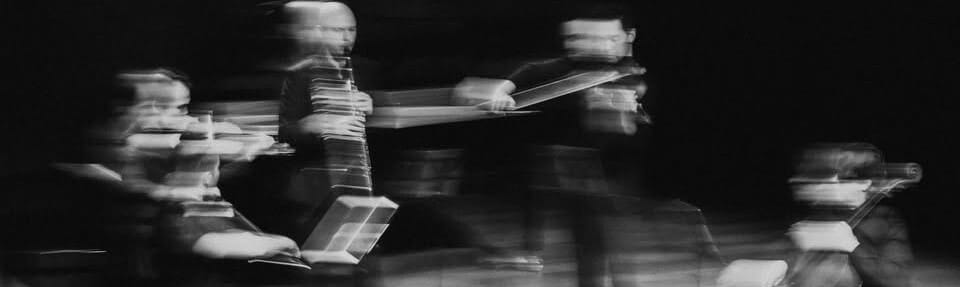
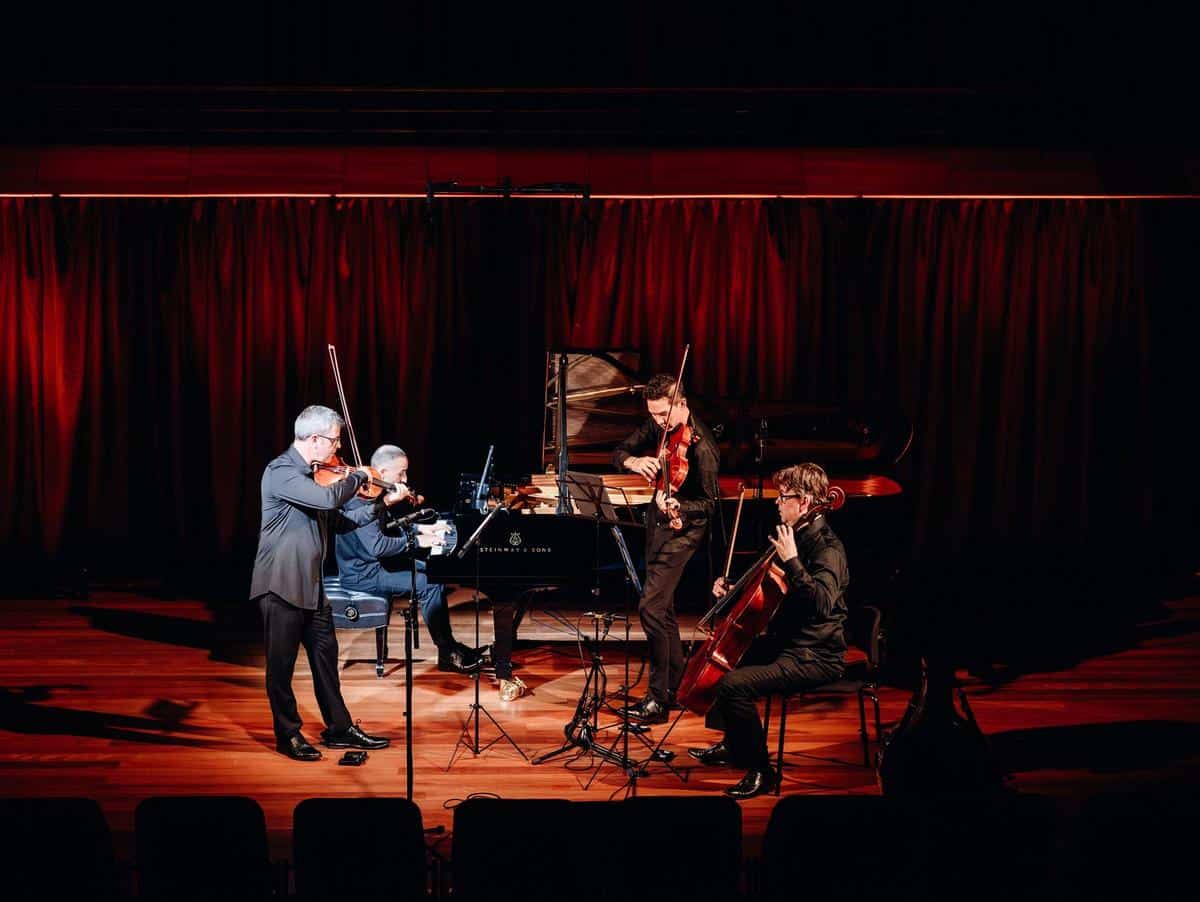
The pamphlet guide to the Omega Ensemble's new composition of works entitled Howl promises audience members “riot, rapture and release”. Ensconced within a beautiful wood-panelled studio situated in Walsh Bay, it was clear that those who sat down to see the first performance of this show were bearing witness to an intriguing and complex arrangement of music.
The show began with a rendition of a piece called Tooth and Nail, which involved a talented soloist skillfully wrangling his viola to an eerie and circular backing-track. To me, the piece was haunting and reminiscent of the feeling of chasing and being chased by something sinister. It was a piece that woke the audience up; a true skill for the musician to play this kind of music in a way that is suspenseful without being shrill.
Following the first piece, two more violinists and a cellist joined each other on stage, and the blue curtain behind them was at once lit up by a fluorescent green/pink background. This was in preparation for a piece entitled Tuggemo; my least favourite composition of all that were played. According to the guide, Tuggemo is a word that has fallen out of usage and means “a swarm of birds or flies”. It was clear the musicians were mastering their instruments, and perhaps the flurry of activity in the last portion of the piece was building into something sharper. However, when the piece ended abruptly, what was left seemed to be a confused purpose. It felt to me as if the purity that strings are capable of was being eschewed in order to replicate the impossible. However, I am not an experienced musician and the audience seemed to be okay with it, which may simply mean that something had been lost on me.
The third piece; Interference Patterns seemed much closer to its intent. When the green and pink lights fell away from the blue fabric of the curtain, it was as if the music had become orchestral and cinematic again, and the audience was taken to another place. The piece was foreboding and ominous while at other times clean and exquisite. The friend I had brought with me (who previously played as a classical violinist in her home country) said she loved it. To the question of why she liked it so much, she answered that it was ‘nostalgic; like something in the past but at the same time hasn't been heard before’.
Interference Patterns set the tone perfectly for what was to come next; the piece the show is named after and which uncoincidentally shares a name with Allen Ginsberg’s infamous poem. The musicians playing Howl did well to capture the nightmarish intensity of the infamous work. It was sharp rather than chaotic and the strings were haunting but never sad. Particularly effective was the clarinetist, who commanded the room, and led the audience through what seemed to be a faultless performance. I felt that the music did not unravel in the same way the poem does, however technically and thematically, the notes were mastered by their respective musicians.
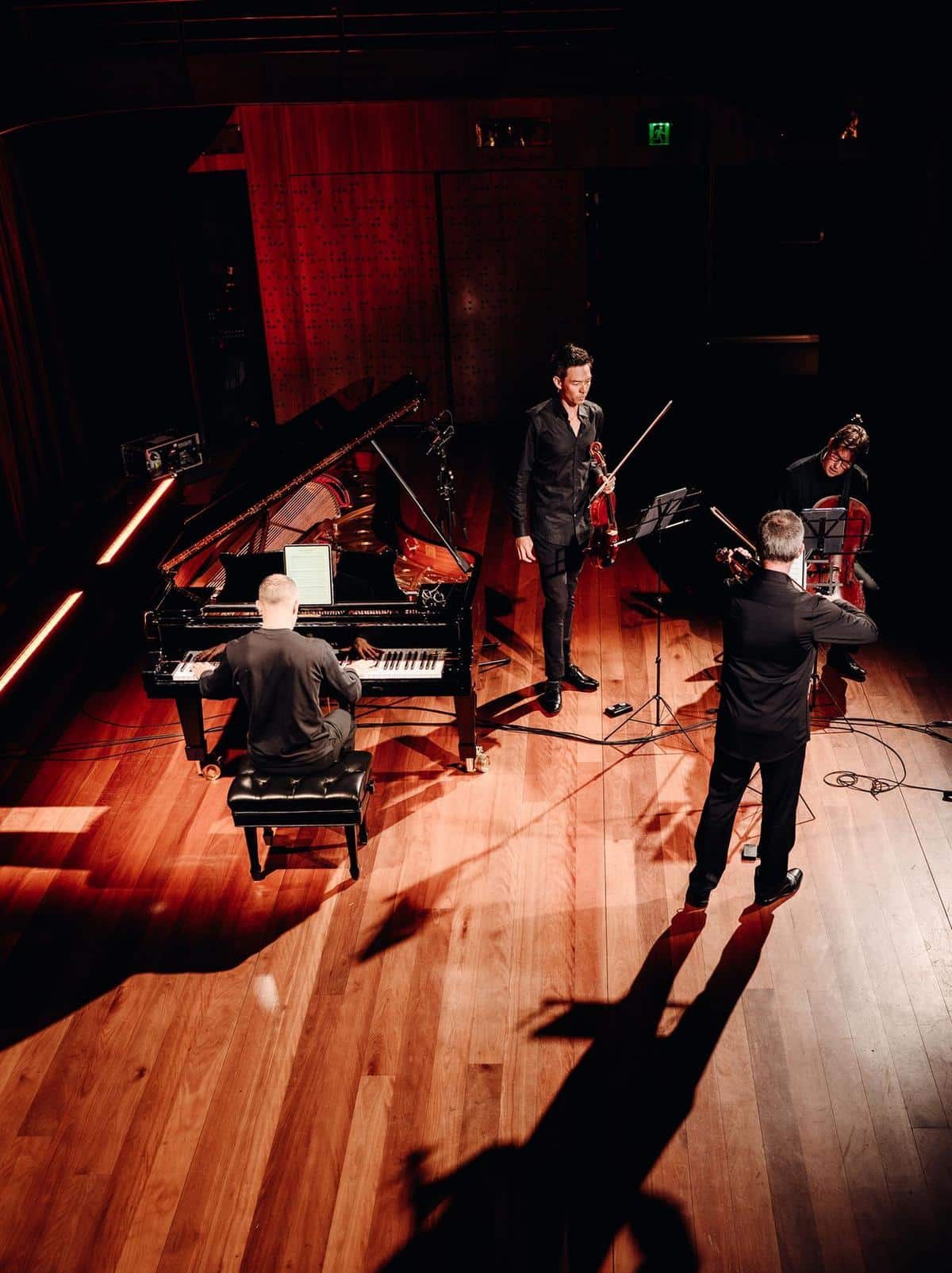
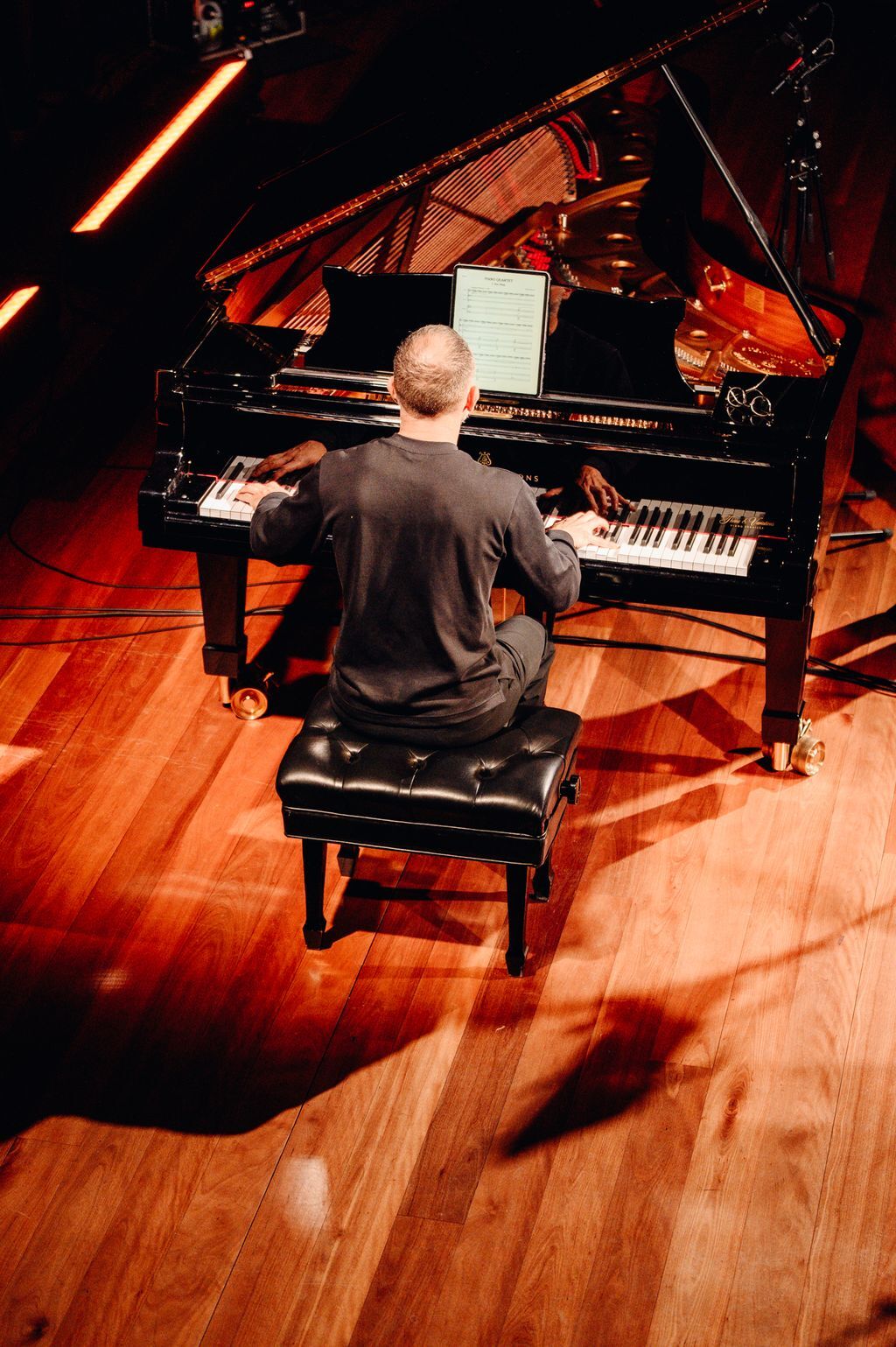
Following the end of the fourth piece, pianist Vatche Jambazian took to the stage to introduce himself as the musician playing Danny Elfman’s composition; Piano Quartet. He seemed to at once take command of the beautiful Steinway and Sons grand piano in the centre of the room to express himself through the music, rather than merely playing it. The animated performance provided music that was interesting, creepy and captivating.
And so, as a non-musician who loves music and knows it is for everyone, I can only review this performance from the honesty of my own lens. In this way, I think the collective attentiveness of the audience showed that they were grateful for being gifted with this experience. As an admirer of poetry, I would say that it is perhaps impossible to emulate the intensity of Ginsberg's Howl without the words by which it expresses its sentiment. However, I am adamant in my judgement that the standalone performance here played out in the final piece; Piano Quartet. The pianist was a definitive and shining gift in the program, fully embodying its genre and showcasing inherent musicality.