Meet The Performer – Lily Hayman

Feature-The Infinity Mirror

Brace yourselves, theatre enthusiasts! We sat down with the multifaceted creative powerhouse behind The Infinity Mirror. From a passionate young actor to an accomplished writer and director, Lily is stepping back under the spotlight with The Infinity Mirror in Adelaide Fringe 2026.

About Lily Hayman

Why do you want to be an actor?

When I was growing up all that I ever wanted to be was an actor. I jumped at any chance to perform. I loved it because it made me feel like I was good at something. Like I had something I could really contribute to and belong to. I also made some of my best friends performing, and they helped shape me into who I am.

Then when I went to university, I realised there was so much more to making theatre. Suddenly I just wanted to make stuff. I started writing and directing and my love for that overtook my love for performing. But I still found moments when I wanted to be on stage. The exciting thing about The Infinity Mirror is it’s a chance for me to do all those things at once. Don’t get me wrong I have an incredible team helping me make this show, but I’ve been working as a director for a few years now, and I’m really excited to get back on stage.

What do you enjoy most about acting?

The connection with an audience is my favourite part. I’m not necessarily an “actors actor” that enjoys crafting a character. Instead I want that moment, when you’re speaking with a room of people, and together you’re creating a story.

What productions have you acted in before?

It’s been a while since I have been on stage. The last show I performed in was in 2022, in a group ensemble work called ‘Where Shall We Meet?’ – which featured artists with and without Disability and was a really fun show about what it means to be human, and how we connect. I’ve been in a few shows with that ensemble (Harness Ensemble at Shopfront Arts Co-Op) and loved it. I’ve also been in a few new plays, my favourite thing to do is create New Work so I haven’t been in anything like ‘The Cherry Orchard’ since Uni!

Do you want to work in film, live theatre or both?

Live Theatre is my favourite thing on the planet. I find Film really interesting, and I obviously love to watch and take inspiration from movies/TV but I think I will always work in theatre. In a world of screens, there is something about a truly ‘live’ room that can’t be repeated. We don’t always manage it, but when a theatre is alive it’s magic.

What has been your favourite role so far in your career?

I played Elvis Presley in a Checkhov show once. It was a bonkers adaptation, but it was really wonderful to be a part of. And the sideburns suited me!

What do you think makes a performance most believable?

Some of the most “believable” work I have seen does away with some of the artifice of theatre. Fringe is a great example of it. You often find a show which is just someone telling a good story, and it moves you beyond belief. That being said, the best actors can take you there with all the artifice still in place just cleverly hidden.

How would you react if you received a negative review of a performance?

The last negative review a show I worked on got, I took the two stars and some of the worst quotes and made big instagram graphics out of them. I was the producer of that one not a performer to be fair, but all of us as a team had a great time owning the bad review with pride. Not everyone is going to like our work all the time, and we try to make work that has a strong aesthetic and point of view. Some people won’t like it, and that makes me really happy. I’d rather make something divisive than dull.

How do you maintain your physical and emotional health while working on demanding projects?

I am no one’s role model in this regard.

Are there any particular genres or types of roles that you prefer or feel most comfortable in?

I grew up in a world of contemporary performance, so I find myself at home in non-traditional theatre. Whether it be storytelling, a bit dislocated, or completely bonkers – if there is a bit of a distancing effect at play I am more in more element. I want theatre to work as a form, not just as a vessel for story, so when some of the cogs are on display I have fun showing them to the audience.

Have you ever had to improvise during a performance? If so, can you share an example?

I once had to jump into a performance that I was the Assistant Director of, because a performer couldn’t go on. Luckily I have a knack for lines and knew a lot of the show just from being in the room during rehearsals, but there were some really improvised moments that night as I made my way through the show!

Are you comfortable with performing stunts or action scenes? If so, what kind of training have you had?

Not trained at all but I love to do the worm. It’s my best stunt.

Where can patrons purchase tickets to this production?

To book tickets to The Infinity Mirror, please visit https://adelaidefringe.com.au/fringetix/the-infinity-mirror-af2026.

Thank you for sitting down with us and sharing your insights. We can’t wait to see the magic you bring to The Infinity Mirror. Break a leg and enjoy every moment under the spotlight!

Other interviews can be viewed in our Meet The Performer Series.

Spread the word on your favourite platform!

About The Musical – Maytide’s It Is Well with My Soul: The Musical

Feature-Maytide's It Is Well with My Soul: The Musical

Prepare to be enchanted and deeply moved by Maytide Theatre Company’s latest production, “It Is Well with My Soul: The Musical.” Today, we have the pleasure of speaking with Andrew Broadbent, the Production Manager and Co-Author behind this powerful adaptation of the heartrending true story of Anna and Horatio Spafford.

About Maytide’s It Is Well with My Soul: The Musical

What is this Production about?

This beautiful tale of tragedy and faith is based on the true story of Anna and Horatio Spafford. It follows Anna’s journey from her Norwegian roots to 19th-century Chicago and later Jerusalem, capturing the couple’s faith and resilience after losing their four daughters in the S.S. Ville du Havre shipwreck. The narrative explores themes of grief, hope, redemption, and spiritual transformation, brought to life through original music, heartfelt performances, and rich historical context. The famous hymn “It Is Well with My Soul,” written by Horatio Spafford, has inspired our stage musical.

What’s challenging about bringing this script to life?

Co-writing this adaptation of the story, it was challenging not only in the discovery of the many historical details needed to ensure accuracy, but also in ensuring it conveyed a captivating story across the stage for audiences. We have created more than just a retelling of a story – it’s a healing hymn in theatrical form.

Why did you want to be involved in this production?

I got a message from Director and Owner of Maytide Theatre Company, Ally Gum, about this play that was spoken about in a radio interview that had piqued her interest, and after she was done telling me about it, I was also hooked. I had always wanted to be involved in an Adelaide Fringe production, and I think the stars really aligned with this project

What sort of person is going to love this show?

In a Fringe festival that is full of short acts, and one-acts, It Is Well with Our Soul is a production that audiences can sink their teeth into, ingest something gritty for their brain to absorb.
This story is also inspired by a hymn that is now 153 years old, and well known across the globe in varying christian circles and churches, so parishioners will be keen to get their tickets too

What will the audience be thinking about in the car as they drive home after this show?

Hopefully the audience will be reflecting on any comparisons in their life – if they’re going through a hard time, struggling with issues – they’ll be able to find the courage to reach out to their communities and seek assistance in their faith. Or maybe they’ll even find a new creative they want to follow on social media…

What’s going to surprise people about this show?

This show isn’t a comedy. When I think about the Fringe, keywords such as comedy, cabaret, experimental come to mind. But this is a historical drama that has been fleshed out by actors passionate in their craft that want to give their best to audiences

Who has the best costume?

We’ve had a sneak peek at the costumes already – Anna and her daughters in Act One have matching red/maroon costumes that look amazing together. Horatio’s early costume while he’s still young is also pretty schmick.

Is there anything else you’d like to add?

In 2026, people face many struggles in their lives – the economic crisis, homelessness, unemployment, discrimination… the list goes on. Through this story, we learn, and want our audiences to learn that we not only survive but prosper through our communities and our faith.

In the 1800s, the Spafford family faced many struggles themselves – the Great Chicago Fire, leaving ⅓ of the population homeless; the Ville du Havre shipwreck, losing their four daughters. They were surrounded by disaster, and even losing a child to scarlet fever and were lost until they found their community and focussed on their faith.

By penning the lyrics to It Is Well with My Soul, Horatio has helped and given comfort and guidance to many people over the last 150 years.

It Is Well inspires reflection and compassion, reminding viewers that sorrow need not define a life, and that love, service, and faith can chart a path forward. It offers not just a retelling—but a healing hymn in theatrical form. We are blessed for the chance to be sharing this story.

Where can patrons purchase tickets to this production?

To book tickets to Maytide’s It Is Well with My Soul: The Musical, please visit https://adelaidefringe.com.au/fringetix/maytide-s-it-is-well-with-my-soul-the-musical-af2026.

Thank you so much for sharing your incredible journey and insights with us. We wish you all the best for “Maytide’s It Is Well with My Soul: The Musical” at the Adelaide Fringe. May your performances continue to inspire and move audiences with the powerful story of the Spafford family. Break a leg!

Other production interviews can be viewed in our About The Production Series.

Spread the word on your favourite platform!

A Promenade of Shorts – The Red Phoenix Theatre Company

A Promenade of Shorts

A Promenade of Shorts Rating

Click if you liked this article

1

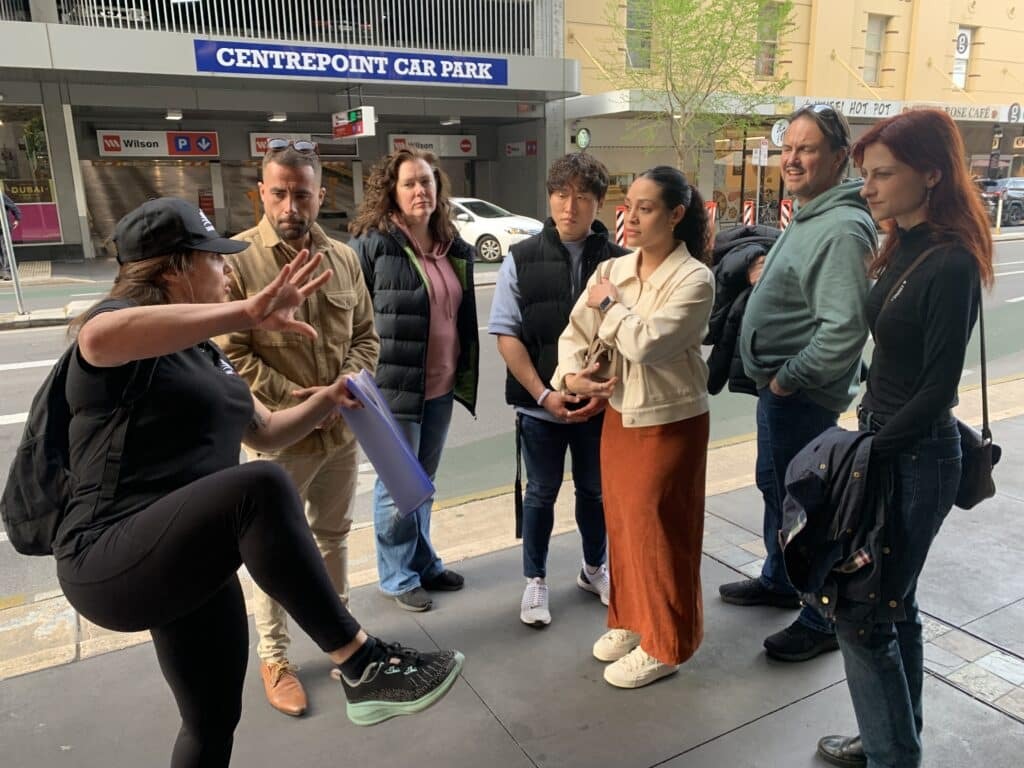
The concept of A Promenade of Shorts was born out of COVID restrictions in April 2020 when crowd sizes had to be limited to a small number. Due to the previous success of the concept, in 2026 the Red Phoenix Theatre Company presents season 3 of A Promenade of Shorts now at the Goodwood Theatre whereby 29 actors perform in 9 plays each of 10 minutes. They are performed in different areas of the theatre with great success. The plays are expertly executed over 3 sessions with 2 breaks and provide a highly entertaining experience.

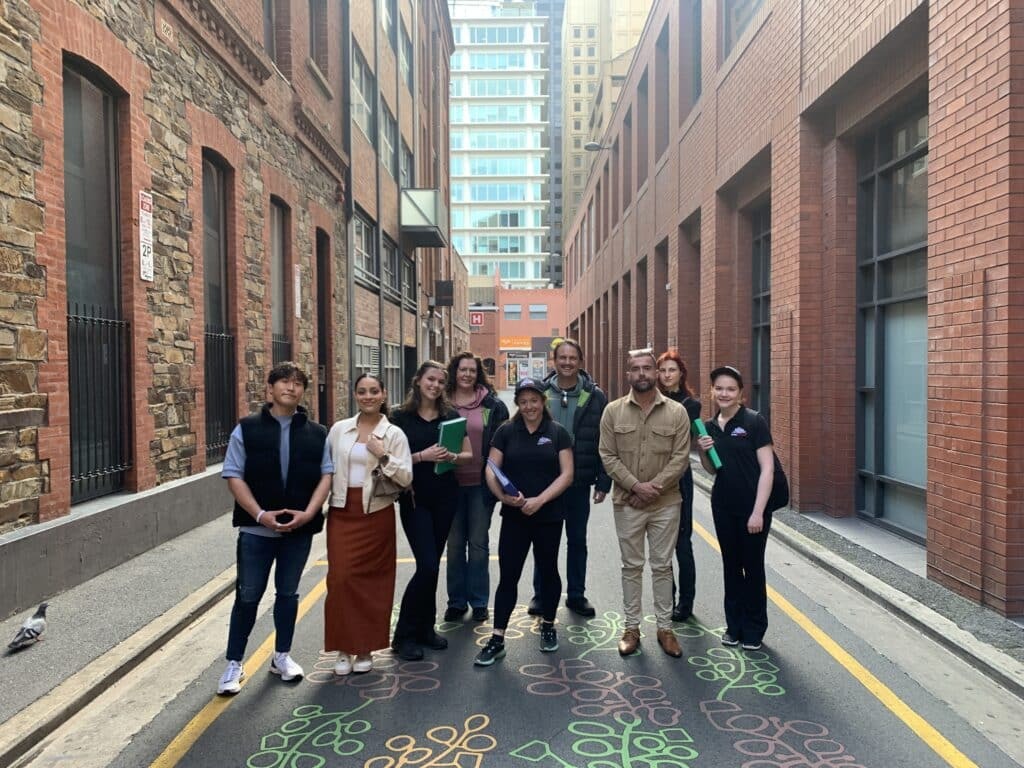
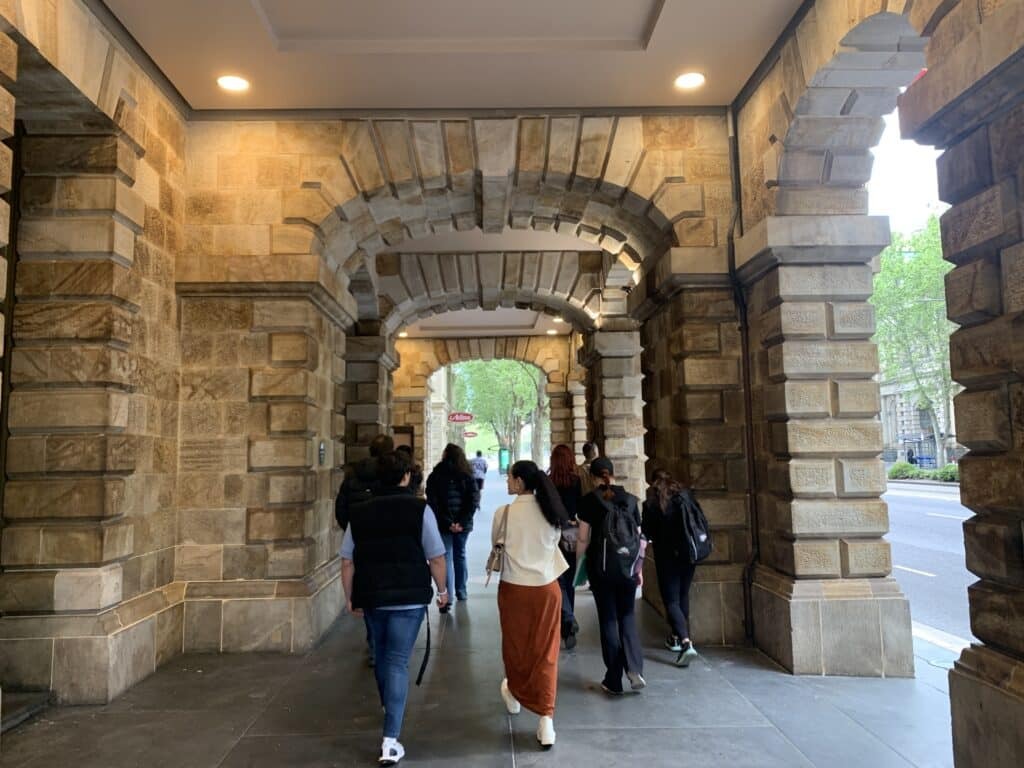
Over the course of the evening, Tour Guides (Anne Doherty, Kate Prescott and Olivia Jan Parker) lead 3 groups of audience members through the distinct performance spaces where 3 plays are performed at each space.

In the Main Theatre the following are performed:

1. In Farce (written by Steven Bucko, directed by Norm Caddick)

Cast:
Front Desk Staff Jo Coventry
Man Matt Chapman
Husband Adam Tuominen
Wife Anita Zamberlan Canala
Plot Device Krystal Cave

2. Chilled Wine (written by Dorothy Lambert, directed by Alicia Zorkovic)

Cast:
Charlotte Jessica Corrie
Louise Laura Tregloan
Gemma Monika Lapka

3. Go to the Light (written by Laurie Allen, directed by Alicia Zorkovic)

Cast:
Roxie Peta Shannon
Sophie Cheryl Douglas
Dad Malcolm Walton
Will Tom Tassone

In The Bar the following are performed:

4. Bottle for a Special Occasion (written by William Kovacsik, directed by Hayley Horton)

Cast:
Martin Stuart Perce
Judith Lyn Wilson

5. On Queue (written by Morey Norkin, directed by Hayley Horton)

Cast:
Man 1 Jack Robins
Man 2 Jethro Pidd

6. Choices (written by James McLindon, directed by Hayley Horton)

Cast:
Debt Counselor Rebecca Kemp
Prospective Client Laura Lines


In The Studio the following are performed:

7. Road Trip (written by Jan Probst, directed by Libby Drake)

Cast:
Allen Lindsay Dunn
Mary Joanne St Clair
Aunt Pat Katie Packer
Uncle Joe John Rosen
Jack Jai Pearce
Michael Charlie Butler

8. When I Fall in Love it Will Be … (written by Susan Middaugh, directed by Libby Drake)

Cast:
Florence Campbell Lisa Lanzi
Ed Ferris Adrian Barnes

9. Mrs Thrale Lays On … Tea! (written by Rob Taylor, directed by Libby Drake)

Cast:
Mrs Thrale Sharon Malujlo
Polly Zoe Battersby
Dr Johnson Michael Eustice

Over the 9 plays the audience learns the ordinances in the town of Farce, not to trust a man working his way through the alphabet, how many Facebook likes you could get on your death bed, what’s the best wines for a cheating husband, how 2 men can make a queue, how to repay your student loan, how to plan a family road trip, how to cope with spouses who have dementia in residential care and what Mrs Thrale and Dr Johnson do after tea – very naughty!

The plays are often funny, sometimes hilariously, but there is also a mixture of sadness, and all are expertly acted. Each performance space presents its own demands which are adeptly and seamlessly resolved by the company’s crew members. Each audience member will have their favourite play of the evening and is also required to vote for it which is a difficult task due to the high-quality of all of them.

The Red Phoenix Theatre Company is to be congratulated for providing a magnificent evening of entertainment with season 3 of A Promenade of Shorts, with something for all audience members, it is in every respect a triumph deserving full houses.

Reviewed by Rob McKinnon
Rating; 5/5

A Promenade of Shorts remaining sessions are:
January 17, 21, 22, 23 & 24 @ 7.30pm. Sunday January 18 @ 2.00pm

Venue: Goodwood Theatre
166 Goodwood Road, Goodwood SA 5034

Tickets: https://www.trybooking.com/events/landing/1419827

To book tickets to A Promenade of Shorts, please visit https://www.redphoenixtheatre.com/nextplay/.

Spread the word on your favourite platform!

Kokuhō Opens the 2025 Japanese Film Festival With Power, Precision and Pure Theatrical Brilliance

Kokuho (Opening Night Reception - Japanese Film Festival)

Kokuho (Opening Night Reception – Japanese Film Festival) Rating

Click if you liked this article

The Japanese Film Festival is in its twenty-ninth year, and the festival continues to build its reputation as one of the most significant celebrations of Japanese cinema outside Japan. What began in 1997 with three small community screenings has grown into a nationwide cultural program that brings together new releases direct from Japanese cinemas, rare 35 millimetre prints, guest appearances, Q and A sessions and opportunities to experience both traditional and contemporary Japanese culture.

Opening night in Melbourne this year was buzzing from the moment the audience arrived. There was a warm sense of community at this festival, and that feeling was matched by a spread that included some of the best mochi I have ever had, generously provided by Roboto. The mood was festive, the theatre was full, and the anticipation for the flagship film was high.

This year’s opening film is Kokuhō, directed by Lee Sang il. The title means National Treasure, a fitting name given the cultural impact the film has had in Japan. Based on the best-selling novel by Shūichi Yoshida, Kokuhō stormed the Japanese box office in mid-2025 and continued to grow in popularity throughout the year. Audiences flocked to it repeatedly, word of mouth turning it into a major cultural milestone.

Unusually for a live-action drama, Kokuhō also became a major force on the international festival circuit. While Japanese films that break into global award categories are often animated features, Kokuhō made waves at Cannes and several other significant festivals. It was one of the most awarded and widely discussed Japanese films of the year, raising expectations ahead of its arrival in Australia.

A Story Shaped by Lineage, Ambition and Art

The story begins in Nagasaki in 1964 with a moment of shocking violence. Young Kikuo witnesses the murder of his father, a powerful leader of a yakuza organisation. This trauma marks him for life and shapes his intense desire to build a new future for himself. After his father’s death, Kikuo is taken in by the great kabuki master Hanjirō Hanai, played by the legendary Ken Watanabe. Under Hanai’s strict yet compassionate guidance, Kikuo begins to train as a kabuki performer alongside the master’s own son, Shunsuke.

The film follows the intertwined destinies of the two boys as they grow into men and into rivals. Their training is demanding. Their devotion to kabuki becomes an all-consuming pursuit that demands sacrifice, emotional depth and personal transformation. The film spans several decades, charting their rise through acting schools, rehearsal rooms and eventually onto Japan’s most prestigious kabuki stages.

Ryō Yoshizawa gives a powerful performance as Kikuo. He carries the weight of grief, ambition and longing with remarkable nuance. Ryūsei Yokohama as Shunsuke provides the perfect counterpoint, the son of a famous master who must grapple with the burden of legacy and expectation. The complex relationship between the two men provides the emotional core of the film. They are raised like brothers, yet they push and pull against each other constantly as their shared ambition becomes a source of love, frustration and pain.


Drama in Every Sense of the Word

Kokuhō is a drama in the richest sense. It is a story about artistic excellence, intense rivalry and deep emotional turmoil. It is also a story about Japan itself. The film is set during a period of enormous cultural transition. The country was emerging from the aftermath of the Second World War and moving into a modern future. This tension between old and new plays out both on the stage and in the characters’ lives.

One of the most impressive achievements of the film is the way it integrates kabuki into the narrative. Kabuki is known for its bold makeup, elaborate costumes, stylised movement and heightened delivery. For audiences unfamiliar with it, the artform can at first seem exaggerated. The film teaches viewers how to understand its emotional language. Rehearsal scenes show how performers learn to express pain, longing and joy through intonation and precise physicality. As Kikuo and Shunsuke train, we begin to see how their real lives mirror the classic tales they perform on stage.

The kabuki performances are staged with extraordinary visual beauty. The cinematography captures the richness of the costumes, the elegance of the sets and the commanding presence of the actors. The film allows several kabuki scenes to unfold in full, giving the audience a chance to experience the art form as though sitting in the theatre. These scenes also run in parallel with the offstage story, heightening the emotional impact.

A Film That Welcomes Newcomers to Kabuki

One of the film’s great strengths is its accessibility. Even if you have never seen kabuki before, Kokuhō draws you gently into its world. The characters learn and rehearse in ways that reveal the mechanics of the art. As the audience sees them refine their craft and receive feedback from Hanai, kabuki becomes easier to follow and understand. By the time the major stage scenes arrive, the heightened style feels entirely natural because the film has taught us how to read it.

This makes Kokuhō not only a gripping drama but also a cultural education. It provides a rare cinematic window into an artform that has survived for centuries and continues to hold a revered place in Japanese cultural identity.

A Rich Tapestry of Old and New Japan

The film also explores the social and cultural tensions of the era. Kikuo’s yakuza background places him at odds with the traditions and purity expected of kabuki performers. Meanwhile, Shunsuke must contend with the expectations placed upon him as the heir to a master performer. Japan itself is changing, and so are the worlds these men inhabit. The clash between traditional norms and a rapidly modernising society gives the film an added depth.

Verdict: A Masterwork of Emotion and Artistry

Kokuhō is a triumph of storytelling, performance and direction. It is a sweeping epic that never loses sight of the intimate emotional journeys at its heart. The performances are sublime, the direction confident, and the visual experience unforgettable. It balances scale, beauty and emotional truth.

As the opening feature for the 2025 Japanese Film Festival, it could not be more fitting. It embodies the richness and diversity of Japanese cinema and highlights the festival’s commitment to showcasing films that push artistic boundaries and capture the imagination.

The Japanese Film Festival runs nationwide from October to December 2025. To explore the full program, visit the festival website and enjoy a celebration of Japanese cinema that continues to grow in scope, ambition and cultural impact.

To book tickets to Kokuho (Opening Night Reception – Japanese Film Festival), please visit https://japanesefilmfestival.net/film/kokuho/.

Spread the word on your favourite platform!