Dial M for Murder

Dial M for Murder

Dial M for Murder Rating

★★★★★

Click if you liked this article

3

The telephone rings, trilling through the darkened living room three, four, five times. The bedroom light flicks on, illuminating the telephone and the desk it rests upon. A woman appears, yawning, in her dressing gown.

She answers the phone, but no one responds. “Hello?” she says again, looking at the handset in confusion. It’s in that moment she feels fabric tightening around her neck as she is shoved onto the desk, fighting for air …

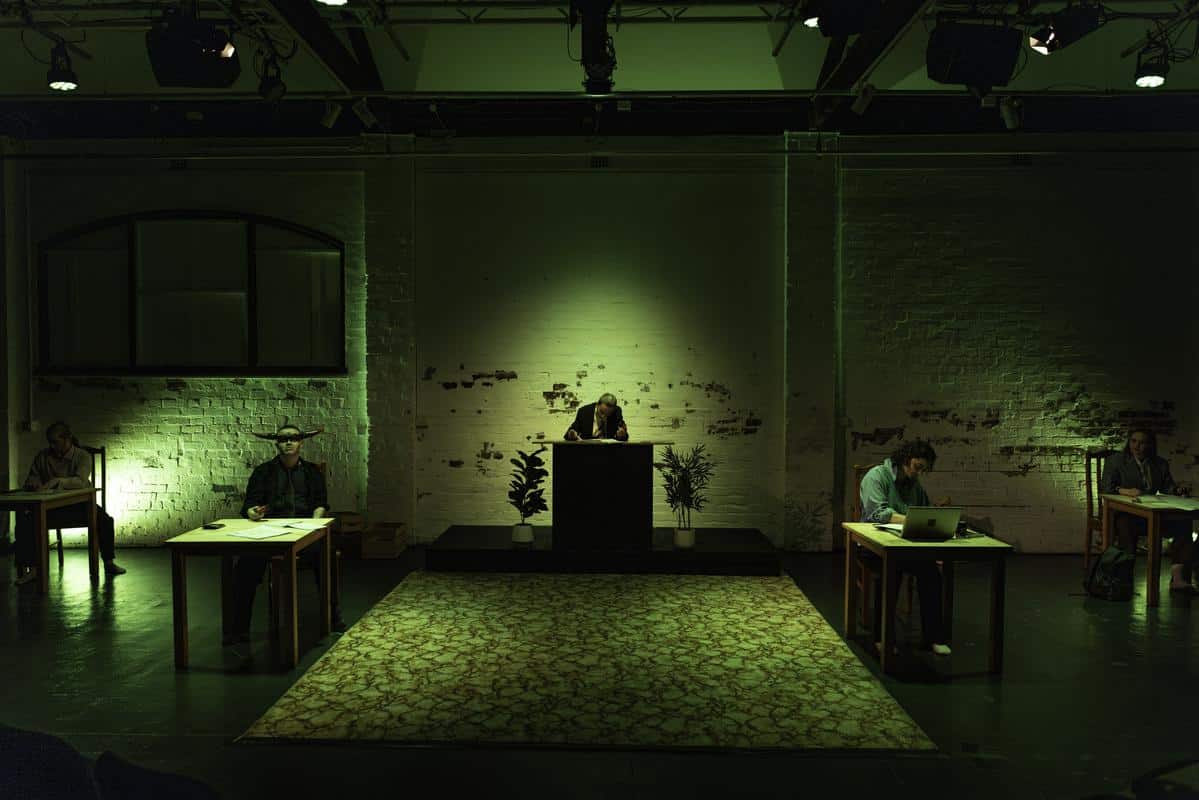
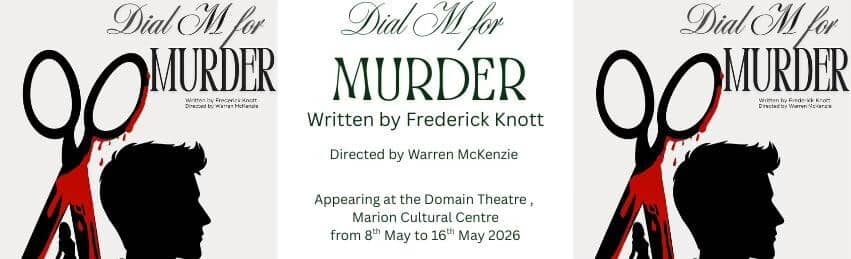
“Dial M for Murder”, presented by Galleon Theatre Group, is not only a beautiful demonstration of inner turmoil, but simplicity on stage. Everything from the set design to the costumes is simple, elegant, and beautifully complementary. The set has been expertly crafted to enhance the impact the lighting has on key moments within the story. Key moments which have also been carefully paired with a spine-tingling score to set your nerves jangling.

Not only will your nerves be frayed, but you can expect to find yourself holding your breath in anticipation more than once, wondering “how on earth will they will get away with this?”




With a small cast of five you expect the chemistry to be high-quality, and the cast from Galleon Theatre do not let down their audience for a moment. With heartfelt confessions, scheming, dastardly deeds, and inquisitive inspectors, no interaction felt unhurried or unconsidered. Each moment was carefully plotted from the facial expressions to the smooth, natural use of the entire stage.

The stage, which has a distinct air of being its own character, is deceptively simple at first glance, but after some observation has clearly been well curated, not just for the performance but also for the actors. The set feels cohesive and lived in, just like the flat of a married couple should.

Be sure to keep your eye on this married couple, for their body language and voice control are expertly maintained … until they’re not. Dressed impeccably, and with barely a hair out place, Mr. and Mrs. Wendice navigate the new twist their marriage has undertaken, while a desperate Mr. Halliday and the calculating Inspector Hubbard do their utmost to make sense of how the slimy Captain Lesgate fits into the story. Be sure to watch the costumes carefully, each one perfectly suited for their character, and even being used as a plot point … The audience will find themselves on the edge of their seat to see if the good guys will prevail and the bad guys will get what’s coming to them, with laughs, gasps, and sinking feelings along the way.

To book tickets to Dial M for Murder, please visit https://www.galleon.org.au/html/dialMForMurder.html.

Spread the word on your favourite platform!

The Taming of the Shrew - The Adelaide University Theatre Guild

The Taming of the Shrew

The Taming of the Shrew Rating

★★★★★

Click if you liked this article

1

Review: The Taming of the Shrew - The Adelaide University Theatre Guild

The Adelaide University Theatre Guild’s new adaption of one of Shakespeare’s more problematic plays puts The Taming of the Shrew into a new realm of pop and rock music to great effect while still holding mostly true to the original text.

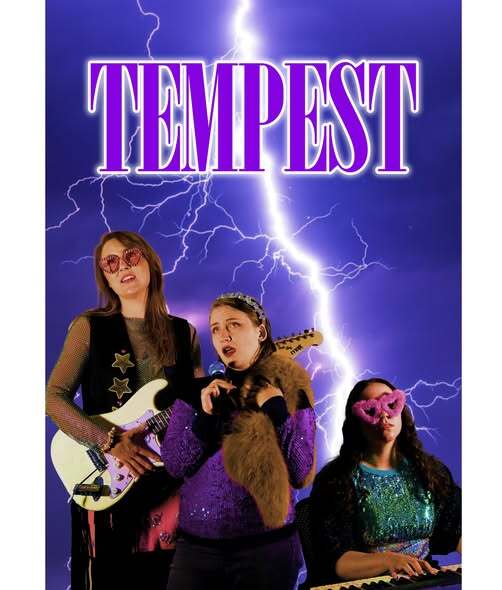
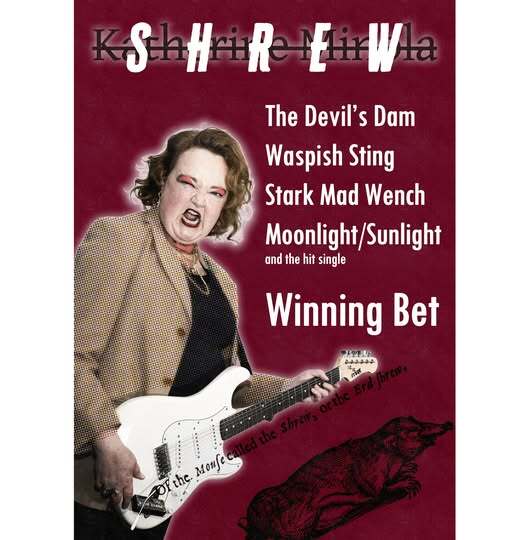
Dispensing with Shakespeare's original play within a play concept, and instead of being set in the usual Padua, this version is set in Paradise which is “a powerhouse record label and the battlefield is the charts.” The play begins with Bianca (Jessica Merrick) and her band singing and dancing to her pop song, then enters Katherine (Heather Crawford), her rock chick older sister with her band and her sharp edges.

Bianca has two suitors, Gremio (Martin Penhale) and Hortensio (Macey Lawson) who wish to marry her but her mother, Minola Baptista (Deborah Walsh), will not agree to anyone marrying Bianca until her older sister Katherine is married. Lucentio (Ben Proeve) arrives with his loyal servant, Tranio (John Charles), and Lucentio also falls in love with Bianca. To try to win her love, Lucentio disguises himself as a tutor for Bianca and Hortensio disguises himself as a musician to also gain access to her to try to do the same. Tranio disguises himself as Lucentio to help convince Minola Baptista to allow Lucentio to marry Bianca.

Standing in their way however is Minola Baptista’s demands that the quarrelsome Katherine be married first. Petruchio (Tom Tassone) arrives and after hearing about Katherine he decides to court her, and he is assisted in this task by Gremio and Hortensio. Upon meeting Petruchio, Katherine resists his advances, but he is not discouraged and he sets a wedding date and so begins the taming of the shrew.


Setting the play in Paradise and revising it for a contemporary time is successful and adds a welcome fresh dimension to the play, although the audience seemed to be a little confused by Bianca and Katherine’s entry. In addition, modern music references to the original text brings many humorous elements. The limited space of the Little Theatre always adds production issues, but both levels of the theatre are skilfully utilised by Olivia Jane Parker’s first-rate direction. In addition, the music includes songs by Ben Waller and two songs by Macey Lawson.

The whole cast handles the fast-moving proceedings superbly, Tom Tassone as Petruchio, John Charles as Tranio with Macey Lawson as Hortensio are particularly impressive. Heather Crawford delivers Katherine’s long final monologue exceptionally.

This version of the thorny The Taming of the Shrew, set innovatively in the modern music scene, is outstandingly well performed and adds to the long line of exceptional productions by the Theatre Guild.

Reviewed by Rob McKinnon
Rating; 4/5

Production Details

Venue: Little Theatre, Adelaide University, The Cloisters, Adelaide SA 5005

Performance Dates:
Saturday 9 May - 3pm
Sunday 10 May - 3pm
Wednesday 13 May - 6:30pm (w/ post-show Q&A)
Thursday 14 May - 7:30pm
Friday 15 May - 7:30pm
Saturday 16 May - 3pm
Sunday 17 May - 3pm

To book tickets to The Taming of the Shrew, please visit https://tasaonline.org.au/series/the-taming-of-the-shrew/.

Photographer: Maggie Morris

Spread the word on your favourite platform!

All Bull

All Bull

All Bull Rating

★★★★★

Click if you liked this article

2

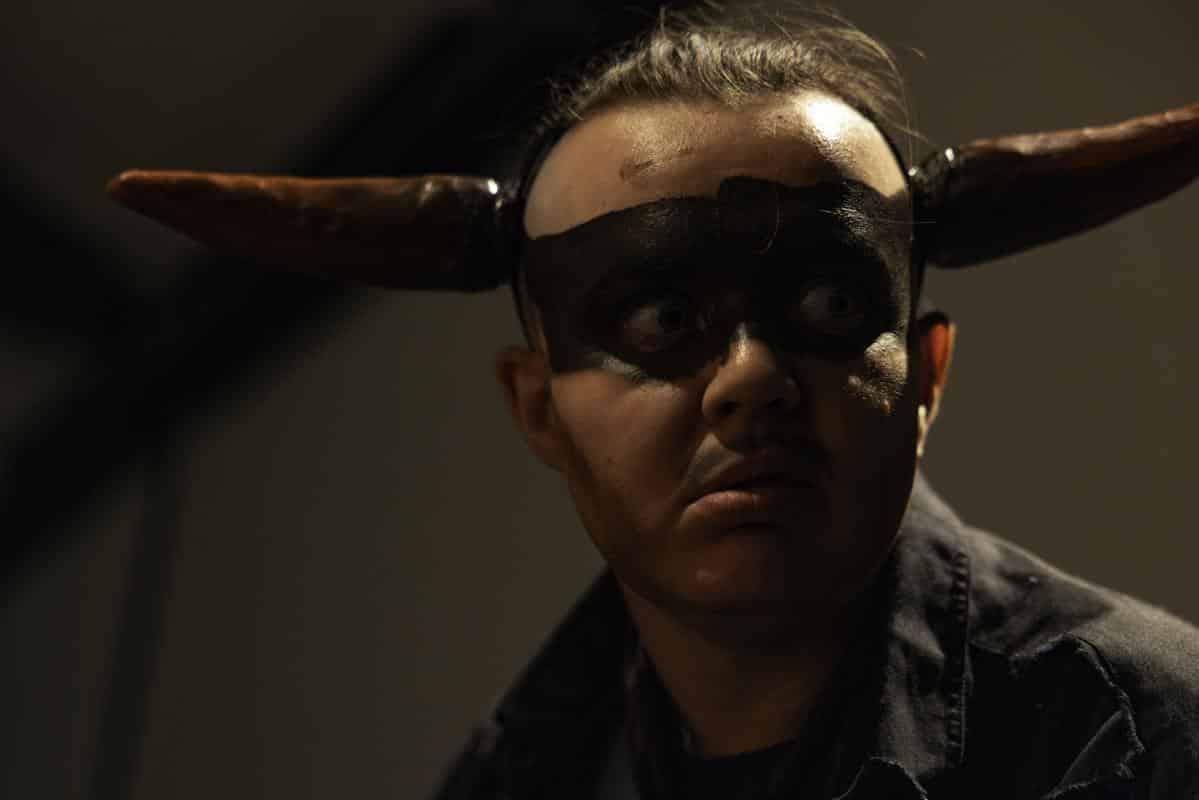
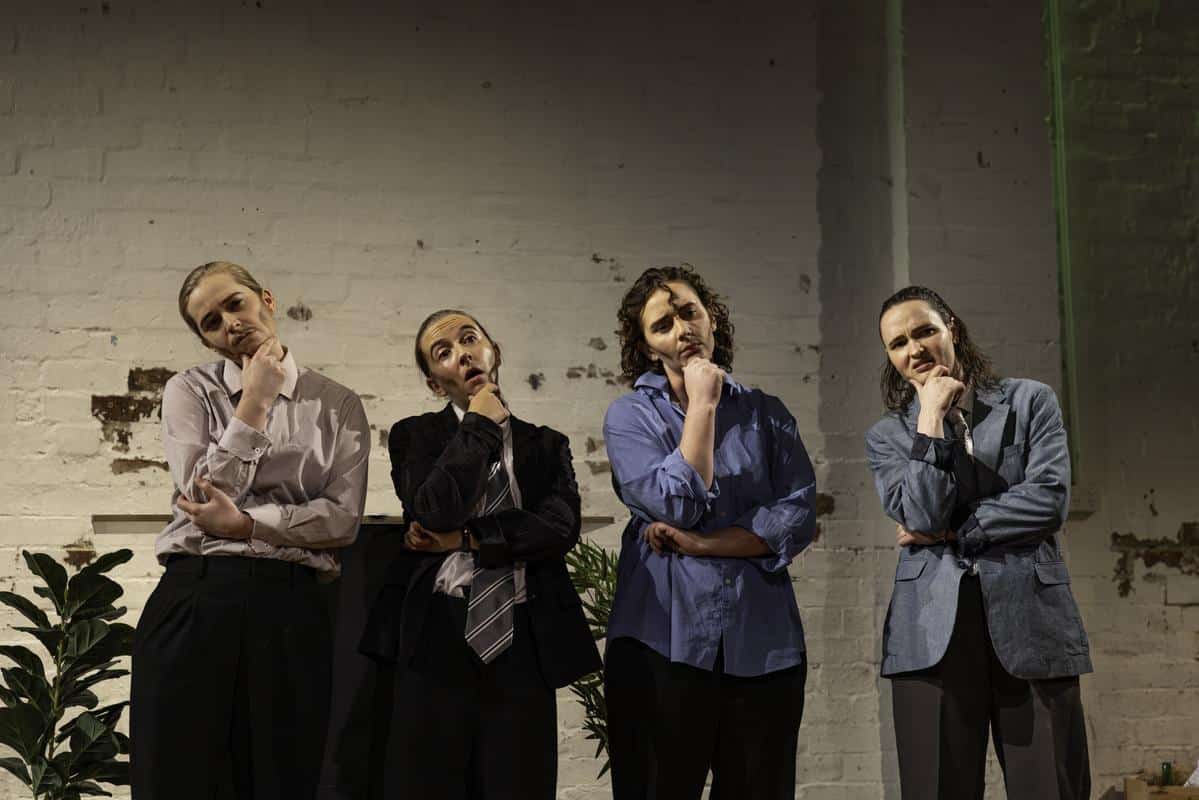
All Bull, written and directed by Walt Dyson, follows a group of five salesmen as they travel from pub to work to pub to work and spot a bull stampeding down the street. As the play progresses, employees Ben (Lousie Jameson) and John (Ashlynn Parigi) attempt to raise the alarm as the group and the rest of the city are turned one by one into bulls.

The show is a bit unpolished in a few ways, firstly its tone/style has difficulty finding a home. Joe and Jeff who were played by Emily Farrell and Emily Jenkins respectively, were written almost solely comedically, allowing the actors to lean into the ridiculousness of their characters. Farrell and Jenkins’ clowning energy were fantastic to watch and were real comedic highlights of the show. In comparison, Jameson’s Ben and Parigi’s John were more grounded. Their embodiments created men the audience felt they knew. However this does highlight that the play is unsure whether to commit to realism or camp, and therefore often lands awkwardly in between. There were more camp moments near the start, particularly when first spotting the bull, that I wish had been peppered more throughout.

The sound and composition by Junaid Eastman is a stand out production element. Transitioning from cow bells to clinking glasses, Eastman creates an unnerving environment from when the audience first enters and plays off the tonal layers throughout the show.


While I was particularly excited to see where the bull transformations fit in the themes, the allegory is a bit half baked and attempts to stretch without material to cling onto. The script attempts to make it explicit, spoonfeeding the audience direct lines about what it’s meant to mean, e.g. “bulls will be bulls,” while the allegory itself becomes inconsistent. The reasoning for why some of the men turn into bulls or are drawn to its appeal is underdeveloped. Additionally, the choice of making dangerous men monstrous and unintelligent is already a delicate game.

Though I give credit to the fact the script was attempting to branch out from sexual violence and misogyny – as many productions critiquing masculinity have focused their attention – it ends up being a vague what is being critiqued. It leans towards talking about male alcoholism, but we don’t see it actually cause many problems. In the director’s note Dyson references “drunken acts” he had witnessed, but few happen during the show, including none from Ben who is meant to be the raging alcoholic. It ends up not feeling grounded in these real world issues it’s alluding to, saying “drinking makes men act badly” without proving its claim or asking why. I think there is something in the cracks about how capitalism nurtures toxic masculinity, but it doesn't develop far.

The show’s strongest moments were in the choreographed movement sequences and leaning into the physicalisation and aggression of the bulls. Faun Xe and Eden Bren were standouts in their bullish masculinity, even when doing a set transition the energy was palpable with clear hierarchical lines drawn. The staging did however at times feel static and awkward, often drawing my eye away from the main conversations.

All Bull attempts to examine Australian drinking culture, toxic masculinity and at times the manosphere, but ends up unsure in its thesis. I think with some more development and a confident through thread, this show could truly be something special. In a current climate where there is by no means a lack of theatre about masculinity, Dyson needs to be specific with what he actually wants to talk about.

To book tickets to All Bull, please visit https://www.eventbrite.com.au/e/all-bull-a-play-in-one-act-tickets-1984172243593.

Spread the word on your favourite platform!

A Ghost To Believe In

Beethoven's Ghost

Beethoven's Ghost Rating

★★★★★

Click if you liked this article

2

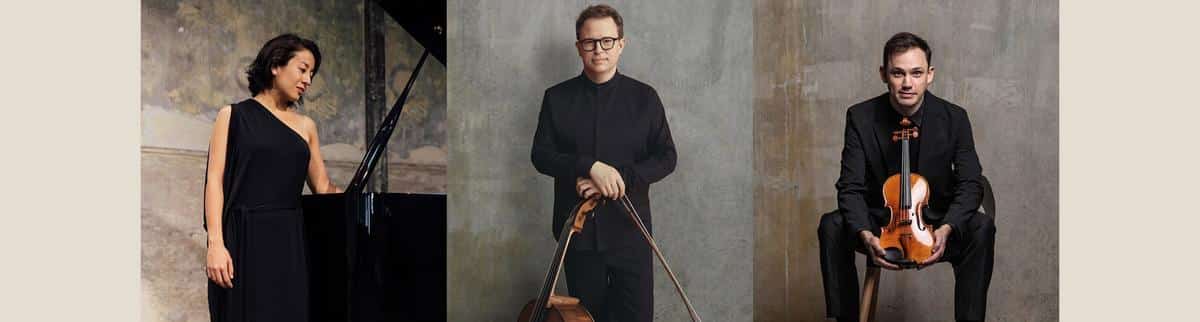
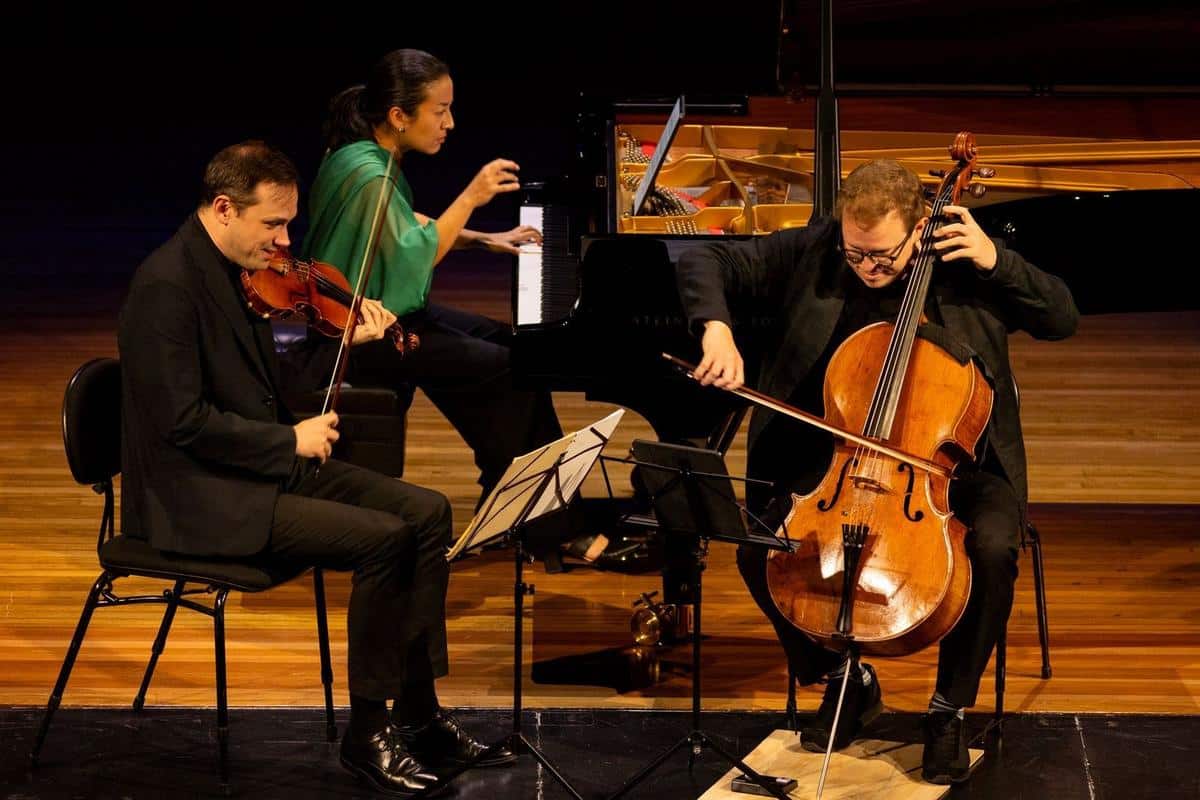
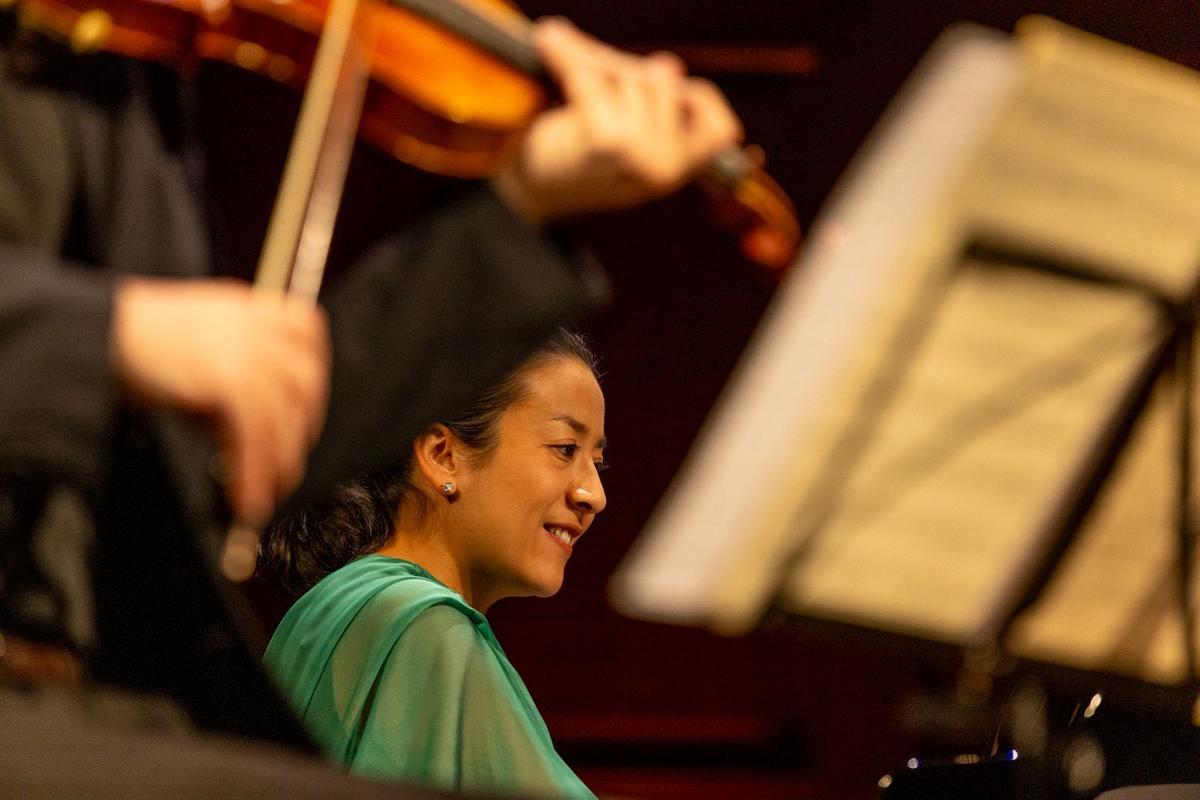
Musica Viva always assemble world-class musicians. The Beethoven's Ghost concert at City Recital Hall, on May 6, saw a sublime collaboration. Aura Go on piano, plays with boundless passion and innovation. Kristian Winther on violin, creates wondrous, coherent performances. Timo-Veikko Valve, caresses the cello, in expressive fashion.

In many ways, this is an eclectic program with Beethoven and Ravel, accompanied by Australian composer Evotvos and French composer, Boulanger. Yet, it all blends magnificently in the gorgeous artistic space of the City Recital Hall. Valve and Go have collaborated over several years as a duo. Winther has also played with Go. The prospect of forming a trio, proved irresistible and Musica Viva have launched a national tour.

Beethoven's Piano Trio in D major, Op 70 No.1 Ghost 1808, opens the program. The Ghost has Shakespearean influences, which of course adds to the drama. The first movement, Allegro vivace e con brio, is fast-paced and lively. We sense a ghostly spirit. The second movement Largo assai ed espressivo, is slow and effectively eerie. The third movement, Presto, is quick, demanding technical intensity from the trio. Ghosts move in mysterious ways! This Beethoven trio is one of his most performed chamber works and its appeal is obvious.


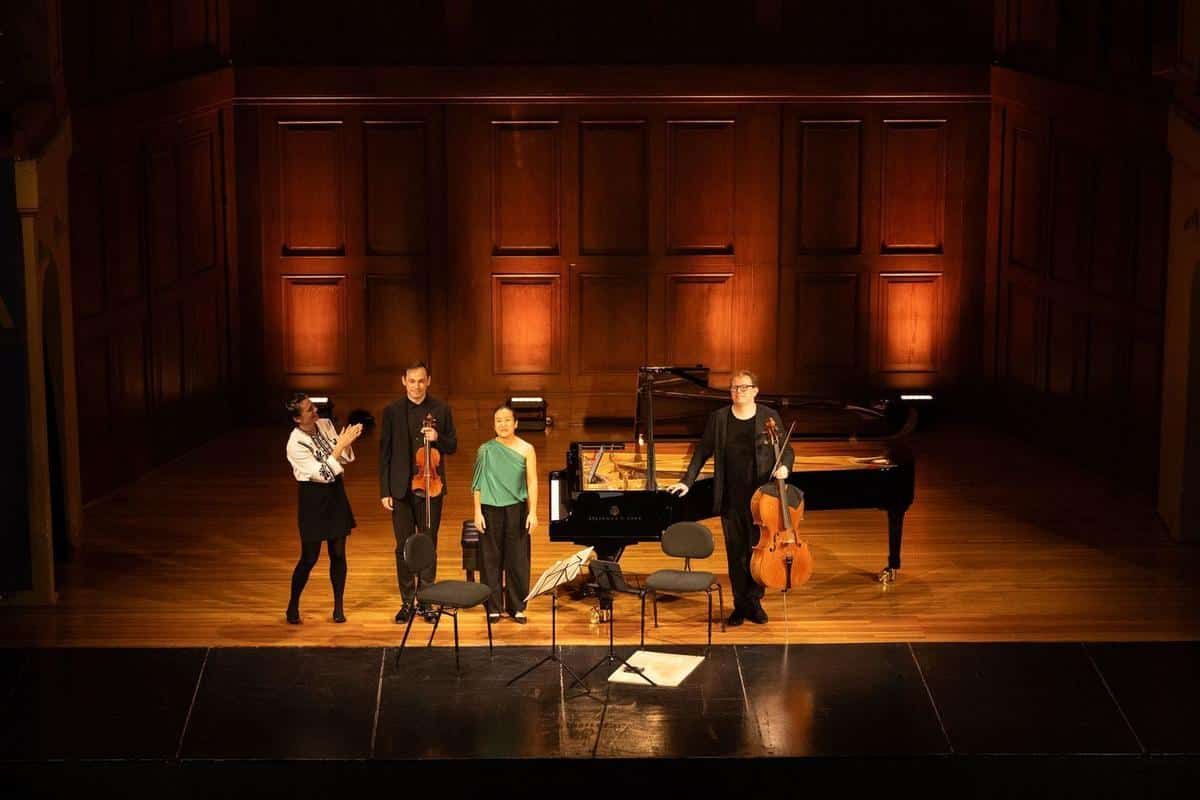
The second composer is Melody Eotvos,(yes, the perfect name for a composer). Regnare, Piano Trio No 3 2026, is powerful. Eotvos, introduces her work on-stage. We learn that her inspiration for this piece comes from the Tasmanian Ash (Eucalyptus regnare). Being the world's tallest flowering plant, there's a sense that various climatic changes must be overcome in order to survive. The trio capture the atmospherics here so beautifully. Eotvos embraces the artists to rapturous applause from the audience. It's a joyous way to glide to an interval.

The third composer is Lili Boulanger's piece, D'un soir triste 1918, which translates to Of a sad Evening. There's an enveloping sensation of despair, grief and indeed, deep sadness. The trio again achieve shivering harmonies. Life is fragile. The piece has an urgent intensity. We feel brave for having witnessed it. Sadness is the most lasting of all human emotions.

To close the program, there's Ravel's Piano Trio 1914. Movement 1, Modere is played at moderate speed. It has a folk music-like feel with subtle irregularities to waft over us. The second movement, Pantoum Assez vif, is lively and poetic. Victor Hugo's words being influential in its formation. Passacaille, the third instalment, is a hymn to the piece. Each instrument has its moments to absolutely shine, as a climax is achieved. The final movement has a divine, rhythmic Basque texture. A glorious conclusion to a beguiling evening.

Post Show there is a Q&A on-stage with the ever-charming, director, Paul Kildea, composer Melody Eotvos, accompanied by Aura Go, Kristian Winther and Timo-Veikko-Valve. Musica Viva pride themselves on being accessible. There's no intellectual snobbery. The mutual admiration between, director, composer and artists is gloriously on-show. Concerts like this happen through collaboration and an ambitious drive for excellence. Beethoven's Ghost has thrilled audiences in Newcastle, Sydney, and Canberra. Adelaide, Melbourne and Perth, are next on the tour. Not to be missed!

To book tickets to Beethoven's Ghost, please visit https://musicaviva.com.au/concert-season/2026/beethovens-ghost/.

Photographer: Peter Stoop

Spread the word on your favourite platform!

Subscribe to What's The Show

Reviews, show news and what is on, straight to your inbox.