Exit Laughing

Exit Laughing

Exit Laughing Rating

Click if you liked this article

3

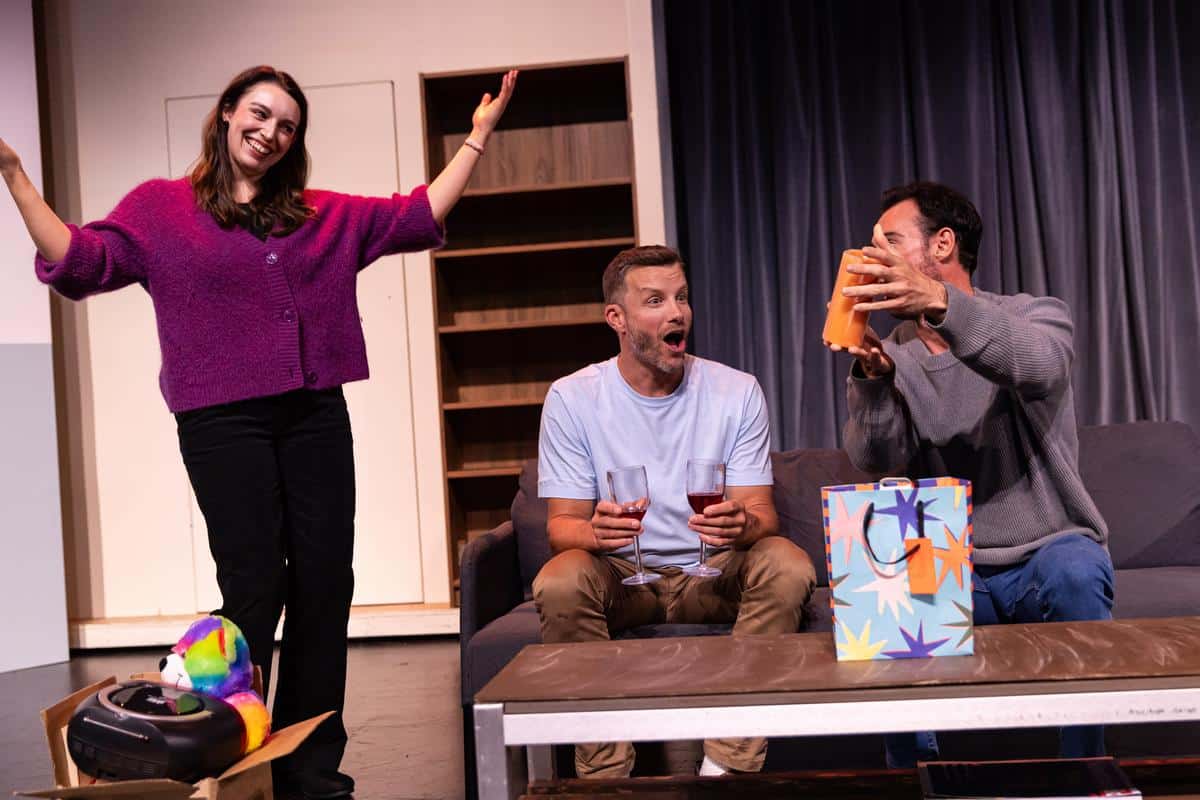
There are plays that make you laugh, plays that make you cry, and then there are plays that quietly sneak up on you and remind you that life is happening right now. Watching ‘Exit Laughing’ feels a little like attending the obituary of a woman who refused to leave the table before the last hand was played. Not a solemn obituary, of course—but one written in laughter, cake crumbs, and the shuffle of bridge cards.

For thirty years, Mary’s greatest adventure was her weekly bridge night with “the girls.” In the grand ledger of life, perhaps that sounds small. But for Connie, Leona, Millie, and Mary—four Southern ladies from Birmingham—it was ritual, friendship, and the quiet glue that held the years together. So when Mary dies rather inconveniently before the next scheduled game, the surviving trio does what any respectable, bridge-loving friends might do: they “borrow” her ashes from the funeral home and bring her along for one final night of cards.

From that moment on, the play unfolds like a mischievous wake—one where the guest of honor is present in an urn and the night spirals gloriously out of control. What begins in melancholy quickly turns into an evening of surprises. It is ridiculous in the best theatrical sense: a celebration of life disguised as chaos.

Originally staged at the historic Landers Theatre by the Springfield Little Theatre, the production famously broke the theater’s fifty-year record for tickets sold, playing to standing-room-only audiences and becoming the most popular non-musical in the theatre’s century-long history. It is not difficult to see why. The play carries a universal message wrapped in laughter: it is never too late—or too early—to seize the day.


The recent production at Hunters Hill Theatre, directed by Annette Van Roden, captures this spirit beautifully. Van Roden’s direction keeps the pacing lively while allowing the emotional moments to breathe. She has clearly chosen her cast with care, creating an ensemble that feels authentic, warm, and delightfully human.

Among the cast, Penny Church’s Millie stands out as a particularly charming presence—eccentric, slightly unhinged, but utterly lovable. Her performance captures the play’s essence: that life, even in its later chapters, can still be wild, surprising, and full of joy.

By the end, the audience leaves with what might best be described as a warm aftertaste—a smile lingering long after the curtain falls. In the end, Exit Laughing is less a comedy about death and more an obituary for a life lived too cautiously. Mary’s final hand reminds us all that the game isn’t over yet—and that the best move might simply be to laugh and play on. ♠️♥️♣️♦️

To book tickets to Exit Laughing, please visit https://www.huntershilltheatre.com.au/.

Photographer: Daniel Ferris

Spread the word on your favourite platform!

A Mirror

A Mirror

A Mirror Rating

Click if you liked this article

3

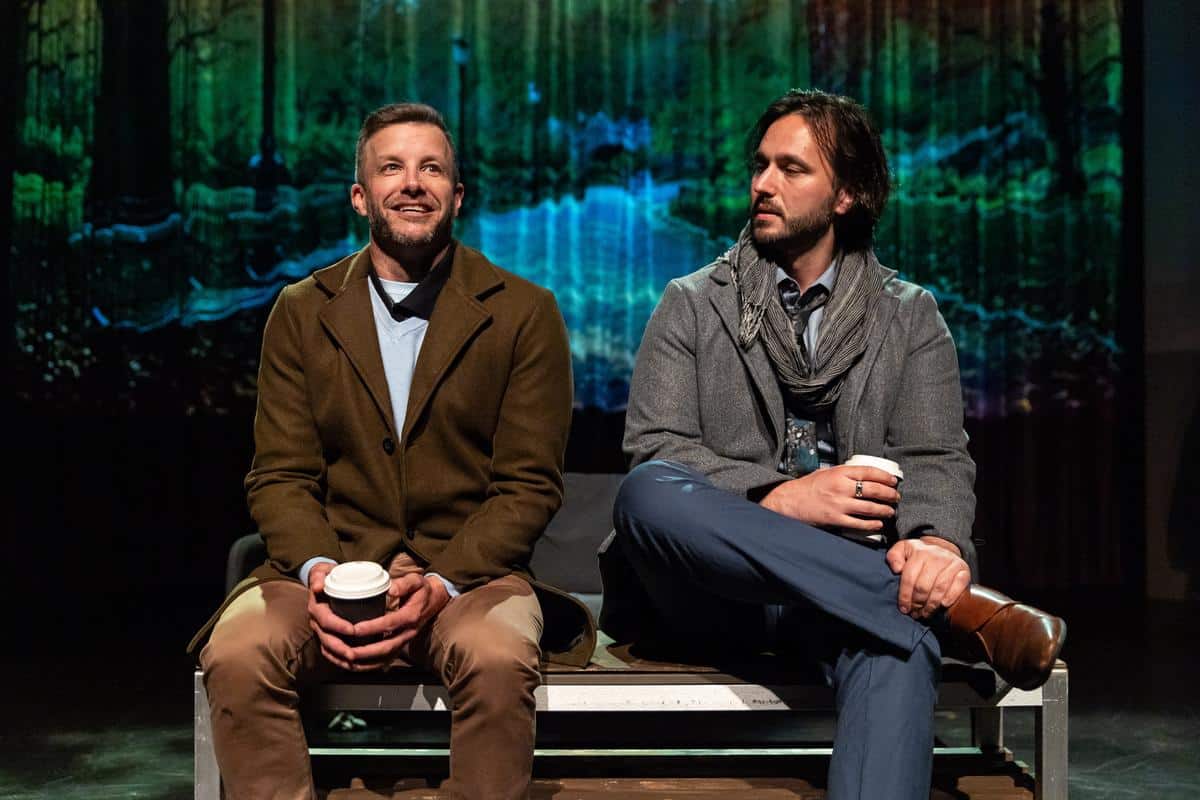
As you enter the theatre for ‘A Mirror’, it feels less like attending a play and more like arriving at a celebration. The foyer hums with anticipation. Ushers hand you a wedding programme, neatly printed with the order of events, inviting you to witness a union. It is a charming touch—until you turn the paper over. There, instead of a sentimental note, is a stark Oath of Allegiance to the Motherland. The shift is immediate and unsettling. You take your seat—slightly more uncomfortable than expected—and as the festivities begin, you sense that you are not merely watching a wedding. You are being watched yourself.

From the outset, Holcroft’s play establishes a world chillingly reminiscent of George Orwell’s ‘1984’. The auditorium becomes part of the dystopia. Eyes seem to linger too long. Applause feels monitored. In this society, a misstep, a wrong look, an insufficiently enthusiastic smile—any of these could betray you. The atmosphere is thick with suspicion.

The wedding that frames the narrative is a masterstroke of theatrical irony. Traditionally a symbol of joy and new beginnings, here it is a hollow performance: a carefully constructed fiction designed to appease the authorities. Beneath rehearsed vows and forced laughter lies desperation. The ceremony becomes a metaphor for the wider social order—an elaborate façade maintained for survival. Love is secondary; compliance is everything.


As the story unfolds, we are drawn into the lives of writers coerced into producing patriotic fabrications. They are tasked with rewriting history, inventing heroes, and manufacturing narratives that glorify the regime. Their creativity, once a source of meaning, becomes an instrument of oppression. Through intimidation and propaganda, they are compelled to betray not only the truth but also themselves. Holcroft incisively explores how authoritarian systems corrupt the act of storytelling, transforming art into ammunition.

Yet the weight of the subject matter, combined with the absence of an intermission, makes the production feel deliberately relentless. There is no pause for reflection, no moment to breathe. While this structural choice reinforces the suffocating atmosphere of the regime, it also renders the experience slow at times, even long. The unbroken intensity mirrors the characters’ entrapment, asking the audience to endure the same sustained pressure.

When the lights dim, the impact lingers. The play offers no easy catharsis, no triumphant overthrow. Instead, it leaves the audience with a question that echoes long after departure: would you speak the truth if the price were injury, imprisonment, even death?

In its bitterness, the play achieves a powerful moral clarity. It compels compassion, provokes self‑examination, and reminds us that while regimes built on lies may feel immovable, they persist only as long as individuals choose silence over courage. The truth may not always triumph—but as long as there are people willing to tell it, even at great cost, it can.

To book tickets to A Mirror, please visit https://belvoir.com.au/productions/a-mirror/.

Photographer: Brett Boardman

Spread the word on your favourite platform!

Have They, Won’t They: Es & Flo at the Old Fitz

Es & Flo

Es & Flo Rating

Click if you liked this article

2

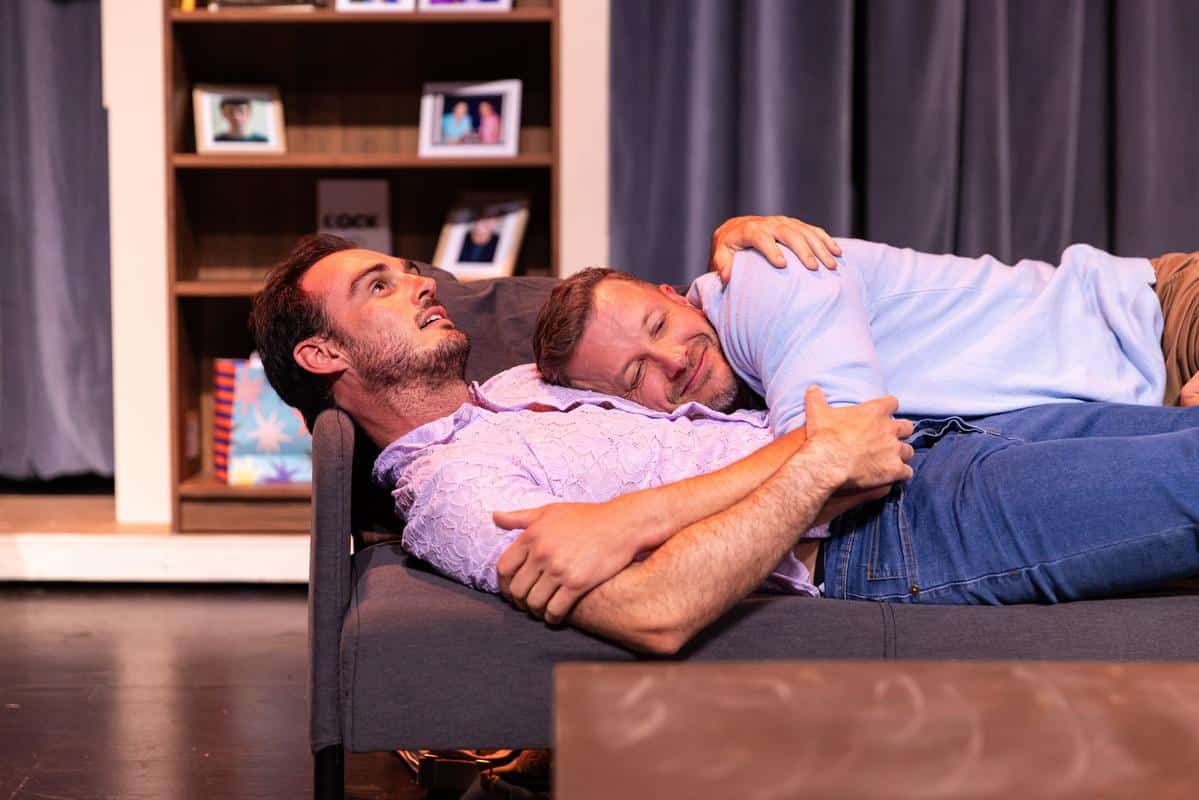
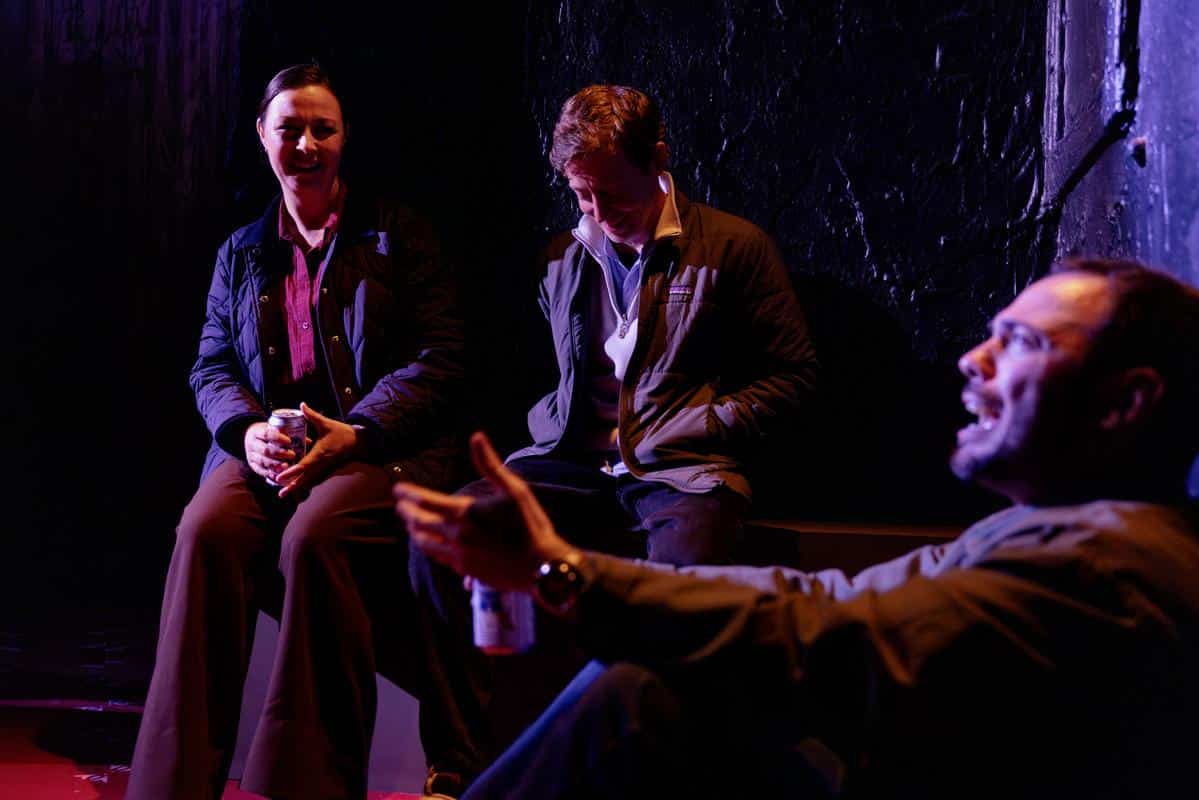
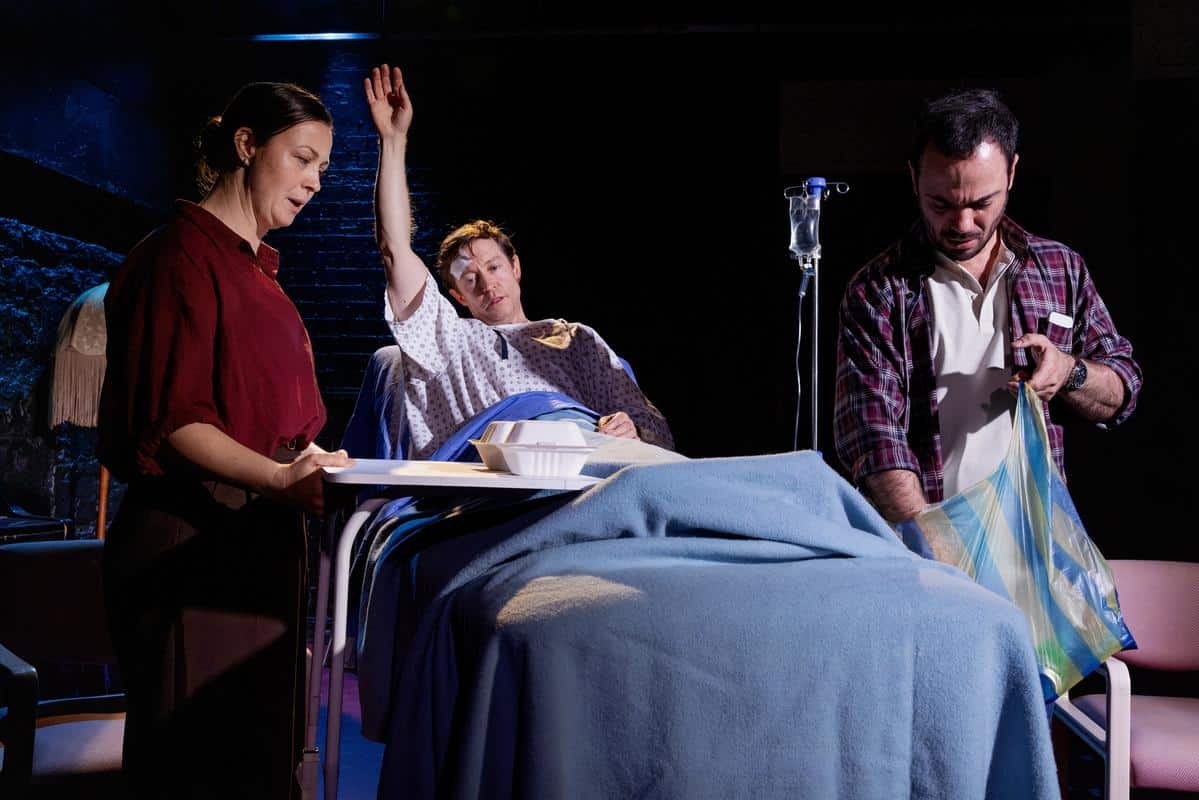
It took until 2013 for gay marriage laws to pass in England. Although it may feel like we’ve made strides towards change, in a lot of ways, queerness had a bright, shining five to seven years in the sun before it began to slide backwards again in modern politics. Es & Flo is a little bit about this – and why marriage is such an essential part of the fight – but it’s also mostly about the complexity of lifelong relationships, and the intimate sense of loss and betrayal we feel when someone we love begins to slip through our fingers.

Emma Canalese has set this show in the warm and familiar home it deserves, one yellowed by years of adoration and care. One that the characters on stage are also deeply familiar with. Such, the threat of losing the home and those inside it becomes all the more raw and uncomfortable. As the piece progresses, the sense of belonging we feel in this quiet home becomes more and more disturbed – video and audio of protests and conversations merging in a way that creates a cacophony that we’re both threatened by, and desperately want to understand.


Annie Bryon delivers something that truly hits close to home with Esme. Maybe it’s the unending patience and devotion to the childlike wonder of Kasia, or maybe it’s the disquieting hysteria of an older person’s confusion. Either way, it’s difficult not to think of some of ours in our own lives. Bryon evolved spectacularly in the second half, particularly in the more subtly brutal moments. Fay Du Chateau in return gives us something quieter, smarter, but nevertheless slipping into a panic she can’t understand either, as the stability of her entire world begins to fall apart. Her physicality in gesture, and her willingness to play in the discomfort of the piece makes her performance really something special. Charlotte Salusinszky as Biata is a lovely empathetic,\ but realistic edge, bouncing off of Chateau in a way that humanizes and deepens both of them. Erika Ndibe brings a whimsicality that lifts the piece to its feet in a way it often needs, along with providing the quiet tragedy of not understanding why Es and Flo aren’t allowed to be open in their love for each other. Eloise Snape provides some truly impressive comedic work, and toes the line of insufferable and sympathetic with true finesse.

In a piece centered around relationships, it is only natural that this is where the production shines. All the cast have undeniable chemistry with one another, and their bonding allows the piece to focus the audience into the heartache of the micro of a dementia patient, and the macro of internalised homophobia. There are some brief blips of conviction and blocking, but in a piece as intimate as this one, where it almost feels like we’re voyeuristically spying into someone’s living room, these odd moments smooth over for the most part.

Familiar, and unforgivable, sympathetic, and pathetic; Es & Flo walks the tight-rope of a shame and desperation we as a modern queer collective feel off put attaching ourselves to, whilst demanding that we understand why. As the curtains close, I can say I was reminded all too honestly of the path forwards – especially as those who fought for our freedom begin to age out.

To book tickets to Es & Flo, please visit https://www.oldfitztheatre.com.au/es-flo.

Photographer: Robert Catto

Spread the word on your favourite platform!

Vanya And Sonia And Masha And Spike

Vanya And Sonia And Masha And Spike

Vanya And Sonia And Masha And Spike Rating

Click if you liked this article

5

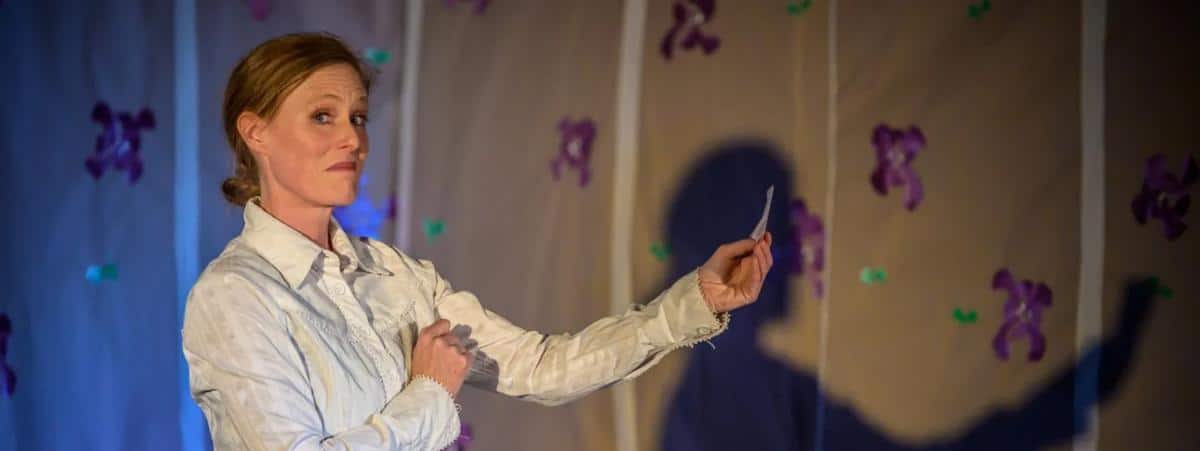
Cheryl Butler has directed Christopher Durang’s “Vanya and Sonia and Masha and Spike” excellently, delivering a night of theatre from Arts Theatre Cronulla that is both funny and sweet. A family (and the people in their orbit) descend on a Pennsylvania farmhouse over a weekend, and end up exploring the frustrations and search for meaning that aging in our rapidly-paced world induces. The play is littered with Chekov references, but even for a Chekov novice like this reviewer, there were things to connect to and laughs to be had. To draw humanity from characters making what are (often, throughout the show) dubious or childish decisions, takes a skilful hand, and Butler has done it with aplomb.

The ensemble cast are a delight, with each finding the light and shade in their characters. Michael Barlow gives Vanya a still and quiet depth, which gives real weight to moments where he voices his frustrations and desires. The excellent hair and makeup to turn Barlow into a believable 57 year old is paired with subtle physical choices that mean his struggle feels very real, and his grumbling is forgiven.

The high points of emotional investment from the audience came from across the cast, but the one that drew out audible exclamations was Lynda Leavers’ Sonia alone onstage taking a phone call; all the squabbling and self-doubt and tension that Sonia has been part of until that point is honoured and explored, and we saw Sonia begin a new chapter of her life in that moment. Leavers did an excellent job throughout.

Suzy Wilds as Masha is the energetic core of the show; Masha is a bit of a whirlwind of both personality and emotion, and Wilds’ performance means you also care about her, even with her strops and vanity. Masha’s physical presence in the farmhouse and in relation to the others shifts the air around her; a lot of great comedy and genuine regret and longing are brought into the open through the magnet of Wilds’ Masha.


Angela Gibson, who is consistently excellent in ATC productions, imbues Cassandra, the witchy fortune-telling house keeper, with flowing movement. Her timing made for some of the comic highlights of the show. Tamara O’Rourke gives the plucky girl next door Nina a real heart, and makes it clear how smart this character is from the start. The voice she gives Nina is wise beyond its years, which gives real comedy to the interactions with Samuel Chapman’s bouncy and oblivious Spike. Spike has some of the most out and out gags, and Chapman does well to give hints of the additional layers (good and otherwise) of the pretty-faced boy Masha brings to the house.

All the elements of this production are skilfully done. The set design from Cheryl Butler and Michael Gooley is full of clever details; a glimpse of the cherry orchard through the window, and a calm green-walled setting for the meditative moments and playfulness this play contains. The set construction team has done an excellent job at transforming the space, setting us believeably in a rural setting, assisted by Craig Oberg’s lighting design. The stage management and changes are all done smoothly and imperceptibly, which is a credit to the work of stage hand Kathryn Bray and stage managers Michele Potter and Ann Sayegh. Gary Clark’s sound design is similarly subtle and lovely, and timing is perfect for any moments that come to the fore as part of scenes.

Costuming was excellent in this show – whether its Nina’s consistent palette of white and blue carrying into her fancy dress or Sonia’s transformation from wallflower to movie star in a scene, Carol Smith and Lesley Tinker have nailed the characters’ energy in the choices they’ve made about their clothes. Masha’s floaty caftans contrast with Spike’s sneakers and constant stripping to his underwear in a way that underscores their dynamic perfectly, and the pyjama-clad dynamic between Vanya and Sonia that begins the play sets the tone of the whole piece; homely, thoughtful and sweet.

This is another strong production from Arts Theatre Cronulla, who seem to have a knack for picking interesting work and creating productions that are dripping with both heart and humour, delivered with skill and verve.

To book tickets to Vanya And Sonia And Masha And Spike, please visit https://www.artstheatrecronulla.com.au/vsms.

Photographer: Mark Phillips

Spread the word on your favourite platform!