A Film About The Power Of Lies And Losing Oneself In Imagination

Hsbc Spanish & Latin American Film Festival

Hsbc Spanish & Latin American Film Festival Rating

★★★★★

Click if you liked this article

2

The Captive (El Cautivo) is a Spanish language historical drama exploring the five years writer Miguel de Cervantes spent as a hostage of Moorish pirates in Algiers. Or so it says on the box. There is a lot more to it than that. Cervantes famously wrote Don Quixote, claimed to be the first modern novel and arguably the most important cultural text in Spanish history. While fighting the Ottomans in a Spanish fleet, Cervantes was heavily wounded, losing the use of his right arm. A few years later he was captured by Ottoman corsairs who held him captive in Algiers, hoping for a large ransom rather than selling him as a slave. Little is known about this time in Algiers, so writer and director Alejandro Amenábar has filled the gap using Cervantes’s own themes of invention and imagination.

The film starts with Cervantes (Julio Peña), having been captured amongst other Spanish sailors, lying about his social standing in order to be ransomed instead of being sold as a slave. As he struggles to cope with his captivity, Cervantes invents a narrative of escape that begins to merge with the diegetic reality of the film. This was done in such a way that soon I wasn't always sure what was meant to be ‘true’ and what was his fanciful imagination. Cervantes entertains fellow prisoners with stories of exotic princesses and heroic escapes, catching the attention of the corsair leader Hasán Bajá (Alessandro Borghi), an Italian who converted to Islam to escape slavery. They form a bond of friendship (and more) that causes outrage amongst the devout Catholic captives, threatening Cervantes’ chances of being ransomed by the Catholic envoys. Cervantes is rewarded for telling a pleasing story to Bajá with a day of freedom to explore the markets and city of Algiers. What he sees beyond the prison wall is then shared with the other captives.
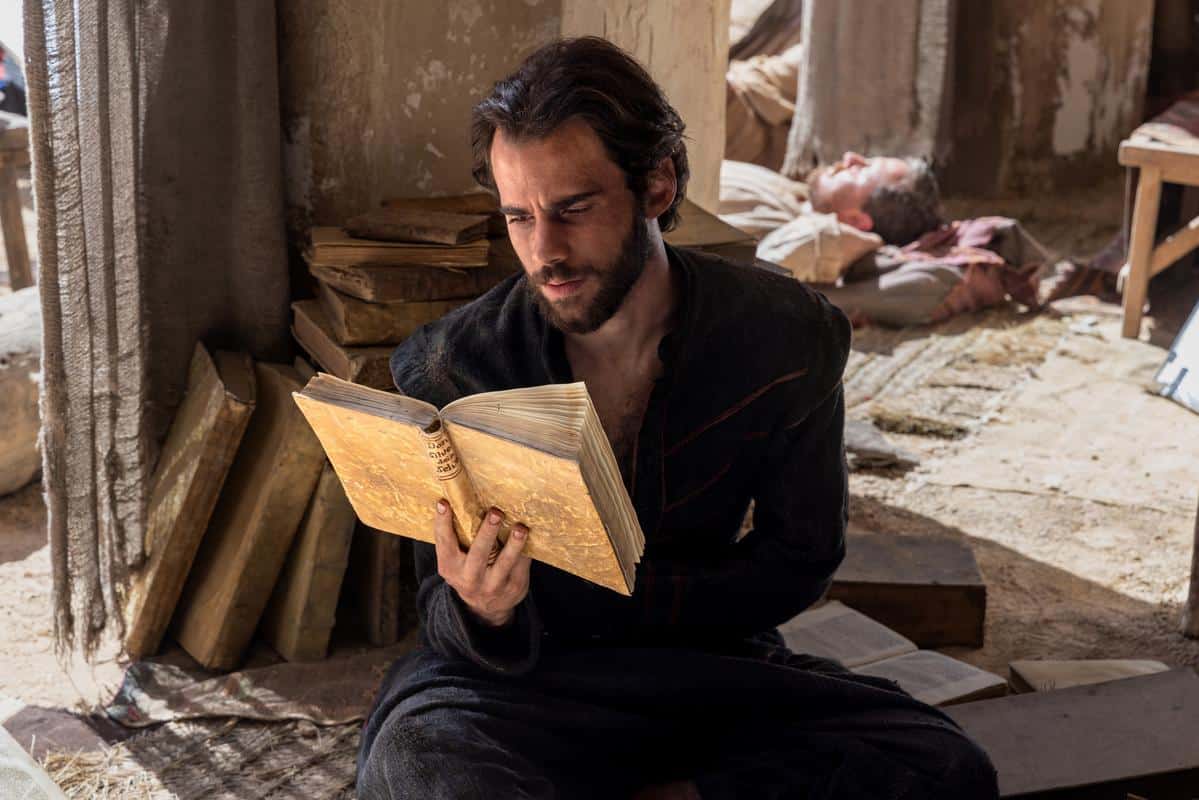


The plot seemed slow and disjointed at first and the setup wasn’t overly clear. It was only when Amenábar began toying with reality that I settled into the narrative. The story is told in such a way that you are never quite sure what is meant to be an invention of Cervantes and what Amenabar wants us to accept as 'real.' I found myself doubting if any of the escape attempts, rewards, double-crossing initrigue, and intimate relationships were even actually happening and not just more of Cervantes’ own fanciful inventions. Characters are constantly lying right from the start, the heroes and villains alike, not only to save their own neck, but to create division or gain an advantage. There are many visual references to Don Quixote, too, like windmills and the Catholic envoy, where a tall, thin dignified older priest with a magnificent beard is accompanied by a short fat priest on a donkey, clearly signifying Quixote and Sancho Panza.

Like Don Quixote, The Captive is about the power of lies and losing oneself in imagination. This isn’t really an origin story about a famous writer, or an attempt at explaining history. This is a story about storytelling itself, and that is absolutely fascinating.

The Captive was seen as a media preview for the HSBC Spanish and Latin American Film Festival running through June to July.

https://spanishfilmfestival.com

To book tickets to Hsbc Spanish & Latin American Film Festival, please visit https://spanishfilmfestival.com/.

Spread the word on your favourite platform!

Eurydice

Eurydice

Eurydice Rating

★★★★★

Click if you liked this article

5

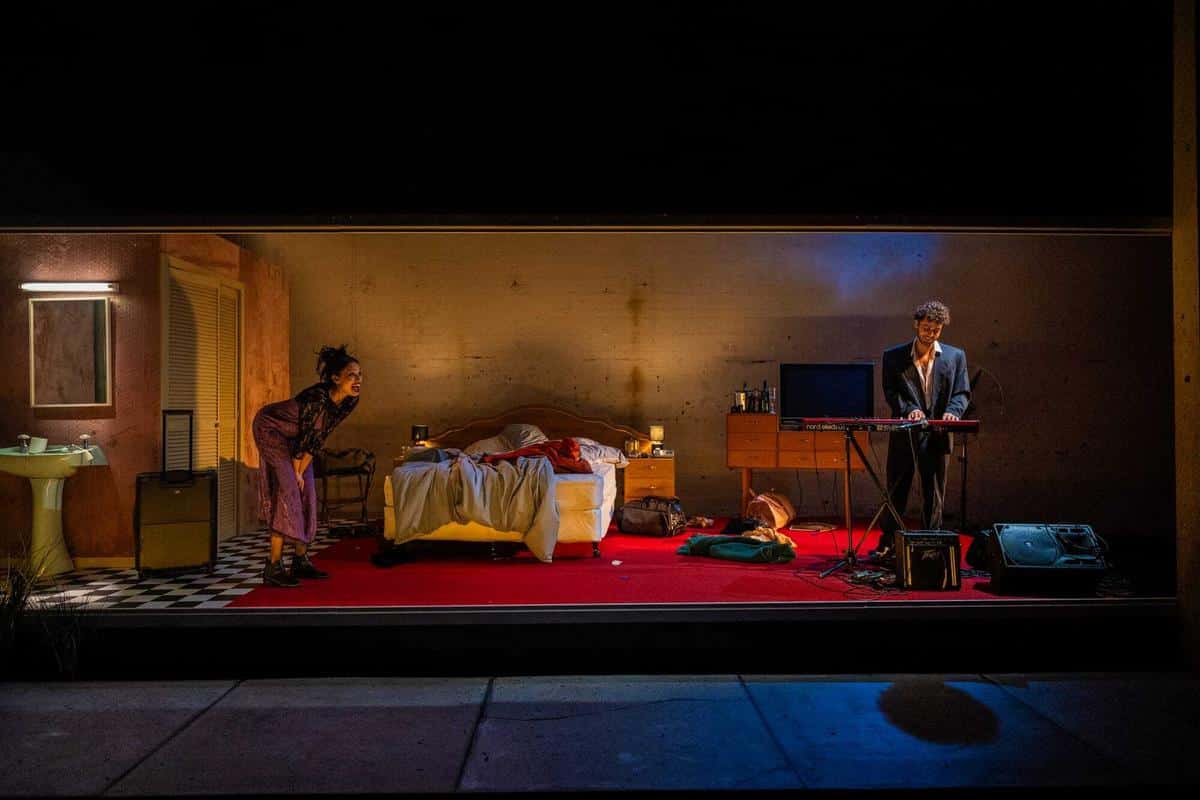
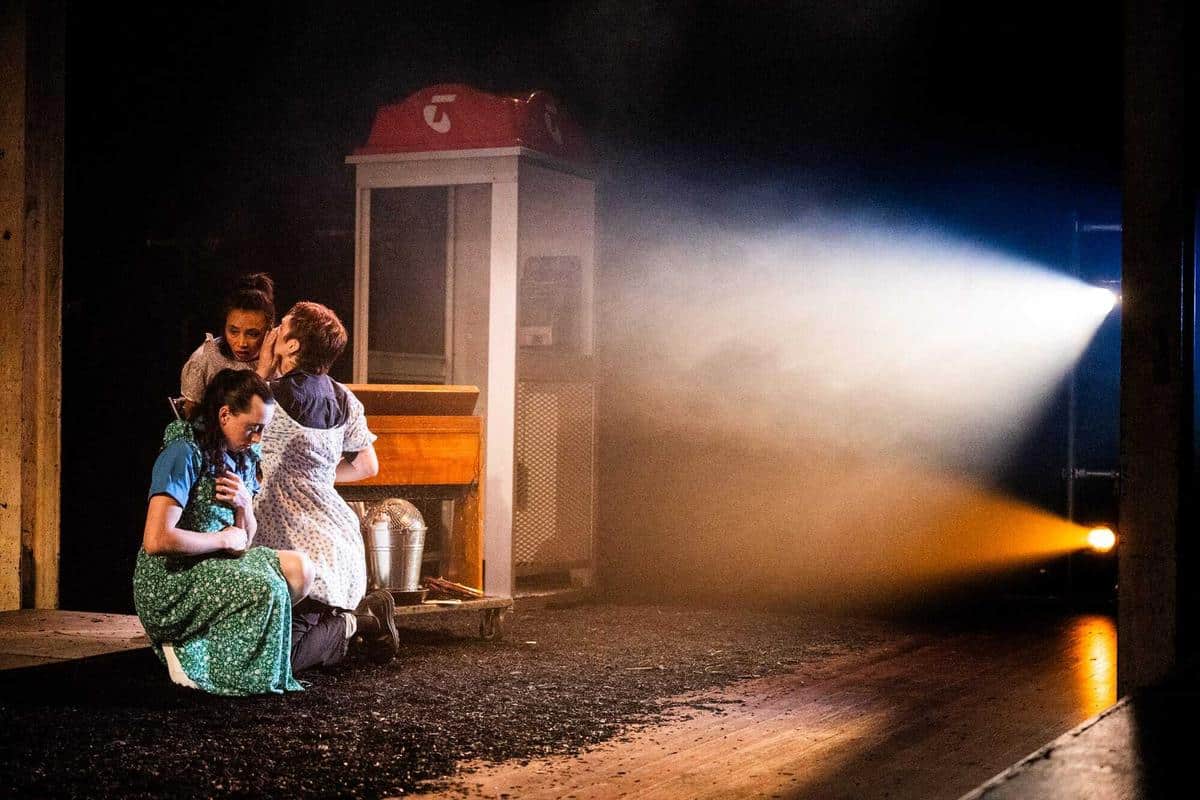
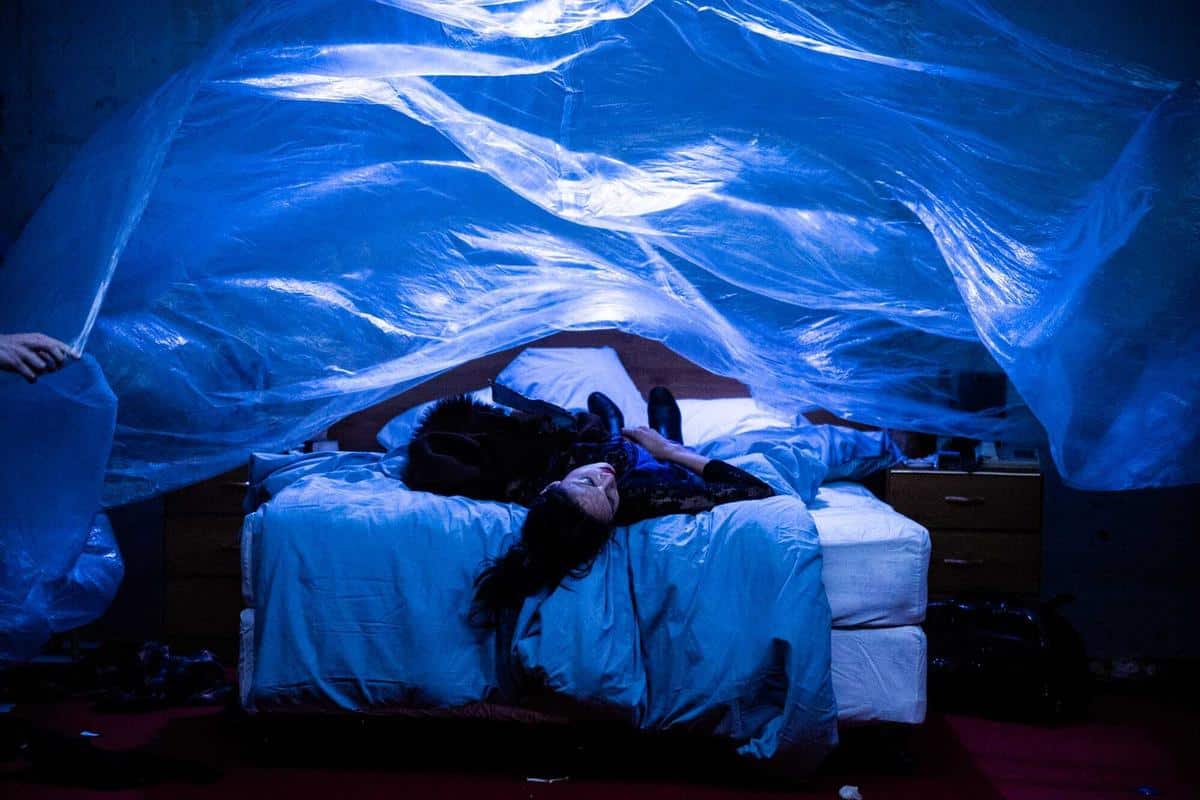
Melbourne Shakespeare Company’s production of Eurydice at fortyfivedownstairs is a remarkable theatrical achievement, an ambitious, visually poetic and emotionally resonant work that lingers long after the final moments on stage. Written by acclaimed American playwright Sarah Ruhl, whose celebrated works include In the Next Room (or The Vibrator Play) and Stage Kiss, Eurydice offers a contemporary reimagining of the ancient Greek myth of Orpheus and Eurydice. In the hands of director Gary Abrahams, this modern classic becomes a deeply moving exploration of love, loss, memory and the spaces between worlds.

Ruhl’s script cleverly balances heartbreak with humour, weaving together lyrical language, surreal imagery and witty commentary on the challenges of translating classical myths for contemporary audiences. This production embraces those contrasts wholeheartedly. The result is a theatrical experience that feels both intellectually stimulating and emotionally accessible, inviting audiences into a world where the ordinary and the extraordinary coexist.

Director Gary Abrahams once again demonstrates why he is one of Australia’s most inventive theatre-makers. His vision for Eurydice is bold and imaginative, creating a production that seamlessly blends music, visual storytelling and dreamlike theatricality. Every creative choice feels purposeful, contributing to a rich sensory landscape that captures the mythic scope of the story while remaining grounded in its deeply human emotional core. Abrahams crafts a world that is at once strange and familiar, beautiful and heartbreaking.


The cast delivers exceptional performances across the board, with each performer bringing a distinct energy and presence to the stage. Special mention must go to Aisha Aidara in the titular role. Aidara’s portrayal of Eurydice is fearless and deeply affecting. Through both voice and movement, she captures the character’s vulnerability, intelligence and passion with extraordinary nuance. Her performance is filled with emotional honesty, allowing audiences to connect profoundly with Eurydice’s journey between love and loss.

Equally captivating is Devon Braithwaite as the Lord of the Underworld. Braithwaite commands the stage with magnetic charisma, bringing humour, menace and unpredictability to the role. His performance provides many of the production’s most memorable moments, skillfully balancing the play’s darker themes with its delightfully absurd wit.

What makes this production particularly successful is its ability to touch the soul without sacrificing any reverence for the classical myth. It trusts its audience to engage with its complexities while offering moments of genuine wonder and beauty. The combination of evocative design, haunting music and exceptional performances creates an atmosphere that feels almost dreamlike, as though the audience has stepped into a living poem.

Melbourne Shakespeare Company has delivered a production that honours the spirit of Orpheus and Eurydice's extraordinary love story while carving out its own unique voice. Eurydice is a masterclass in contemporary theatre-making. This production is thought-provoking, visually stunning and emotionally powerful. It's little wonder that this season is likely to sell out. This is theatre at its most imaginative and affecting, and it is absolutely not to be missed.

To book tickets to Eurydice, please visit https://www.melbourneshakespeare.com/eurydice.

Photographer: Nick Mick Pics

Spread the word on your favourite platform!

To Kill a Mockingbird

To Kill a Mockingbird

To Kill a Mockingbird Rating

★★★★★

Click if you liked this article

10

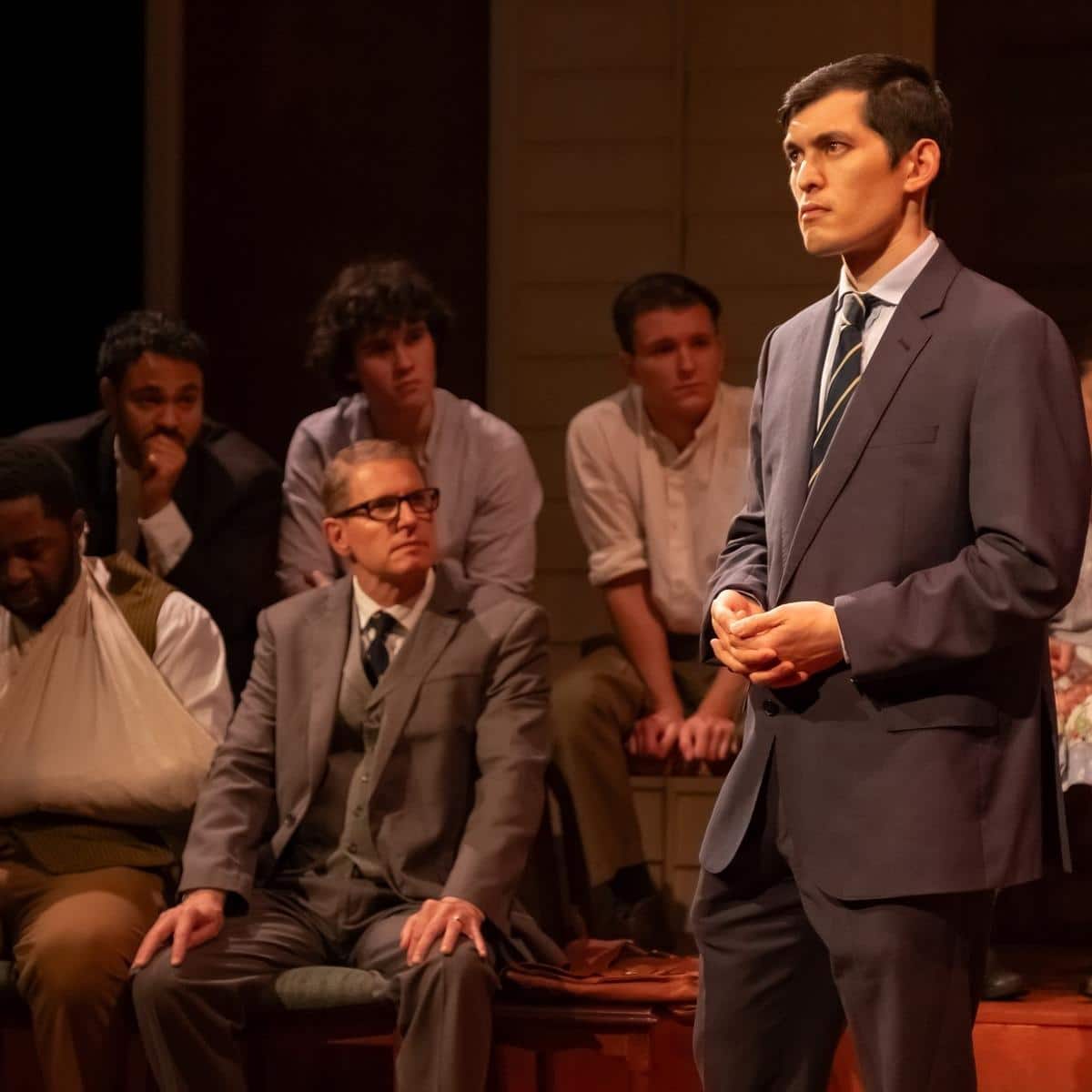
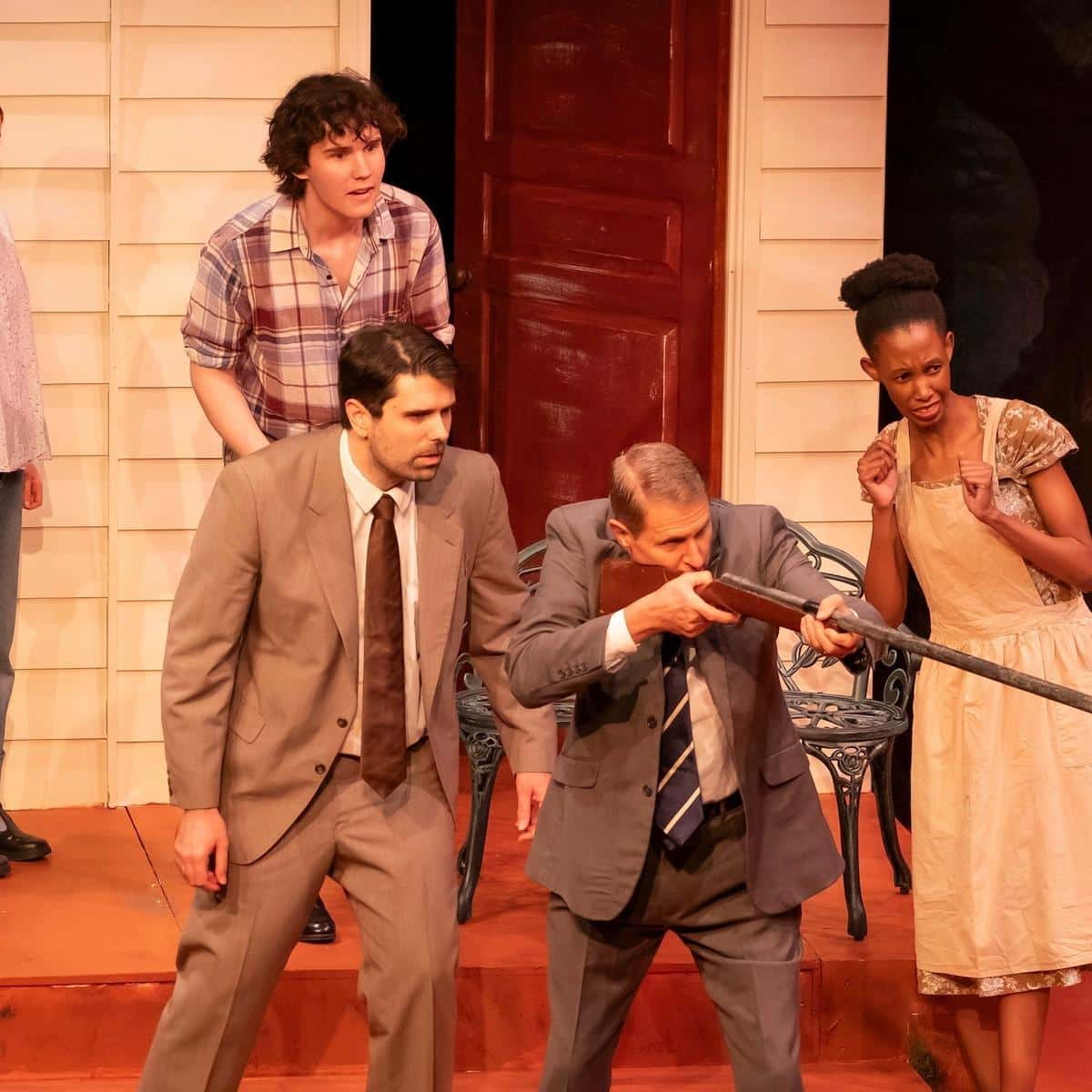
To step into the Genesian Theatre for their production of 'To Kill a Mockingbird' is to be quietly unmoored from the present and drawn into the humid, moral gravity of the 1930s American South. Harper Lee’s Pulitzer Prize-winning classic has long stood as a pillar of American literature—a piercing examination of the human conscience—and under the masterful stewardship of director Theo Hatzistergos, the weight of that legacy is handled with both reverence and raw, visceral power.

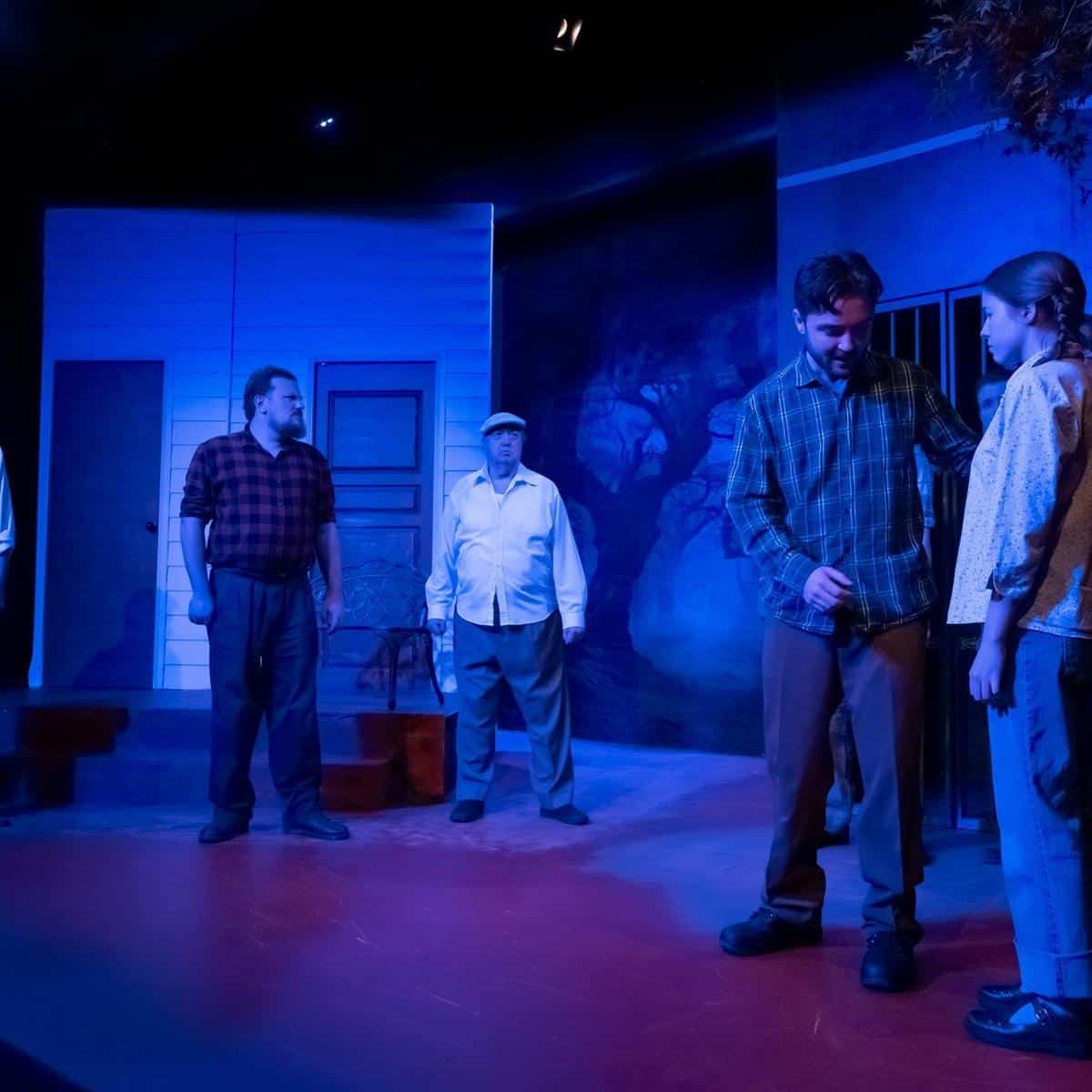
The staging is an act of immersive alchemy. By allowing actors to drift through the auditorium, Hatzistergos dissolves the barrier between stage and spectator. We are no longer mere observers; we are neighbors on the porch, witnesses to a small town’s slow decay into prejudice. The set, a skeletal Alabama street, breathes with the heat of a bygone era, creating a landscape where innocence is constantly besieged by the shadows of social caste.

At the heart of this storm is Barry Nielsen’s Atticus Finch, a performance defined by a quiet, towering dignity. He is the anchor in a sea of intolerance, teaching his children that character is the only true currency of a soul. Beside him, Brigid Jeffries gives a performance as Scout that is nothing short of transcendent; she captures the sharp edges of childhood curiosity and the dawning, painful awareness of an adult world’s cruelty with breathtaking authenticity.


The narrative pivots on the trial of Tom Robinson, rendered with shattering vulnerability by Ibrahim Conteh. When the verdict falls, it is not just a scene from a play; it is a profound wound inflicted upon the audience’s sense of justice. It reminds us that courage is not the absence of fear, but the willingness to stand in the path of an oncoming storm when no one else will.

Yet, it is the title that lingers most poignantly in the air long after the final curtain. The mockingbird—that most fragile emblem of pure, selfless spirit—asks nothing of us but to listen to its song. It symbolizes the innocent, those who exist only to bring beauty into the world, and whose destruction is the ultimate mark of human failing. As the play unfolds, we are reminded that these "mockingbirds" are the keepers of our collective grace. To witness their harm is to lose a piece of our own humanity; to protect them is the only path toward redemption.

The Genesian Theatre has not merely produced a play; they have conjured a haunting, necessary mirror. We departed the theatre with a heavy heart, bruised by the injustice we witnessed, yet galvanized by the flicker of courage that remains. This is a production that does not let you look away, and in that gaze, we find the urgent reminder that kindness is a fragile, precious thing—one that must be guarded, defended, and cherished above all else.

To book tickets to To Kill a Mockingbird , please visit https://genesiantheatre.com.au/events/to-kill-a-mockingbird/.

Spread the word on your favourite platform!

A Look At Love Again In Neil Simon's Play 'Chapter Two'

Chapter Two

Chapter Two Rating

★★★★★

Click if you liked this article

3

Chapter One of your life – if you are lucky, you may date, find your ‘person’, your one true love and live happily ever after. But what happens if that person isn’t there anymore? Do you find another True Love? Do you deserve a second chance at love? “chapter two”, written by Neil Simon and directed by Moja Band, is a fast-paced play exploring the human depth of emotional self-introspection.

Neil Simon is widely regarded as one of the most successful playwrights by his audience and peers. Over his career, he wrote more than 30 stage plays, many of which were adapted into major motion pictures - a rare achievement that highlights his influence on both theatre and film. Simon’s work earned him significant critical respect, reflected in his record for the highest combined number of Oscar and Tony nominations received by any writer in show business history. Having written comedies such as the well-known plays The Odd Couple and Biloxi Blues, I was looking forward to seeing the Hunter’s Hill Theatre’s production of “chapter two”.

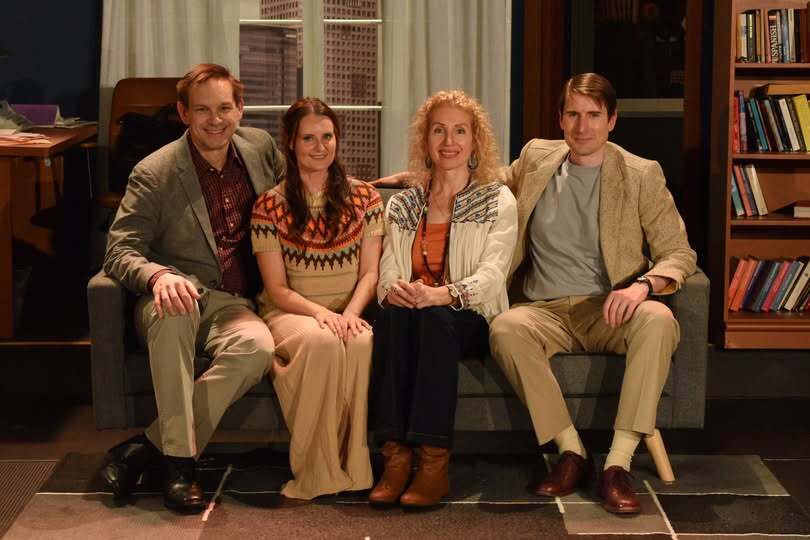
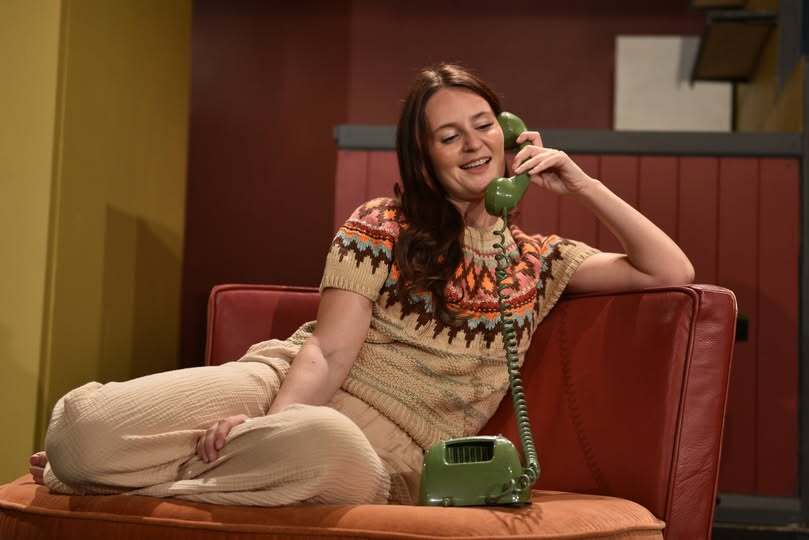
When grieving widower George (Daniel Ferris) returns from an overseas trip that was meant to be healing following the loss of his beloved wife Barbara, his brother Leo (Simon Pearce) sets him up with Jennie (Laura Stead) who had gone through and come out the other side of a divorce. Though at first reluctant to return to dating, George relents and picks up the phone to call Jennie. What follows is a surprisingly strong connection between the two characters and they agree to meet that day in George’s apartment. A whirlwind romance blossoms during the first act leading to an unexpected (from the audience’s point of view) engagement after only knowing each other two weeks. Treated to the witty dialogue with the trademark one liner sharp comedic lines of Neil Simon, carried off with just the right amount of nuance and confidence by the two lead characters, I was hooked and asking myself, “where does it go from here?”.


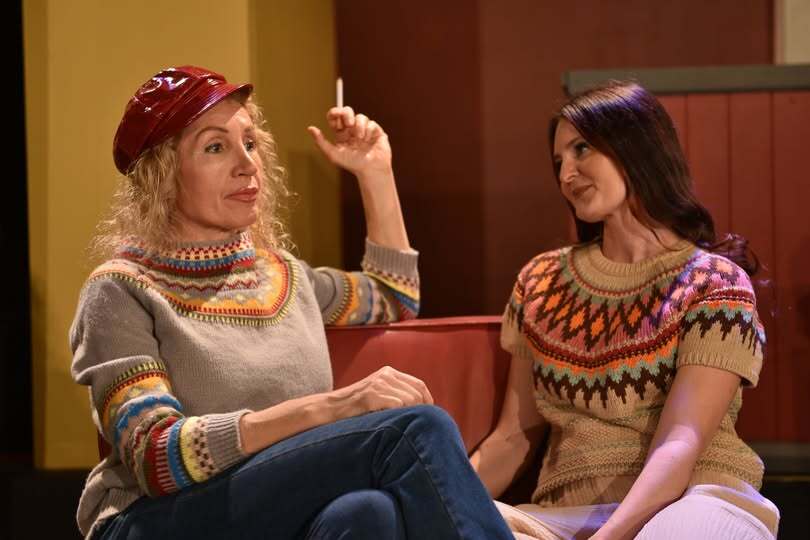
Meanwhile, Jennie’s best friend Faye (Margareta Moir), a brassy actress unhappy in her loveless marriage, longs for attention and affection. Moir highlights Faye’s dramatic lunge into what she hopes will be a cloak and dagger affair with George’s brother Leo, a busy press agent. Pearce leans fully into the role of Leo, a smooth-talking philanderer (and proud of it!) and both he and Moir together deliver the lighter comedic scenes in contrast to some of the more complex themes his younger brother and Jennie are experiencing.

The second act sets out to explore some of these emotionally conflicting themes as George deals with his unresolved immense guilt about moving forward with his life with Jennie. I felt the weight of these heavy scenes as the actors encompass their characters.

Only two months ago, Ferris co-directed The Heartbreak Choir with Pymble Players, which I saw and loved. He quickly switched hats from director to actor onstage, with an outstanding performance playing all the complicated highs and lows of George. “chapter two” was semi-autobiographical, echoing similarities of Neil Simon’s life. Like his character, Simon was already a successful writer when his wife of twenty years passed away from cancer. He met and married his second wife just three months after she died. Drawing from his own guilt and subsequent pulling away from his second wife in the months shortly after their marriage, it is no wonder the dialogue felt so real and raw.

Jennie is left with the emotional fallout of George’s unhappiness during their honeymoon and on the return to their apartment. Stead’s performance led me to be cheering for her character to have a happy life as when we first met Jennie, she was bright, a real sweetheart and full of life. There were plants all around her apartment and from the first telephone conversation, Jennie’s optimism and sweetness was apparent. In the second act, Jennie stood up to George when he was saying some hurtful things to her, and the strength in these scenes showed us that she would fight for George because she loved him, and that she had the confidence to not be a replacement wife but be loved for who she is.

Stead delivers a commanding performance as Jennie, capturing her fierce independence, yet also her raw vulnerability. I had seen Stead some time ago performing the lead role in Hunters Hill Theatre’s “The Ballad of Maria Marten” and I remember that I was impressed by her acting then. It is to her credit that I didn’t recognise she was the same actress until I read her bio in the program, as that character was so different from the current character she was portraying; a testament to Stead’s acting.

The stage was divided into half, with each representing George and Jennie’s apartments. The lighting design by Antony Read worked well, using different types of light and strengths to highlight each. The sound design by Peter Tucker brought out the emotional moments in the play, with songs from the 1950’s lyrics delivering subtle messages to the audience. Well done to the lighting and sound operators Wayne Chee and Oliver Davies on the night I attended the play.

"chapter two” is a witty and emotionally raw masterpiece. Book your tickets to see Hunters Hill Theatre’s performance of this deeply moving play, which invites audiences to witness a story of self-reflection after tragedy and the courageous pursuit of true happiness, the second time around.

Season: 29 May 2026 – 21 June 2026
Running Time: Approx 2 hours with a 15 minute intermission
Club Ryde Ex. 728 Victoria Road, Ryde.
Tickets: www.huntershilltheatre.com.au

To book tickets to Chapter Two, please visit https://www.huntershilltheatre.com.au/.

Spread the word on your favourite platform!

Subscribe to What's The Show

Reviews, show news and what is on, straight to your inbox.