Ensemble Q With Ed Le Brocq

Ensemble Q With Ed Le Brocq

Ensemble Q With Ed Le Brocq Rating

Click if you liked this article

5

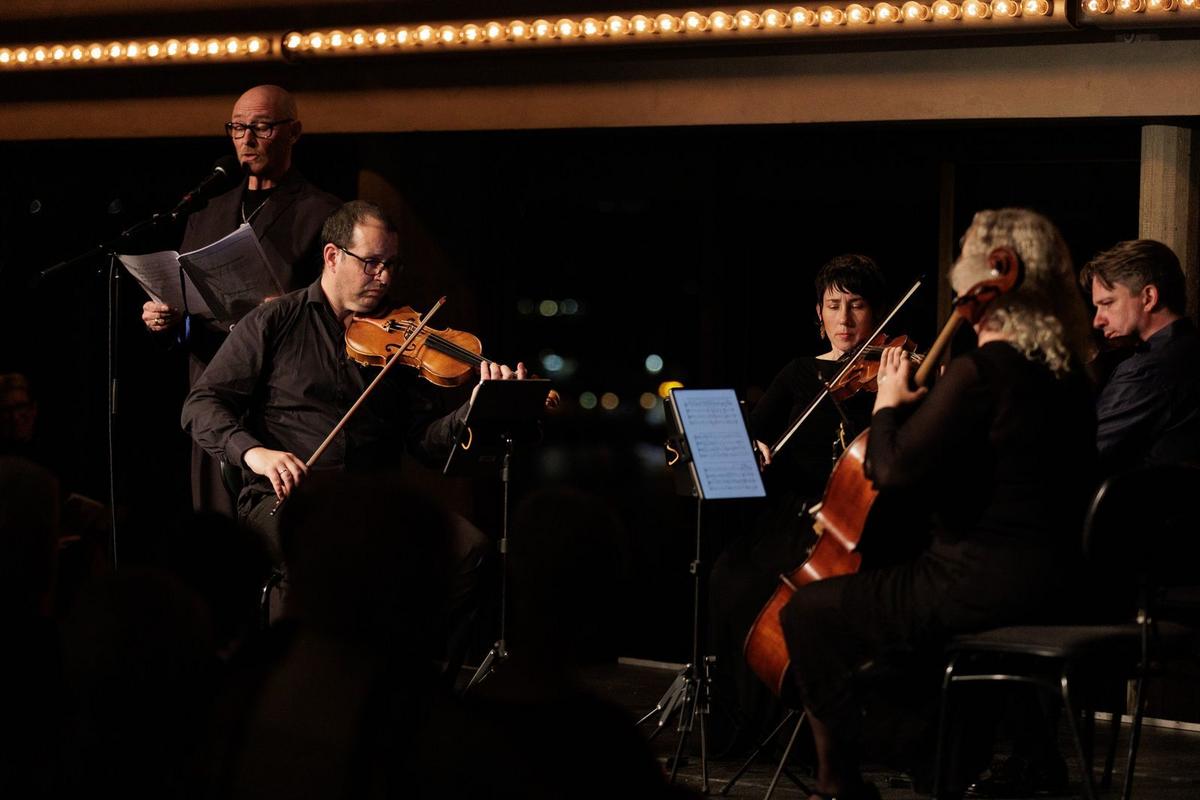
There is a rare, intoxicating vulnerability when world-class chamber music is experienced in an intimate performance space, and tonight at the Sydney Opera House’s Utzon Room, Brisbane-based Ensemble Q delivered a concert that was not merely heard, but deeply felt—an experience that bypassed the intellectual mechanics of music and touched the soul directly. The venue’s tight, warm acoustics placed the audience in striking, captivating proximity to the musicians. Sitting so close that you could hear the soft intake of breath before a phrase, see the delicate bow hair catch the strings, and feel the physical resonance of every note created an immediate, deeply personal connection that elevated the entire performance, making it feel less like a distant spectacle on a cavernous stage and more like a shared, living conversation between artist and listener.

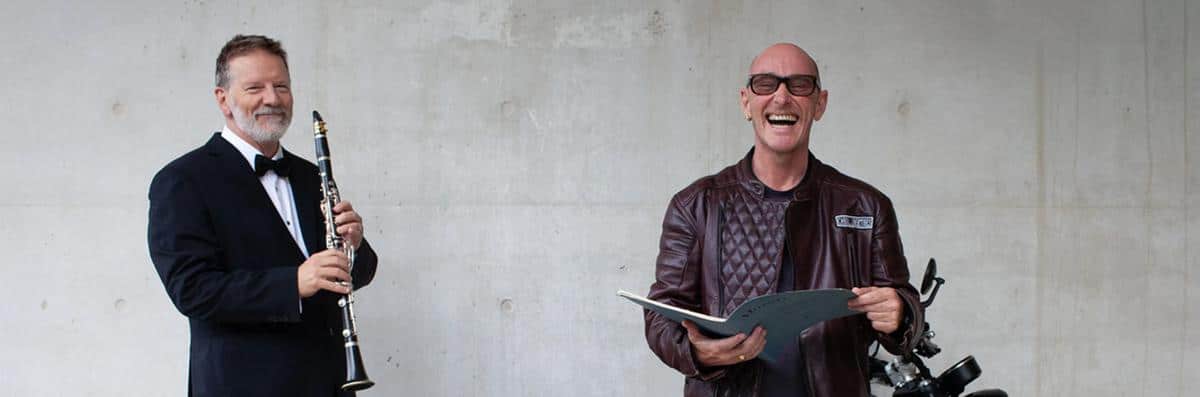
Founded by husband-and-wife duo Paul Dean, a professor at the University of Queensland and one of Australia’s foremost clarinettists, and Trish Dean, an internationally respected cellist, Ensemble Q brings together a powerhouse lineup of extraordinary Australian talent. Joining them on stage were violinist Asma Chalabi, Head of Violin at ANAM performing on an exquisite 1805 Joseph Panormo violin; the brilliant violinist Anne Horton, whose international career boasts major competition victories in Cremona and Osaka; and acclaimed violist Benjamin Roskams, who added immense emotional warmth on a magnificent c. 1720 Joseph filius Andreae Guarneri viola. Completing the ensemble was acclaimed broadcaster, author, and narrator Ed Le Brocq, whose sensitive, grounded storytelling provided a gentle emotional spine for the evening’s narrative works.
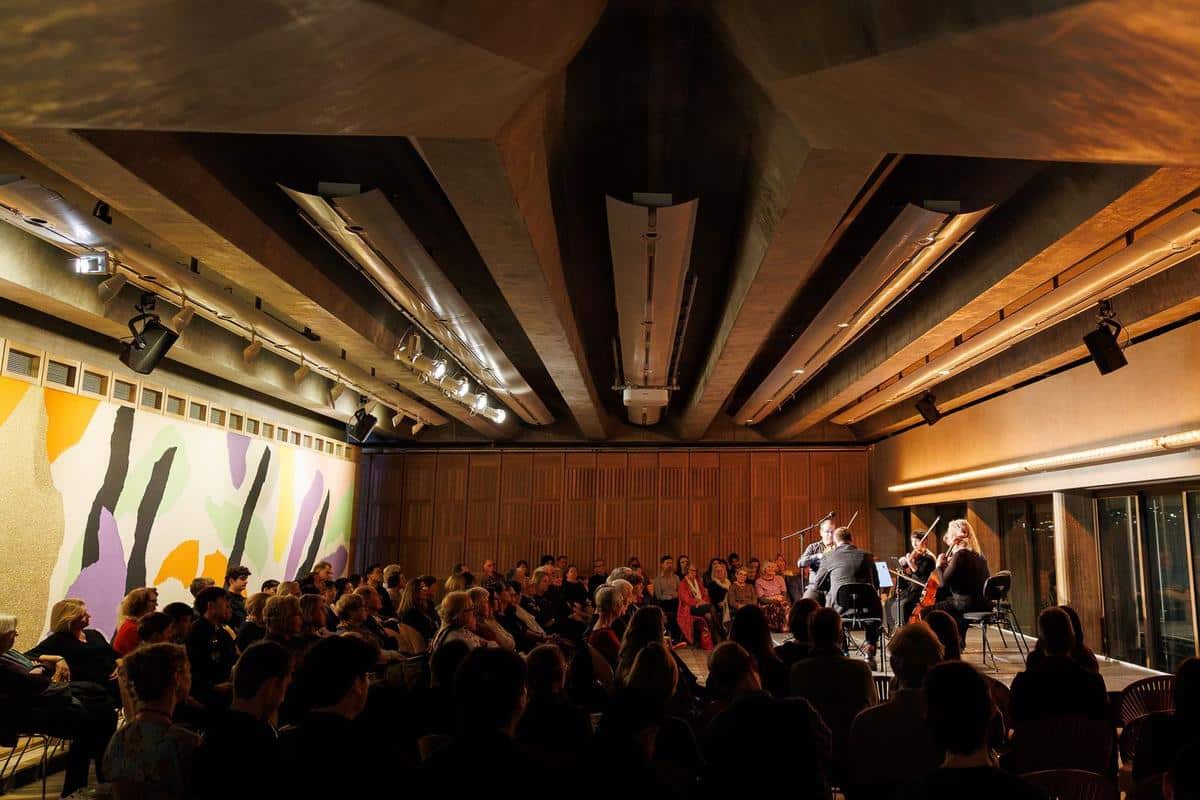
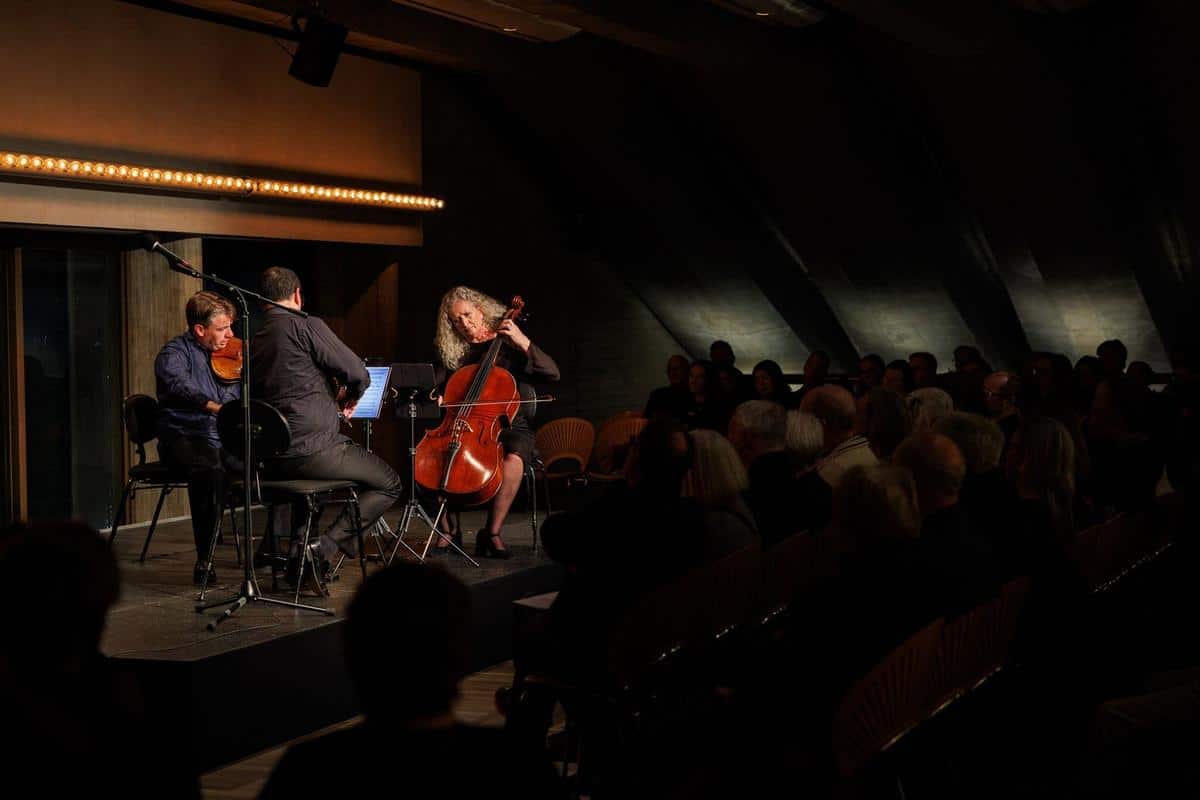


The program was a masterclass in balance, artfully weaving dark classical intensity with poignant contemporary narrative and whimsical charm. The performance opened with Ludwig van Beethoven’s stormiest early chamber work, the String Trio in C minor, Op. 9 No. 3. Being so physically close to the players emphasized the fierce, conversational dialogue between violin, viola, and cello, showcasing the ensemble’s breathtaking synchronisation and flawless technique.

The emotional apex of the evening was Anne Cawrse’s ‘Sonam and the Silence’, commissioned by Ensemble Q for their 2026 season and written for narrator, clarinet in B♭, and string quartet. Based on a picture book set in bustling, Taliban-ruled Kabul—where music is forbidden—it tells the tender story of a young girl who discovers the enduring power of music. Cawrse’s evocative score paired with Le Brocq’s sensitive storytelling left the room in pin-drop silence, creating an overwhelming sense of shared empathy and hope.

In a similarly enchanting vein, the ensemble performed Calvin Bowman’s ‘Curly Pyjama Letters’, a work across seven movements for narrator and string quartet set to texts by the late Michael Leunig (1945–2024). Originally commissioned for the Flinders Quartet in 2011, the piece brought Leunig’s beloved, whimsical universe to life. Bowman’s score—stylistically inspired by the sound world of the Academy of Ancient Music, gargling angels, and Schubert—matched the quirky correspondence between lone voyager Vasco Pyjama and his mentor Mr. Curly of Curly Flat with immense warmth, wit, and charm.

The concert concluded with Wolfgang Amadeus Mozart’s timeless Clarinet Quintet in A major, K. 581. Paul Dean’s clarinet tone was liquid gold throughout, and the famous Larghetto movement, performed with transcendent delicacy, felt like a private lullaby played specifically for each person in the room.

What made the night truly unforgettable was this remarkable synthesis of raw virtuosity and ultimate physical closeness. Ensemble Q did not simply play music; they opened a window directly into the human spirit, demonstrating not only breathtaking technical mastery but also a rare ability to tell profound stories through sound. An unmissable event.

To book tickets to Ensemble Q With Ed Le Brocq, please visit https://www.sydneyoperahouse.com/classical-music/ensemble-q-ed-le-brocq.

Photographer: Gavin Rebetzke

Spread the word on your favourite platform!

Dealing with Clair

Dealing with Clair

Dealing with Clair Rating

Click if you liked this article

5

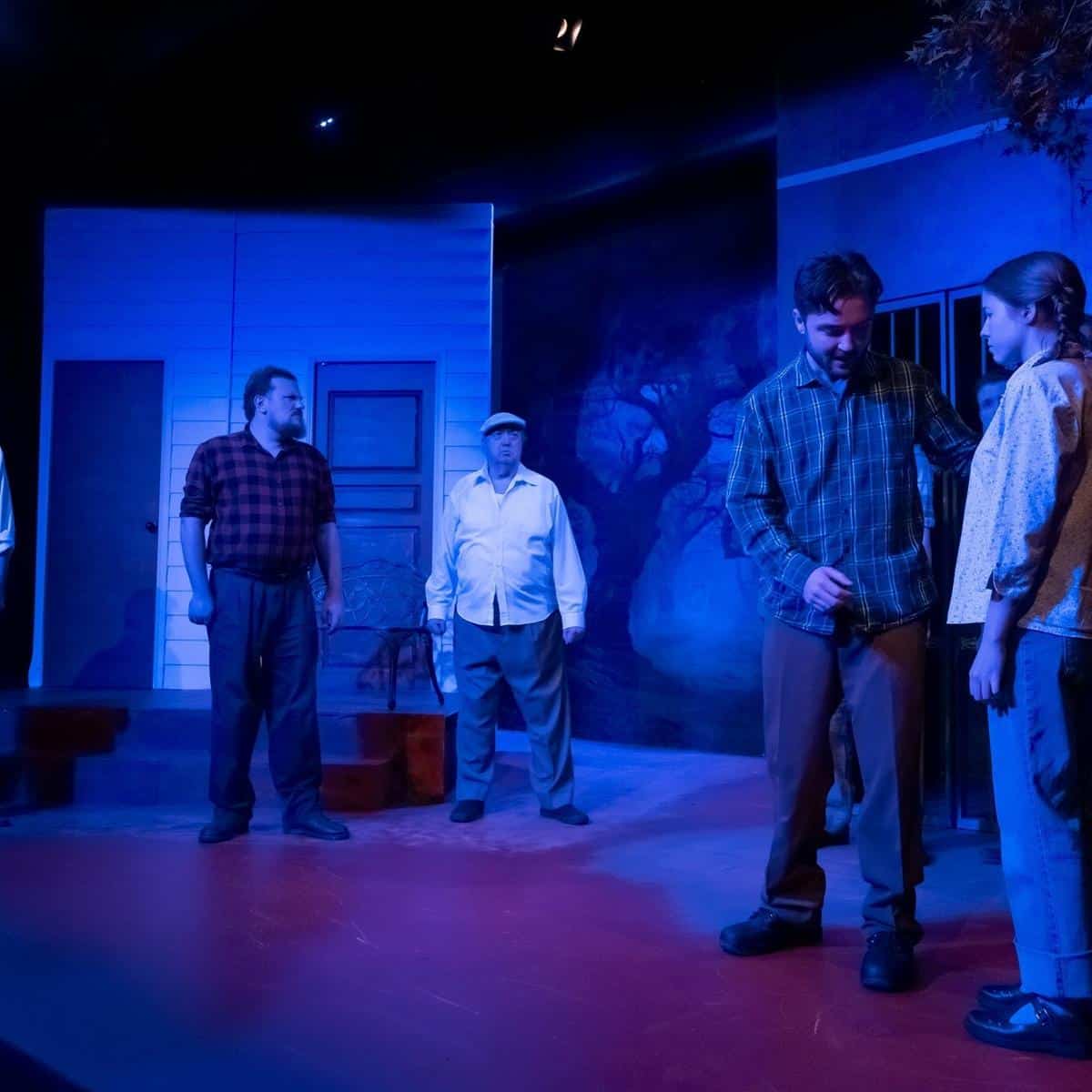
There is a distinct, intoxicating magic to discovering a razor-sharp, chillingly prophetic revival in an intimate local space, and Sydney is incredibly fortunate to have venues like the historic Old Fitzroy Theatre—a charming, subterranean pocket where the audience is pulled so close to the stage that they can feel the moral atmosphere shift in real-time. This extreme physical proximity acts as the perfect, claustrophobic incubator for the tension of Martin Crimp’s psychological thriller, “Dealing with Clair”. First performed in 1988, Crimp’s play is heavily inspired by a haunting, real-world tragedy: the unsolved 1986 disappearance of London real estate agent Suzy Lamplugh, who vanished into thin air after leaving her office to show a house to a mysterious client. This unsettling historical anchor hangs like a heavy, cold fog over the entire production, transforming what could be a simple, sharp satire of a booming property market into an agonizingly tense, slow-burning exploration of vulnerability, predation, and systemic greed.


The narrative centers on Clair, played with exquisite nuance by Olivia Hall-Smith, an ambitious young estate agent who believes she can safely navigate the cutthroat, transactional waters of London’s real estate boom through sheer professional charm and quiet determination. Hall-Smith beautifully captures the delicate friction between Clair’s eager-to-please, professional armor and the profound, isolated vulnerability that slowly begins to leak through as the pressure mounts. As the transaction unfolds, we watch the veneer of polite, middle-class respectability slide away from homeowners Liz and Mike, portrayed with a delightful, superficial hypocrisy by Talia Benatar and Arkia Ashraf. Though they initially boast of their unwavering moral integrity—vowing to act honorably and avoid dirty gazumping tactics—their principles instantly dissolve when a mysterious cash buyer named James, played with a magnetically sinister composure by Daniel Fletcher, offers to outbid their original buyers. Fletcher’s performance is chillingly effective, wrapping predatory intentions in a smooth, highly articulate warmth that keeps the audience in a state of constant, low-humming anxiety.

What begins as a mundane, polite negotiation quickly spirals into an unsettling examination of how easily human empathy is traded for financial gain, as Clair’s sharpest instincts quietly scream that something is deeply wrong with James, yet her ambition and professional duty force her to ignore the warning signs. The supporting cast is uniformly brilliant in fleshing out this dark, morally compromised ecosystem. Jade Fuda is profoundly affecting as Anna, the young Italian nanny virtually imprisoned in a windowless room by her self-congratulating employers, showcasing a quiet, isolated parallel to Clair’s own entrapment. Meanwhile, Bayley Prendergast displays dazzling versatility, shifting seamlessly between a rugged, earthy tradesman and a slick, rival real estate agent. Ultimately, under the sharp direction of this production, the play builds a suffocating momentum that refuses to offer easy resolution or comfortable answers, leaving the audience to reckon with the horrifying realization of what—and who—we are willing to sacrifice in the pursuit of personal security and material success. It is a masterful, deeply unsettling theatrical experience that lingers in the mind long after the basement lights of the Old Fitzroy have faded to black.

To book tickets to Dealing with Clair , please visit https://www.oldfitztheatre.com.au/dealing-with-clair.

Photographer: Robert Miniter

Spread the word on your favourite platform!

The Last Resort

The Last Resort (Paradis)

The Last Resort (Paradis) Rating

Click if you liked this article

1

There is a distinct, intoxicating alchemy to a film festival. To step into a dark theater is to willingly surrender your worldview, trading it for another culture’s lens, another creator’s gaze. This sense of cinematic discovery was palpable at Sydney’s Nordic Film Festival preview of ‘The Last Resort’ (originally titled ‘Paradis’). Directed by Maria Sødahl, this Danish-Norwegian tour de force arrives with the heavy prestige of the Göteborg Film Festival’s 2026 Dragon Award for Best Nordic Film—an honor that, by the time the house lights rise, feels profoundly earned.

On its shimmering surface, Sødahl’s narrative opens as a postcard of contemporary European leisure. We follow a seemingly picture-perfect Danish family as they descend upon an all-inclusive resort in Gran Canaria. The scenery is predictably intoxicating: a sun-drenched coast, an oasis of luxury, and the effortless hospitality of an island sanctuary.

Yet, as the title implies, this “paradise” is a beautifully constructed trap.

With surgical precision, Sødahl peels back the glossy veneer of tourism to expose a rot of socio-political tension. What begins as an intimate holiday drama gradually develops into a razor-sharp psychological and ethical dissection of Western privilege, complicity, and the quiet violence of denial.


The film’s emotional spine rests on the formidable shoulders of Mikkel (Espen Smed, ‘A Fortunate Man’) and Louise (Danica Ćurčić, ‘Unruly’). Both deliver masterclasses in restraint. Initially, they are the archetype of a stable, affluent modern couple. But as the narrative collides with the brutal reality of a local refugee crisis, Smed and Ćurčić brilliantly map the hairline fractures spreading across their characters’ relationship, forcing them—and us—to confront the boundaries of their comfortable empathy.

It is here that ‘The Last Resort’ delivers its most devastating critique, aiming its lens directly at the hypocrisy of modern “performative morality.” Mikkel and Louise at first glance are extremely compassionate and socially aware, yet, when faced with real-life consequences, their actions pivot toward self-protection. Sødahl creates an uncomfortable tension between who these characters *think* they are and what they are actually willing to do when their comfort is leveraged.

In a brilliant narrative counterweight, the children, Sille and Ella, offer a quiet, heartbreaking contrast to the adults. In their uncorrupted gaze, we see that moral apathy is not an innate human trait, but a learned defense mechanism.

Visually, the film is a triumphs of subtext. The cinematography weaponizes the beautiful landscape to reflect the bigger themes of the film. There is a profound eloquence to the framing; frequently, a choice of scenery speaks volumes more than the heavy silences hanging between the actors.

‘The Last Resort’ is not a comfortable watch, nor does it aspire to be. It is an urgent, slow-burning piece of morally complex cinema that refuses to offer easy absolution. Long after the credits roll, it lingers like a fever, demanding that we look into the mirror and ask ourselves: “What would we do if the world’s tragedies arrived at the edge of our sunlounger?”

For lovers of deeply reflective, high-stakes psychological storytelling, this is an absolute masterclass. Do not miss it.

To book tickets to The Last Resort (Paradis), please visit https://nordicfilmfestival.com.au/films/nor26-the-last-resort.

Spread the word on your favourite platform!

To Kill a Mockingbird

To Kill a Mockingbird

To Kill a Mockingbird Rating

Click if you liked this article

9

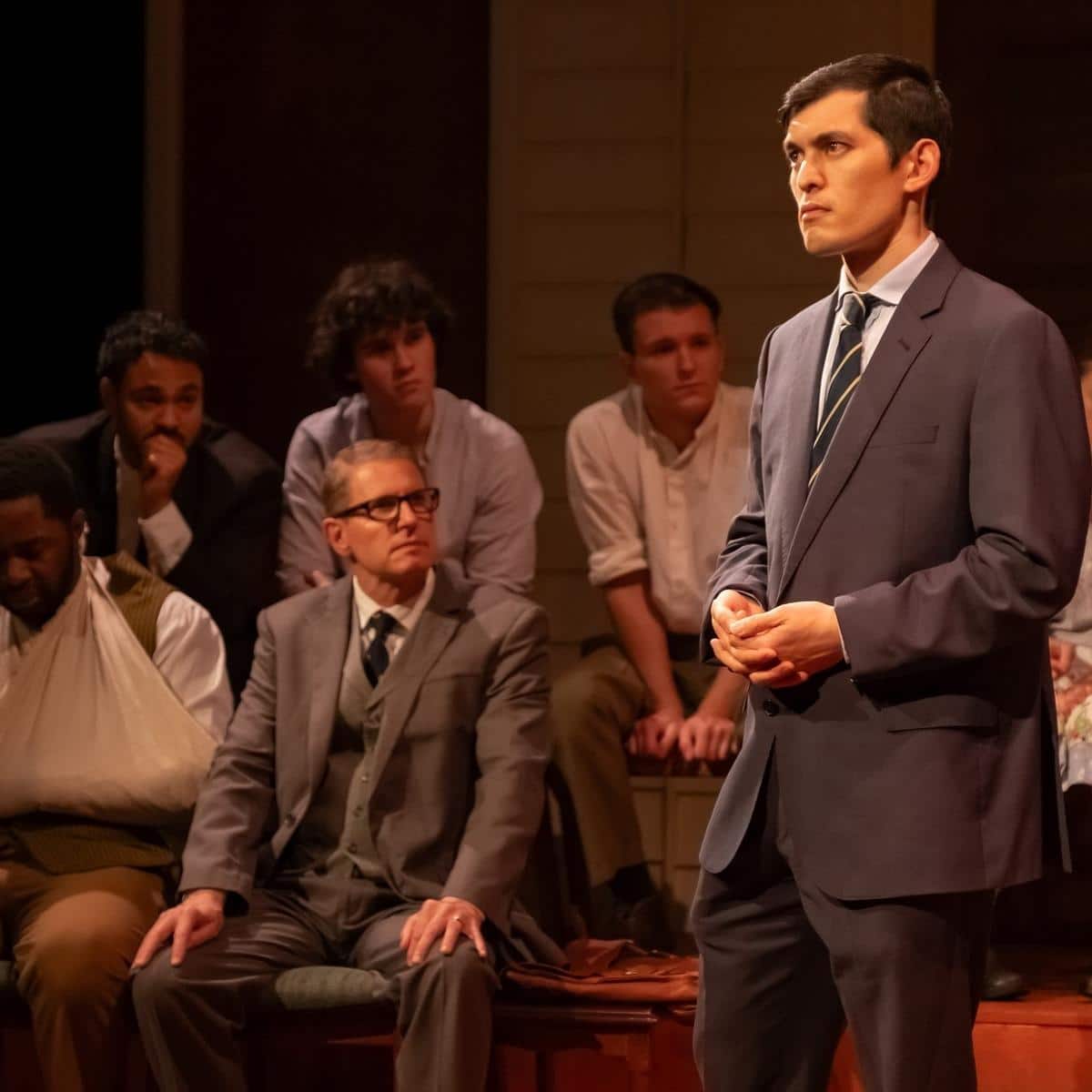
To step into the Genesian Theatre for their production of ‘To Kill a Mockingbird’ is to be quietly unmoored from the present and drawn into the humid, moral gravity of the 1930s American South. Harper Lee’s Pulitzer Prize-winning classic has long stood as a pillar of American literature—a piercing examination of the human conscience—and under the masterful stewardship of director Theo Hatzistergos, the weight of that legacy is handled with both reverence and raw, visceral power.

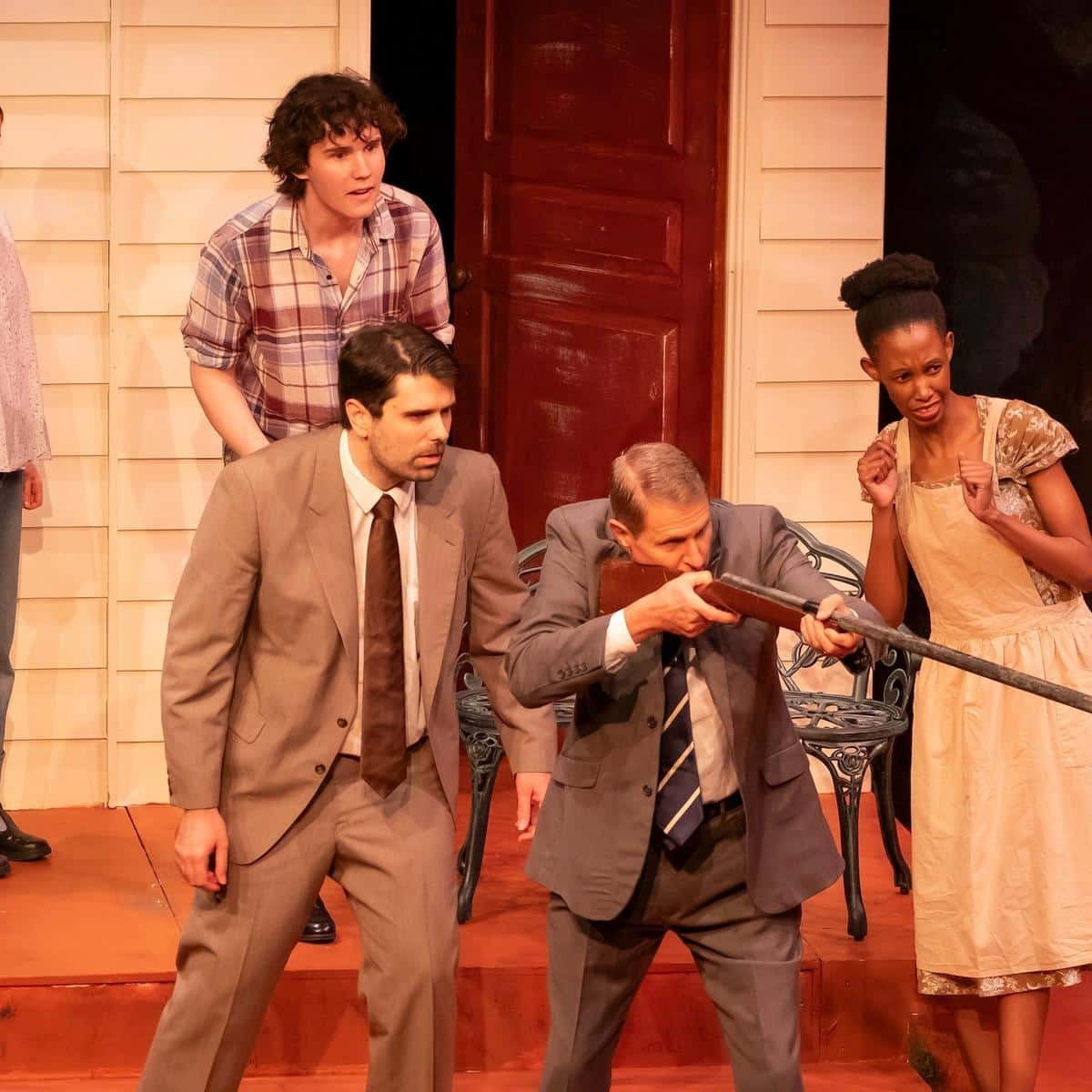
The staging is an act of immersive alchemy. By allowing actors to drift through the auditorium, Hatzistergos dissolves the barrier between stage and spectator. We are no longer mere observers; we are neighbors on the porch, witnesses to a small town’s slow decay into prejudice. The set, a skeletal Alabama street, breathes with the heat of a bygone era, creating a landscape where innocence is constantly besieged by the shadows of social caste.

At the heart of this storm is Barry Nielsen’s Atticus Finch, a performance defined by a quiet, towering dignity. He is the anchor in a sea of intolerance, teaching his children that character is the only true currency of a soul. Beside him, Brigid Jeffries gives a performance as Scout that is nothing short of transcendent; she captures the sharp edges of childhood curiosity and the dawning, painful awareness of an adult world’s cruelty with breathtaking authenticity.


The narrative pivots on the trial of Tom Robinson, rendered with shattering vulnerability by Ibrahim Conteh. When the verdict falls, it is not just a scene from a play; it is a profound wound inflicted upon the audience’s sense of justice. It reminds us that courage is not the absence of fear, but the willingness to stand in the path of an oncoming storm when no one else will.

Yet, it is the title that lingers most poignantly in the air long after the final curtain. The mockingbird—that most fragile emblem of pure, selfless spirit—asks nothing of us but to listen to its song. It symbolizes the innocent, those who exist only to bring beauty into the world, and whose destruction is the ultimate mark of human failing. As the play unfolds, we are reminded that these “mockingbirds” are the keepers of our collective grace. To witness their harm is to lose a piece of our own humanity; to protect them is the only path toward redemption.

The Genesian Theatre has not merely produced a play; they have conjured a haunting, necessary mirror. We departed the theatre with a heavy heart, bruised by the injustice we witnessed, yet galvanized by the flicker of courage that remains. This is a production that does not let you look away, and in that gaze, we find the urgent reminder that kindness is a fragile, precious thing—one that must be guarded, defended, and cherished above all else.

To book tickets to To Kill a Mockingbird , please visit https://genesiantheatre.com.au/events/to-kill-a-mockingbird/.

Spread the word on your favourite platform!