A Film About The Power Of Lies And Losing Oneself In Imagination

Hsbc Spanish & Latin American Film Festival

Hsbc Spanish & Latin American Film Festival Rating

Click if you liked this article

2

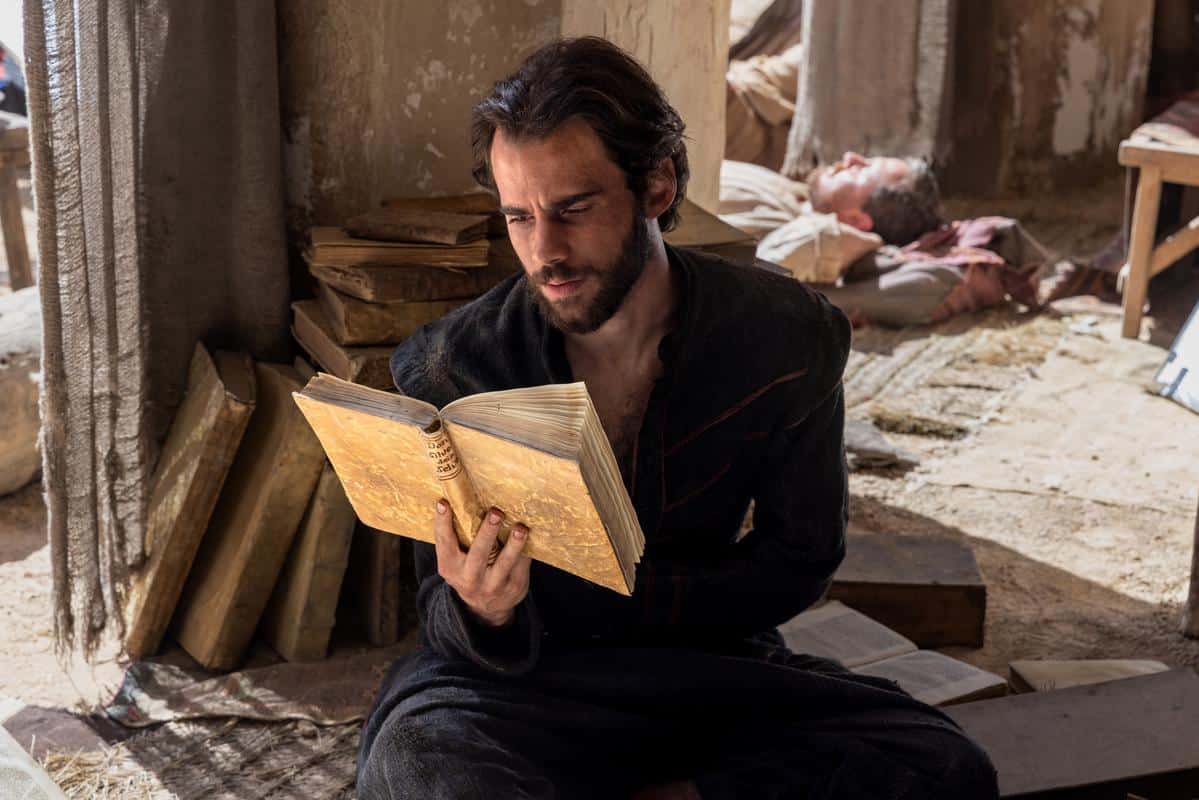
The Captive (El Cautivo) is a Spanish language historical drama exploring the five years writer Miguel de Cervantes spent as a hostage of Moorish pirates in Algiers. Or so it says on the box. There is a lot more to it than that. Cervantes famously wrote Don Quixote, claimed to be the first modern novel and arguably the most important cultural text in Spanish history. While fighting the Ottomans in a Spanish fleet, Cervantes was heavily wounded, losing the use of his right arm. A few years later he was captured by Ottoman corsairs who held him captive in Algiers, hoping for a large ransom rather than selling him as a slave. Little is known about this time in Algiers, so writer and director Alejandro Amenábar has filled the gap using Cervantes’s own themes of invention and imagination.

The film starts with Cervantes (Julio Peña), having been captured amongst other Spanish sailors, lying about his social standing in order to be ransomed instead of being sold as a slave. As he struggles to cope with his captivity, Cervantes invents a narrative of escape that begins to merge with the diegetic reality of the film. This was done in such a way that soon I wasn’t always sure what was meant to be ‘true’ and what was his fanciful imagination. Cervantes entertains fellow prisoners with stories of exotic princesses and heroic escapes, catching the attention of the corsair leader Hasán Bajá (Alessandro Borghi), an Italian who converted to Islam to escape slavery. They form a bond of friendship (and more) that causes outrage amongst the devout Catholic captives, threatening Cervantes’ chances of being ransomed by the Catholic envoys. Cervantes is rewarded for telling a pleasing story to Bajá with a day of freedom to explore the markets and city of Algiers. What he sees beyond the prison wall is then shared with the other captives.


The plot seemed slow and disjointed at first and the setup wasn’t overly clear. It was only when Amenábar began toying with reality that I settled into the narrative. The story is told in such a way that you are never quite sure what is meant to be an invention of Cervantes and what Amenabar wants us to accept as ‘real.’ I found myself doubting if any of the escape attempts, rewards, double-crossing initrigue, and intimate relationships were even actually happening and not just more of Cervantes’ own fanciful inventions. Characters are constantly lying right from the start, the heroes and villains alike, not only to save their own neck, but to create division or gain an advantage. There are many visual references to Don Quixote, too, like windmills and the Catholic envoy, where a tall, thin dignified older priest with a magnificent beard is accompanied by a short fat priest on a donkey, clearly signifying Quixote and Sancho Panza.

Like Don Quixote, The Captive is about the power of lies and losing oneself in imagination. This isn’t really an origin story about a famous writer, or an attempt at explaining history. This is a story about storytelling itself, and that is absolutely fascinating.

The Captive was seen as a media preview for the HSBC Spanish and Latin American Film Festival running through June to July.

https://spanishfilmfestival.com

To book tickets to Hsbc Spanish & Latin American Film Festival, please visit https://spanishfilmfestival.com/.

Spread the word on your favourite platform!

The Admirable Crichton

The Admirable Crichton

The Admirable Crichton Rating

Click if you liked this article

The Admiral Crichton, J.N Barrie’s comedy about social class and division is just as relevant today as it was when first performed in London in 1902, with the 2022 Palm D’or winning film The Triangle of Sadness using Barrie’s story as a framework.

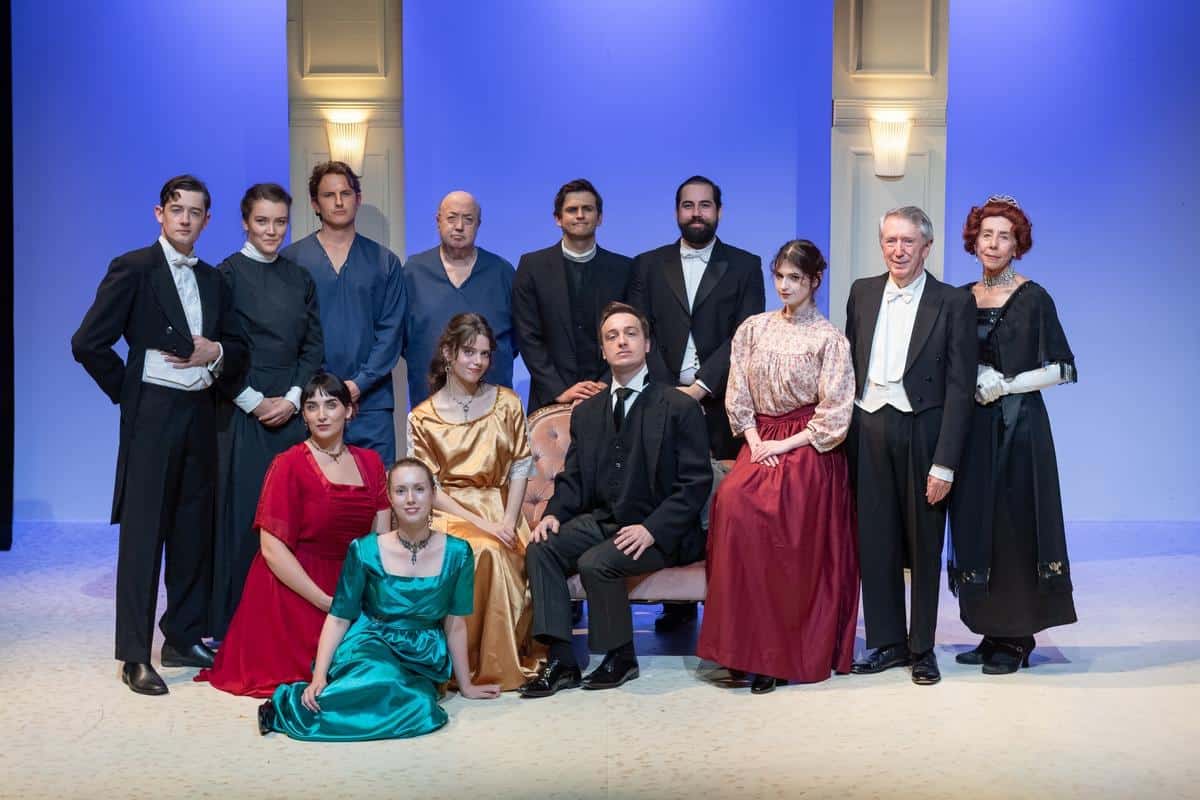
Crichton, played by Andrew Eddey, is the loyal butler to the Earl of Loam (Timothy Bennett), who doesn’t believe in the natural order of class divisions. His fellow aristocrats are embarrassed by his monthly tea parties where servants are treated as equals. Despite the ideology of his socially progressive master, Crichton himself believes that class and rank are the natural conditions of civilisation. When the Loam family along with two of their servants take a pleasure cruise, they find themselves wrecked on a tropical island, where natural capacity towards survival changes the rank of each person in the group. The resourceful and handy Crichton finds himself at the top of the new social order, leading to a range of moral and ethical choices amongst the castaways. You can see where Gilligan’s Island got their ideas from, like being able to build some of the modern luxuries of civilisation out of coconuts and driftwood.


The staging was great, with each environment brought to life by the set design and construction team. All the technical details such as sound and lighting were also superb, so the backstage team did a commendable job to support the performers. The direction by Steven Hopley was strong, bringing the story to life with a natural sense of timing, but I found that some of the humour was lost in the desire to use appropriate accents. The choice of delivery for some of the dialogue was also a little confusing at times, but that could just be a matter of taste. The performers still did a great job with each character. They were all well cast and seemed to be having lots of fun on stage. Andrew Eddy played the eponymous Crichton with an air of calm intelligence and dignity befitting a dedicated butler, while Timothy Bennett perfectly embodied the endearing, socialist-leaning Lord Loam. While I liked all the cast, the particular standouts for me were Amy Tustian as Lady Mary, one of Lord Loam’s three aristocratic daughters who becomes Crichton’s island fling, and Isabelle Serafim, playing the maid Tweeny.

The story has now been explored in all sorts of productions since it was first performed, and while the topic is no longer new or controversial, it’s still a fun evening at the theatre with some great performances and light-hearted comedy that carries with it a message we shouldn’t forget.

The Admirable Crichton is currently playing at the Genesian Theatre in Rozelle until the 16th of May.

To book tickets to The Admirable Crichton, please visit https://genesiantheatre.com.au/events/the-admirable-crichton/.

Spread the word on your favourite platform!

The Choral

The Choral

The Choral Rating

Click if you liked this article

Art is about being creative and defiant, while music brings people together. Ralph Fiennes leads a strong ensemble cast in The Choral, a moving film about the devastation of war and the uniting power of music. Set in a fictional Yorkshire town during the first world war, the local choral society is struggling to maintain it’s male singers as the men head off to fight. All they have left are the young boys and old men. Trying to maintain a sense of normality despite grief and loss, the community hopes to find a uniting joy by putting on their annual choral performance.

When the choirmaster volunteers to fight in France, the only replacement they can find is Dr Guthrie (Fiennes), who causes immediate scandal because he lived in Germany for many years and admires their art and culture. With most of the great composers being German or Austrian, the Choral society chooses Elgar and his forgotten production The Dream of Gerontius.

But it’s not really about that.


The choral performance acts as the framework to hold a variety of rich stories about love, hope, loss, grief, and fear played by a strong ensemble cast including Alun Armstrong, Mark Addy, Ron Cook, Emily Fairn, and Lyndsey Marshal. The next generation of youth explore love and sex as they face conscription as soon as they turn 18, knowing they may not return. A wounded soldier returns from the war to find his old life is over, and looks for solace and comfort in the choral. There is the pianist, a pacifist and gay man who faces jail and shame for refusing to fight. Dr Guthrie himself struggles with the relevance of Elgar’s story about the death of an old man, when so many of the young are dying. Without permission, he adapts Elgar’s production to better reflect the pain and struggles of the community.

The film is calmly directed by Nicholas Hynter, never overplaying the sentimentality or message. There is plenty of well-placed humour to keep the mood from getting too grim. Hynter handles his characters with a great deal of care, never demonising anyone despite their flaws. Even the powerful and wealthy mill owner who funds the Choral is handled with empathy. Because of his position he expects to play the lead, but only because he loves to sing. It brings him much needed joy as he grieves a fallen son, but soon he realises that he must step aside.

The Choral is playing as part of the British Film Festival at Palace Cinemas Moore Park until December 7, with a program full of the best of British Cinema.

To book tickets to The Choral, please visit https://britishfilmfestival.com.au/films/bff25-the-choral.

Spread the word on your favourite platform!

I Swear

I Swear (British Film Festival Media Preview)

I Swear (British Film Festival Media Preview) Rating

Click if you liked this article

1

Many people still think that Tourette Syndrome is all about swearing, not understanding the deeper complexity and impact of the condition. With education comes acceptance. That is the message at the heart of I Swear, a biopic about John Davidson, the Scottish activist who helped raise awareness of the syndrome after developing symptoms as a teenager. Written and directed by Kirk Jones, the film is a compassionate, beautifully told story that is both heart-warming and heart-wrenching, often at the same time.

While the plot was safe and highly predictable, it was the stunning performances that grabbed my attention and didn’t let go. Robert Aramayo, from Rings of Power, plays an adult John so beautifully that all the physical ticks and outbursts feel natural and authentic. There’s such a warm humanity to John, and his rejections and setbacks are truly heart-breaking. The swearing, while tragic in their origin, are also timed and delivered so well you can’t help but laugh, despite the dramatic consequences. Some lines are absolute classics, with John yelling at the police he has drugs on him, or the judge that he’s a ‘see you en tea’. Aramayo is supported by fantastic cast including Peter Mullan, Maxine Peake, and Shirley Henderson. There isn’t a weak link in the chain.


The story begins when John first notices uncontrollable ticks when he’s only 13. Scott Ellis Watson is brilliant as the young John, convincingly playing a confused and scared young boy as the condition destroys what looks like a promising football career and leads to the break-up of his parent’s marriage. With the condition unrecognised and unaccepted, John is considered a trouble-maker, bullied and outcast not only by other school children but the broader community. It’s devastating.

When John grows up, he lives with his mother who struggles to cope with his behaviour and insists that medication is the solution. When John meets Dottie, the mother of an old school friend, his life begins to change. By showing compassion and understanding, Dottie makes John feel accepted and safe. She tells him never to apologise for something that can’t be helped. This acceptance empowers John to build a normal life for himself, eventually helping others with the condition and educating the community about Tourette Syndrome. There were a few moments where the drama became a little too forced, but I gave the authenticity the benefit of the doubt. It might actually have happened that way.

I Swear is not only moving and inspirational, but educational, turning misunderstanding into revelation. The entire theatre came out raving to each other about the power of the story. I can’t recommend it enough.

I Swear is showing as part of the British Film Festival at Palace Cinemas Moore Park from November 5 to December 7, with a program full of the best of British Cinema.

To book tickets to I Swear (British Film Festival Media Preview), please visit https://britishfilmfestival.com.au/films/bff25-i-swear.

Spread the word on your favourite platform!