There is a distinct, intoxicating alchemy to a film festival. To step into a dark theater is to willingly surrender your worldview, trading it for another culture’s lens, another creator’s gaze. This sense of cinematic discovery was palpable at Sydney’s Nordic Film Festival preview of ‘The Last Resort’ (originally titled ‘Paradis’). Directed by Maria Sødahl, this Danish-Norwegian tour de force arrives with the heavy prestige of the Göteborg Film Festival’s 2026 Dragon Award for Best Nordic Film—an honor that, by the time the house lights rise, feels profoundly earned.
On its shimmering surface, Sødahl’s narrative opens as a postcard of contemporary European leisure. We follow a seemingly picture-perfect Danish family as they descend upon an all-inclusive resort in Gran Canaria. The scenery is predictably intoxicating: a sun-drenched coast, an oasis of luxury, and the effortless hospitality of an island sanctuary.
Yet, as the title implies, this “paradise” is a beautifully constructed trap.
With surgical precision, Sødahl peels back the glossy veneer of tourism to expose a rot of socio-political tension. What begins as an intimate holiday drama gradually develops into a razor-sharp psychological and ethical dissection of Western privilege, complicity, and the quiet violence of denial.
The film’s emotional spine rests on the formidable shoulders of Mikkel (Espen Smed, ‘A Fortunate Man’) and Louise (Danica Ćurčić, ‘Unruly’). Both deliver masterclasses in restraint. Initially, they are the archetype of a stable, affluent modern couple. But as the narrative collides with the brutal reality of a local refugee crisis, Smed and Ćurčić brilliantly map the hairline fractures spreading across their characters’ relationship, forcing them—and us—to confront the boundaries of their comfortable empathy.
It is here that ‘The Last Resort’ delivers its most devastating critique, aiming its lens directly at the hypocrisy of modern “performative morality.” Mikkel and Louise at first glance are extremely compassionate and socially aware, yet, when faced with real-life consequences, their actions pivot toward self-protection. Sødahl creates an uncomfortable tension between who these characters *think* they are and what they are actually willing to do when their comfort is leveraged.
In a brilliant narrative counterweight, the children, Sille and Ella, offer a quiet, heartbreaking contrast to the adults. In their uncorrupted gaze, we see that moral apathy is not an innate human trait, but a learned defense mechanism.
Visually, the film is a triumphs of subtext. The cinematography weaponizes the beautiful landscape to reflect the bigger themes of the film. There is a profound eloquence to the framing; frequently, a choice of scenery speaks volumes more than the heavy silences hanging between the actors.
‘The Last Resort’ is not a comfortable watch, nor does it aspire to be. It is an urgent, slow-burning piece of morally complex cinema that refuses to offer easy absolution. Long after the credits roll, it lingers like a fever, demanding that we look into the mirror and ask ourselves: “What would we do if the world’s tragedies arrived at the edge of our sunlounger?”
For lovers of deeply reflective, high-stakes psychological storytelling, this is an absolute masterclass. Do not miss it.
Hsbc Spanish & Latin American Film Festival Rating
★★★★★
Click if you liked this article
2
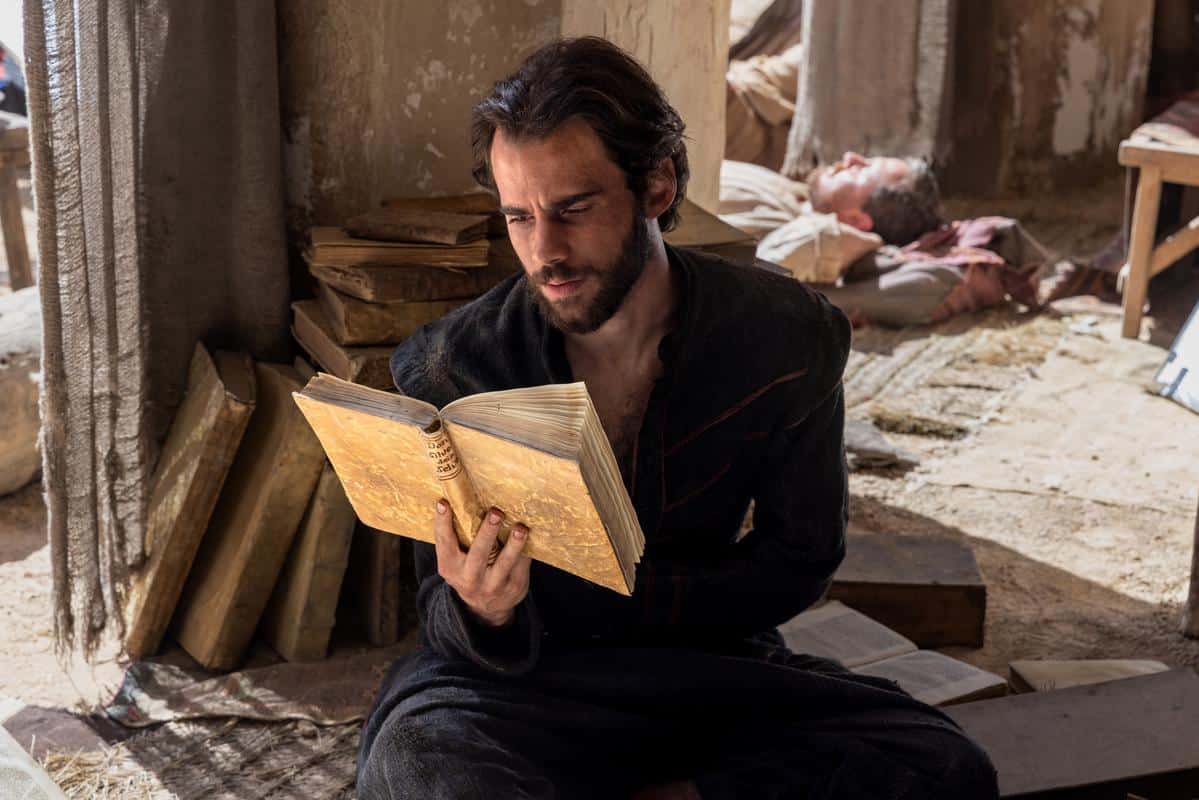
The Captive (El Cautivo) is a Spanish language historical drama exploring the five years writer Miguel de Cervantes spent as a hostage of Moorish pirates in Algiers. Or so it says on the box. There is a lot more to it than that. Cervantes famously wrote Don Quixote, claimed to be the first modern novel and arguably the most important cultural text in Spanish history. While fighting the Ottomans in a Spanish fleet, Cervantes was heavily wounded, losing the use of his right arm. A few years later he was captured by Ottoman corsairs who held him captive in Algiers, hoping for a large ransom rather than selling him as a slave. Little is known about this time in Algiers, so writer and director Alejandro Amenábar has filled the gap using Cervantes’s own themes of invention and imagination.
The film starts with Cervantes (Julio Peña), having been captured amongst other Spanish sailors, lying about his social standing in order to be ransomed instead of being sold as a slave. As he struggles to cope with his captivity, Cervantes invents a narrative of escape that begins to merge with the diegetic reality of the film. This was done in such a way that soon I wasn’t always sure what was meant to be ‘true’ and what was his fanciful imagination. Cervantes entertains fellow prisoners with stories of exotic princesses and heroic escapes, catching the attention of the corsair leader Hasán Bajá (Alessandro Borghi), an Italian who converted to Islam to escape slavery. They form a bond of friendship (and more) that causes outrage amongst the devout Catholic captives, threatening Cervantes’ chances of being ransomed by the Catholic envoys. Cervantes is rewarded for telling a pleasing story to Bajá with a day of freedom to explore the markets and city of Algiers. What he sees beyond the prison wall is then shared with the other captives.
The plot seemed slow and disjointed at first and the setup wasn’t overly clear. It was only when Amenábar began toying with reality that I settled into the narrative. The story is told in such a way that you are never quite sure what is meant to be an invention of Cervantes and what Amenabar wants us to accept as ‘real.’ I found myself doubting if any of the escape attempts, rewards, double-crossing initrigue, and intimate relationships were even actually happening and not just more of Cervantes’ own fanciful inventions. Characters are constantly lying right from the start, the heroes and villains alike, not only to save their own neck, but to create division or gain an advantage. There are many visual references to Don Quixote, too, like windmills and the Catholic envoy, where a tall, thin dignified older priest with a magnificent beard is accompanied by a short fat priest on a donkey, clearly signifying Quixote and Sancho Panza.
Like Don Quixote, The Captive is about the power of lies and losing oneself in imagination. This isn’t really an origin story about a famous writer, or an attempt at explaining history. This is a story about storytelling itself, and that is absolutely fascinating.
The Captive was seen as a media preview for the HSBC Spanish and Latin American Film Festival running through June to July.
Kokuho (Opening Night Reception – Japanese Film Festival) Rating
★★★★★
Click if you liked this article
The Japanese Film Festival is in its twenty-ninth year, and the festival continues to build its reputation as one of the most significant celebrations of Japanese cinema outside Japan. What began in 1997 with three small community screenings has grown into a nationwide cultural program that brings together new releases direct from Japanese cinemas, rare 35 millimetre prints, guest appearances, Q and A sessions and opportunities to experience both traditional and contemporary Japanese culture.
Opening night in Melbourne this year was buzzing from the moment the audience arrived. There was a warm sense of community at this festival, and that feeling was matched by a spread that included some of the best mochi I have ever had, generously provided by Roboto. The mood was festive, the theatre was full, and the anticipation for the flagship film was high.
This year’s opening film is Kokuhō, directed by Lee Sang il. The title means National Treasure, a fitting name given the cultural impact the film has had in Japan. Based on the best-selling novel by Shūichi Yoshida, Kokuhō stormed the Japanese box office in mid-2025 and continued to grow in popularity throughout the year. Audiences flocked to it repeatedly, word of mouth turning it into a major cultural milestone.
Unusually for a live-action drama, Kokuhō also became a major force on the international festival circuit. While Japanese films that break into global award categories are often animated features, Kokuhō made waves at Cannes and several other significant festivals. It was one of the most awarded and widely discussed Japanese films of the year, raising expectations ahead of its arrival in Australia.
A Story Shaped by Lineage, Ambition and Art
The story begins in Nagasaki in 1964 with a moment of shocking violence. Young Kikuo witnesses the murder of his father, a powerful leader of a yakuza organisation. This trauma marks him for life and shapes his intense desire to build a new future for himself. After his father’s death, Kikuo is taken in by the great kabuki master Hanjirō Hanai, played by the legendary Ken Watanabe. Under Hanai’s strict yet compassionate guidance, Kikuo begins to train as a kabuki performer alongside the master’s own son, Shunsuke.
The film follows the intertwined destinies of the two boys as they grow into men and into rivals. Their training is demanding. Their devotion to kabuki becomes an all-consuming pursuit that demands sacrifice, emotional depth and personal transformation. The film spans several decades, charting their rise through acting schools, rehearsal rooms and eventually onto Japan’s most prestigious kabuki stages.
Ryō Yoshizawa gives a powerful performance as Kikuo. He carries the weight of grief, ambition and longing with remarkable nuance. Ryūsei Yokohama as Shunsuke provides the perfect counterpoint, the son of a famous master who must grapple with the burden of legacy and expectation. The complex relationship between the two men provides the emotional core of the film. They are raised like brothers, yet they push and pull against each other constantly as their shared ambition becomes a source of love, frustration and pain.
Drama in Every Sense of the Word
Kokuhō is a drama in the richest sense. It is a story about artistic excellence, intense rivalry and deep emotional turmoil. It is also a story about Japan itself. The film is set during a period of enormous cultural transition. The country was emerging from the aftermath of the Second World War and moving into a modern future. This tension between old and new plays out both on the stage and in the characters’ lives.
One of the most impressive achievements of the film is the way it integrates kabuki into the narrative. Kabuki is known for its bold makeup, elaborate costumes, stylised movement and heightened delivery. For audiences unfamiliar with it, the artform can at first seem exaggerated. The film teaches viewers how to understand its emotional language. Rehearsal scenes show how performers learn to express pain, longing and joy through intonation and precise physicality. As Kikuo and Shunsuke train, we begin to see how their real lives mirror the classic tales they perform on stage.
The kabuki performances are staged with extraordinary visual beauty. The cinematography captures the richness of the costumes, the elegance of the sets and the commanding presence of the actors. The film allows several kabuki scenes to unfold in full, giving the audience a chance to experience the art form as though sitting in the theatre. These scenes also run in parallel with the offstage story, heightening the emotional impact.
A Film That Welcomes Newcomers to Kabuki
One of the film’s great strengths is its accessibility. Even if you have never seen kabuki before, Kokuhō draws you gently into its world. The characters learn and rehearse in ways that reveal the mechanics of the art. As the audience sees them refine their craft and receive feedback from Hanai, kabuki becomes easier to follow and understand. By the time the major stage scenes arrive, the heightened style feels entirely natural because the film has taught us how to read it.
This makes Kokuhō not only a gripping drama but also a cultural education. It provides a rare cinematic window into an artform that has survived for centuries and continues to hold a revered place in Japanese cultural identity.
A Rich Tapestry of Old and New Japan
The film also explores the social and cultural tensions of the era. Kikuo’s yakuza background places him at odds with the traditions and purity expected of kabuki performers. Meanwhile, Shunsuke must contend with the expectations placed upon him as the heir to a master performer. Japan itself is changing, and so are the worlds these men inhabit. The clash between traditional norms and a rapidly modernising society gives the film an added depth.
Verdict: A Masterwork of Emotion and Artistry
Kokuhō is a triumph of storytelling, performance and direction. It is a sweeping epic that never loses sight of the intimate emotional journeys at its heart. The performances are sublime, the direction confident, and the visual experience unforgettable. It balances scale, beauty and emotional truth.
As the opening feature for the 2025 Japanese Film Festival, it could not be more fitting. It embodies the richness and diversity of Japanese cinema and highlights the festival’s commitment to showcasing films that push artistic boundaries and capture the imagination.
The Japanese Film Festival runs nationwide from October to December 2025. To explore the full program, visit the festival website and enjoy a celebration of Japanese cinema that continues to grow in scope, ambition and cultural impact.
I Swear (British Film Festival Media Preview) Rating
★★★★★
Click if you liked this article
1
Many people still think that Tourette Syndrome is all about swearing, not understanding the deeper complexity and impact of the condition. With education comes acceptance. That is the message at the heart of I Swear, a biopic about John Davidson, the Scottish activist who helped raise awareness of the syndrome after developing symptoms as a teenager. Written and directed by Kirk Jones, the film is a compassionate, beautifully told story that is both heart-warming and heart-wrenching, often at the same time.
While the plot was safe and highly predictable, it was the stunning performances that grabbed my attention and didn’t let go. Robert Aramayo, from Rings of Power, plays an adult John so beautifully that all the physical ticks and outbursts feel natural and authentic. There’s such a warm humanity to John, and his rejections and setbacks are truly heart-breaking. The swearing, while tragic in their origin, are also timed and delivered so well you can’t help but laugh, despite the dramatic consequences. Some lines are absolute classics, with John yelling at the police he has drugs on him, or the judge that he’s a ‘see you en tea’. Aramayo is supported by fantastic cast including Peter Mullan, Maxine Peake, and Shirley Henderson. There isn’t a weak link in the chain.
The story begins when John first notices uncontrollable ticks when he’s only 13. Scott Ellis Watson is brilliant as the young John, convincingly playing a confused and scared young boy as the condition destroys what looks like a promising football career and leads to the break-up of his parent’s marriage. With the condition unrecognised and unaccepted, John is considered a trouble-maker, bullied and outcast not only by other school children but the broader community. It’s devastating.
When John grows up, he lives with his mother who struggles to cope with his behaviour and insists that medication is the solution. When John meets Dottie, the mother of an old school friend, his life begins to change. By showing compassion and understanding, Dottie makes John feel accepted and safe. She tells him never to apologise for something that can’t be helped. This acceptance empowers John to build a normal life for himself, eventually helping others with the condition and educating the community about Tourette Syndrome. There were a few moments where the drama became a little too forced, but I gave the authenticity the benefit of the doubt. It might actually have happened that way.
I Swear is not only moving and inspirational, but educational, turning misunderstanding into revelation. The entire theatre came out raving to each other about the power of the story. I can’t recommend it enough.
I Swear is showing as part of the British Film Festival at Palace Cinemas Moore Park from November 5 to December 7, with a program full of the best of British Cinema.