In a West Country town in Somerset, England, lies the Ashton Brook Primary School. From the outside, it seems like any other upstanding educational institution. The teachers are set at a high-standard. The children wear uniforms. There is nobility in singing the school anthem.
But, for primary school teacher Maria Spencer, something is simmering internally. An unwavering pressure that seems to have no solution in sight.
The problem? Her irate and unruly student, Danny. He disrupts her classroom constantly. He picks fights with other children. He can’t be trusted on fields trips. He even throws a fellow pupil down the stairs. And somehow, the pressure of keeping control of Danny always falls into Maria’s hands, with no support from the school’s administration. Even the principal wants to wipe her hands of it.
To make matters worse? Maria’s formal school evaluation is scheduled for the following day. If Danny is there in the classroom, she knows she will look incompetent.
So, in a moment of deep desperation, Maria takes this matter into her own hands.
She tries to speak with Danny’s father. She is again rebuffed. Sensing parental neglect, she then finds Danny nearby, angrily smashing cars. After having to restrain him from bashing her car, he falls unconscious. Fearful of the consequences of having hurt a pupil, Maria quickly herds Danny into the backseat of her car, and brings him safely to her home, where she lives alone.
And this is where this dark comedy thriller becomes truly interesting.
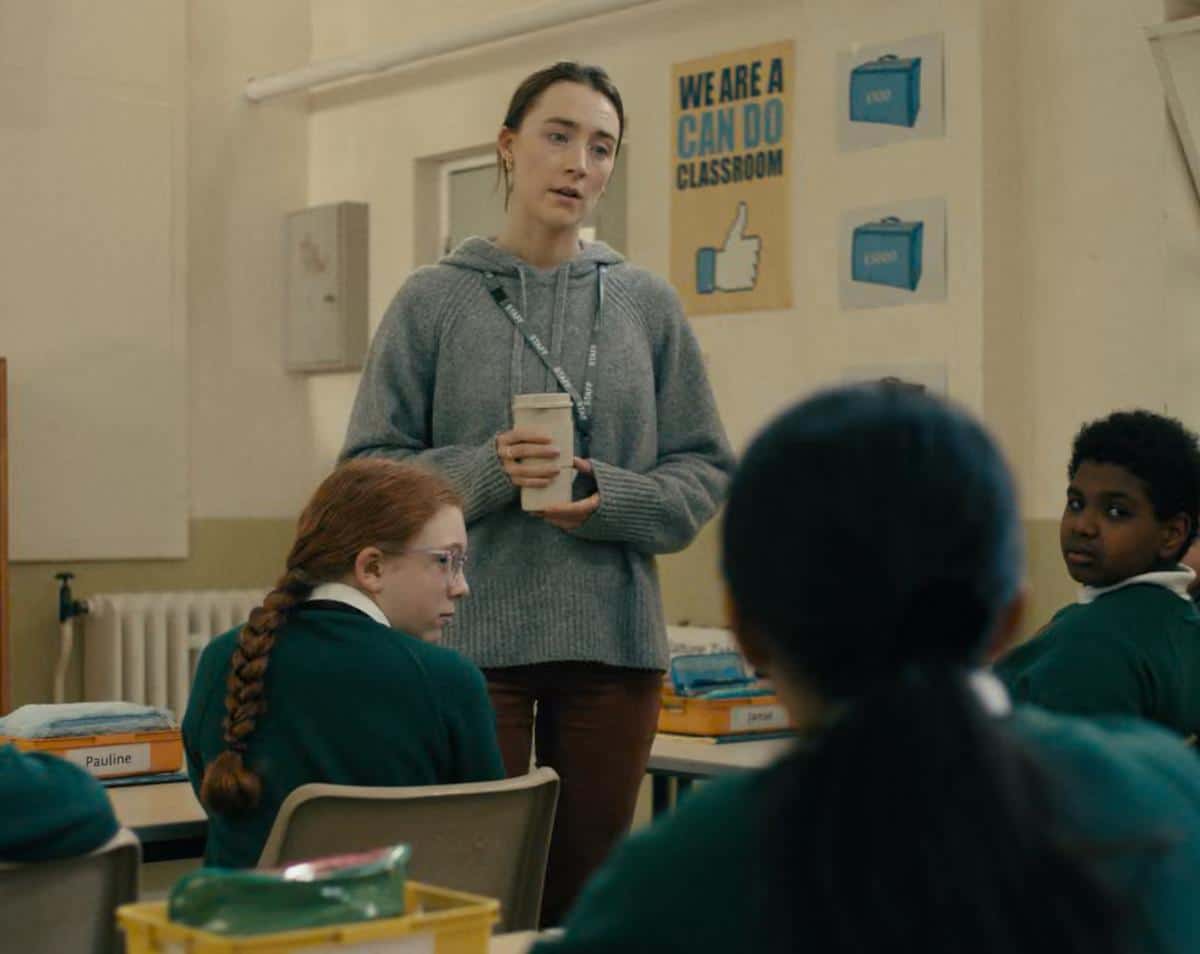
Well-meaning Maria Spencer? Well, she does the unthinkable. She locks Danny in her basement, so he is absent in the classroom during her appraisal.
And, as she had surmised, things go swimmingly well for her. She takes control of her classroom. She can actually do her job without distractions. And the children begin to respect her. She not only gets an outstanding result, but her whole life is starting to improve – all while kidnapping Danny and secretly keeping him under lock and key in her basement.
This is such an interesting story that is not only packed with dark comedy, but that plays with visual metaphors. Like the constant meaning of the rotten, bad apple.
That if it appears in an orchard, it has the power to ruin the whole bushel.
How one bad decision has the power to root out and spread further decay in its aftermath.
And moreover; how the dark and sinister behaviour of ‘every man for himself’ can sometimes spiral and twist itself, to surprising and thrilling consequences.
This film is based on the Swedish novel ‘De Oönskade’, by author Rasmus Lindgren. It’s not only a tale of the modern struggles of the teaching profession, and the complexities surrounding community educational systems; but about the moral dilemma of its central character, Maria Spencer, and her constant need to be in control of something in her life. In this case? It’s of the system that is sadly, constantly betraying her.
This film, directed by fellow Swede Jonatan Etzler, is part dark comedy, part satire, and contain a myriad of dark Swedish cinema tropes.
A clean, saccharine-like parental community, desperate to hide a secret that could undermine their lives. Even if it means letting one wayward child pay the price.
Wicked human behaviour? Is cleverly depicted through static, poker-faced mannerisms, typically used when trying to keep sinister secrets, and to bring out the more satirical moments of irony in this film.
The environment of this film? Is hostile and gloomy. There is thunder constantly brewing. Lashings of rain. Loud noises and banging. Ominous music foreshadowing the darkness within, especially amongst the main characters in this film.
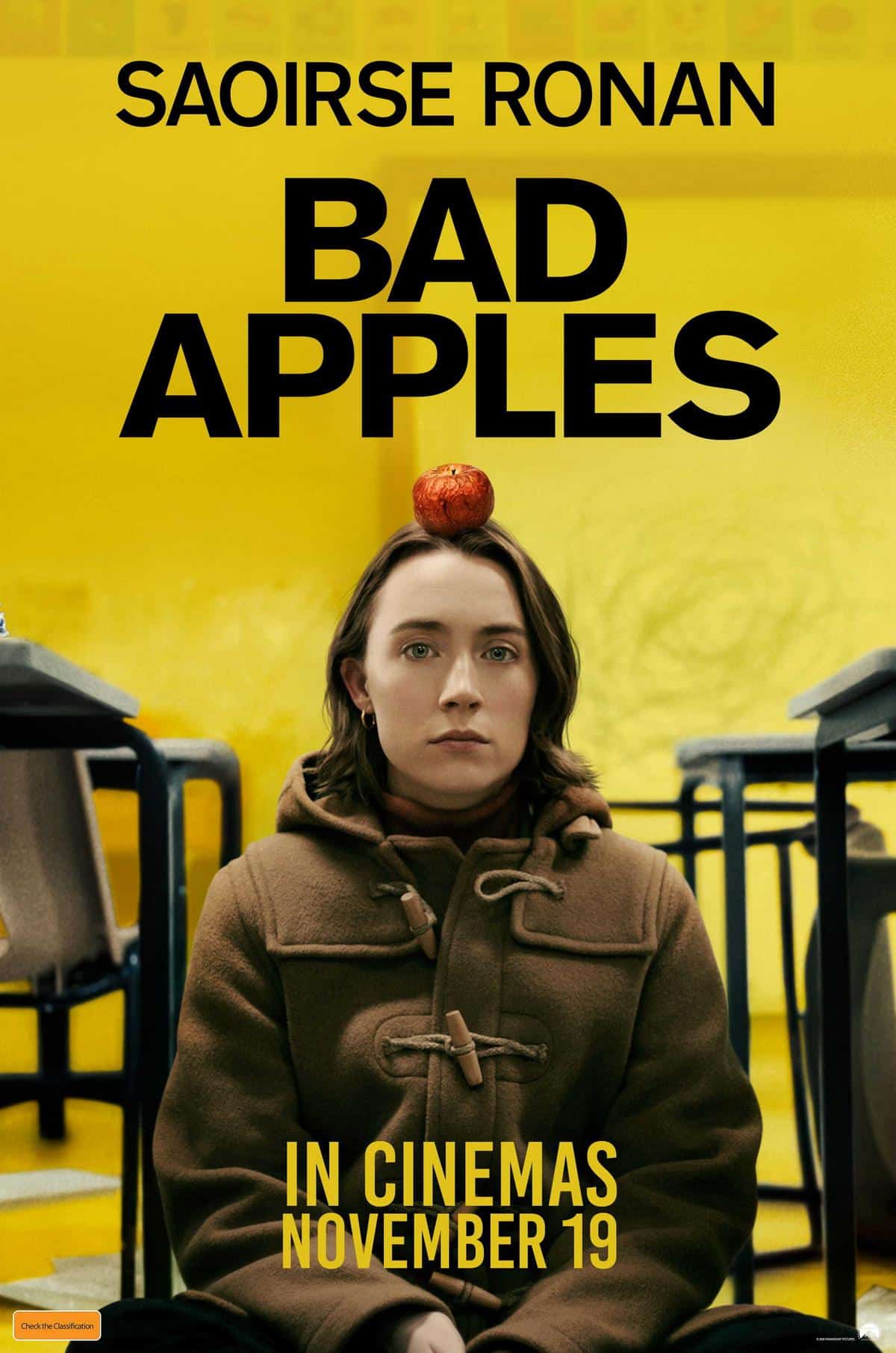
Academy Award nominee Saoirse Ronan is wonderfully astute as the artful dodger Maria, whose character arc moves from a level of a hapless and desperate teacher, to a shrewd and slick champion of deception.
Eddie Walker, as disruptive pupil Danny, has the perfect look of a stunted child, having fallen into the cracks of a broken system, a train-wreck of outdated belief systems unable to help him. He blends embittered anger with an underlying well of pity and vulnerability; that makes his performance all the more believable.
But the twisted role of little Pauline, excellently played by Nia Brown, cleverly hijacks the film in the most delicious of ways, particularly when singing her schools anthem with ‘dark lyrics’ while playing the keyboard at the parents/teacher meeting. A truer-than-true Boomtown Rat’s ‘I Don’t Like Mondays’ crescendo-peaking grab. A true cinematic delight for the mind-bending enthusiasts in the audience.
In all, Bad Apples, in all its irony, is a turbulent, suspenseful, see-saw ride of how twisted moments, however selfish, can sometimes provide even better outcomes. How the well-meaning seeds we may plant in our own orchard of life? May result in the greatest evolution: even within ourselves.
To book tickets to Bad Apples, please visit https://britishfilmfestival.com.au/films/bff26-bad-apples.