Kokuhō Opens the 2025 Japanese Film Festival With Power, Precision and Pure Theatrical Brilliance

Kokuho (Opening Night Reception - Japanese Film Festival)

Kokuho (Opening Night Reception – Japanese Film Festival) Rating

Click if you liked this article

The Japanese Film Festival is in its twenty-ninth year, and the festival continues to build its reputation as one of the most significant celebrations of Japanese cinema outside Japan. What began in 1997 with three small community screenings has grown into a nationwide cultural program that brings together new releases direct from Japanese cinemas, rare 35 millimetre prints, guest appearances, Q and A sessions and opportunities to experience both traditional and contemporary Japanese culture.

Opening night in Melbourne this year was buzzing from the moment the audience arrived. There was a warm sense of community at this festival, and that feeling was matched by a spread that included some of the best mochi I have ever had, generously provided by Roboto. The mood was festive, the theatre was full, and the anticipation for the flagship film was high.

This year’s opening film is Kokuhō, directed by Lee Sang il. The title means National Treasure, a fitting name given the cultural impact the film has had in Japan. Based on the best-selling novel by Shūichi Yoshida, Kokuhō stormed the Japanese box office in mid-2025 and continued to grow in popularity throughout the year. Audiences flocked to it repeatedly, word of mouth turning it into a major cultural milestone.

Unusually for a live-action drama, Kokuhō also became a major force on the international festival circuit. While Japanese films that break into global award categories are often animated features, Kokuhō made waves at Cannes and several other significant festivals. It was one of the most awarded and widely discussed Japanese films of the year, raising expectations ahead of its arrival in Australia.

A Story Shaped by Lineage, Ambition and Art

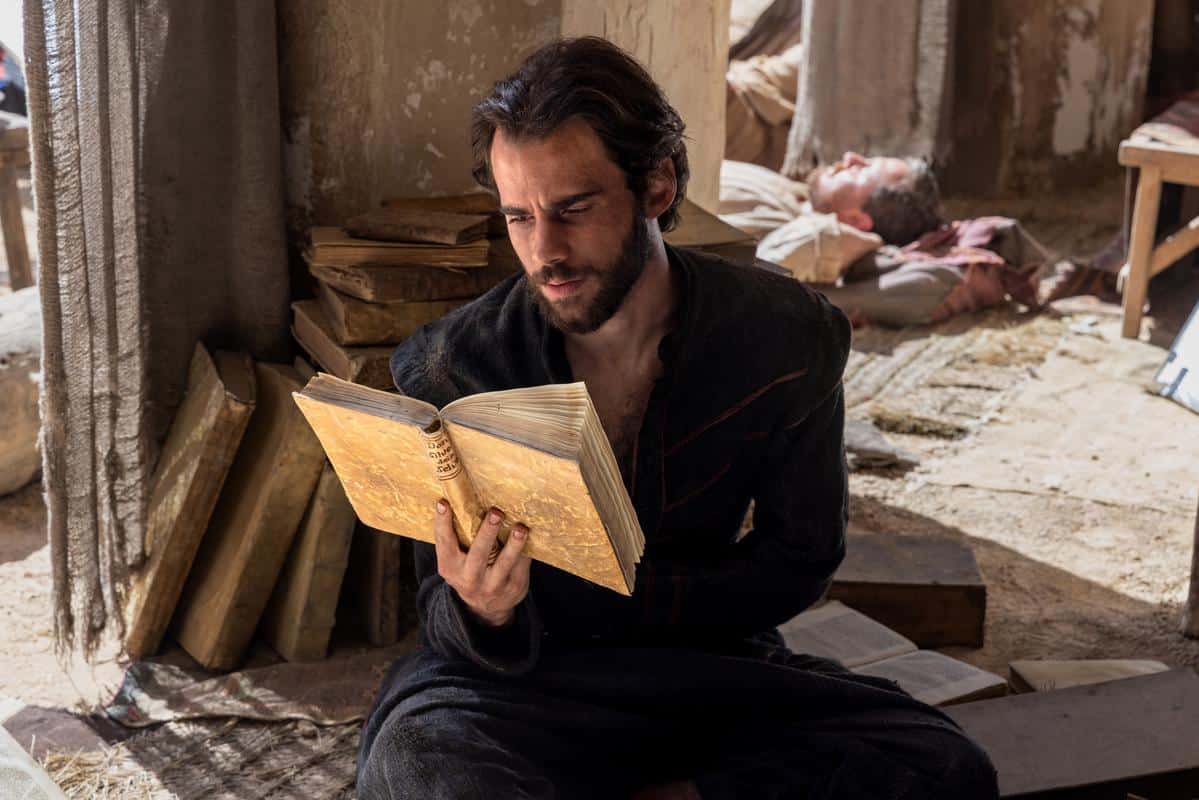
The story begins in Nagasaki in 1964 with a moment of shocking violence. Young Kikuo witnesses the murder of his father, a powerful leader of a yakuza organisation. This trauma marks him for life and shapes his intense desire to build a new future for himself. After his father’s death, Kikuo is taken in by the great kabuki master Hanjirō Hanai, played by the legendary Ken Watanabe. Under Hanai’s strict yet compassionate guidance, Kikuo begins to train as a kabuki performer alongside the master’s own son, Shunsuke.

The film follows the intertwined destinies of the two boys as they grow into men and into rivals. Their training is demanding. Their devotion to kabuki becomes an all-consuming pursuit that demands sacrifice, emotional depth and personal transformation. The film spans several decades, charting their rise through acting schools, rehearsal rooms and eventually onto Japan’s most prestigious kabuki stages.

Ryō Yoshizawa gives a powerful performance as Kikuo. He carries the weight of grief, ambition and longing with remarkable nuance. Ryūsei Yokohama as Shunsuke provides the perfect counterpoint, the son of a famous master who must grapple with the burden of legacy and expectation. The complex relationship between the two men provides the emotional core of the film. They are raised like brothers, yet they push and pull against each other constantly as their shared ambition becomes a source of love, frustration and pain.


Drama in Every Sense of the Word

Kokuhō is a drama in the richest sense. It is a story about artistic excellence, intense rivalry and deep emotional turmoil. It is also a story about Japan itself. The film is set during a period of enormous cultural transition. The country was emerging from the aftermath of the Second World War and moving into a modern future. This tension between old and new plays out both on the stage and in the characters’ lives.

One of the most impressive achievements of the film is the way it integrates kabuki into the narrative. Kabuki is known for its bold makeup, elaborate costumes, stylised movement and heightened delivery. For audiences unfamiliar with it, the artform can at first seem exaggerated. The film teaches viewers how to understand its emotional language. Rehearsal scenes show how performers learn to express pain, longing and joy through intonation and precise physicality. As Kikuo and Shunsuke train, we begin to see how their real lives mirror the classic tales they perform on stage.

The kabuki performances are staged with extraordinary visual beauty. The cinematography captures the richness of the costumes, the elegance of the sets and the commanding presence of the actors. The film allows several kabuki scenes to unfold in full, giving the audience a chance to experience the art form as though sitting in the theatre. These scenes also run in parallel with the offstage story, heightening the emotional impact.

A Film That Welcomes Newcomers to Kabuki

One of the film’s great strengths is its accessibility. Even if you have never seen kabuki before, Kokuhō draws you gently into its world. The characters learn and rehearse in ways that reveal the mechanics of the art. As the audience sees them refine their craft and receive feedback from Hanai, kabuki becomes easier to follow and understand. By the time the major stage scenes arrive, the heightened style feels entirely natural because the film has taught us how to read it.

This makes Kokuhō not only a gripping drama but also a cultural education. It provides a rare cinematic window into an artform that has survived for centuries and continues to hold a revered place in Japanese cultural identity.

A Rich Tapestry of Old and New Japan

The film also explores the social and cultural tensions of the era. Kikuo’s yakuza background places him at odds with the traditions and purity expected of kabuki performers. Meanwhile, Shunsuke must contend with the expectations placed upon him as the heir to a master performer. Japan itself is changing, and so are the worlds these men inhabit. The clash between traditional norms and a rapidly modernising society gives the film an added depth.

Verdict: A Masterwork of Emotion and Artistry

Kokuhō is a triumph of storytelling, performance and direction. It is a sweeping epic that never loses sight of the intimate emotional journeys at its heart. The performances are sublime, the direction confident, and the visual experience unforgettable. It balances scale, beauty and emotional truth.

As the opening feature for the 2025 Japanese Film Festival, it could not be more fitting. It embodies the richness and diversity of Japanese cinema and highlights the festival’s commitment to showcasing films that push artistic boundaries and capture the imagination.

The Japanese Film Festival runs nationwide from October to December 2025. To explore the full program, visit the festival website and enjoy a celebration of Japanese cinema that continues to grow in scope, ambition and cultural impact.

To book tickets to Kokuho (Opening Night Reception – Japanese Film Festival), please visit https://japanesefilmfestival.net/film/kokuho/.

Spread the word on your favourite platform!

The Choral

The Choral

The Choral Rating

Click if you liked this article

Art is about being creative and defiant, while music brings people together. Ralph Fiennes leads a strong ensemble cast in The Choral, a moving film about the devastation of war and the uniting power of music. Set in a fictional Yorkshire town during the first world war, the local choral society is struggling to maintain it’s male singers as the men head off to fight. All they have left are the young boys and old men. Trying to maintain a sense of normality despite grief and loss, the community hopes to find a uniting joy by putting on their annual choral performance.

When the choirmaster volunteers to fight in France, the only replacement they can find is Dr Guthrie (Fiennes), who causes immediate scandal because he lived in Germany for many years and admires their art and culture. With most of the great composers being German or Austrian, the Choral society chooses Elgar and his forgotten production The Dream of Gerontius.

But it’s not really about that.


The choral performance acts as the framework to hold a variety of rich stories about love, hope, loss, grief, and fear played by a strong ensemble cast including Alun Armstrong, Mark Addy, Ron Cook, Emily Fairn, and Lyndsey Marshal. The next generation of youth explore love and sex as they face conscription as soon as they turn 18, knowing they may not return. A wounded soldier returns from the war to find his old life is over, and looks for solace and comfort in the choral. There is the pianist, a pacifist and gay man who faces jail and shame for refusing to fight. Dr Guthrie himself struggles with the relevance of Elgar’s story about the death of an old man, when so many of the young are dying. Without permission, he adapts Elgar’s production to better reflect the pain and struggles of the community.

The film is calmly directed by Nicholas Hynter, never overplaying the sentimentality or message. There is plenty of well-placed humour to keep the mood from getting too grim. Hynter handles his characters with a great deal of care, never demonising anyone despite their flaws. Even the powerful and wealthy mill owner who funds the Choral is handled with empathy. Because of his position he expects to play the lead, but only because he loves to sing. It brings him much needed joy as he grieves a fallen son, but soon he realises that he must step aside.

The Choral is playing as part of the British Film Festival at Palace Cinemas Moore Park until December 7, with a program full of the best of British Cinema.

To book tickets to The Choral, please visit https://britishfilmfestival.com.au/films/bff25-the-choral.

Spread the word on your favourite platform!

I Swear

I Swear (British Film Festival Media Preview)

I Swear (British Film Festival Media Preview) Rating

Click if you liked this article

1

Many people still think that Tourette Syndrome is all about swearing, not understanding the deeper complexity and impact of the condition. With education comes acceptance. That is the message at the heart of I Swear, a biopic about John Davidson, the Scottish activist who helped raise awareness of the syndrome after developing symptoms as a teenager. Written and directed by Kirk Jones, the film is a compassionate, beautifully told story that is both heart-warming and heart-wrenching, often at the same time.

While the plot was safe and highly predictable, it was the stunning performances that grabbed my attention and didn’t let go. Robert Aramayo, from Rings of Power, plays an adult John so beautifully that all the physical ticks and outbursts feel natural and authentic. There’s such a warm humanity to John, and his rejections and setbacks are truly heart-breaking. The swearing, while tragic in their origin, are also timed and delivered so well you can’t help but laugh, despite the dramatic consequences. Some lines are absolute classics, with John yelling at the police he has drugs on him, or the judge that he’s a ‘see you en tea’. Aramayo is supported by fantastic cast including Peter Mullan, Maxine Peake, and Shirley Henderson. There isn’t a weak link in the chain.


The story begins when John first notices uncontrollable ticks when he’s only 13. Scott Ellis Watson is brilliant as the young John, convincingly playing a confused and scared young boy as the condition destroys what looks like a promising football career and leads to the break-up of his parent’s marriage. With the condition unrecognised and unaccepted, John is considered a trouble-maker, bullied and outcast not only by other school children but the broader community. It’s devastating.

When John grows up, he lives with his mother who struggles to cope with his behaviour and insists that medication is the solution. When John meets Dottie, the mother of an old school friend, his life begins to change. By showing compassion and understanding, Dottie makes John feel accepted and safe. She tells him never to apologise for something that can’t be helped. This acceptance empowers John to build a normal life for himself, eventually helping others with the condition and educating the community about Tourette Syndrome. There were a few moments where the drama became a little too forced, but I gave the authenticity the benefit of the doubt. It might actually have happened that way.

I Swear is not only moving and inspirational, but educational, turning misunderstanding into revelation. The entire theatre came out raving to each other about the power of the story. I can’t recommend it enough.

I Swear is showing as part of the British Film Festival at Palace Cinemas Moore Park from November 5 to December 7, with a program full of the best of British Cinema.

To book tickets to I Swear (British Film Festival Media Preview), please visit https://britishfilmfestival.com.au/films/bff25-i-swear.

Spread the word on your favourite platform!

Serpent’s Path: Japanese Cult Movie to Taut French Thriller

Serpent's Path

Serpent’s Path Rating

Click if you liked this article

Director Kiyoshi Kurosawa takes a second shot at ‘Hebi no michi,’ his 1998 Japanese V-Cinema movie. Here, Kurosawa steps away from Japan’s criminal underbelly, remaking his film in Paris, as a predominately French-language thriller.

Back in 1998, Kiyoshi Kurosawa (no relation to the legendary Japanese filmmaker Akira Kurosawa) made V-Cinema movies as quickly as Roger Corman used to make horror films. Most were straight-to-video, some had a limited theatrical release. V-Cinema usually meant low-budget action: bullets, explosions, crime stories and thrill rides.

‘Hebi no michi’ was dark and contemplative. Two men, Miyashita and Nijima, were hellbent on revenge. Carving a bloody swathe through everyone Miyashita held responsible for the brutal murder of his daughter.

The original 1998 Japanese movie, starring Teruyuki Kagawa as Miyashita and V-Cinema legend Show Aikawa as Nijima, rapidly gained cult status.

French cinemagoers have developed a taste for director Kiyoshi Kurosawa’s movies. He has twice won the Cannes Film Festival’s Un Certain Regard prize, for ‘Tokyo Sonata’ in 2008, and for ‘Journey to the Shore’ in 2015.

His international reputation was cemented in 2020 when his film, ‘Wife of a Spy,’ won the Silver Lion for Best Director at the Venice International Film Festival.

Given the opportunity to remake one of his earlier movies in France, Kurosawa jumped at the chance, immediately choosing ‘Hebi no michi,’ ‘Serpent’s Path.’

‘Serpent’s Path,’ ‘La Voie du serpent,’ 2024, updates and makes a number of subtle but effective changes.

Kô Shibasaki (Battle Royale; 47 Ronin; The Boy and the Heron) and Damien Bonnard (Les Misérables; Poor Things; The French Dispatch) star in this taut and brilliant thriller.


Damien Bonnard takes the role of Albert Bacheret. The original’s Miyashita was ex-Yakuza. Part of Japan’s criminal underworld. Here, Bacheret is a bumbling, grieving father. He shambles, broken and hurting but unstoppable.

Kô Shibasaki as Sayoko Mijima holds every frame she appears in. Mijima’s stillness is in marked contrast to the stumbling Bacheret. Mijima is a psychiatrist rather than the original’s schoolteacher. As the movie’s mysteries are revealed one by one, Mijima keeps her secrets.

Shibasaki and Bonnard are ably supported by a cast of French character actors including Mathieu Amalric (The Diving Bell and the Butterfly; The Grand Budapest Hotel; Quantum of Solace) and Grégoire Colin (The Dreamlife of Angels; The Vourdalak).

Kurosawa shifts the story from Japan’s criminal underworld to the dark side of European charitable organisations. Anonymous foundations, with secretive inner circles. Wider conspiracies that hide unspeakable crimes.

‘Before you embark on a journey of revenge, dig two graves’ was originally a Japanese proverb.

In Serpent’s Path, you need to dig half a graveyard to bury the dead. The first act of abduction, dehumanisation and revenge rapidly spirals as deeper secrets are uncovered and the body count rises.

Is anyone telling the truth? Are they lying and pointing fingers to shift blame and save their own skin?

Serpent’s Path winds left and right, zigzagging as you follow the clues, the confessions and the trail of the dead.

Avoid spoilers, buy tickets and immerse yourself in this razor-sharp thriller.

To book tickets to Serpent’s Path, please visit https://japanesefilmfestival.net/film/serpents-path/.

Spread the word on your favourite platform!