The Choral

The Choral

The Choral Rating

Click if you liked this article

Art is about being creative and defiant, while music brings people together. Ralph Fiennes leads a strong ensemble cast in The Choral, a moving film about the devastation of war and the uniting power of music. Set in a fictional Yorkshire town during the first world war, the local choral society is struggling to maintain it’s male singers as the men head off to fight. All they have left are the young boys and old men. Trying to maintain a sense of normality despite grief and loss, the community hopes to find a uniting joy by putting on their annual choral performance.

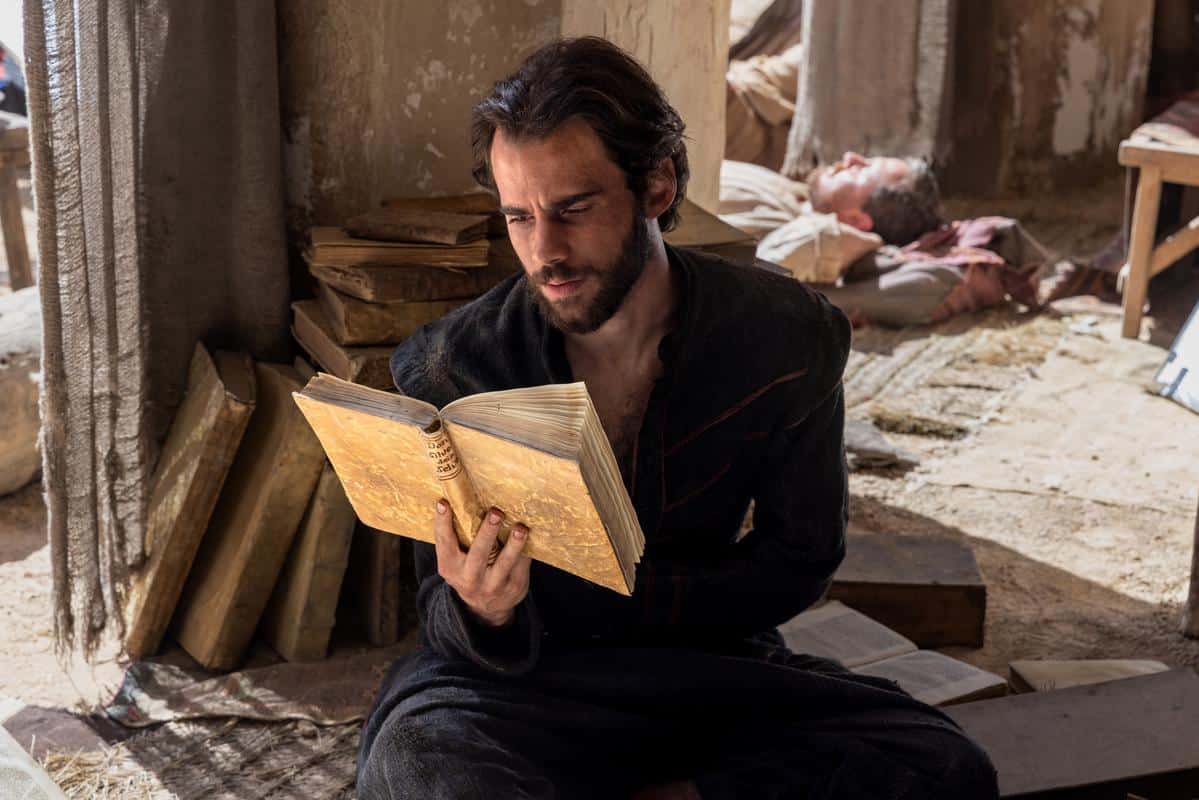
When the choirmaster volunteers to fight in France, the only replacement they can find is Dr Guthrie (Fiennes), who causes immediate scandal because he lived in Germany for many years and admires their art and culture. With most of the great composers being German or Austrian, the Choral society chooses Elgar and his forgotten production The Dream of Gerontius.

But it’s not really about that.


The choral performance acts as the framework to hold a variety of rich stories about love, hope, loss, grief, and fear played by a strong ensemble cast including Alun Armstrong, Mark Addy, Ron Cook, Emily Fairn, and Lyndsey Marshal. The next generation of youth explore love and sex as they face conscription as soon as they turn 18, knowing they may not return. A wounded soldier returns from the war to find his old life is over, and looks for solace and comfort in the choral. There is the pianist, a pacifist and gay man who faces jail and shame for refusing to fight. Dr Guthrie himself struggles with the relevance of Elgar’s story about the death of an old man, when so many of the young are dying. Without permission, he adapts Elgar’s production to better reflect the pain and struggles of the community.

The film is calmly directed by Nicholas Hynter, never overplaying the sentimentality or message. There is plenty of well-placed humour to keep the mood from getting too grim. Hynter handles his characters with a great deal of care, never demonising anyone despite their flaws. Even the powerful and wealthy mill owner who funds the Choral is handled with empathy. Because of his position he expects to play the lead, but only because he loves to sing. It brings him much needed joy as he grieves a fallen son, but soon he realises that he must step aside.

The Choral is playing as part of the British Film Festival at Palace Cinemas Moore Park until December 7, with a program full of the best of British Cinema.

To book tickets to The Choral, please visit https://britishfilmfestival.com.au/films/bff25-the-choral.

Spread the word on your favourite platform!

I Swear

I Swear (British Film Festival Media Preview)

I Swear (British Film Festival Media Preview) Rating

Click if you liked this article

1

Many people still think that Tourette Syndrome is all about swearing, not understanding the deeper complexity and impact of the condition. With education comes acceptance. That is the message at the heart of I Swear, a biopic about John Davidson, the Scottish activist who helped raise awareness of the syndrome after developing symptoms as a teenager. Written and directed by Kirk Jones, the film is a compassionate, beautifully told story that is both heart-warming and heart-wrenching, often at the same time.

While the plot was safe and highly predictable, it was the stunning performances that grabbed my attention and didn’t let go. Robert Aramayo, from Rings of Power, plays an adult John so beautifully that all the physical ticks and outbursts feel natural and authentic. There’s such a warm humanity to John, and his rejections and setbacks are truly heart-breaking. The swearing, while tragic in their origin, are also timed and delivered so well you can’t help but laugh, despite the dramatic consequences. Some lines are absolute classics, with John yelling at the police he has drugs on him, or the judge that he’s a ‘see you en tea’. Aramayo is supported by fantastic cast including Peter Mullan, Maxine Peake, and Shirley Henderson. There isn’t a weak link in the chain.


The story begins when John first notices uncontrollable ticks when he’s only 13. Scott Ellis Watson is brilliant as the young John, convincingly playing a confused and scared young boy as the condition destroys what looks like a promising football career and leads to the break-up of his parent’s marriage. With the condition unrecognised and unaccepted, John is considered a trouble-maker, bullied and outcast not only by other school children but the broader community. It’s devastating.

When John grows up, he lives with his mother who struggles to cope with his behaviour and insists that medication is the solution. When John meets Dottie, the mother of an old school friend, his life begins to change. By showing compassion and understanding, Dottie makes John feel accepted and safe. She tells him never to apologise for something that can’t be helped. This acceptance empowers John to build a normal life for himself, eventually helping others with the condition and educating the community about Tourette Syndrome. There were a few moments where the drama became a little too forced, but I gave the authenticity the benefit of the doubt. It might actually have happened that way.

I Swear is not only moving and inspirational, but educational, turning misunderstanding into revelation. The entire theatre came out raving to each other about the power of the story. I can’t recommend it enough.

I Swear is showing as part of the British Film Festival at Palace Cinemas Moore Park from November 5 to December 7, with a program full of the best of British Cinema.

To book tickets to I Swear (British Film Festival Media Preview), please visit https://britishfilmfestival.com.au/films/bff25-i-swear.

Spread the word on your favourite platform!

Selkie

Selkie

Selkie Rating

Click if you liked this article

Finn O’Branagáin’s play, Selkie, uses old Orkney mythology to explore the important themes of domestic violence and coercive control. A Selkie is a creature that lives in the sea in the form of a seal, coming to land and shedding their seal skin to become attractive and seductive humans.

Rónnad (Celeste Cortez Davis) finds herself naked on the beach after losing her seal skin, trapping her on land. She is ‘rescued’ by Séan (Josh Hammond), who takes her in to his home, gives her clothing, and promises to help find her skin. There’s no actual nudity in the play, and it isn’t needed, the idea of a Selkie without her seal skin effectively achieved in other ways.

Trapped in Séan’s care, the two develop an awkward relationship, just like Selkie’s of mythology who are sometimes tricked into marrying humans. Rónnad tries her best to assimilate while missing her life of freedom in the sea, longing to escape. Tensions rise as she fails to meet Séan’s expectations, who both claims to love her idiosyncrasies, but is also angered by them. The symbolism is beautifully woven between real relationships born of entrapment and the Celtic mythology.


It was interesting how there was absolutely no chemistry between the pair. Words of love and affection felt empty and hollow, demonstrating the lack of real connection between the couple despite outward behaviour. While Séan seems infatuated by the idea of Rónnad, he fails to connect with her true self. Rónnad herself struggles to conform, trapped on the land, trying her best to love Séan without losing her own identity. Struggles often experienced by those who suffer abusive relationships.

The play felt a bit too short and could have used a few more scenes to really develop both the dysfunctional relationship and the growing tension between the pair. The lack of time smothered the play’s ability to escalate the emotional abuse more subtly and effectively.

The performances were strong, and I really enjoyed the creative directing in telling the story with minimal set design. I was drawn into their world thanks to well-designed lighting and audio effects. The choice of music to induce emotion was disappointing however, and could have been more effective without lyrics.

Selkie is currently playing at The Old Fitz Theatre as part of the Sydney Fringe Festival.

To book tickets to Selkie, please visit https://www.oldfitztheatre.com.au/selkie.

Photographer: Robert Miniter

Spread the word on your favourite platform!

She Threaded Dangerously

She Threaded Dangerously

She Threaded Dangerously Rating

Click if you liked this article

The small, intimate Old Fitz theatre seemed like the perfect place to premiere She Threaded Dangerously, a bold new play by Simon Thomson and Emma Wright. The story follows four friends in an all-girl’s High School as they navigate the complicated dynamics of friendship, loyalty, and supressed desire, blinding them to the dangers around them.

The ensemble story jumps between each of the four girls as they wrestle with adolescence, sexual desire, and power dynamics, often putting them in conflict with each other. At the centre is a substitute male P.E. teacher some of the girl’s find attractive and dare each other to flirt with. They invite two boys from their twin all-boys school to a private party to drink and flirt, sparking rivalries and division. While skipping class, one of the girl’s meets an adult jogger who calls her an old soul. He strikes up what she believes is just friendly banter that makes her feel seen. Claiming to be a police officer, his manipulative grooming from a position of trust and power is uncomfortably insidious. The male characters balanced each other a little too obviously, with the two younger characters, and two older characters, each a pair of contrasting expressions of masculinity and authority put into conflict with the girls.


The story felt rushed, often moving along at such an exhausting pace it was hard to follow the banter being thrown around between the girls. Sometimes their screaming and yelling was a bit too loud for the tiny Old Fitz theatre and my ears were bleeding. Much like a High School, I guess. While the deeper themes are dark and uncomfortable, the various story threads could have used more depth or be taken in a surprising direction. Once you knew where each story was going it was predictable.

Karrine Kanaan, Alyssa Peters, and Larissa Turton do a great job as the girls, along with Claudia Elbourne, who also directs. Each embodied their characters convincingly, as did the supporting cast of Hamish Alexander, Michael Yore, and Leon Walshe. I particularly liked the sound design by Alexander Lee-Rekers, who created an intense soundscape mixed with music that reinforced the drama and chaos. Laila McCarthy’s set also worked beautifully in the limited space, using only a few carefully selected props and set pieces to craft a variety of locations that leaned into the power of theatrical imagination.

She Threaded Dangerously is an uncomfortable yet important exploration of teenage girls navigating a complex world of desire, power, and friendship, currently playing at the Old Fitz Theatre as part of the Sydney Fringe Festival until the 27th of September.

To book tickets to She Threaded Dangerously, please visit https://www.oldfitztheatre.com.au/she-threaded-dangerously.

Photographer: Karla Elbourne

Spread the word on your favourite platform!