Most know the late Tony Bennett and the much younger pop icon, Lady Gaga, who shared a musical partnership and a friendship for decades. Both were Italian singers with a mutual respect for each other, as well as two collaborative jazz albums.
After first meeting at the 2011 Robin Hood Foundation gala in New York City, when Bennett told Gaga, “Lady, you are a jazz singer”, later that year Gaga recorded “The Lady Is a Tramp” for Bennett’s Duets II album.
So successful, they then released the chart-topping jazz record Cheek to Cheek in 2014 and the Cole Porter tribute album Love for Sale in 2021.
What many don’t know is the mutual impact and support they shared revitalized Gaga’s love for music when she was considering quitting the music industry. Their partnership was that profound.
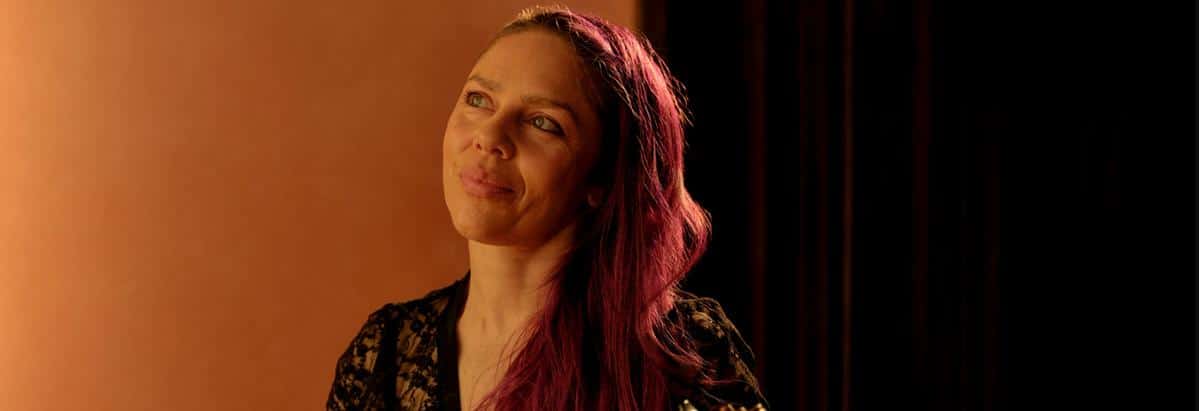
For the amazing Tony & Gaga tribute show in Melbourne last Friday, acclaimed powerhouse vocalist, Sarah C, (Dancing with the Stars, X Factor) teamed up with debonair Melbourne fashion icon, Dom Bagnato, to sing the unforgettable hits of the American Songbook.
Arguably, some of the best songs ever produced in our history, some nearly 100 years old, these timeless tunes fit somewhere into our lives emotionally, still today.
When I last reviewed Sarah’s ‘Soul Divas’ show, I met Dom in the audience, excited about doing this new show with Sarah C.
This had developed when Sarah and Dom had sung together at the birthday of Dom’s daughter when they realised they had some great musical mojo together. Now, the rest is history.
No coincidence, the 20-piece band backing Sarah and Dom on Friday night were named the Mojo Orchestra and, the chemistry between Sarah and Dom with this great band, was an absolute treat to behold.


Dressed in dinner suits and bow ties, the Mojo Orchestra stage setting was reminiscent of the halcyon days of the Glenn Miller Orchestra. Mojo had the same musical precision Miller’s band was famous for – when to come in loud and when to pull back – without anyone knowing how they timed that.
The first song of the night, sung by backing singers Cathy Moloney and Julie Kemelfield, was ‘Summertime’, from the musical Porgy and Bess. They were there to warm us up so, we had no idea how opulent our experience was about to be.
I had just flown in Friday morning from a friend’s “007” wedding in Greece and a week in Thailand’s relaxed humidity, straight into Melbourne’s frosty Friday night to do this review, so ‘Summertime’ seemed serendipitous.
I was ready for the warmth of “crooner” tunes, when Musical Director, Peter Foley, introduced us to Sarah C and Dom Bagnato as Gaga and Bennett and their first duet, the classic, ‘The Lady is a Tramp’. It is a playful song about a woman who hates strict social rules, made famous by singers like Frank Sinatra and Tony Bennett, celebrating being free and real. What more could one want?
Sarah C, always so glamourous – was wearing a leopard print blazer, diamante brooch and a Fedora hat, the first of her many changes – showed us her vocal versatility with some matching Beebop, (first developed in the 40s by legends like Charlie Parker and Dizzy Gillespie.).
The band sounded romantic and fabulous and the audience couldn’t wait to hear what more was in store for their evening.
Next, Sarah and Dom performed ‘Heaven’ with Sarah’s tone reminiscent of Amy Winehouse, she always sings so brilliantly; followed by ‘Night and Day’, composed by Cole Porter in 1932 for the Broadway musical, Gay Divorcee; and ‘Under my Skin’, also by Cole Porter in 1936 and adopted by Sinatra as one of his signature hits.
Dom bantered happily with our audience like he knew us all personally.
“When I travel, I like to sing, especially this one’, ‘I left my heart in San Francisco’. He sang a very apt tribute to Tony Bennett, who originally recorded and popularized the song in 1962, when it quickly became Bennett’s signature song.
Dom then chose the Sinatra hit, ‘The way you look tonight’, originally sung by Fred Astaire and, Mojo’s trombones were exquisite.
Then, another Sinatra hit with an arrangement by Quincy Jones from 1964, ‘Fly me to the Moon’ – later becoming tied to NASA’s Apollo space missions.
The Mojo band excelled during this number with their eight saxophones especially synchronised, powerful and melodic.
Sarah C returned to the stage in a long pink satin dress to sing us ‘La Vie ‘en Rose’ (Life in pink), in French. A wonderful tribute to Edith Piaf’s 1945 version, which later became a hit in the USA in the 50’s.
Next was ‘At Last’, originally recorded by the Glenn Miller Orchestra with vocals by Ray Eberle and Pat Friday in 1941. Most know Etta James’ 1960 soul version. Sarah C’s smoky depth gave us a little mix of both, Sarah taking full advantage of her exquisite 20-piece orchestra at that moment.
The audience was invited to take a break and on return, Dom treated us to a Sinatra and Dean Martin medley: ‘Come fly with me’, ‘All of me’, ‘You’re nobody ‘til somebody loves you’ and finally, ‘My Way’, which Dom sang with all his heart and soul, totally winning over the audience and causing us all to stand and cheer.
Sarah C in her a beautiful, long pink gown, tied in a huge bow – designed by Ella Atkins – paired with a stunning Halo diamante Tiara, sang one of my all-time favourite songs – once recorded by Sammy Davis Junior, John Coltrane, Michael Buble, and, most famously, the irrepressible Nina Simone – the very cool and extremely groovy, ‘I’m feeling good’.
To hear this classic sung by Sarah in an intimate band room, performed live by the magnificent Mojo orchestra, was spine-tingling.
As were the following hits, ‘Orange coloured Sky’ originally by Nat King Cole; ‘My Baby just cares for me’; ‘I get a kick out of you’; Duke Ellington and Ella Fitzgerald’s, ‘Don’t mean a thing if you ‘aint got that swing’ and finally, ‘New York. New York.’
By this time, the audience was singing along loudly and with joy.
Brunswick Ballroom is one of Melbourne’s live music gems. Not only does it host live original and cover bands of every genre on Fridays, Saturdays and Sundays – and some weekdays – on this marvellous night, it opened at 6.30pm for dinner before the show starting at 8.30pm.
Who doesn’t love a dinner and show?
This was something different – An opulent big band experience, everyone dressed up to the nines in an intimate ballroom, hosting a 20-piece orchestra behind two powerhouse voices, two good friends, who, like the real Tony and Gaga re-igniting these classics, had a camaraderie and talent too good to miss.
A time of chivalry, respect, romance and joy. Melbourne needs more of this.
Don’t miss your chance to see this great show. Upcoming dates are:
- Frankston Arts Centre – Saturday, 5th September, 2026.
- Birds Basement – Friday, 9th October, 2026.
Mojo Orchestra:
Peter Foley – MD and Trombone
Cathy Moloney – Vocal
Julie Kemelfield – Vocal
Judee Horin – Piano
Doug Foley – Bass
Scott Hurley – Guitar
Paul Grage – Drums
Sean Wheatley – Alto Sax
Tracey Boekel – Alto Sax
Toby Amiel – Alto Sax
Juergen Moews – Tenor Sax
Michael Ruhsam – Tenor Sax
Leonie McNeill – Tenor Sax
Paul McDonald – Tenor Sax
Greg Day – Baritone Sax
Chris Ryan – Trombone
Jamie Grima – Trombone
Linh Du – Trombone
Darcy Neate – Trombone
Dave Melgaard – Trumpet
Leo Dellafiore – Trumpet
Lawrie Barnes – Trumpet
Enrico Bazzani – Trumpet
Andrew Pyrcz – Trumpet
To book tickets to Tony & Gaga: An Opulent Big Band Experience, please visit https://brunswickballroom.com.au/whats-on/.