A Christmas Carol - A Ghost Story Of Christmas Rating
★★★★★
Click if you liked this article
4
Pymble Players' production of this much-loved Dickensian classic, 'A Christmas Carol', has to be the best show in town. Boasting a 22-strong cast (yes, every one of them is brilliant), there's a real buzz at the Zenith Theatre. Director, Joy Sweeney, has done a superb job. It's obvious that all involved are thoroughly engaged.
On stage, an image of a large clock looms large. It's a poetic reminder that time is precious. The past, the present and the future, will make their ghostly impacts. Casey Moon-Watton has created a fabulously atmospheric set design that transports us to nineteenth century London on a foggy, freezing Christmas Eve.
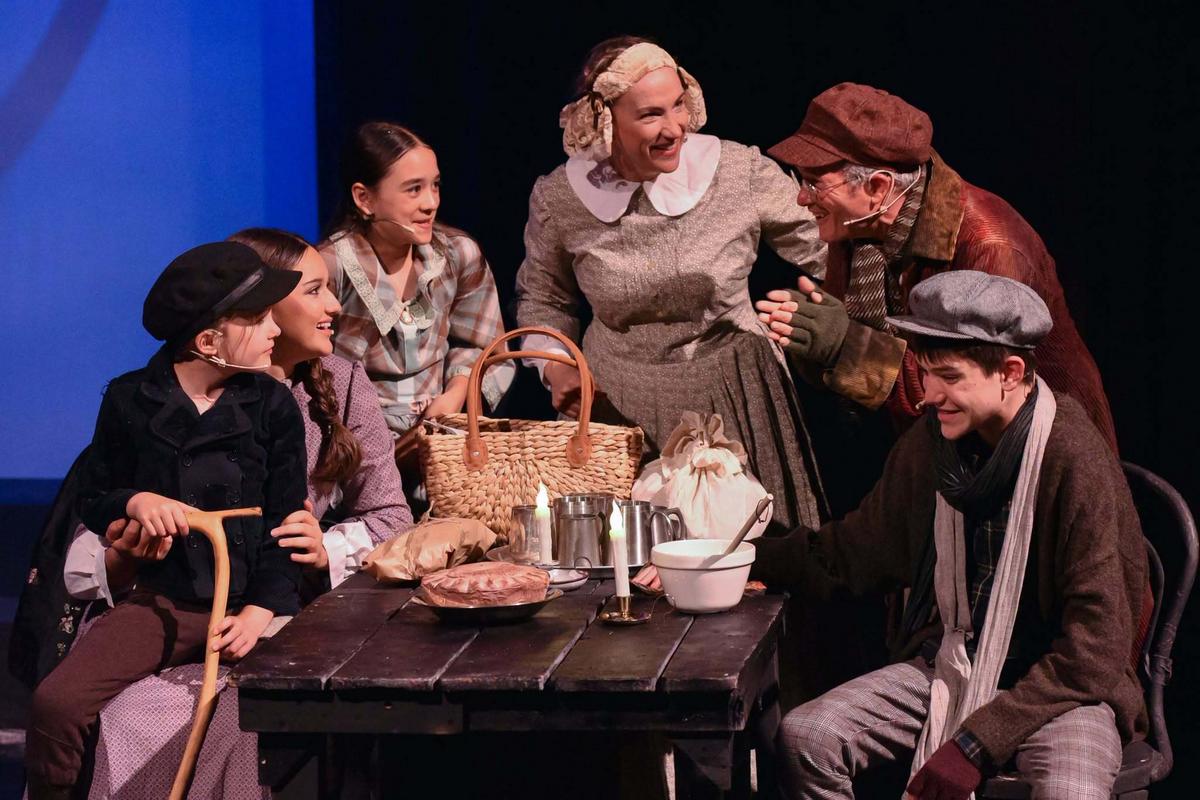
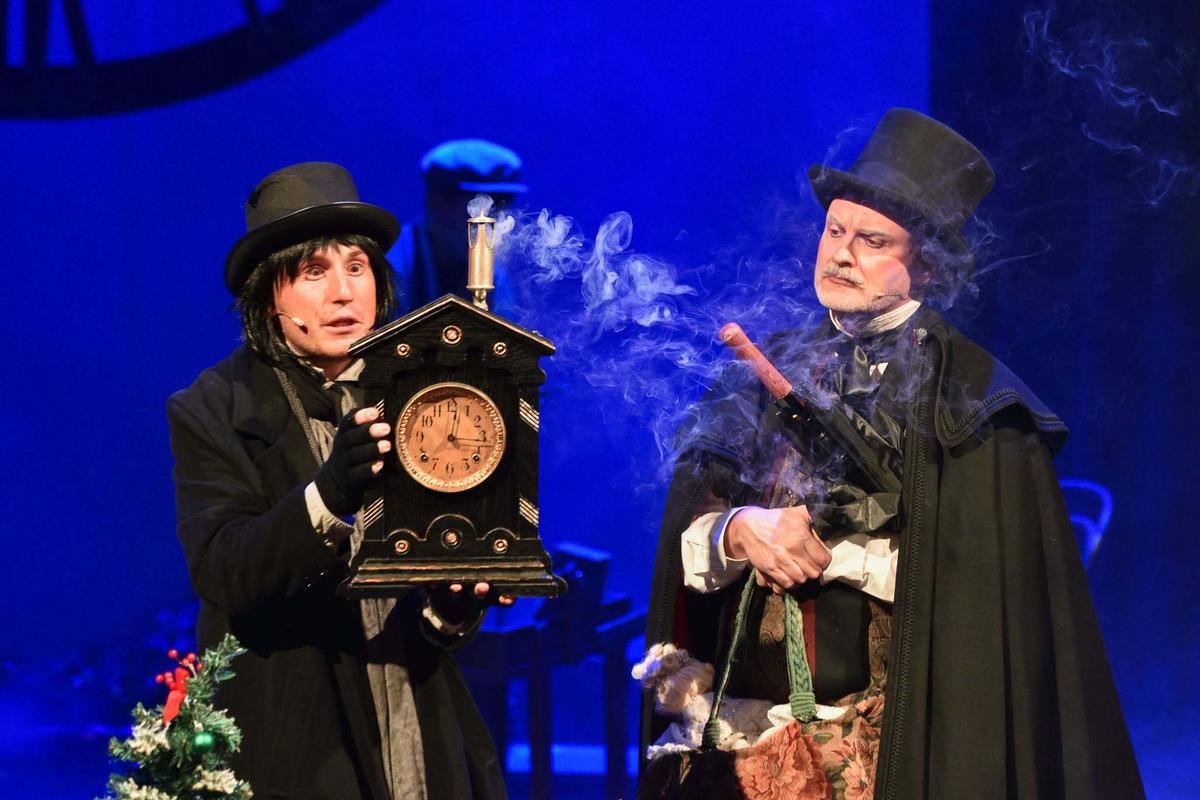
The play begins and there's an audible hush in the theatre as the six young performers have the audience spellbound. The protagonist, businessman, Ebenezer Scrooge, played masterfully by Trent Gardiner (Johnny Depp eat your heart out), soon commands the stage. His long-suffering maid, Mrs Dilber (Diane Howden) has to grin and bear it, as he barks demands. Scrooge has no compassion for his debt-ridden clients. The over-worked and underpaid clerk, Bob Cratchit (Phil Whitehouse) is spared no mercy, even though he has a family to support. One of the Cratchit children, Tiny Tim (Madeleine van den Bol) is seriously ill and will die without medical intervention.
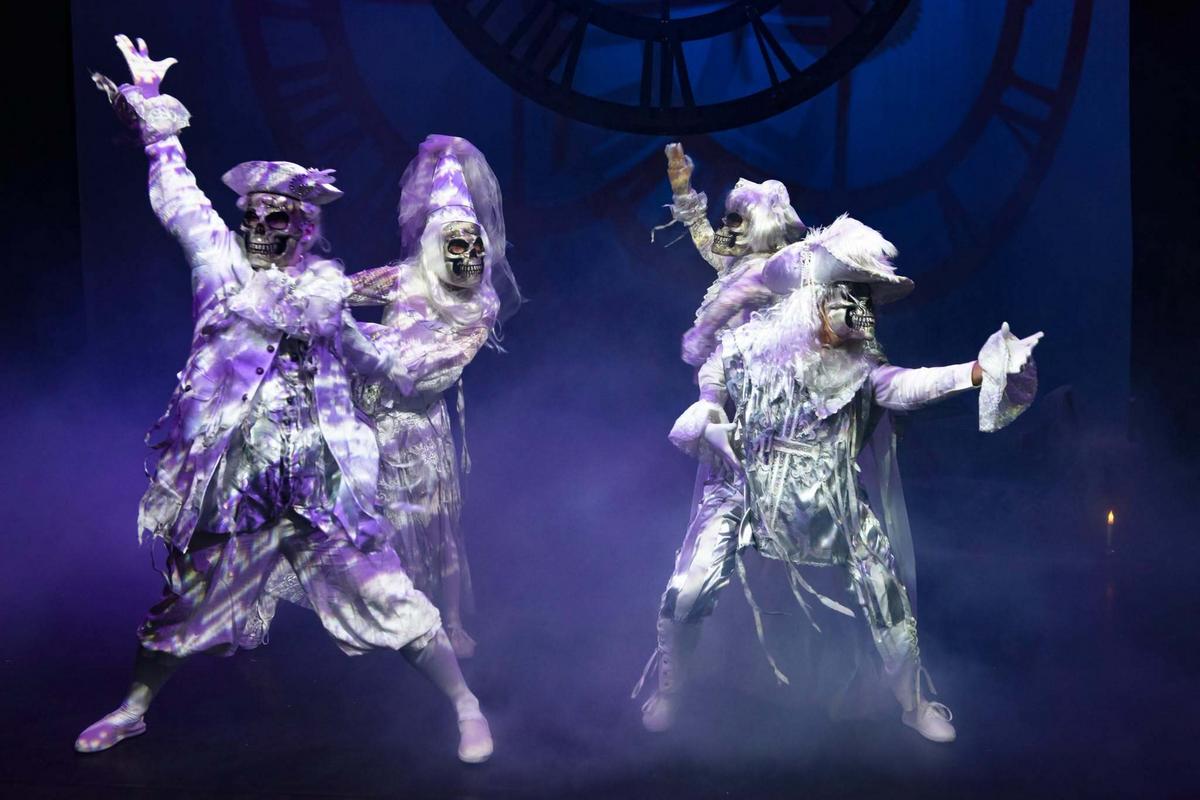
It's Christmas Eve and Mr. Scrooge has done nothing to embrace the festive spirit, until ghostly revelations start to play with his conscience. Firstly, there's the Ghost of Jacob Marley (Ebenezer's former business partner). A chained Ross Alexander lurks across the stage, displaying the shackles that he had to endure. The Ghost of Christmas Past (Jillian Narezzi) then takes Scrooge on a journey back to his boarding school days and a meeting with a compassionate former employer, Mr. Fezziwig (Sammy Hewett.) There's also a pivotal scene with former fiancee, Belle (Daniella Hymers). So many relationships ruined by greed. Is Scrooge's heart beginning to thaw?
The Ghost of Christmas Present (Clive Hobson) shows Scrooge how the desperately poor Cratchit family are still able to have a festive and joyous Christmas. The plight of very ill, Tiny Tim, starts to pull at the heart strings. The Ghost of Christmas Future (Sammy Hewett) helps Scrooge become generous. The Cratchits receive an enormous Turkey and money to pay for Tiny Tim's medical expenses. Tiny Tim survives. The Cratchits inspire Scrooge to re-acquaint with his nephew Fred (Henry Garing) and his wife played by Daniella Hymers. It's certainly a happy ending that rouses a standing ovation from the audience.
Cassandra Gorman and Will Evans convincingly play several roles to round out the adult ensemble. The child actors, Heidi Bailey, Ryan Kimpton, Genevieve van den Bol, Mandela Harada and Noah Macey join Madeleine van den Bol. These young performers are an absolute delight.
In true Dickensian style, there are a flurry of eccentric characters. Pymble Players have produced gorgeous costumes and stunning props. Director Joy Sweeney has worked with an impressive team to bring these characters to life. The Sound Designers, Nicholas Pang and Geoff Jones have done a stunning job, in making the atmospherics seem real. Sam Gorman and Wayne Chee, as Sound Operators, are also brilliant.
Pymble Players is a top-class company and this is a top-class production. Get in the festive spirit and see this show before it sells out!
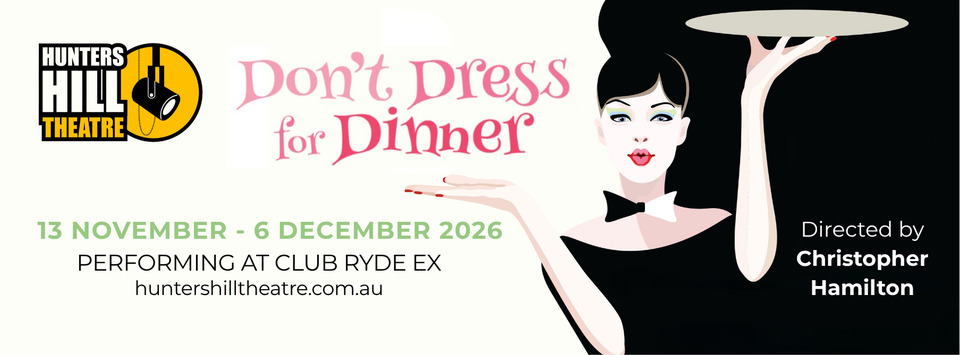
Hunters Hill Theatre chose “Don’t Dress for Dinner” as their last play of the year, and it was a smashingly rollicking good choice to round out the year, with myself and the audience leaving the theatre and talking about how funny it was. This farcical comedy was adapted by Robin Hawdon from French playwright Marc Camoletti’s two act play called “Pyjama Pour Six”. The pyjama part makes sense, but you’ll need to watch this play until the end to find out why.
“Don’t Dress for Dinner” takes place in a converted French farmhouse, with rooms aptly named in honour of its history, and immediately comically alluding to what may or may not be coming up. The renovated bedroom on the right of the stage was nicknamed “the Cowshed”, to the left was “the Piggery”, with the master bedroom upstairs, “the Hayloft”.
Although we never see inside the bedrooms, their doors playing an integral role in the set and how the characters move around the house, designed to the clever set construction by Christopher Hamilton and Ross Alexander.
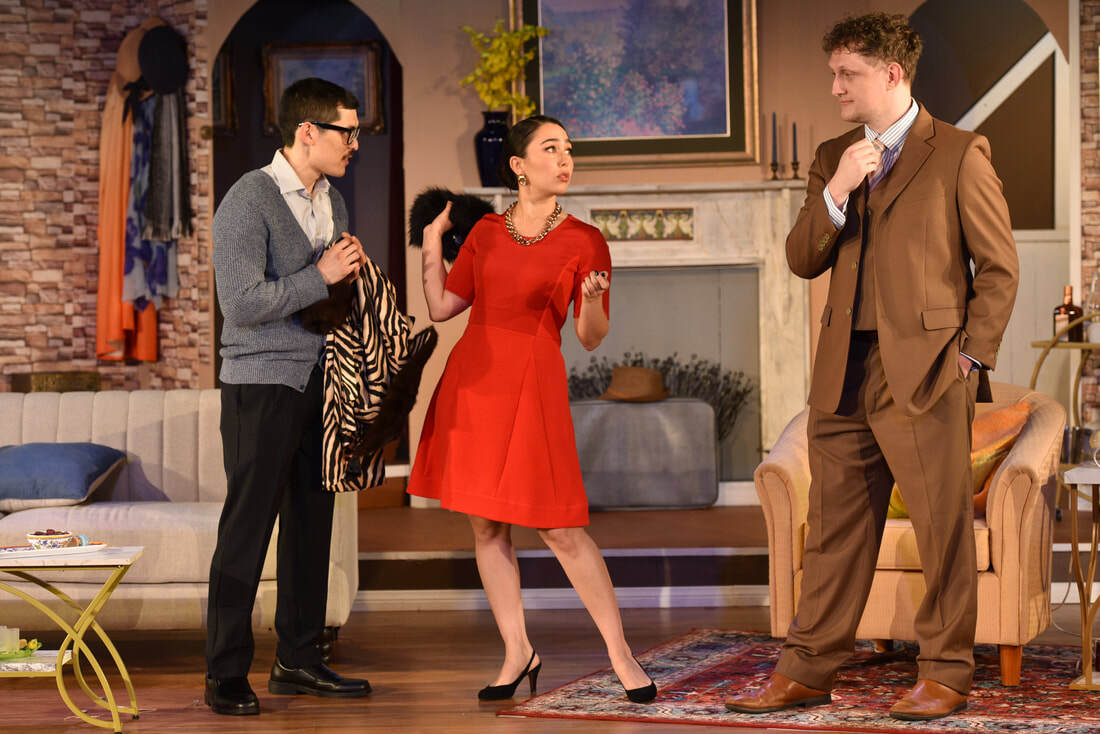
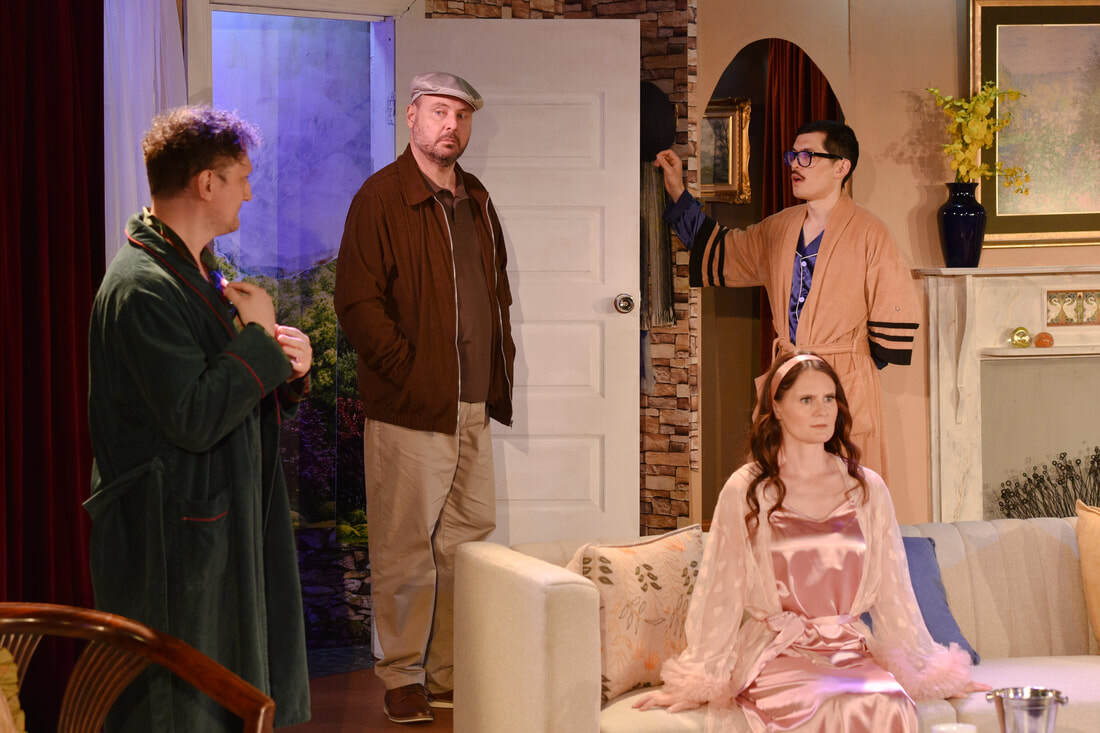
The married residents of this farmhouse, Jacqueline (Laura Stead) and Bernard (Michael Waples) are keeping secrets from each other. Bernard is desperate to get his wife out of the house so he can have a weekend with his beautiful model / actress mistress, Suzanne (Rosie Rodrigues). He plans to use his best friend Robert (Michael Mulvenna) as an alibi, but the scheme unravels when Jacqueline learns about it. She decides to cancel the planned visit to her mother’s house and stay at home with Robert, revealing that the two are involved in an affair. This becomes the base for a weekend of chaos, as the cordon bleu chef that Bernard organised to cook a birthday meal was also named Suzette (Katy Thompson). When Suzette arrives, Robert is trapped into the ruse of her being his mistress, mistaking this Suzy for the other Suzy, who is yet to arrive. When the other Suzy arrives, to protect Bernard from being exposed to Jacqueline, she is relegated to the role of the cordon bleu chef.
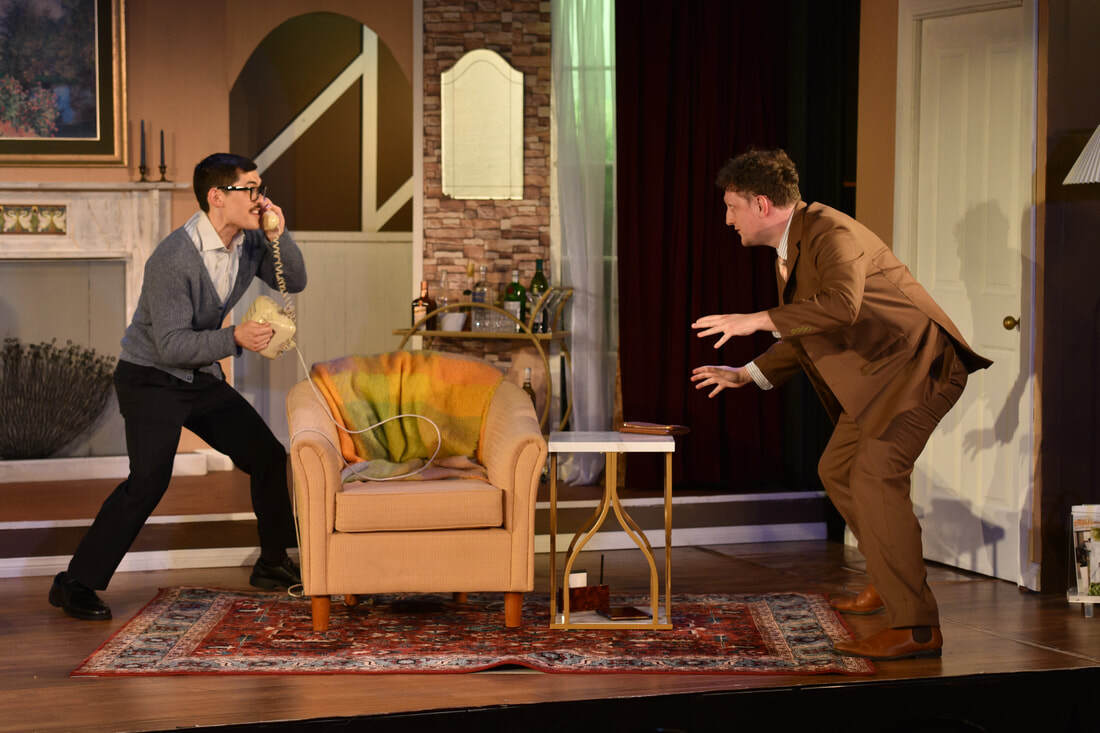
Lies upon lies begin stacking up in order to keep indiscretions secret and soon almost everyone appeared to be playing a role, leaving many reluctant participants utterly confused and having to keep up with each others’ improvised conversations. This was the beauty of the “Don’t Dress for Dinner” script. The characters’ rapid fire witty improvisation was played by the actors sharply and with perfect comedic timing, delivered with impressive skill which drove the energy hurtling forward.
Mulvenna’s performance of Robert was outstanding. He kept being forced into fake relationships and having to respond to a multitude of porky pies, and with every grimace of confusion and exaggerated reluctant protestation, I felt very sorry for his character. I wasn’t the only one, as I heard other audience members groan and voice their concern for poor Robert during various scenes. One particularly memorable scene featured Mulvenna articulating aloud the situation that had unfolded. With all the mistaken identities and comedic chaos, the complex dialogue navigating the layers of truth must have been challenging to master.
Stead and Waples bounced off each other, keeping their characters fresh and showing that their marriage was clearly on the rocks. Stead shot many stares at both her husband and her lover, and they were so pointedly deadly, it was a wonder they didn’t fall down dead right then and there.
The two Suzys brought the funniest situations to the stage. Thompson’s Suzette’s on-stage dressing (or rather, undressing) for the dinner scene, helped along by Robert and Bernard was hysterical and had the house in fits of laughter. Thompson expertly developed her character from an innocent and rather timid chef into a more complex, financially astute Suzy, making for a comedic transformation as she continually demanded compensation for all the extras! Brian May’s entrance in the latter scenes of Act Two as George, Suzette’s husband, further complicated the situation.
Rodrigues played the chic Suzanne perfectly. She garnered my sympathy as she was forced into situations she clearly was not ready for, like being forced into the role as the speciality chef and having to cook for all the guests. Rodrigues’ bewildered and helpless expressions and mannerisms throughout the play demonstrated her comedic timing.
Lighting by Oliver Davies and sound design by Peter Tucker brought the audience’s attention to the French farmhouse and to the characters needed. Costume design was by Penelope Korths and put the play in the 1990s. Bernard’s wardrobe had many shirts, which amused me as he kept having to change multiple times due to various reasons. The director Christopher Hamilton has pulled together an outrageously funny play, with many pieces flying everywhere, yet bringing the story back together for a satisfying conclusion.
The choreography of the couples in various combinations during the curtain call coming out from the many doors in this farmhouse was very original and expertly executed.
“Don’t Dress for Dinner” - a play with a Who’s Who guest list you don’t want to miss!
Season run: 13 November - 6 December 2026 Hunters Hill Theatre performances are at Club Ryde 728 Victoria Rd, Ryde Approximately 2 hours with a 20 minute interval
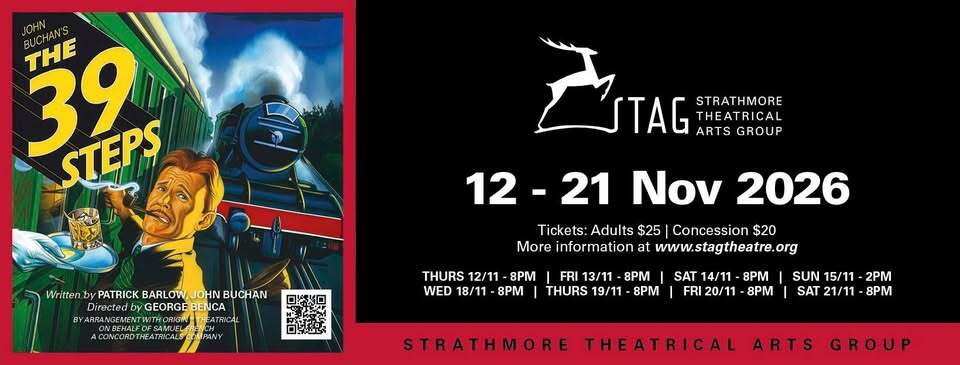
Coming to the end of another fabulous 2026 season for STAG is the 1930’s play The 39 Steps. A fast-paced, hilarious, spoof-heavy, suspenseful spy thriller. Blending Hitchcockian tropes, absurdist Python-isms, and the deliciously evil dashings of James Bond villainery. And on opening night, The 39 Steps pulled out all the stops. From the get-go, it took the audience on a fast-paced ride of round-the-world intrigue, featuring a satirical plot, laugh-out-loud silliness and farcical adventures.
Based on Scottish writer John Buchan’s hit 1915 spy adventure novel, (an immediate commercial and critical hit of that time),The 39 Steps, historically speaking, cleared the benchmark for the beginnings of the spy-tale genre we know of today. It became a 5-book series, and then, in 1935, was loosely adapted by Alfred Hitchcock (his 20th feature film) which was not only declared by the British Film Institute ‘as the fourth greatest British film of all time,’ but cemented Hitchcock's international reputation as well. It was then adapted multiple times for radio, most famously by Orson Welles's Mercury Theatre in 1938, alongside later film and TV versions.
But by 1995, a thrilling stage adaptation of The 39 Steps was devised by Simon Corble and Nobby Dimon. And finally, in 2005, rewritten by Patrick Barlow, it premiered at the West Yorkshire Playhouse before enjoying long-running successes in the West End and on Broadway.
And for good reason.
The 39 Steps follows Richard Hannay, a world-weary, well-travelled 37-year old British gentleman, who returns to London in 1935 after roaming the world and living in Canada. Filled with a tremendous sense of boredom, he decides to go to the London Palladium in the West End to attend a night at the theatre, to seek some much-needed thrills n’ spills.
His wishes come to pass, when he comes into contact with a mysterious woman, Annabella Schmidt, who seats herself next to him. Gunshots are fired and panic breaks out. Annabella then acts fearful and convinces Hannay to let her come home with him. Once they arrive at his flat, she admits that she fired the shots herself as a diversion. She then explains that she is a secret agent being pursued by assassins who are trying to steal vital British military secrets. This is how Hannay unknowingly gets dragged into a chaotic case: of international espionage.
As they drink scotch back at Richard’s West End apartment, and things start to get cosy, Annabella returns with a knife literally stuck in her back. Quickly, she informs him that the foreign spy ring is called "The 39 Steps". Before she collapses and dies, she leaves him a clue alluding to a contact and a location in Scotland called ‘Alt-na-Shellach’, and warns him that a master spy resides there. As she dies on top of him, Richard finds himself the prime suspect - painted as a murderer, and thus, becomes an accidental fugitive on the run, taking the audience on a spy-filled adventure aboard the Flying Scotsman Train up to the Scottish Highlands, on a mission to find this international enemy, save England and thus clear his name. All this, while evading both the police and international agents on every corner who fail to capture him, with hilarious results.
On this pursuit through the highlands of Scotland, he finds himself encountering an array of absurdist Scottish characters, somehow being able to escape their evil clutches. All the while, trying to discover the meaning of the 39 Steps, and stop this evil faction from destroying the world.
But in between this adventurous rogue-ish romp? Lies intrigue. There are romantic entanglements thrown in. Hilarious unforgettable characters, including bizarre innkeepers, entertaining prop playfulness thanks to the brilliant direction by George Benca that literally stop-the-show with uncontrollable laughter, and the truly evil spy-dom that would much satisfy the inner James Bond fan in all of us.
The cast is equally brilliant in this clever masterpiece, many of whom take on a variety of clown roles with classic fluidity, and with gusto. Drew Mason as Clown 3 plays the Sheriff in Scotland convincingly and with a great American drawl, just as he enthusiastically plays a West End variety host at the London Palladium, a mischievous thug, and an ‘overly-excitable’ Monty-esque train inspector.
Oscar Mikic, as Clown 4, doubles in many roles and is suited to the hapless Benny Hill-style British comedy club, if there ever was one. He embodied a plethora of the absurd, including the unforgettable portrayal of humanoid Mr. Memory, a radio announcer with a particular crush, a member of the British police in full Monty-garb, and a humorous lampoon-y Scottish Highlands inspector alongside the sheriff.
Jack Lees, a truly committed actor as Clown 2, was also simply a joy to watch. Understanding the need to morph into larger-than-life satirical characterisation from the get-go. From his arrival as a imposing thug wielding a baton, to a married salesman with a particular fetish for ladies undergarments, to a ghoulish evil spy bringing the house down with a five-minute dramatic death sequence, with ‘Palin-like prowess.’
In this piece, the actresses also took centre-stage, and were the perfect fodder for their male counterparts. Del Jordan was enigmatic and playful as Annabella Schmidt, and equally hilarious as a human fireplace prop that spoke. Sarah Deering as Mrs Higgins & Mrs Jordan played the roles of ‘Bates-like’ sinister housekeeper and evil chatelaine to perfection, as she did attempting to blow a tiny Scottish ‘bagpipe’ while holding an Edinburgh sign at the train station, to the delight of the audience. Kirsten Hennessey as Pamela, had great chemistry with Richard Hannay, her leading man, matching his physicality and wills to great depth.
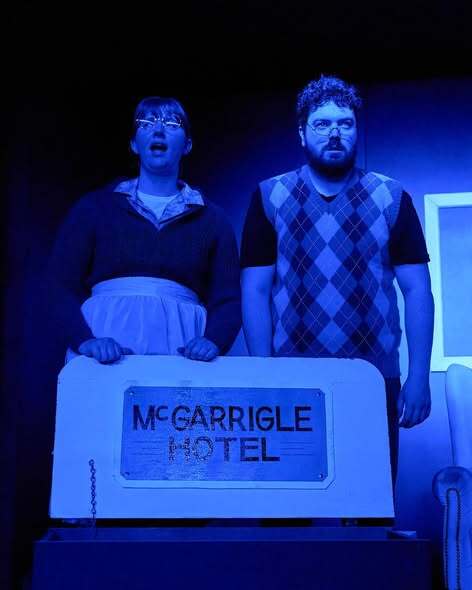
But Kirsty Taylor as Margaret & Mrs McGarrigle? Had that quality of a great British comedienne. Playing ‘quietly-oppressed’ churchy Glaswegian character Margaret with a deadpan mousy energy, to the extremely funny ‘pepperpot-voiced’ Mrs McGarrigle, a classic female Monty Python archetype - sent the audience into absolute stitches.
The lead actor and narrator, Richard Hannay, played by Sean Paisley Collins, carried the show with confidence, cultivated wit, and clever quips. His depiction of a benign brit on-the-run outwitting danger from the authorities time and again was equally hilarious as it was brazen. His sly cheekiness and love of adventure worked beautifully with his onstage entanglements, appearing playful yet comfortably alone, even while handcuffed: set in his ways as a seasoned strait-laced bachelor in an unpredictable world.
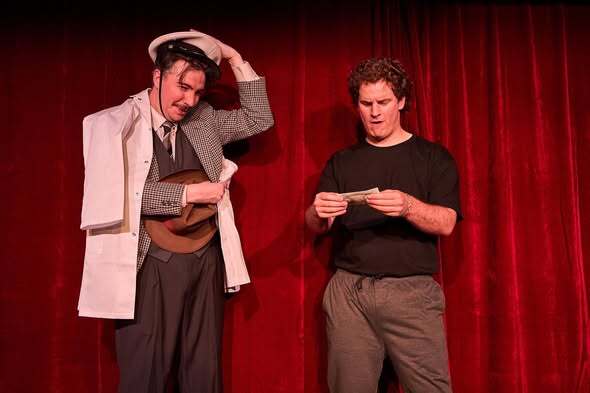
But Broderick McDonald? Was by far my favourite of the bunch. As Clown 1, he played his roles to precision. His versatility shone. His ability to rapidly switch between characters and adopt a range of accents in split-second comic changes was impressive to say the least. He paired well with other actors in scenes as he did on his own, and committed wholeheartedly to the process of veering from British stereotypical sketch comedy into leering, scruffy Scottish loonery. From a British lingerie salesman wearing ladies underpants on his head, to reciting church-going hymns as a Scottish highland madman, to slithering across the stage as a drunk-as-a-skunk detective, Broderick McDonald is the one to watch when it comes to comedy gold.
The slapstick direction by George Benca kept the audience in fits of giggles. In particular, his clever use of props being thrust upon the stage as cinematic staging, allowing them to not only actively drive the story forward; but to add stylised theatrical trickery to The 39 Steps.
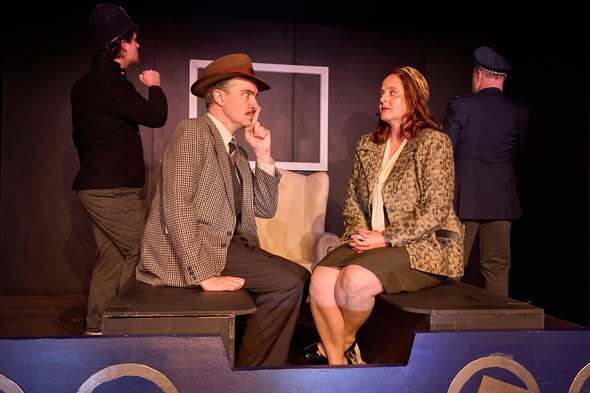
My favourites included a bubble gun machine used for the train and airplane smoke, and to depict foggy weather; the airplane props being held by two actors to depict spy planes in flight, the 1930’s wall telephone being thrust out for the actors to pick up and answer, the stuffed lambs that are brought onstage that block the enemies’ get-away car, and the surreptitious way that various members of the cast come onstage to create a huge prop - like the Flying Scotsman Train for example, as if they are in a play-within-a-play.
Very python-esque, n’est-ce-pas?
If you are looking for a historically-minded mystery show that is full of jocular banter, satirical wit and parody-like stylisation, smack dab in the genre of espionage-driven spy films, then The 39 Steps is definitely the show for you to indulge in this week.
The 39 Steps is playing from the 12th - 21st November 2026 at the Strathmore Theatrical Arts Group in Strathmore.
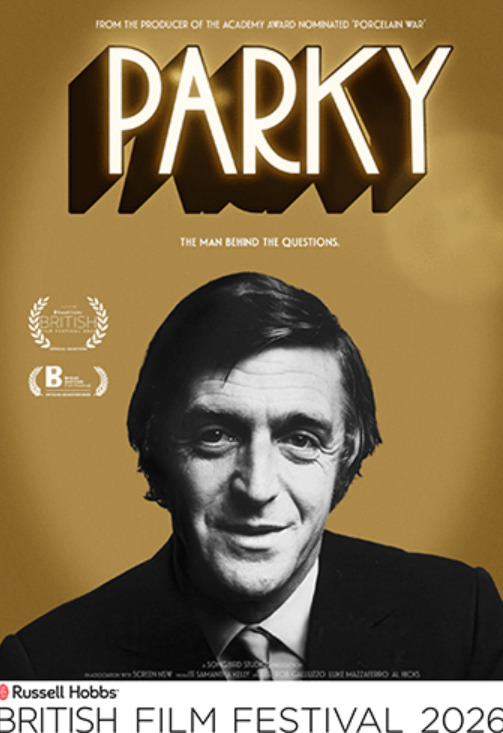
Michael Parkinson, or Parky as he was affectionately known, was a child of his time and place which influenced how he became a man, an icon. ‘Parky’, the documentary, gives us an insight into the man who was known for his journalistic interviewing style to encourage movie stars, politicians, musicians, writers and others to open up. What is interesting is how closed and private he was and that is where this documentary reveals the man behind the persona.
Many of us grew up with Parkinson being the equivalent of Graham Norton these days. In post 1960s, a wave of different English accents, education and background emerged due to a new political climate. It is important to understand that a few years before this he wouldn’t have even been considered. With a broad Yorkshire accent, no real depth of education but having got a chance in journalism and through sheer talent for writing and investigating, he took the opportunity to launch a new style of television program. The audience lapped it up.
This documentary, narrated by his sons, wife and friends reveals a self-effacing man whose love of cricket and unfortunately at times, alcohol, reveals a man of depth who is searching for understanding of himself and others. A key point highlighted by Parkinson himself is his amazing wife, a renowned interviewer herself, who sacrificed her career recognising that there was room for only one television star. She is as fascinating as she reveals her part in his life.
Watching the man, it is clear that he also has a face that the camera loves and a charisma that can’t be bought or learnt. He would research interviewees not to catch them out but to find a deeper meaning to them and their lives. We also see a man who loses his identity himself when his popularity diminishes and he and moves into heavy drinking. He acknowledges this and with the help of his family overcame it. It is revealing that Russell Harty, another renowned UK personality said that Parkinson often asked questions of his guests that were really about himself.
It is a fascinating documentary not only of the man but also of the eras that he covered with questions he himself said he wouldn’t ask in another time. It charts the change in stardom from the fading Hollywood movie star stable of the likes of Fred Astaire, Bette Davis and others to the new movie stars coming into vogue such as Helen Mirren, Tom Hanks, George Clooney and the emerging celebrities such as the Beckhams and Robbie Williams. He was clearly an interviewer who said he only wanted interesting people to meet and towards the end of his long running show appeared bored. It was time to go and he moved back to writing and radio.
The fact that he is known, like other icons of any era, by one name says it all. Think of Ali, Madonna, Cher, Sting, Oprah and Pele, guests he interviewed. He wouldn’t have dreamed to be considered in their realm. Michael Parkinson also represented decades of change from the 1960s through to 2022 and passed away in 2023. His group of friends reflect this man and include the comedian Billy Connolly, Dickie Bird from the cricket world and Laurie Holloway, a renowned UK TV music and jazz composer. A child of Yorkshire pit miners with only 2 ‘O’ levels became a global personality with a legacy of style and journalism. He was unique and to quote him, ‘It's not so much about what you ask as what you don't ask’.