Howl

Howl

Howl Rating

Click if you liked this article

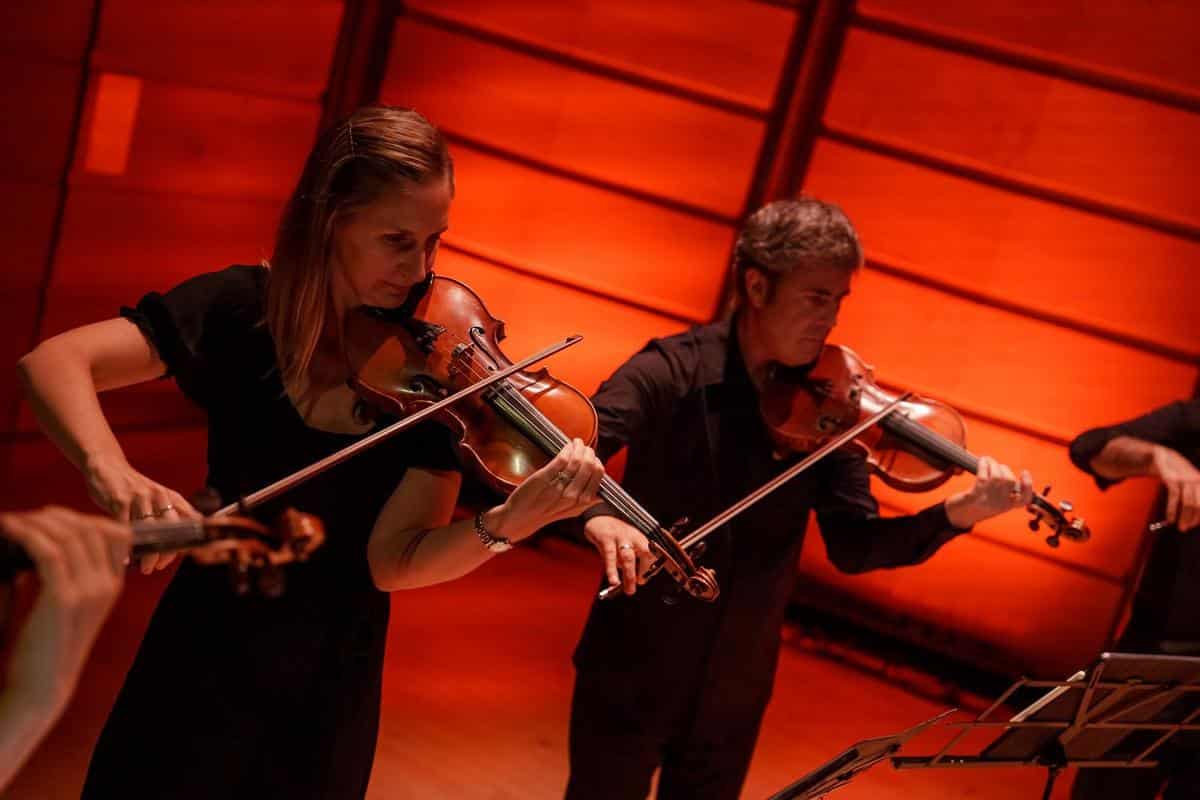
The pamphlet guide to the Omega Ensemble’s new composition of works entitled Howl promises audience members “riot, rapture and release”. Ensconced within a beautiful wood-panelled studio situated in Walsh Bay, it was clear that those who sat down to see the first performance of this show were bearing witness to an intriguing and complex arrangement of music.

The show began with a rendition of a piece called Tooth and Nail, which involved a talented soloist skillfully wrangling his viola to an eerie and circular backing-track. To me, the piece was haunting and reminiscent of the feeling of chasing and being chased by something sinister. It was a piece that woke the audience up; a true skill for the musician to play this kind of music in a way that is suspenseful without being shrill.

Following the first piece, two more violinists and a cellist joined each other on stage, and the blue curtain behind them was at once lit up by a fluorescent green/pink background. This was in preparation for a piece entitled Tuggemo; my least favourite composition of all that were played. According to the guide, Tuggemo is a word that has fallen out of usage and means “a swarm of birds or flies”. It was clear the musicians were mastering their instruments, and perhaps the flurry of activity in the last portion of the piece was building into something sharper. However, when the piece ended abruptly, what was left seemed to be a confused purpose. It felt to me as if the purity that strings are capable of was being eschewed in order to replicate the impossible. However, I am not an experienced musician and the audience seemed to be okay with it, which may simply mean that something had been lost on me.


The third piece; Interference Patterns seemed much closer to its intent. When the green and pink lights fell away from the blue fabric of the curtain, it was as if the music had become orchestral and cinematic again, and the audience was taken to another place. The piece was foreboding and ominous while at other times clean and exquisite. The friend I had brought with me (who previously played as a classical violinist in her home country) said she loved it. To the question of why she liked it so much, she answered that it was ‘nostalgic; like something in the past but at the same time hasn’t been heard before’.

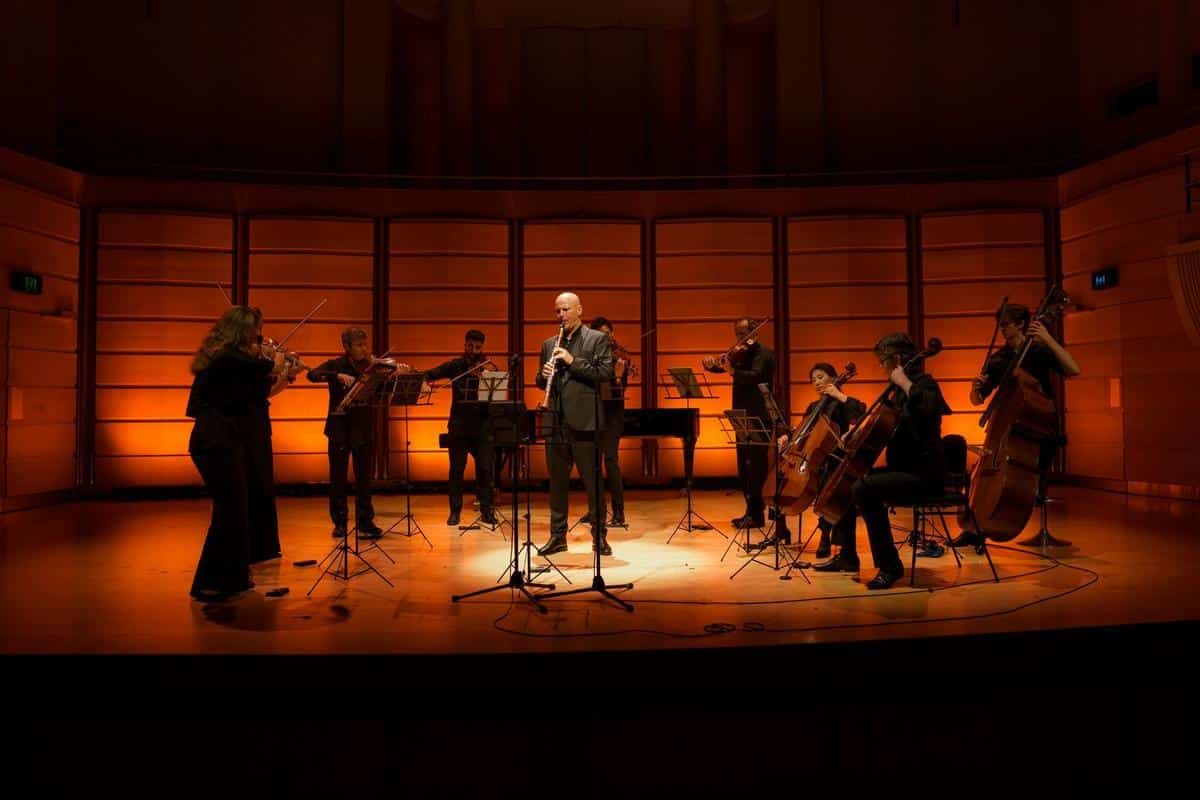
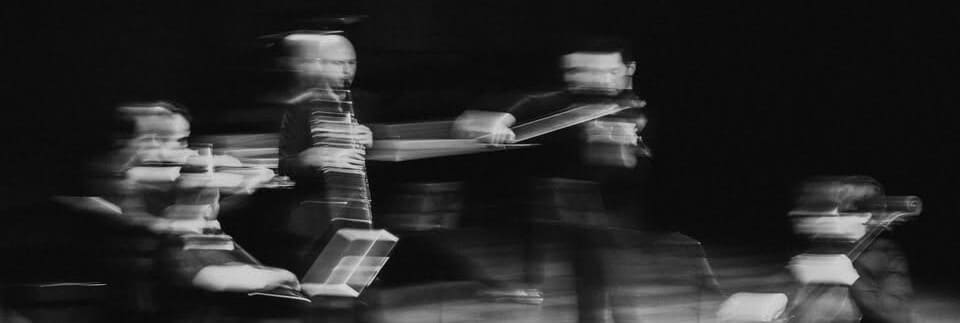
Interference Patterns set the tone perfectly for what was to come next; the piece the show is named after and which uncoincidentally shares a name with Allen Ginsberg’s infamous poem. The musicians playing Howl did well to capture the nightmarish intensity of the infamous work. It was sharp rather than chaotic and the strings were haunting but never sad. Particularly effective was the clarinetist, who commanded the room, and led the audience through what seemed to be a faultless performance. I felt that the music did not unravel in the same way the poem does, however technically and thematically, the notes were mastered by their respective musicians.

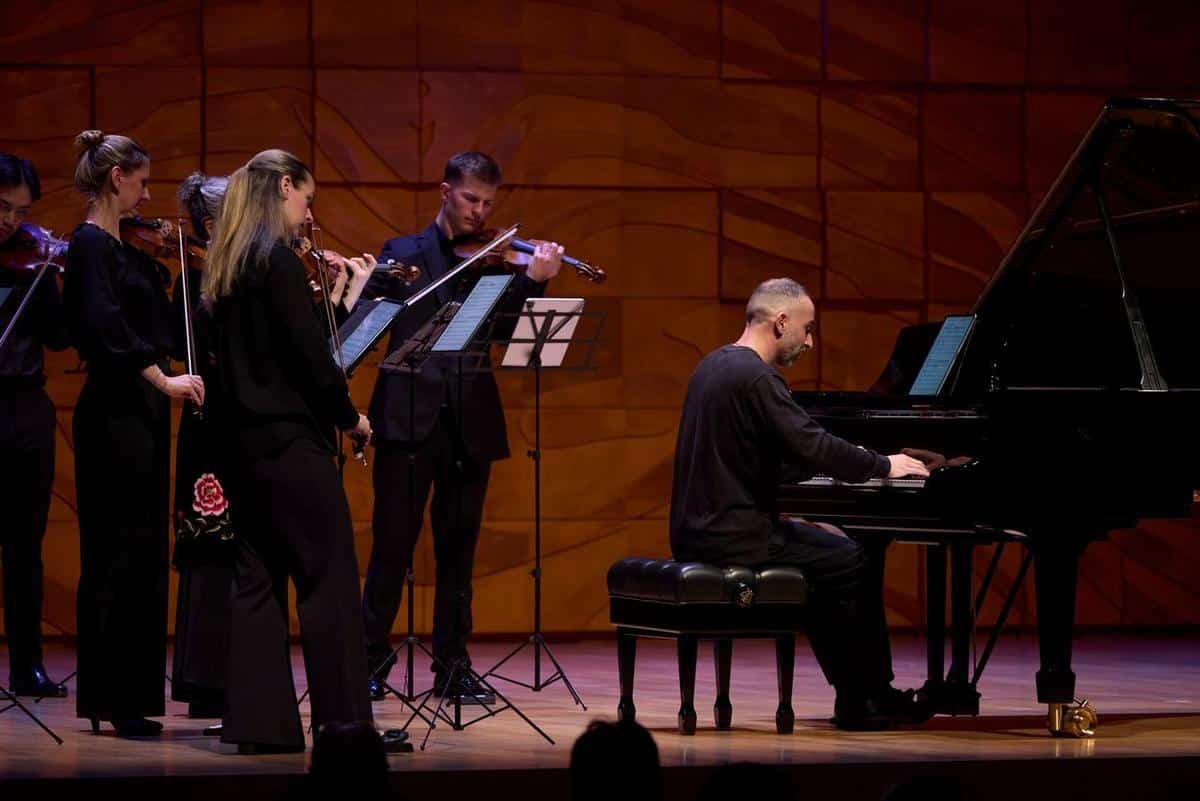
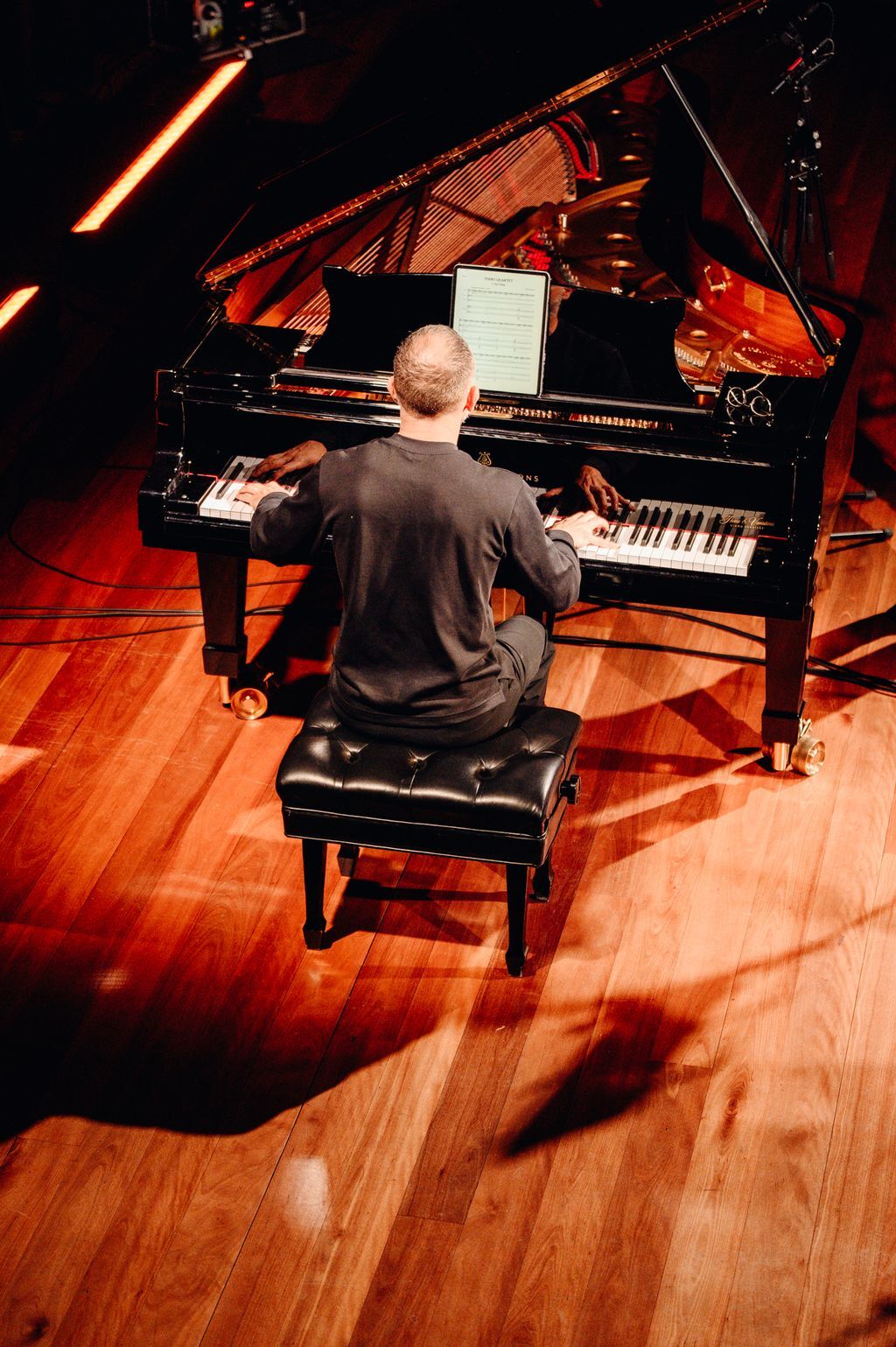
Following the end of the fourth piece, pianist Vatche Jambazian took to the stage to introduce himself as the musician playing Danny Elfman’s composition; Piano Quartet. He seemed to at once take command of the beautiful Steinway and Sons grand piano in the centre of the room to express himself through the music, rather than merely playing it. The animated performance provided music that was interesting, creepy and captivating.

And so, as a non-musician who loves music and knows it is for everyone, I can only review this performance from the honesty of my own lens. In this way, I think the collective attentiveness of the audience showed that they were grateful for being gifted with this experience. As an admirer of poetry, I would say that it is perhaps impossible to emulate the intensity of Ginsberg’s Howl without the words by which it expresses its sentiment. However, I am adamant in my judgement that the standalone performance here played out in the final piece; Piano Quartet. The pianist was a definitive and shining gift in the program, fully embodying its genre and showcasing inherent musicality.

3 ½ stars

To book tickets to Howl, please visit https://www.omegaensemble.com.au/howl.

Photographer: Gxbriellemxry

Spread the word on your favourite platform!

Omega Ensemble Presents: Starburst

Starburst

Starburst Rating

Click if you liked this article

2

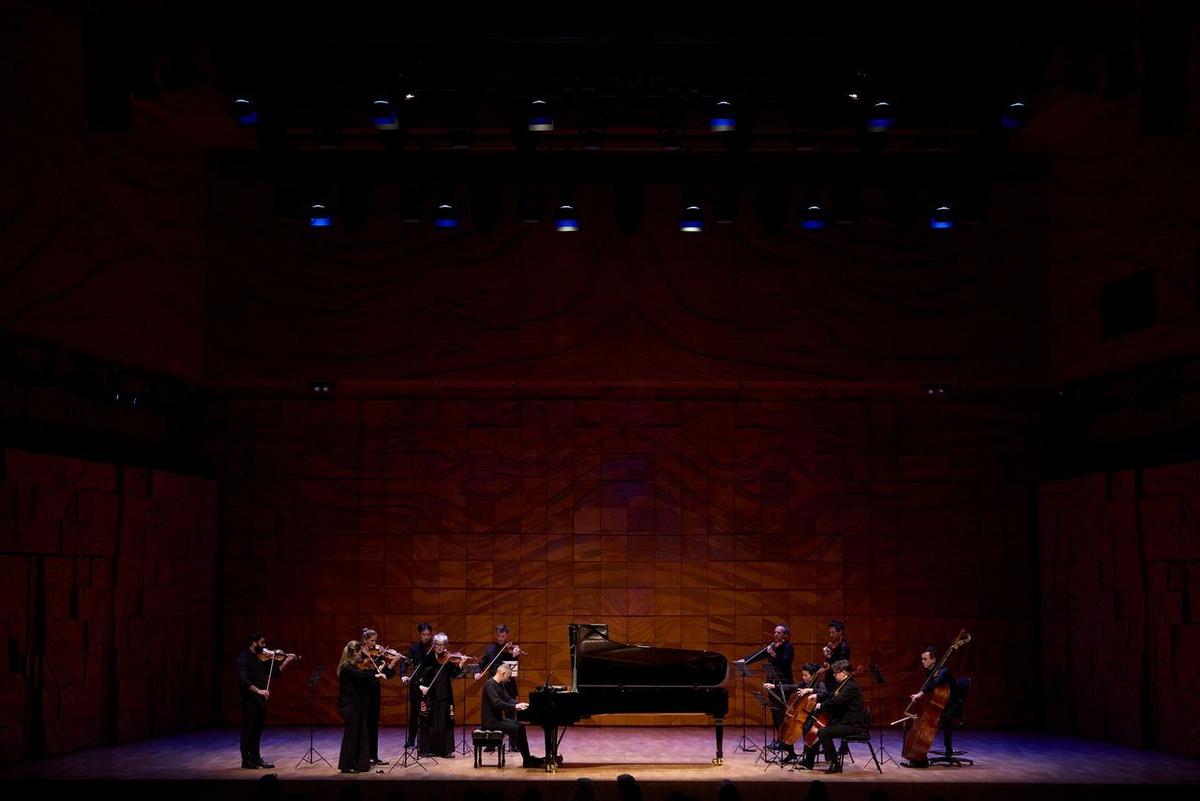
Taking place at Melbourne’s Recital Centre, ‘Starburst’ marks the start of the Omega Ensemble’s 2026 season, featuring works by four unique composers in an evening of genre-bending chamber music. The Omega Ensemble is a cornerstone of Australia’s classical music scene, and this year’s performance once again reaffirmed their reputation for pushing boundaries and delivering extraordinary musical experiences.

The program was nonstop from curtains up, opening with Jessie Montgomery’s punchy, experimental ‘Starburst’ and moving just as quickly into the more traditional ‘Clarinet Concerto’ by 20th century composer Gerald Finzi. The small chamber ensemble was a tight unit throughout, gliding through highly complicated pieces with cohesion and exquisite technique. Within the walls of the acoustically-optimised Elisabeth Murdoch Hall, each instrument blended together superbly and never once into the background.

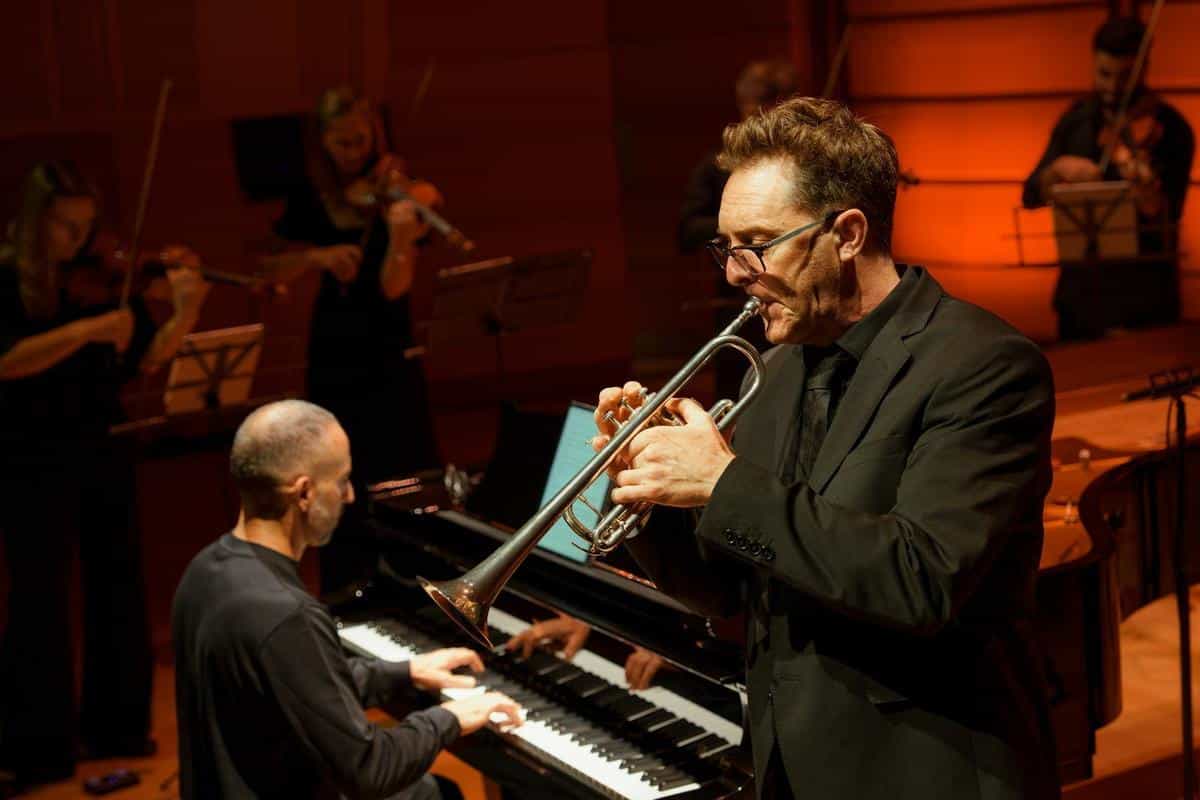
Trumpeter David Elton and clarinetist David Rowden were a pleasure to watch, from their brilliant solo performances of Finzi and Shostakovich to the world premiere of Lachlan Skipworth’s ‘A Turning Sky’, a double concerto composed specifically for Elton and Rowden. Side by side they expertly weaved together a melodic and full-bodied duet that, backed by the orchestra, completely encompassed the hall in a wash of perfect harmony. ‘A Turning Sky’ was incredibly arranged, highly detailed and masterfully performed; it was just awesome to experience original work by leading Australian composers.


The Omega Ensemble’s rendition of Dmitri Shostakovich’s ‘Concerto No. 1 for Piano, Trumpet and Strings’ was truly something to behold and the undeniable nucleus of ‘Starburst’: an unrelenting combustion of a concerto closing with a piano solo that earned pianist Vatche Jambazian a well-deserved standing ovation. It was a physical performance as much as it was musical and Jambazian’s backbreaking playing style kept eyes pinned as he shredded on the keys like a man possessed. Shostakovich, I now know, was insane—but man, the whiplash from ominous dissonance to jolly fanfare melted my brain. I had to go listen to it again later just to be sure it was real.

‘Starburst’ featured a particular selection of composers that, while incredibly enjoyable to listen to, emphasised a deeper significance beyond music alone. In the years between what we know to be classical (then) and contemporary (now), experimental music emerged as a means of radical self-expression in times of great uncertainty, loss and discovery. The Omega Ensemble explores the space between classical and contemporary music in bursts of sound and light, connecting modernist musicians of centuries past with composers pioneering the classical genre today. Both an exchange and a collaboration, ‘Starburst’ highlights the value of artistic dialogue as a catalyst for redefining the boundaries of contemporary classical music.

‘Starburst’ has finished up its run, but you can always catch the Omega Ensemble Australia-wide all year round!

To book tickets to Starburst, please visit https://www.omegaensemble.com.au/starburst.

Photographer: Amelia Kain

Spread the word on your favourite platform!

How Classical Music Can Feel Modern And Accessible

Elevator Music

Elevator Music Rating

Click if you liked this article

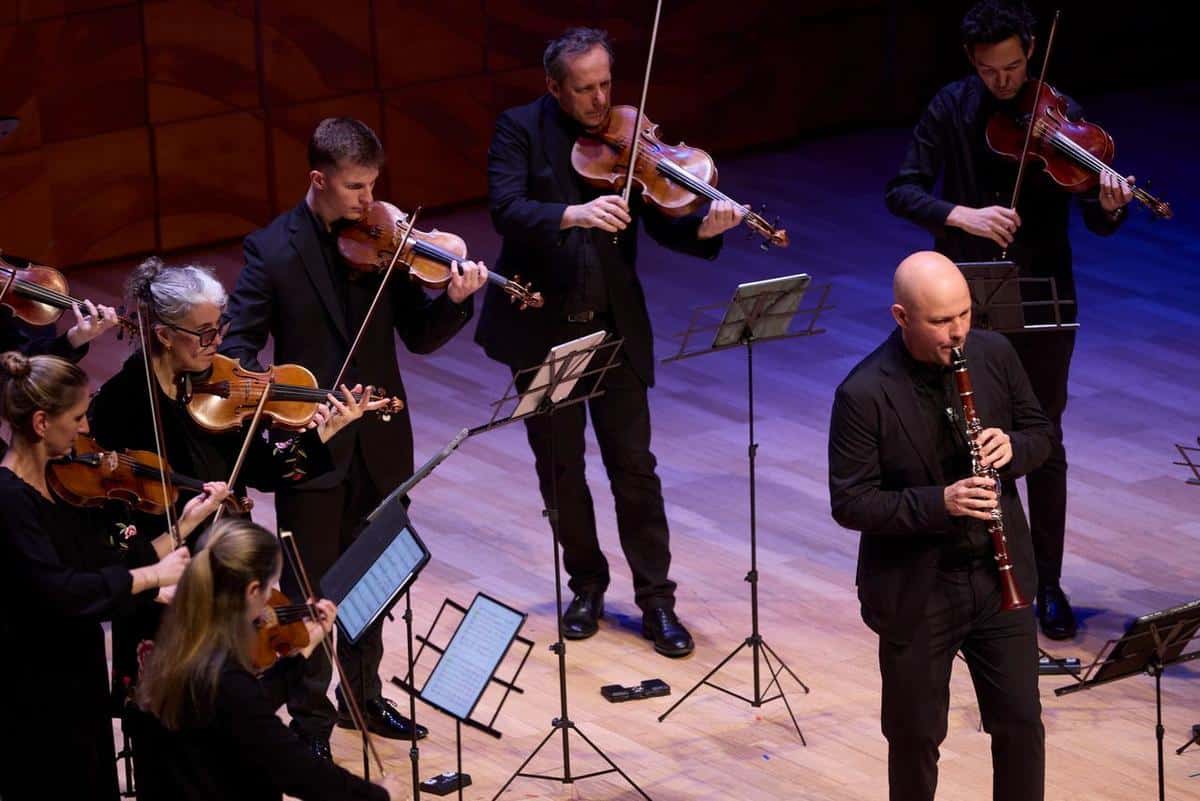
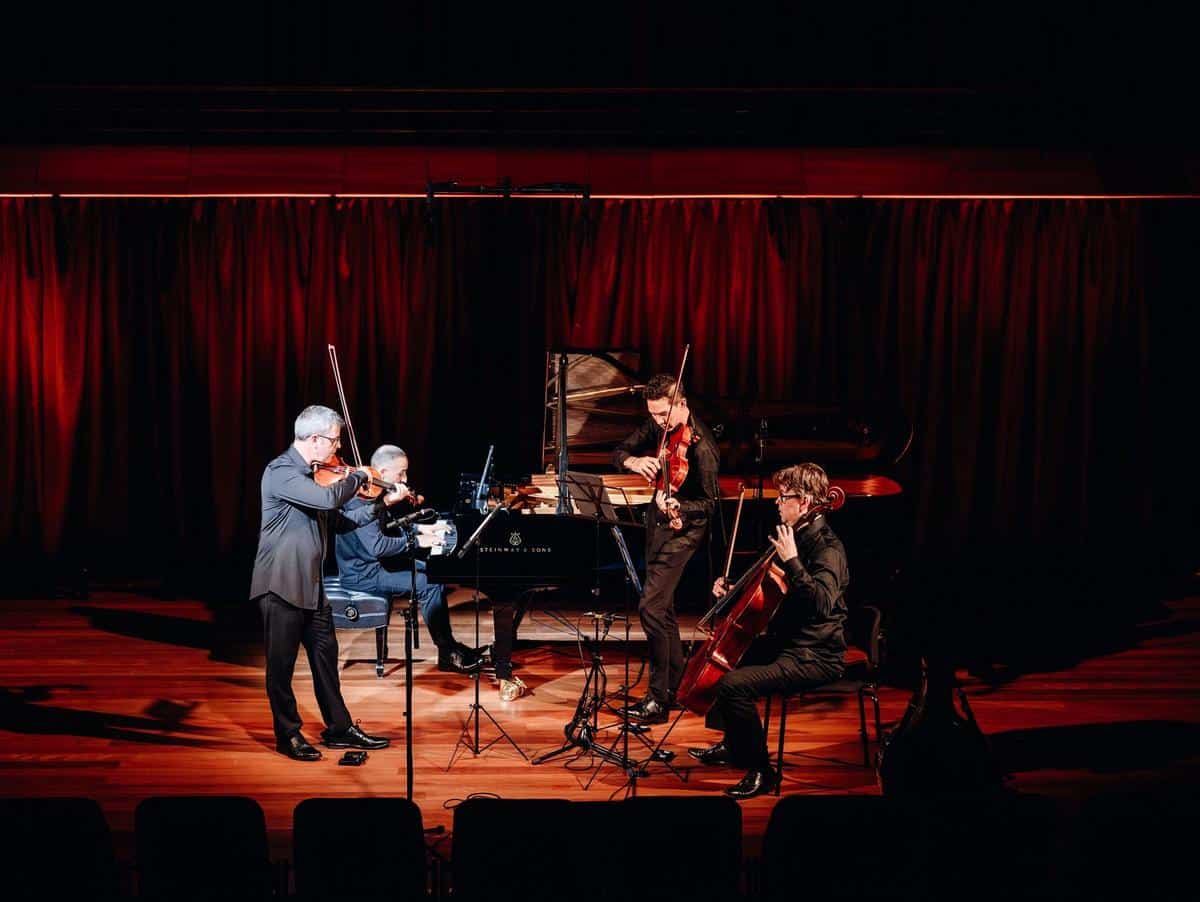
The Omega Ensemble’s Elevator Music, consisted of Anna Clyne’s Stride, Gaeme Koehne’s Dances on the Edge of Time and Aaron Copland’s Clarient Concerto. The concert was deliciously familiar and heart-warming. In particular Koehne’s work sampled familiar melodies, acting as a postmodern classical music DJ of sorts. The lively and energetic ensemble wove both old and new classical music, bringing to life a new and harmonic story through sound. The music was postmodernist and playful, referencing and recycling beloved melodies. The clarinet soloists (Michael Collins and David Rowden) pression and control, particularly their purity of tone in the upper registers, exhibited a mastery of the clarinets transition between registers.

The first piece began with, what seemed to me, crisp personality and warmth, benefitting from the expressive first violin, Véronque Serret. The music continued ominously and atmospherically, effectively building tension and my anxiety (as I assume the composer intended). The piece felt like story telling through sound, a fearsome loathsome tale that swiftly transitioned from hopeful to fearful. The tone was clearly conveyed in a way that listeners unfamiliar with classical music could feel and understand.


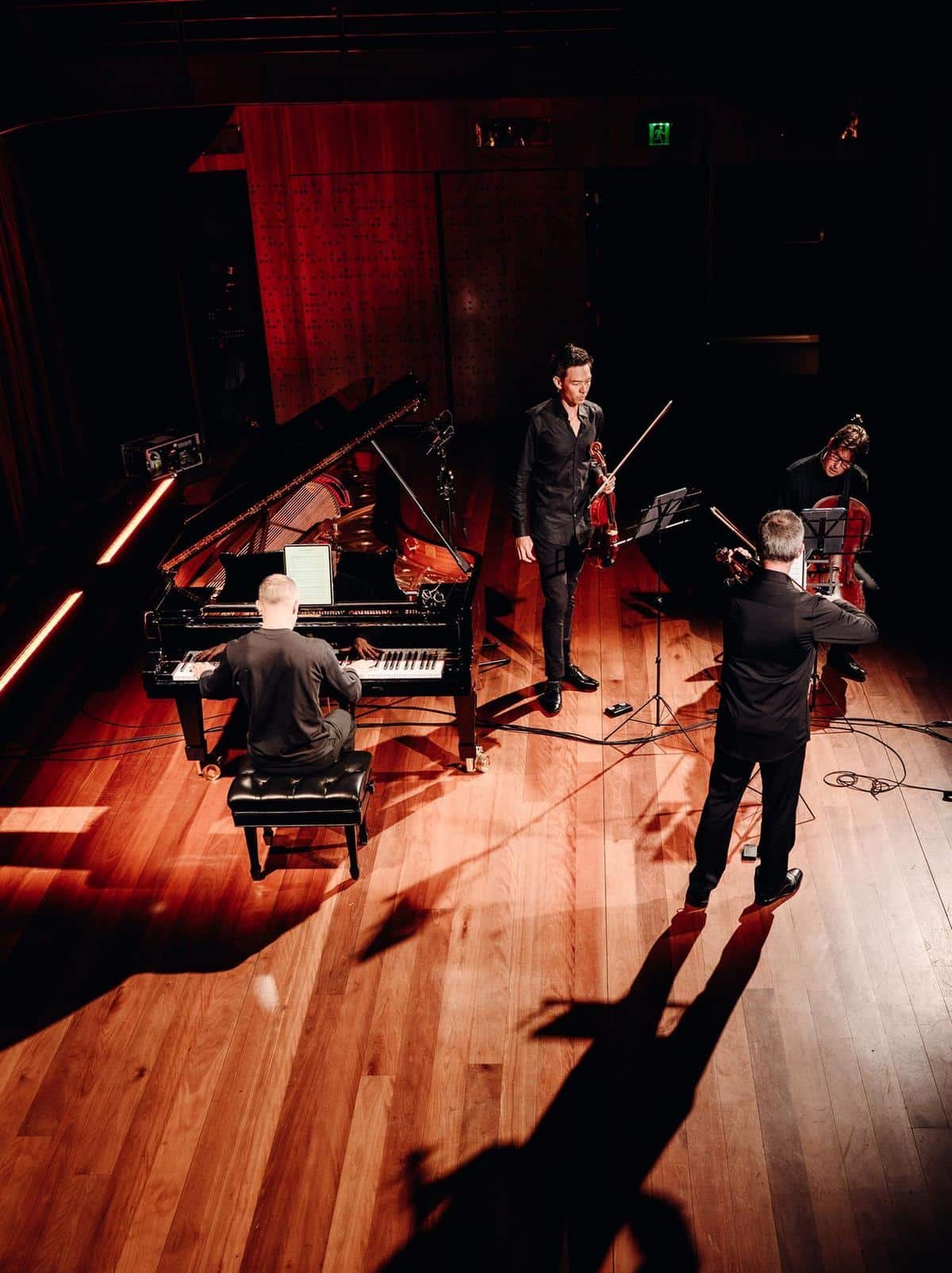
Dances on the Edge of Time introduced the two clarinet soloists, Michael Collins and David Rowden (also the artistic director). The clarinets ushered in a warmth and airy lightness. This was mirrored in the addition of the piano (Vatche Jambazian). In this piece the two clarinets blended deliciously with a foundation of sound built by the orchestra. All the musicians were playing and toying not just with sound, but volume too, which drew out swirling emotions from the audience. Koehne’s work continued to be heart warmingly nostalgic, as intended, the program noted that Koehne prefers warmth, clarity and lyricism over “the cliched angst and ponderousness of so much ‘respectable’ new music.” I tend to agree, and found the soulful, thoughtful and playful music, particularly the call and response from the clarinet soloists, to be moving and enjoyable. Koehnes orchestration is at times reminiscent of ravel’s colouristic effects

The Clarinet Concerto began slowly and gently, guided by the harmonic direction of Michael Collins. The piece was played as hopeful and dreamy, and produced feelings of wistfulness within me. I was brought along a journey that the artists wanted the audience to follow, it was twisting path of beauty and cool breezes. This piece continued, picking up speed and energy, with an ominous shift in orchestration and accompaniment. The clarinet soloists, however, continued with a light and energetic harmony, containing more call and response weaving in well-known classical melodies to the modern music. The piece continued with the whimsy highlighted by the double bases (Adrian Whitehall and Jacques Emery), powerfully building and breaking the tension of the music.

The concert ended with a surprise encore and world premiere of a reworked (for two clarinet soloists) piece called Ornamental Air. The encore began with a sense of urgency from entire orchestra. This piece continued with the playfulness of the previous works. The clarinets were delicately and deliberately light and harmonious. It was a delightful end to a lovely evening of music that moved me, and took me along a journey through my mind.

To book tickets to Elevator Music, please visit https://www.melbournerecital.com.au/whats-on/current-productions/omega-ensemble-elevator-music.

Photographer: Eloise Coomber

Spread the word on your favourite platform!

Aphrodite: Beauty Disassembled

Aphrodite

Aphrodite Rating

Click if you liked this article

In Sydney Chamber Opera’s Aphrodite, the act of looking becomes its own kind of violence. Composed by acclaimed American composer Nico Muhly with a libretto by Laura Lethlean, and presented in association with Omega Ensemble, this striking new work reimagines the goddess of love not as a figure of desire but as a symbol of distortion; a mirror in which the modern self dissolves.

The story follows Ava, a thoughtful academic whose book, The Aphrodite Complex, catapults her to sudden fame after being adapted into a hit documentary. As her public image grows, her personal life fractures. Ava becomes consumed by the pursuit of perfection, sculpting herself for the gaze of others while losing touch with intimacy, authenticity, and selfhood. When the goddess Aphrodite herself appears, cool, composed, and elusive, Ava’s carefully constructed world begins to collapse.

Director Alexander Berlage’s use of live video is both conceptually and theatrically masterful. Cameras flank the stage, embedded in mobile phones, and hang from the ceiling, capturing the performers in extreme close-up. These images, not just of faces but of hands, feet, clothing, trembling skin, are projected on a large screen above the stage, which simultaneously displays the libretto. What emerges is a fragmented portrait of each character: isolated body parts, captured and magnified, turned into objects of scrutiny and aesthetic judgement.

Rather than drawing the audience closer, these hyper-intimate visuals create distance. We are not watching the characters as whole people; we are dissecting them. The body becomes content. Ava becomes an image. Even her moments of vulnerability are caught, cropped, and curated. The overhead camera is particularly cruel: it frames her from above like an anatomical specimen, cold and clinical, as if the goddess herself were observing.

Jessica O’Donoghue gives a deeply affecting performance as Ava, vocally assured and emotionally transparent. Her portrayal balances intellect and fragility, making Ava’s descent into disconnection feel both inevitable and tragic. Puerto Rican soprano Meechot Marrero, in her Australian debut, brings an arresting stillness to Aphrodite. Her presence is magnetic and inscrutable, her voice radiant. She is not temptation incarnate but myth personified; unknowable, unmoved.

Muhly’s score is luminous and precise, shifting between shimmering textures and silences that seem to stretch time. The Omega Ensemble plays with clarity and control, amplifying the opera’s psychological tension without overwhelming its introspective tone.

Aphrodite is a cool, elegant gut-punch of an opera, a work that refuses sentimentality in favour of scalpel-like insight. It’s about beauty, yes, but more importantly, it’s about the cost of being seen only in parts. By disassembling its characters on screen and in sound, it delivers a quietly devastating truth: there can be no connection until we are allowed to exist as whole.

To book tickets to Aphrodite, please visit https://www.sydneychamberopera.com/2025/02/17/aphrodite/.

Photographer: Daniel Boud

Spread the word on your favourite platform!