Comedy often succeeds not simply because of good jokes, but because of rhythm. Jason Spindlow’s production of A Shot in the Dark understands this well, balancing measured scenes with bursts of energetic physical comedy to create a production that remains engaging from beginning to end. Rather than maintaining a relentless pace, quieter moments allow both the characters and the humour to develop before the action accelerates, making the comic peaks land all the more effectively.
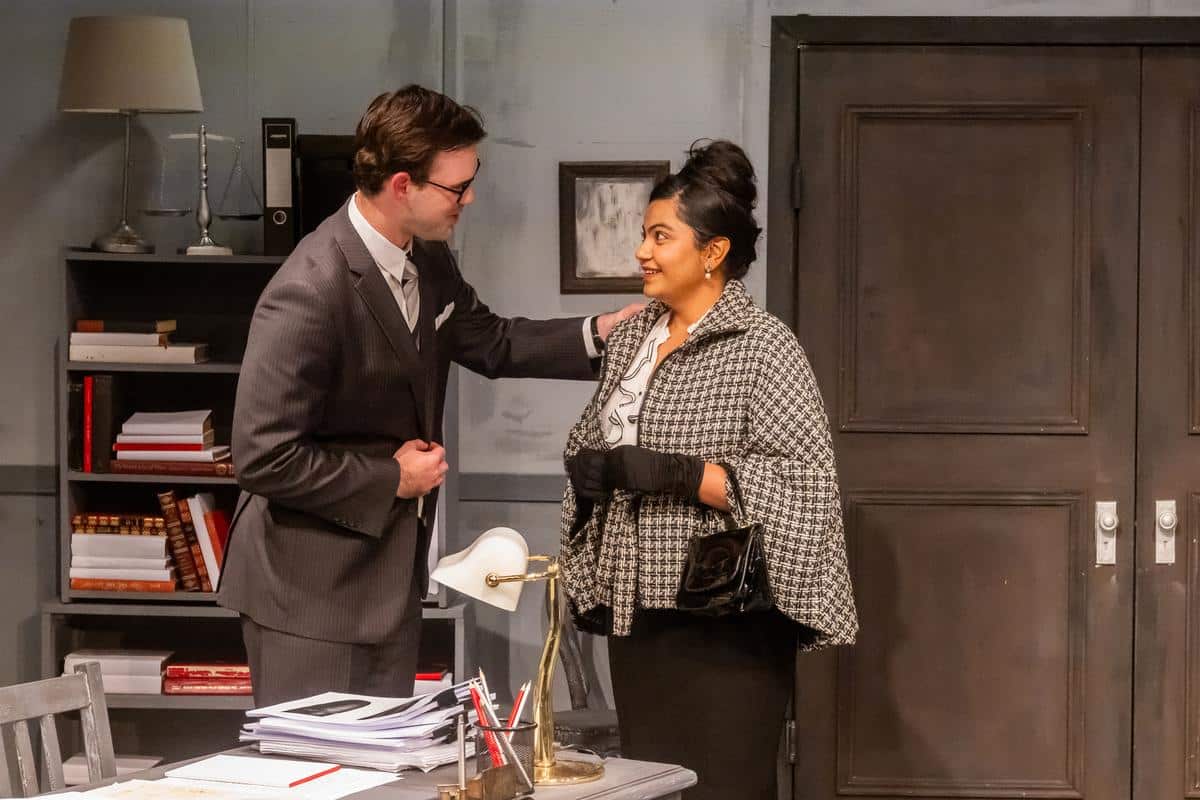
Ben Wheeler anchors the production as Paul Sevigne, presenting an examining magistrate whose fierce commitment to justice gradually collides with his growing attraction to the irrepressible Josefa Lantenay. Wheeler gives Sevigne authority from the outset, yet reveals the cracks beneath his composed exterior through excellent physical comedy. Whether shuffling papers in frustration, gently rebuking Morestan for openly staring at Josefa, or sprawling awkwardly across his desk in a futile attempt to prevent his wife from seeing his beautiful suspect, Wheeler communicates Sevigne’s increasingly impossible predicament almost entirely through body language. Importantly, the comedy never undermines the character’s integrity. Sevigne’s determination to discover the truth remains the engine that drives the play forward.
Ella Rose Titterton is captivating as Josefa Lantenay. Visually, she dominates the stage, dressed in vibrant red and black against a production otherwise defined by shades of black, white and grey. The contrast immediately establishes Josefa as the disruptive force within this ordered world. Titterton plays her as vivacious, brazen and keenly aware of the effect she has on those around her. Josefa delights in the attention she attracts and the jealousy she provokes, yet the performance avoids reducing her to a flirt. Beneath her confidence lies a woman caught in an impossible situation, forced to conceal information or risk conviction and execution for murder. Titterton gives the character warmth and nuance, ensuring Josefa remains sympathetic even as she continually complicates the investigation.
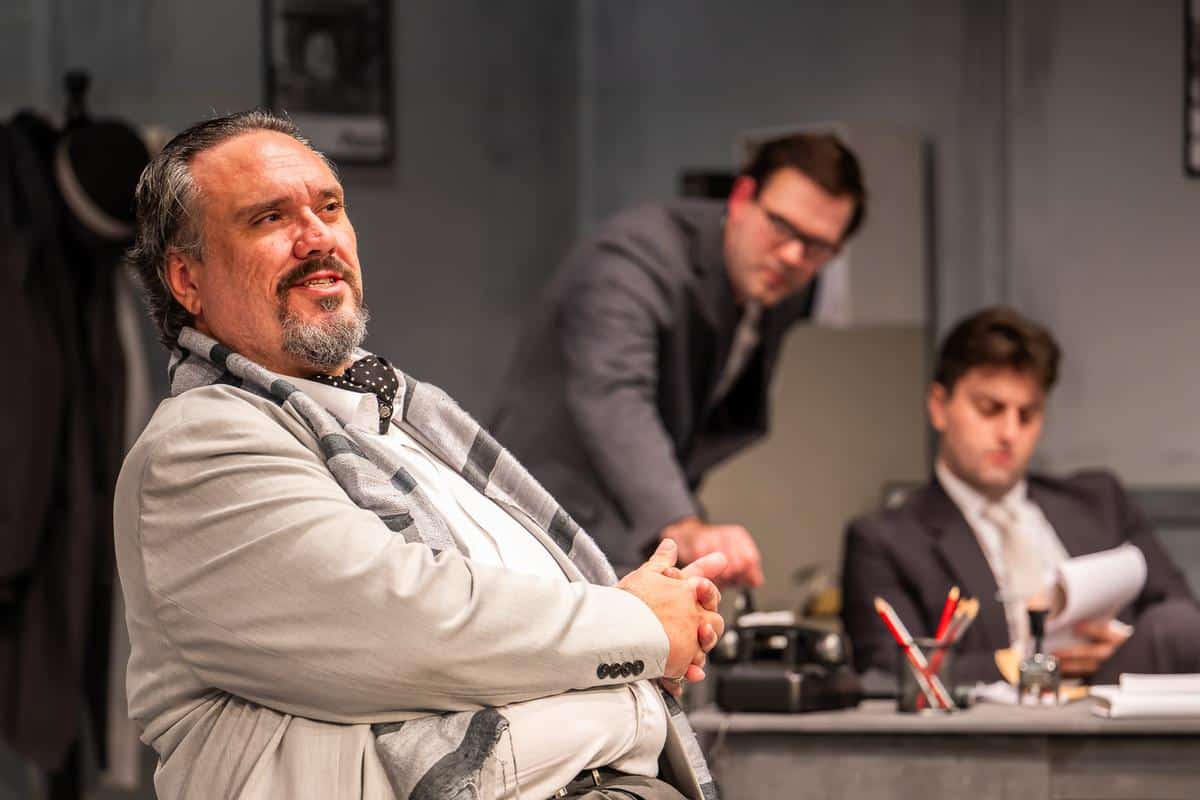
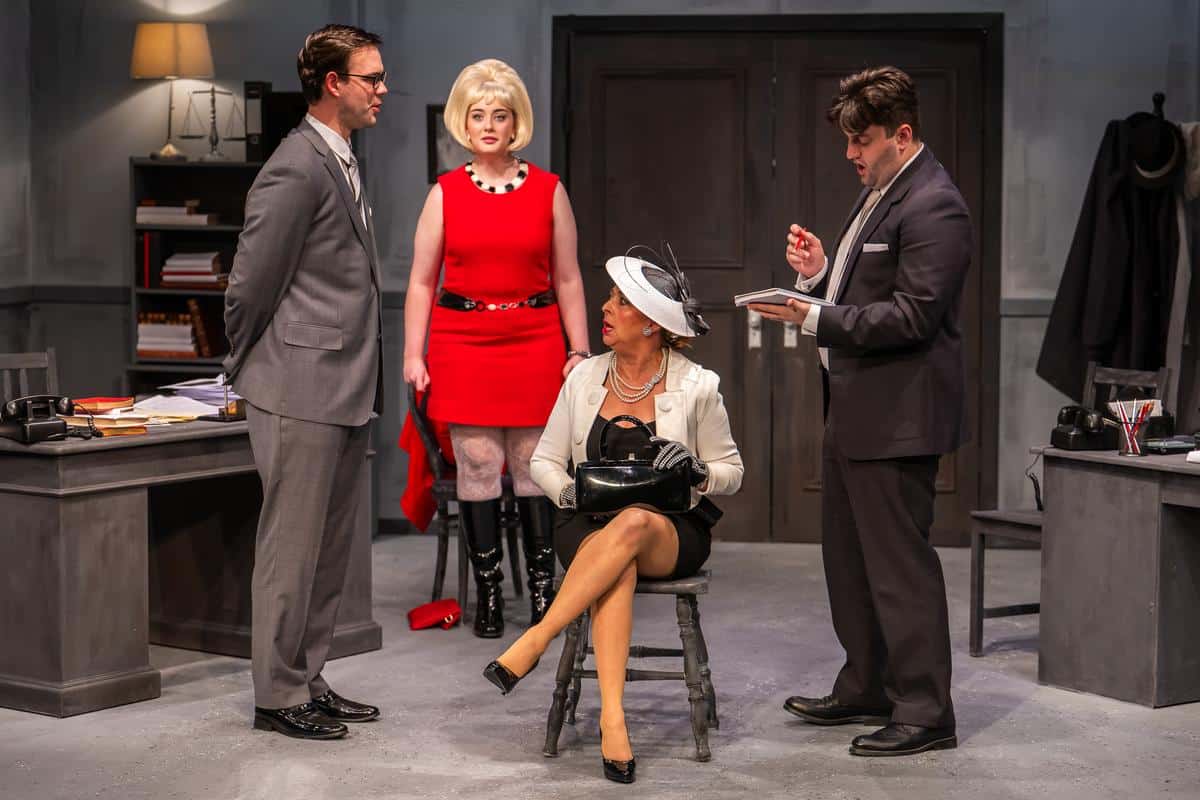
Lachlan Armstrong proves an outstanding comic foil as Morestan. Though firmly a supporting character, he arguably receives the biggest laughs of the evening through superb comic timing and wonderfully expressive reactions. His wide-eyed fascination with Josefa, mischievous grins during Sevigne’s interrogations and perfectly judged physical comedy consistently delight the audience without distracting from the central story. A second-act sequence involving the frantic concealment of a centrefold magazine is particularly well executed. Morestan is more than simply comic relief; Armstrong presents him as a genuinely capable assistant whose inability to disguise his reactions provides a perfect contrast to Sevigne’s increasingly strained professionalism.
Among the supporting cast, Aditya gives Antoinette Sevigne a calculating edge. Her concern extends beyond marital jealousy to protecting the social position that accompanies her husband’s career, making her suspicion of Josefa both understandable and, ultimately, justified. Ben Pobjie plays Benjamin Beaurevers with languid confidence, maintaining complete composure until events finally expose him, while Faith Jessel gives Dominique Beaurevers an eccentricity that skirts absurdity without tipping into caricature. Peter Phan brings quiet authority to Lablache, presenting Sevigne’s superior as meticulously controlled rather than bombastic, before demonstrating impressive versatility later in the evening with a memorable piece of broad physical comedy as the prison guard.
The production’s visual design is equally thoughtful. Abby Bishop’s set is convincing without becoming cluttered, allowing the actors ample room for the production’s physical humour. The central chair becomes almost a stage within the stage, naturally drawing attention whenever a character occupies it. Leone Sharp’s costumes establish a stylish mid-century aesthetic while reinforcing the play’s visual language through a restrained monochrome palette, broken only by Josefa’s striking red wardrobe. Together they create a world where order and disruption are immediately recognisable before a word is spoken.
By combining assured performances, intelligent direction and carefully considered design, this production captures both the wit and humanity of A Shot in the Dark. It is a polished and consistently entertaining evening of theatre, led by a strong ensemble that understands comedy is as much about character and timing as it is about laughter.
To book tickets to A Shot In The Dark, please visit https://paviliontheatre.org.au/a-shot-in-the-dark/.
Photographer: Chris Lundie