Jumping About All Over The Place

Nihilistic Optimism on Trampolines

Nihilistic Optimism on Trampolines Rating

ā˜…ā˜…ā˜…ā˜…ā˜…

Click if you liked this article

2

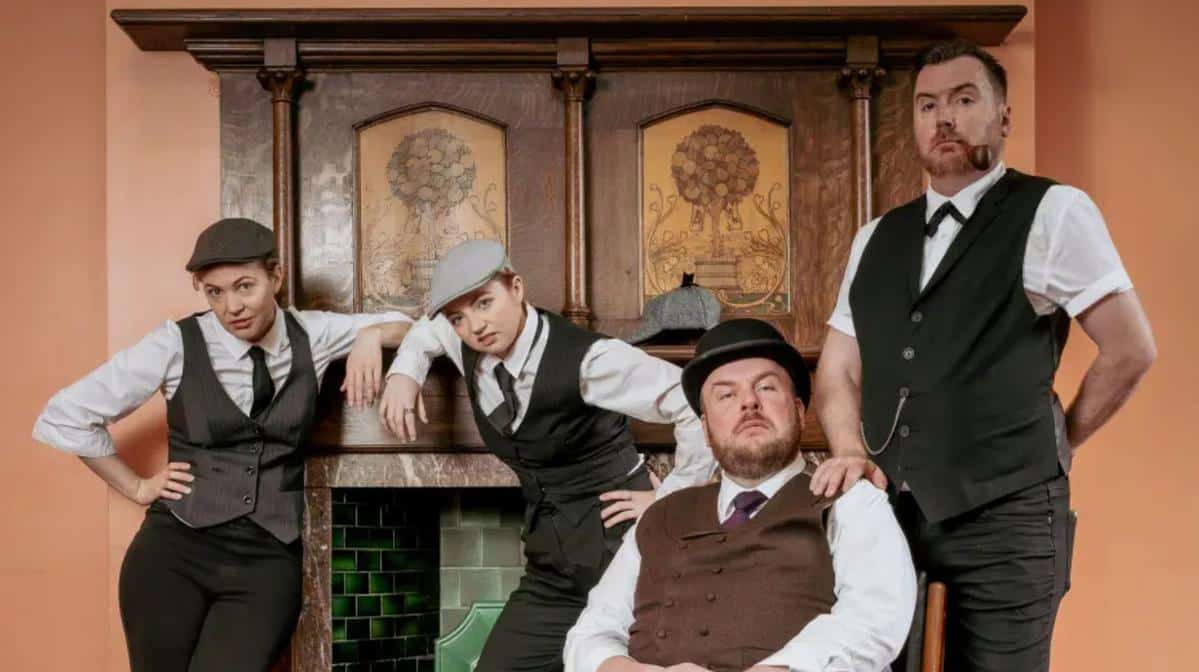
‘Nihilistic Optimism on Trampolines’ is undoubtedly one of the most unusual plays I’ve seen this year. Whilst heavy on the nihilism (and light on both optimism and trampolines), it was an original and genuinely imaginative reworking of the supposed origins of the classic novel ā€˜Frankenstein’.

The production blended text from Mary Shelley’s novel with excerpts from her personal journals adding some emotional depth to the relationships depicted. It also set the whole thing, hilariously, in ā€˜Trampoline World’ a place of suffocating monotony and lacklustre job prospects. The cast threw themselves into the story with enthusiasm and full physical commitment and for the most part the chemistry between them worked well. The performance of Mary (played by Gabrielle Ward) was a standout, but honourable mention should go to the comic relief of Byron (Eleanor Golding), who brought some levity to the darker moments.
While the production lacked polish, any real production values and occasionally slipped into feeling a little improvised, it also aimed high. Reworking a classic text is extremely difficult to do with originality unless you commit fully and take creative risks. To their credit both the writer and cast were clearly swinging for something clever and nuanced.

Where the show really excelled was in its depiction of the sheer monotony of customer facing work. The endless repetitive conversations. The glazed interactions. The joy of mopping up vomit while being surrounded by screaming children and huffy parents. Much of the audience would have recognised their own flashbacks to those teenage jobs where commitment was low, wages even lower and the tangled crushes and camaraderie among staff were the only things getting you through the shift.


Where the show struggled was in clearly communicating the heart of the story. My theatre partner had not read Frankenstein and most certainly was not aware of Mary Shelley’s dramatic Geneva holiday with Percy Bysshe Shelley, Lord Byron and Mary’s sister, Claire. Which means he also had no reference for the dark emotional chaos that surrounded Mary’s relationship with Percy at that time, nor that the trip, (and her recurrent horrific nightmares), became the impetus which inspired her story – so those little nods to that experience, though explored in the play, were far too easy to miss.

As someone who has read the novel, seen the films and even watched ā€˜Rowing with the Wind’ a period film which dramatises the strained and sometimes unhinged relationships between the four (suggesting, as it does, that much of it was fuelled by both drugs and rather free sexual relationships between them all), I had a much easier time connecting the dots. For audience members without that context, I imagine the play would feel disjointed and confusing. The plot is fragmented and sometimes hard to track even for those who do know the backstory. The jumps between contemporary speech and period speech and the sudden segues between the tangled lives of the staff of Trampoline World and the feverish imaginings in Mary’s mind were not always smooth. Despite solid acting the heart of the play felt obscured under the sound effects, jarring lighting shifts and literal jumping around. In reference to the trampolining side of things, I would note that there wasn’t a whole lot of trampolining in the show and none of it was of a particularly entertaining or acrobatic nature – I was expecting something a little more exciting in that respect.

On a final positive note, the live band deserves acknowledgement. Their music added atmosphere, drive and emotional colour to the play and helped anchor scenes that might otherwise have floated away completely.

Ultimately this one was a swing and a miss for me, but with the recognition that it was highly original, and original thinking should always be applauded.

To book tickets to Nihilistic Optimism on Trampolines, please visit https://www.theatreworks.org.au/2025/nihilistic-optimism-on-trampolines.

Spread the word on your favourite platform!

Numbered Lives: Stylish Shadows, Unsteady Steps

Numbered Lives

Click if you liked this article

0

What a night of spectacle the global premiere of Numbered Lives turned out to be. Wrapped in black-tie elegance at Melbourne’s Crown (though with more flesh on show than the red-light district in Amsterdam), the red-carpet arrivals glittered in sequins, the free bar flowed, and the buzz of Hollywood-style glamour filled the air. By the time we settled into our gold-class seats – icecreams in hand and popcorn at the ready – anticipation for the indie thriller, written/directed by J G Clarke, produced by David Lightfoot and starring none other than Jeremy Piven of much awarded TV series ā€˜Entourage’ fame – was palpable.

On paper, the premise is intriguing (if not wholly original): a shadowy medical conglomerate snatches society’s most vulnerable – street kids and prison inmates – people ā€œno one will missā€ – to become unwilling test subjects in sinister drug trials undertaken at the ā€˜Institute’. Viewed through the eyes of Noah, a first-time inmate who awakens in the facility, the film confronts us with uncomfortable questions about what society is willing to sacrifice ā€œfor the manyā€ and how far we’ll go to save those we love (or line our pockets).


Visually, Numbered Lives is powerful. Filmed entirely on location in South Australia, it draws on the brooding presence of places like the Old Adelaide Gaol and the notorious Ward Z of Glenside Asylum for the criminally insane, to cultivate an almost tangible sense of dread. Darkly stylised cinematography bathes every frame in chiselled shadows and icy light, while the sound design – equal parts suspenseful score and unsettling ambience – keeps nerves taut in a near-noir horror style groove. Even the American accents land with surprising authenticity, underscoring the film’s polished production values.

Yet for all its style, the film’s emotional heartbeat sometimes falters. The characters skirt clichĆ©, their moral dilemmas glossed over when they deserved deeper exploration. Dialogue feels stilted – at times veering into the unintentionally comedic – and the pacing jumps around, leaving moments that should land with impact feeling undercooked or overblown.

Having said all that, it’s worth celebrating that an Australian indie film – written and directed by a first timer no less – has secured global distribution, racked up 32 festival awards (including Best Thriller, Best Director, and Best Lead Actor), and proved there’s an appetite for bold, homegrown storytelling. It’s also worth remembering that not every director knocks it out of the park with their first film, (who here remembers Spielberg’s first film before Jaws?), so Numbered Lives deserves credit for its ambition and grit and there is real recognition here of the numerous achievements that allowed this film to exist in the first place.

Whilst not my personal cup of tea, I still think that this film is worth a view if only to support future Australian filmmakers and to continue to fund our independent film making.

Spread the word on your favourite platform!

Maori Mini Film Festival: A Worthy Individual

Tai

Tai Rating

ā˜…ā˜…ā˜…ā˜…ā˜…

Click if you liked this article

It’s quite hard to review an animated film objectively when we are so accustomed to big-budget games and movies with high-end graphics, like Pixar Shorts.

However,Ta’i is a poignant short animated film by Mii Taokia about the wanton and targeted destruction of the abundantly resourced and beautiful pacific islands by the ā€˜Island Eaters’ – a system of corrupt government scientists.

The pastel-hued, blurred visuals heighten the islands’ lushness and give a sense of dreamlike beauty, juxtaposed against the more sinister imagery of their oppressors. This is all underscored by a modern lo-fi soundtrack that subtly contrasts the intimate devastation.

Even the island Gods, goaded into action, are unable to stop the destruction until they combine their powers and share them with a ‘worthy individual’.

The film’s central tenet is that a place’s most valuable but overlooked resource is its people and that sometimes, they are the only way to create real change.

Indeed, an individual taking a stand for what is right and good is all that has ever effected change, and this message feels especially resonant in today’s political climate.

To book tickets to the Maori Mini Film Festival, please visit https://www.bunjilplace.com.au/events/maoriland-film-festival

Spread the word on your favourite platform!

Maori Mini Film Festival: Walking Between Worlds

Tuia Ngā Here

Tuia Ngā Here Rating

ā˜…ā˜…ā˜…ā˜…ā˜…

Click if you liked this article

It was a real pleasure to review this soulful short film by Ngā Aho Whakaari as part of the Maori Short Film Festival and not just because it’s so impressive to see filmmakers who can create something so beautiful, with such incredible production values, on a small budget.

Exploring important themes of land and belonging – environmental protection, the preservation of cultural identity and intergenerational familial relationships – we are introduced to 16-year-old Hiwa who returns home from boarding school to discover her beloved grandfather, the local ‘land legend’, is seriously ill and unable to tend to the forest he has spent his life protecting.

Whilst her younger brother Pōtiki, who has clearly inherited his grandfather’s deep affinity for the ‘whenua’ (land), is determined to follow in his Korua’s footsteps, Hiwa struggles to integrate her simple, traditional values with the ‘modern’ world she inhabits at school.

Both children wrestle with the shifting dynamics in their family, and the darkly green and lush scenery is a beautiful but ominous metaphor, reflecting both Hiwa and Pōtiki’s realisations of the importance of their new roles as the next generation of guardians for the land and their family.

This film was part warning, part love letter to land and culture. As someone who has a deep connection to land myself, it was an invitation to recognise the ways in which we are called to stand as protectors for that to which we ‘belong. ‘ It’s definitely one to watch.

To book tickets to the Maori Mini Film Festival, please visit https://www.bunjilplace.com.au/events/maoriland-film-festival

Spread the word on your favourite platform!