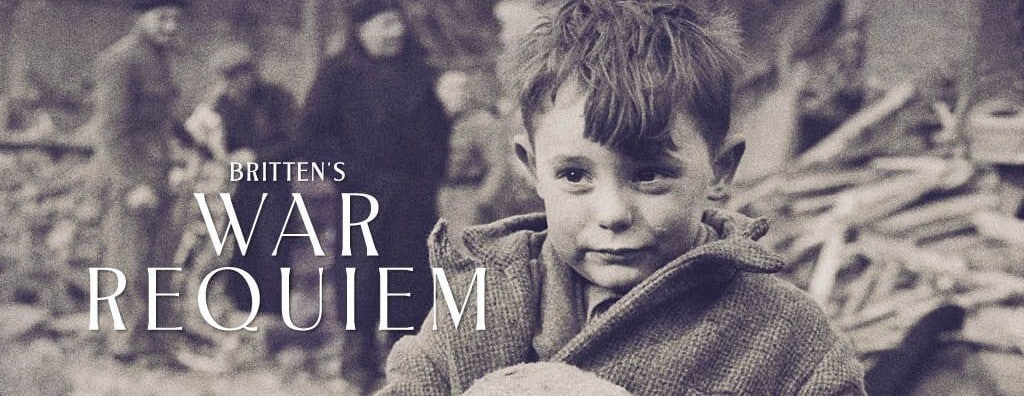
Benjamin Britten’s War Requiem, Op. 66, is a full-on choral and orchestral composition finished in 1962 with shades of Philip Glass chords and dissonance. Originally performed for the rebuilt Coventry Cathedral that had been destroyed in World War II, the piece is scored for a double orchestra, two choirs, organ and just about everything else. For example, there were eight percussionists. It was going to produce a wall of sound.
Along with the traditional Latin text, the anguished poems of Wilfred Owen, written during World War I, offered a dramatic and dark mood about the futility of war and the loss of human lives. Owen’s poems were banned during the conflict as they were anti-war and clearly revealed the reality of the horror and futility of those in the trenches. Sadly, he died at 25 years old in battle a week before the Armistice.
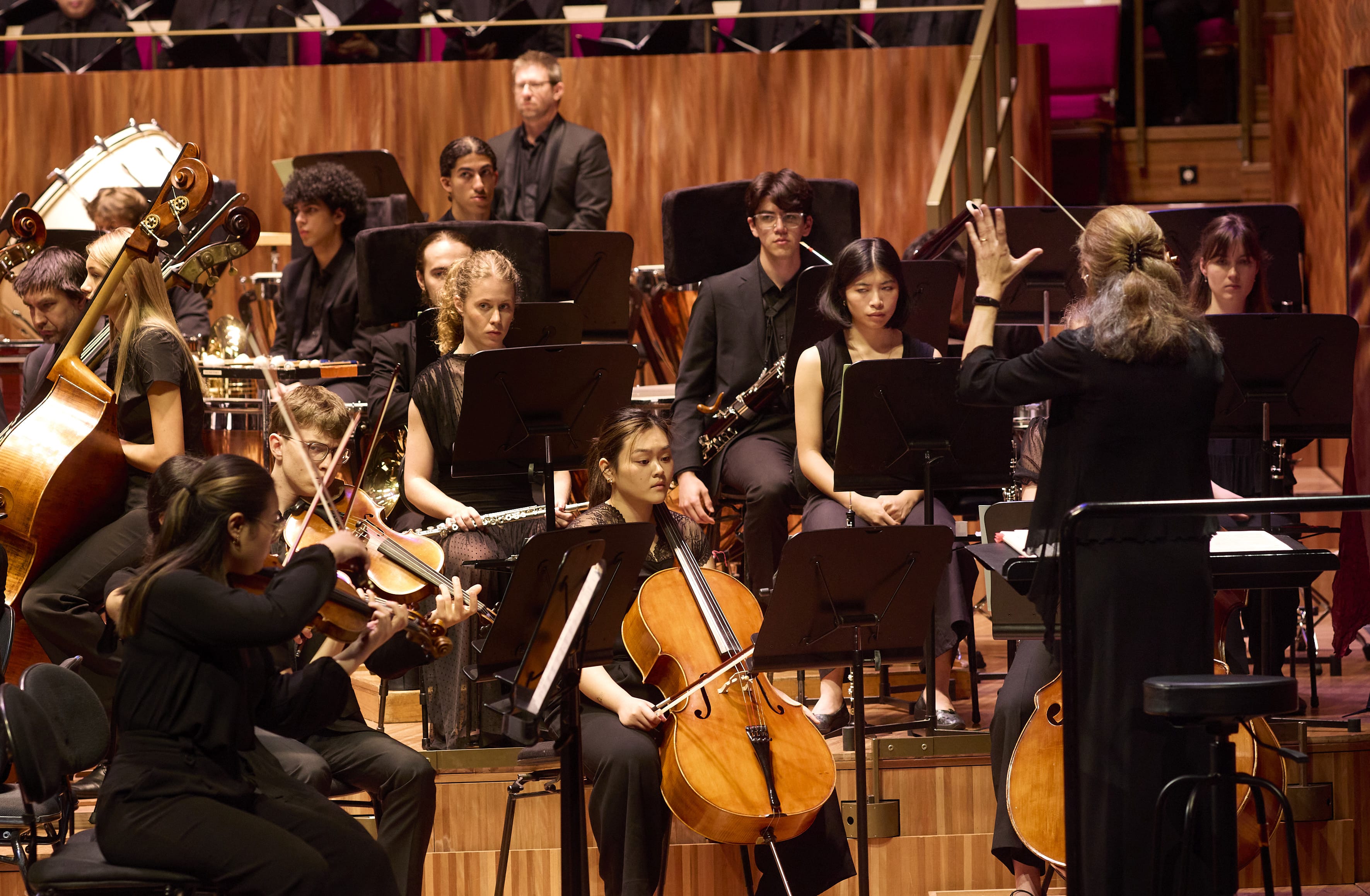
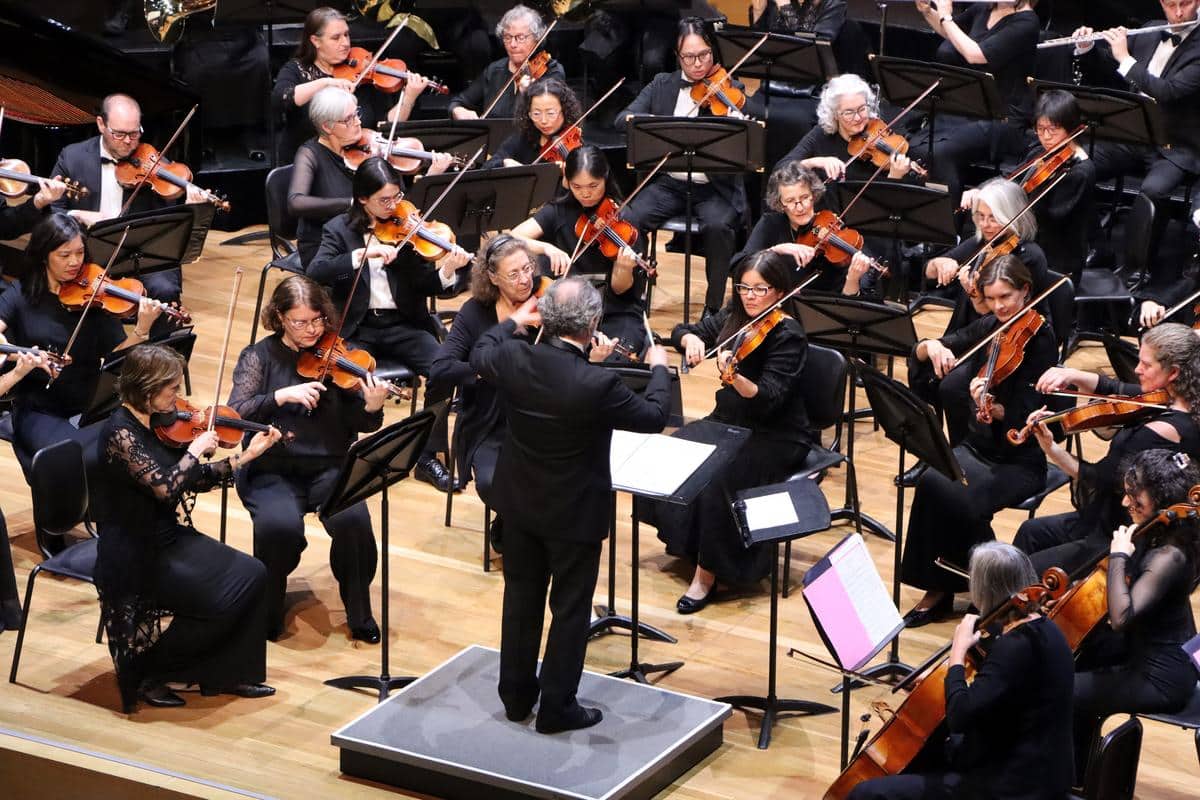
Brett Weymark skilfully conducted the Sydney Philharmonia Festival chorus, Sydney Youth Orchestra and Conservatorium High School choristers. The orchestra was magnificent with brass sounding out as the bray of battle along with clashes of cymbals, drums and gongs as the string players struck chords that represented the tragedy of what was happening.
The choir, all 300 of them rose to the occasion quietly chanting at the start and producing almost a howl as the battle raged. The children’s choir stood at the back of the concert hall and sang like a choir of angels as if welcoming the dying soldiers. The final piece culminated in the soloists joining to ‘let me sleep in peace’ almost imploring the audience to do so. Then the conductor stood in silence for twenty seconds as if at the last post.
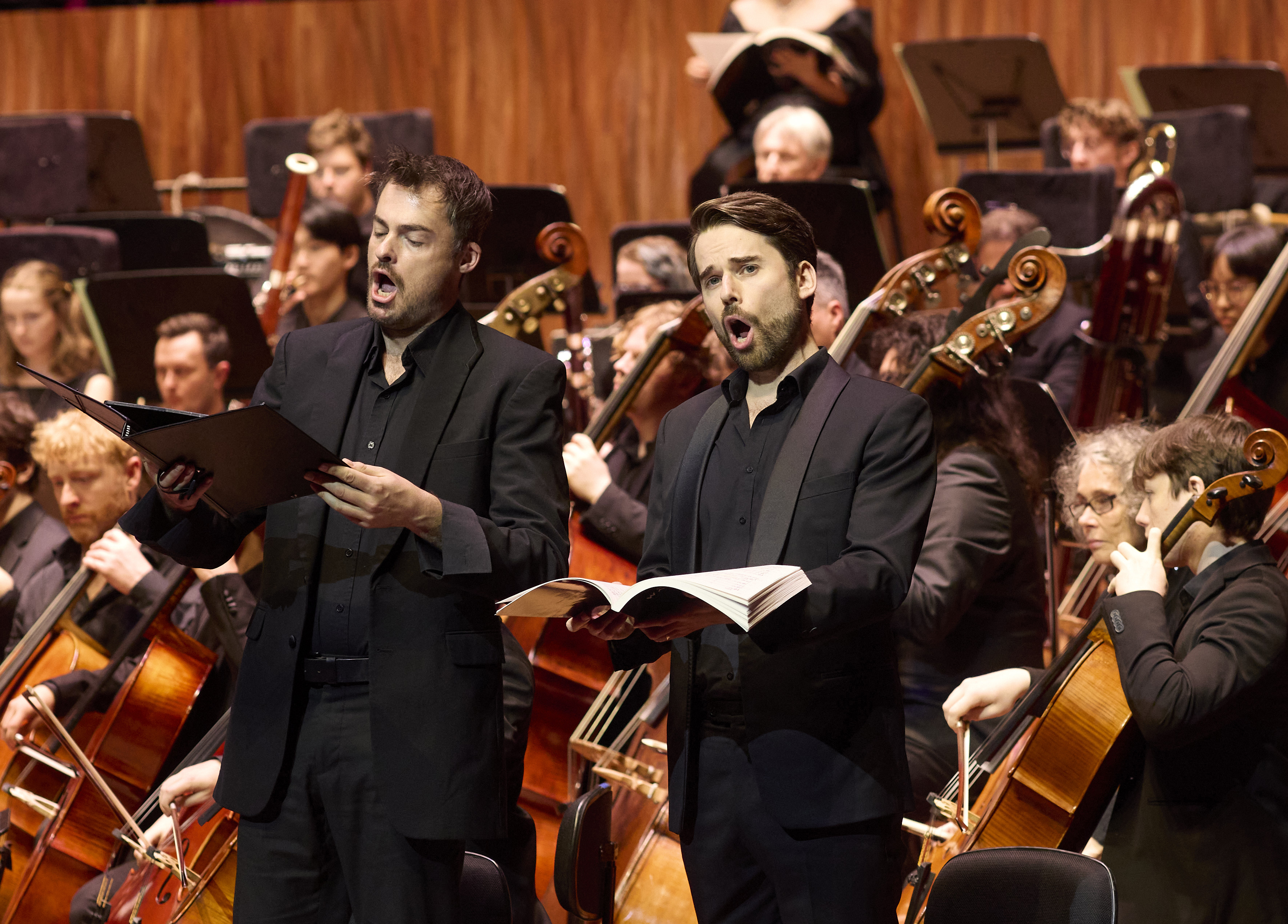
The soloists, tenor Kyle Stegall, and baritone Jeremy Kleeman, offered Owen’s poems. Stegall’s beautiful lyrical voice soared as he sang about the soldiers’ fears and observations of the horror of war such as, ‘What passing bells for these who die as cattle?’. Kleeman’s clear baritone beseeched the audience to realise, ‘I am the enemy you killed, my friend’. The only disappointment was with such a strong orchestral sound, Owen’s poignant words were often lost in the wall of sound.
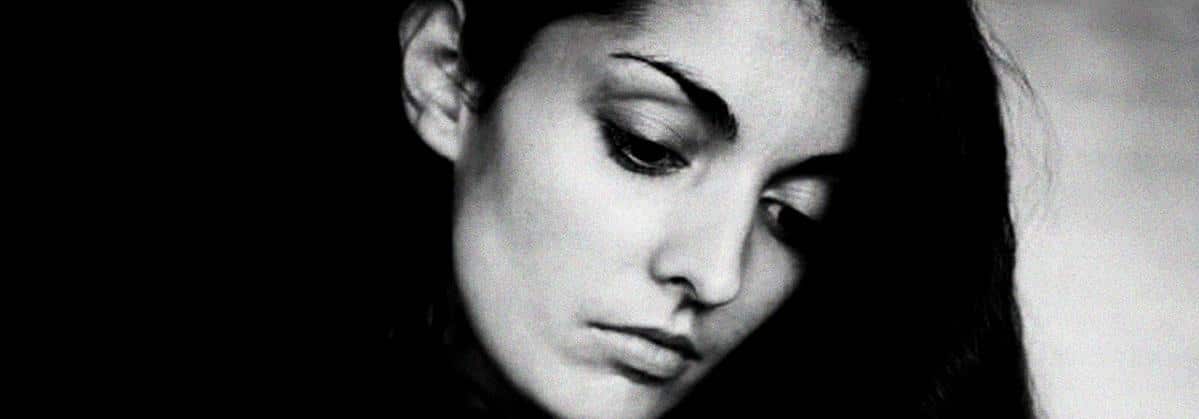
Soprano, Eva Kong, strangely placed behind the orchestra at the back with the chorus, sang like an angel, interpreting the Latin mass text valiantly and beautifully. It may have been easier for her and the audience if she were with the other soloists at the front.
It isn’t an easy piece as there are no memorable melodies. As we approach Remembrance Day, it is a reminder not to celebrate war but to honour those forced to participate. It was a memorable concert for all and the audience responded with resounding applause. We were left remembering the final chant of, ‘Let Me Sleep in Peace.’
Following this concert I think the Vibraphone is my new favourite instrument. Think tubular bells mixed with a glass harp for the purest sound in an orchestra. As a tribute to Steve Reich who was influenced by Back to Coltrane and master of this instrument, the Ensemble Offspring offered a technically brilliant afternoon of sound. The self-effacing key speaker Claire Edwardes outlined the program and the ensemble’s history and love of Reich’s compositions and technical difficulty. She even wondered out loud why they had chosen some difficult pieces!
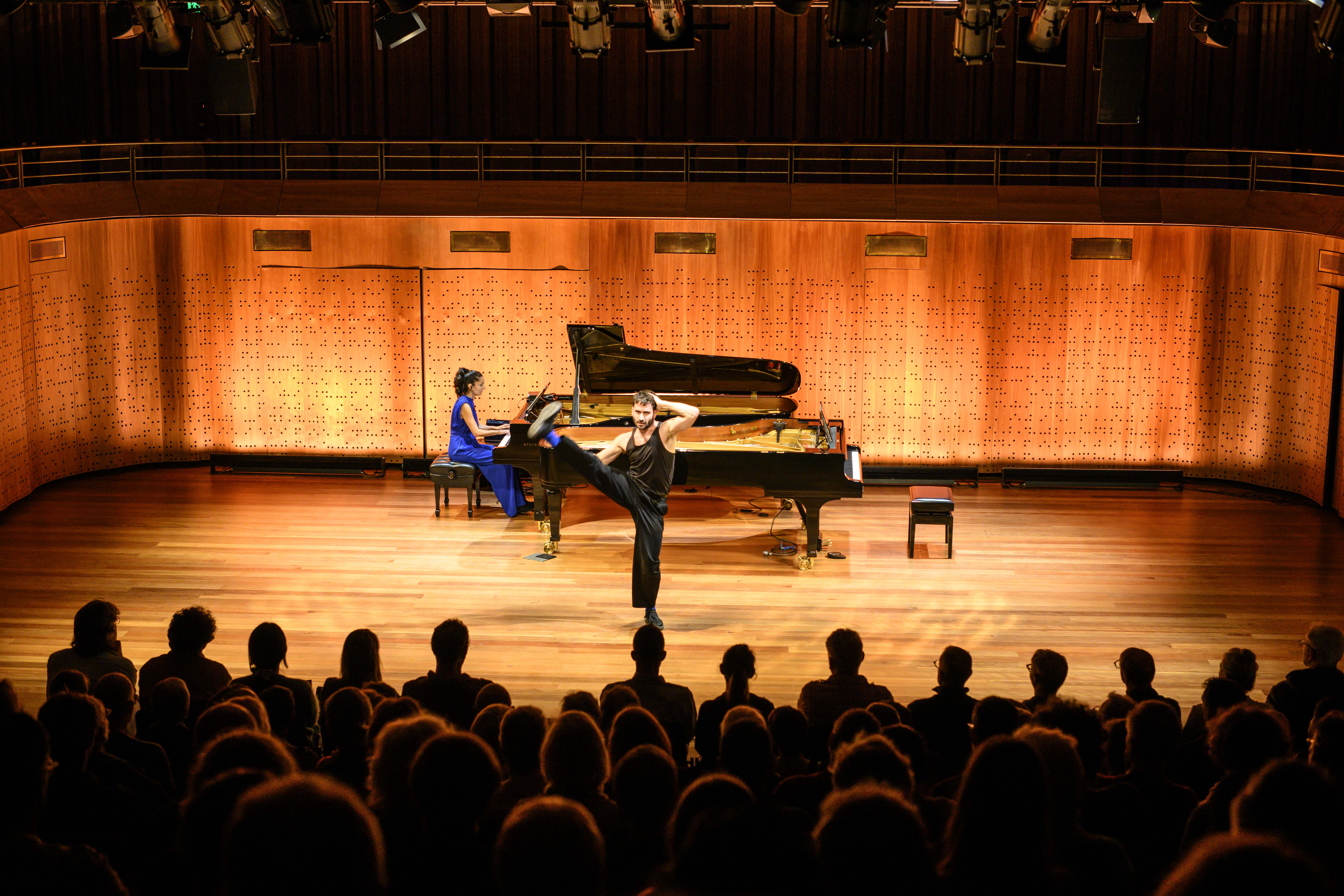
First up, Richard Cilli and Claire Edwardes strode on with metronomes and, accompanied by the amazing pianist Gabi Sultana, their body percussion and ballet melded sound, rhythm and the piano providing a surprising pulse. ‘Metronomes’, offered Reich’s classic phrasing of repeat, review and revise. The bodies moved in time matching the metronomes as they were out of sync and then in-sync as if they were a piece of separate music. It was compelling in its fluidity.
Richard then stepped forward and with fluid balletic dexterity presented a conversation with a silent partner as if the beat, piano and his movements were debating with another to get some response regardless. Gabi pushed the piano as if it were vibrating to the music whilst her fingers ran across the notes mastering the difficult phrasing.
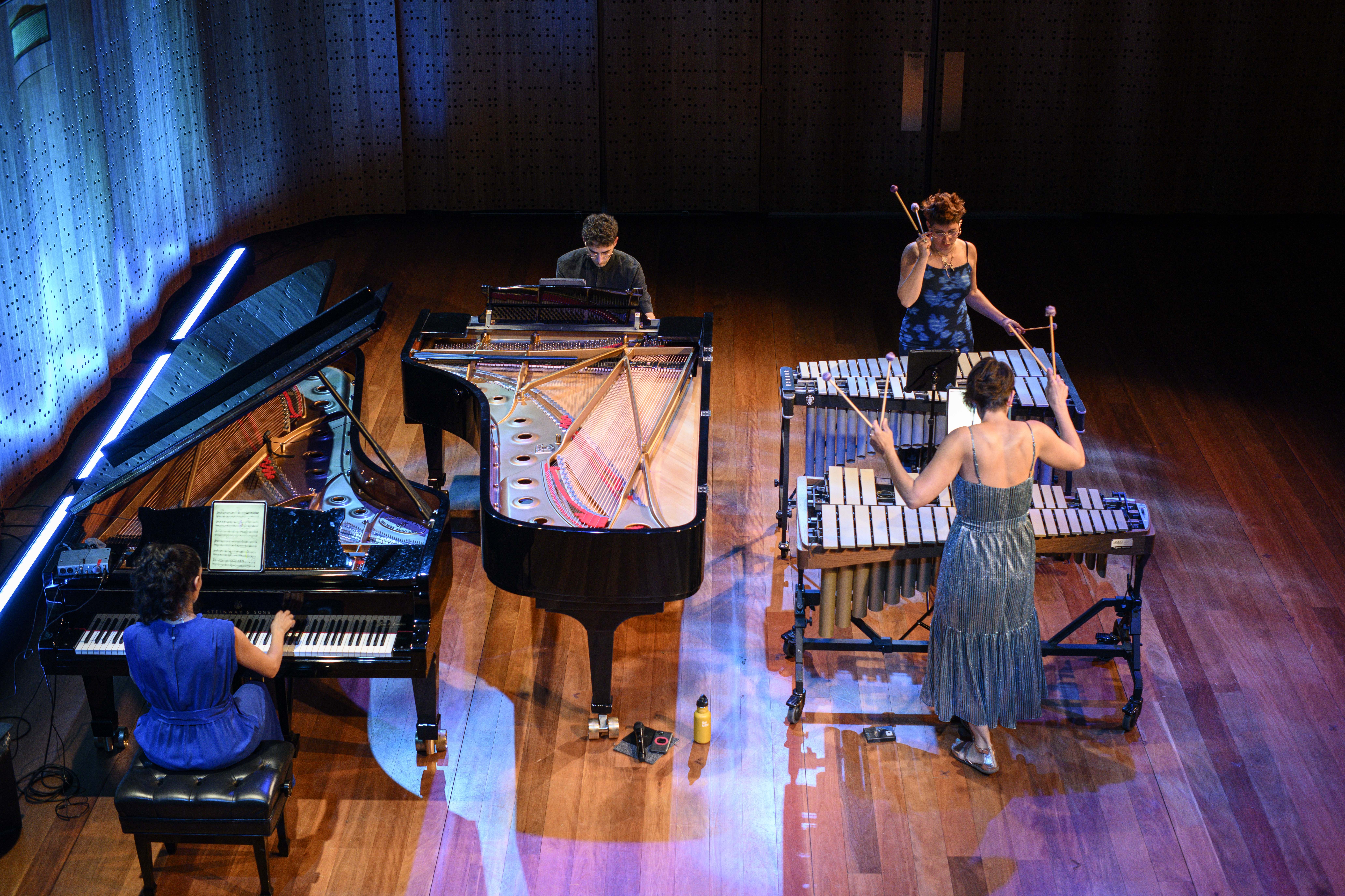
Next we had the famous piece, Quartet from 2013, which featured two vibraphones and two pianos – just in case! The nimble dexterity and clarity of sound was beautiful and the pace was fast and furious. Lots of counter questions and answers between all four performers as they delved into the complex harmonies and difficult twists of hands and instruments to match the rhythm, fast, slow, fast and then faster. It was amazing to watch the ballet of fingers using the mallets as if playing four keyboards on one instrument and the precision of the timing was everything.
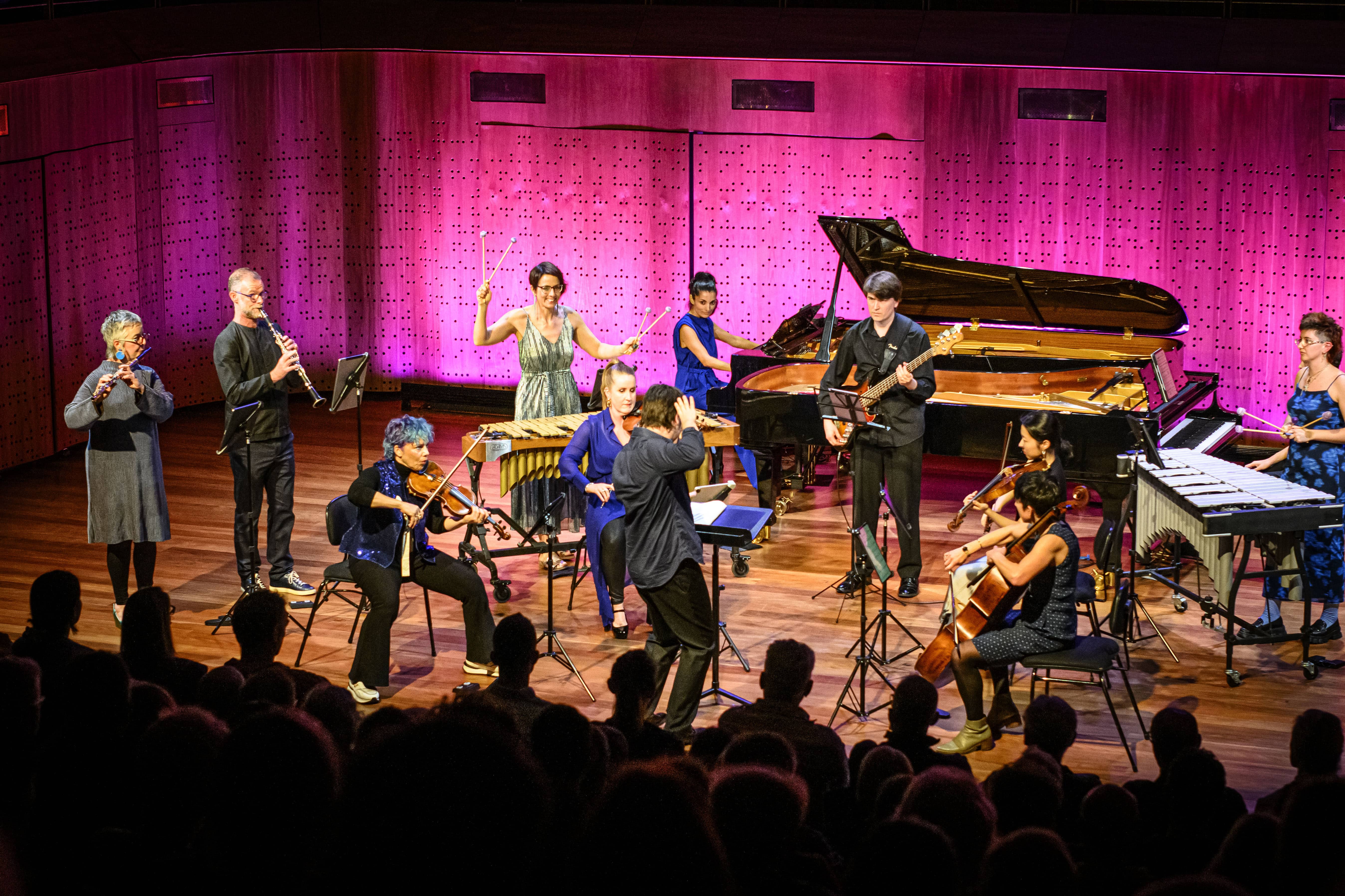
The finale of the whole ensemble added a bass guitar, flute, clarinet, violins, viola and cello which circled the pianos and vibraphones. Radio Rewire from 2012, is a piece not for the fainthearted. With shards of Radioheads’ Everything in Its Right Place and Jigsaw Falling Into Place, Reich offers a throwback to older composers using pre-existing music to weave in to their own variations on a theme. The piece moved back and forward in speed and finalised in a massive pure sound leaving the audience stunned by the sheer technical brilliance and the complex phrasing as variations were weaving around from each performer. The performance culminated in a cacophony of dynamic sound.
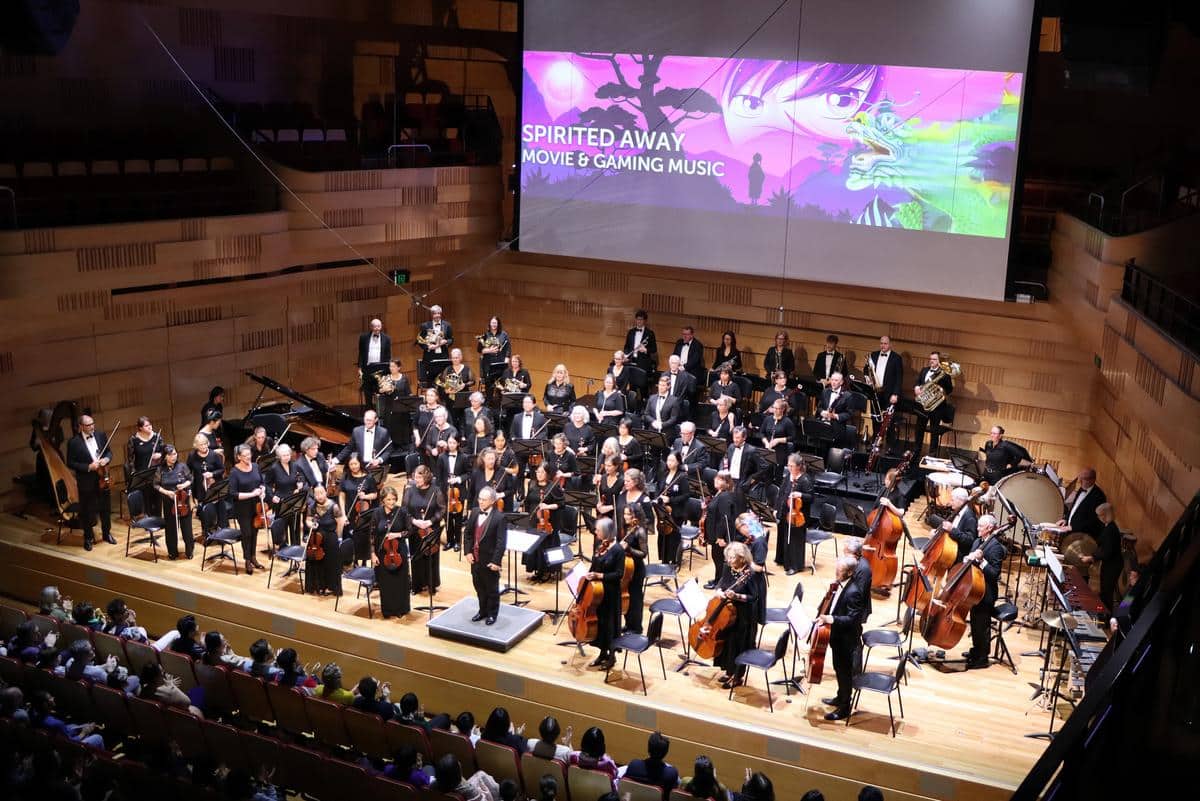
For a relaxing Sunday afternoon, being immersed in the sounds of film and gaming music scores performed by the Ku-ring-gai Philharmonic Orchestra (KPO) was perfection. The choice of songs was varied, from the widely known “Star Wars Suite” composed by the legendary John Williams to other songs that I was not familiar with, such as Jeremy Soule’s “Song of the Dragonborn”.
The KPO’s deliberate choice of song order was clever, which took the audience on an emotional musical journey with ups and downs like a wave. The KPO alternated playing intense songs, then moved next to a quieter song, then back to a powerful piece.
A standout song was the meditative beauty “Benjamin”, originally from the ABC/ International film and television series, “The Hymns of the Forefathers”. Listening to this song live was quite special, as we were fortunate to witness the composer conduct his own piece. The song “Benjamin” was named after his three year old son. KPO’s Artistic Director and Chief Conductor Paul Terracini used his baton, signalling tempo and guiding the orchestra in all of the song performances, except this one. Instead, it was beautiful to see the love and depth of feeling he had for his own piece. He did not use his baton, he conducted with his whole body and arms, swaying to the tempo, and it was mesmerising to watch.
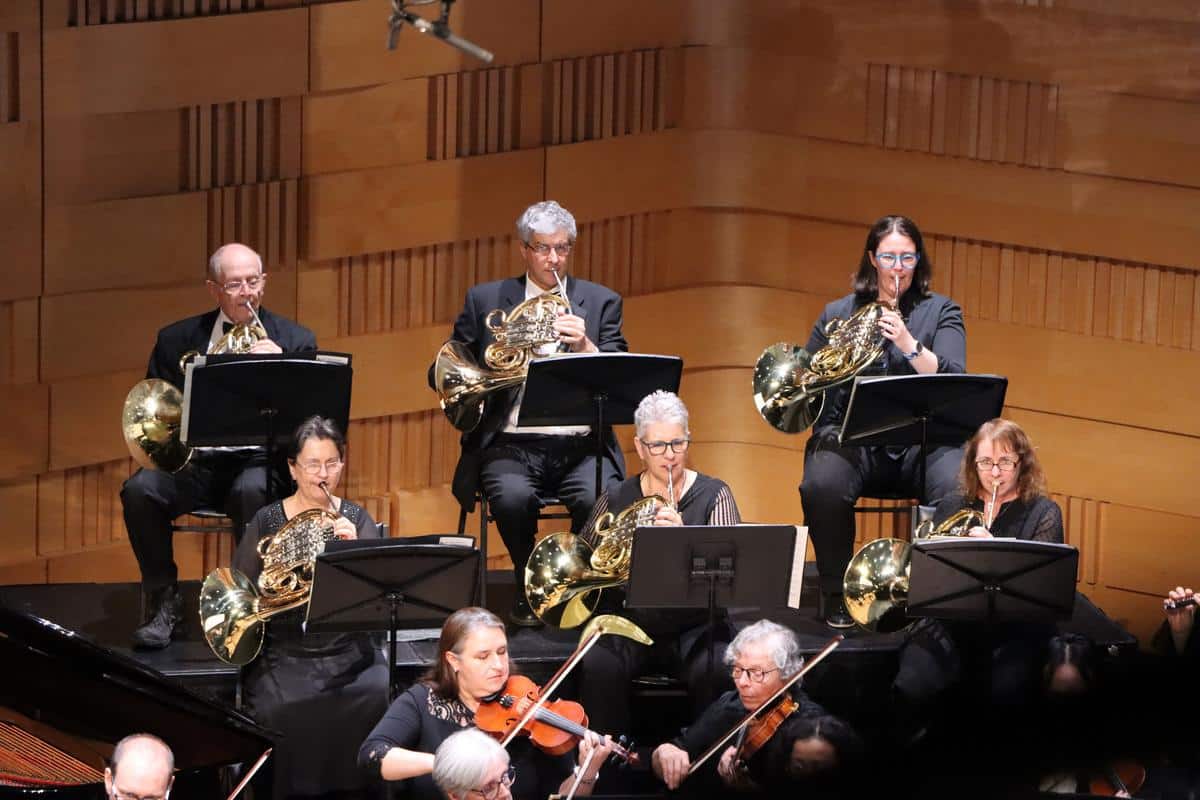
Before each performance, Terracini introduced each song with some background information on each composer and some information on the song. The KPO’s first song was the “Star Wars Suite”, and from the very first opening note, the power and precision of the orchestra created an exciting start. The “Imperial March” was played with perfect precision, with the sharpness of the trumpets, bassoons, trombones and tuba intermingled with the frenetic violins and full orchestration to create the menacing Darth Vader theme. This Suite arrangement displayed an example of the alternating powerful and gentle song format, with sweet and regal “Princess Leia’s Theme” following the boisterous main theme. The different tempo and soft beauty of “Yoda’s Theme” with the harp, and the grandiosity of the “Throne Room and End Title” contrasted with each other and conjured up scenes from this classic movie into my mind.
The magic of the KPO’s music continued with “Spirited Away Suite”. Joe Hisaishi composed for Hayao Miyazaki’s animated films from Studio Ghibli. I had seen the 2001 anime “Spirited Away” a long time ago and did not remember the music, so it was with curiosity that I began to listen to this suite. The piano infused a gentle and curious beginning with “One Summer’s Day” and as this song progressed, it shone of innocent wonder. The harp plucking represented the moon to me, in “Night Time Coming”, with a lovely lullaby. This was followed by “The Gods”, which had a dramatic element, with the percussion leading the effects in some parts. This suite featured lovely solos by harpist Kaela Phillips and Concertmaster Violin Lead Anne Marie Braid. The effect of a solo, and then the orchestra joining in was effective in creating a musically flowing journey for the audience.
After the interval, the KPO performed the soundtracks and music from “Song of the Dragonborn”, “The Elden Ring 2022”, “Spartacus”, “Benjamin” and ended with “Fellowship of the Ring Suite”.
Japanese Composer Yuka Kitamura’s “Elden Ring 2022” theme was arranged by Jonathan Shaw and was a very strong and powerful piece. Beginning gently, the quick metamorphosis into a highly dramatic theme, with the brass, wind instruments, violins, percussion and metallic percussion gong’s calling was impressive.
“Spartacus”, was composed by Aram Khachaturian. This song was written for a ballet in 1954, and the retelling of a Thracian gladiator reuniting with his wife after she was captured, was romantic. The middle part of the song hinted at a shadowed darker time, and the echo of a call and response of the orchestra was instrumental in building the dramatic intensity to a crescendo. The ending of the song relayed the couple’s tender love, as the tempo calmed and the lead violinist brought the story to a peaceful end.
Jeremy Soule’s “Song of the Dragonborn” played next and began in the Dragonborn’s ‘tongue’ – shouts which are heard alongside the horns and violins and were an effective way to introduce the mood. This was an uplifting and courageous song and in some parts it lifted my imagination skyward. This was a very regal song utilising strong brass and percussion to create a mediaeval themed mood.
“The Lord of the Rings: Fellowship of the Ring Symphonic Suite”, arranged by John Whitney, was the last piece the KPO performed and was a wonderful piece to end on. Composer, conductor and orchestrator Howard Shore’s film scores have earned Academy Awards, Golden Globes and Grammy Awards and this suite, beautifully played by the KPO, showcased his talent. The LotR suite included distinct sweeping movements for different character themes. Most notably, the heavier colours during one part came through with sharp precision with the brass and percussion, and then was contrasted with the piccolo, flutes and strings for lighter moments.
The talented musicians from the the Ku-ring-gai Philharmonic Orchestra, led by conductor Paul Terracini created a magical afternoon. This was an encompassing musical journey into the imaginative world of make believe worlds of film, animation and gaming. If you are a music lover, you must listen to a live KPO performance in the future. There is a free community concert called Nothing is Forever, on September 20 2026 at the Turramurra Uniting Church.
Spirited Away Movie and Gaming Music was performed at The Concourse Concert Hall in Chatswood. Time: 2 hours with a 20 minute interval.
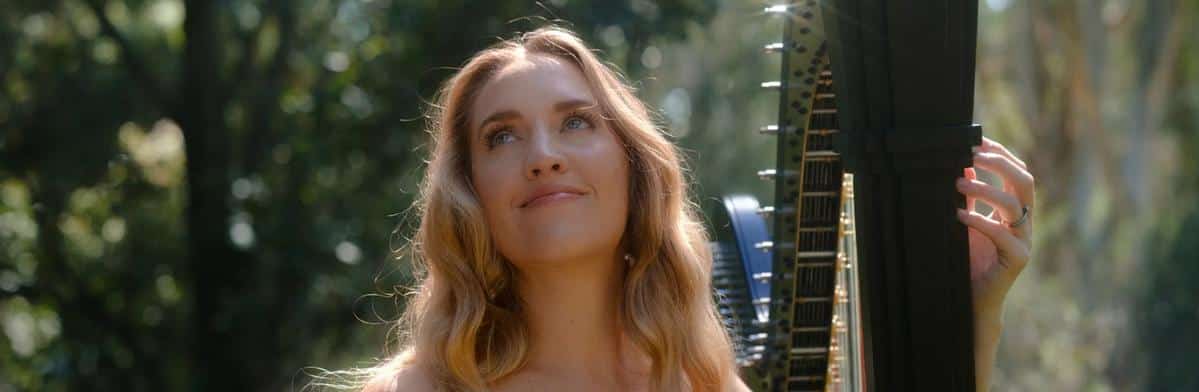
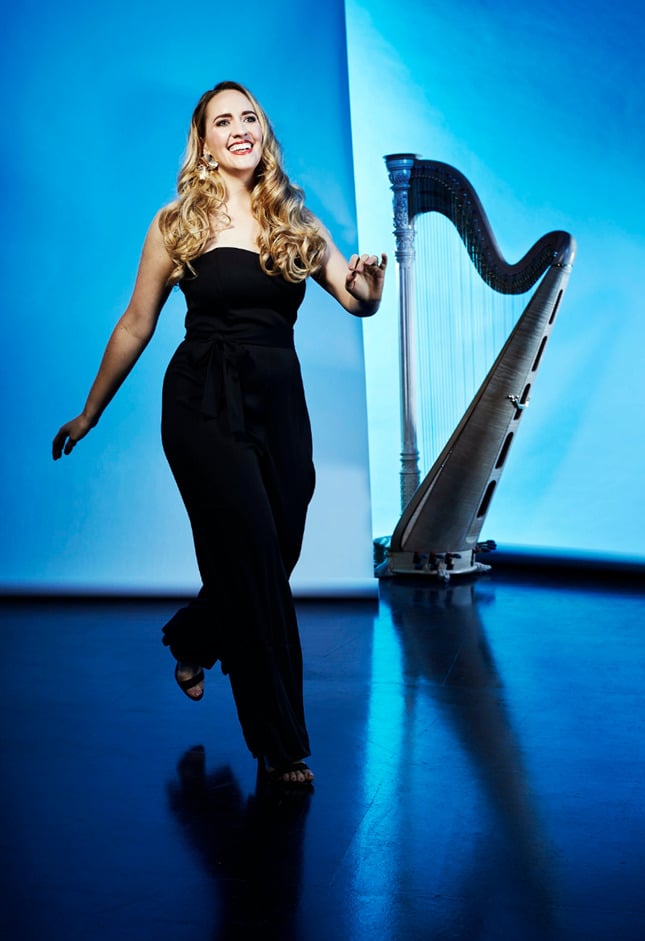
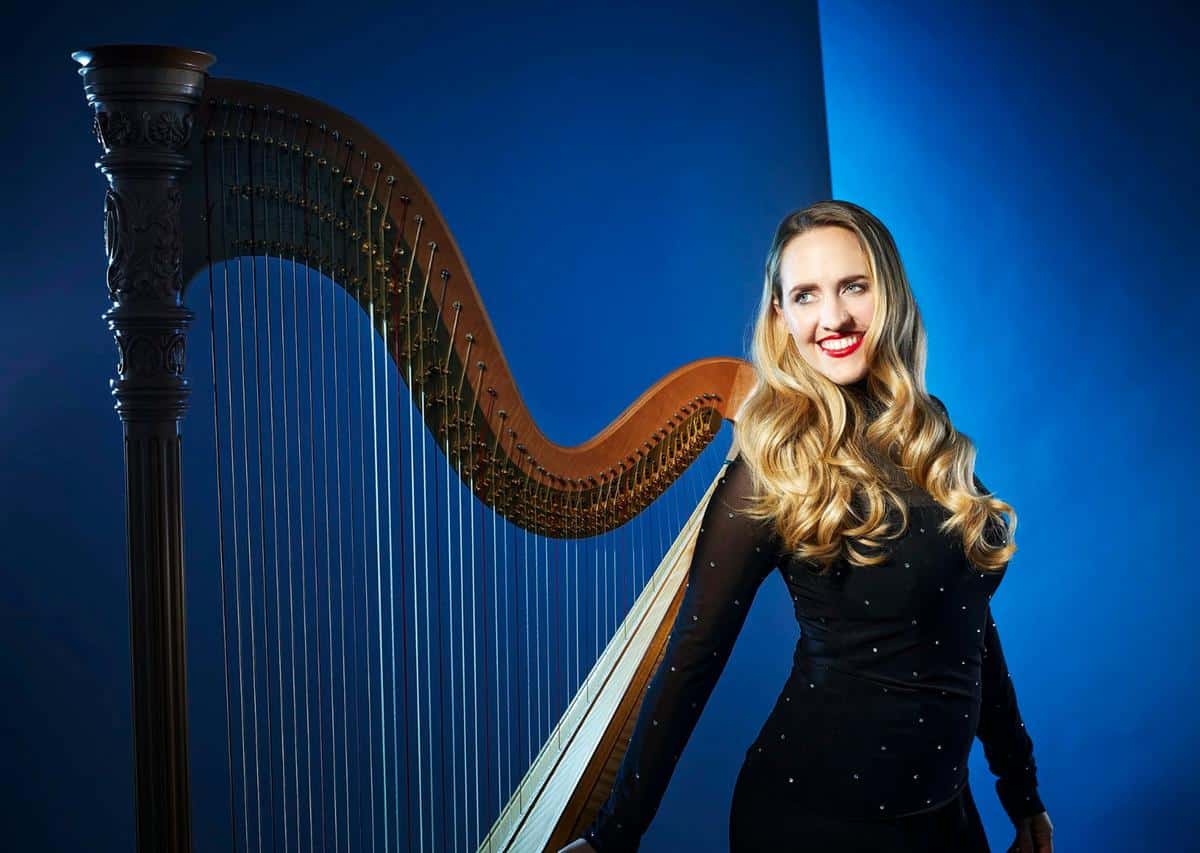
How do you describe the sheer beauty and joy of Emily Granger’s live harp performance? It’s impossible but I’ll give it a try.
There’s something otherworldly about the harp. The Lyres or Harps of Ur are the oldest surviving stringed instruments in the world. They were made of cedar, boxwood, gold, silver and lapis lazuli. Four and a half thousand years later, the classical harp that Emily borrowed for the evening is still a work of art, crafted from wood, decorated with gold.
If you close your eyes, you can picture yourself as part of tradition that has survived since ancient Mesopotamia and Egypt, evolving through the feasting halls of Ireland and Scotland’s Celtic chiefs, to the Royal palaces of France and Italy.
Nothing will ever replace the wonder and magic of being there, in the room, with a world-class musician, holding an audience enraptured.
In movies, the purity of harp music can be heartbreaking. You feel like you’re holding your breath, like the world is somehow spinning more slowly.
The delicate sounds of the harp defy words and conjure feelings and images, like a magic spell.
I found myself imaging a tiny child, wearing a princess dress and a pair of dress-up fairy wings, running barefoot through soft wet grass, gumboots in hand, after a rain spell. I wondered what everyone else in the audience was feeling or seeing in their mind’s eye.
As Emily said, “I hope with everything going on in the world, that this music makes you feel a little lighter.”
Emily’s new album, “A Thing Of Beauty,” is an absolute delight. It’s a wonderful treasure house full of new compositions, and we were blessed to have four of the composers sitting alongside us in the Sydney Opera House’s Utzon Room.
The evening’s performance sparkled with new music including “Emily’s Suite,” composed by Alice Chance, and “sanddollar,” composed by Sarah Elise Thompson. We journeyed from reminiscences of winters’ past to Californian beaches, from Christina Rossetti’s poetry to lullabies gifted to newborn babies.
Granger is a warm and natural performer, telling us little personal stories of visiting the tiny village of Karoola in Tasmania. She recited poet Hilary Burden’s four Karoola Seasons haikus; Spring, Summer, Autumn, and Winter, and played the four harp pieces they inspired, composed by Christina Sonnemann Baehr.
Granger’s versatility and talent are matched by her devotion to music. Her new album, “A Thing Of Beauty,” is full of new harp music that she has commissioned, creating incredible opportunities for contemporary composers.
As Emily told the audience, “I believe in creating a little happiness every day.”
Emily Granger’s new album, ‘A Thing Of Beauty,’ released through ABC Classic, is now available on CD and streaming. https://www.abc.net.au/listen/classic/shop/emily-granger-a-thing-of-beauty/106866470
You can find Emily Granger online at: https://emilygranger.com/