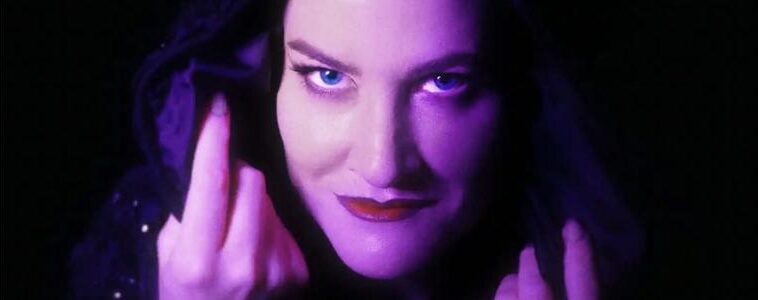
Acoco Premiere Emma O’halloran’s Explosive, Grammy-nominated, Double-bill Mary Motorhead & Trade At The Malthouse

Feature-Mary Motorhead & Trade

It’s Double Vision! ACOCO brings Irish composer Emma O’Halloran’s Explosive New Operas to Melbourne. Australian Contemporary Opera Co. (ACOCO) will present the Australian premiere of Emma O’Halloran’s acclaimed chamber operas Mary Motorhead and Trade in the Beckett Theatre at The Malthouse in March 2026. Opening on Friday 6 March, this major double-bill unites two arresting human dramas, helmed by leading Australian artists Emily Edmonds (Mary Motorhead) and Christopher Hillier (Older Man in Trade). Tickets go on sale from 17 December 2025 through the Malthouse Box Office.

“Giving local audiences and artists direct access to brilliant contemporary opera being made in the world today, these Irish works tackle difficult, relatable human characters with raw honesty and thrilling musical invention.” Said Linda Thompson AM, Artistic Director & CEO, The Australian Contemporary Opera Company. “They speak to the same belief that has shaped ACOCO from the beginning – that opera can [still] hold a mirror to society, challenge us, and create profound empathy in a way no other art form can.”

In Mary Motorhead, audiences are thrust into the fierce interior world of a woman imprisoned for a violent act, her story unraveling through volatile, lyrical confessions. Trade explores a charged encounter in a motel room between a middle-aged man and an eighteen-year-old – both outwardly conventional; privately grappling with desire and identity.

Together, the works form an electrifying pairing that has captivated audiences in New York, Los Angeles, and Ireland, with their psychological depth, rhythmic energy, and daring composition. Grammy-nominated Irish conductor Elaine Kelly will make her Australian debut, having conducted the works’ world premiere in New York and subsequent international seasons in Los Angeles and Ireland.

As the arts continue to navigate uncertainty, ACOCO reaffirms its place at the forefront of contemporary opera in this country – embracing bold new works that mirror the intensity and complexity of modern life. Based in Melbourne, ACOCO draws its artists from across Australia, and has built a reputation for producing fearless, boundary-pushing opera that gives voice to living composers and resonates deeply with both established and new opera audiences.

In presenting Emma O’Halloran’s fierce and vital opera-theatre, ACOCO invites audiences to confront the beauty, pain, and truth of the human condition. These two operas mark not only a landmark debut for ACOCO’s 2026 season, but a bold statement about the power of modern opera to speak to our times. Through Emma O’Halloran’s incisive and compelling opera-theatre, ACOCO invites audiences to reflect on the beauty, pain, and complexity of being human. ACOCO opening its 2026 season with a resonant statement on the immediacy and relevance of opera today.

Tickets on sale now. More information visit https://www.acoco.org.au/.

Spread the word on your favourite platform!

Opera For The Uninformed: In The Presence of Light

In The Presence of Light

In The Presence of Light Rating

Click if you liked this article

There’s something rather intimate about being invited to a dress rehearsal of a show. The creatives are milling around you buzzing in nervous excitement. The show is still in bits and pieces on the floor, not yet solid. The world they’ve created is in its teenagehood — not infant in its conceptualism, but not yet fully grown. You feel much like a wildlife photographer, sitting, observing, noticing, but still distinctly on the outside; our presence as critics is both cruelly invasive and fundamentally necessary. In The Presence of Light was my first dress rehearsal invitation, and it offered me entirely new parts of the critic’s experience. Principally, I got to feel how the show was actively coming together around me, and I got to ask a little about what I was walking into.

Spark Sanders-Robinson, creative-lead and the only live speaking (and singing) voice says, when I confess to her I have no experience writing for opera, that this experience is “opera for the uninformed” — that is, it is an operatic experience for those who don’t want to be spoken down to, but instead connected with. She tells me the experience is a deliberation of love, an exploration of what it is in its truest form, instead it being trapped within the bonds of the human experience.

“It’s about death,” she says, then, when Mia Rashid, their dancer prompts, “is it about death?” she responds, “no. It’s about love.” I am, admittedly, prepared for the experience to be completely incomprehensible after this conversation. I have never been so glad to be proven right.

We are tucked into the M2 Gallery in Surry Hills — an itty bitty space, unconventional, echoey, with what almost looks like a frame surrounding the elevated platform this team is using as a stage. The “stage” is bare, ‘cept for a white sheet at the back. Robinson wears a flowy, airy, blue wrap dress — which, with Rashid’s simple white tulle, almost shapeless dress, creates an eerie dreamlike atmosphere, allowing them to become one with the space around them. The space itself is generally unsupportive, and I look up to the ceiling to see what they will do with lighting, because there’s certainly no view-blocking from-home lights milling about. On the floor, there sits a singular projector, surrounded by indistinguishable frames I don’t yet understand. Nathaniel Kong joins us in the room, sits behind the piano.

I ask, upon finding out that Robinson and Rashid will be the only two interacting on stage: “is it a two-hander?” Robinson responds, “kinda a two-hander. Unless you count the piano as a third character.”

We begin.

Recorded responses from what must be over ten or fifteen people fill the room with their overlapping responses, talking about what it is that they love. Although each answer is interesting and beautiful, we cannot catch a single one as they become jumbled and chaotic. Robinson takes the stage and the glow of her projector light snaps on as she begins to talk to the audience (me and their photographer, mind you) about what she defines as love. Or rather, how difficult she finds love to define. She leaves us on a rumination about the use of defining it at all, and the lights go out. Rashid replaces her on stage, taking us through the first of many classical pieces of music in the show. Her movements are wide and grounded, translating the impossible hugeness of love, what it is as a force of nature. Then, as she connects to its fragility and its grief, they go miniscule and wineglass-thin in turn.

Robinson is generally well-known for her use and manipulation of light, no different in this production. Indeed, what makes this light work so interesting across Robinson’s catalogue is the matter in which it interacts with itself, as well as the people on stage. As Rashid becomes something more human, she catches and releases the light in her hand, and love goes from being something that possesses and consumes her, to something akin to hope, a slight glimmer. Different frames of colour over the projector take us from softer yellows, to bright, high-contrast whites that throw sharp, dangerous shadows behind Robinson. Then, as our dancer rejoins us, she is bathed in a pink light that makes her almost inhuman. It is at this moment I understand the deliberation about the piano. Kong and Rashid seem to not just legitimately communicate, but have entire conversations through the call and response of music and dance. Later, when Robinson’s mezzo-soprano rings out through the almost-empty room, I remember this relationship in its more traditional form as the opera and the orchestra interact, representing entire sections through these two individuals.


As a production, I cannot tell you that there was an overlapping narrative to this piece. Rather, it functioned as a series of images, more performance art or a film sequence than a piece of theatre. In one moment, shadow puppets creep over the projector, two faces in profile, then meet in the middle for a kiss. Rashid collapses in between them, bathed in, yet shadowed by their love. To that point, the piece doesn’t attempt to ask or answer something, it invites you to feel the full scope of an emotive experience in all its beauty and wickedness. The performers are all viscerally facing something through their chosen art form, and the size of the space as well as the passion of their performances makes the whole experience incredibly intimate. In Rashid’s rare moments of pause, we can hear the heaving of her breath. In between Robinson’s clear notes, we can feel the sound still bouncing around the room. The body-ness of it all provides us with the raw erotic lens of their conversation.

In a technique I’ve certainly never seen before, a glass bowl is placed over the projector, and Robinson and Rashid take turns dripping water, oil, and ink into it, throwing curling and whispering colour across the stage, bleeding and changing the light. As both performers are in white or almost-white, these moments of colours stain not just the background, but them as well. In one particularly effective moment, an explosion of purples appear across Robinson’s body on stage, as ink is dripped into the centre of the bowl.

In many ways, our fourth character is the continued reappearance of the voices. Although jumbled and confusing through the beginning, they spread out and become clearer. We listen to them talk about their lived experience of love, of grief, of heartbreak, of redemption, of life. This tether of realism affirms the path of images we tiptoe through, as well as providing an edge of human vulnerability to the piece that can sometimes escape a performer.

Although I was invited to the dress rehearsal, I must briefly play the part of the wicked critic and remind the world that no art can be perfect. Indeed, the performance as a whole was brilliant, and my only moments of nitpicking are as follows. Robinson, despite being an incredible mezzo-soprano and having strong monologues, has moments of struggling to sit in her body and relaxing. This, when compared with how viscerally one must be in their body as a dancer, is thrown into rather sharp contrast next to Rashid. Further, each of the three performers had moments of sneaking worried glances at one another, which although can be understood as working through the anxieties and uncertainties of dress rehearsal, manifested as drops in concentration through the show. However, other than this, I truly cannot fault anything else. The light work was inspired and beautifully done; Robinson’s performance both as an actor and a singer was beautiful;, Rashid took my breath away as a dancer; and Kong brought old music to new light through his work on the piano. The last moments of the show, a Joni Mitchell cover, floated through the more conceptual work of the rest of the piece and touched base with the audience, giving us a tether to hold onto even as the stage swan with an iris of pink spinning light.

In a topic so broad and difficult to fathom such as love, sometimes connecting to the conceptual and visual serves the explorative process more than the grounded and naturalistic ever could. In The Presence of Light shows its audience that the emotional experience is not a logical one, but a visual and physical one, and if we can embrace letting go of our need to understand, we, ironically, come much closer to knowing what that emotion truly is. The team, in this tucked away gallery, have in a way presented something that matched my early anxieties of being incomprehensible. But then, can’t we say the same thing about love itself?

To book tickets to In The Presence of Light , please visit https://www.lightsontheatre.com/.

Photographer: Samuel Herriman

Spread the word on your favourite platform!

A Masterpiece of Music and Theatre: The Hunchback of Notre Dame

The Hunchback Of Notre Dame

The Hunchback Of Notre Dame Rating

Click if you liked this article

14

The Hunchback Of Notre Dame Musical is now one of my all-time favourite musicals thanks to The Hills Musical Theatre Company. I absolutely loved this powerful production, held at Model Farms High School Auditorium in Baulkham Hills, and thoroughly enjoyed the laid-back cabaret seating with BYO drinks and snacks. Luke Derrick has executed outstanding direction in this fabulous musical, ably assisted by Hannah Aouchan, Assistant Director, along with superb musical direction by Peter Thornton and Gabrielle Lanham. The entire orchestra needs a special mention for animating this magnificent musical score with impeccable professionalism. The music is all-encompassing and written to tingle every nerve and fibre in your body. Notably, a very challenging score, but The Hills Musical Theatre Company triumphed in every aspect.

The absolute shining star, Quasimodo, was played by the brilliant Andrew Schwimmer. Schwimmer blew me away with his one-of-a-kind vocals and held me captive throughout his incredible performance. Schwimmer’s performance was a delight to behold and I don’t believe a better Quasimodo could be found worldwide. The star leading lady, Aya Adel, was resplendent in her role as Esmerelda. She was reminiscent of a Disney Princess. I found her performance thoroughly engaging and sincere. Wonderful singing, fabulous dance movement, and Adel showed strong conviction to her boldly defiant character.


Dom Claude Frollo was presented by Simon Buchner, who oozed this villainous character with the greatest of sincerity. Buchner’s dedication to his challenging character was steadfast and believable. In contrast, there was the heroic, earnest, and charismatic Captain Phoebus De Martin, who was played by Lenard Chang. Chang conveyed a splendid rendition of his role, charming the audience throughout the show.

The leader of the Gypsies, Clopin Trouillefou, is brought to life by James Waters. Waters injected fathomless spirit and energy into this complex, multifaceted role and delivered a polished and engaging performance.

The enormous ensemble and choir were absolutely brilliant. From start to finish, they exuberated enthusiasm and steadfast dedication. Their harmonies sounded fittingly ethereal and lines were delivered with clear enunciation. The choreography for the ensemble was executed with neat precision and their commitment was unwavering. The choreography by Emily Taylor was perfectly appropriate—simple and impactful, utilising resonating repetition that beautifully enhanced poignant moments.

The Hunchback Of Notre Dame Musical encompasses a stellar professional cast and is definitely one you don’t want to miss. The musical score is phenomenal and the story is as powerful today as ever. Seriously, this production leaves the Disney rendition for dead. Do not miss your chance to see this fabulous performance by The Hills Musical Theatre Company.

To book tickets to The Hunchback Of Notre Dame , please visit https://hmtc.sales.ticketsearch.com/sales/salesevent/153157.

Photographer: Grant Leslie Photography

Spread the word on your favourite platform!

The Old Maid, The Thief, The Telephone

The Old Maid, The Thief, The Telephone

The Old Maid, The Thief, The Telephone Rating

Click if you liked this article

1

Mopoke Theatre Productions, an Adelaide-based independent theatre company’s presentation of ‘The Old Maid and the Thief, and the Telephone’, is light-hearted and entertaining.

The show opens with The Telephone, an amusing sketch about the hapless Ben (Nicholas Cannon), trying desperately to get a few moments undisturbed with his beautiful girlfriend Lucy (Jessica Mills) so he can propose to her. Awkwardly, Ben just cannot seem to get a word in because Lucy is constantly on the telephone gossiping with her friends. Running late to catch a train, every time Ben is about to nervously pop the question, the phone rings, and once again Lucy is happily chatting and gossiping with a friend on the other end of the annoying contraption. Finally, Ben decides the only solution is to leave the apartment and call Lucy on the telephone. This brilliant idea works, and Lucy is delighted to get the proposal and of course, says yes, making Ben a happy man.

It’s hard to imagine a funny comedy sketch as an opera, but that is what the Telephone is. Jessica (soprano) and Nicholas (Baritone) keep the banter moving with delightful humour, making the audience chuckle along the way.

Returning after twelve years, The Old Maid and the Thief was the first show from Mopoke Theatre Productions’ early beginnings. Laetitia (Jessica Mills) who works at the home of lonely spinster, Miss Todd (Catriona Barr), brings a charming stranger, Bob (Macintyre Howie-Reeves) into Miss Todds home. Bob, a drifter just passing through, infatuates Laetitia and so she persuades Miss Todd to let him stay.

The local gossip, Miss Pinkerton (Rachel McCall) pays a visit with disturbing news that an escaped prisoner, who’s description sounds very much like Bob, is at large somewhere in the area. Miss Todd, already under Bob’s charming spell, ignores the similarities, and lets Bob continue to laze around the house, taking advantage of Miss Todd’s hospitality.

To keep up with Bod’s appetite for liquor, Miss Todd and Laetitia begin stealing from the local liquor store, oddly making them thieves in the process. Miss Todd realises what she has done, embarrassed she confronts Bob and tells him to leave. Bob leaves with Laetitia, leaving Miss Todd alone, to face the consequence of what has happened.

The combined singing talent of Catriona Barr (mezzo soprano) Rachel McCall (mezzo soprano), Jessica Mills (Soprano) Macintyre Howie-Reeves (baritone) make this an enjoyable operatic experience.

Directors Nicholas Cannon and Macintyre Howie-Reeves, Musical Directors Sachiko Hidaka and Penelope Cashman, Set and Costume Designer James Nicholson and Lighting Designer and Technician Tom Hannagan work together to bring the fantastic production to life.

This is a great production, sung in English, and a good choice for first-time opera attendees. My daughter joined me for this production, and it was her first time at an opera, and she was surprised how much she enjoyed it. It’s exciting to watch a show that is locally produced, featuring local talent. A thoroughly enjoyable experience.

The State Opera Theatre at Netley is a suitable venue, well-suited for its purpose. Easy to access with plenty of parking spaces makes for a hassle free evening out.

To book tickets to The Old Maid, The Thief, The Telephone, please visit https://www.mopoketheatreproductions.com/the-telephone-the-old-maid-and-the-thief.

Photographer: Alex Craddock

Spread the word on your favourite platform!