Menopause: The Musical

Menopause The Musical

Menopause The Musical Rating

Click if you liked this article

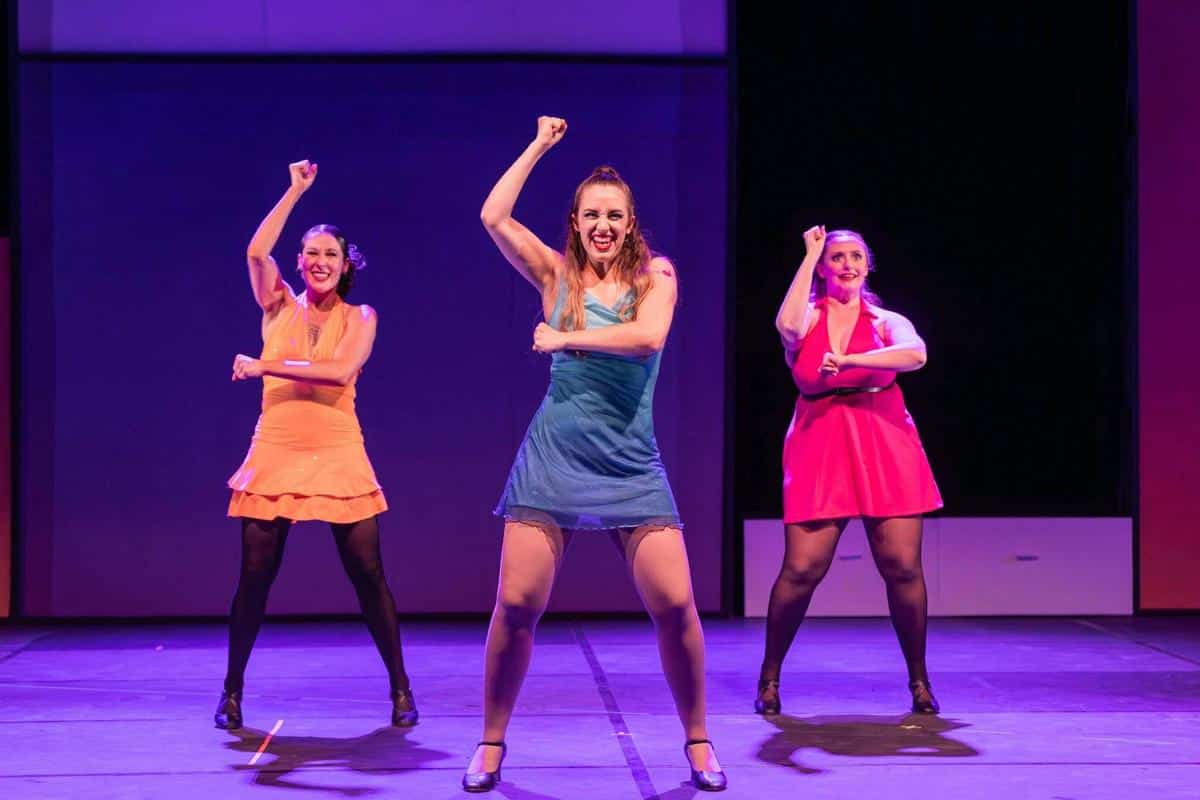
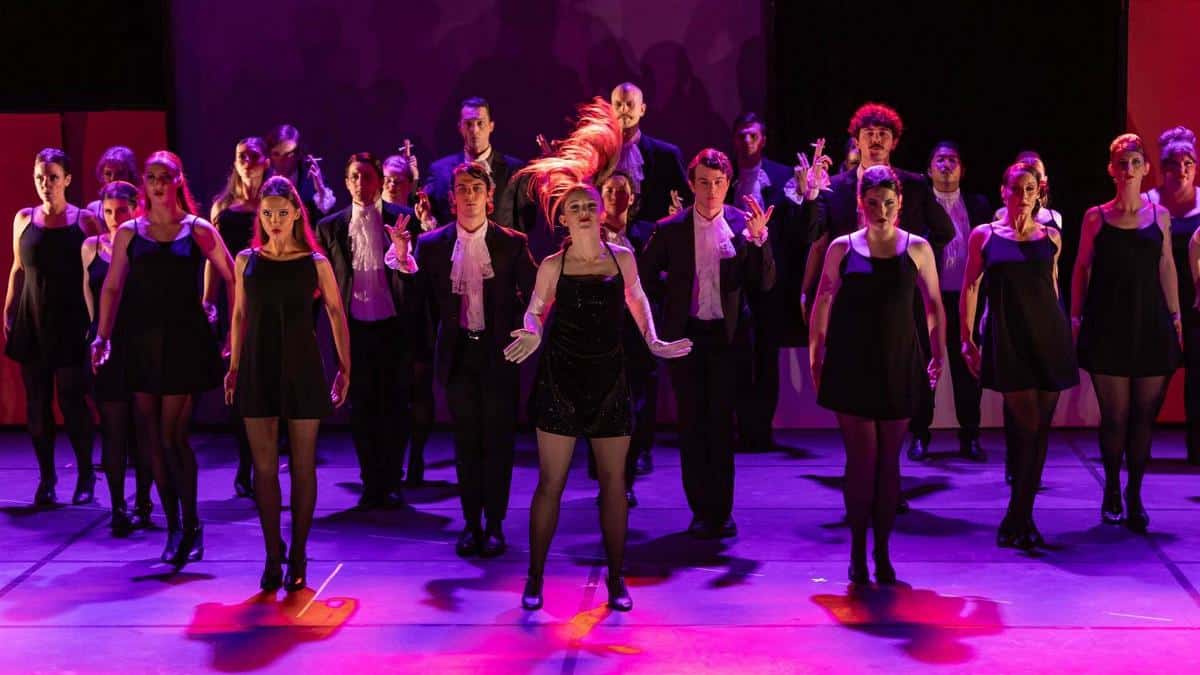
Menopause the Musical has been packing theatres around the world for more than two decades, and its Sydney season shows why. Built as a one-hour revue without interval, the show wastes no time on plot, instead linking pop classics with menopause-themed lyrics and broad comedy. It’s a format that could easily flag, but in Cameron Mitchell’s brisk staging the pace feels more like momentum than overload, sustained by four performers who never let the energy drop.

The archetypes are simple—Professional Woman, Soap Star, Housewife, Earth Mother—but the cast injects them with distinct flavour. Tara Morice, remembered by many as Fran from Strictly Ballroom, brings a real edge to her Professional Woman, most memorably when she trades businesswear for a shiny black top, skirt, and denim jacket to belt What’s Love Got to Do With It. Erika Heynatz, cast with a wink as the Soap Star given her Home and Away past, proves the standout vocalist, carrying numbers with clarity and ease. Melissa Langton’s Housewife combines warmth and honesty with gleeful broad comedy—her romp in red lingerie over her clothes is a crowd-pleasing highlight. Cherine Peck, reprising her role as Earth Mother, leans into the playfulness of the part, giving the ensemble an effervescent lift.


Christine Mutton’s costumes start in recognisable shorthand—power suit, flowing layers, domestic comfort, showbiz glam—before sliding into sillier territory. The red lingerie gag and the final sparkly outfits underline the production’s refusal to take itself too seriously while still keeping the glamour dialled up. Frances Story’s set is functional but bright, leaving space for the performers, while Jasmine Rizk’s lighting design proves versatile: bold washes carry the big numbers, but subtler effects sneak in, particularly during the hot-flash sequences where the humour lands visually as well as vocally.

The songs themselves—rewritten classics from the baby boomer songbook—are instantly familiar, and that recognition is half the joke. For an audience of “ladies of a certain age,” as the program knowingly puts it, the combination of nostalgia, camp, and shared experience is irresistible. Saturday night’s crowd responded with knowing laughter, cheers, and a standing ovation.

Menopause the Musical is not a show for subtlety or story. It’s a night of energy, glamour, and communal release. In this Sydney staging, thanks to a committed cast and slick creative team, the formula still works—and then some.

To book tickets to Menopause The Musical, please visit https://menopausethemusical.com.au/.

Photographer: David Hooley, Joel Devereux

Spread the word on your favourite platform!

The School For Scandal

The School For Scandal

The School For Scandal Rating

Click if you liked this article

4

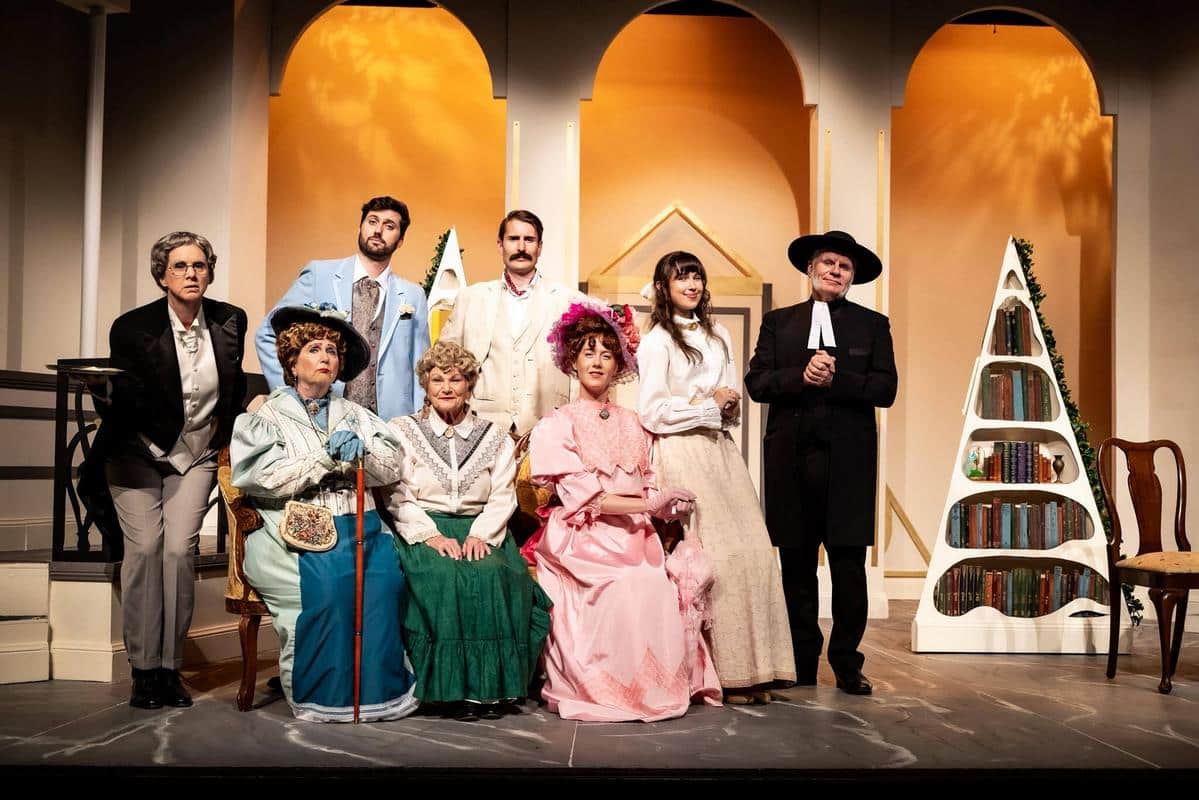
Richard Brinsley Sheridan’s The School for Scandal has endured since 1777 because its satire of gossip, hypocrisy, and vanity never goes out of fashion. Lane Cove Theatre Company’s latest production, directed by Christine Firkin, embraces that timelessness with a minimalist hand — proving that sharp performances can do far more than ornate scenery.

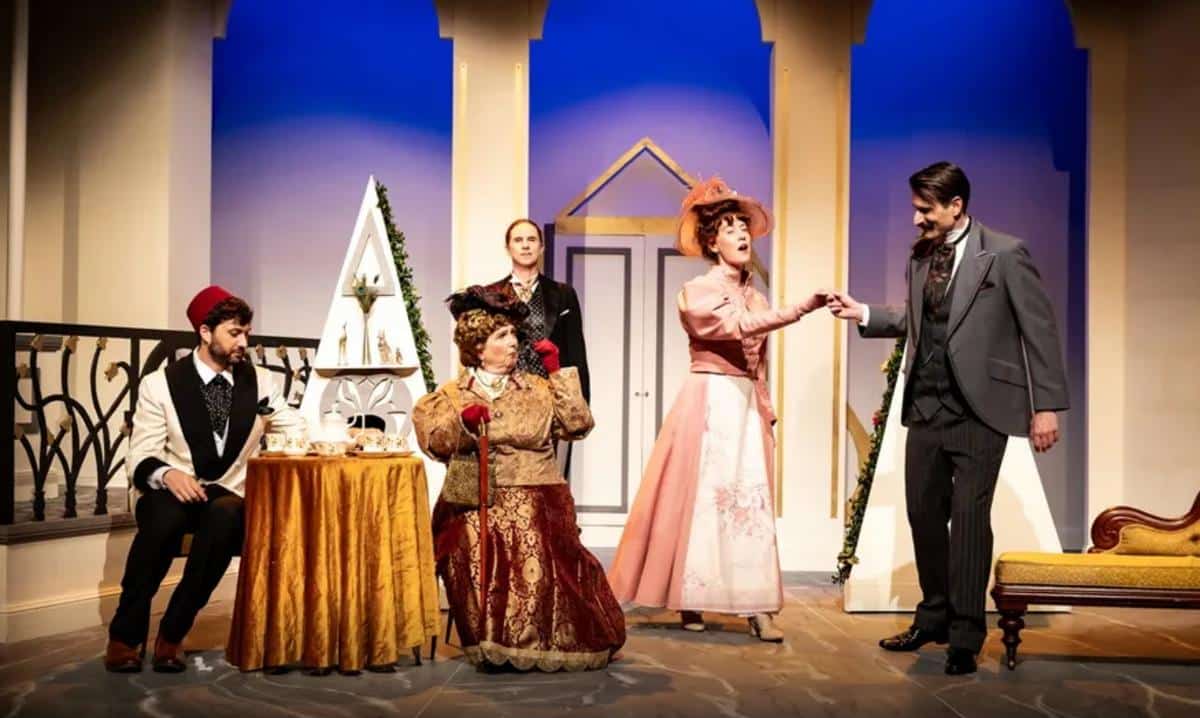
The set never shifted: chairs and a chaise lounge with a plain backdrop lit in washes of pink, purple, green, or blue to signal a change of location. Costumes were simple but distinctive, each character marked by clear colours and silhouettes so the audience could follow the action at a glance. This pared-back aesthetic threw all attention onto Sheridan’s biting wit and the players’ performances.

And what a performance it was. Daisy Cousins stood out as Lady Teazle, bringing both uproarious comic energy and subtle facial nuance; a raised eyebrow from her could puncture a scene. Samuel Chapman’s Joseph Surface matched her precision, playing the schemer with quiet menace and expressive restraint. Together, they showed how much this production relied on nuance as well as volume.


The ensemble also shone in versatility with several performers in multiple roles. Benjamin Walsh balanced rakish charm as Charles Surface with sly gossip as Crabtree. Joyce Sharma shifted nimbly between Snake’s sycophancy, Careless’s looseness, and the reimagined Lady Elizabeth Backbite, keeping each sharply distinct. Most impressive was Phillipa Coleman, moving from the eager prattle of Mrs Candour to the sober honesty of Rowley without a hint of overlap — two utterly different figures brought vividly to life.

Trent Gardiner anchored the play as Sir Peter Teazle, sparring with Cousins in exchanges that veered between exasperation and tenderness. Ciara Briggs lent Lady Sneerwell a cool edge, while Michelle Bellany gave gravitas to the adapted Lady Olivia Surface and her disguises.

Two set-pieces defined the evening. The “auction of ancestors” became a comic highlight when portraits were played by fellow cast members holding frames and I’m wigs and hats, turning satire into playful physical theatre. Later, the famous screen scene — one of Sheridan’s great inventions — was handled with zest: Joseph frantically hiding both Sir Peter in the closet and Lady Teazle behind the screen, the deception stretched to breaking point before it inevitably collapsed.

This performance of School for Scandal shows that spectacle is optional when satire is alive. With wit, inventiveness, and a company able to juggle multiple roles without missing a beat, Sheridan’s centuries-old comedy felt as fresh as ever.

To book tickets to The School For Scandal, please visit https://www.lanecovetheatrecompany.com.au/season-2025.html.

Spread the word on your favourite platform!

Aphrodite: Beauty Disassembled

Aphrodite

Aphrodite Rating

Click if you liked this article

In Sydney Chamber Opera’s Aphrodite, the act of looking becomes its own kind of violence. Composed by acclaimed American composer Nico Muhly with a libretto by Laura Lethlean, and presented in association with Omega Ensemble, this striking new work reimagines the goddess of love not as a figure of desire but as a symbol of distortion; a mirror in which the modern self dissolves.

The story follows Ava, a thoughtful academic whose book, The Aphrodite Complex, catapults her to sudden fame after being adapted into a hit documentary. As her public image grows, her personal life fractures. Ava becomes consumed by the pursuit of perfection, sculpting herself for the gaze of others while losing touch with intimacy, authenticity, and selfhood. When the goddess Aphrodite herself appears, cool, composed, and elusive, Ava’s carefully constructed world begins to collapse.

Director Alexander Berlage’s use of live video is both conceptually and theatrically masterful. Cameras flank the stage, embedded in mobile phones, and hang from the ceiling, capturing the performers in extreme close-up. These images, not just of faces but of hands, feet, clothing, trembling skin, are projected on a large screen above the stage, which simultaneously displays the libretto. What emerges is a fragmented portrait of each character: isolated body parts, captured and magnified, turned into objects of scrutiny and aesthetic judgement.

Rather than drawing the audience closer, these hyper-intimate visuals create distance. We are not watching the characters as whole people; we are dissecting them. The body becomes content. Ava becomes an image. Even her moments of vulnerability are caught, cropped, and curated. The overhead camera is particularly cruel: it frames her from above like an anatomical specimen, cold and clinical, as if the goddess herself were observing.

Jessica O’Donoghue gives a deeply affecting performance as Ava, vocally assured and emotionally transparent. Her portrayal balances intellect and fragility, making Ava’s descent into disconnection feel both inevitable and tragic. Puerto Rican soprano Meechot Marrero, in her Australian debut, brings an arresting stillness to Aphrodite. Her presence is magnetic and inscrutable, her voice radiant. She is not temptation incarnate but myth personified; unknowable, unmoved.

Muhly’s score is luminous and precise, shifting between shimmering textures and silences that seem to stretch time. The Omega Ensemble plays with clarity and control, amplifying the opera’s psychological tension without overwhelming its introspective tone.

Aphrodite is a cool, elegant gut-punch of an opera, a work that refuses sentimentality in favour of scalpel-like insight. It’s about beauty, yes, but more importantly, it’s about the cost of being seen only in parts. By disassembling its characters on screen and in sound, it delivers a quietly devastating truth: there can be no connection until we are allowed to exist as whole.

To book tickets to Aphrodite, please visit https://www.sydneychamberopera.com/2025/02/17/aphrodite/.

Photographer: Daniel Boud

Spread the word on your favourite platform!

Eureka Day

Eureka Day

Eureka Day Rating

Click if you liked this article

1

In Eureka Day, Jonathan Spector’s razor-sharp satire of liberal consensus and public health anxiety, a seemingly progressive Californian school board descends into chaos over a mumps outbreak. But what could easily become a smug send-up of anti-vaxxers and virtue-signallers is instead something more nuanced, uncomfortable, and timely. Under Craig Baldwin’s deft direction, Outhouse Theatre Co’s production at the Seymour Centre lands every comic beat while never losing sight of the emotional truths buried beneath the surface.

Although the play is distinctly American in setting, this Australian staging loses none of its relevance. The characters feel instantly recognisable, the debates all too familiar. This is a story not just about vaccines, but about what happens when our desire for clarity and reassurance collides with ambiguity, grief, and fractured trust.

Katrina Retallick is particularly compelling as Suzanne, the new age, soy latte-sipping board member whose calm certainty masks deep personal pain. She walks the tightrope between satire and sincerity with precision, making Suzanne both maddening and deeply human. When the character’s backstory is revealed, Retallick’s performance shifts into something tragic—an aching portrayal of a parent failed by the institutions she once believed in.

Jamie Oxenbould’s Don is equally affecting. The embodiment of well-meaning, moderate liberalism, Don wants nothing more than to keep everyone happy. Oxenbould captures his charm and diplomacy perfectly, but also lets us see the cracks forming under the strain of trying to appease all sides. His unravelling in the brilliantly staged Zoom scene is as funny as it is painfully relatable.

Deborah An brings a quiet strength to May, initially playing her as a reserved and observant figure. But as the stakes rise, An reveals the steel beneath the calm, delivering a performance that builds patiently to a moment of quiet triumph. Christian Charisou’s Eli enters bold and brash, full of passionate conviction, but undergoes one of the play’s most significant emotional shifts. His transformation, grounded in his role as a father, adds weight and tenderness to a character that could easily become just a mouthpiece.

As Carina, Branden Christine is a standout. Starting off as a newcomer eager not to step on toes, she grows into a voice of clarity and compassion. Her confrontation with Suzanne doesn’t just showcase moral courage, but also the empathy that gives the scene its emotional punch. Christine subtly anchors the play’s message: that we must speak up for what we believe in, but also make space to truly hear one another.

Technically, the production is sharp and inventive. The colourful, clean set provides a visual cue for the play’s early optimism, which contrasts starkly with the bleakness of the later hospital scene. The use of live projection, sound, and lighting in the Zoom sequence is a highlight—expertly timed, uproariously funny, and all too recognisable to anyone who survived the remote meeting era.

Eureka Day is a biting, intelligent, and unexpectedly moving production. Outhouse Theatre Co has created a version that speaks directly to Australian audiences, reminding us that the messiness of democracy—and of parenting—has no borders. It’s as hilarious as it is human, and well worth seeing.

To book tickets to Eureka Day, please visit https://www.seymourcentre.com/event/eureka-day/.

Photographer: Richard Farland

Spread the word on your favourite platform!