Omega Ensemble Presents: Starburst

Starburst

Starburst Rating

Click if you liked this article

2

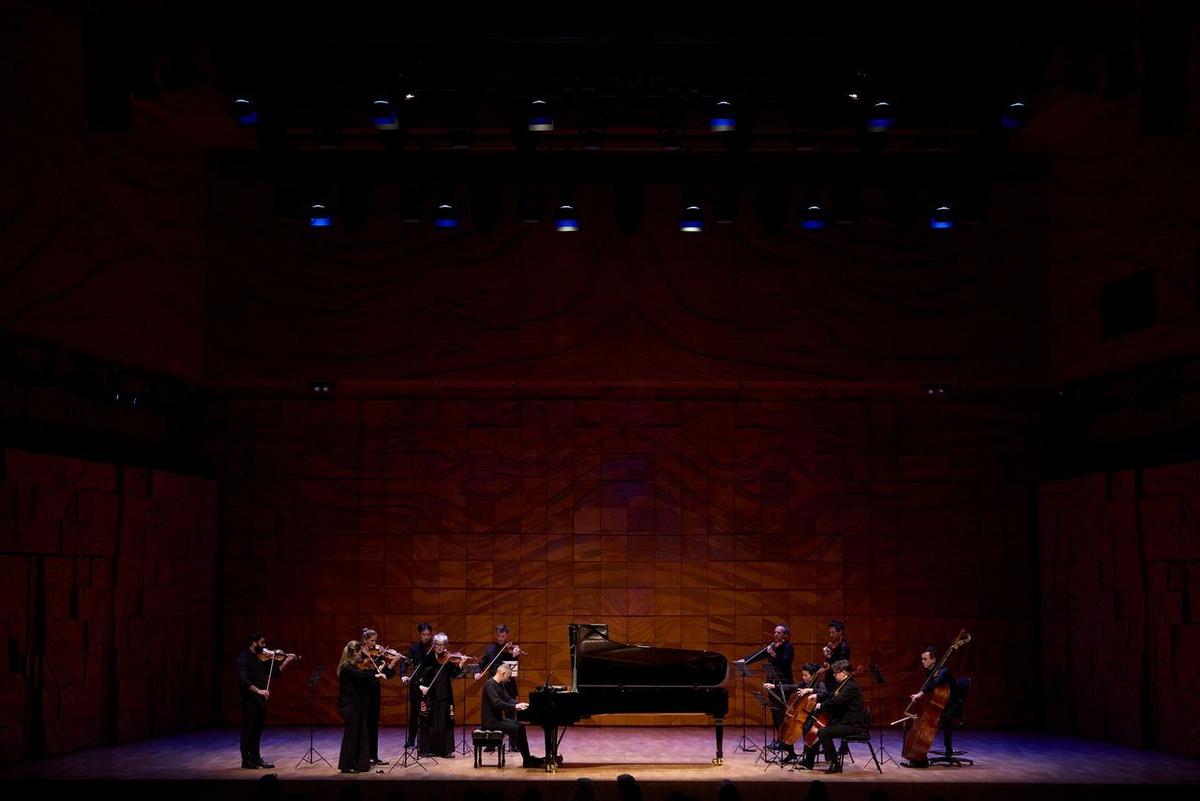
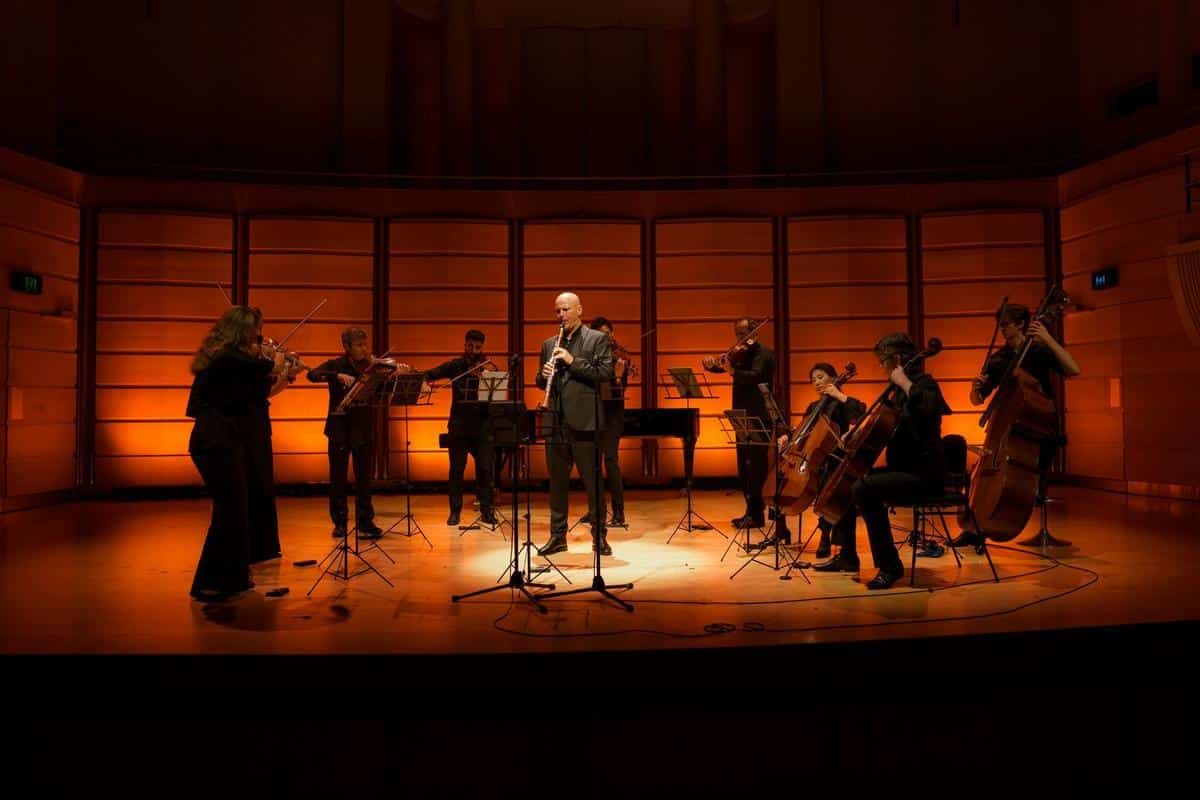
Taking place at Melbourne’s Recital Centre, ‘Starburst’ marks the start of the Omega Ensemble’s 2026 season, featuring works by four unique composers in an evening of genre-bending chamber music. The Omega Ensemble is a cornerstone of Australia’s classical music scene, and this year’s performance once again reaffirmed their reputation for pushing boundaries and delivering extraordinary musical experiences.

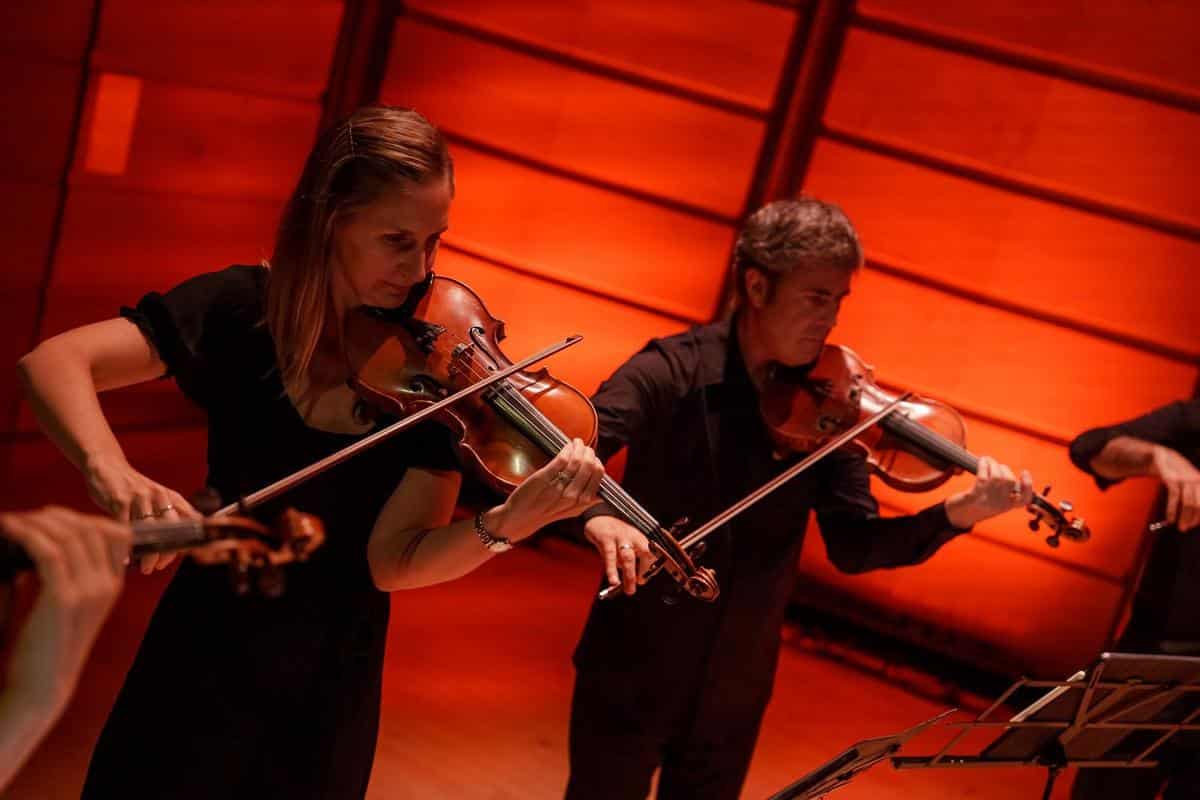
The program was nonstop from curtains up, opening with Jessie Montgomery’s punchy, experimental ‘Starburst’ and moving just as quickly into the more traditional ‘Clarinet Concerto’ by 20th century composer Gerald Finzi. The small chamber ensemble was a tight unit throughout, gliding through highly complicated pieces with cohesion and exquisite technique. Within the walls of the acoustically-optimised Elisabeth Murdoch Hall, each instrument blended together superbly and never once into the background.

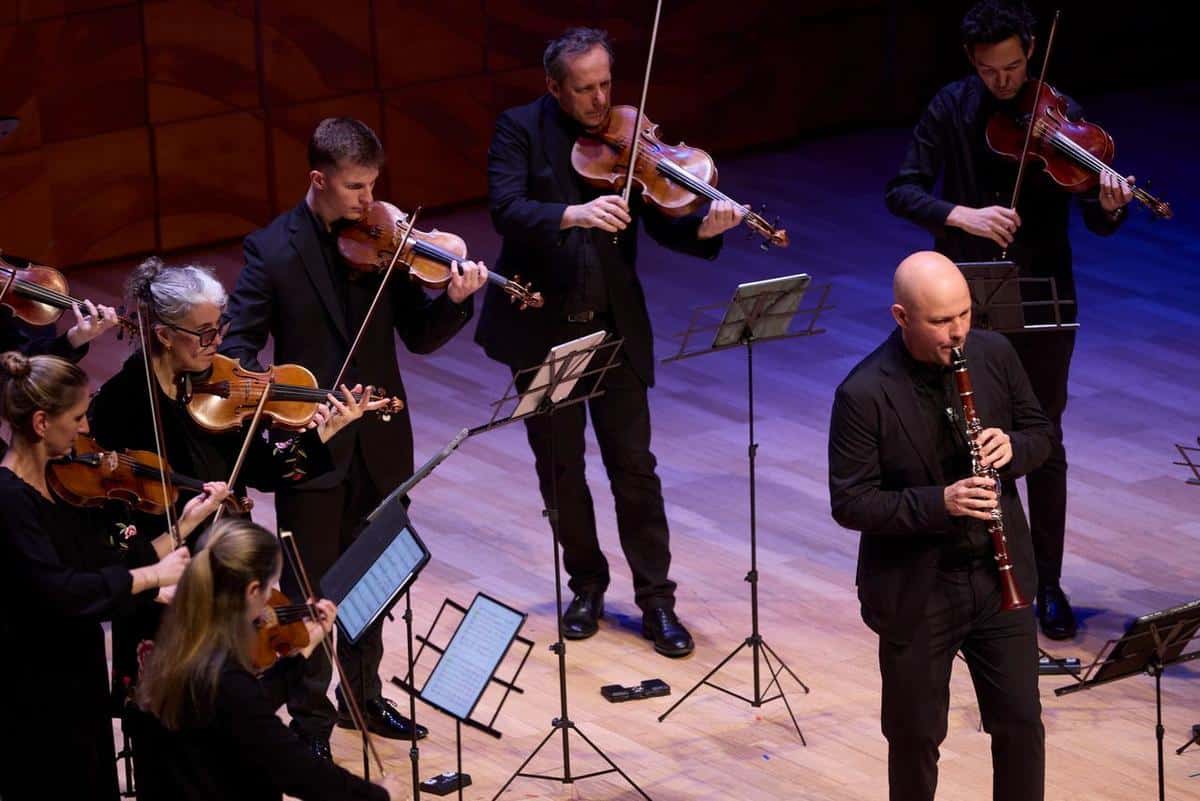
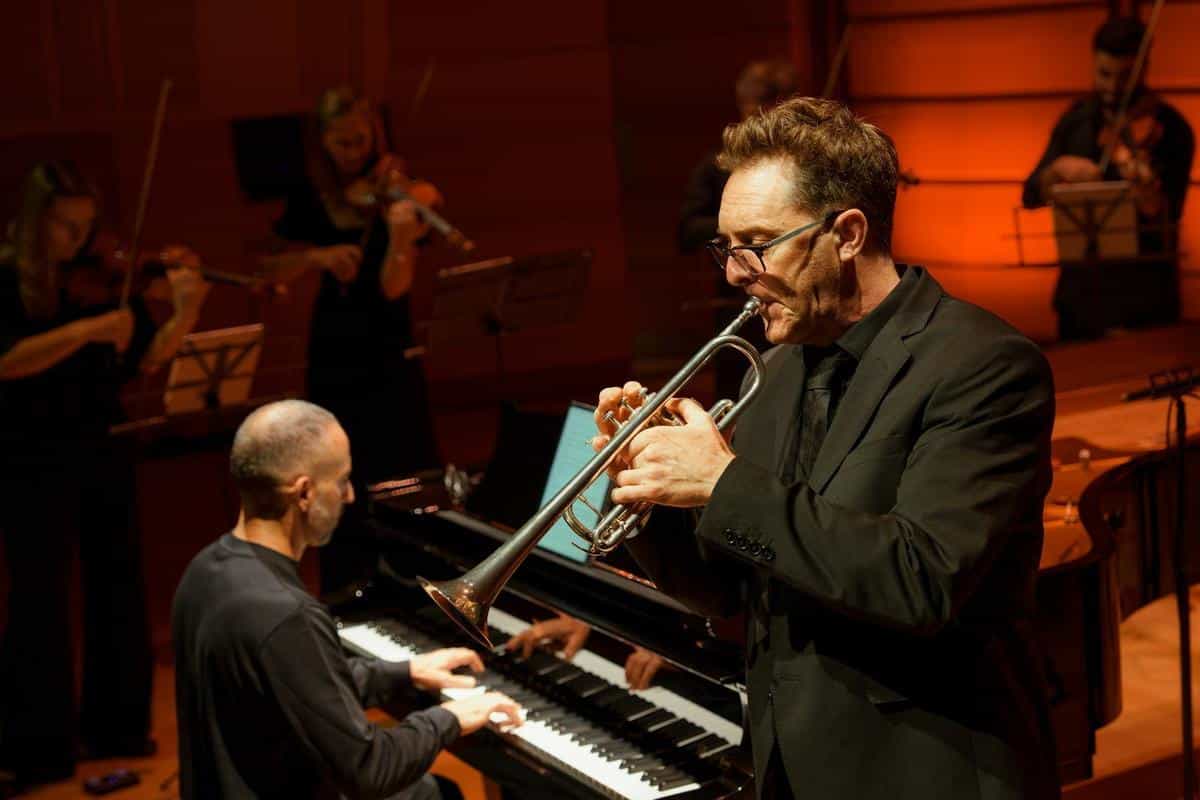
Trumpeter David Elton and clarinetist David Rowden were a pleasure to watch, from their brilliant solo performances of Finzi and Shostakovich to the world premiere of Lachlan Skipworth’s ‘A Turning Sky’, a double concerto composed specifically for Elton and Rowden. Side by side they expertly weaved together a melodic and full-bodied duet that, backed by the orchestra, completely encompassed the hall in a wash of perfect harmony. ‘A Turning Sky’ was incredibly arranged, highly detailed and masterfully performed; it was just awesome to experience original work by leading Australian composers.


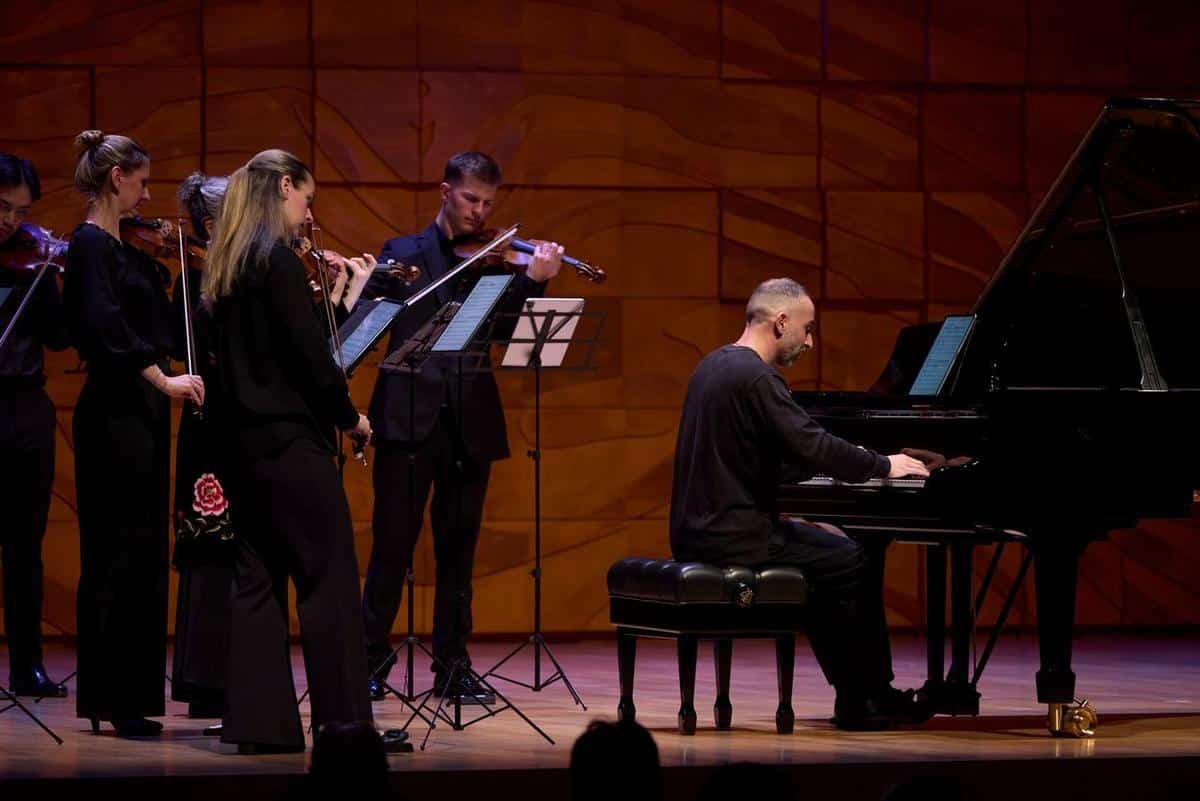
The Omega Ensemble’s rendition of Dmitri Shostakovich’s ‘Concerto No. 1 for Piano, Trumpet and Strings’ was truly something to behold and the undeniable nucleus of ‘Starburst’: an unrelenting combustion of a concerto closing with a piano solo that earned pianist Vatche Jambazian a well-deserved standing ovation. It was a physical performance as much as it was musical and Jambazian’s backbreaking playing style kept eyes pinned as he shredded on the keys like a man possessed. Shostakovich, I now know, was insane—but man, the whiplash from ominous dissonance to jolly fanfare melted my brain. I had to go listen to it again later just to be sure it was real.

‘Starburst’ featured a particular selection of composers that, while incredibly enjoyable to listen to, emphasised a deeper significance beyond music alone. In the years between what we know to be classical (then) and contemporary (now), experimental music emerged as a means of radical self-expression in times of great uncertainty, loss and discovery. The Omega Ensemble explores the space between classical and contemporary music in bursts of sound and light, connecting modernist musicians of centuries past with composers pioneering the classical genre today. Both an exchange and a collaboration, ‘Starburst’ highlights the value of artistic dialogue as a catalyst for redefining the boundaries of contemporary classical music.

‘Starburst’ has finished up its run, but you can always catch the Omega Ensemble Australia-wide all year round!

To book tickets to Starburst, please visit https://www.omegaensemble.com.au/starburst.

Photographer: Amelia Kain

Spread the word on your favourite platform!

Piotr Anderszewski

Piotr Anderszewski (Musica Viva Australia)

Piotr Anderszewski (Musica Viva Australia) Rating

Click if you liked this article

Some concerts creep up on you. Others announce themselves with force. Piotr Anderszewski’s recital at Melbourne Recital Centre did something rarer. It invited us in with quiet confidence and then held the entire room completely still. It was the kind of night that reminds you why we gather in concert halls instead of sitting at home scrolling through recordings.

The program opened with twelve pieces selected from Brahms’ late piano works Opp. 116 to 119. These miniatures can feel introspective, even private, but Anderszewski treated them like a conversation he was having directly with us. Nothing about his playing felt unconsidered. Every shift in colour had purpose. Every pause had weight. There was virtuosity here but it was the kind that draws you closer rather than pushing you back. The hall was silent enough (save for the single phone ringing that, I swear, brought a subtle shake of the head from the pianist) to hear the softest phrases land like thoughts forming in real time.

After interval came Bach. Anderszewski delivered the Prelude and Fugue in E major BWV 878 and the Prelude and Fugue in G sharp minor BWV 887 with a clarity that never tipped into dryness. He let the melodic lines speak with a simplicity that suited the space. Elisabeth Murdoch Hall has the kind of acoustic that wraps a performer in a warm glow without smudging the detail. It felt made for this music.


Then came one of the loveliest theatrical touches of the evening. Without any break or invitation for applause, Anderszewski slipped straight into Beethoven’s Sonata No. 31 in A flat major Op. 110. You could feel the audience catch on one by one. A tiny ripple of realisation moved through the hall.  It was clever and charming and made the transition feel like part of the storytelling rather than a reset.

His Beethoven had an almost improvisatory quality. Not loose for the sake of it but alive to the moment. Dynamic shifts surprised us yet always connected to the emotional flow of the work. The Arioso dolente was especially moving and the fugue grew with a kind of quiet determination that suited Anderszewski’s understated presence at the keyboard. Nothing was showy beyond necessity. Everything was honest and heartfelt.

Two encores followed after an eruption of applause at the end of the evening. The first felt like a warm nod to the audience and the final encore offered a gentle send off. A perfect ending.

Musica Viva deserves real credit for bringing this artist to Australia and for programming a recital that felt both rare and completely right for this venue. Elisabeth Murdoch Hall remains one of the great gifts to Melbourne audiences. Nights like this prove it.

To book tickets to Piotr Anderszewski (Musica Viva Australia), please visit https://www.musicaviva.com.au/concert-season/past-seasons/concerts-2025/piotr-anderszewski/.

Photographer: Claudio Raschella

Spread the word on your favourite platform!

How Classical Music Can Feel Modern And Accessible

Elevator Music

Elevator Music Rating

Click if you liked this article

The Omega Ensemble’s Elevator Music, consisted of Anna Clyne’s Stride, Gaeme Koehne’s Dances on the Edge of Time and Aaron Copland’s Clarient Concerto. The concert was deliciously familiar and heart-warming. In particular Koehne’s work sampled familiar melodies, acting as a postmodern classical music DJ of sorts. The lively and energetic ensemble wove both old and new classical music, bringing to life a new and harmonic story through sound. The music was postmodernist and playful, referencing and recycling beloved melodies. The clarinet soloists (Michael Collins and David Rowden) pression and control, particularly their purity of tone in the upper registers, exhibited a mastery of the clarinets transition between registers.

The first piece began with, what seemed to me, crisp personality and warmth, benefitting from the expressive first violin, Véronque Serret. The music continued ominously and atmospherically, effectively building tension and my anxiety (as I assume the composer intended). The piece felt like story telling through sound, a fearsome loathsome tale that swiftly transitioned from hopeful to fearful. The tone was clearly conveyed in a way that listeners unfamiliar with classical music could feel and understand.


Dances on the Edge of Time introduced the two clarinet soloists, Michael Collins and David Rowden (also the artistic director). The clarinets ushered in a warmth and airy lightness. This was mirrored in the addition of the piano (Vatche Jambazian). In this piece the two clarinets blended deliciously with a foundation of sound built by the orchestra. All the musicians were playing and toying not just with sound, but volume too, which drew out swirling emotions from the audience. Koehne’s work continued to be heart warmingly nostalgic, as intended, the program noted that Koehne prefers warmth, clarity and lyricism over “the cliched angst and ponderousness of so much ‘respectable’ new music.” I tend to agree, and found the soulful, thoughtful and playful music, particularly the call and response from the clarinet soloists, to be moving and enjoyable. Koehnes orchestration is at times reminiscent of ravel’s colouristic effects

The Clarinet Concerto began slowly and gently, guided by the harmonic direction of Michael Collins. The piece was played as hopeful and dreamy, and produced feelings of wistfulness within me. I was brought along a journey that the artists wanted the audience to follow, it was twisting path of beauty and cool breezes. This piece continued, picking up speed and energy, with an ominous shift in orchestration and accompaniment. The clarinet soloists, however, continued with a light and energetic harmony, containing more call and response weaving in well-known classical melodies to the modern music. The piece continued with the whimsy highlighted by the double bases (Adrian Whitehall and Jacques Emery), powerfully building and breaking the tension of the music.

The concert ended with a surprise encore and world premiere of a reworked (for two clarinet soloists) piece called Ornamental Air. The encore began with a sense of urgency from entire orchestra. This piece continued with the playfulness of the previous works. The clarinets were delicately and deliberately light and harmonious. It was a delightful end to a lovely evening of music that moved me, and took me along a journey through my mind.

To book tickets to Elevator Music, please visit https://www.melbournerecital.com.au/whats-on/current-productions/omega-ensemble-elevator-music.

Photographer: Eloise Coomber

Spread the word on your favourite platform!

Review: The Central Australian Aboriginal Women’s Choir

Central Australian Aboriginal Women's Choir

The Central Australian Aboriginal Women’s Choir Rating

Click if you liked this article

8

“Try connection, try love, try understanding: it will fill your hearts with joy and change your life!” This plea from the heart of Morris Stuart, Artistic Director of the Central Australian Aboriginal Women’s Choir (CAAWC), could be the catchcry of this unique ensemble. The values of connection, love and understanding underpin the choir’s history and allowed two seemingly disparate cultures to find a common ground in singing.  German Lutherans arrived in Hermannsburg/Ntaria, NT, in 1877 bringing hymns of faith. They collaborated with Western Arrarnta people to the translate the hymns into Western Arrarnta language. The old musical form from overseas merged with the old language of the interior, and both were preserved in a new form by four generations of Western Arrarnta women, some of whom are singing in the choir today.

The significance of this preservation, particularly for a threatened Aboriginal language, is revealed in Naina Sen’s documentary “The Songkeepers” (2017), available on SBS, which followed the CAAWC’s 2015 journey to Germany to sing sometimes forgotten hymns to the churches that originally sent them, in the languages of Western Arrarnta and Pitjantjatjara 140 years later.

The CAAWC performed at the Melbourne Recital Centre on Sunday 23rd March to a very supportive audience. The choir of 25 members (including four men) have a very distinct sound due to the thick, guttural, nasal quality that is the preferred vocal timbre of Aboriginal musicians. The hymn arrangements from the time of Bach to early Romantic period take on a new life with this tonal quality and use of Central Australian Aboriginal languages. Every song was infused with joy and there was an artlessness about the performance that engaged me in its honesty.

Most of the sacred songs were Lutheran hymns with lyrics translated into Western Arrarnta or Pitjantjatjara. With Aboriginal languages increasingly endangered, this choir and its members are living history. To be able to sing for us in their first language is a privilege that has had to be fought for. It is a continuing conversation about culture and language preservation that the choir invites us to have. Artistic Director, Morris Stuart, reminded us that Areyonga/Utju’s 50 years of bilingual education program in the NT had to be fought for, even to the point of involving the Human Right’s Commission.

I was particularly interested the two sacred songs in the repertoire that were original compositions. One was written in 1921 by Western Arrarnta elders, Moses Tjalkapurta and Johannes Ntjalka in the style of a traditional ceremonial chant (3- line chant) with modern harmonic elements. Some of the choir members are their descendants.

The other original song was “Godanya” written by Carolyn Windy, her niece  Petrina Windy (both choir members) and Adelaidean Holly Webb. It celebrates the Holy Trinity – God the Father, Son and Holy Spirit. To me this song was the highlight of the evening. The influence of hymn was there in its strophic form and diatonic harmony. However, the synergy of words and melody was remarkably seamless and the simple homophonic texture gradually grew into a wall of sound, unified and balanced, with no unnecessary movement. There was a power in its compositional simplicity that moved me. The choir was particularly of one voice in this song – my guess is that it must be one of their favourites – like one person breathing. In a later conversation with Morris Stuart, he agreed that it is the choir’s “tour de force”. It is more original songs like this that I look forward to hearing in the future.

Apart from the early Romantic style hymns and original sacred songs, we were treated to a Bach Chorale conducted by teacher, linguist and author, David Roennfeldt, as well as two German rounds with Western Arrarnta lyrics by Lily Roennfeldt.

There was also a short set of three more familiar songs which were beautifully supported by collborative pianist, Marten Visser. The audience were taught Western Arrarnta words to Kumbayah and invited to sing along. Waltzing Matilda showcased the choir’s storytelling ability and humour. But the most memorable was “We Are Australian”, sung in Western Arrarnta language. We were invited to simultaneously sing the last chorus in English and the connection between choir and audience was palpable. We rose to our feet to give a heartfelt standing ovation.

For me, the word that sums up the CAAWC and this performance is connection. At one point, Stuart asked for the house lights to come up so they could see who they were singing to. They waved to us as they exited the stage singing, and we waved back, our hearts filled with joy, and then went out to meet them in person in the foyer.

The Central Australian Aboriginal Women’s Choir is made up of members of six remote community choirs from Ntaria, Areyonga, Titjikala, Mutitjulu, Docker River and Mission Block, Alice Springs. This tour is produced by Margot Teele from Andrew Kay and Associates Pty Ltd and includes Nuriootpa, Womadelaide, Bunbury, Perth, Canberra, Melbourne, Brunswick, Sydney and Bateman’s Bay.

Spread the word on your favourite platform!