Pay No Attention

Pay No Attention

Pay No Attention Rating

Click if you liked this article

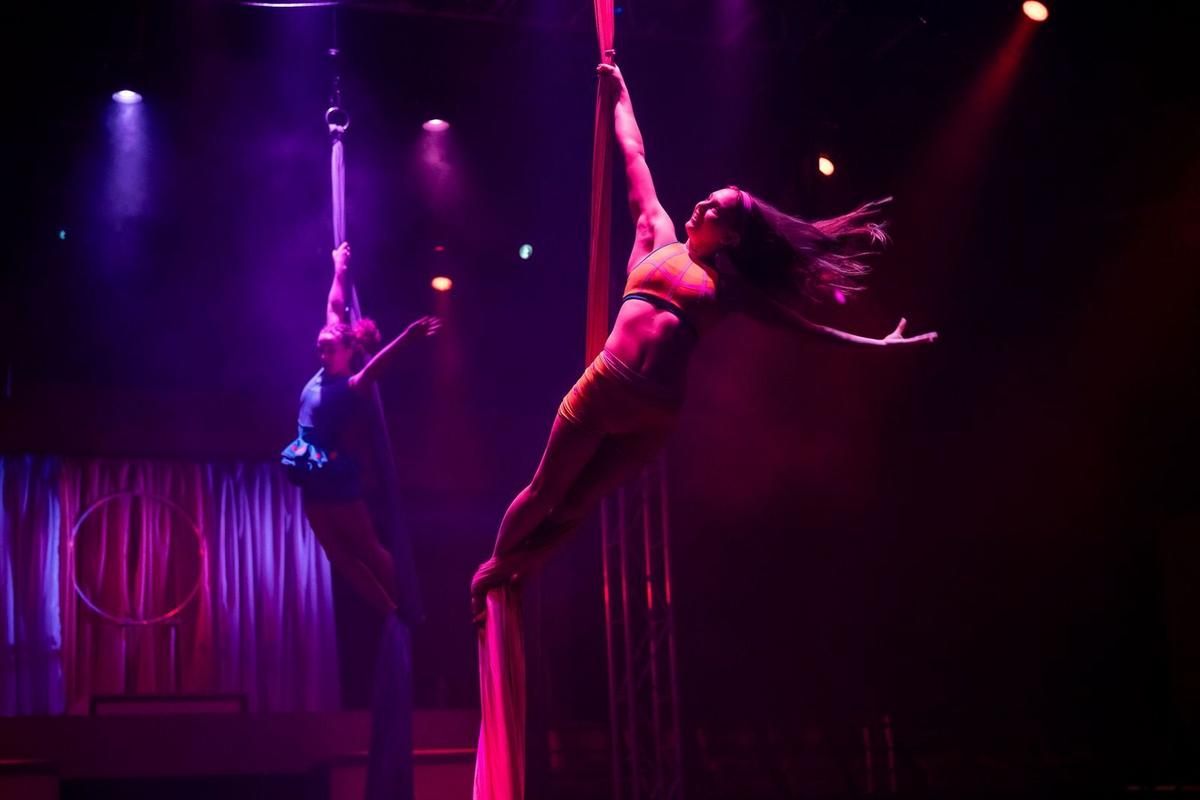
This show is perfect for children and adults of a certain age! It is true physical theatre and demanding whilst being inspirational at the same time. The Flying Fruit Fly Circus, Australia’s only full-time training circus for young people, started in 1979 and it is still going with amazing results.

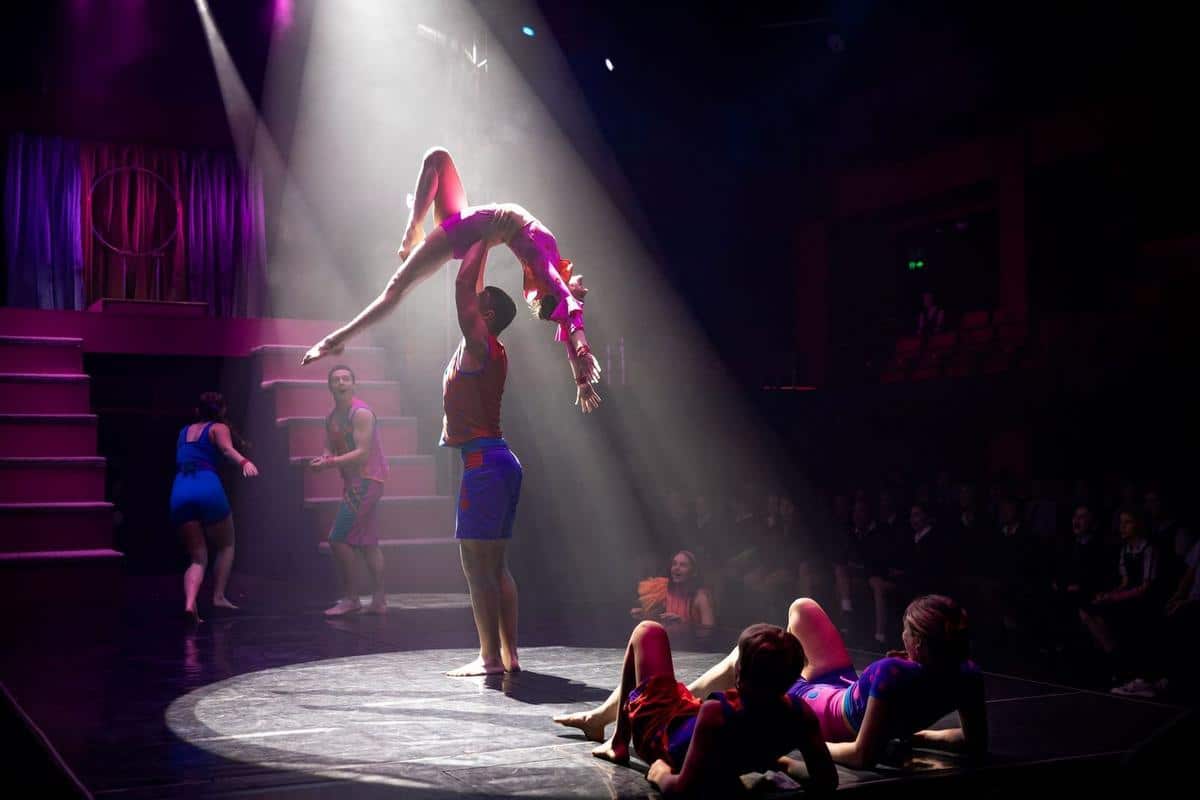
One artist opened the show with a thought provoking view on growing up and the need to pay attention to young people find out what really happens. Then with bright coloured costumes, fun lighting and a circus style set, the audience was ready for a fun hour of kaleidoscope trapeze artists, dancers providing strength-testing and comic acting. At times, the acts produced tension as young people performed from heights with no safety harness but all of the props were carefully managed with trainers standing by. It was still thrilling to watch as the artists with great stamina and strength and depending on the act, with elegance, performed to great applause and wonder.

One artist ascended a pole and gracefully demonstrated her flexibility and style. Two other female performers worked with high wire aerial silks and perfect timing as they whirled and twirled within the silk. There was a wonderful hula hoop performer showing her dexterity. The audience watched a strong young man holding up three people, with breath held hoping they were all balanced.


Music played a part with fun Spanish and Italian music matching the rhythm of the act. An elegant classical waltz had couples dancing as if at a Victorian ball and then two of the young men presented a wonderful act on two separate poles, running up and down them in time and then quickly falling to an inch of their noses. All with a balletic turn.

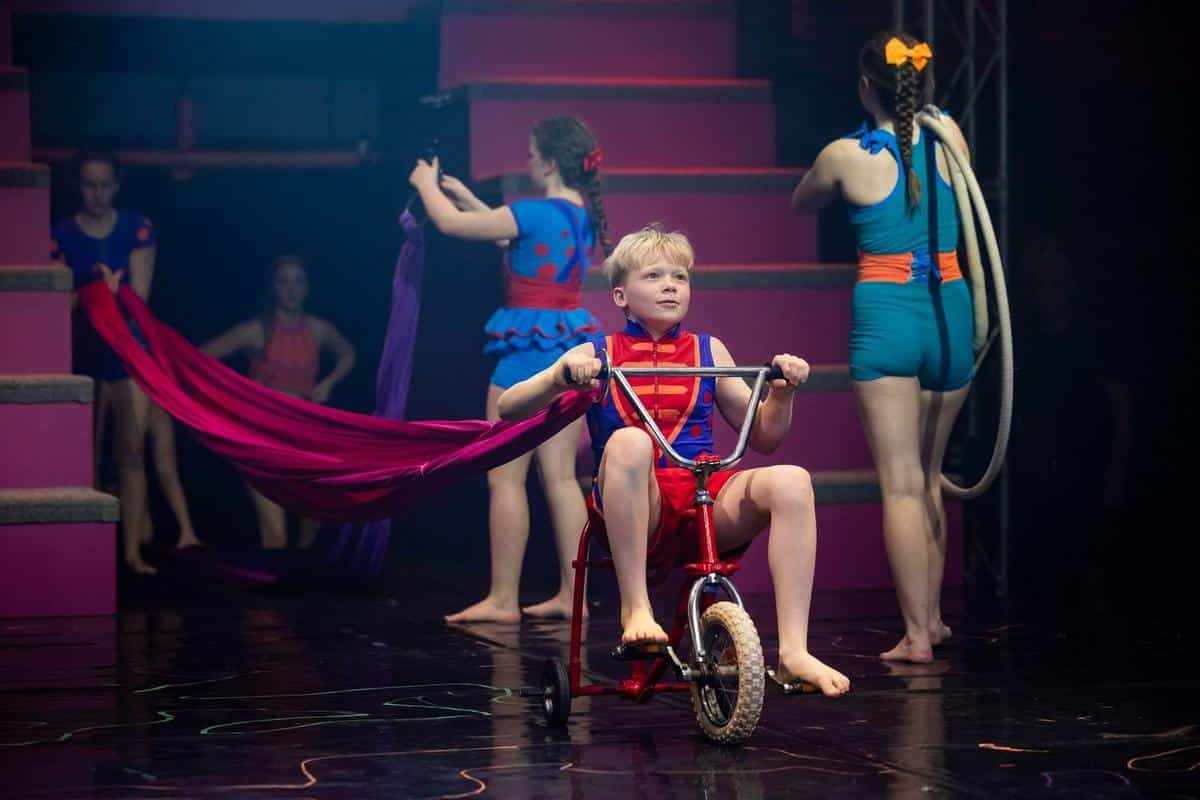
Two young women presented a kind of friendship, twirling with ropes and blending with each other in time to the music with a gentle flow. The two youngest members provided some comedy with classic circus moments including a tricycle and other fun circus style props. The finale was an ensemble piece with careful choreography, balletic grace and lots of balance and strength. The audience was enthralled.

It is a joy to watch a young ensemble supporting and working together with such professionalism, determination and style. There was obviously a range of ages with older members supporting young members when needed. It brought to mind the dream that many young people have, to run away to the circus!

To book tickets to Pay No Attention, please visit https://fruitflycircus.com.au/performance/pay-no-attention/.

Spread the word on your favourite platform!

Haydn’s Creation

Haydn’s Creation

Haydn’s Creation Rating

Click if you liked this article

5

Haydn’s The Creation
Sydney Opera House – Concert Hall

For my first experience of a major classical performance, I could hardly have asked for a more fitting introduction than Joseph Haydn’s The Creation in the Sydney Opera House Concert Hall. Performed by the Sydney Philharmonia Choirs and Orchestra under the direction of Brett Weymark, this one-night concert presentation demonstrated that music alone can tell a story with extraordinary clarity, scale and emotional force.

For those unfamiliar with the form, an oratorio shares many features with opera, using soloists, chorus and orchestra to tell a dramatic story, but is presented as a concert rather than with scenery, costumes or theatrical staging. Oratorios are also usually sacred or liturgical in theme; Handel’s Messiah, which helped inspire Haydn’s The Creation, is perhaps the best-known example. Here, the programme’s inclusion of the libretto was especially useful. As Naomi Hnat noted in the pre-concert talk, The Creation was always intended to be performable for an English-speaking audience, and the edition used in this performance adopted the original English words as set by Haydn. That made the storytelling feel immediate rather than translated at a distance.

Before the performance, a free forty-five-minute talk in the Northern Foyer provided an excellent introduction to the work. Hosted by Tom Forrester-Paton, with Conducting Fellow Naomi Hnat and geobiologist Dr Maxwell Lechte, it proved especially valuable for those without a long background in classical music. Hnat demonstrated key passages at the piano, making Haydn’s musical language accessible without oversimplifying it. Her explanation of the opening “Chaos” was particularly illuminating, showing how Haydn deliberately avoids the musical resolutions audiences instinctively expect, leaving the music unsettled as it searches for order. She also explained the famous “and there was light” passage, where the word “light” marks the transition from C minor into a blazing C major — a moment she described as one of Haydn’s favourites, while Forrester-Paton noted it was also a favourite passage for the chorus to perform.

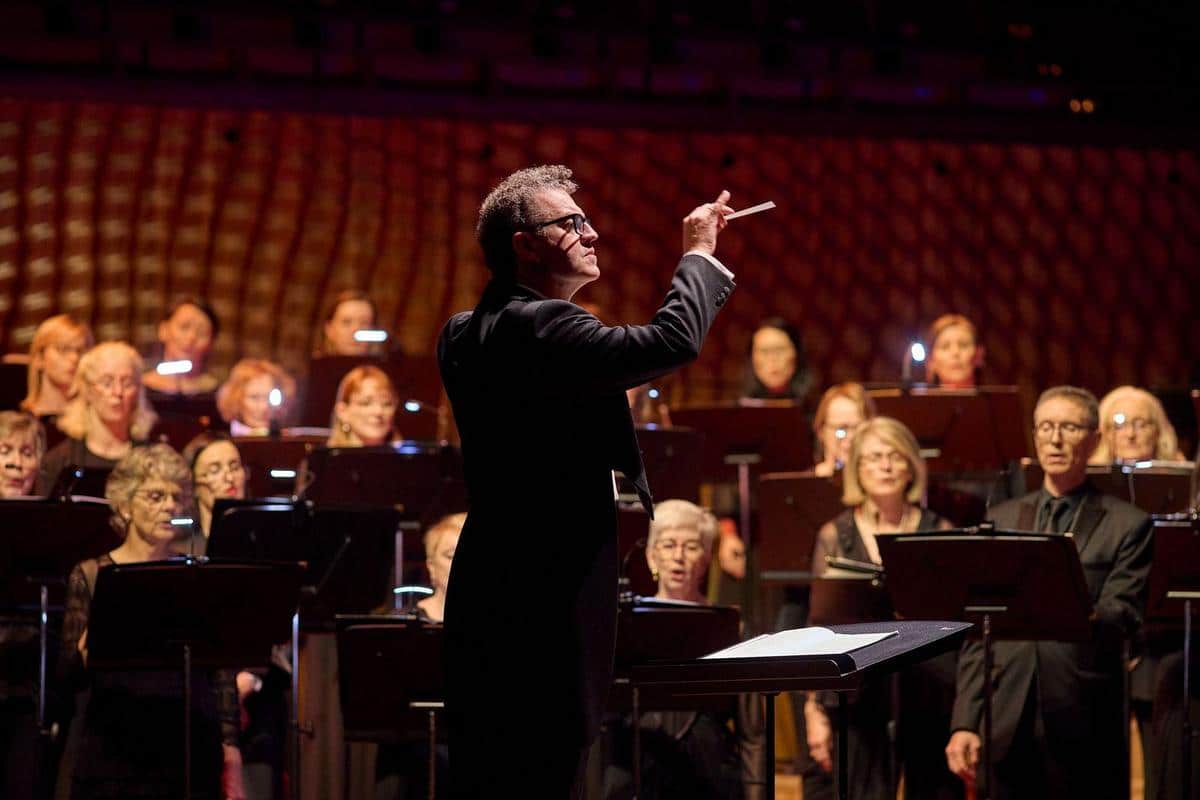
Brett Weymark conducted with remarkable vitality. At times he seemed almost to dance the music into being, but never in a way that distracted from the performance itself. Rather, he seemed to live inside Haydn’s score as it turned and changed, especially during the more dramatic passages. His evident affection for the work translated into a performance of momentum, warmth and conviction, drawing committed responses from both orchestra and choir.


The opening “Chaos” unfolded exactly as Hnat had described, resisting comfortable resolution and creating an unsettled musical landscape before the famous declaration, “Let there be light.” The command itself arrived softly but with quiet certainty. The true release came with “and there was light,” when orchestra, choir and the lighting above the stage opened together in what felt like a blazing sunrise of sound. After the uncertainty of the opening, the effect was overwhelming: not merely heard, but physically felt throughout the Concert Hall.

The orchestra served not simply as accompaniment but as the foundation on which the entire performance rested. Rather than drawing attention to individual sections, it supported the unfolding narrative and allowed Haydn’s vivid musical imagery to emerge naturally. Nathan Cox’s fortepiano became an elegant bridge between orchestra and voices, adding delicacy and clarity whenever the soloists emerged.

The principal soloists each brought a distinct vocal character to the performance. Celeste Lazarenko’s Gabriel had a quicksilver lightness, bright, agile and seemingly airborne. As Eve, that radiance remained but became more grounded, giving the final part a warmer and more human presence. The transformation was subtle rather than theatrical, allowing the audience to hear not merely another role but another way of encountering the newly created world.

Kyle Stegall’s Uriel brought his own brightness and flexibility to the tenor line, carrying the narrative with clarity and ease. His singing had an effortless quality that allowed the story to move naturally from one stage of creation to the next, without ever feeling merely functional.

Michael Lampard’s baritone offered an ideal counterweight, oak-like in its warmth and solidity. As Raphael, he anchored the great descriptive passages with steadiness and authority; as Adam, he revealed a gentler and more intimate character. His duets with Lazarenko were among the evening’s finest moments, their contrasting vocal colours creating both balance and intimacy.

The addition of mezzo-soprano Yvette Leonard in the closing section broadened the vocal palette of the solo ensemble. Rather than competing with the principal voices, her contribution enriched the finale, adding warmth and balance to the concluding pages and giving the ending a fuller sense of vocal breadth.

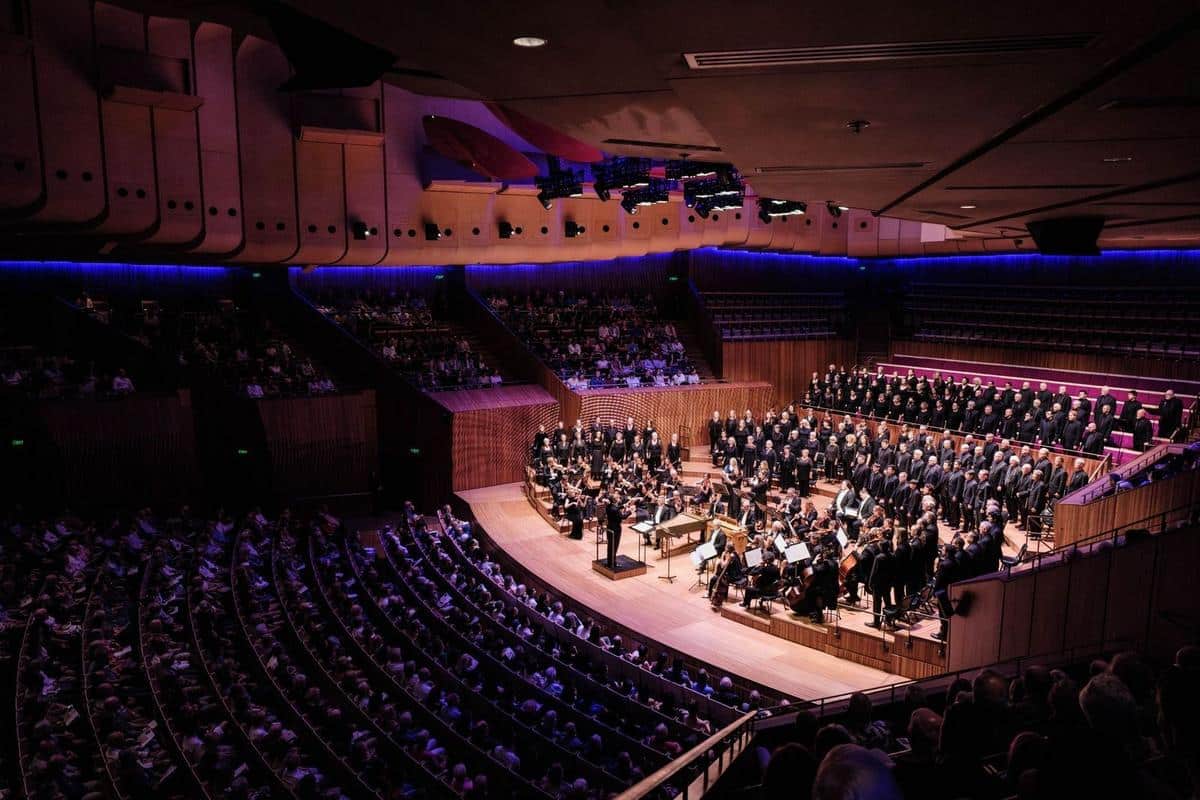
If the soloists carried the narrative, the Sydney Philharmonia Choir supplied the emotional and spiritual force of the evening. At its most powerful it became a wall of sound, filling the Concert Hall without losing clarity. Yet what impressed just as much was its subtlety. Softer passages revealed many colours, while from the stalls it was possible to see and hear the individual vocal lines ripple across the risers before gathering once more into a unified whole. The effect was almost orchestral in itself, different voices emerging and receding like changing colours through falling leaves. By the second half, I found myself anticipating each occasion the choir would rise again.

The renovated Concert Hall deserves mention as a participant in the performance rather than simply its setting. The acoustics combined warmth, clarity and power, allowing orchestra, soloists and choir to blend without sacrificing individual detail. Music in this space was not simply audible; it had a tangible physical presence that surrounded the audience and reinforced the grandeur of Haydn’s vision.

The audience responded warmly throughout the afternoon, with appreciative applause between the major sections and a generous ovation at the conclusion. It felt like an acknowledgement not only of technical accomplishment but of the care, preparation and affection that had gone into bringing Haydn’s masterpiece to life.

For a first encounter with large-scale classical performance, The Creation proved both welcoming and awe-inspiring. More than two centuries after Haydn composed it, its sense of wonder remains intact. Under Weymark’s energetic direction, supported by outstanding soloists, orchestra and choir, this one-night performance transformed the Concert Hall into a place where creation was not simply described — it was vividly experienced.

To book tickets to Haydn’s Creation, please visit https://www.sydneyphilharmonia.com.au/events/haydns-creation/.

Spread the word on your favourite platform!

Get Yourself Along To See It – These Are Stories That Deserve To Be Witnessed

Sheltering

Sheltering Rating

Click if you liked this article

Sheltering was enthusiastically introduced by Artistic Director and Co-CEO Frances Rings, alongside Director of Community Relations Kirk Page, whom I was already a fan of from Dear Son at Belvoir earlier this year. It was a warm, personal welcome that set the tone perfectly for what followed.

Sheltering is a triple bill that beats with the heart of Bangarra’s community spirit, truth-telling and connection to culture. All three works were developed through Bangarra’s Dance Clan program, founded in 1998, to nurture community-focused, choreographic storytelling, empowering dancers and creators to dream up and express in their own language, under expert mentorship. This season marks Bangarra’s first national tour since being awarded the prestigious Golden Lion for Lifetime Achievement in Dance by the Biennale Danza 2026. That context matters. This is a company at the peak of its legacy, and also looking boldly forward.

“Keeping Grounded”, choreographed by Indjalandji-Dhidhanu and Alyawarre person Glory Tuohy-Daniell, is a fascinating piece. The dancers move between the net, the suspension and shakiness of which requires their deep attention, care and uses their energy. In contrast, they move fluidly in tandem with one another when they connect with the ground and their roots.Composer Brendon Boney’s score is a beautiful element throughout, and Karen Norris’ lighting sculpts the space, allowing the dancers to meet each shift in the music with precision and presence. As Tuohy-Daniell writes, this work is “an invitation to notice. To consider how small, almost forgotten actions can create an effect through the body and mind. A step barefoot. A moment of stillness. A return.”


“Brown Boys”, co-directed by Daniel Mateo and Cass Mortimer Eipper, with Mateo performing, is an exquisite piece of dance poetry presented on screen. In just six minutes, Mateo takes us on a journey through the holistic, physical and spiritual experience of brown men navigating identity, belonging and the perceptions imposed upon them, and the quest to come home to themselves. Composer Leon Rodgers’ soundscape holds the film in something both tender and expansive. It is beautiful, and it is genuinely moving. Mateo puts it simply: “I want to give this film to boys who grew up like me, so they can connect, and through that, the village expands.”

“Sheoak”, choreographed by Frances Rings and originally premiering in 2015, closes the evening. Created in response to the deeply offensive “lifestyle choice” comments made by a former Prime Minister about remote Aboriginal communities, it is a work of reclamation; those words taken back, rebuilt, and transformed. Jacob Nash’s set design and Jennifer Irwin’s costuming are impeccable; the visual world of this piece is as layered as its emotional one. Across its three sections; Place, Body, Spirit… we witness systemic trauma, rupture, and ultimately, renewal. It is a deep, at times dark, emotional ride, with movement and choreography that created many audible gasps and intakes of breath.

Afterwards, we were lucky enough to meet the dancers and hear about each of their origins and their time with Bangarra; a reminder that these are not just extraordinary performers but custodians of living stories.

Bangarra has long held a reputation for Black excellence, magnificent storytelling, and uniquely impressive talent. Sheltering doesn’t just add to that history; it extends it, with one eye firmly on the next generation of First Nations creatives being given the space and mentorship to bring their own stories to the stage.

Get yourself along to see it. These are stories that deserve to be witnessed.

To book tickets to Sheltering, please visit https://www.bangarra.com.au/productions/sheltering/.

Photographer: Daniel Boud

Spread the word on your favourite platform!

Duruflé’s Requiem And Poulenc’s Gloria

Duruflé's Requiem And Poulenc's Gloria

Duruflé’s Requiem And Poulenc’s Gloria Rating

Click if you liked this article

27

Today, on a glorious Saturday, the audience at the Sydney Opera House was treated to a magnificent concert featuring Maurice Duruflé’s ‘Requiem’ — first performed in Paris in 1947 — alongside Francis Poulenc’s ‘Gloria’. Representing a bridge across time, the concert offered extraordinary choral performances filled with beauty, spirituality, and emotional depth.

Completing the program was the world premiere of ‘Time’s Fell Hand’ by Carl Vine choral piece, which injected a distinctly Australian flavour into the French compositions of Duruflé and Poulenc. Together, the works took the audience on a remarkable journey of colour and harmony, calm reflection, and contemplation.

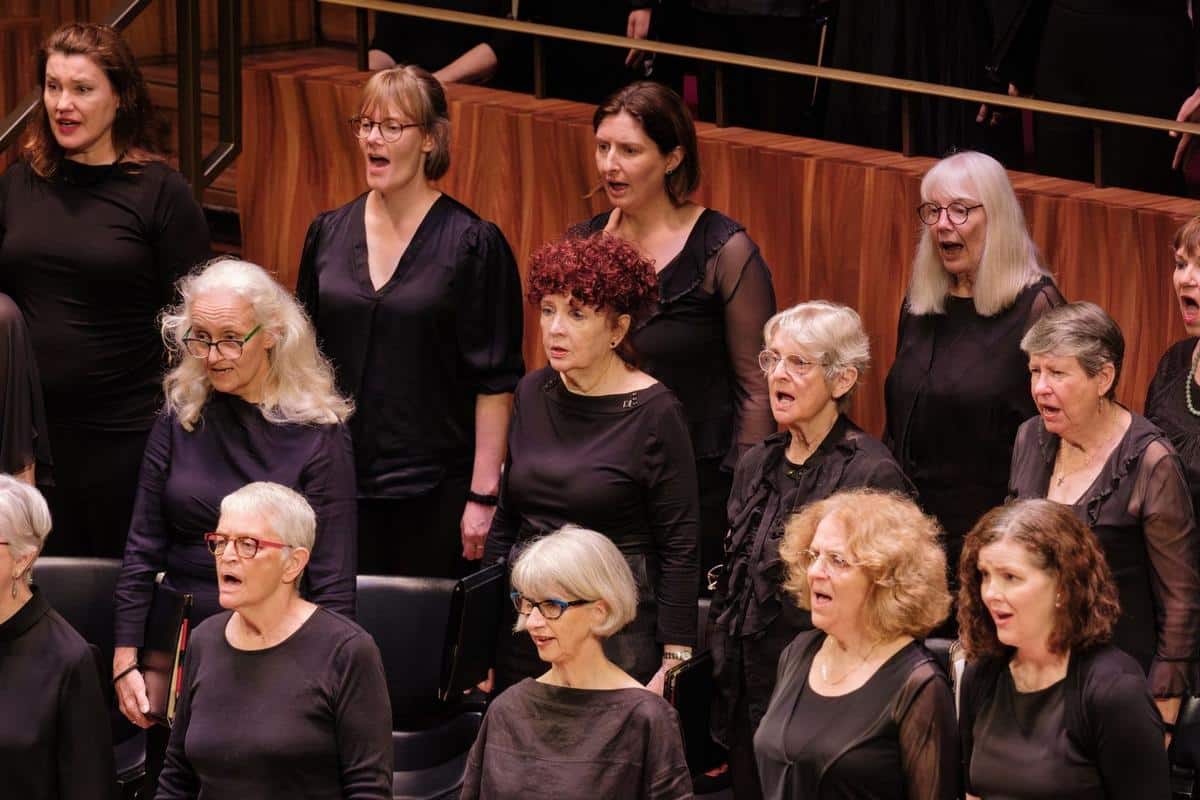
We were dazzled by the unexpectedly large choir — close to 500 performers — whose extraordinary vocal blend created an astonishing combination of tones and textures. The sheer scale of the ensemble was breathtaking, yet its sound remained balanced, nuanced, and deeply moving.

The opening carried an elegant stillness, overlaid with worshipful and spiritual sounds. It evoked a beautiful mix of church-like hymns and reverent chants, immediately creating an atmosphere of reflection. Duruflé’s Requiem, supported by orchestral textures within the sound design, felt both intimate and expansive. The entry of the Opera House organ added further depth, creating a rich soundscape of extraordinary resonance.


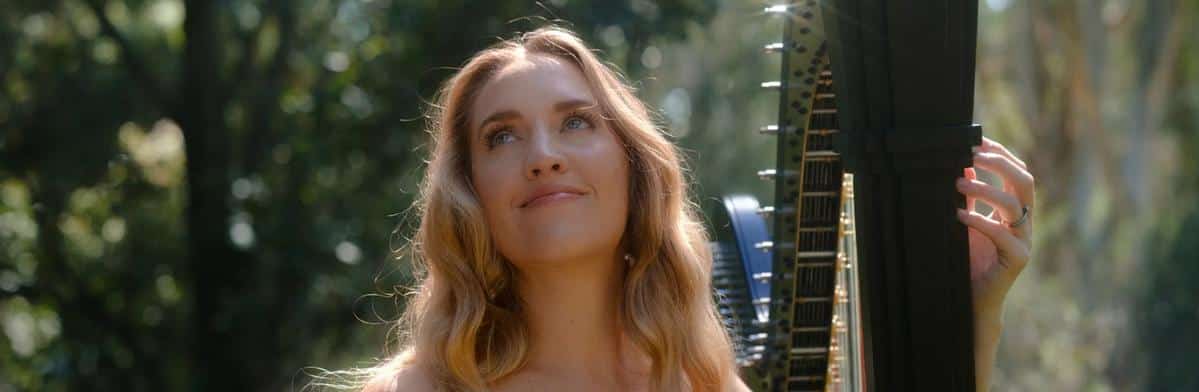
The five vocal sections — bass, baritone, alto, mezzo-soprano, and soprano — worked collaboratively, creating a beautifully unified and layered performance. A particular delight was the harp, played exquisitely, its sound like delicate stitches woven into an intricate musical tapestry.

The soloists, each brought distinctive voices, perfectly matched to the score. Samuel Dale Johnson opened a new door to musical expression with his beautifully delivered performance. Already recognized as one of today’s leading young baritones, with extensive performances across Europe, he brought depth and refinement to the role.

Award-winning mezzo-soprano Helen Sherman infused the music with richly textured mid-range warmth, delivering a performance of rare beauty and sensitivity.

Puerto Rican-born, Sydney-based soprano Meechot Marrero dazzled the audience with finely controlled tonality, never overpowering the composition but always enhancing both choir and orchestra. Her international career has taken her across Europe, the United States, the United Kingdom, and South America, performing in productions including ‘The Magic Flute’, ‘Turandot’, and ‘Candide’. Her final delivery of “Amen” was utterly mesmerizing.

Conductor Elizabeth Scott demonstrated remarkable skill in leading the orchestra, organ, choir, and soloists with precision, grace, and sensitivity.

The finale of Poulenc’s ‘Gloria’ left the audience with a profound sense of spiritual inspiration and emotional uplift.
An unforgettable performance indeed.

To book tickets to Duruflé’s Requiem And Poulenc’s Gloria, please visit https://www.sydneyphilharmonia.com.au/events/durufles-requiem-poulencs-gloria/.

Photographer: Keith Saunders

Spread the word on your favourite platform!