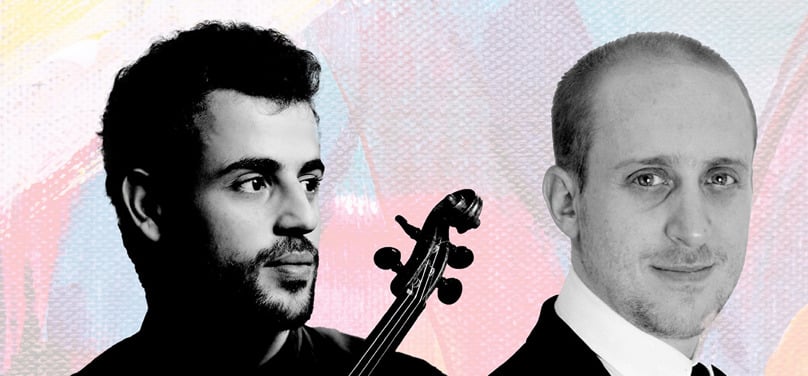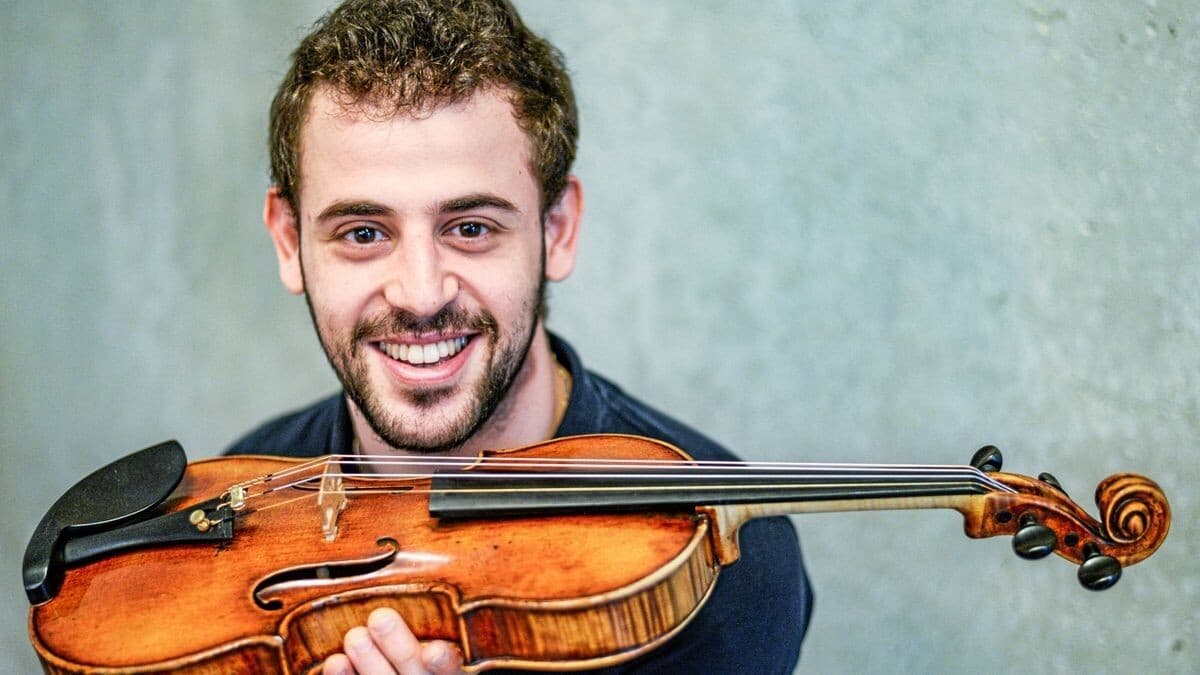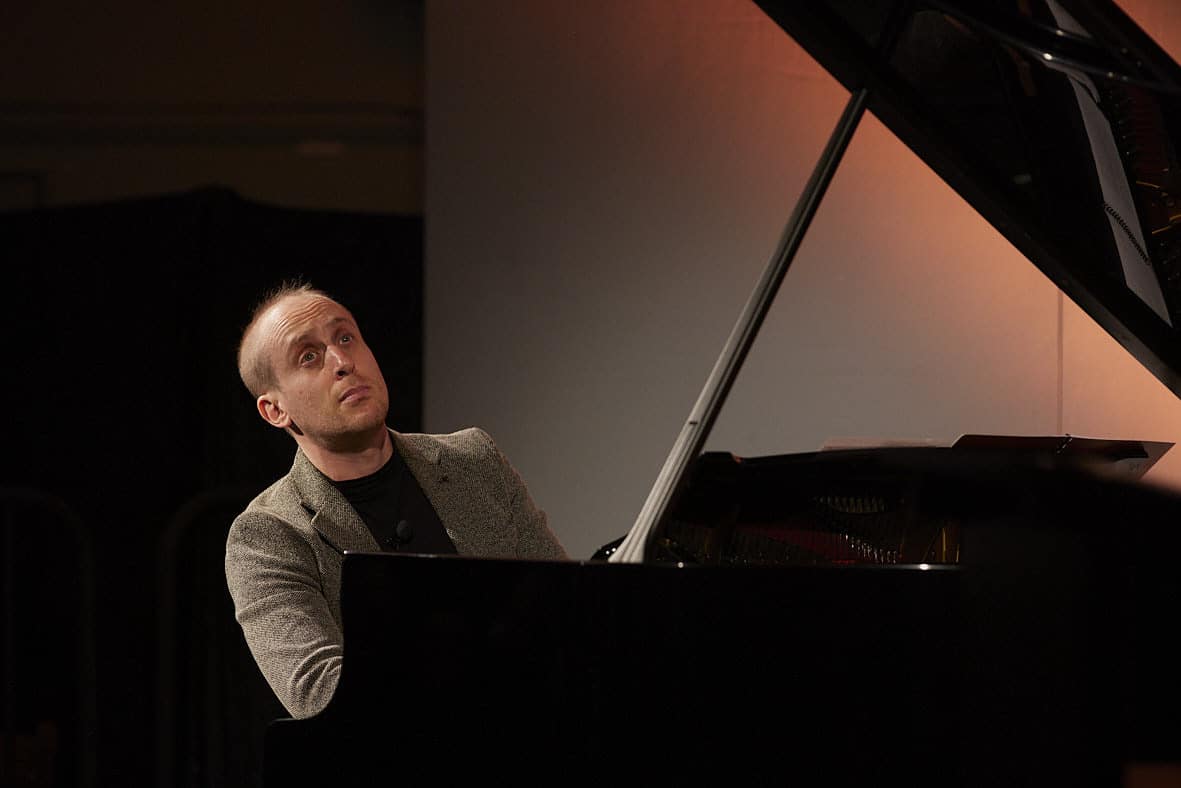
My husband and I had the pleasure of attending Omega Ensemble’s concert, Inner Landscapes, at the beautiful Melbourne Recital Centre. Neither of us had been to a live classical concert before, so we had no idea what to expect. What we got was an amazing aural sound-bath from the incredibly accomplished musicians who make up the ensemble. With the hall’s beautifully acoustic design holding, reflecting and reinforcing the music from every direction, this was a true feast for the ears, joyful, surprising and moving in turns.
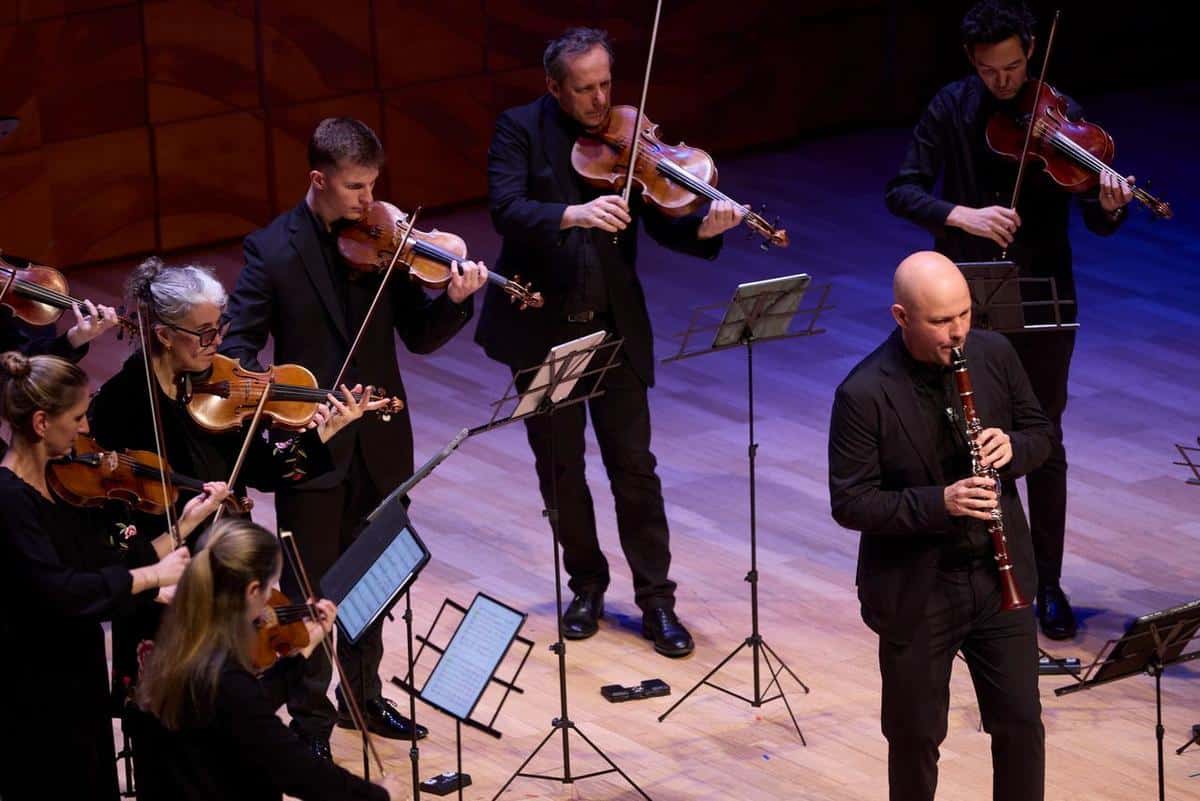
The night opened with a powerful original score by the Pulitzer Prize winning composer, John Corigliano. ‘Soliloquy’, written in memory of his father, was a tender exploration of that loss. The interplay between the violins and the solo clarinet carried a poignant sense of the empty spaces left behind when someone we love leaves. Even with its mournful threads pulling at absence and longing, quietly unravelling the listener, it was not without drama. There was an almost Hitchcockian feel to the piece in places, a sense of tension surrounding the beauty of the violins, suggesting that even as normal life was being lived, something darker and more insidious tugged at the edges, threatening to overwhelm it. It was an incredible treat to hear it live and be invited into that deeply personal experience.
The second piece was delightfully familiar to me and will be to many of you too, I imagine. An expanded ensemble, now including cellos and double bass (I love these deep, earthy, mournful instruments the most), gave us a powerful performance of Franz Schubert’s String Quartet No. 14, Death and the Maiden. Performed in four movements, it rose and fell deftly. The first conjured rolling hills, bird murmurations, a feeling of youth and vitality, with an edge of unpredictability and sometimes danger created by the dancing, vigorous strings. My understanding is that this movement reflects the Maiden’s terror of Death. The second is slower, meant to convey a sense of safety despite Death’s presence. Here Death felt safe and generous rather than fearful, yet still carried the passionate, dramatic surges of feeling such a meeting would bring. It felt like being carried through the full emotional gamut of a life, seasons the Maiden will never live through rolled past as if in fast forward, a little like the idea that your life flashes before your eyes when you die. The third and fourth movements were sublime, returning to earlier themes with maturity and depth. The ensemble worked together impeccably. With no conductor, I watched with great interest the subtle interplay between the musicians, the tightly bound group led with breath and eye and the subtle hand of the principal viola and violinists. I was left thinking: if this is how incredible this ensemble is, can the Philharmonic really be any better?
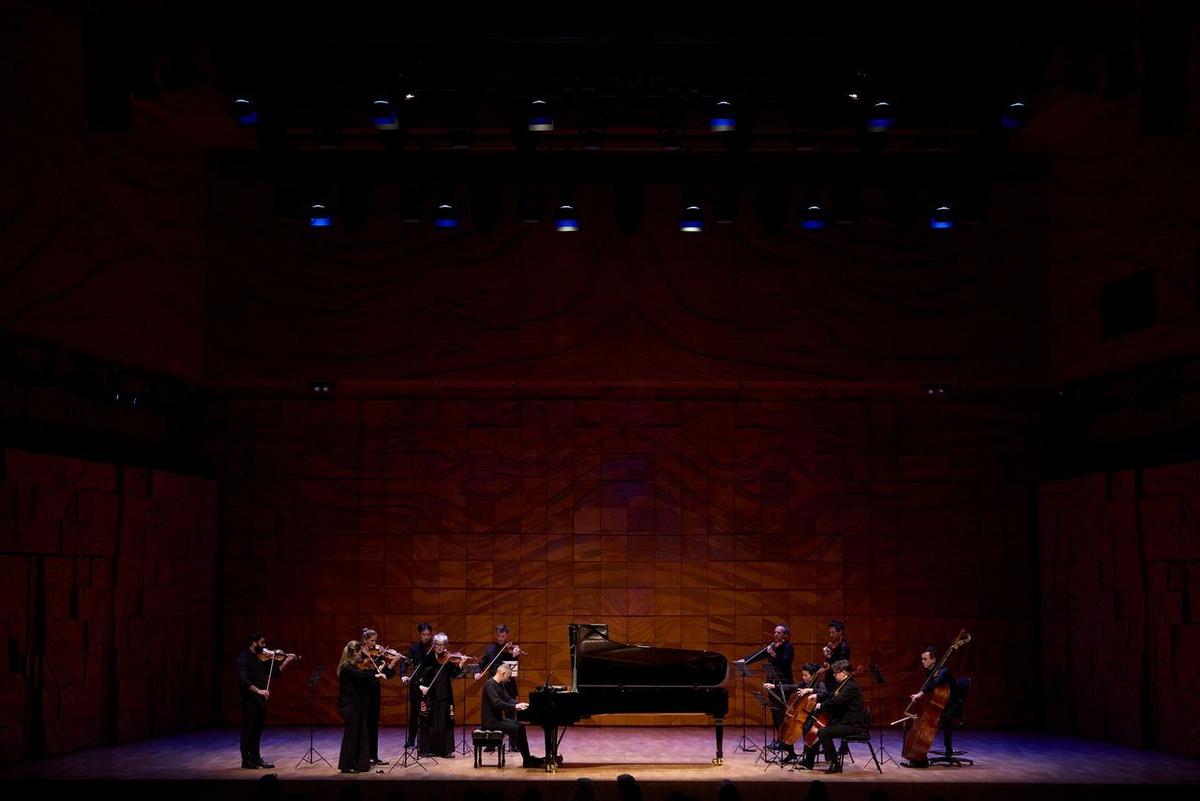
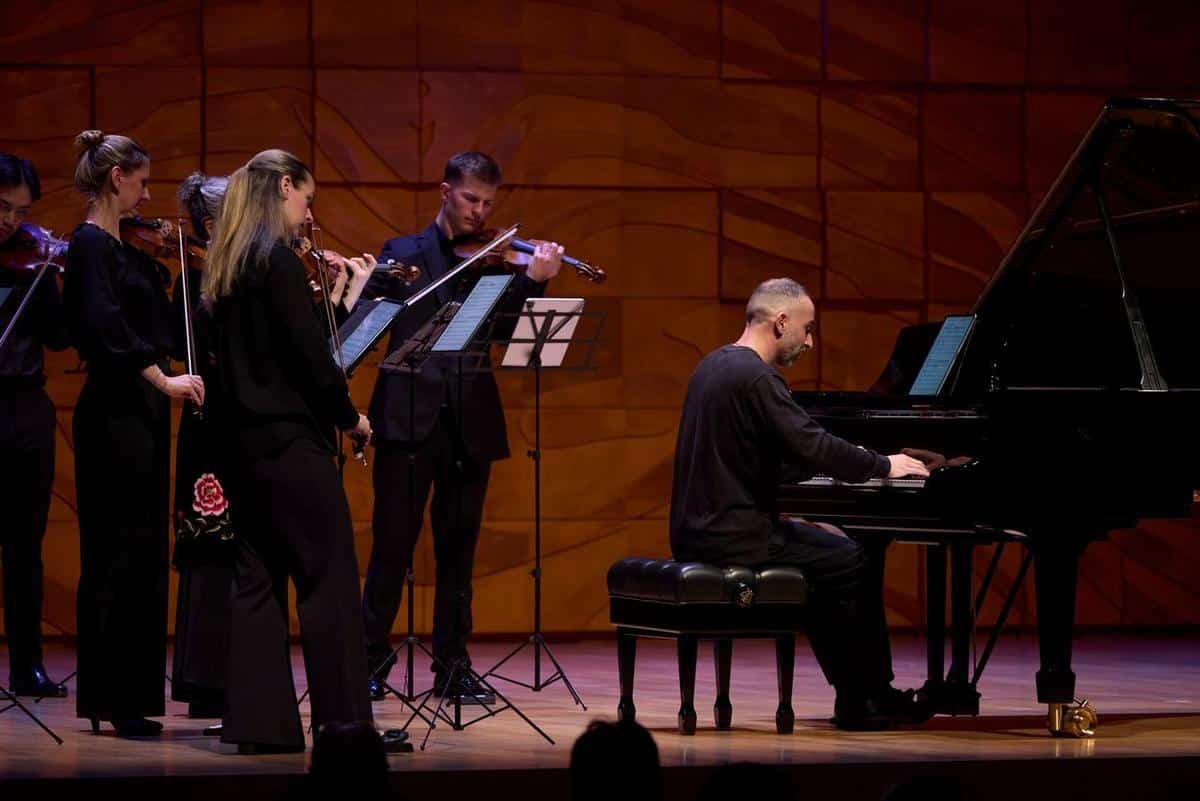
The third piece was another original composition, ‘Rounds’ by Jessie Montgomery, a Grammy Award winning composer and violinist. Inspired by T.S. Eliot’s epic poem ‘Four Quartets’, it felt to me like sitting in the centre of a storm. With passionate, skilful playing from pianist, Vatche Jambazian, I felt immersed in water: storm clouds producing lightning and rain, surging seas, the threat of violence and danger interspersed with lighter, more playful refrains, violins and piano exploring light and dark together, discordant, harmonious, rising and falling in ever more powerful rounds. A unique and interesting piece, and one that left the listener feeling as though they’d resurfaced breathlessly from deep underwater.
The final piece, a world premiere of ‘Paludarian Dreams’ by another award winning composer, Paul Stanhope, explored themes of nature found in a busy city. It was written for Omega Ensemble and it’s Artistic Director and solo clarinetist, David Rowden, whose deft fingers brought easily to mind the swift unpredictability of birds in flight.
Workshopped with the ensemble members, it felt beautifully collaborative and is, by their own admission, always evolving. It is joyful, sometimes whimsical and always surprising, delighting the audience with violin frogs that made us laugh out loud (not something you expect from classical music) as they called throatily to one another in the dark marshy waters of the piece. And the long cello solo was a genuine treat for me.
Honestly, this was one of the most enjoyable experiences I’ve had as a reviewer. Some of that can perhaps be put down to the delight of my first foray into live orchestral music, but most of it was down to the sheer talent of these highly accomplished musicians and the power of the compositions.
I highly recommend you go and see them as soon as you can, whichever city you happen to be in, because the only sad thing about the whole experience was that the auditorium wasn’t full to bursting. Omega ensemble truly deserves a full house.
To book tickets to Inner Landscapes, please visit https://www.melbournerecital.com.au/whats-on/current-productions/omega-ensemble-inner-landscapes.
Photographer: Laura Manariti