Hurtigruten Nordic Film Festival Opening Night Reception And Premiere Screening of ÁRRU Rating
★★★★★
Click if you liked this article
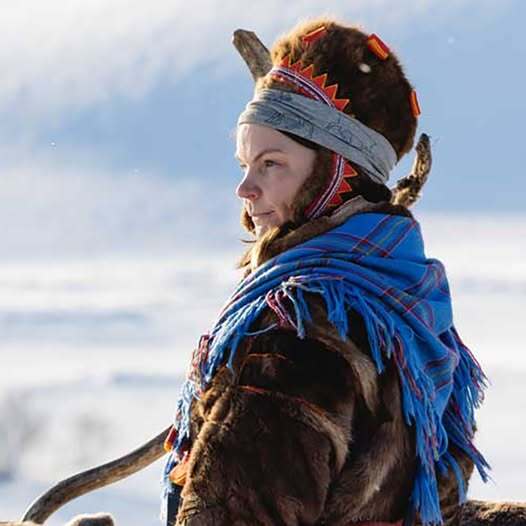
What happens when the person you rely on to save almost everything you know and love also turns out to be a monster? Can you walk away? How do you negotiate the constant challenges to life and culture? Do the young want to carry on the flame? These are some of the core questions in Árru, Elle Sofe Sara’s striking debut feature focusing on the lives and culture of the Sami people that inhabit the Sápmi region of Norway, Sweden, and Finland. What better film to represent the unified yet separate cultures showcased at the 2026 Nordic Film Festival.
Using a mixture of genre styles, from surreal cinema, family drama, to musical, Árru starts in white snows of winter covering a vast, almost empty landscape. After the bloody miscarriage of a reindeer, traditional herder Maia (Sara Mariell Gaup Beaska) buries the tiny body in the snow. Together with her brother Danel (Simon Issát Marainen) and daughter Ailin (Ayla Garen Nutti), they continue the rustic life of the Sami, tending to their reindeer, killing and butchering them for meat and clothing. After the snow retreats for summer, the vast grasslands of summer form the backdrop of the narrative drama. We learn that a mining conglomerate is planning to build a large copper mine, reducing the grazing land available. This will force a mass culling of the reindeer and with it the destruction of Maia’s livelihood and her way of life.
Leading the fight is Maia’s charismatic lawyer brother Lemme (Mikkel Gaup), who successfully campaigned against a similar situation in Canada. As he rallies the community through protest and song, Maia and Danel remain wary around Lemme. This reluctance to embrace their possibly saviour and Lemme’s grip of power over his family and the town threatens Maia’s relationship with Ailin, one of his strongest advocates. The film then slowly reveals Lemme’s real character. First, Ailin discovers that Lemme is not as trustworthy as she first believed, and then a drunken confession by Danel at a celebration of culture reveals a dark past that shatters the community. They need Lemme to save their way of life, but can they still allow him to live amongst them.
Sara uses music and song throughout to connect Maia with her ancestors and home, and is clearly an important life of Sami culture. Musical numbers sometimes break the dramatic flow of the film, but remaining beautiful and interesting. During one of the protests, however, traditional song turns into a music video style dance number that seemed like an odd stylistic choice and a bold contrast to the grounded realism of the drama. But that wasn’t enough to pull me out. The performances were authentic and powerful, especially Simon Issát Marainen, who at first seemed brooding and surly but then when we discover why, draws from us empathy and understanding. And while the dramatic narrative forms the core structure of the film and provides plenty of intrigue and conflict, the most appealing part of the film for me was just spending time with the last remaining indigenous group in Europe.
Árru can be seen as part of the Nordic film festival playing nation wide at Palace Cinemas.
The Bubbles Festival Melbourne: A celebration of all things sparkling!
Natalie Pickett founded The Bubbles Review 10 years ago, when her first blog educated those who thought Moet was spoken like the end of the word, “ballet”, with a silent T, when really, it’s pronounced “Mo-wett.” Natalie should know. When working as a tour guide in Europe, on a guided trip to Moët et Chandon, she confirmed this exact fact.
Natalie’s ‘Bubbles Reviewers’ Club’ offers members monthly rewards, tasting technique masterclasses and more discoveries and invitations via www.thebubblesreview.com
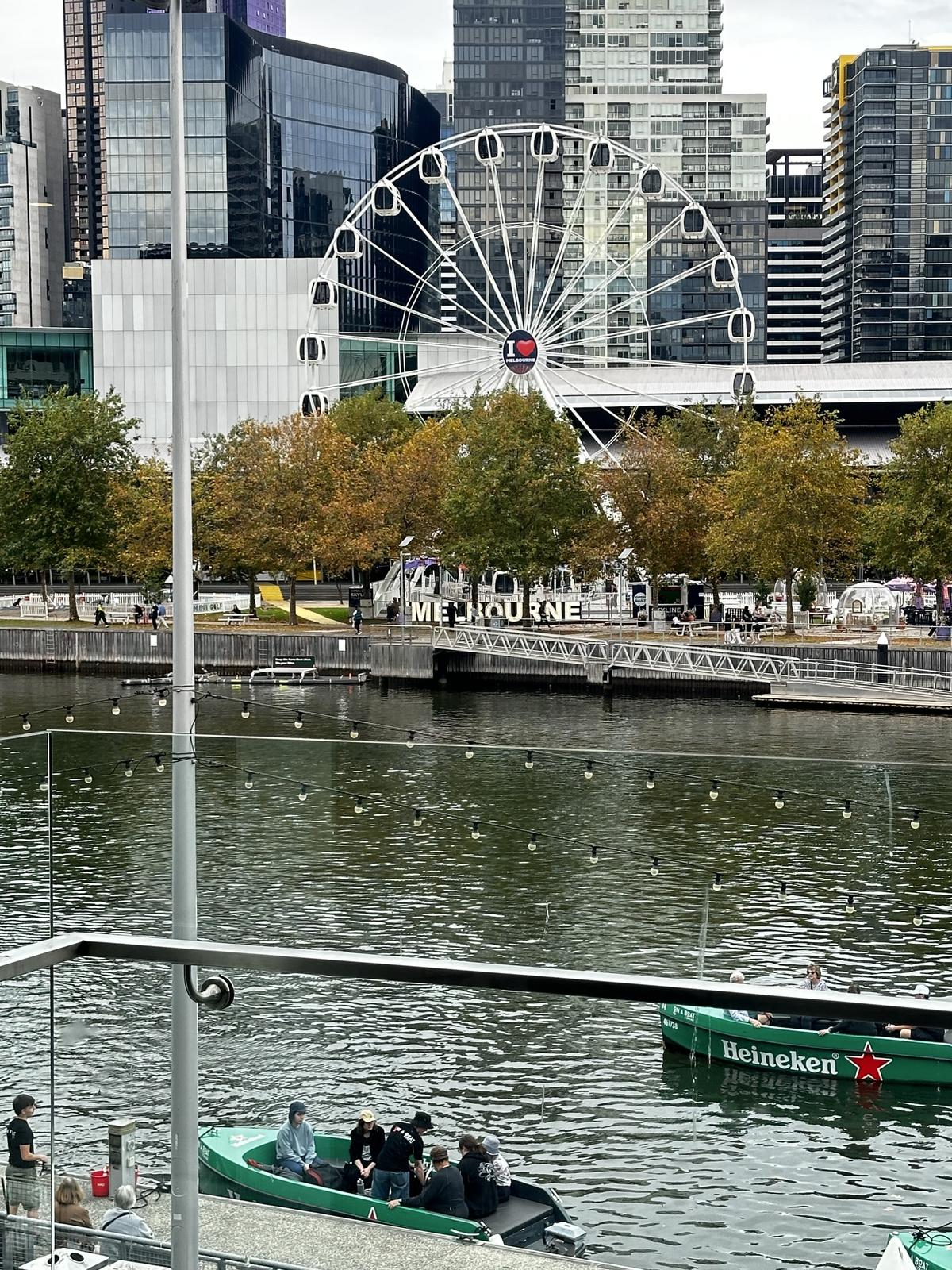
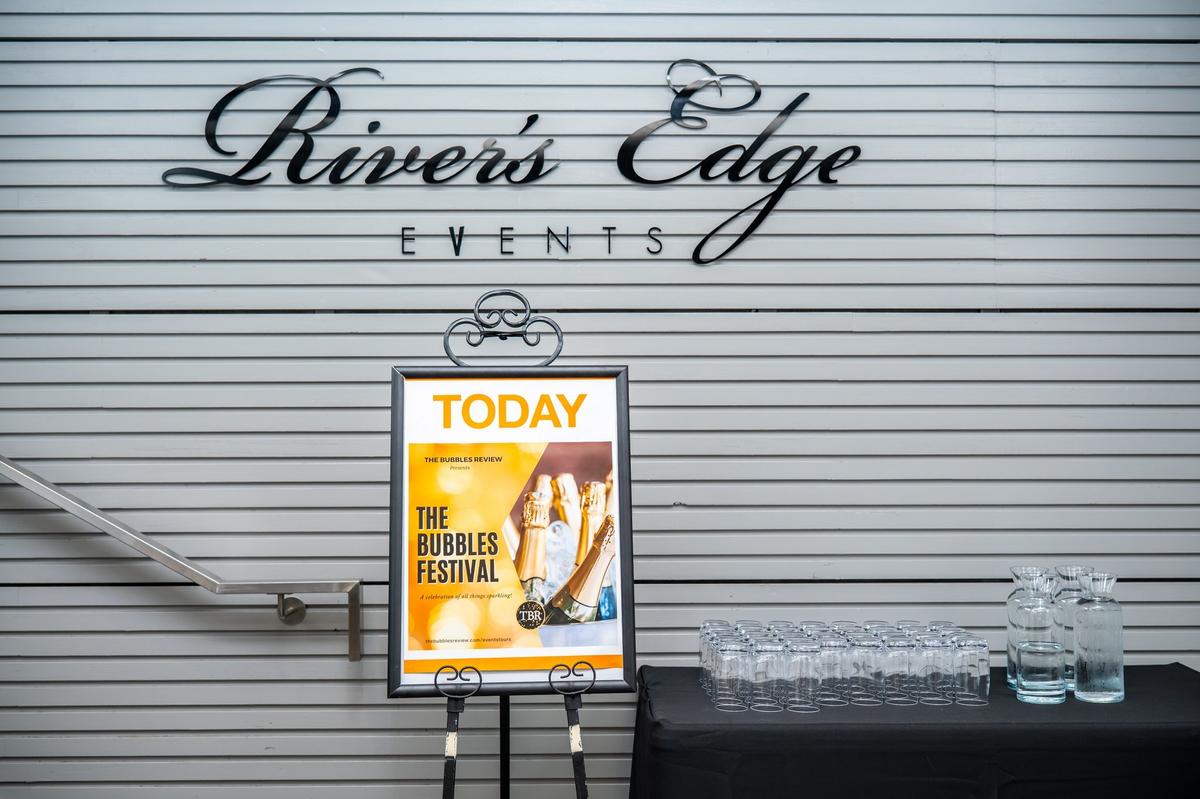
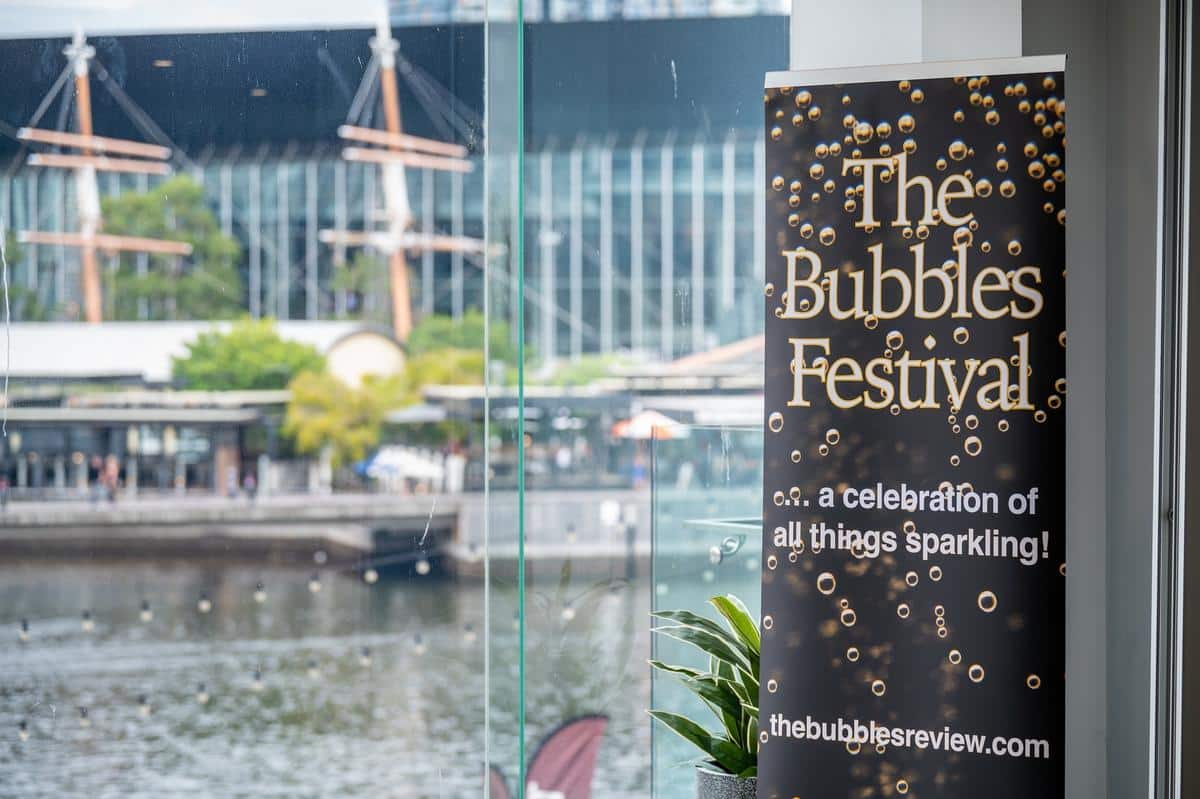
I met some of her club members on Saturday, 2nd May, for Bubbles Festival Melbourne, at River’s Edge Events in the World Trades Centre – in a room with a stunning view of the Skyline Wheel and Polly Woodside. Holding our complimentary Riedel sparkling glasses (included in our tickets), we were all thirsty to begin when Natalie welcomed our group and spoke about some important terms to remember before sampling the bubbles on offer. She reminded everyone to hold their glass by the stem, as best to view the bubbles in the middle. We were advised to enjoy the experience of each sparkling with each of our five senses; even holding the glass to our ears – as though listening to a seashell on the beach – and to take in the scent with our noses, as far as they’ll go into the glass before tasting.
“Bubbles – Just like a hug in a glass” and “ABC = Always Bring Champagne” slogans called to us from TV screens around the room. After this, we would visit all the Exhibitor tables to indulge in the exquisite selection.
In between tastings, we were served trays of various Canapés – including Truffle and Mushroom Arancini. We also indulged in a succulent seafood station and a cheese station – perfect bubbly food companions.
Ian was the friendly host from Clover Hill. He poured my first tasting with CLOVER HILL TASMANIA EXCEPTIONELLE MULTI-VINTAGE, (59% Chardonnay, 35% Pinot Noir, 6% Pinot Meunier) – a light straw/green hue in the glass, vibrant citrus and stone fruits on the nose and crisp acidity on the palette.
My second tasting was the CLOVER HILL TASMANIA ROSÉ MULTI-VINTAGE (66% Chardonnay, 29% Pinot Noir, 5% Pinot Meunier) with fresh vibrant strawberry notes upfront on the nose. The palate was layered and creamy with red forest fruits, to a balanced, long finish. This one was sweeter than the first and a little too perfumed for my taste – still a lovely sparkling.
My third taste was the CLOVER HILL BLANC DE BLANCS MULTI-VINTAGE – Tasmania with 100% Chardonnay. This one reminded me a tad of the lovely Billiecart-Salmon Blanc de Blancs Grand Cru NV from France. It too, is characterized by aromas of citrus, white peach, and brioche with a creamy texture.
Tasmanian cool-climate sparkling wines are dominating at the moment, having taken out all the trophies at the 2025 Australian Sparkling Wine Show and Clover Hill is no exception, having been recognised by The Real Review as one of the best producers in the country. They are consistently ranked among Australia’s top producers with a 5-star Halliday rating.
Ian had a fourth offer in CLOVER HILL ROSÉ D’ASSEMBLAGE MULTI-VINTAGE (63% Chardonnay, 29% Pinot Noir, 8% Pinot Meunier), which I didn’t get to sample as I felt drawn to the French table while there was a lull in the crowd.
I met Jean Paul at the Philippe Fourrier table for a quick chat. Since 1847, this family Champagne house located in Baroville, is anchored in an exceptional terroir, the Côte des Bar, in the south of Champagne appellation area.
JP’s first French pour was the CHAMPAGNE PHILIPPE FOURRIER – ROSÉ DE SAIGNÉE (NV) (90% Pinot Noir, 10% Chardonnay) with a light red to deep rosé hue and orange reflections, its fine and persistent bubbles adding elegance in the glass. The nose opened with ripe raspberry and fresh red berry aromas.
JP’s second French pour was LOUIS PERDRIER FRENCH BRUT (NV) – Bordeaux – France (100% Chardonnay), an exceptional French Sparkling. Deliciously toasty notes melt into the scent of golden apples. Gentle and harmonious on the palate with some richness tempering the citrus finish. For me, this was the best sparkling of the day.
The third French pour was CHAMPAGNE PHILIPPE FOURRIER – PINOT MEUNIER BRUT (NV) – Champagne, France (100% Pinot Meunier), with a beautiful pale-yellow hue and fine bubbles bright in the glass. The nose offered fresh red fruit aromas of subtle blackberry, hints of peach and plum. This one seemed a tad light to me after the Brut.
Lastly, I met Kathy at the Sutherland Estate stand – a small, second-generation family-owned enterprise located at a picturesque location in Dixon’s Creek, a mountainous area, past Yarra Glen in the Yarra Valley. Her first pour was SUTHERLAND ESTATE – 2021 BLANC DE BLANC SPARKLING – Yarra Valley (100% Chardonnay). Made from 100% Chardonnay in the Méthode Traditionelle, with secondary fermentation and ageing in the bottle.
Kathy’s second pour was her SUTHERLAND ESTATE – 2023 SPARKLING TEMPRANILLO (100% Tempranillo.). This renowned sparkling red is unique because we don’t often see a Tempranillo here in Australia. Sutherland have been making it for more than 12 years, and it’s all grown onsite. It has spent twelve months in seasoned barriques before undergoing secondary fermentation on lees in the bottle made Méthode Traditionelle, having a powerful burst of mid-palate fruit of berries, dark cherries, a bit of liquorice, with peppery spice and earthy undertones to finish. The palate is medium-bodied and well structured, with fine tannins and a persistent bead. A great match with cheese and charcuterie. It had the power of a sparkling Shiraz and I’m keen to visit their Cellar Door for more.
I tried the SUTHERLAND ESTATE – 2025 SPARKLING ROSÉ (with 100% hand-picked Pinot Noir). Whole bunches of Pinot are harvested from the vineyard and come into the winery and straight into the press immediately leading to the gorgeous pale salmon colour. The aromas are bright and enticing with rose petal, strawberry and perfume. On the palate were strawberries and cream. A delightful summer’s drink, but for the last glass of the day, I had to return for one last taste of the Sparkling Temperanillo.
Illustrator, Susan Kerian, who some recognised from her work with retailer, ‘Blue Illusion’, returned to showcase her original illustrations – perfect for ‘Emily In Paris’ fans and Francophiles.
All sparkling wines and Susan’s artwork could be purchased on the day so, I happily departed with my order for delivery of four of the LOUIS PERDRIER FRENCH BRUT (NV) from Bordeaux, two of the CHAMPAGNE PHILIPPE FOURRIER – PINOT MEUNIER BRUT (NV) – from Champagne in France and six of the SUTHERLAND ESTATE – 2023 SPARKLING TEMPRANILLO from the Yarra Valley, because according to F. Scott Fitzgerald, “Too much of anything is bad, but too much Champagne is just right.” Well, that’s my excuse and I’m sticking to it!
All of the exhibitors offered great deals for purchasing on the day. I’ve never understood why tastings sometimes don’t allow that, but at Bubbles Festival, you could take the wine with you on the day, or get it delivered later, which was ideal. $5 from each ticket went to the Sacred Heart Mission, St Kilda. Natalie chooses a different charity to donate to in each of her state’s events.
It was a sunny 25degree day in Melbourne and I tasted some new and exciting Sparklings and Champagnes, met like-minded and vivacious souls, feeling the fresh bubble of life, therefore, I thoroughly recommend attending the Bubbles Festival.
Here are the other states’ Bubbles Festivals, coming soon:
Brisbane – 9 May 2026 – Get your tickets here! Sydney – 22 & 23 May 2026 – Get your tickets here! Adelaide – 6 June 2026 – Get your tickets here! Perth – 20 June 2026 (TBC) – Join waitlist here!
Walking into Belvoir St Theatre felt like reconnecting with an old friend, one whom I have had multiple warm experiences with over the years, and Dear Son only deepened that relationship. Those who know me are aware of my self‑preservation from “spoilers”, so I walk into these situations with just the bare bones of what delight is about to unfold. I was unaware what other “old friends” would be part of this powerful experience.
When director and co‑adapter Isaac Drandic stepped onstage before the show to tell us that Luke Carroll was ill and could not perform, I was briefly disappointed, having known Luke in my youth and followed his career since. Brief is the key word, because it was announced he was being replaced by Aaron Pedersen, an actor who once showed me immense kindness when I was a wide‑eyed Melbourne wanderer in another life, and whose work I also hold in very high esteem. In other words, I already knew I was in for quite a treat before a single word was spoken.
Dear Son, based on the book by Thomas Mayo and adapted for the stage by Drandic and co‑adapter John Harvey, gathers five Indigenous men in what feels like a coastal “men’s shed” to ask, again and again, “What is it to be a man?” through letters, yarns, song and embodied storytelling. The set design by Kevin O’Brien creates warmth and place with deceptively simple means: sandy ground, a rustic wooden covering, two park tables and a glowing sunrise upstage, an inviting representation of a communal gathering space that is both specific and symbolic. It immediately feels connective, it feels personal.
Our five Indigenous actors – Jimi Bani, Waangenga Blanco, Kirk Page, Aaron Pedersen and Tibian Wyles – begin by waving reverently to the audience as words are projected behind them. Video designer Craig Wilkinson’s projections fill the upstage screen with terms like “Father”, “Son”, “Artist”, “Protector”, held by these strong, proud figures as they claim space and create warmth, before those words are undercut and complicated by others that have been used as weapons against Indigenous people for generations, ushering us into Act 1: Letters of Struggle.
The group moves between letters to fathers and sons, shared conversation, humour that is deliciously specific, and moments of song supported by composer and sound designer Wil Hughes’ evocative soundscape. They unpack the impacts of colonisation and the generational trauma wrought by acts of violence, malevolence and cruelty, while also honouring resistance, love and the everyday work of breaking cycles. Lighting designer David Walters gently shifts us through time and tone, from campfire intimacy to something closer to ceremony, with haze and shadow allowing the stories to sit in a liminal, memory‑like space.
The individual performances are powerful, moving and deeply poignant, and the ensemble work is quietly transcendent. It is hard to believe that Pedersen has entered the fold so recently; he integrates with a calm, centred presence that never pulls focus from the collective but deepens it. Wyles often anchors the musical moments with guitar and voice, Bani brings an easy charisma and storyteller’s ease, and Page moves deftly between gravitas and wry humour. Blanco, who also serves as choreographer and movement director, gives the production its physical language.
These stories unite the men in shared trauma, and a far more powerful desire to transcend it by breaking the walls of toxic masculinity down. It’s an important dialogue and unpacking for men, but they are also very clear on the importance of women in their stories and how respect for women should be centred.
There are familiar public figures and stories represented amongst the letters and the production was beautiful, emotional and powerful, but the real tear‑jerker was when each artist shared their own personal lived experience and a meaningful piece of themselves in reverence to the vulnerability they have been celebrating and advocating for throughout.
Dear Son is an important and deeply moving work of First Nations theatre that should not be missed.
Art is about being creative and defiant, while music brings people together. Ralph Fiennes leads a strong ensemble cast in The Choral, a moving film about the devastation of war and the uniting power of music. Set in a fictional Yorkshire town during the first world war, the local choral society is struggling to maintain it’s male singers as the men head off to fight. All they have left are the young boys and old men. Trying to maintain a sense of normality despite grief and loss, the community hopes to find a uniting joy by putting on their annual choral performance.
When the choirmaster volunteers to fight in France, the only replacement they can find is Dr Guthrie (Fiennes), who causes immediate scandal because he lived in Germany for many years and admires their art and culture. With most of the great composers being German or Austrian, the Choral society chooses Elgar and his forgotten production The Dream of Gerontius.
But it’s not really about that.
The choral performance acts as the framework to hold a variety of rich stories about love, hope, loss, grief, and fear played by a strong ensemble cast including Alun Armstrong, Mark Addy, Ron Cook, Emily Fairn, and Lyndsey Marshal. The next generation of youth explore love and sex as they face conscription as soon as they turn 18, knowing they may not return. A wounded soldier returns from the war to find his old life is over, and looks for solace and comfort in the choral. There is the pianist, a pacifist and gay man who faces jail and shame for refusing to fight. Dr Guthrie himself struggles with the relevance of Elgar’s story about the death of an old man, when so many of the young are dying. Without permission, he adapts Elgar’s production to better reflect the pain and struggles of the community.
The film is calmly directed by Nicholas Hynter, never overplaying the sentimentality or message. There is plenty of well-placed humour to keep the mood from getting too grim. Hynter handles his characters with a great deal of care, never demonising anyone despite their flaws. Even the powerful and wealthy mill owner who funds the Choral is handled with empathy. Because of his position he expects to play the lead, but only because he loves to sing. It brings him much needed joy as he grieves a fallen son, but soon he realises that he must step aside.
The Choral is playing as part of the British Film Festival at Palace Cinemas Moore Park until December 7, with a program full of the best of British Cinema.