Art is about being creative and defiant, while music brings people together. Ralph Fiennes leads a strong ensemble cast in The Choral, a moving film about the devastation of war and the uniting power of music. Set in a fictional Yorkshire town during the first world war, the local choral society is struggling to maintain itâs male singers as the men head off to fight. All they have left are the young boys and old men. Trying to maintain a sense of normality despite grief and loss, the community hopes to find a uniting joy by putting on their annual choral performance.
When the choirmaster volunteers to fight in France, the only replacement they can find is Dr Guthrie (Fiennes), who causes immediate scandal because he lived in Germany for many years and admires their art and culture. With most of the great composers being German or Austrian, the Choral society chooses Elgar and his forgotten production The Dream of Gerontius.
But itâs not really about that.
The choral performance acts as the framework to hold a variety of rich stories about love, hope, loss, grief, and fear played by a strong ensemble cast including Alun Armstrong, Mark Addy, Ron Cook, Emily Fairn, and Lyndsey Marshal. The next generation of youth explore love and sex as they face conscription as soon as they turn 18, knowing they may not return. A wounded soldier returns from the war to find his old life is over, and looks for solace and comfort in the choral. There is the pianist, a pacifist and gay man who faces jail and shame for refusing to fight. Dr Guthrie himself struggles with the relevance of Elgarâs story about the death of an old man, when so many of the young are dying. Without permission, he adapts Elgar’s production to better reflect the pain and struggles of the community.
The film is calmly directed by Nicholas Hynter, never overplaying the sentimentality or message. There is plenty of well-placed humour to keep the mood from getting too grim. Hynter handles his characters with a great deal of care, never demonising anyone despite their flaws. Even the powerful and wealthy mill owner who funds the Choral is handled with empathy. Because of his position he expects to play the lead, but only because he loves to sing. It brings him much needed joy as he grieves a fallen son, but soon he realises that he must step aside.
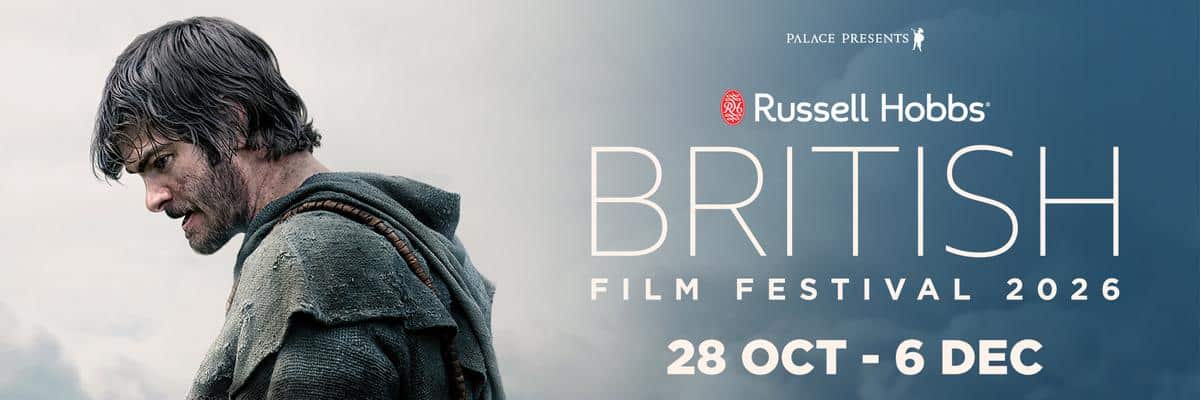
The Choral is playing as part of the British Film Festival at Palace Cinemas Moore Park until December 7, with a program full of the best of British Cinema.
I Swear (British Film Festival Media Preview) Rating
â â â â â
Click if you liked this article
1
Many people still think that Tourette Syndrome is all about swearing, not understanding the deeper complexity and impact of the condition. With education comes acceptance. That is the message at the heart of I Swear, a biopic about John Davidson, the Scottish activist who helped raise awareness of the syndrome after developing symptoms as a teenager. Written and directed by Kirk Jones, the film is a compassionate, beautifully told story that is both heart-warming and heart-wrenching, often at the same time.
While the plot was safe and highly predictable, it was the stunning performances that grabbed my attention and didnât let go. Robert Aramayo, from Rings of Power, plays an adult John so beautifully that all the physical ticks and outbursts feel natural and authentic. Thereâs such a warm humanity to John, and his rejections and setbacks are truly heart-breaking. The swearing, while tragic in their origin, are also timed and delivered so well you canât help but laugh, despite the dramatic consequences. Some lines are absolute classics, with John yelling at the police he has drugs on him, or the judge that heâs a âsee you en teaâ. Aramayo is supported by fantastic cast including Peter Mullan, Maxine Peake, and Shirley Henderson. There isnât a weak link in the chain.
The story begins when John first notices uncontrollable ticks when heâs only 13. Scott Ellis Watson is brilliant as the young John, convincingly playing a confused and scared young boy as the condition destroys what looks like a promising football career and leads to the break-up of his parentâs marriage. With the condition unrecognised and unaccepted, John is considered a trouble-maker, bullied and outcast not only by other school children but the broader community. Itâs devastating.
When John grows up, he lives with his mother who struggles to cope with his behaviour and insists that medication is the solution. When John meets Dottie, the mother of an old school friend, his life begins to change. By showing compassion and understanding, Dottie makes John feel accepted and safe. She tells him never to apologise for something that canât be helped. This acceptance empowers John to build a normal life for himself, eventually helping others with the condition and educating the community about Tourette Syndrome. There were a few moments where the drama became a little too forced, but I gave the authenticity the benefit of the doubt. It might actually have happened that way.
I Swear is not only moving and inspirational, but educational, turning misunderstanding into revelation. The entire theatre came out raving to each other about the power of the story. I canât recommend it enough.
I Swear is showing as part of the British Film Festival at Palace Cinemas Moore Park from November 5 to December 7, with a program full of the best of British Cinema.
Blur: To the End is a documentary that takes fans behind the scenes of Blurâs long-awaited return to the studio to record their first album in over a decade. The film captures the band’s journey, from their reunion in Hong Kong to the creative process of making new music, offering a mix of nostalgia, humour, and candid moments.
Those looking for a 101 on Blur’s history or surprise revelations of previously unknown secrets from the band’s past will have to look elsewhere. This movie is for lifelong fans. Itâs not an introduction to Blur or the band members. It’s for fans who know the mythos and are excited to tune in for the latest chapter.
Though the documentary focused on the lead-up to the new tour and the creation of the new album, the audience gets a peak behind the scenes at the surprisingly calm creative process of talented people with a complicated history. A group of people who love the music and want to keep feeding that love, in whatever form it may take.
While the film gives little context as to how the band met or how they bounded, many nostalgia-filled stories are exchanged between the members as though they are catching up over a pint in a pub. Continuously rewarding the long-term fans of Blur, fans who will be excited to see welcomed along to this next chapter.
The film has a very intimate feel, even for a documentary. The audience is shown the band members’ homes, where the bandmates wear their comfort with each other casually. This does mean that the tone can lean oddly morbid at times. When they are philosophising about life and their relationships, it feels like an end-of-life reflection rather than an acknowledgement of a midpoint. The mid-50s might not be the prime rockstar age, but 50 is far from the end of their musical life.
Given the zeitgeists piqued interest in Brit-pop, with the oft-talked-about Oasis reunion on the horizon, it seems like a missed opportunity not to explore the musical impact Blur had in leading the British bands of the ’90s. Instead, the focus is where they are now, only looking forward.
Truly what you glean from this film is that it is hard to be in a band. It’s much like a family. You all love one thing, but personal dynamics can often get in the way.
To be this successful and this creative after a long and turbulent time together is no small feat. What we see is a group of people who have a genuine love for each other and the music. Gone are the glitz, the glamour, the tension of early rock and roll-dom. Here, you get to join some old mates catching up over Victoria Sponge.
This is a story about a very unsure, depressed, anxious young man who just happened to form the greatest rock and roll band of all time.
Iâm a fan. Iâve been a fan of The Rolling Stones since I can remember. Like The Beatles, theyâve always been in my orbit. As a child of the 90s and 00s growing up with parents who were children of the 60s and 70s, their music was always in the atmosphere. Iâve watched the documentaries, read the authorised biographies, Keithâs immense book âLifeâ, and the unauthorised ones. Iâve screenshotted the photos for the fashion and bought the Stones t-shirts.
Mick and Keith were childhood friends who bumped into each other at a train station when they were teenagers. Keith was going to art school at the time, and Mick was studying at the London School of Economics. Keith spied a couple of records Mick had under his arm. A Muddy Waters LP and Chuck Berryâs greatest hits were all it took for the greatest rock and roll duos to come together. The glimmer twins were born.
Mick and Keith started hanging out at the jazz bars in London, where they met Charlie Watts and Brian Jones. The boys formed a band. They advertised for a bass player, and Bill Wyman answered the call. And then the well-known dot points that go something like;
An English cover band for American Rhythm and Blues, hanging with the Beatles, Satisfaction, Marianne Faithful, drug busts, rock and roll circus, Sympathy for the Devil, Anita Pallenberg, Brian dies, Mick Taylor joins, Hyde Park, Hells Angels, exiled in France; Bianca Jagger, more drug busts, fashion, America, Keith arrested in Canada, rehabilitated, Ronnie Wood, stadium band, middle-aged rockers, Jerry Hall, older rockers, greatest hits albums, Sir Mick, Martin Scorsese, crossfire hurricane, 50th anniversary, tour tour tour, Charlie passes away. And here we are in the present.
Brian Jones has always been a dot point in music history.
For a band thatâs been going on for as long as the stones have, 2024 coming up to 62 years – theyâre official date of conception being 1962 â the interest in their story, music and the passion of their fans is a beautiful thing. They continue to be the soundtrack to countless generations, producing a best-selling studio album as recent as 2023, Hackney Diamonds. The Rolling Stones have always been relevant. Itâs hard to think of them as new and up-and-coming. Especially with the inclusion of Bill Wyman in the documentary, now an old man in his 80s.
Brian Jones and the Stones is not an in-depth portrait compared to others, like âCrossfire Hurricane,â but it does give an intriguing look at Brian Jones.
I knew Brian was the catalyst in getting the stones together, and I knew he came up with the name after Muddy Waterâs song âRollinâ Stoneâ This was his vision for The Rolling Stones, being a cover band of Muddy Water, Howlinâ Wolf, Robert Johnson. It’s not a pop band performing their own compositions about Satisfaction or Jumping Jack Flash. Which is such a crazy notion for us fans. You can see why Mick and Keith and the rest of the band couldnât see Brianâs blinkered view on this. The Stones were hit makers, no question about that. And I wouldnât be so brash as to call Beggars Banquet or Between the Buttons âpopâ. This is Rock, albeit popular rock.
Through this film, Brian’s complexities are explored in a melancholy way. Many friends and comrades describe him as a sweet guy, an immensely talented musician, and a gentleman. And then, as success grows, money comes in, opportunities for debauchery come, and his other side comes to the fore. He was a complicated guy before being a Rolling Stone.
His parents kicked him out as a young man for getting his girlfriend pregnant. And a pattern emerges. He charms his way into the homes and families of each new girlfriend he acquires before he is 25âfive on the filmmakerâs count. Five children were born to five different women. The first is put up for adoption. The film takes the girls’ point of view as the narrators of Brianâs story, which is a great take, I think. The love he showed them mixed with the abandonment. Heâd move in with the girlfriendâs family, get her pregnant and casually move on. Back on tour, back as a Rolling Stone.
One of his girlfriends describes him as a gentleman who would open doors for her and be loving. âWhen he met my mother, he kissed her hand. Who does that?â Well, most people would say a guy who knows how to play the field does that. A guy who was without a home or loving family and needed one to live with. Sadly.
One unhappy tale comes from Linda Lawrence, mother of his son Julian. Linda needed money from Brian, raising their son on her own, and Brian just laughed at her from his balcony. Brian was with Anita Pallenberg by this time. Perhaps not the best influence on a guy with crippling low self-esteem. Anita Pallenberg, who later went on to date and have children with Keith Richards, is no shrinking violet.
Humans all have the capability of good and evil, and Linda believes that Anita Pallenberg brought out Brianâs vicious sideâteasing people and spiking their drinks. When you mix that with fame, money, every available drug in his system, and his band growing tired of his moods and unreliability, Brianâs fate feels like a foregone conclusion.
This is a documentary for the fans. Vintage Stones on the big screen. Their early, unpolished performances in black and white in little theatres across England and Europe, Mick Jagger becoming THE Mick Jagger, singing in a turtleneck jumper, well before the jumpsuits and lavish costumes. Weâre taken back to London in the 60âs, a promised land that will always be rhapsodised and always looks cool to those of us who were never there.
Brian was a lost soul with a glimmer of hope to reach his full potential with the stones. A boy who longed for his parentsâ approval, the parents who kicked him out before he was making money. When the drug busts were happening in 1967, Brian sent a note to his parents asking, âplease donât think badly of meâ. Heartbreaking. Especially with the letter from his father found years after Brains death.
Brian needed to escape something: a pain, a deep insecurity, the five children he had but didnât know, the girls he abandoned. And drugs were his way to do that. I came away feeling not in awe, just desperately sad for him. An interviewer asks him about his songwriting. You see Mick and Keith stop their pretend chatting in the background and shoot their gaze over to see what Brian was going to say. To Brianâs credit he says itâs not him who writes the hits, itâs Mick and Keith.
âWhat would you do differently now that you know how hard you have to work?â is the next question for Brian. âIâd do it all the same, 100 times over.â
Brian Jones. Gone but not forgotten.
The British Film Festival 2024 runs from Nov – Dec 8. To book tickets to this or other films click https://britishfilmfestival.com.au/ for session and venue details.
Spread the word on your favourite platform!
Subscribe to What's The Show
Reviews, show news and what is on, straight to your inbox.