Parky

Parky

Parky Rating

★★★★★

Click if you liked this article

Michael Parkinson, or Parky as he was affectionately known, was a child of his time and place which influenced how he became a man, an icon. ‘Parky’, the documentary, gives us an insight into the man who was known for his journalistic interviewing style to encourage movie stars, politicians, musicians, writers and others to open up. What is interesting is how closed and private he was and that is where this documentary reveals the man behind the persona.

Many of us grew up with Parkinson being the equivalent of Graham Norton these days. In post 1960s, a wave of different English accents, education and background emerged due to a new political climate. It is important to understand that a few years before this he wouldn’t have even been considered. With a broad Yorkshire accent, no real depth of education but having got a chance in journalism and through sheer talent for writing and investigating, he took the opportunity to launch a new style of television program. The audience lapped it up.

This documentary, narrated by his sons, wife and friends reveals a self-effacing man whose love of cricket and unfortunately at times, alcohol, reveals a man of depth who is searching for understanding of himself and others. A key point highlighted by Parkinson himself is his amazing wife, a renowned interviewer herself, who sacrificed her career recognising that there was room for only one television star. She is as fascinating as she reveals her part in his life.
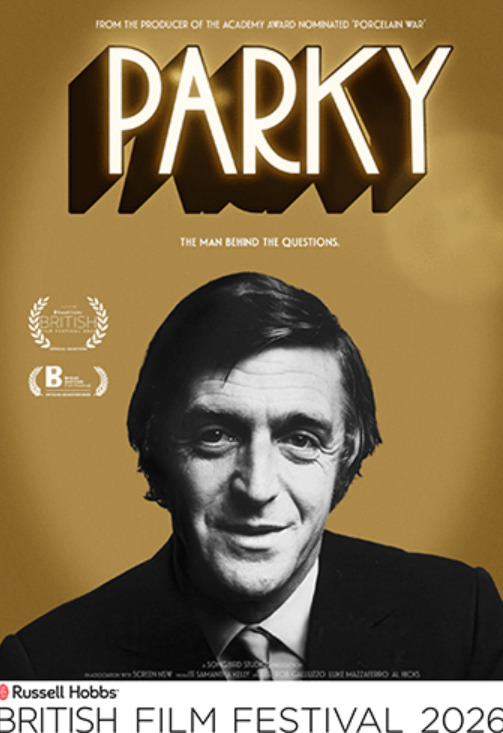
 

Watching the man, it is clear that he also has a face that the camera loves and a charisma that can’t be bought or learnt. He would research interviewees not to catch them out but to find a deeper meaning to them and their lives. We also see a man who loses his identity himself when his popularity diminishes and he and moves into heavy drinking. He acknowledges this and with the help of his family overcame it. It is revealing that Russell Harty, another renowned UK personality said that Parkinson often asked questions of his guests that were really about himself.

It is a fascinating documentary not only of the man but also of the eras that he covered with questions he himself said he wouldn’t ask in another time. It charts the change in stardom from the fading Hollywood movie star stable of the likes of Fred Astaire, Bette Davis and others to the new movie stars coming into vogue such as Helen Mirren, Tom Hanks, George Clooney and the emerging celebrities such as the Beckhams and Robbie Williams. He was clearly an interviewer who said he only wanted interesting people to meet and towards the end of his long running show appeared bored. It was time to go and he moved back to writing and radio.

The fact that he is known, like other icons of any era, by one name says it all. Think of Ali, Madonna, Cher, Sting, Oprah and Pele, guests he interviewed. He wouldn’t have dreamed to be considered in their realm. Michael Parkinson also represented decades of change from the 1960s through to 2022 and passed away in 2023. His group of friends reflect this man and include the comedian Billy Connolly, Dickie Bird from the cricket world and Laurie Holloway, a renowned UK TV music and jazz composer. A child of Yorkshire pit miners with only 2 ‘O’ levels became a global personality with a legacy of style and journalism. He was unique and to quote him, ‘It's not so much about what you ask as what you don't ask’.

To book tickets to Parky, please visit https://www.palacecinemas.com.au/movies/bff26-parky.
Spread the word on your favourite platform!

Arsenic and Old Lace - Join the Brewsters for a Glass of Elderberry Wine!

Arsenic and Old Lace

Arsenic and Old Lace Rating

★★★★★

Click if you liked this article

7

The Theatre on Chester’s production of “Arsenic and Old Lace” was full of all the good things a black comedy play should have. A dysfunctional family, a dead body (perhaps even more than one) two sweet little ole ladies, oblivious policemen, competitive murderers, a plastic surgeon of dubious morals, a menacing villain, true romance and a small dose of poison in homemade elderberry wine…

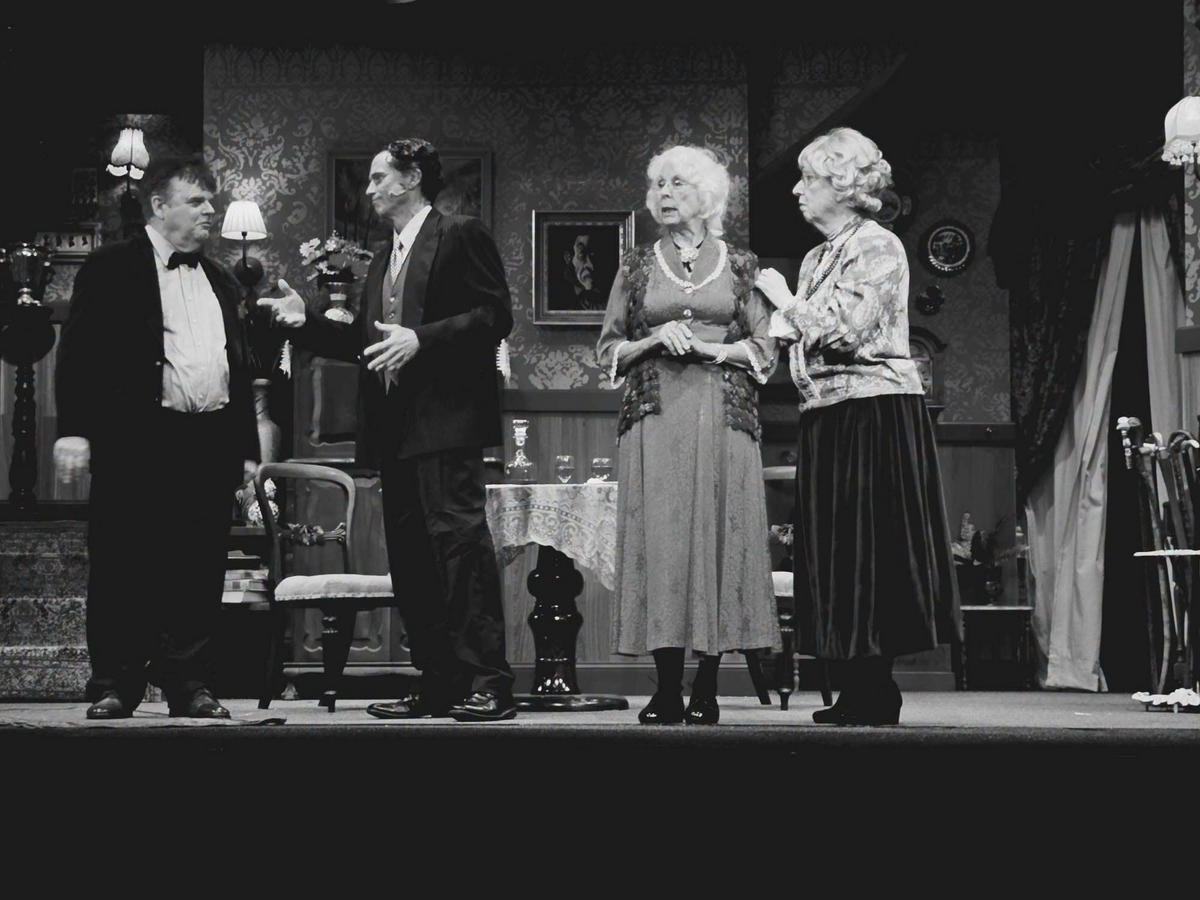
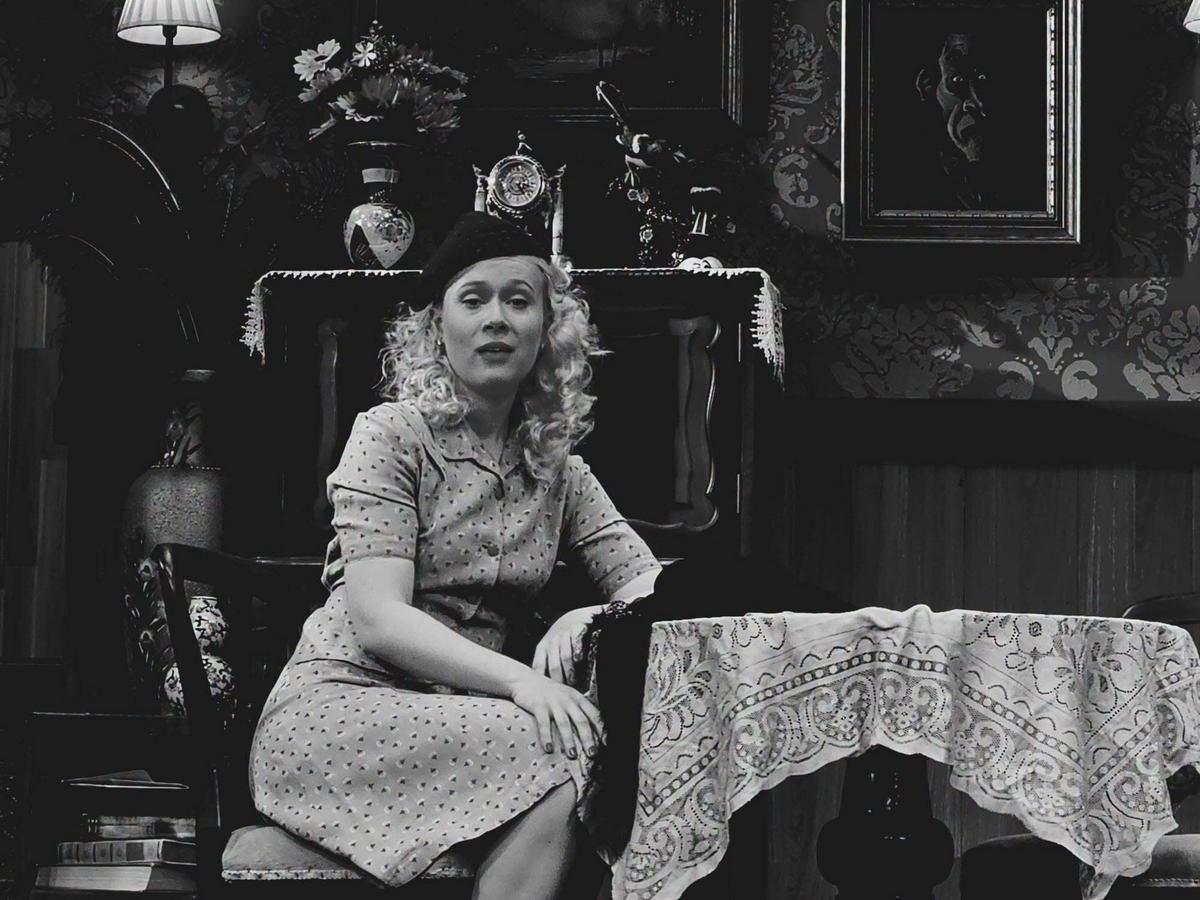
When the curtain opened, it revealed an impressive set design with such attention to details that it stood out to me as a world class theatre set. Leon Coward, the set designer, with props by Sasha O’Brien and Coward, placed the audience immediately into the lavishly decorated upper class mansion during the 1940’s in New York City. Wallpaper claimed the walls from floor to ceiling. Featured were landscape paintings and portraits, notably one of a Brewster ancestor, a doctor and patent medicine inventor who made the family fortune. There were wood cabinets, solid furniture, fancy lamps and even a window seat (we’ll come back to that!).

One prop that stood out was an oversized vase filled with tall peacock feathers that made me feel nostalgic remembering this type of decor in a relative’s house when I was young. The grand architecture, which included stairs leading up to a second story and the stairs leading up to the front door of the house from the theatre’s floor, created a sense of grandeur and an assumption that there were many more rooms and sprawling grounds. The audience is told at a later date, that the house is next to a cemetery, so perhaps this is a negative for the property’s appraisal!

“Arsenic and Old Lace” revolves around the Brewster family. Mortimer (Ryan Atkins) a theatre hating drama critic, is on his way out to a job with the next door neighbour, the pastor’s daughter Elaine (Olivia Bartha). After proposing to Elaine in an awkwardly clumsy way, she leaves to speak to her father. Two sisters, Martha (Carla Moore) and Abby (Christine Rule) are sweet, likeable sisters. Teddy (Tracey Okeby Lucan) is the fourth resident in the house. He believes he is President Teddy Roosevelt and is responded to with salutes and respect from others, who humour him. This interaction between Teddy and the other characters remain a part of the ongoing comedic theme. Lucan plays a serious president with straight faced perfection, commanding respect though his administration who he believes is managing several military and colonial conflicts. His preparation to rush up the stairs shouting “Charge!” never failed to elicit uproarious laughter.

After lifting up the window seat, Mortimer discovers a body. Atkins’ portrayal of his character from this point on was a stand out. His facial expressions and body language complimented Mortimer’s stuttering incredulity at finding the body, and then increased when he discovered that both of his aunties were responsible. As more secrets were uncovered, Mortimer becomes even more freaked out and I was hooked!


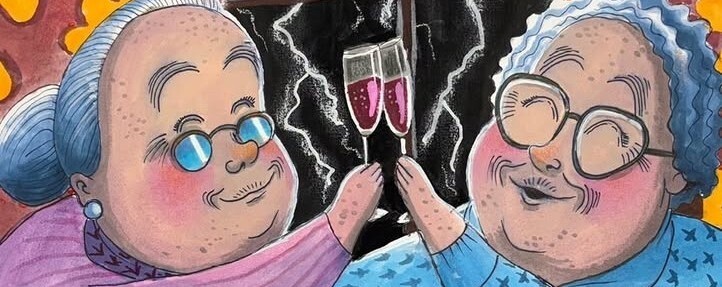
Kudos to the Brewster aunties, with Rule and Moore commanding the stage both separately and as a team. Their comedic timing and portrayal of “the sweet little ladies” who believe they are doing their victims a good deed is hilarious. It’s their perceived innocence and likeable characteristics that made me almost want to have some tea and scones with them. But never, ever drink their homemade elderberry wine.

The third brother, Jonathon (Scott Hall-Watson) and his friend Dr Einstein (Alan Long) arrive at the Brewster home. Jonathon has been away for several years and he and Dr Einstein are hiding out from the law. To this end, he’s had several plastic surgeries by Dr Einstein and this plus the scars on his face make him ghastly and unrecognisable to his aunties. Well done to Hall-Watson, who is menacing and intimidating as Jonathon, making him a scary villain putting the dark in a comedic play. Einstein and Jonathon bring quite a few complications into the Brewster house.

The rapid fire chaos kept rising as the play went on under the expert guidance of the director, Isaac Owen. As the characters became more and more reluctantly involved in each other’s lives, the play’s fast pace and mounting disasters kept rolling. This included a very funny segment from Officer O’Hara (Jack Tyzack) who unwittingly became somewhat of a hostage taker himself, much to the audience’s amusement. Keep an eye on Mortimer during this scene and you’ll catch Atkins at his best. I have seen Atkins in A Kingdom of Fools 4 months ago, which he wrote and directed, and it was easy to see how seamless it was for him to capture the ridiculous and transform it onto the stage.

The costumes by Kate Alway, communicated the 1940’s perfectly with the men looking sharp in pin striped suits and Bartha’s Elaine looking beautiful in the dress common of the times.

“Arsenic and Old Lace” written by Joseph Kesselring was a riot of a play! It was rollicking fun from the beginning to the end. Go see it to experience a farcical comedy, and for a hearty laugh.

Season: November 6 - November 28 2026
Run time: approximately 2 hours with a 20 minute interval
The Theatre on Chester, Corner of Chester St & Oxford St, Epping
Tickets:
www.theatreonchester.com.au/post/arsenic-and-old-lace

To book tickets to Arsenic and Old Lace, please visit https://www.ticketor.com/theatreonchester/default.

Spread the word on your favourite platform!

Steel Magnolias

Steel Magnolias

Steel Magnolias Rating

★★★★★

Click if you liked this article

5

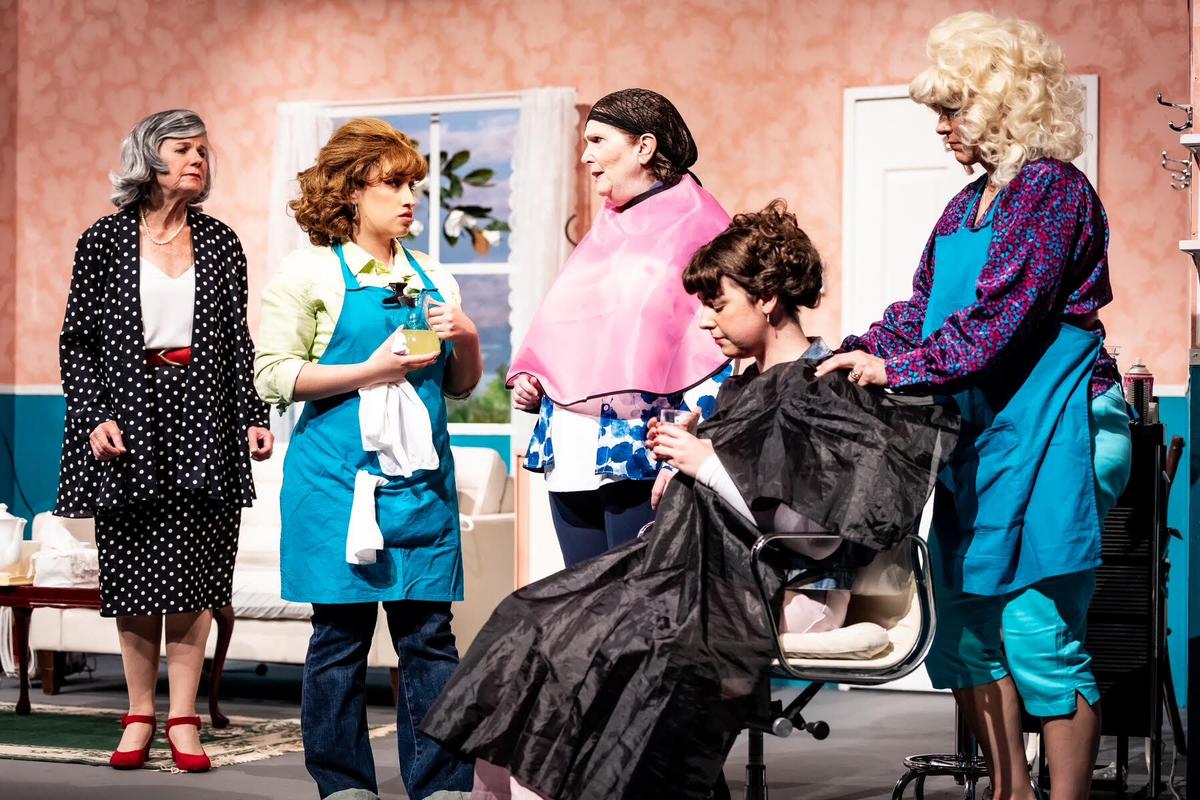
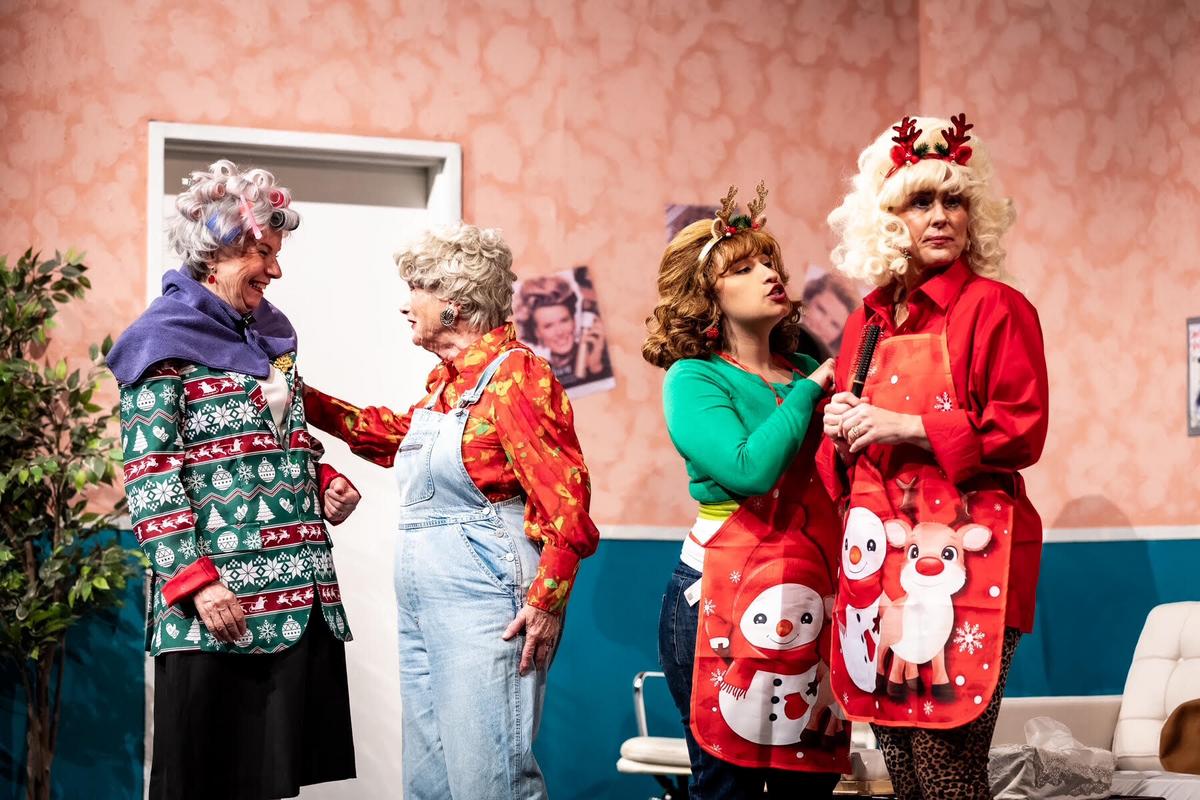
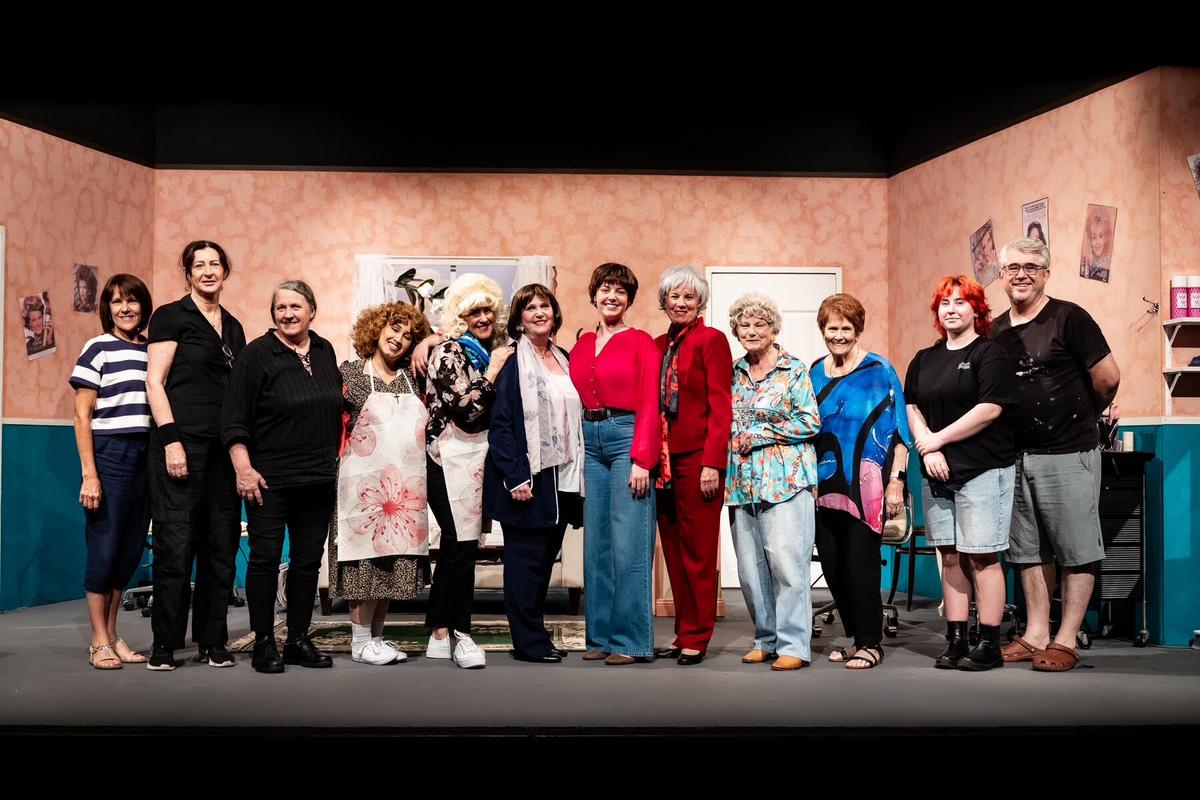
There is a reason Steel Magnolias continues to appeal to audiences, particularly those already familiar with the much-loved film. The beauty salon feels like a real workplace. The set is convincing, the hairdressing activity believable, and the women’s relationships emerge as naturally from their work as from Robert Harling’s dialogue. This matters in a play where love and grief grow out of gossip, teasing and ordinary friendship.

Mel Day gives Truvy the right combination of warmth and no-nonsense authority. Her salon is a place of welcome, but it is also a business, and Day never loses sight of that practical side of the character. Alongside her, Evelyn Georgia has the more complicated task of portraying Annelle’s evolution from an uncertain newcomer into a confident member of the group. The two often work at opposite sides of the stage, yet their growing bond remains apparent. Georgia keeps Annelle’s changing circumstances and newfound religious conviction connected to the anxious young woman who first entered the salon, rather than making her development feel like a succession of disconnected characters.

Lyn Lee has some of the play’s funniest dialogue as the irascible Ouiser, and delivers it with excellent timing. But her achievement lies equally in finding the seriousness beneath the barbs. Ouiser may be difficult, but there is genuine affection and loyalty in her friendships. Margaret Short’s Clairee is an ideal foil: every bit as capable of a cutting remark, but with the elegant assurance of someone who can make an insult sound like a social courtesy. Lee and Short understand the rhythm of their exchanges and the long familiarity behind them.

Crucially, neither pair works in isolation. Even when attention falls elsewhere, the actresses keep the salon socially alive, listening and reacting without distracting from the scene.

Those performances provide the humour and texture of the production. Its emotional centre, however, belongs to Grace Johnson as Shelby and Christiane Brawley as her mother, M’Lynn.


Johnson makes Shelby naturally warm and engaging, with a conviction that becomes particularly clear when she announces her pregnancy despite the medical risks. Shelby seems almost oblivious to her mother’s fear, but she is neither frivolous nor uncertain. She has made her decision. As she speaks, Brawley turns away from Shelby so that the audience can see M’Lynn’s face. It is an extraordinarily effective choice. With little dialogue, Brawley conveys genuine terror for her daughter while Shelby continues to speak with optimism. Their contrasting performances establish the tragedy’s emotional foundations.

Brawley’s greatest achievement comes later, in two passages that demand almost opposite emotional registers. When M’Lynn describes Shelby’s death, she does so quietly, with honesty and clarity. The gentleness of the account makes her love unmistakable, and the effect was evident in the tears around the auditorium. Brawley does not need to press for emotion; she trusts the words and the character.

Then the composure breaks. Within minutes, Brawley moves from controlled tenderness to raw, almost ungovernable rage and anguish. The shift is startling but entirely credible. Much of this passage leaves M’Lynn carrying the dramatic weight without another character to play directly against. Brawley holds it through the force and specificity of her performance.

Even the release into comedy is carefully judged. When Clairee suggests M’Lynn hit Ouiser, Short and Lee time the moment perfectly, allowing laughter to emerge from grief without diminishing it.

Brawley and Johnson deserved the particularly enthusiastic applause they received. This is an ensemble production whose women feel like a community, but its finest achievement is the mother-daughter relationship at its heart. Whether the audience knows the story from the film or encounters it anew, the love is what makes the loss matter.

To book tickets to Steel Magnolias, please visit https://www.guildtheatre.com.au/reserve-tickets/.

Spread the word on your favourite platform!

Snowflake

Snowflake

Snowflake Rating

★★★★★

Click if you liked this article

4

As the festive season approaches, our thoughts inevitably turn to Christmas and family. But alongside the excitement of celebrations, there is often another, less comfortable side to the season: family tensions, unresolved arguments, estranged relatives, and for some, perhaps a painful question of whether there is anyone to share it with at all.

This is precisely why 'Snowflake' feels so perfectly timed. A beautifully observed, emotionally charged play, it explores the complicated, messy and deeply human relationships that Christmas has a way of bringing to the surface.

At its heart is Andy, a lonely father desperate to reconnect with his estranged daughter. But this is far more than a story about a father and daughter trying to make peace. Written by Laurence Olivier Award-winning and BAFTA-nominated playwright Mike Bartlett (King Charles III, Doctor Foster), this critically acclaimed festive production delves into the emotions we often struggle to express: the unconditional love we have for our children and parents, the judgements we make, the acceptance we sometimes withhold, and the longing to repair relationships that have been broken – often with responsibility lying on both sides.

And be warned: this is a real tearjerker. I cried twice! More importantly, I left the theatre thinking differently about how I approach family disagreements and the importance of listening to the people we love.

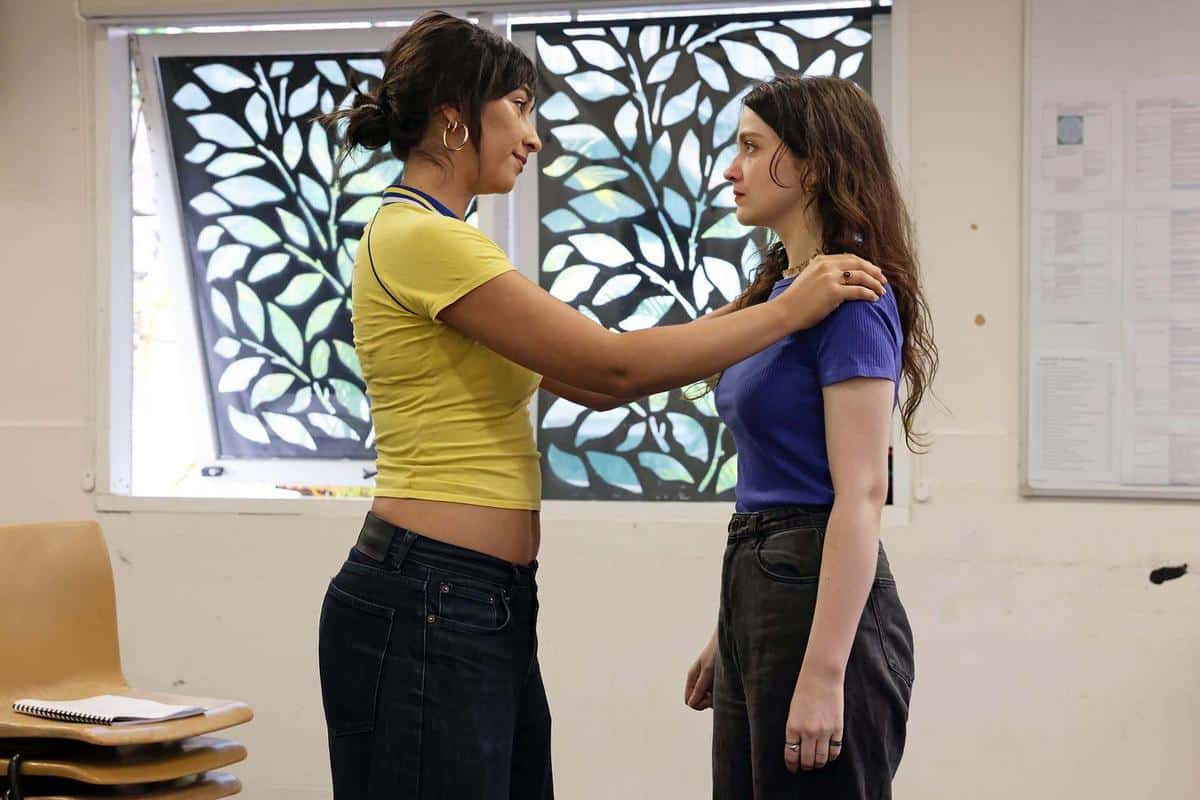
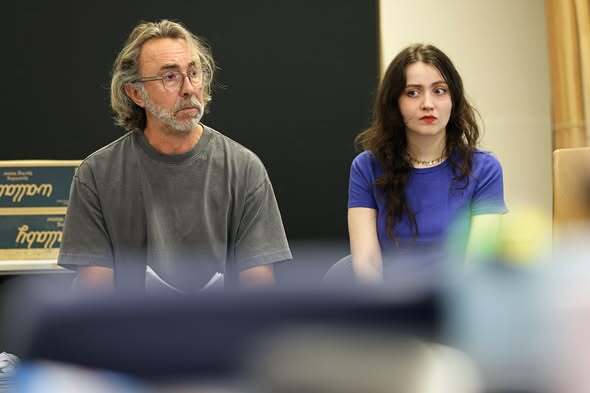
James Lugton, as Andy, is absolutely brilliant. His portrayal of a father desperately seeking reconciliation is extraordinarily moving. We see a man carrying years of unspoken emotions, struggling to find the words to express his love, regret and longing.

Claudia Elbourne, as Maya, is equally compelling. She plays a gentle, reserved young woman who eventually finds the courage to confront her father. For Maya, this meeting is not simply about revisiting the past; it is about recognising that she cannot continue carrying the weight of their unresolved relationship.

Lilian Alejandra Valverde, playing Maya's girlfriend, is another wonderful presence. Strong, intelligent and compassionate, she provides a steady source of support as Maya navigates this emotionally difficult encounter. Her character brings warmth and balance to the story, reminding us how important it is to stand beside the people we love when they are facing their own family struggles.


The stage design plays almost a fourth character. It is not simply an attractive Christmas setting; it becomes an essential part of the storytelling.

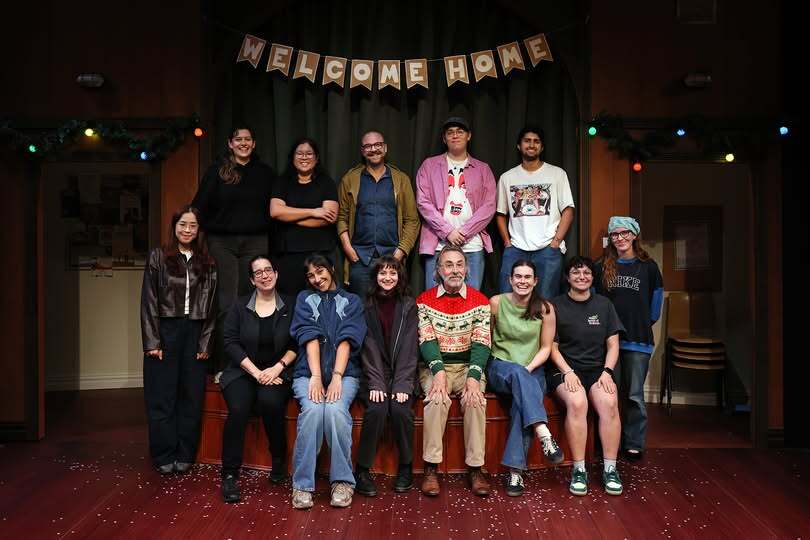
The meeting takes place in a hall Andy has rented for the evening. Since the death of his wife, Andy has been unable to celebrate Christmas. The season has become a painful reminder of his loss. Yet, in an attempt to make peace with Maya and show her how much she means to him, he decides to recreate the Christmas atmosphere of happier times.

Andy is not merely decorating a room; he is trying to recreate a shared memory, to bring back a little of the happiness they once knew and to show his daughter that he is ready to open his heart.

The falling snowflakes are particularly evocative. They add a sense of tenderness and magic to the production, almost reflecting Andy's wish to soften the distance between them. Against this beautiful Christmas backdrop, the emotional weight of their conversation becomes even more powerful.

One particular line from Maya stayed with me long after the performance:

"Just listen to me."

Such a simple request, yet one that carries enormous emotional weight.

It made me reflect on how often we allow our own opinions, frustrations and desire to be right to get in the way of truly hearing the people we love. How frequently do family disagreements become battles in which everyone wants to defend their position, but nobody is willing to stop and listen?

'Snowflake' gently challenges us to reconsider this behaviour. Perhaps reconciliation does not always begin with an apology or an explanation. Perhaps it begins with something much simpler: giving someone the space to speak without interrupting, judging or immediately defending ourselves.

To listen, not to offer advice, not to argue, not to prove a point, but simply to understand.

And perhaps, just as importantly, to accept that we can love someone deeply while disagreeing with their choices, opinions or way of seeing the world.

As Christmas approaches, when family expectations and old tensions can become particularly difficult to navigate, this play feels especially relevant.

A wonderful piece of theatre – and perhaps one of the most meaningful Christmas gifts you can give yourself this season.

To book tickets to Snowflake, please visit https://www.ensemble.com.au/shows/snowflake/.

Photographer: Prudence Upton

Spread the word on your favourite platform!

Subscribe to What's The Show

Reviews, show news and what is on, straight to your inbox.