Catch As Catch Can

Catch as Catch Can

Catch as Catch Can Rating

★★★★★

Click if you liked this article

2

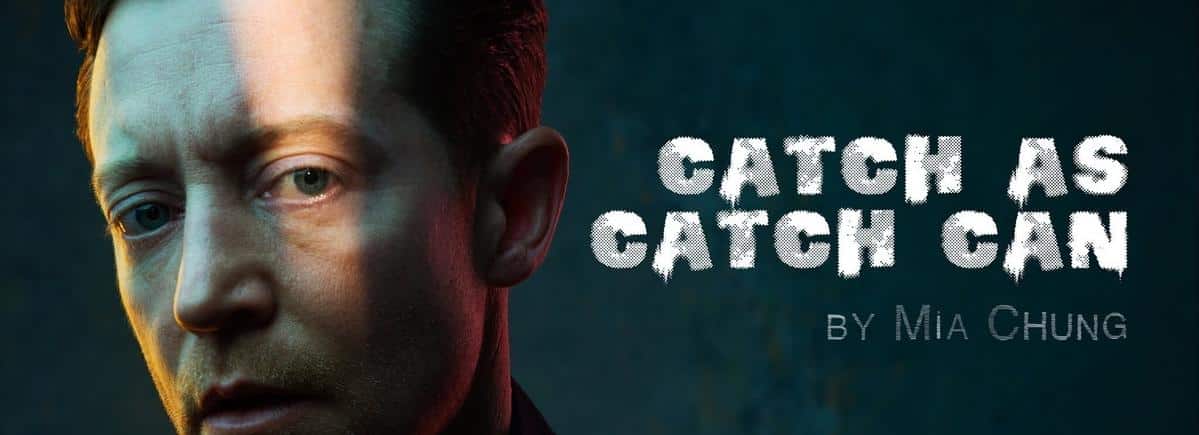
The title 'Catch as Catch Can' carries an evocative historical resonance. Originally a style of submission wrestling that made its way into the early modern Olympic Games, "catch-as-catch-can" was defined by a stark absence of restrictive rules where almost any hold, tactic, or maneuver was permissible to pin down an opponent. Idiomatically, it has come to mean achieving an outcome by any means possible.

In Mia Chung’s play, presented by Empress Theatre and directed with sharp intelligence by Anna Houston, this brutal ethos becomes a haunting metaphor for domestic survival. Here, two generations grapple for control, stability, and love by any means possible. The younger generation—Tim, Lon, and Robbie—yearn desperately for an escape, yet every path, be it a new job, marriage, or parenthood, feels like a trap. To survive, they resort to hiding relationships, feigning composure, and manufacturing facades. Meanwhile, their parents, Theresa and Roberta, yearn for the exact opposite: despite wanting to give their children freedom, they struggle to let go and stop interfering, by leveraging guilt, emotional manipulation, and heavy-handed family role pressure to keep their offspring tethered to the past.

Set within two working-class American families of Italian and Irish origin, 'Catch as Catch Can' operates beneath a surface of everyday conversations and occasional flashes of dark, witty humor. Yet beneath those conversational surface ripples lies a complex web of family tensions, unspoken expectations, and deep emotional wounds.
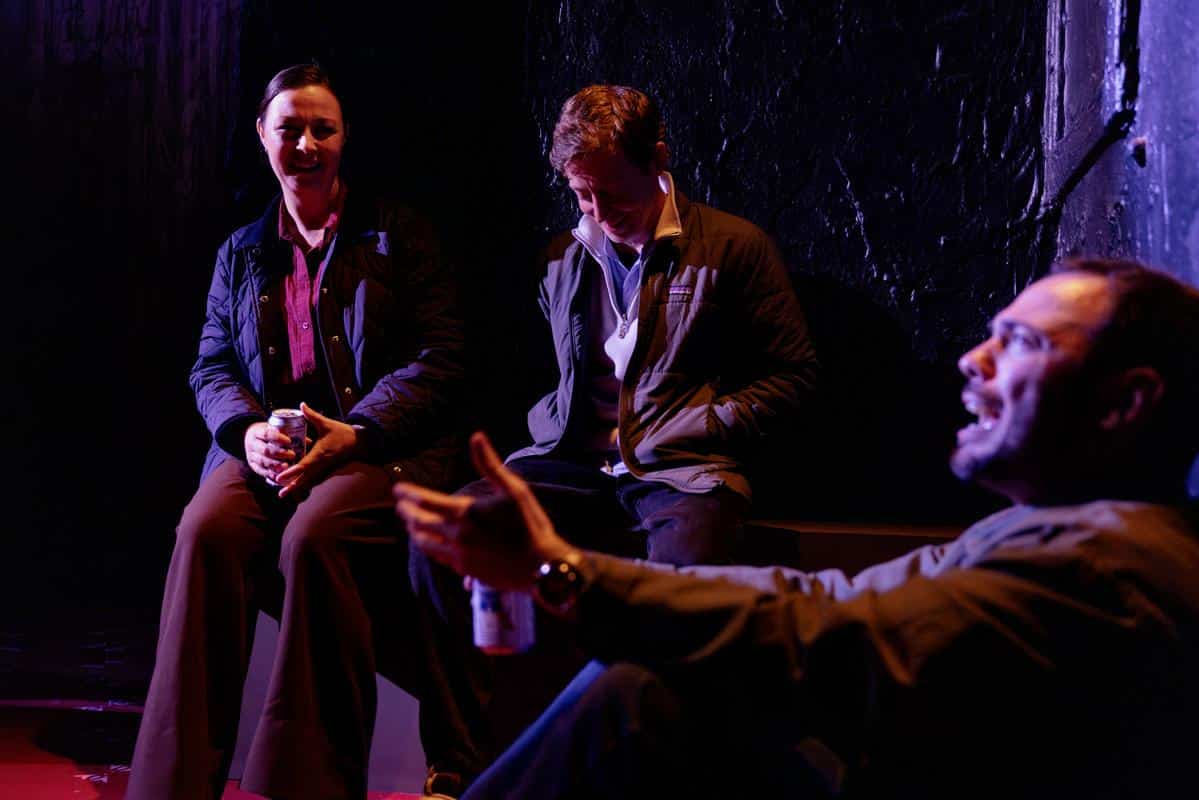
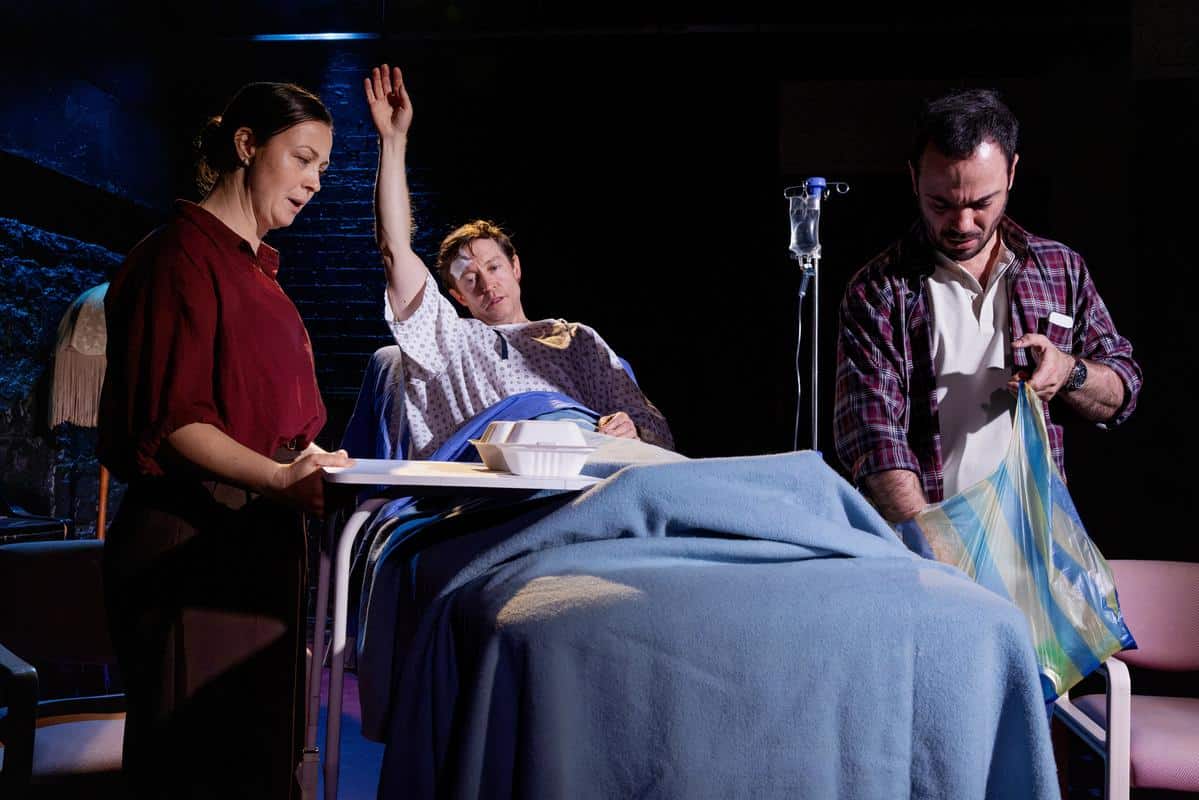
 

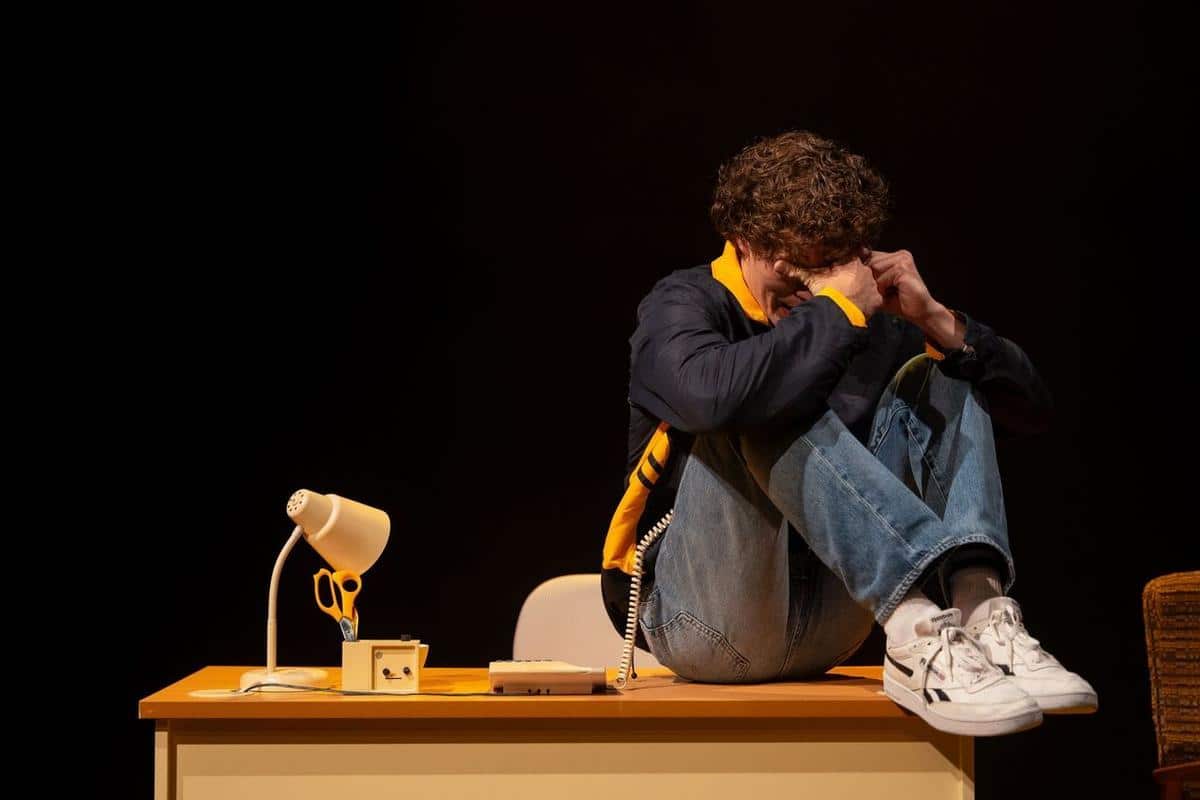
When Tim returns home, the quiet rhythm of his mother’s and neighbors’ lives is shattered. His presence drags old, buried tensions back into the light, culminating in an emotional breakdown that alters the entire atmosphere of the play. Suddenly, the fragility beneath their ordinary routines becomes impossible to ignore, leaving the audience to sit with the uncomfortable realities of family life and the lasting effects of trauma.

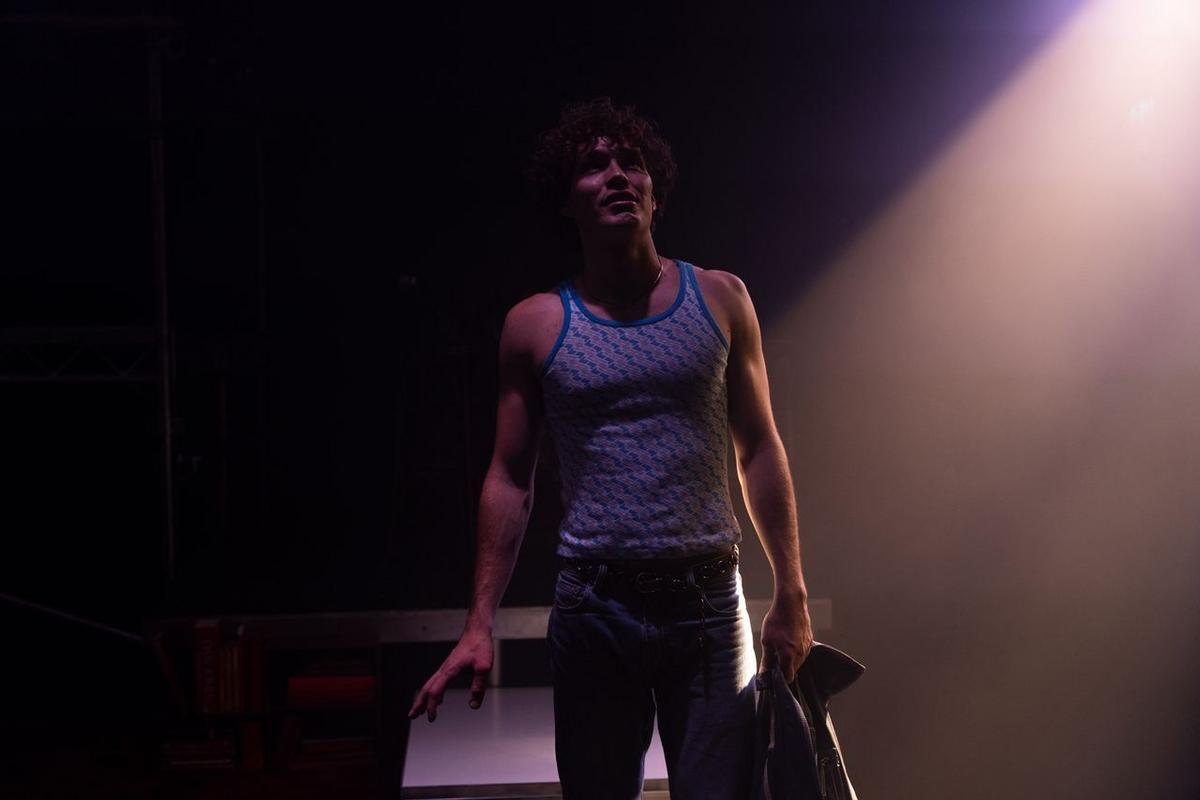
While Chung's script provides a fascinating psychological jigsaw puzzle, the undisputed crown of this production belongs to its virtuoso ensemble. Three actors play six characters, seamlessly crossing boundaries of age and gender without relying on full costume changes or gimmicky transformations. Robin McLeavy plays both Lon and Daniela Lavecchia, David Soncin plays Roberta Lavecchia and Robbie, and Andre de Vanny plays Tim Phelan and his mother, Theresa.

To watch these three deliver a performance of such extraordinary precision, physical control, and emotional depth is nothing short of thrilling. Without costume changes to rely on, the transformations happen entirely through posture, vocal timbre, rhythm, and intention. One moment an actor embodies the rigid, watchful stance of an aging parent; a beat later, with a subtle shift in weight or breath, they become an anxious adult child navigating a fraught conversation.

Robin McLeavy is particularly outstanding, conveying profound emotional pain and the shock of traumatic experiences with an intensity and vulnerability that are difficult to look away from. There is something raw and deeply affecting in her performance that makes her character's distress feel painfully real. David Soncin and Andre de Vanny match her with brilliant versatility, sustaining the shifting world of the play and keeping the emotional pressure cooker boiling.

Dark, complex, and disturbing—yet illuminated by moments of humor— 'Catch as Catch Can' is a demanding and deeply rewarding piece of theatre.

To book tickets to Catch as Catch Can, please visit https://www.oldfitztheatre.com.au/catch-as-catch-can.

Photographer: Phil Erbacher
Spread the word on your favourite platform!

Do We Carry On As Normal, Live In Up Or Party Like There’s No Tomorrow?

Cruise

Cruise Rating

★★★★★

Click if you liked this article

Cruise by Jack Holden
Directed by Sean Landis
Produced Maybelline San Juan
Movement Director Jeremy Lloyd
Starring Fraser Morrison

Cruise is an intergenerational monologue spanning four decades and over 20 characters, celebrating queer nightlife and paying tribute to a generation lost to the AIDS crisis.

Our two central story characters, one a young twink volunteering at an LGBTQIA+ helpline call centre just months before the Covid-19 Pandemic and Michael Spencer, the caller to the helpline. The young twink is left alone one Saturday and Michael calls on a particular anniversary that meaningful to him.

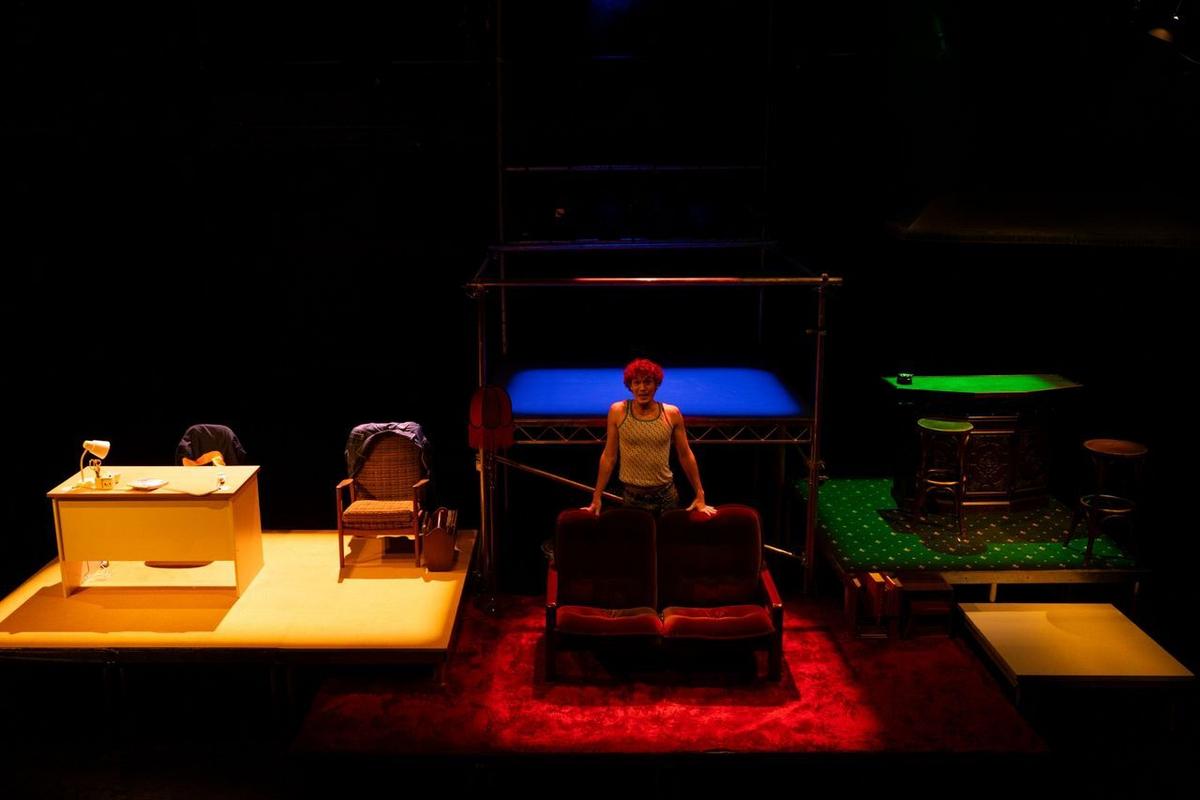
The plot is backlit by the clubs of London’s Soho in the 19802, Michael is living with HIV in 1984, he's told by doctors that he has just four years to live. The show questions how to survive and what to do when given this type of information. Do we carry on as normal, live in up or party like there’s no tomorrow? And if you survive, how can he go on living?

This is a beautiful but heart wrenching play, filled with many fabulous characters to help us breath and have lighter moments in some of the darkest times during the trenches of the AIDS epidemic. Some of my favourite characters were the older ladies depicted in the play.


Fraser Morrison has a Mount Everest to climb and does so with great energy and enthusiasm. It’s an emotional, vocal and physical roll coaster.

The lighting by Tom Hicks is stunning and makes stepping into so many different settings a lot easier with the very limited set that is used.

I did find some of the accents off putting, as I did not know what part of the UK they were from or they were more Australian than British. Having lived in the UK a long time and seen most of the country, it stands out like a sore thumb when they waiver or are a strange amalgamation of several at once. This could have been opening night nerves.

The play runs nearly two hours straight through. I personally felt there should have been an intermission and there are two cliffhanger points where it could have clearly happened. I think this would have let the audience breath a bit more.

Take tissues with you and use the bathroom before the show starts. I think it’s definitely worth seeing.

Cruise runs at the Seymour Centre until October 31st.

To book tickets to Cruise, please visit https://www.seymourcentre.com/event/cruise/.

Photographer: Abraham de Souza

Spread the word on your favourite platform!

Too

Too

Too Rating

★★★★★

Click if you liked this article

1

Non-binary people often aren’t taken seriously. They’re a punching bag for bigots, painted as both laughing stocks and corrupters of the young. The structures of most societies and languages are so gendered that alienation is a part of everyday life. Despite cross-cultural evidence throughout history of identities beyond ‘man’ and ‘woman’, we’ve only recently started seeing attempts to research, articulate and understand what being non-binary looks and feels like. Too is far from the first theatre show about being non-binary (especially in Melbourne), but the creators make one choice that gives it another level of impact: it’s a verbatim show. Except for a short intro, all lines spoken onstage are directly quoted from non-binary interview subjects.

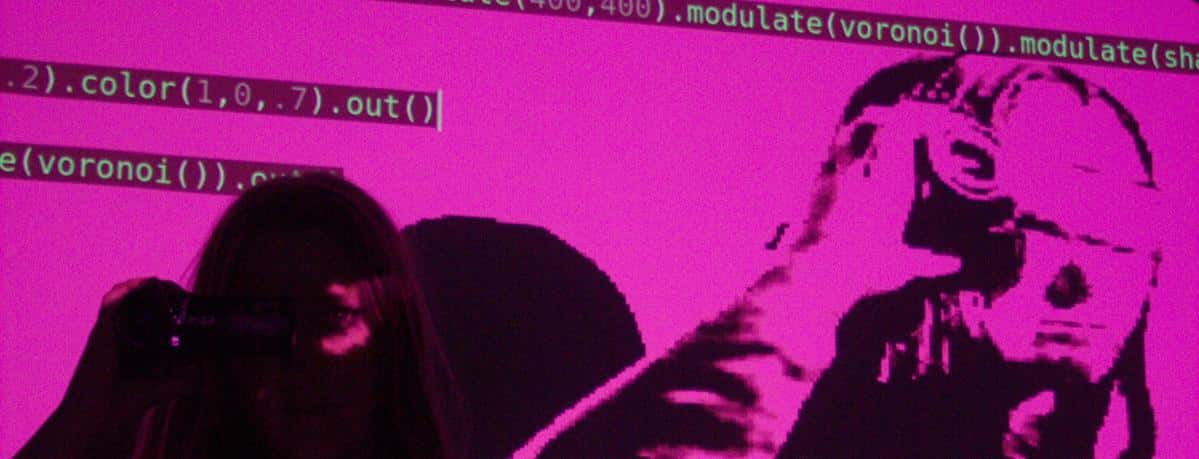
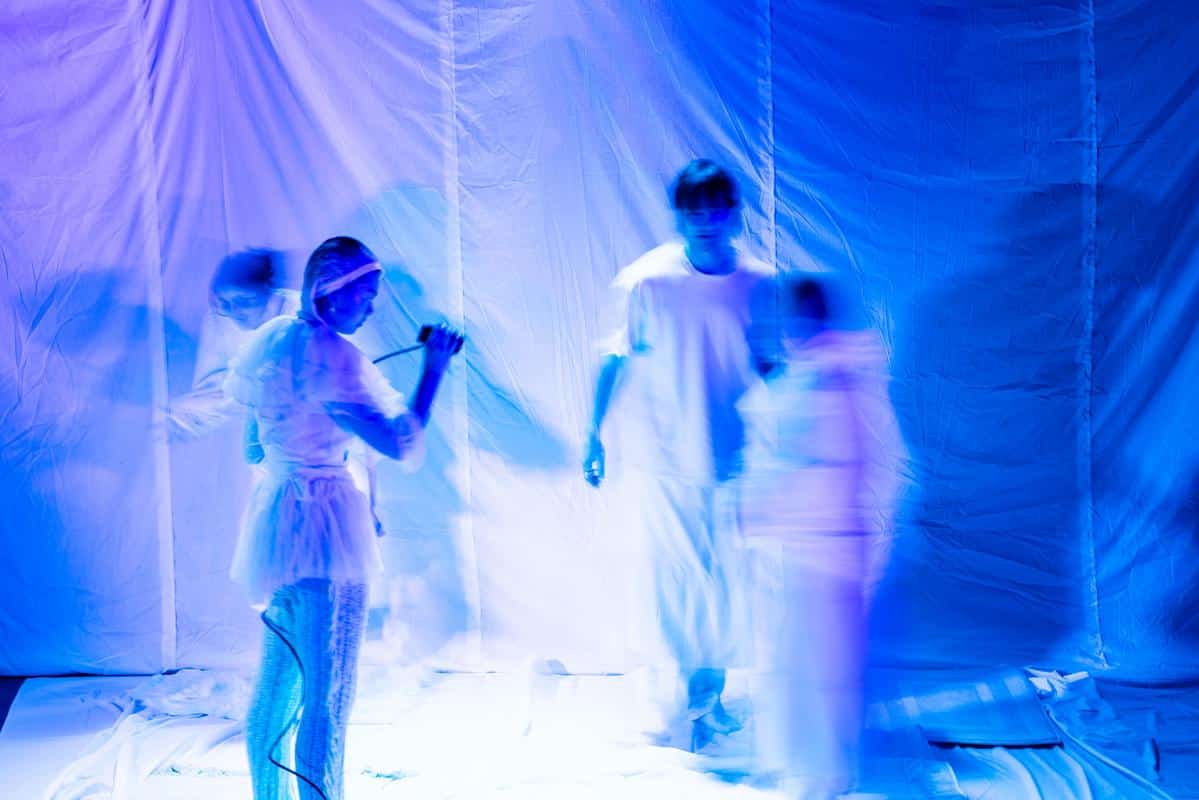
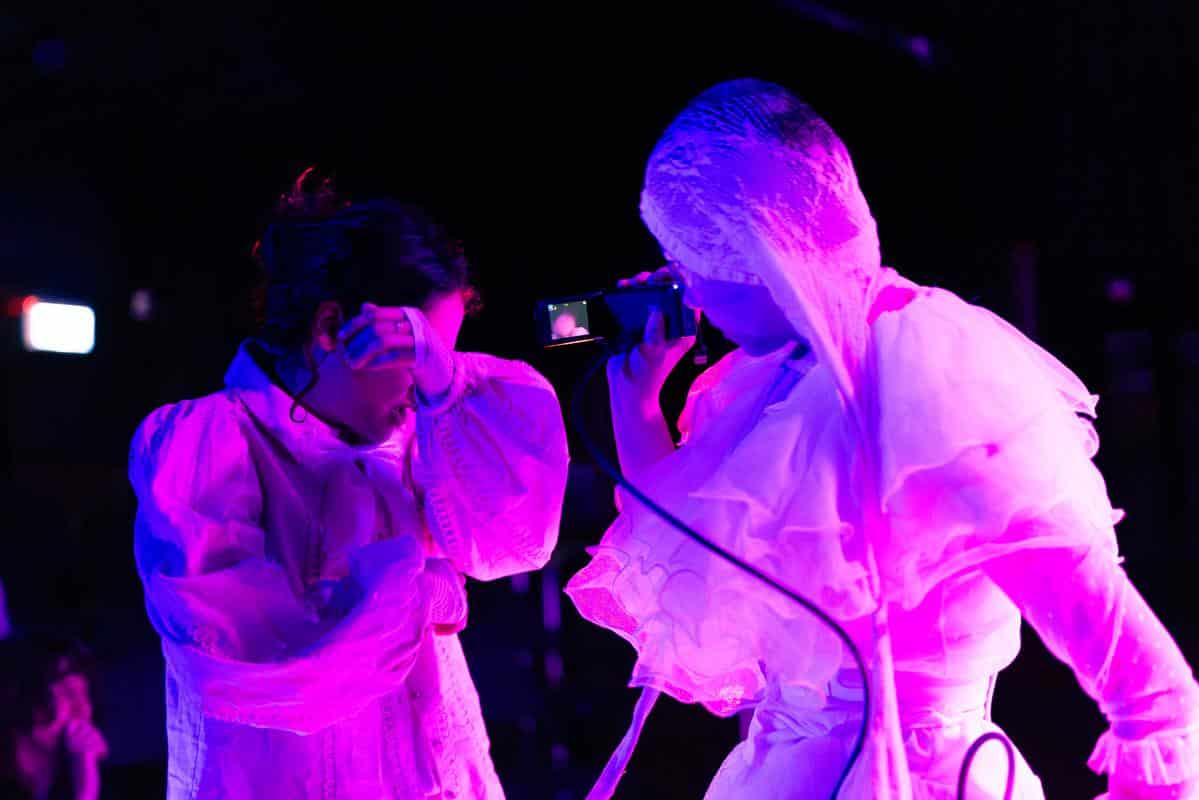
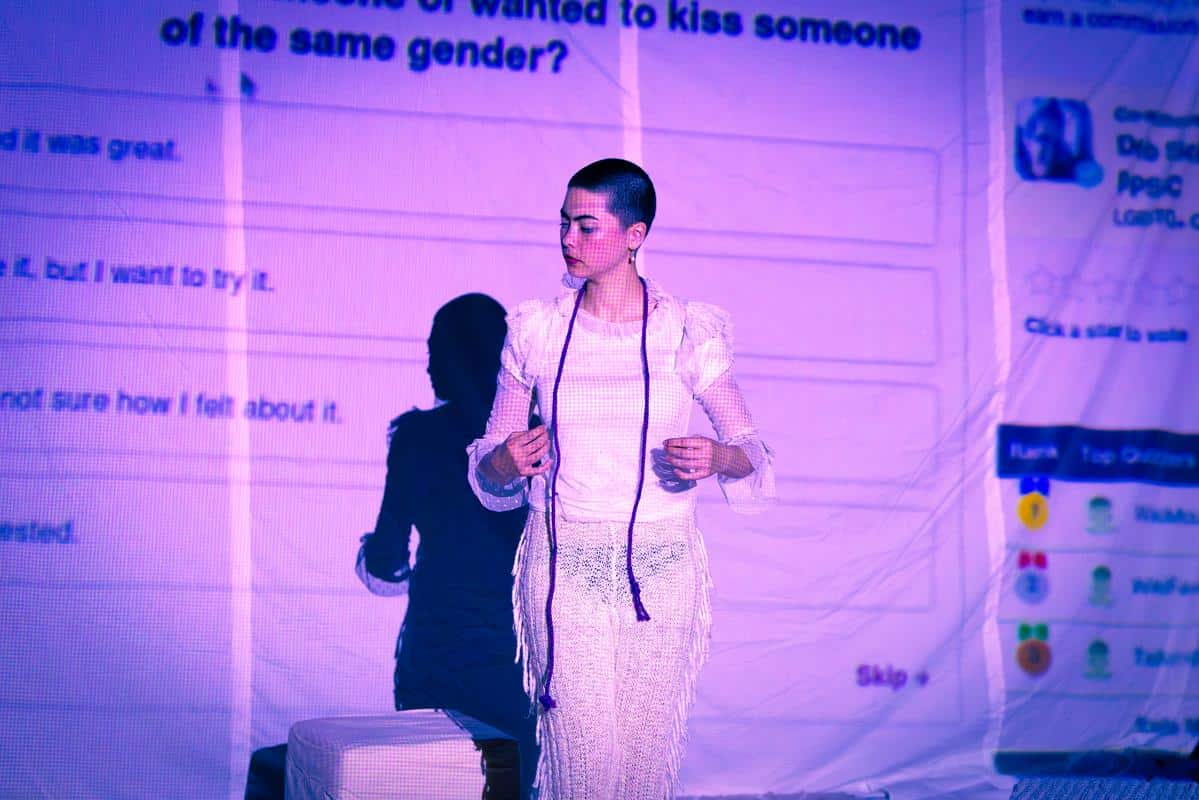
The resulting work by Tip Toe Theatre is appropriately scattered in aesthetic and focus. The actors’ all-white costumes look like they were assembled from whatever they happened to have in their closets. White drapes cover the stage, but not entirely, and they’re used to project live camera footage, distorted graphics and the computer code that warps them in real time. They even explain at the start that one actor has stepped up the last minute and is still reading from their script, but it doesn’t even feel out of place. For me, sometimes the ‘work in progress’ vibes went too far into sloppiness, such as when the camera moved backstage but we could barely see what was happening. The music and dialogue were often so quiet it was hard to hear everything, and I could quibble about some choices in sound and visual effects that took me out of the moment. Still, for the most part the design is a fun, fascinating way to not just tell but show us the experience of having a sense of self that’s constantly under construction. To be a bit glib, it feels authentically ‘enby coded’.


If this show were wholly written by a specific author or team, it might have come across as preachy. It’s essentially an hour of interwoven monologues about various topics related to being non-binary, delivered by actors as they create appropriate metaphorical images. The fact that these are authentic testimonies means the play doesn’t come across as didactic, but as people finally getting the chance to express complex, articulate thoughts they’ve been holding onto for a long time. The performances carry this natural feel, as the actors leave in ‘like’s, stammers and strange interjections and impressively deliver the lines as if they are thinking out loud. They are a strong creative team with a strong vision, and they take their purpose seriously while still being playful with the content and audience.

Too is obviously a text-heavy show, and it takes every advantage of that to comprehensively address some very nuanced themes. There’s rich discussion about intersectionality, how being non-binary isn’t just about gender but overlaps with one’s race, sexuality, mental state, family history and life experiences. What I appreciated even more than these topics being brought up was how they were complicated by the cast. While masculinity is often associated with toxicity nowadays, some speakers take comfort in it. While ‘female friendships’ are often seen as uniquely strong and fulfilling, they can also become a gendered trap. Physically, ropes were brought on stage but not only used to convey restraint; they also became symbols of exploration, passivity and bonding. Too is exactly as complicated as it needs to be.

I think the best way I could sum up the effect of this show is to point out that at many moments, I heard various audience members let out a “hmm…”. I’m still wondering what those reactions were expressing in the moment. Comprehension? Sympathy? Empathy? Probably all the above and then some. The very concept of Too is necessary and relevant, and its execution is perfect for the messages it’s trying to convey. It’s uncomfortable, awkward, joyful, bizarre, scrappy and silly – just like being non-binary.

To book tickets to Too, please visit https://www.melbournefringe.com.au/whats-on/events/too.

Spread the word on your favourite platform!

Thinking Pink: Amelie Peters Is Your 'Emotionally Unstable Godmother' at Melbourne Fringe

Sink or Sing! A Sing-Along Cabaret

Sink or Sing! A Sing-Along Cabaret Rating

★★★★★

Click if you liked this article

1

Inside the ETU ballroom of the Trades Hall, I come upon the depths of a smoke-filled room, with chairs lined up much like a church choir hall, with a six piece band across the back of the stage, seemingly ready to roll.

A bass player. A female drummer wearing a pink cap. A guitarist. A female keyboard player. Even a keys 2. Finishing off with a horn player.

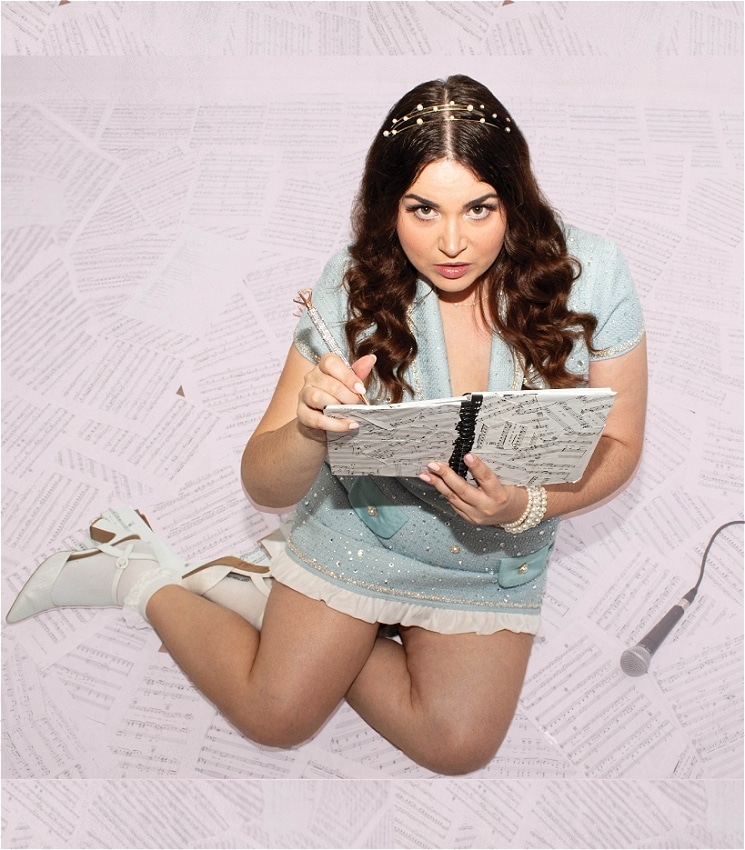
‘A Woman Song’ by Emmy Meli plays overhead. As does ‘Good luck babe’ by Chappell Roan. Pink stage lights beam above, bouncing off the myriad of sparkly items that sit on a prop table: a glittery notebook, a mobile phone, a pair of pink crocs, a bedazzled hairbrush, a makeup pouch entitled ‘passenger princess’, a hot pink beauty headband, and a matching-coloured facial roller.

On the left, and hung on a pole railing, sits a sheer mesh, faux fur trim, long sleeved kimono robe, ready for the taking. Ready to be worn by a bold and empowered performer, Amelie Peters, who, as far as I had read, will aim to take us through a whirlwind, topsy-turvy sing-a-long extravaganza - like no other.

An intro is heard overhead. Of Amelie anxiously getting ready to perform. Putting her heart on her sleeve: at setting the show’s tone from the beginning. So we understand completely, without a doubt, that this show will be an in-depth, thought-provoking look at her life. About the trials and tribulations of a single girl in her thirties, and how she navigates her life in a modern, ever-changing world.

And if I thought this show would be straightforward, it couldn’t be further from the truth. This is fringe, and by fringe, I mean it is meant to be an experience that evokes the unexpected. The opposite of what we expect a show to be.

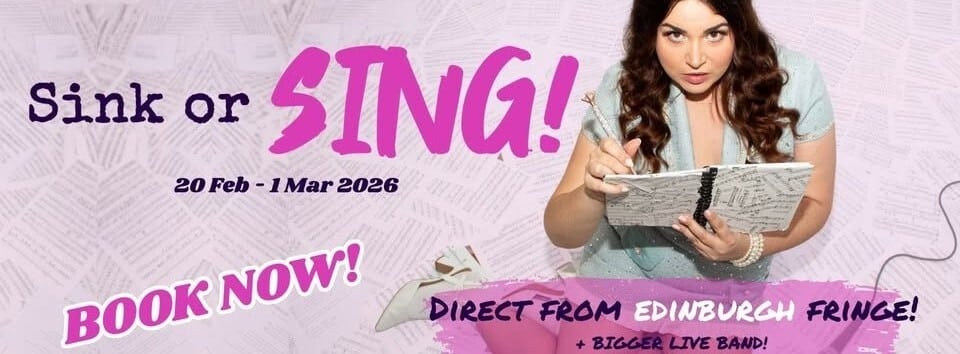
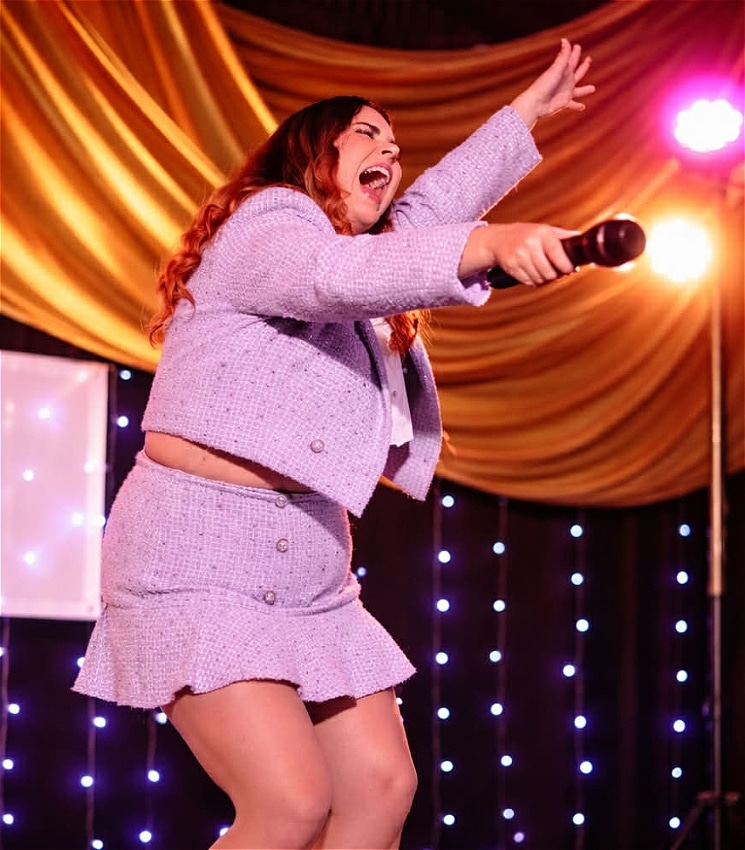
And Amelie, in sassy sista style, knows exactly what she is doing, as she enters through the back of the room and up the aisle - to the stage, dressed in a pink coat with fluffy, faux fur trim, launching into a harried opening number, showing off her operatic diva style, and letting us know that we must think of her as our ‘emotionally unstable godmother’, and that this is going to be the most intimate 60-minutes of our lives.


Next, she tries to warm us up as if we are in a choir, leading us in singing the scale of DO-RE-MI. I get excited, thinking that she will be coaching us in singing songs that we already know, as she is a singing coach. Songs by Britney Spears comes to mind, or the Spice Girls. Something light, fun and karaoke-like. Something safe and light-hearted.

But as we sing and hold a note, something else happens. Amelie throws out questions to the audience about the lows and lows of online dating and being ghosted.

As we wonder where this is going, I gather that Peters is not only a seasoned contemporary musical theatre performer and a standout operatic warbler, but she also writes songs. And not just any songs about the human condition. But songs that speak of the thoughts that consume the minds of a girl in her thirties, trying to bravely navigate her role in the world. A world where women are still fighting for their own truth. For their chance to shine.

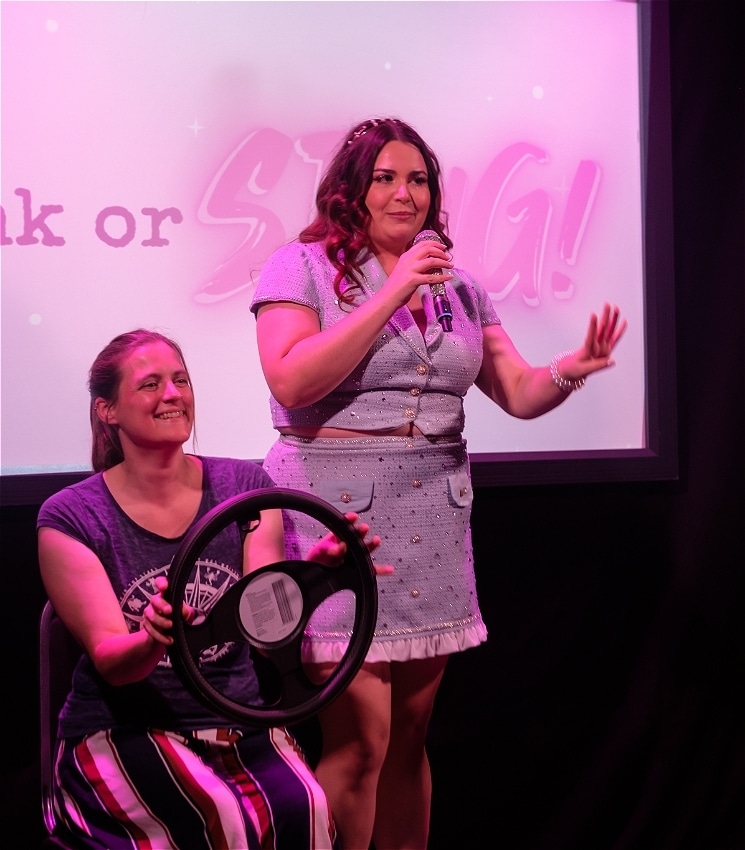
About online dating? Peter’s sings a charming bopping ditty, ‘left, right, left’. Keeping up with the challenging of beauty standards? ‘Lotions, potions and circular motions’ to a 70’s beat. The challenges of driving with a man on a date? ‘Passenger princess’, even inviting a male onstage to hold a steering wheel prop. The value of friendship? ‘I choose mates over dates’. From ‘Life is hard’, lamenting when situations go wrong, to ‘living life filter free’, about stopping our own comparison wheels, to a song called ‘Fairybread’, about ‘adding some sprinkle when you are in a pickle’, Peters sings and story-tells through her songs with the utmost conviction, all of which we are invited to sing-a-long to and absorb along with her.

Peters contemporary musical theatre voice is no doubt superb, and I feel she definitely has the scope to write and perform in this hugely popular ‘Girl Era’ genre, similar to the success of ‘Legally Blonde’ or ‘Heathers’.

If I had to be more critical, it would be that I feel the show needs a bit more structure, if an audience is to be included in the singing. As some songs had lyrics on the projector wall, and some didn’t. I also feel that it could do with better pacing. As in, I would have like to have heard more storytelling monologues without music from Peters, as at times, it was difficult to hear her words with the band playing.

But if you are looking for a pop-infused, funky night where you can just bask in your girly-era, enjoy off-the-cuff singing with great amounts of audience interaction - plus the added bonus of ‘thinking pink’ with a glass of bubbly in your hands, then this is indeed the show for you!

To book tickets to Sink or Sing! A Sing-Along Cabaret, please visit https://www.melbournefringe.com.au/whats-on/events/sink-or-sing-a-sing-a-long-cabaret.

Spread the word on your favourite platform!

Subscribe to What's The Show

Reviews, show news and what is on, straight to your inbox.