Egg, Chips, and a Side of Self-Discovery

Shirley Valentine

Shirley Valentine Rating

Click if you liked this article

As someone who adored the original Shirley Valentine film starring Pauline Collins, I was skeptical of ex-Neighbours actors/pop stars making the leap to serious theatre, and has a deep intolerance for people who butcher any accent from my homeland, (but especially one as unique as Liverpudlian), I entered this performance fully prepared to be critical.

Willy Russell’s iconic story first won hearts as a stage play before the beloved film cemented its place in the lives of middle-aged women everywhere in the late 80s. At its core, Shirley Valentine is the tale of a woman suffocating in the monotony of a life that has drained her of identity and joy. Trapped in a world where her only confidante is her kitchen wall, Shirley exists in quiet desperation—serving an ungrateful husband, appeasing selfish grown children, and mourning the rebellious, spirited woman she once was.


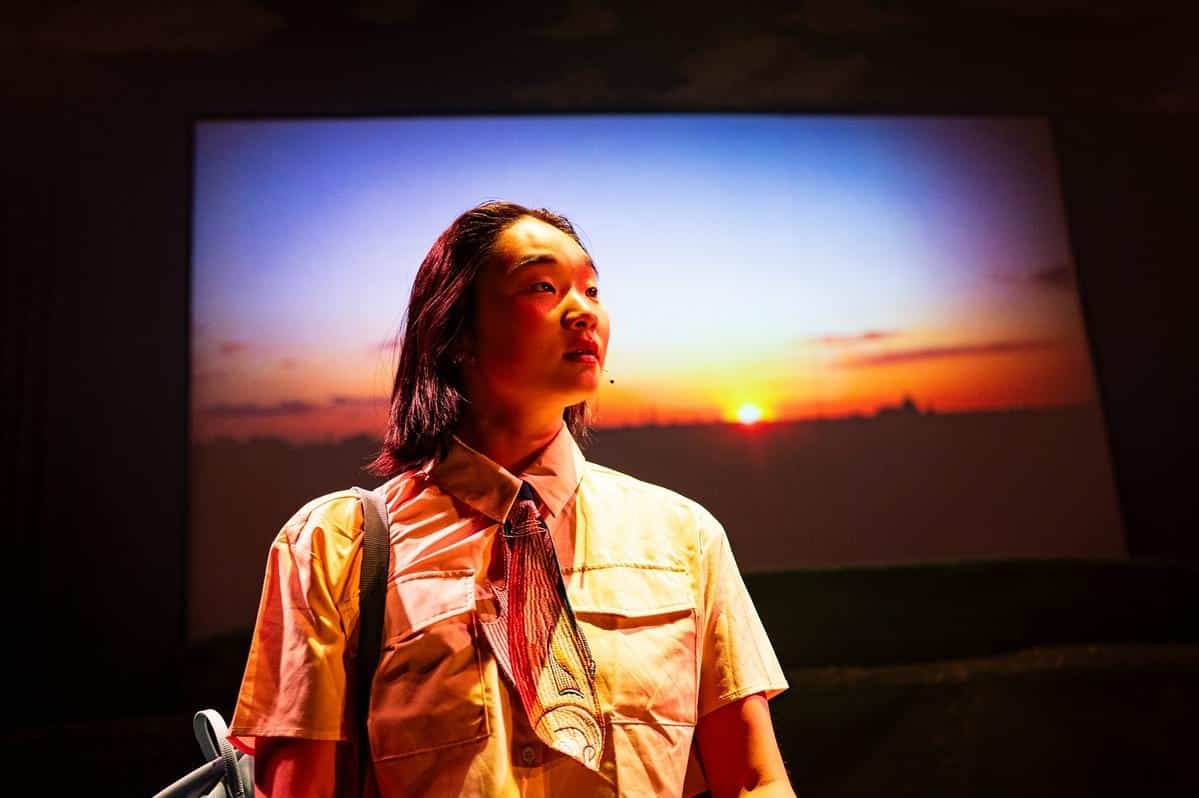
As the familiar strains of the 80s hits fade, Natalie Bassingthwaite sighs onto the stage, gulping white wine and chopping potatoes for her husband, Joe—who will, she assures us, “have a right gob on him” when he realises dinner is egg and chips instead of his usual Tuesday mince. Despite all my reservations, Natalie doesn’t just step into Shirley’s shoes—she revives her, fully embodied, in bleached mum jeans and a comfy pink sweater. Every weary movement between the fridge, the bench, and the stove tells the nuanced story of a woman who has slowly lost herself. Lamenting that she allowed herself “to lead this little life, when inside me there was so much more.” It’s a portrayal that resonates deeply, particularly with an audience of largely midlife women who, in one way or another, perhaps recognise their own fading dreams in Shirley’s quiet grief and who are just as afraid of dying with their music still in them.

Shirley is captivating—raw but never indulgent, resigned yet still tinged with hope. She draws us in with wry humour, reminiscing about her rebellious school days and the classmates she once envied, only to realise they now envy her—or at least, the woman she used to be. When, in between comparing marriage to the Middle East and sex to supermarkets, she nervously reveals that her friend Jane has invited her to Greece (has bought her a ticket, no less), we feel the impossible weight of the decision. The airline ticket trembles in her hands as she dares to dream of sitting with the sun on her face, drinking “a glass of wine in a country where the grape’s grown.” Yet even as she visibly aches for escape, for the possibility of something to shake her out of her never-changing world, she continues preparing a dinner Joe will never eat.


Bassingthwaite’s performance is nothing short of revelatory. Her Liverpudlian accent—much to my relief—is acceptably solid, despite the odd line fluff. Indeed, she disappears so entirely into the role that her popstar past is all but forgotten. But it is in the second half that her transformation truly shines. As the lights go up on a tanned, relaxed Shirley, Bassingthwaite reveals a woman that is no longer the same. A woman no longer crushed by monotony, who had to anxiously force herself onto a plane. This is a Shirley who is self-assured, present, and forever changed—not because of an affair or a holiday romance, but because, at last, she has chosen to explore all the ‘unlived life’ remaining within herself. She has, at last, chosen herself.

This is Shirley Valentine in all its bittersweet brilliance. A triumphant performance, beautifully staged, and an absolute pleasure to witness.

To book tickets to Shirley Valentine, please visit https://shirleyvalentine.com.au/.

Spread the word on your favourite platform!

Barking Up the Right Tree

My Queer Spiritual Entropy

My Queer Spiritual Entropy Rating

Click if you liked this article

The Motley Bauhaus is a tiny theatre at the back of a large pub in Carlton. Its intimate nature lends itself to powerful storytelling and heartfelt performances, and that’s exactly what ‘My Queer Spiritual Entropy’ (a play by Holly Rowan & The Wilderbeans) amply provides.

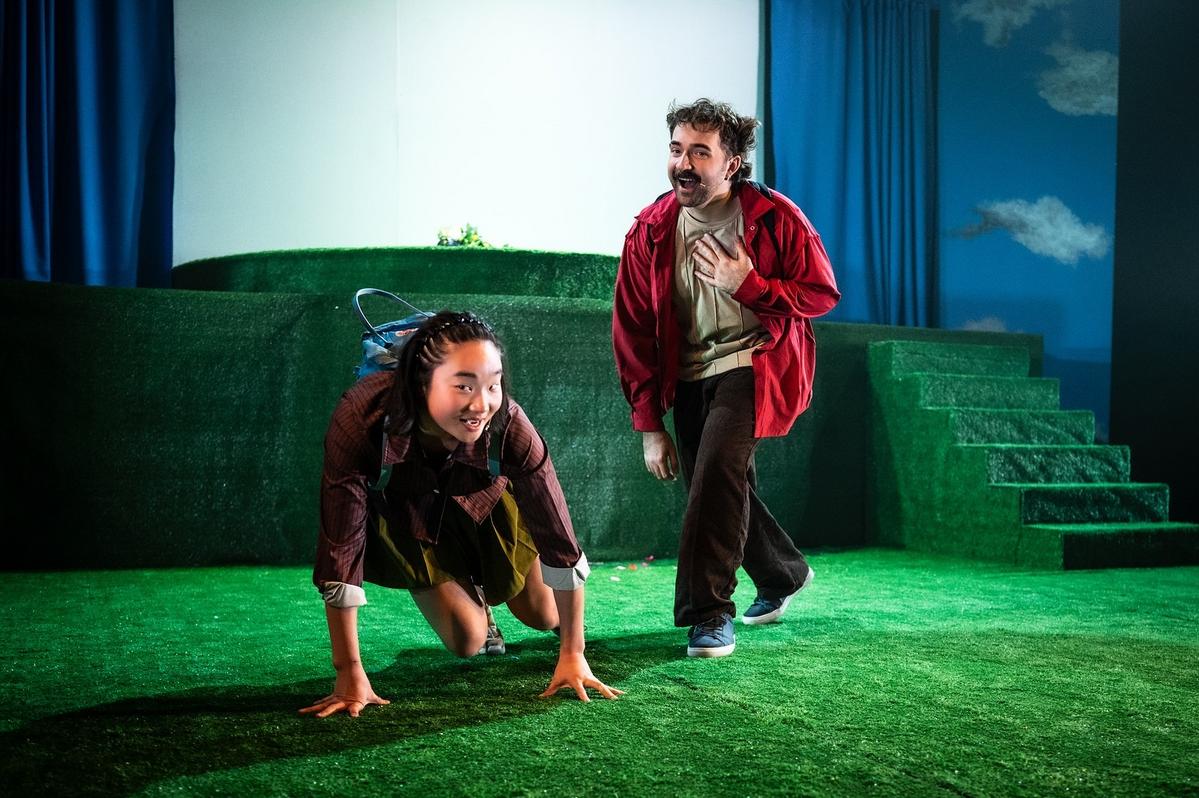
We are welcomed into our seats by an accompaniment of whimsical folk music played live by three child-like nature creatures. The creatures reveal themselves to be ancient trees and through music and story they begin to share with us the delights of the natural world and their places within it. We are educated about the hermaphroditic nature of some trees which possess both male and female parts within themselves and is something which makes that tree truly special, giving it the ability to self-fertilise and reproduce without external pollinators, ensuring its species survives.

However, this same natural and special ability in trees becomes something of deep concern when it happens in humans. Indeed, it becomes not just concerning but deeply antagonistic when anything happens outside of the binary of male and female in humans.

To help us understand that differences are natural and not something to be feared, the tree shares the tale of a little girl called “Holly’ who was once happy, wild and free, revelling in her unique nature but who slowly, little by little, squashes herself into the tiny gender box assigned and deemed appropriate by society, even as it slowly suffocates her. Holly is berated for being ugly, unnatural and ‘wrong’, rejected for not being a ‘proper’ female. Holly is told that their true nature is unnatural and offensive to the family, society and world in which they live. So they try to be ‘good’ and ‘fit in’, but it slowly erodes their sense of self and their connection to their true selves and makes them desperate, self-destructive and terribly lonely.


If it sounds heavy in parts, that’s because My Queer Spiritual Entropy calls attention to the lived experience of many gender-diverse people and is at times confronting, forcing us to look at our own behaviour, beliefs and binary-centric attitudes to the lives and gender, non-conforming ‘choices’ of our queer folk. At other times, the show is amusing, poking pointed but good-natured fun at the accepted roles of men and women in our society and challenging our unconscious compliance with those ideologies. Plus, nothing is funnier than a little nip at the narcissistic dark side of the personal development world, which was a highlight for me.

As a theatre-goer who was, at first, a little worried the show might disappear too much into ‘experimental’ with a side of ‘end of year school play’, I was both surprised at the complexity of the non-binary narrative and genuinely moved in several places – in particular when Holly begins to find acceptance both inside of and outside of themselves. My theatre-mate, for whom this is a lived experience, found himself reflected very clearly in the material and also shed a tear or two – such was the power of the music, the silliness, the playfulness and the raw beating heart of this eccentric, edgy but very poignant play.

I believe we, as a society, have to do better in many ways, and right now, one way in which we can do better is by learning to shake off the chains of the ‘two gender’ binary because beyond ‘man’ and ‘woman’, in the complex and often challenging landscape of queer identities, there is a vast community of people whose voices deserve to be heard. I urge you to listen.

To book tickets to My Queer Spiritual Entropy, please visit https://www.midsumma.org.au/whats-on/events/my-queer-spiritual-entropy/

Photography: by Anais Stewart

This year’s Midsumma Festival runs from 19th Jan to 9th Feb. For more information, please visit https://www.midsumma.org.au/.

Spread the word on your favourite platform!

F5 – Presented by UNLID Dance Theatre

F5

F5 Rating

Click if you liked this article

13

Certainly a different type of show when you walk into the alley laneway next to the Arnold Street Studio to see a performance by three ultra-talented dancers and one super talented choreographer behind the vision ‘F5’ by ‘UNLID’ last weekend. This Premiere follows the company’s inaugural tour to Singapore in 2024 with Part I which I had read about, so I’m excited to see how this performance unfolds.

USA born Jennifer Fleenor-O’Brien welcomes us all with her personable quality and genuine care of the arts. She says though she was ‘technically’ trained in the United States, she was ‘artistically’ trained in Europe (from her many years living and working there). Having now lived bayside in Melbourne Australia for many years with her family, Jennifer (holding a Master of Dance (Hons) from the University of Melbourne VCA Dance amongst many other accolades) is the founder of possibly the newest visionary contemporary dance company in Victoria. Working with her passion out of the company’s base in the Cheltenham studios, she offers dancers who have finished full-time training courses, or those wishing to further enhance their higher dance training, the opportunity to learn and grow in developing performances such as ‘F5’.

It’s a beautiful night, perfect weather, the dancers have a light breeze as the sun dims just enough to create the best light. An ounce of luck there!

We, the audience, are comfortable to stay outside as three all-in-black figures appear, one by one, to the sound of percussion rhythms backdropped by a paling fence and against the red brick wall, with its graffiti just adding to the realism of where we are. There is no ‘stage’ as such, this laneway and the rooms inside will be the ‘stages’ to which we witness this project.

The dancers’ spacing, timing and awareness of each other outside in this unusual environment is so good that at one point I only saw the front dancer with the other two completely disappearing from my view to go behind her in exact matches of lines and extensions. Great opening!

This is very different choreography to ‘…5,6,7,8’. Contemporary dance has no rules, no boundaries, no pre-expectations other than when you see ‘contemporary’ you expect to have some intricate thought process on what it’s about. And that can be different for everyone watching. Our interpretation may not even be similar to each other’s or that of the choreographer or dancers, but I think that’s what makes the world of contemporary dance so interesting, you never know what you’re going to get or how you’re going to feel.

F5 takes us on a day to day (hour by hour) journey in life (that’s my interpretation anyway), i.e. three dancers, three different perspectives on life. Are they lives that are mundane, fulfilling, hurting or joyous? Will they continue to dance alone, in synchronisation or come together in a different way? Are they experiencing or remembering or imagining?


Sometimes, in certain situations, we’d all like to crawl under our coffee table, slide forward and scrape ourselves blindly down the kitchen bench, open our wardrobe and change from our boring neutral daywear into a dress of colour, screaming in silence and expressing that we all cope in different ways; falling and surviving at the same time.

Are we being heard? Do we want to skip and run and stop suddenly to meet another person only to be enveloped into their world of darkness or happiness? Is it to be our world? What choices should we make?

I saw movements and uniformity in this show I hadn’t witnessed before in contemporary dance. An element of almost hip hop at times and some amazing partnering combinations, fluidity and cross referencing from where we started in the alley for the first scene, through to the everyday living spaces and finally into the open vastness of a blank canvas room, made for compelling engagement.

We didn’t sit down at all, the audience was standing and then following the dancers through the spaces, using the entire building. When it came time to take a bow (actually 3 or 4 bows), the audience was loud and proud of what they had just seen. Well done girls!

Speaking to some other attendees after the show:
“I didn’t mind standing up, it was excellent. It didn’t have any dull moments, it went fast!”
“My mum cried, it was so captivating.”
“I couldn’t believe they could dance on, under and around the table so well”
“Loved the dancing outside, extraordinary!”
“I thought I knew what was going to happen but I didn’t”
“They were dancing in the moment, I stared straight at them, but I couldn’t shift their gaze”

Speaking to a dancer:
“To be involved was to experience a different aspect of Jen and her work, I have taken her classes before. She has a lot of energy and we worked a lot on very precise movements. Most contemporary dance I’ve done is nothing like what we did tonight. I loved it.”

Speaking to Jennifer (choreographer) on her ideas for ‘F5’:

Conformity by society is what came to mind.

“Mapping the dancers’ own stories to memory, lineage and connecting the audience to take the journey with them that underpins their own personal story within.”

A thoroughly enjoyable show, and the drinks and supper snacks provided afterwards for all the audience to enjoy gave us the opportunity to find out who thought what; and how interpretations differed, but all were impressed.

Congratulations to Jennifer and her dance artists in ‘F5’, Mollie Harrison, Bridget Lyte and Bre Surridge.

I strongly recommend if you’re a lover of dance or any interpretive artforms, look out for their next creative work and opportunities to be involved. Website link: https://www.unlid-dance.com.au/

Dancers may join an Advanced Contemporary class at Space Fest on Monday March 10th from 11am – 12:30pm at The Space and to come along!  Check our the Unlid Dance website for the most current information on classes and upcoming auditions.

Photographers: Lee Harrison, Chrissy Dore Photography, Gnashmas of Singapore

Spread the word on your favourite platform!

Hot White Kiss

Hot White Kiss

Hot White Kiss Rating

Click if you liked this article

1

Written and directed by James WF Roberts, Hot White Kiss is an hour-long play focusing on five individuals, all sporadically linked through polyamorous & bisexual relationships with each other. Yet sparking and fuelling their individual flames isn’t oxygen, but the dangerous elements of addiction, abuse, trauma, and self-destruction.

The story, stemming from a poem Roberts previously wrote, is no stranger to The Butterfly Club. It now returns almost a year later as part of the Midsumma Festival and with a larger cast. Sticking with its previous venue proves to be an asset, as Hot White Kiss’ gritty themes fit perfectly with the grungy, basement-esque setting of the Club.

The show follows Leena, a heroin addict who cannot see the harm she’s inflicting on herself and others, and John, a wannabe poet trying to get out of the harmful addictions he’s found himself dealing with, including Leena. Surrounding them is Cilla, a drug-dealer who is obsessed with controlling Leena’s life, and a married polyamorous couple (Bill & Taylah), who see the harm from a far but do little to help.

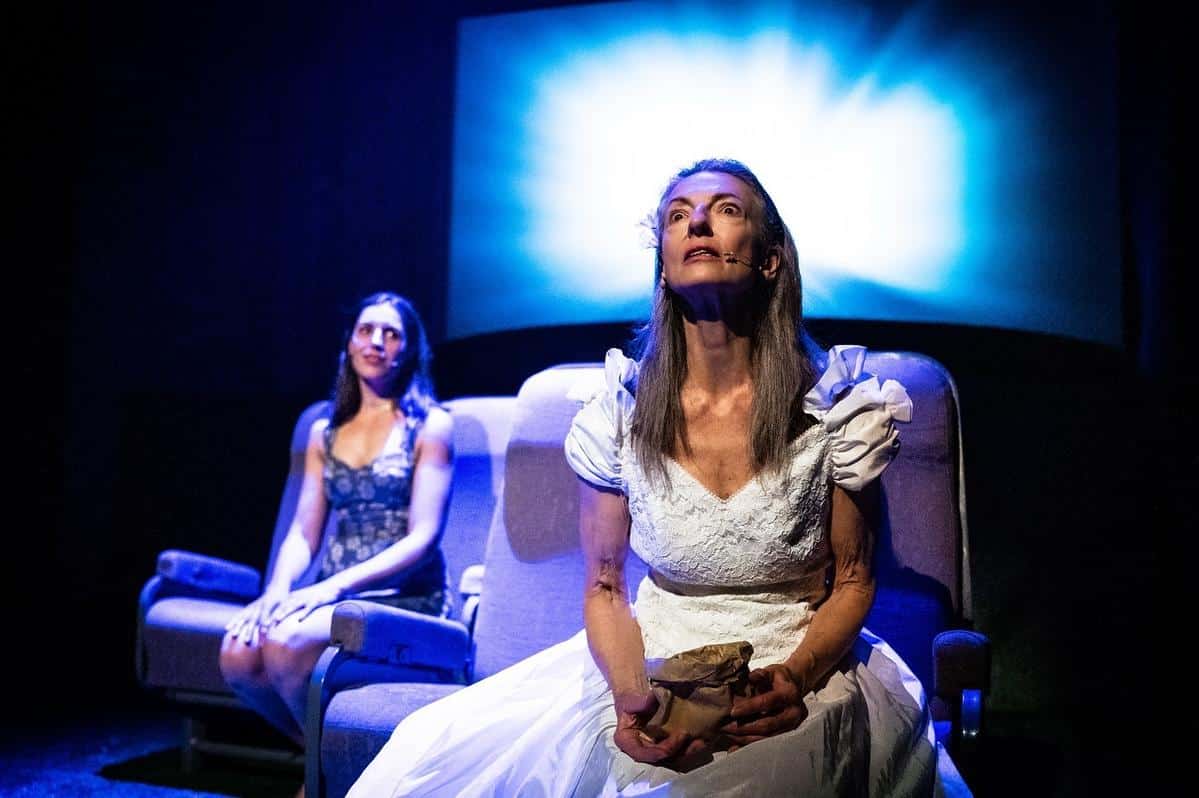
Savier D’Arsie-Marquez (John) and Olivia Buckton Smith (Leena) stand out as the two main characters, who appear to have no positive reason to stay together. Not that it would stop them. They both portray a great amount of hurt and panic through their deliveries and expressions, that had them feeling like genuine people.

Most of the audience stayed wide-eyed and quiet throughout the performance of emotions on stage – but the few large laughs that broke through came from D’Arsie-Marquez’s ability to have fun with the dialogue in well-timed moments that made his character shine.

Considering the topics of the show, it felt there shouldn’t be a personified villain to the story. Yet Cilla’s (Bridgette Kucher) Joker-like smirk and constant manipulation of Leena often evoked that anger. There weren’t many redeeming parts that made us understand why Lenna stays with her, well portraying the abusive relationships you sometimes question from the outside.

The interpersonal relationships between each of the characters are constantly calamitous. All of them using the other people as person-shaped climbing block to get higher and leaving the other bleeding down below. But no one truly ends up on top.

However, a lot of the romances between characters felt slightly fabricated. It would have been enjoyable to see there be a bit more of a connection or backstory between the two leads. One of their most interesting scenes when reminiscing their past together was more like a tease of a flame that left you wanting to understand more of their relationship.

An unfortunate and constant jarring of the show came from the music played between scenes and set-ups. The audio’s sudden slice through the tension and emitting from the back of the theatre gave an illusion of a phone going off in the seats. By the time the understanding came that it wasn’t that, the emotional tether had already been cut. If it could fade in/out or come from behind the curtain instead, it would help keep the tension high.

Overall, the show was strong in the moments it felt grounded and real between characters. And though confrontations ended with not a lot of pay off and a few things left unanswered – it felt supportive of the less than comforting ending you often get when involved with addiction and toxic relationships like these.

And if they were hoping to raise addiction awareness additionally – one man leaving the theatre who noted, “Well…I’m never going to do heroin” certainly got the message.

To book tickets to Hot White Kiss, please visit https://thebutterflyclub.com/

Spread the word on your favourite platform!

Subscribe to What's The Show

Reviews, show news and what is on, straight to your inbox.