Omega Ensemble Presents: Starburst

Starburst

Starburst Rating

Click if you liked this article

3

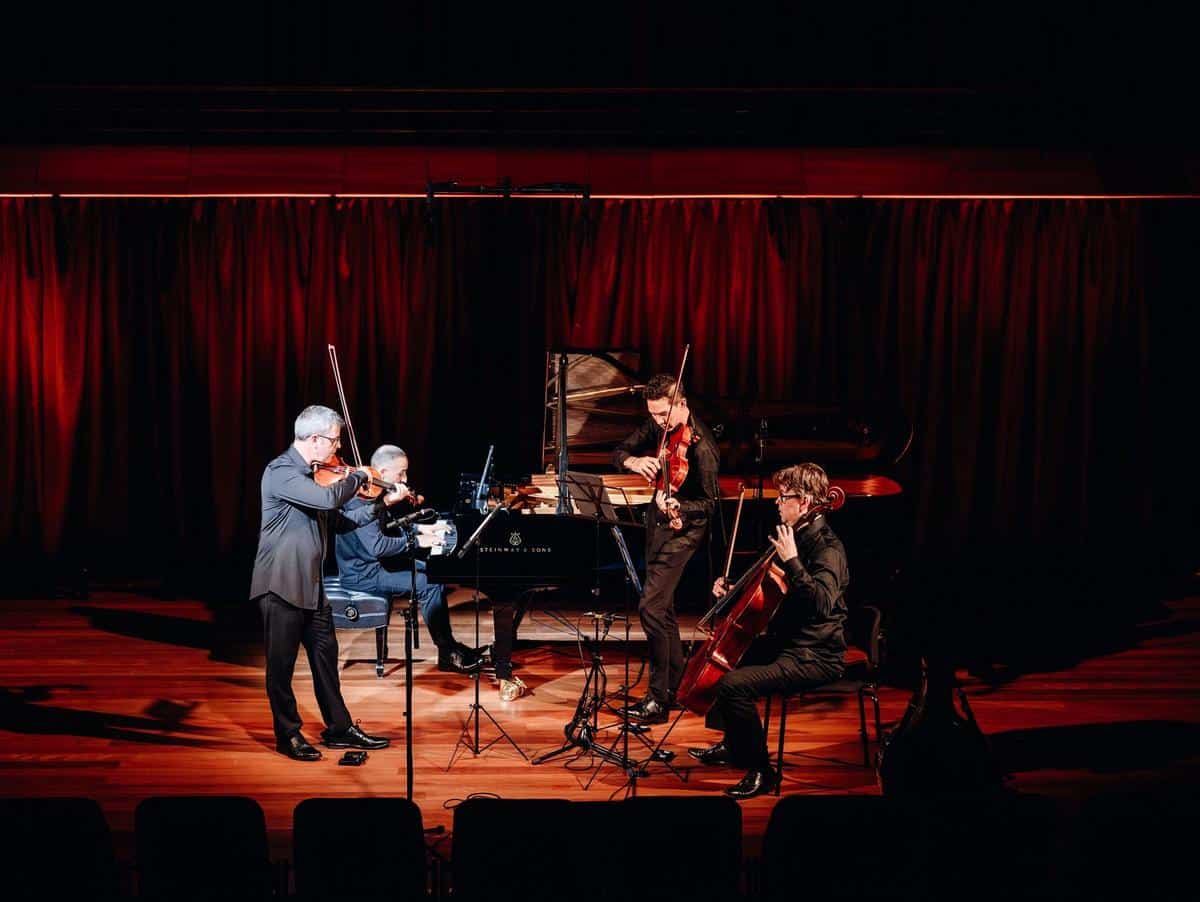
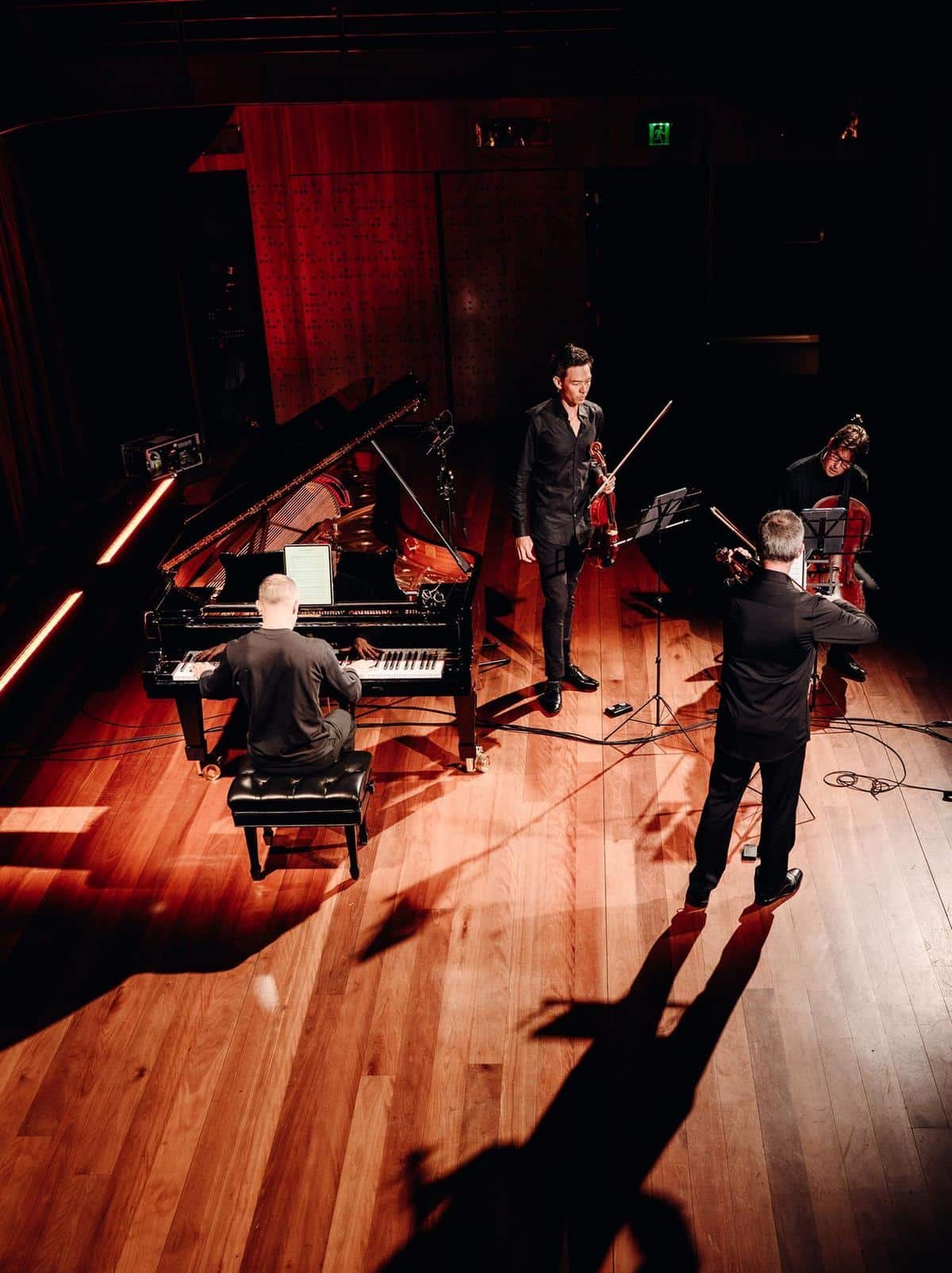
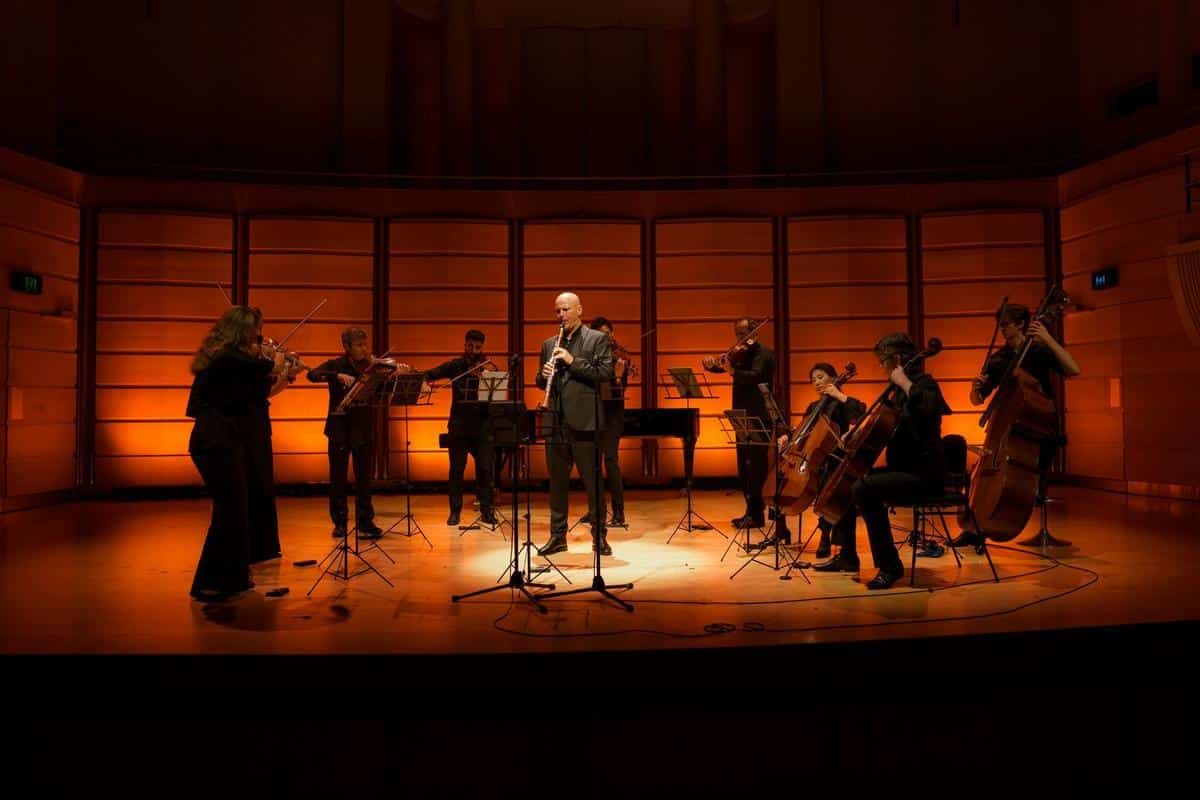
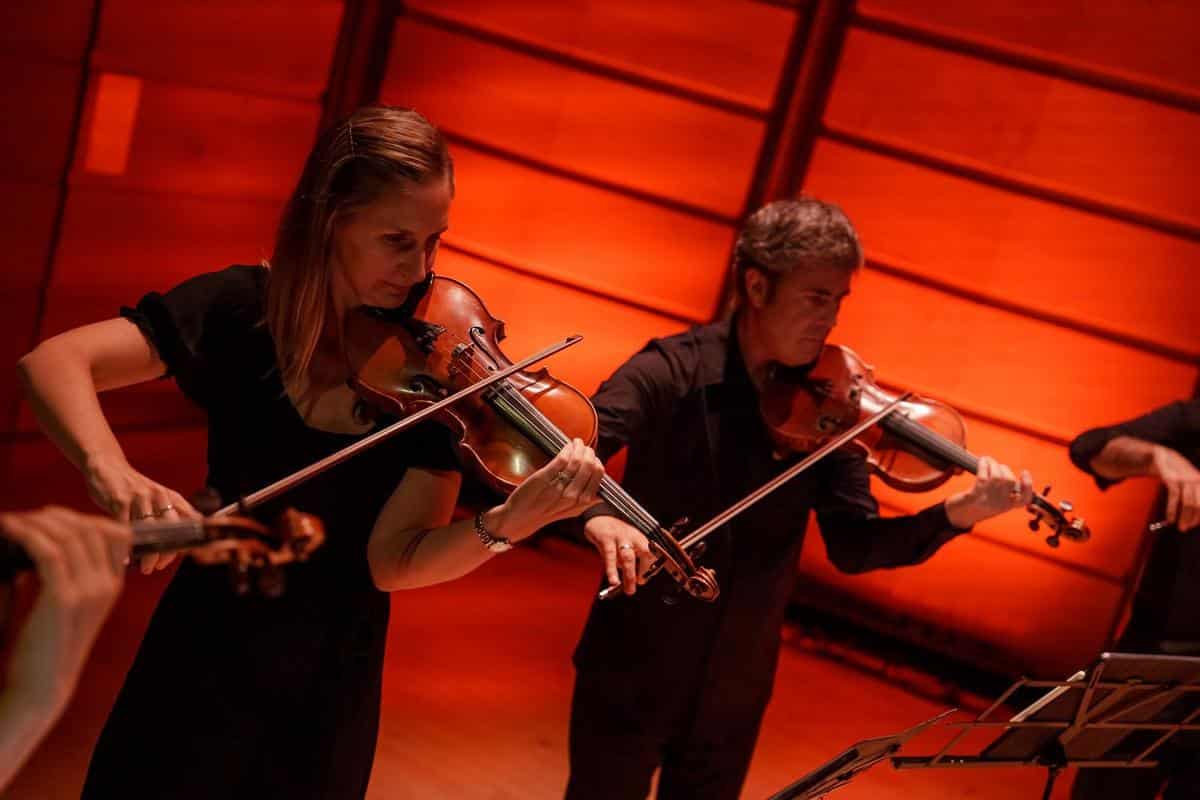
Taking place at Melbourne’s Recital Centre, ‘Starburst’ marks the start of the Omega Ensemble’s 2026 season, featuring works by four unique composers in an evening of genre-bending chamber music. The Omega Ensemble is a cornerstone of Australia’s classical music scene, and this year’s performance once again reaffirmed their reputation for pushing boundaries and delivering extraordinary musical experiences.

The program was nonstop from curtains up, opening with Jessie Montgomery’s punchy, experimental ‘Starburst’ and moving just as quickly into the more traditional ‘Clarinet Concerto’ by 20th century composer Gerald Finzi. The small chamber ensemble was a tight unit throughout, gliding through highly complicated pieces with cohesion and exquisite technique. Within the walls of the acoustically-optimised Elisabeth Murdoch Hall, each instrument blended together superbly and never once into the background.

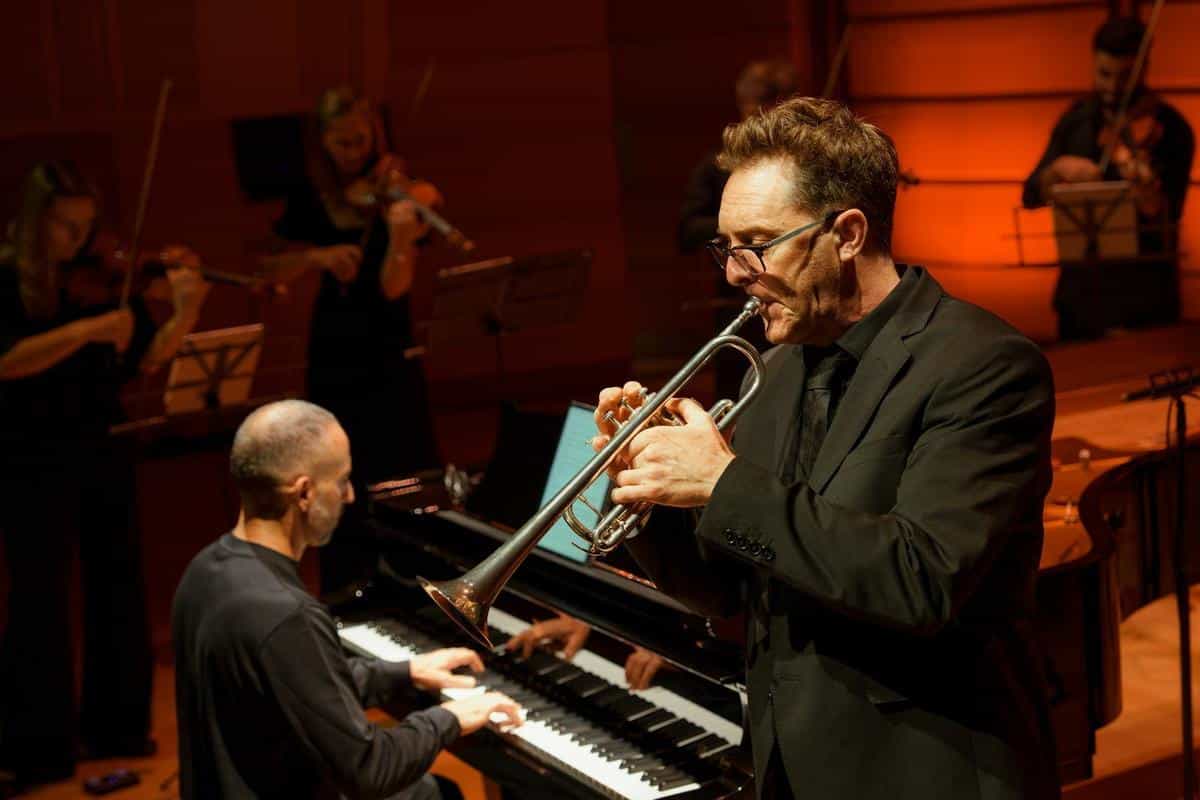
Trumpeter David Elton and clarinetist David Rowden were a pleasure to watch, from their brilliant solo performances of Finzi and Shostakovich to the world premiere of Lachlan Skipworth’s ‘A Turning Sky’, a double concerto composed specifically for Elton and Rowden. Side by side they expertly weaved together a melodic and full-bodied duet that, backed by the orchestra, completely encompassed the hall in a wash of perfect harmony. ‘A Turning Sky’ was incredibly arranged, highly detailed and masterfully performed; it was just awesome to experience original work by leading Australian composers.


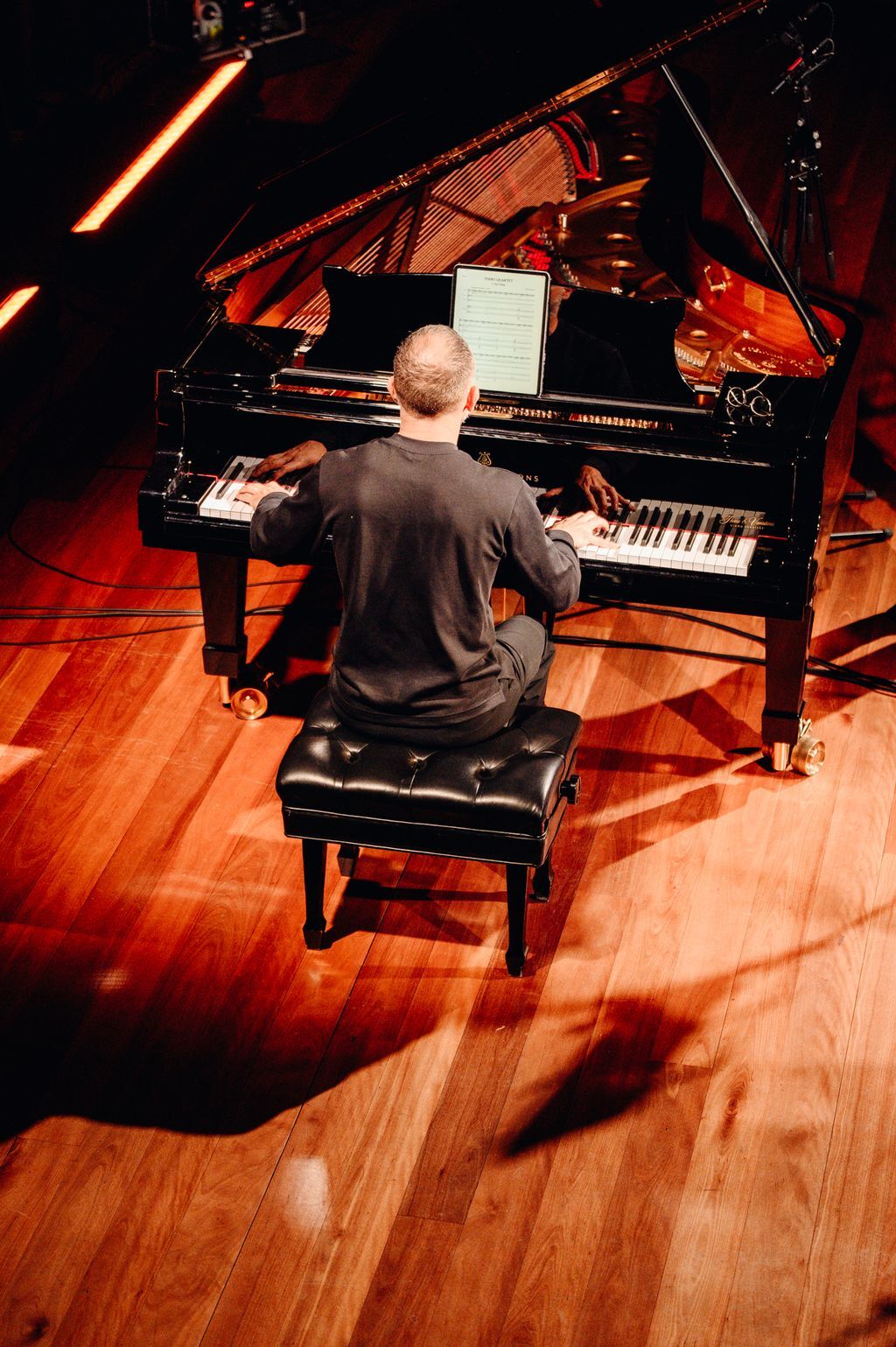
The Omega Ensemble’s rendition of Dmitri Shostakovich’s ‘Concerto No. 1 for Piano, Trumpet and Strings’ was truly something to behold and the undeniable nucleus of ‘Starburst’: an unrelenting combustion of a concerto closing with a piano solo that earned pianist Vatche Jambazian a well-deserved standing ovation. It was a physical performance as much as it was musical and Jambazian’s backbreaking playing style kept eyes pinned as he shredded on the keys like a man possessed. Shostakovich, I now know, was insane—but man, the whiplash from ominous dissonance to jolly fanfare melted my brain. I had to go listen to it again later just to be sure it was real.

‘Starburst’ featured a particular selection of composers that, while incredibly enjoyable to listen to, emphasised a deeper significance beyond music alone. In the years between what we know to be classical (then) and contemporary (now), experimental music emerged as a means of radical self-expression in times of great uncertainty, loss and discovery. The Omega Ensemble explores the space between classical and contemporary music in bursts of sound and light, connecting modernist musicians of centuries past with composers pioneering the classical genre today. Both an exchange and a collaboration, ‘Starburst’ highlights the value of artistic dialogue as a catalyst for redefining the boundaries of contemporary classical music.

‘Starburst’ has finished up its run, but you can always catch the Omega Ensemble Australia-wide all year round!

To book tickets to Starburst, please visit https://www.omegaensemble.com.au/starburst.

Photographer: Amelia Kain

Spread the word on your favourite platform!

Homophonic!

Homophonic

Homophonic Rating

Click if you liked this article

4

This year, ‘Homophonic!’ celebrates their 16th annual performance at Midsumma. Directed and presented by double bass player Miranda Hill, ‘Homophonic!’ features new music by queer composers and embraces the playful, shiny disco ball side to the classical music scene. I was devastated I couldn’t make it last time, so consider this review a year in the making.

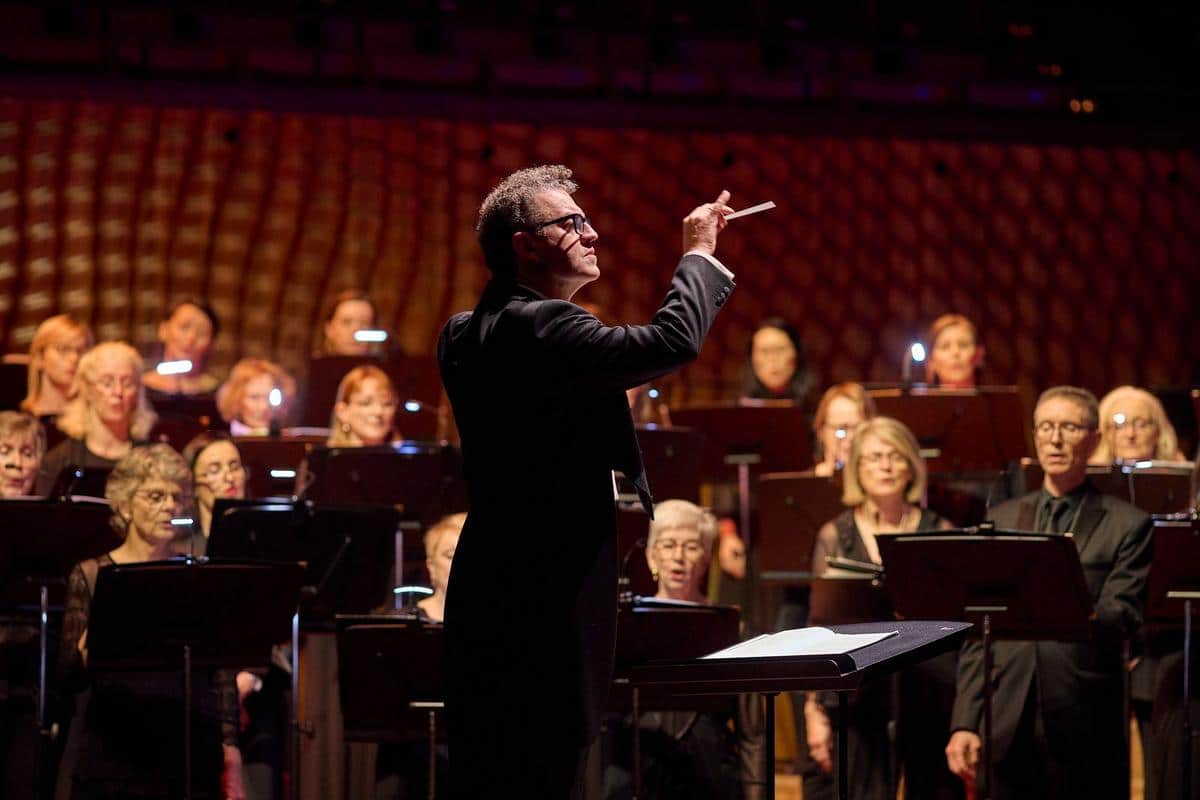
Storytelling was without a doubt the heart of ‘Homophonic!’ I noticed, as Hill reverently introduced each composer and the stories behind their work. Backed by a strings quartet, percussion and the voices of the Consort of Melbourne, the program reflected on the many diverse facets of the queer experience. Lyle Chan’s AIDS memorial quartet and Caroline Shaw’s ‘To The Hands’ were particularly memorable examples in their haunting, near-tangible beauty. At times, ‘Homophonic!’ felt more like a conversation between composer, musician and audience; a mutual understanding beyond what language alone can describe. It was visceral, and nothing short of an amazing experience.


‘Homophonic!’ played with a blend of mediums from classical to contemporary, disco, performance art and spoken word. ‘i ain’t reading all that / i’m happy for you tho / or sorry that happened‘, composed by Connor D’Netto and written by Alex Creece, was a brilliant foray into poetry: hilarious, ineffable and heartbreakingly real. The Consort of Melbourne serving as a conduit for the barrage of inner thoughts projected onto the theatre wall was genius, and as their voices overlapped in crescendos and cacophonies, I remember thinking, ‘Oh, so thiiiis is poetry. I finally get it!’. ‘All lesbians are jellicle’ is a line that will literally never leave my consciousness now.

I’m no classical aficionado by any means, so I brought a date who is, but we ended up having so much fun the technicalities I was so worried about didn’t matter. While the performers were incredibly skilled, and I could go on and on about that, it was their enjoyment of the craft that struck a chord—they were having just as much fun as us. Carving out space for experimental, passionate and proud queer art is a form of protest as much as it is play and ‘Homophonic!’ balances that responsibility with grace.

Music is inherently political. To create art on stolen land, as queer people, as activists, it’s impossible to blithely remove this context from our practices (even so-called ‘apolitical’ art is an intentional, if telling, choice). ‘Homophonic!’ celebrates the intertwinement of art and self in a new form that welcomes a wider audience through the golden gates of classical music—which, by the way, has always been queer.

To book tickets to Homophonic, please visit https://www.theatreworks.org.au/2026/homophonic.

Photographer: Darren Gill

Spread the word on your favourite platform!

Bach Akademie Australia: The Brandenburg Concertos

The Brandenburg Concertos

The Brandenburg Concertos Rating

Click if you liked this article

About 25.3 billion kilometres from Earth, travelling at 61,000 km per hour, Voyager 1 contains a gold record that includes recordings of Barnumbirr (Morning Star) and Moikoi Song played by Tom Djäwa, Mudpo, and Waliparu, Johnny B. Goode by Chuck Berry, and Johann Sebastian Bach’s Brandenburg Concerto No. 2 in F Major.

When asked what message humans should send to alien civilisations, the biologist Lewis Thomas replied: “I would send the complete works of Johann Sebastian Bach… but that would be boasting.”

The Brandenburg Concertos are exquisite, like gems, cut precisely and polished so they sparkle.

Imagine you are 36 years old. Your wife had died, you have four children and you need a better paying job. In 1721, Johann Sebastian Bach wrote six concertos in an attempt to convince the Margrave of Brandenburg-Schwedt to hire him. It didn’t work. The manuscript was discovered, tucked away in a library cupboard, in 1849. It appears that the Margrave never saw them.

Miraculously, the original manuscript survived the bombing of the train they were being carried on during World War II. A librarian, transporting the manuscript, fled the train, running out into a forest with Bach’s concertos hidden under his coat.

Madeleine Easton, the artistic director of Bach Akademie Australia, was captivated by the concertos when she first heard them as a child. The music “bubbled” joyfully. She was transfixed and determined that one day she would learn to play them herself.

Easton has more than realised that artistic dream. She is one of Australia’s most celebrated violinists, performing to acclaim internationally, and leading the Bach Akademie Australia.


Bach Akademie Australia are a remarkable group. The promo spoke of “unbridled joy”, a promise kept in the performance of the Brandenburg Concertos tonight. Technical skill is present in abundance in this group of accomplished musicians, but it is the balance of that skill with the dynamic interpretations and the sheer joy of performing that makes Bach Akademie’s music memorable.

It is delightful to see the communication between the musicians as they play: a glance here, the synchronised breathing, the physical uplift of the body to initialise the tempo, or a call and response between instruments in the concerto. The travelling solo in Brandenburg Concerto number three was a pleasurable highlight.

I found odd moments of real magic, not just during the performances but during the interval, when Nathan Cox tuned the harpsichord.

To a certain extent recordings have spoiled us. There is an unspoked expectation of perfection that can only be achieved by editing and the best of hi-fi equipment. With this in mind, there is a wonderment in hearing original and acoustic instruments without amplification, especially in a chamber music setting.

Madeleine Easton plays a 1682 Giovanni Grancino violin, an instrument with a wealth of experience in its wood. Her colleagues are similarly equipped, and we the audience benefit greatly from the wood, the breath, the brass, the experience and the joy.

To book tickets to The Brandenburg Concertos, please visit https://www.bachakademieaustralia.com.au/events.

Spread the word on your favourite platform!

Trio Isimsiz

Trio Isimsiz (Musica Viva Australia)

Trio Isimsiz (Musica Viva Australia) Rating

Click if you liked this article

3

For anyone who hasn’t seen inside, allow the scene to be set. The Adelaide Town Hall Auditorium is a stunning display of ornate ceilings, marble columns, and a pipe organ on display which serves as the perfect backdrop for performers such as Trio Isimsiz. Turkish for ‘trio without a name’, Trio Isimsiz formed in 2009, have performed widely; been broadcast by BBC Radio in Europe; and have won countless prizes and accolades. The trio have been successful together and individually, with their adoration for their craft seeping from every note they play.

Introductions were not initially needed. The three men took to the stage, bowed to the audience, and sat with their instruments: they were simultaneously cool, calm, and collected while almost vibrating with excitement to begin their performance. With the barest of nods between them, the audience was transported away.

The cellist, Edvard Pogossian, spoke a few words after they had completed the first piece. He named the three pieces they had, and would, perform, and spoke a little about the newest piece by Francisco Coll, written in 2020. Pianist Erdem Mısırlıoğlu and violinist Pablo Hernán Benedí declined to add anything further, their fingers already twitching towards their instruments.

Each piece which was performed was written by a different composer, and each piece guides the audience through a different journey. We began with an energetic piece by Johannes Brahms (Piano Trio in C minor, Op. 101), before being led into the curious Piano Trio by Francisco Coll. To finish the night, we were treated to the lively story by Franz Schubert (Piano Trio No. 1 in B-flat major, D898).


If you are unfamiliar with classical music, each piece (specifically for this performance, at least) lasts between 18 and 42 minutes. Do not be fooled when the music dips; it is not yet time to applaud, because the music is changing its tune (no pun intended) into the next movement. But you are never bored! The music ebbs and flows with ease, creating a visceral and immersive experience; each piece bringing forth fresh sounds and imagery, creating a similar, almost ethereal sense you can experience when looking through a kaleidoscope.

The second piece, by Francisco Coll, at the time of this writing, has only been performed for Australian audiences twice; once in Perth, and once in Adelaide. It was commissioned for Trio Isimsiz, after a conversation between their violinist and the composer, and was first performed in January of 2022. The program goes into further details about the piece, the composer, and the Trio, and is well worth the read.

The three performers play with a passion, care, and love for their craft which was tangible even from the dress circle. It was a delight to watch them perform, and an honour to be a part of the second Australian audience to experience Coll’s piece.

If you don’t consider yourself a fan of classical music, this show is still worth checking out. The music is a new experience and a new appreciation for music in general … and with three good-looking boys playing so passionately, there are no downsides!

To book tickets to Trio Isimsiz (Musica Viva Australia), please visit https://www.musicaviva.com.au/concert-season/2025/trio-isimsiz/.

Photographer: Dylan Alcock

Spread the word on your favourite platform!

Subscribe to What's The Show

Reviews, show news and what is on, straight to your inbox.