Funeral – King IV at Midsumma 2026

Funeral

Funeral Rating

Click if you liked this article

2

FUNERAL
KING IV
Thursday, 29th January, 2026

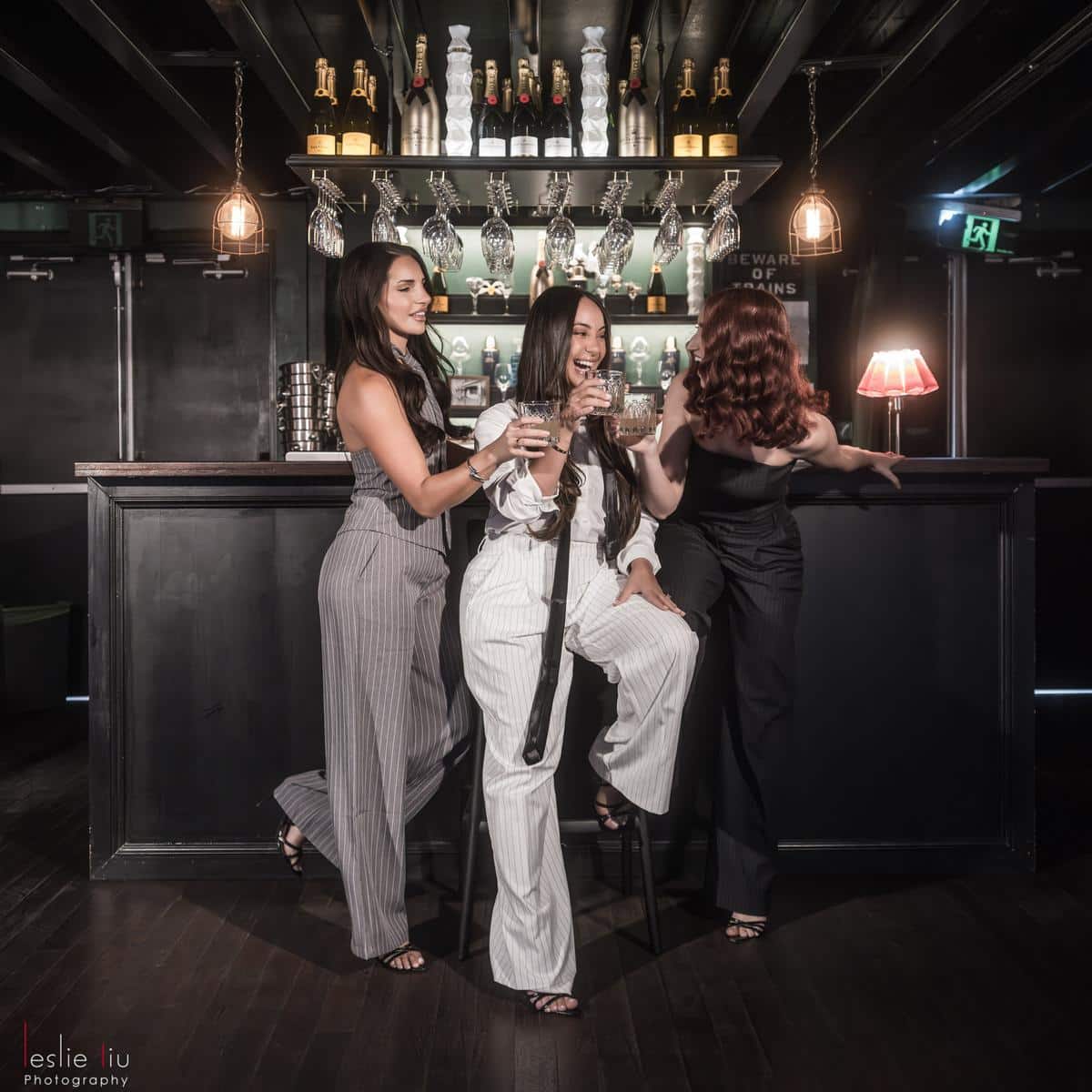
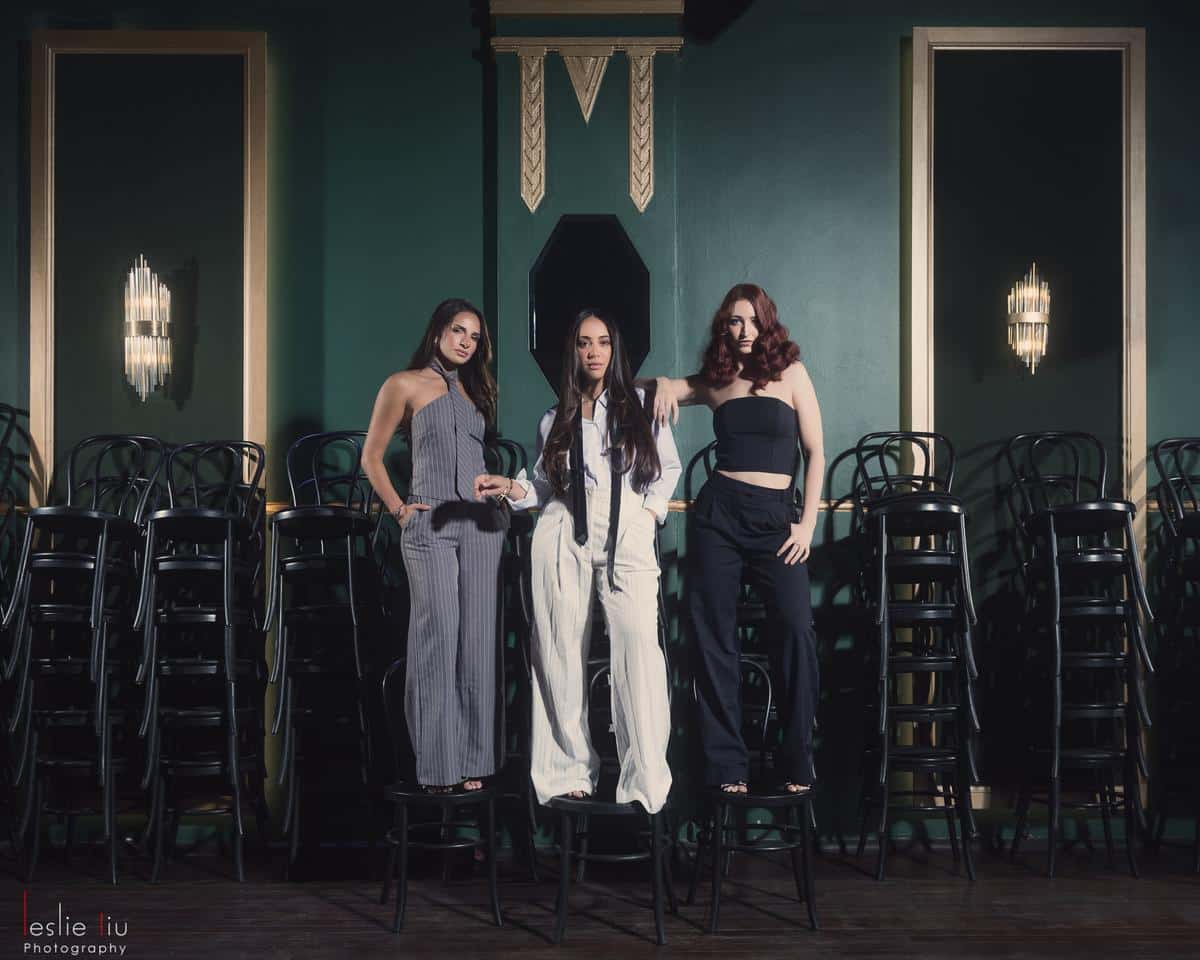
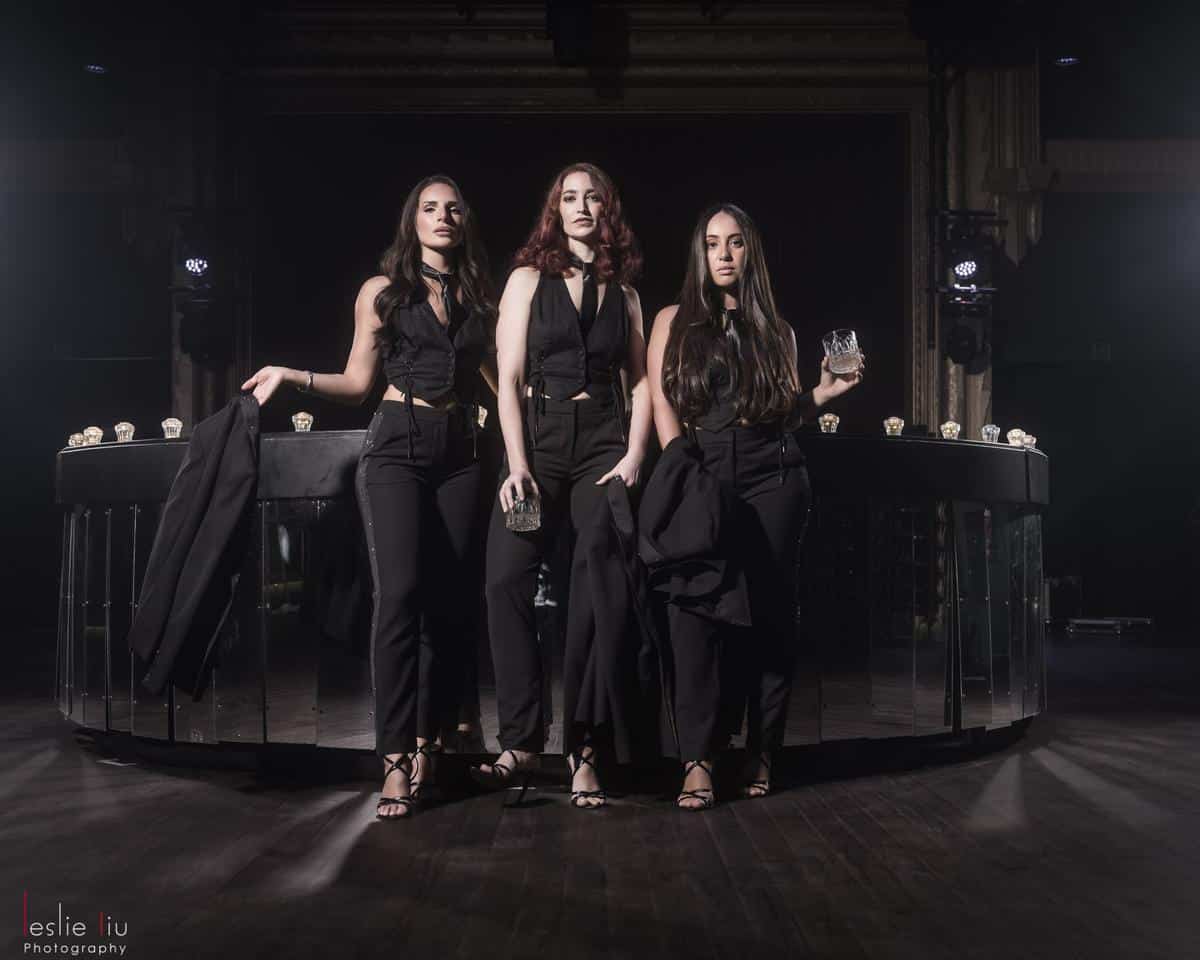
Inspired by the words; “It’s time to lay your old self to rest — and be reborn as the ultimate version of yourself, as you were always meant to be. This is your ending. This is your beginning. This is FUNERAL”, I ventured over to Howler in Brunswick on 29/1/26 to see ‘Funeral’, a “live music performance from dark, electronic, alt-pop phenomenon, KING IV.” (Pronounced I-V-Y.)

‘Funeral’ is the live performance of KING IV’s dance-pop album, ‘Psychopomp: the other side.’ Melbourne artist, Cheyenne Harper, is professionally known as King IV, who imagines herself as a conduit between two worlds, which provides her – and in turn, us – with a feeling of freedom and power.

The MIDSUMMA festival program is made up of diverse art forms and genres, so I knew ‘Funeral’ by King IV would be far from vanilla. I certainly got more than I expected – as I’m sure crowds discovered from King IV’s past gigs at Beyond the Valley, Melbourne Music Week and previous live and large events.

All songs are originals, written and composed by Harper and backed by a visual feast of cinematic projections and dark choreography, to live and synth-ed music. Don’t fear or judge the synthesizer. These songs are truthful and from the soul. There is a rawness and honesty thrown artistically and boldly in-your-face, and each track leaves you wanting more.

Beginning with a video wall as wide as the stage and evocative words conveying her “red being” crossing to the other side, we meet a sensual King IV with her 2023 single, ‘See you later’, a song about seeking pleasure and letting the light of passion free one from darkness.

King IV told Australian Music Scene in 2022 the song “…poured out of her after a night out clubbing and being love-bombed by the person she was out with.” When writing ‘See you later’, she was also influenced by psychotherapist, Carl Jung, and his quotes on passion, including, “…they must be on fire even if they make a fool of themselves…”


‘See you later’, is both erotic and clubby so, everyone at Howler moved towards the stage where we could be closer to even more surreal imagery from this extraordinary artist and her voice-over, asking;

“Did you become the forest? Or the space between the stars?
The wind crossed through the valley, or the harsh and ancient jars?
I reach for you in the wind…. in earth, in flame, in sea.
Whatever form you’ve taken, please leave a space for me.
Tell me if you’re alright, even if you’re not.
Even if you’re gone now. Is your soul forever lost?
Welcome to the cosmos and floating on the stars.
A break inside the universe. You’re always in my heart.”

She has taken us to the Afterlife. It’s something we’ve all considered, especially after profound loss.

King IV, as her “red being”, then returns with a plethora of pumping poetry.

A funky kick-beat of a song, ‘Wicked’, was one of my favourites.
“We can cross the seasons. We can reach the stars.”
I resonated with her “wicked witchy woman” story.

Next, ‘Night and Day’ with IV singing inside a red-lit coffin, standing centre stage. Loved the electric guitar riff on this one.
“I like it when you taste it. I do. I do. I like it when we’re naked. I do. I do.”

‘Murder’ mixed ethereal vocals and electronic layers.

‘Psychopomp’ was a stand-out.
“I’m a fire-breathing dragon. Always ready for some action.”

Ultra-talented Pat Gabriel, composer and musical director – @pattyboomba – plays the keyboard, the strings and other recorded pieces throughout the whole show and, it’s obvious to everyone he loves what he’s doing. Heavy on the bass, he interprets his talents within King IV’s compositions.

The Funeral dancers are fit and fast with dynamic and demonic moves, framing King IV fabulously along this unique journey she’s created for us.

‘Psychopomp; the other side’ is an excellent electronic, dance compilation, moody and theatrical, exploring hedonistic lifestyle, personal transformation and pushing each of us to claim our own unique identity.
“To truly transform, you must let the old self die – and trust that something greater is waiting to be born.”

Words of wisdom to live by as we venture into 2026.

Purchase King IV’s ‘Psychopomp: the other side’ album from Bandcamp, an online site that directly support the artists who make music.

@kingivsound

To book tickets to Funeral, please visit https://www.midsumma.org.au/whats-on/events/funeral-king-iv/.

Spread the word on your favourite platform!

Piotr Anderszewski

Piotr Anderszewski (Musica Viva Australia)

Piotr Anderszewski (Musica Viva Australia) Rating

Click if you liked this article

Some concerts creep up on you. Others announce themselves with force. Piotr Anderszewski’s recital at Melbourne Recital Centre did something rarer. It invited us in with quiet confidence and then held the entire room completely still. It was the kind of night that reminds you why we gather in concert halls instead of sitting at home scrolling through recordings.

The program opened with twelve pieces selected from Brahms’ late piano works Opp. 116 to 119. These miniatures can feel introspective, even private, but Anderszewski treated them like a conversation he was having directly with us. Nothing about his playing felt unconsidered. Every shift in colour had purpose. Every pause had weight. There was virtuosity here but it was the kind that draws you closer rather than pushing you back. The hall was silent enough (save for the single phone ringing that, I swear, brought a subtle shake of the head from the pianist) to hear the softest phrases land like thoughts forming in real time.

After interval came Bach. Anderszewski delivered the Prelude and Fugue in E major BWV 878 and the Prelude and Fugue in G sharp minor BWV 887 with a clarity that never tipped into dryness. He let the melodic lines speak with a simplicity that suited the space. Elisabeth Murdoch Hall has the kind of acoustic that wraps a performer in a warm glow without smudging the detail. It felt made for this music.


Then came one of the loveliest theatrical touches of the evening. Without any break or invitation for applause, Anderszewski slipped straight into Beethoven’s Sonata No. 31 in A flat major Op. 110. You could feel the audience catch on one by one. A tiny ripple of realisation moved through the hall.  It was clever and charming and made the transition feel like part of the storytelling rather than a reset.

His Beethoven had an almost improvisatory quality. Not loose for the sake of it but alive to the moment. Dynamic shifts surprised us yet always connected to the emotional flow of the work. The Arioso dolente was especially moving and the fugue grew with a kind of quiet determination that suited Anderszewski’s understated presence at the keyboard. Nothing was showy beyond necessity. Everything was honest and heartfelt.

Two encores followed after an eruption of applause at the end of the evening. The first felt like a warm nod to the audience and the final encore offered a gentle send off. A perfect ending.

Musica Viva deserves real credit for bringing this artist to Australia and for programming a recital that felt both rare and completely right for this venue. Elisabeth Murdoch Hall remains one of the great gifts to Melbourne audiences. Nights like this prove it.

To book tickets to Piotr Anderszewski (Musica Viva Australia), please visit https://www.musicaviva.com.au/concert-season/past-seasons/concerts-2025/piotr-anderszewski/.

Photographer: Claudio Raschella

Spread the word on your favourite platform!

Bach Akademie Australia: The Brandenburg Concertos

The Brandenburg Concertos

The Brandenburg Concertos Rating

Click if you liked this article

About 25.3 billion kilometres from Earth, travelling at 61,000 km per hour, Voyager 1 contains a gold record that includes recordings of Barnumbirr (Morning Star) and Moikoi Song played by Tom Djäwa, Mudpo, and Waliparu, Johnny B. Goode by Chuck Berry, and Johann Sebastian Bach’s Brandenburg Concerto No. 2 in F Major.

When asked what message humans should send to alien civilisations, the biologist Lewis Thomas replied: “I would send the complete works of Johann Sebastian Bach… but that would be boasting.”

The Brandenburg Concertos are exquisite, like gems, cut precisely and polished so they sparkle.

Imagine you are 36 years old. Your wife had died, you have four children and you need a better paying job. In 1721, Johann Sebastian Bach wrote six concertos in an attempt to convince the Margrave of Brandenburg-Schwedt to hire him. It didn’t work. The manuscript was discovered, tucked away in a library cupboard, in 1849. It appears that the Margrave never saw them.

Miraculously, the original manuscript survived the bombing of the train they were being carried on during World War II. A librarian, transporting the manuscript, fled the train, running out into a forest with Bach’s concertos hidden under his coat.

Madeleine Easton, the artistic director of Bach Akademie Australia, was captivated by the concertos when she first heard them as a child. The music “bubbled” joyfully. She was transfixed and determined that one day she would learn to play them herself.

Easton has more than realised that artistic dream. She is one of Australia’s most celebrated violinists, performing to acclaim internationally, and leading the Bach Akademie Australia.


Bach Akademie Australia are a remarkable group. The promo spoke of “unbridled joy”, a promise kept in the performance of the Brandenburg Concertos tonight. Technical skill is present in abundance in this group of accomplished musicians, but it is the balance of that skill with the dynamic interpretations and the sheer joy of performing that makes Bach Akademie’s music memorable.

It is delightful to see the communication between the musicians as they play: a glance here, the synchronised breathing, the physical uplift of the body to initialise the tempo, or a call and response between instruments in the concerto. The travelling solo in Brandenburg Concerto number three was a pleasurable highlight.

I found odd moments of real magic, not just during the performances but during the interval, when Nathan Cox tuned the harpsichord.

To a certain extent recordings have spoiled us. There is an unspoked expectation of perfection that can only be achieved by editing and the best of hi-fi equipment. With this in mind, there is a wonderment in hearing original and acoustic instruments without amplification, especially in a chamber music setting.

Madeleine Easton plays a 1682 Giovanni Grancino violin, an instrument with a wealth of experience in its wood. Her colleagues are similarly equipped, and we the audience benefit greatly from the wood, the breath, the brass, the experience and the joy.

To book tickets to The Brandenburg Concertos, please visit https://www.bachakademieaustralia.com.au/events.

Spread the word on your favourite platform!

The Art of Violin

The Art of Violin

The Art of Violin Rating

Click if you liked this article

3

The Sydney Opera House is always a breathtaking setting for live performance, but tonight’s concert in the intimate Utzon Room was something truly special. Making their debut in this iconic venue, Bach Akademie Australia delivered a spellbinding program that not only showcased the ensemble’s exceptional musicianship but also celebrated the rich legacy of the violin concerto.

Close your eyes, and you could almost believe you’d been swept back to the golden age of the violin. Picture yourself in late 17th-century Italy: candlelit salons, the gentle hum of anticipation, and the first brilliant notes of a new form capturing the public’s imagination—the violin concerto. With master luthiers like Stradivari perfecting the instrument’s design, and composers elevating it to virtuosic heights, the violin became the soul of the Baroque era. It sang with fire and finesse, captivating audiences and rivalling even the grandeur of opera in popularity.

Tonight, under the inspired direction of Artistic Director Madeleine Easton, that golden age was vividly reborn with clarity and passion by Bach Akademie Australia under the artistic direction of Madeleine Easton. Her insightful commentary guided the audience through the historical and musical evolution of the violin, framing each work with warmth and erudition. What followed was a program of extraordinary variety and cohesion, featuring works by Vivaldi, Leclair, Handel, Telemann, and Bach.


The ensemble performed with remarkable finesse and stylistic authenticity. The blend of violin, viola, cello, double bass, theorbo, and harpsichord created a rich and resonant Baroque sound world that felt both timeless and immediate. Each piece was delivered with a sense of joy and reverence, perfectly suited to the acoustics and intimacy of the Utzon Room.

Three violin soloists took turns at centre stage, each offering a unique voice. Rafael Font’s interpretation of Leclair’s Violin Concerto in D minor, Op. 7 No. 1 was luminous—technically agile and emotionally captivating, while Simone Slattery brought a poetic intensity to Telemann’s Violin Concerto in A minor, TWV 51:a1, illuminating its lyrical elegance and rhythmic drive.

As evening fell over Sydney Harbour, the music seemed to shimmer in response. Bach Akademie Australia did more than perform—they conjured a world, an era, and a spirit. The Art of Violin was not only a triumph of musicianship but a moving tribute to the enduring beauty of the instrument.

To book tickets to The Art of Violin, please visit https://www.bachakademieaustralia.com.au/events/the-art-of-violin-concert-1.

Spread the word on your favourite platform!