Robot Song

Robot Song

Robot Song Rating

Click if you liked this article

3

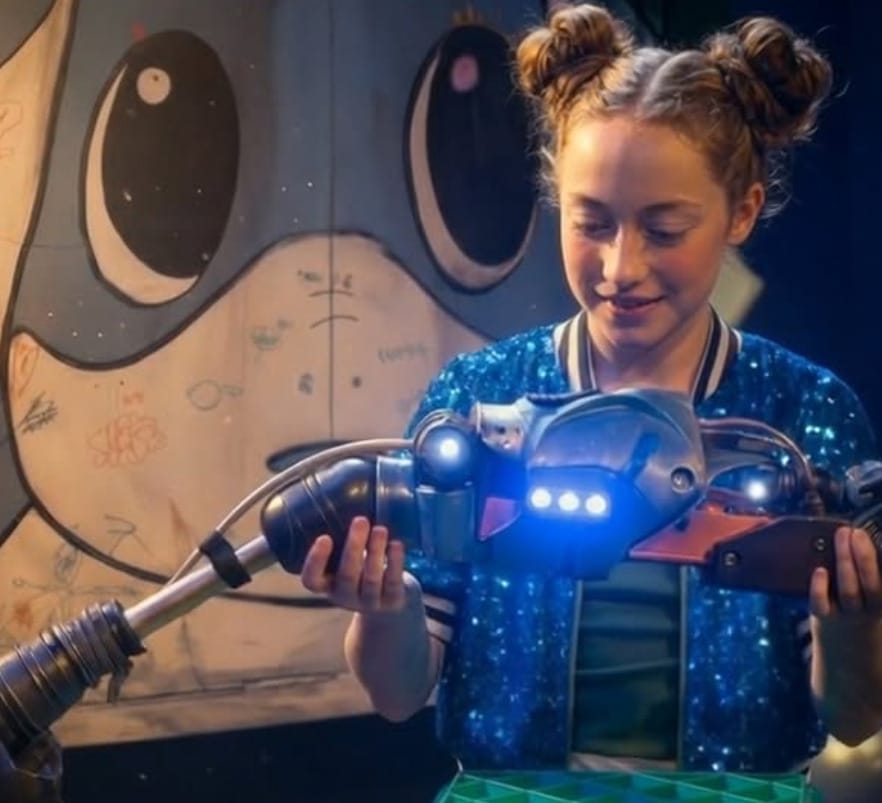
Robot Song is a 10/10 unicorn. It’s a lean, hilarious and genuinely heartfelt piece of theatre, where every element is perfectly placed and the magic sneaks up on you. There is no fat in this show. Nothing extraneous. It is deliberate, thoughtful and perfectly crafted, a tight hour that moves at a cracking pace and still finds room for your heart to keep up.

I first saw Robot Song years ago and it hit me just as hard this time at Theatre Works as it did when I saw it in regional Victoria. I feel like that is the mark of a work built on universal truth and authenticity.

Created by Jolyon James (writer, director and designer), Robot Song takes the lazy “robotic” stereotype often slapped onto autistic people and flips it into something far more honest and generous. In James’ own words the show challenges those misconceptions, asks how we define ourselves and centres creativity as a way through when language fails.

At the centre of the story is Adeline Hunter as Juniper May, giving a stellar performance that is funny, raw and completely believable, like you are watching a real kid think in real time. Phillip McInnes as Dad nails the paternal warmth and the messy, relatable effort of trying to get it right more often than you get it wrong. Michelle Doyle, performer-musician, is a quiet force, moving between presence as Mum and musicianship in a way that makes the whole room feel held.
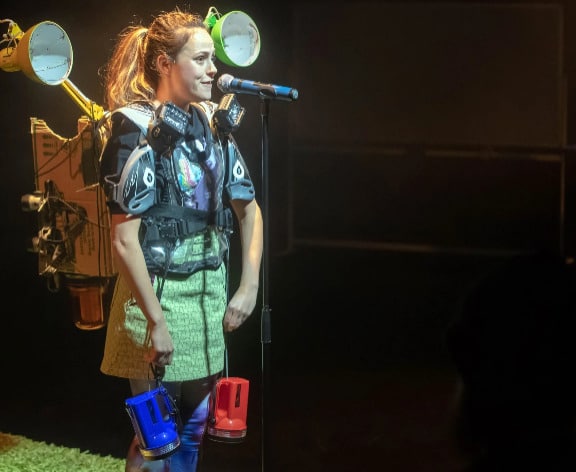


The music, composed and directed by Nathan Gilkes, is simple but perfectly formed, built to keep the lyrics clear and centred while still giving the singers space to fly. And fly they did. Each performer showcased their vocal skills brilliantly but Adeline Hunter stole the show vocally with a powerhouse voice that left the audience cheering.

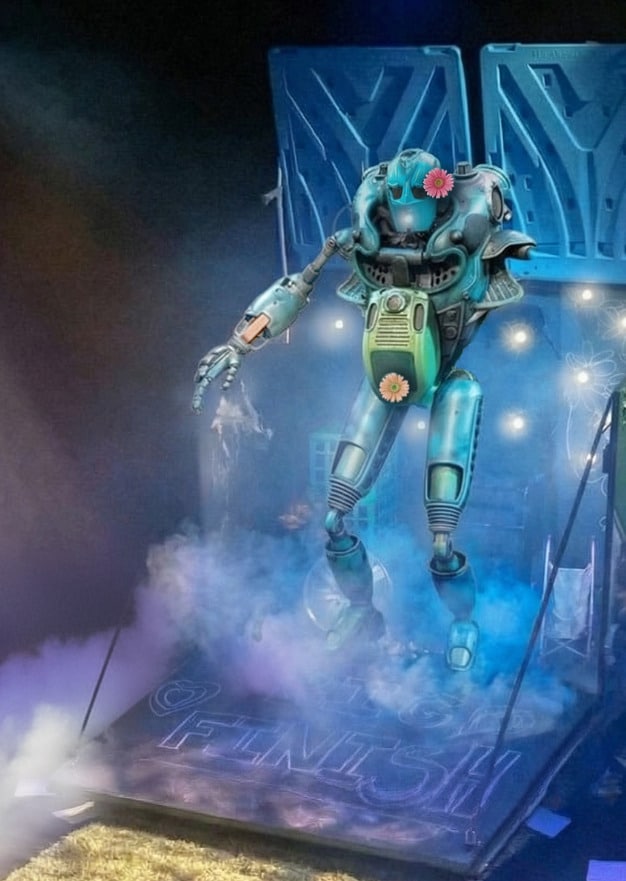
The theatrical language is a joy too: a show-within-a-show (and sometimes another show within that). It never feels confusing as we switch between worlds, just lovingly guided. Puppetry, projection, movement and live tech blend so seamlessly, you stop clocking the mechanics of brilliant theatre-making and find yourself genuinely immersed inside the story.

The design, once again, highlights the versatility of Theatre Works. It sits within the space as though it was custom built for the venue. The set looks casual, complete with found objects strewn everywhere, but everything is precisely chosen and positioned, especially around the oversized dumpster centrepiece which is somehow both realistic and quietly magical. Set construction is credited to Tom Eeles at JT Custom Builds, and you can feel the intelligence in every centimetre of it. The lighting (with original lighting design by Paul Lim) and the sound design deserve their own standing ovation. They are detailed, sculpted and so apparently effortless that you only realise afterwards how much work must be underneath.

I brought my 17-year-old daughter to this performance and she loved it as much as I did, as much as the younger kids in the audience did too. That “everyone gets something” kind of magic is rare. Think Bluey energy: warm, clever, deeply inclusive, with big lessons delivered gently with wit and kindness. This show made me laugh, cry and I loved every moment of it. Don’t miss it.

To book tickets to Robot Song, please visit https://www.theatreworks.org.au/2026/robot-song.

Spread the word on your favourite platform!

Piper’s Playhouse

Piper’s Playhouse

Piper’s Playhouse Rating

Click if you liked this article

1

From the moment guests step inside Piper’s Playhouse, it is clear this is not simply a show. It is a fully realised world.

Greeted warmly by the irrepressible Jimi the Kween and the razor-sharp Valerie Hex, audiences are ushered through an immersive maze, complete with bubble artist, hilarious peep shows and confession booths. From the start, you can tell that whimsy and risqué will walk hand in hand for the evening. The space itself is a triumph of design. Deep red velvets, glowing table lamps, light haze and a central podium create a Parisian cabaret atmosphere that feels both transportive and inviting rather than themed or contrived.

A full house on the night I attended generated a buzzy energy, with a broad mix of ages (strictly over 18) proving the experience is as accessible as it is sophisticated. Gorgeous tables, attentive costumed hosts and slick service reinforce the sense that every detail has been carefully considered. Even the delivery of the first glass of champagne becomes theatre in a moment of surprise that perfectly captures the spirit of the night.

On stage, a stunning jazz band provides the heartbeat of the room. Their playing is effortlessly virtuosic, loud enough to shape the atmosphere yet perfectly balanced so conversation can flow. It is cabaret accompaniment at its finest: tight, relaxed and deeply stylish.


Valerie Hex proves a brilliant MC, working the room with effortless comedy and razor wit that never comes at the expense of the audience. Meanwhile, Jimi the Kween commands attention with a spectacular voice that moves seamlessly from power to nuance, all delivered with uproarious humour.

Headliner Diesel Darling demonstrates exactly why she sits in the Burlesque Hall of Fame. Titillating and playful, her connection with the audience is magnetic.

The supporting acts are equally compelling. Becky Bubble is captivatingly inventive, elevating the medium of bubble art into something quietly magical. Soliana Ersie leaves the crowd audibly gasping with contortion work that borders on the impossible, while hand balancer Naz Alexander delivers feats of strength with undeniable flair. Magician Sebastian Rideaux impresses both onstage and during close-up performances between sets, his charming patter guiding audiences from laughter to cheers of delight in seconds.

Importantly, the troupe feels like exactly that, a troupe. Performers weave through the audience, support one another’s moments and contribute to an atmosphere that is welcoming, inclusive and joyfully celebratory.

Add excellent food, fast and friendly table service and a late-night, post-show piano bar led by the high-energy Trevor Jones, and the result is an evening that refuses to let the party end quietly.

The attention to detail is immaculate. The care for the audience experience is unmistakable. Piper’s Playhouse is an immersive feast for the senses, a masterclass in modern cabaret and the kind of night you can’t wait to tell your friends about.

To book tickets to Piper’s Playhouse , please visit https://www.crownmelbourne.com.au/bars/pipers-playhouse.

Spread the word on your favourite platform!

Piotr Anderszewski

Piotr Anderszewski (Musica Viva Australia)

Piotr Anderszewski (Musica Viva Australia) Rating

Click if you liked this article

Some concerts creep up on you. Others announce themselves with force. Piotr Anderszewski’s recital at Melbourne Recital Centre did something rarer. It invited us in with quiet confidence and then held the entire room completely still. It was the kind of night that reminds you why we gather in concert halls instead of sitting at home scrolling through recordings.

The program opened with twelve pieces selected from Brahms’ late piano works Opp. 116 to 119. These miniatures can feel introspective, even private, but Anderszewski treated them like a conversation he was having directly with us. Nothing about his playing felt unconsidered. Every shift in colour had purpose. Every pause had weight. There was virtuosity here but it was the kind that draws you closer rather than pushing you back. The hall was silent enough (save for the single phone ringing that, I swear, brought a subtle shake of the head from the pianist) to hear the softest phrases land like thoughts forming in real time.

After interval came Bach. Anderszewski delivered the Prelude and Fugue in E major BWV 878 and the Prelude and Fugue in G sharp minor BWV 887 with a clarity that never tipped into dryness. He let the melodic lines speak with a simplicity that suited the space. Elisabeth Murdoch Hall has the kind of acoustic that wraps a performer in a warm glow without smudging the detail. It felt made for this music.


Then came one of the loveliest theatrical touches of the evening. Without any break or invitation for applause, Anderszewski slipped straight into Beethoven’s Sonata No. 31 in A flat major Op. 110. You could feel the audience catch on one by one. A tiny ripple of realisation moved through the hall.  It was clever and charming and made the transition feel like part of the storytelling rather than a reset.

His Beethoven had an almost improvisatory quality. Not loose for the sake of it but alive to the moment. Dynamic shifts surprised us yet always connected to the emotional flow of the work. The Arioso dolente was especially moving and the fugue grew with a kind of quiet determination that suited Anderszewski’s understated presence at the keyboard. Nothing was showy beyond necessity. Everything was honest and heartfelt.

Two encores followed after an eruption of applause at the end of the evening. The first felt like a warm nod to the audience and the final encore offered a gentle send off. A perfect ending.

Musica Viva deserves real credit for bringing this artist to Australia and for programming a recital that felt both rare and completely right for this venue. Elisabeth Murdoch Hall remains one of the great gifts to Melbourne audiences. Nights like this prove it.

To book tickets to Piotr Anderszewski (Musica Viva Australia), please visit https://www.musicaviva.com.au/concert-season/past-seasons/concerts-2025/piotr-anderszewski/.

Photographer: Claudio Raschella

Spread the word on your favourite platform!

Titus Andronicus

Titus Andronicus

Titus Andronicus Rating

Click if you liked this article

3

Theatre Works and Th’ Unguarded Duncan have delivered a Titus Andronicus that shakes the dust off Shakespeare’s most brutal tragedy and gives it a visceral, contemporary pulse. It’s a nightmarish, muscular production filled with human vulnerability and psychological horror rather than empty shock value and it had the audience ricocheting between laughter, gasps and the occasional tear. This is Titus for newcomers and die-hard Shakespeare fans alike.

At the centre of it all is Josh Morrison as Titus, who unleashes an unrelenting rage that never tips into caricature. His performance is a thunderous force, yet it sits on a foundation of emotional authenticity that makes the character’s descent compelling. For my taste, I might have enjoyed a sharper arc from decorated general to shattered father, but Morrison’s clarity of intention gives the role a gripping cohesion that I really can’t fault. It’s easily the best Titus I’ve seen.

Joanna Halliday’s Lavinia is spellbinding. She begins the play vivacious and bright then slowly transforms into something still, deliberate and driven. Her physical and emotional control draws your eye even in silence. Halliday leans into the horror elements without losing the character’s dignity, giving us a Lavinia who is both haunting and heartbreakingly human.

Helen Hopkins grounds Marcus with immaculate text work. She brings the energy of a seasoned Shakespearian actor, the kind who makes the verse feel like breath rather than technique. Marcus can vanish in a sea of titanic characters, but Hopkins’ patrician poise ensures the role resonates.


The production finds remarkable subtlety in its men of war. Rajendra Moodley (Aaron) and River Stevens (Lucius) deliver monologues that feel as if they’re aimed straight at each audience member. Their grounded humanity makes their choices believable and their presence magnetic.

Meanwhile, the Goth brothers steal scene after scene. James Cerche (Chiron) and Seon Williams (Demetrius) are wickedly funny, disturbingly casual and physically razor sharp. Their playful cruelty taps perfectly into the show’s tonal balance of horror and wit.

Victoria Haslam’s Tamora delights in viciousness, particularly in her chilling condemnation of Lavinia. She’s dangerous, charismatic and hard to look away from.

Directors Kevin Hopkins and Claire Nicholls craft a production that feels purposeful in every moment. The physicality is cohesive, the pacing is tight and the story is crystal clear without ever being over-explained. The minimal set keeps the focus on the ensemble, and while the central ring’s construction briefly distracted me, its use to delineate space and evoke the infamous pit was inspired. Lighting stays subtle and supportive, letting the actors carve the world. Max Hopkins’ sporadic bursts of heavy metal underscore transform key scenes into something almost cinematic, heightening tension and chaos in all the right places.

Paulina Kostov and Victoria Haslam’s costuming choices and creation drew a sharp line between worlds: disciplined Romans in hakama and rebellious Goths in punk-inspired gear. It’s a clever visual shorthand that deepens the storytelling.

This production made me see Titus Andronicus in a new light. It strips away the noise and brings the humanity right to the surface. A thrilling, haunting and deeply satisfying night of theatre at Theatre Works.

To book tickets to Titus Andronicus , please visit https://www.theatreworks.org.au/2025/titus-andronicus.

Photographer: James William

Spread the word on your favourite platform!