Beyond Good and Evil: Lord of the Flies Examines the Darkness Within

Lord Of The Flies

Lord Of The Flies Rating

★★★★★

Click if you liked this article

4

In today’s world, where the terms ‘unpredictability’ and ‘uncertainty’ have become part of our everyday vocabulary, is it no wonder that we, as a society, are craving more and more control over our lives? To feel safe, repetitive routines and rituals are formed. Activities and nutrition fuel our bodies and minds. Social connections satisfy our need for feeling valued and accepted.

And yet, beyond our scope, there are greater forces that exist in our world that we have no control over. Circumstances of good vs evil; of hate and suffering; of larger-than-life power plays beyond our human understanding. So we look for strong leadership (of countries, corporations or institutions) to restore peace and harmony. To fix and put right. To give us hope. To make us feel safe once more.

But, as humans, are we naive to think that peace is the answer to eradicating evil? Or does evil exist as part of our nature, if all hope is lost?

In director Steven Mitchell Wright’s reimagining of Nigel Williams’ adaptation of Lord Of The Flies, we examine how the science of evil can slowly creep into the human psyche, and seek to dismantle order and destroy others in its wake.

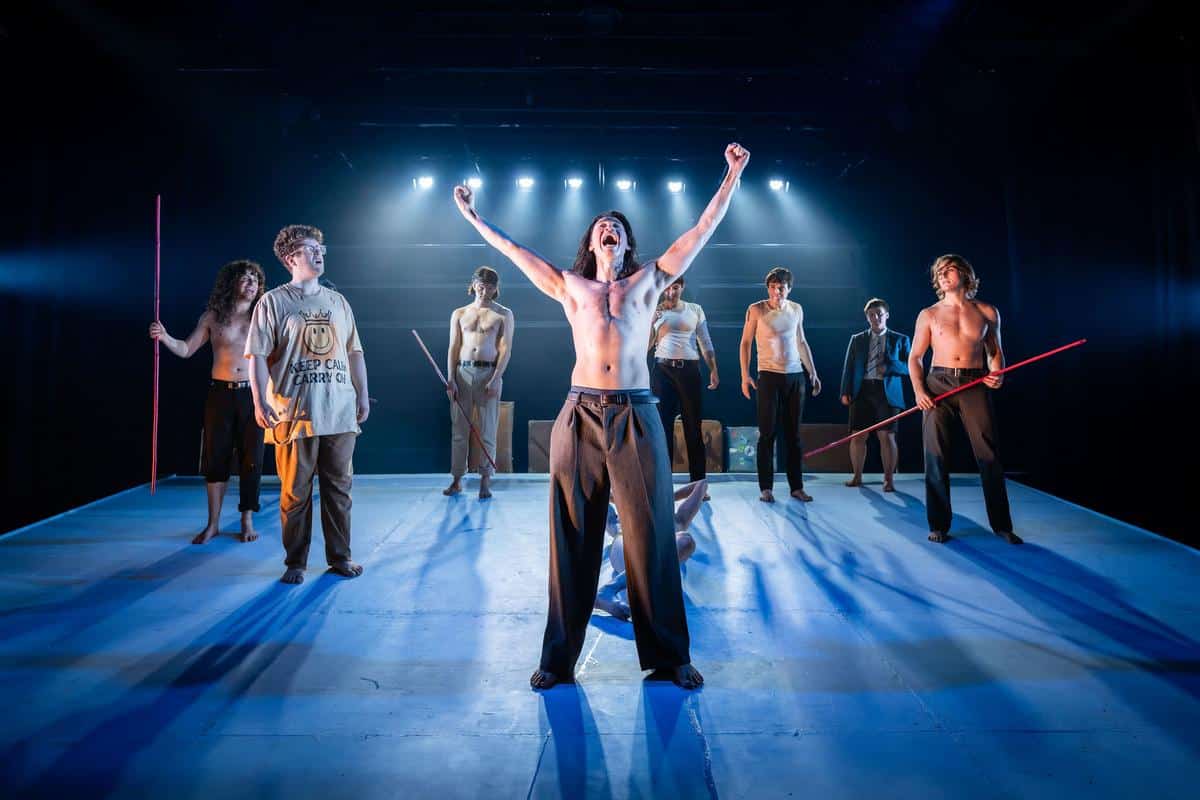
From the moment I enter the theatre, award-winning director Steven Mitchell Wright transports me in a moment of childhood innocence, where a deeply-slanted white stage faces in towards the audience, exemplifying a pure boys-being-boys existence: (played by adolescents and non-gender actors). Boys playing joyful sport together, free as flies, even in an uncertain world.
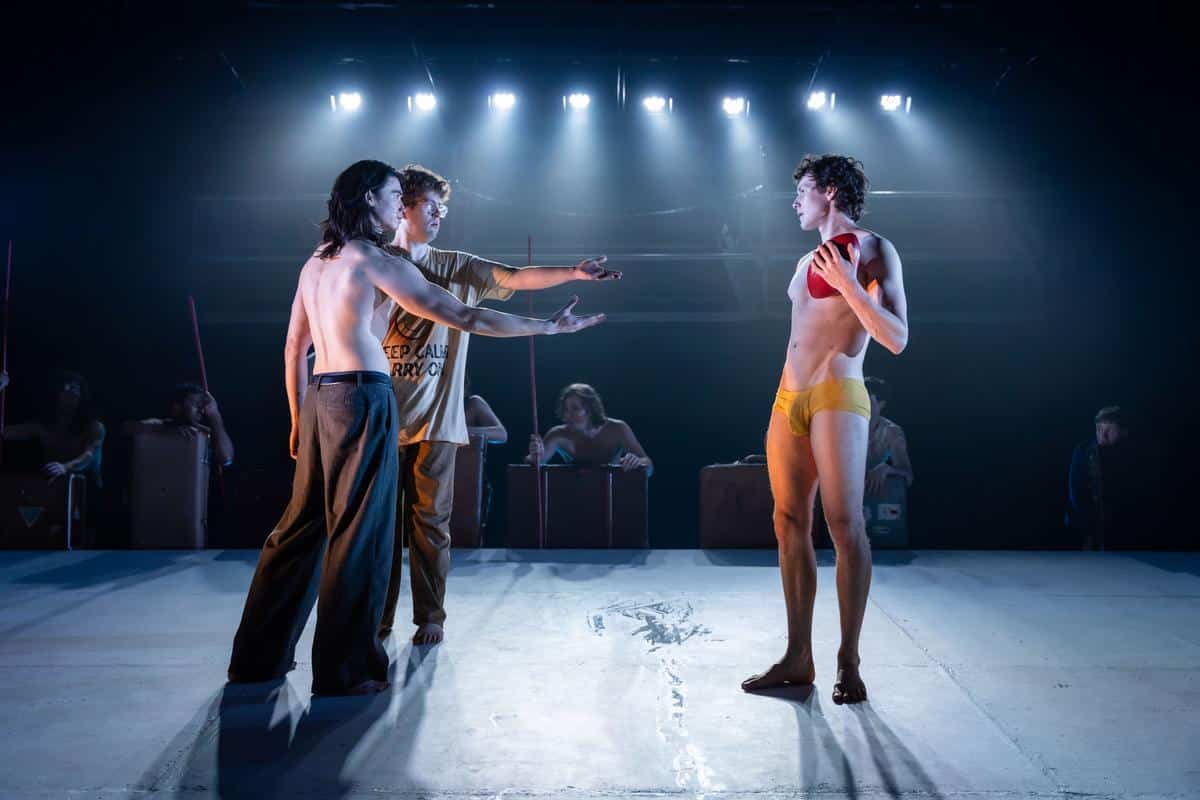
 

When these boys are put on a plane out of England to escape an atomic war, crash-landing on a remote island, we are witness to a different kind of battle – the survival-of-the-fittest. We are transported to a land where the forces of good are distorted slowly into evil – from innocent boys basking in adventure to descending into tribal warfare. Asking us: if evil is rooted in our nature – or borne from ego-driven madness?

For in this no-holds-barred classically brilliant production, Wright looks at every line in the script and explores the timing of its statements for a new generation. Much like looking into a mirror, he begs us to ponder: Have rules become cloudier? Has leadership lost even more of its meaning? Has the ball of ‘authority’ become so weak and so disposable, that it can be thrown around willy-nilly, like an Aussie rules football, when it comes to our modern survival? Or does it come complete with sharpened spears and a winning-at-all-costs mindset?

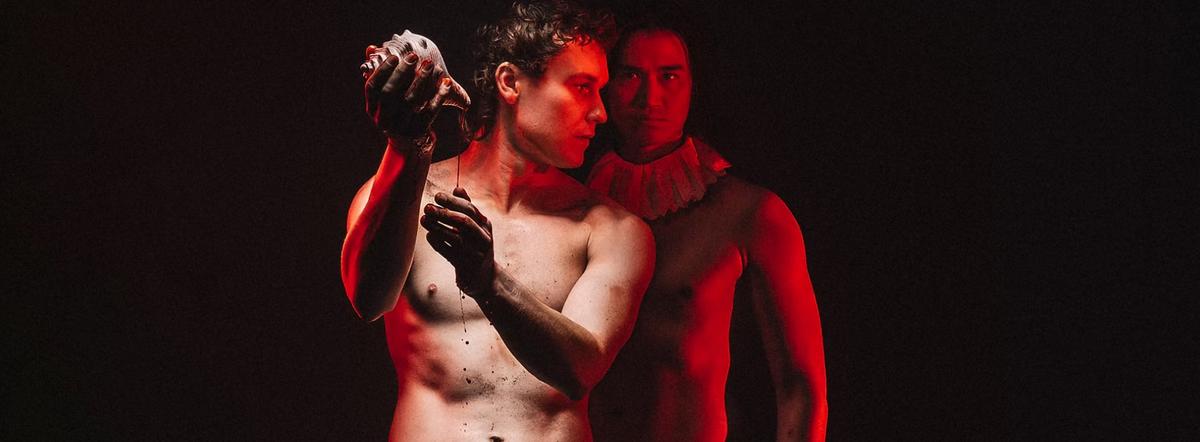
Brilliantly played, staged and choreographed, Steven Mitchell Wright’s immersive staging also places modern technology at the forefront of his production to amplify the madness of evil. Actors carry a selfie stick with an iPhone camera projected onto the stage to amplify the terror of savagery. A dance mob forms to symbolise freedom with undertones of carnal desires and the birth of wild savagery. Animalistic chants and wild physical movements intensify the killer instinct of a hunter seeking its prey. Boys in fight-or-flight mode constantly on guard – losing their train of thought in a world without routine, becoming animal-like in nature. The effects of red lights depicting madness, effectively created by lighting designer Ben Hughes and alerting sounds of nature infiltrating our minds, such as tropical thunder and rain pouring down, were effectively created by sound designer Jack Burmeister – inviting us into the fearful world existing even within nature itself.

The cast of this show were no less than exceptional. Angus Leighton as Ralph exemplified the exact leading man energy and machismo required to play a budding showman, a leader in looks, and in bark; with no bite. Yet, watching his character’s ego-crushing demise was both heartbreaking and riveting.

Sean Yuen Halley as Jack commanded the stage immediately with his intense energy of unapologetic arrogance and ferocity, seeking to seize control of everything in his world, yet losing control of himself in the process. Jack’s descent into madness was depicted so methodically and so seamlessly, launching into what appeared to be a devil-like possession that was flawlessly executed.

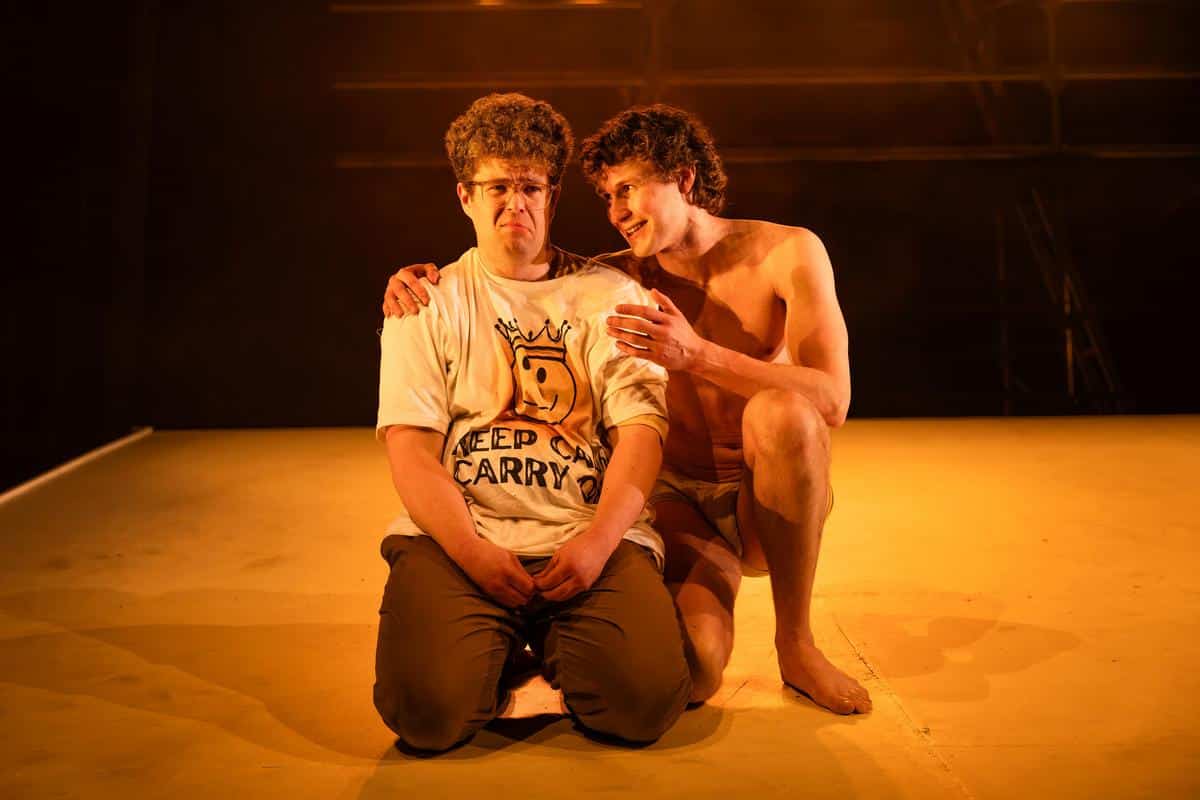
But in the role of Piggy, my most highest of accolades goes to Oliver Cowen. Wearing his heart on his sleeve, Cowen brought the audience to tears with his angelic presence, beyond the obvious childhood taunts and physiological judgements: to symbolise the moral compass within us all. Cleverly balancing the show out with the hope – that there is good in people. For this alone, I congratulate Cowan as not only embodying the backbone of this production, but the heart and conscience of this show as well.

All in all, this production of ‘Lord Of The Flies’ is a must-see. It is an exceptional production for the 2026 season at Theatreworks that should not be missed.

To book tickets to Lord Of The Flies, please visit https://www.theatreworks.org.au/2026/lord-of-the-flies.

Photographer: Image 1: Oliver Cowen and Angus Leighton Image 2: Sean Yuen Halley, Oliver Cowen, and Angus Leighton Image 3: Blaise Tindale, Oliver Cowen, Charlie Veitch, Sean Yuen Halley, Oliver Gorringe, Declan Magee, Darcy Crawford, William Bastow
Spread the word on your favourite platform!

Anastasia: An Elegant, Enchanting Enigma

Anastasia The Musical

Anastasia The Musical Rating

★★★★★

Click if you liked this article

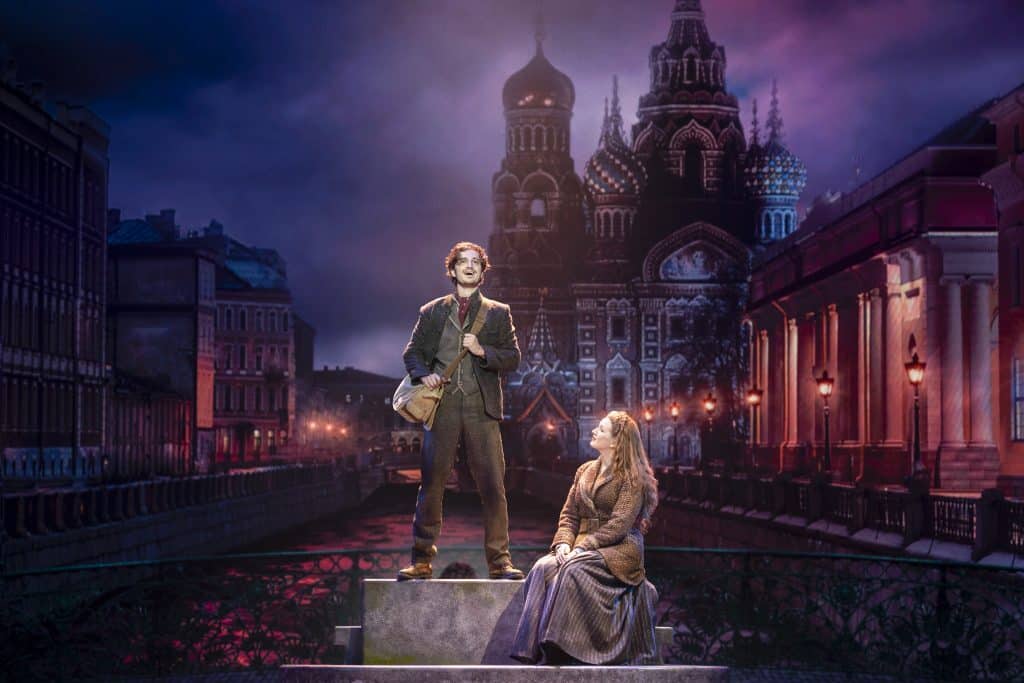
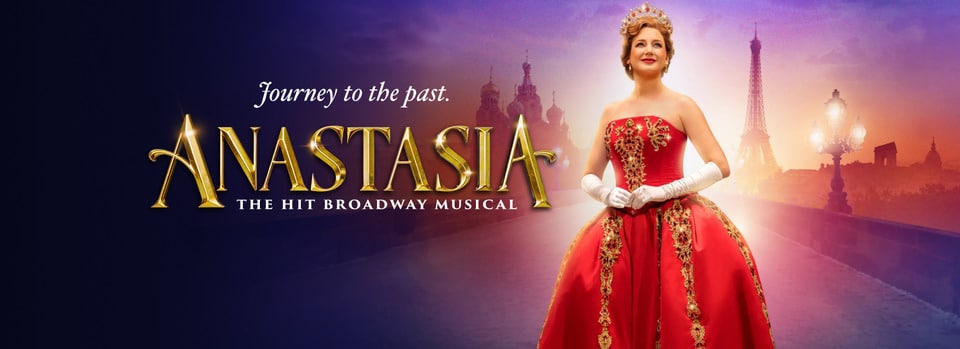
According to Anastasia’s writer Terrence McNally, a fairy tale is a story that even if it isn’t demonstrably true, tells us something very truthful about who we are. So even if modern DNA testing has concluded any claim about a runaway Romanov, the rumour, legend and mystery of Anastasia rightly endure and find luminous life in a Broadway show, now performing at QPAC’s Lyric Theatre in Brisbane. Set largely within economically shattered early 1900s Russia, Anastasia avoids excessive sentimentality, canvassing a society struggling to survive, and haunted with loss. Street sweeper Anya is groomed by conmen Dmitry and Vlad to pose as Grand Duchess Anastasia Nikolaevna of Russia, rumoured to have escaped and survived her Imperial family’s execution, so they can pocket a reward. However, as the story develops, the grift turns to gratitude, and the fiction may not be so far-flung.

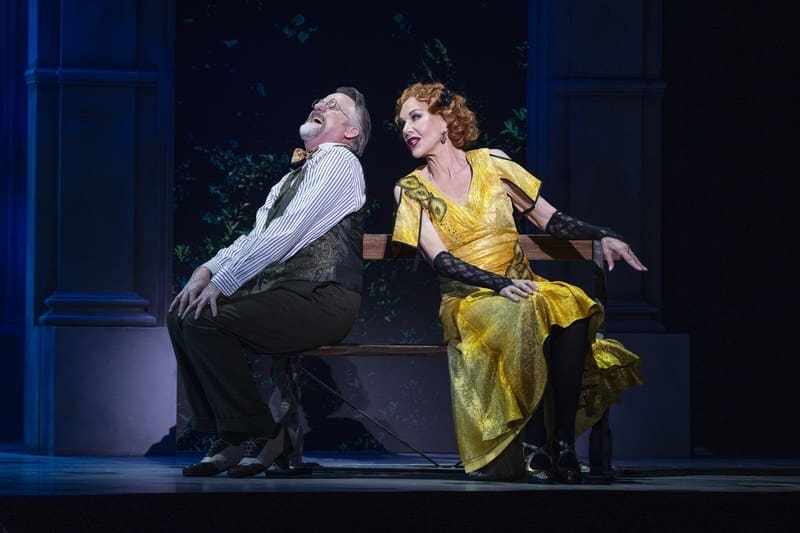
Every facet of Anastasia is impressively crafted, creating a musical that is spirited and spellbinding, yet sombre. Of the performers, Georgina Hopson is an admirable Anya, exuding the guts and grace to embody both the peasant and the princess with authentic likeability, not to mention pitch-perfect vocals, delivered with power and tender restraint. Robert Tripolino is eye catching as the resourceful rogue, Dmitry, a conman with a conscience. The magnetism between Anya and Dmitry is evident earlier than the characters realise it, and their burgeoning romance provides them with satisfying realignment and redemption, respectively. Rodney Dobson brings lived-in levity to the character Vlad, wily associate of Dmitry, and ex-member of the Imperial Court, sharing good connection and timing, particularly in his scenes with Tripolino, and Rhonda Burchmore – who is a giddy, glamourous and genial Countess Lily. Joshua Robson stands out as Gleb, capturing the complexity and ambivalence of the character, with velvet, vibrato-rich vocals, while as the Dowager Empress, Nancy Hayes commands with gravitas and regal decorum. The entire ensemble is highly commendable, vivacious and versatile.


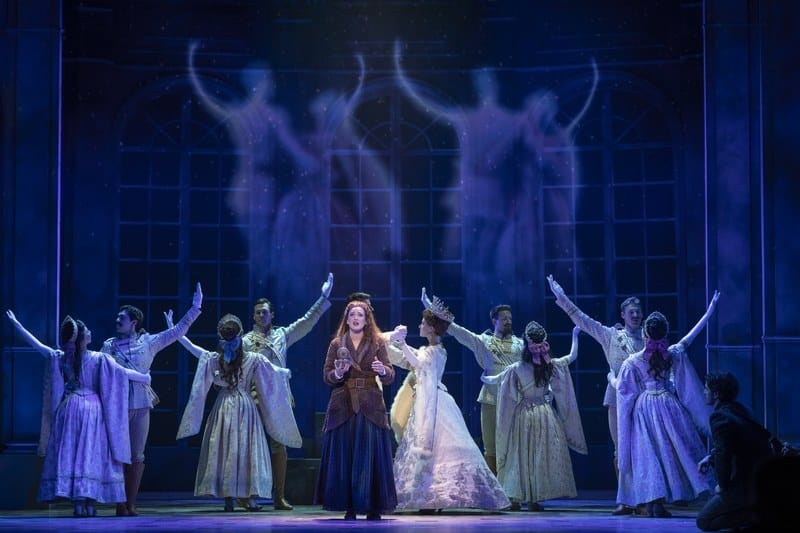
Anastasia’s projection and videography are remarkable, adding depth and cinematic spectacle to the stage, immersing us in the adventure even more thoroughly. Dance is another special feature, with effervescent group numbers and stirring contrast between Russian waltzes, beautiful but bygone, and the up-tempo jazz stylings of 1920’s Paris. There is some phenomenal ballet added in for good measure, which provides a dazzling link between the old and new. The stylistic changes in costume, dance, and music achieve a marked tonal shift from the repression of revolution era Russia to the joie de vivre of Paris – and the possibilities of a new dawn. The costumes are stunning, the women’s regal dresses in particular draw gasps of appreciation, and the music is sumptuous and memorable, with undertones of melancholy befitting the fallen who at once grace and haunt the stage.

Anastasia shares many elements with the animated 1997 film, including five of the songs, but it achieves something new and more grown up, with each aspect combining beautifully. Director Darko Tresnjak and the entire creative team truly sweep us away in the journey. Overall, the legend of Anastasia endures, and this production is an elegant and enchanting enigma, telling many truths, including about how serendipity leads us where we are meant to be. Highly recommended.

To book tickets to Anastasia The Musical, please visit https://anastasiathemusical.com.au/tickets/brisbane/.

Spread the word on your favourite platform!

Here Comes The Sun

Sessions On The Pier: Time & Tide

Sessions On The Pier: Time & Tide Rating

★★★★★

Click if you liked this article

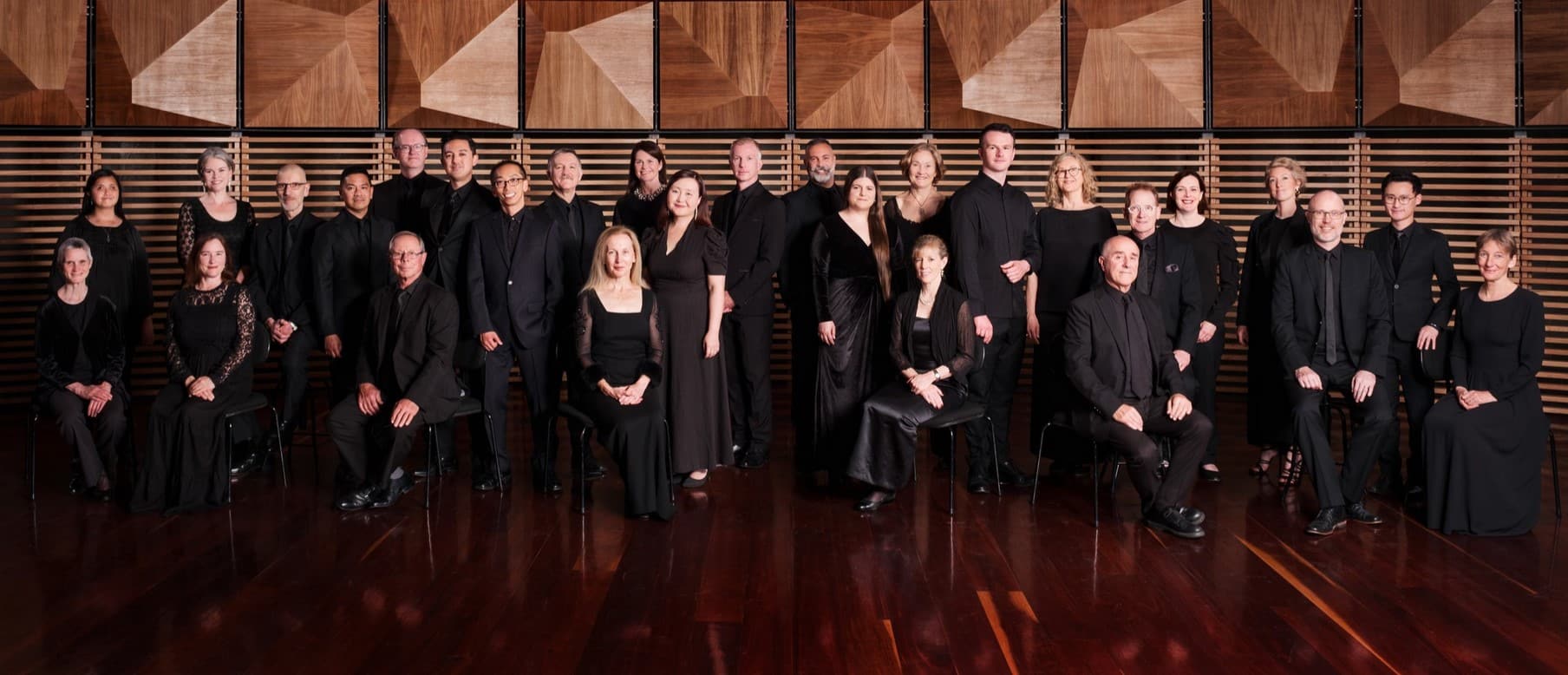
The Neilson, in Sydney’s Walsh Bay precinct is a must-see, must-experience venue. ‘Time & Tide’, is a gorgeous collaboration with the Sydney Chamber Choir and a jazz trio, comprising of Kevin Hunt on piano, Jacques Emery on bass and Chloe Kim on drums. The theme of the program reflects how our emotions are swayed by the seasons. My emotions certainly react to being on Sydney Harbour on a sparkling Spring day.

A jazzy rendition of Jimmy McHugh’s, ‘On the Sunny Side of the Street’, greets the audience. It’s always exciting to see musicians on-stage before the show officially begins. The performance space allows for tables and chairs to be positioned like a jazz club configuration, allowing for up-close-and-personal participation. The rest of audience are seated in rows across a square shape seating plan, ensuring that there’s not a bad seat in the house.

The whimsical George Harrison classic, ‘Here Comes The Sun’, starts the program. It’s a stunning arrangement by Sydney Chamber Choir’s Co-Director, Naomi Crellin (who innovatively arranges several songs in this collection). Proving that choirs always elevate a song to euphoric heights. The choir is sublime with lovely solos from Richard Sanchez and Toby Wong. Totally uplifting. George would have been proud. I could have listened to this all afternoon. Next, we experience heartbreak in Sigmund Romberg’s, ‘Softly, As In A Morning Sunrise’. The tenors and basses sing directly to the sopranos and altos. In this choir it means the men singing to the women. The audience is in-awe. Benjamin Britten’s operatic qualities shine in ‘The Succession Of The Four Sweet Months’. Our emotional rollercoaster is now definitely on-track.


In keeping with the Spring/Summer theme, we have George Gershwin’s sumptuous, ‘Summertime’, from the musical ‘Porgy and Bess’. Kevin Hunt on piano, is in his element here. It’s always exhilarating watching a pianist fully in-sync with the material and loving every minute of it. Jacques Emery oozes charisma on bass. It’s obvious why Emery is sought after by so many orchestras around the country. Chloe Kim on drums, is an absolute revelation. This drummer can do anything. Chloe twirls those drumsticks with such dexterity, that she could perform in any musical setting. (I could see Ms Kim in a pop band!)

‘Autumn Leaves’, by Joseph Koma follows. It’s beautifully melancholic, with a stylish arrangement by Ryan O’Connell and Naomi Crellin. Apparently Marlene Dietrich was offered this song, but declined. One wonders why. We don’t stay melancholic for long as Bobby Troup’s (yes, of Route 66 fame), ‘Their Hearts Were Full Of Spring’, gets us upbeat again. Nick Begbie (Co-Director, Sydney Chamber Choir), tells us that this song was an early Beach Boys’ collaboration. Nick Begbie also tells jokes too. (Composers having more Oscars than Sesame Street, gets everyone laughing.) As an acapella, it soars. Back on the rollercoaster, emotions are tested again. ‘Spring Can Really Hang You Up The Most’, by Tommy Wolf, is an interesting choice, but it works. Soprano Lily Harper has her glorious moment in the sun, during this rendition. The title of course, charts the trajectory of the thematic program. ‘On The Night Train’, by Joseph Twist (yes, based on the Henry Lawson poem), gives sopranos Ria Andriani and Wei Jiang, the forum to shine. The singing is world-class.

One of the closing songs is ‘It Might as Well Be Spring’, by that dynamic duo, Rodgers and Hammerstein II. Nick Begbie does an exquisite solo here. Begbie is the epitome of cool. These songs deserve an audience. They will never go out of fashion.
The aptly named Sam Allchurch conducts proceedings with panache.

To book tickets to Sessions On The Pier: Time & Tide, please visit https://www.aco.com.au/whats-on/2026/sydney-chamber-choir-time-and-tide.

Spread the word on your favourite platform!

Savages: Drama Below The Decks

Savages

Savages Rating

★★★★★

Click if you liked this article

2

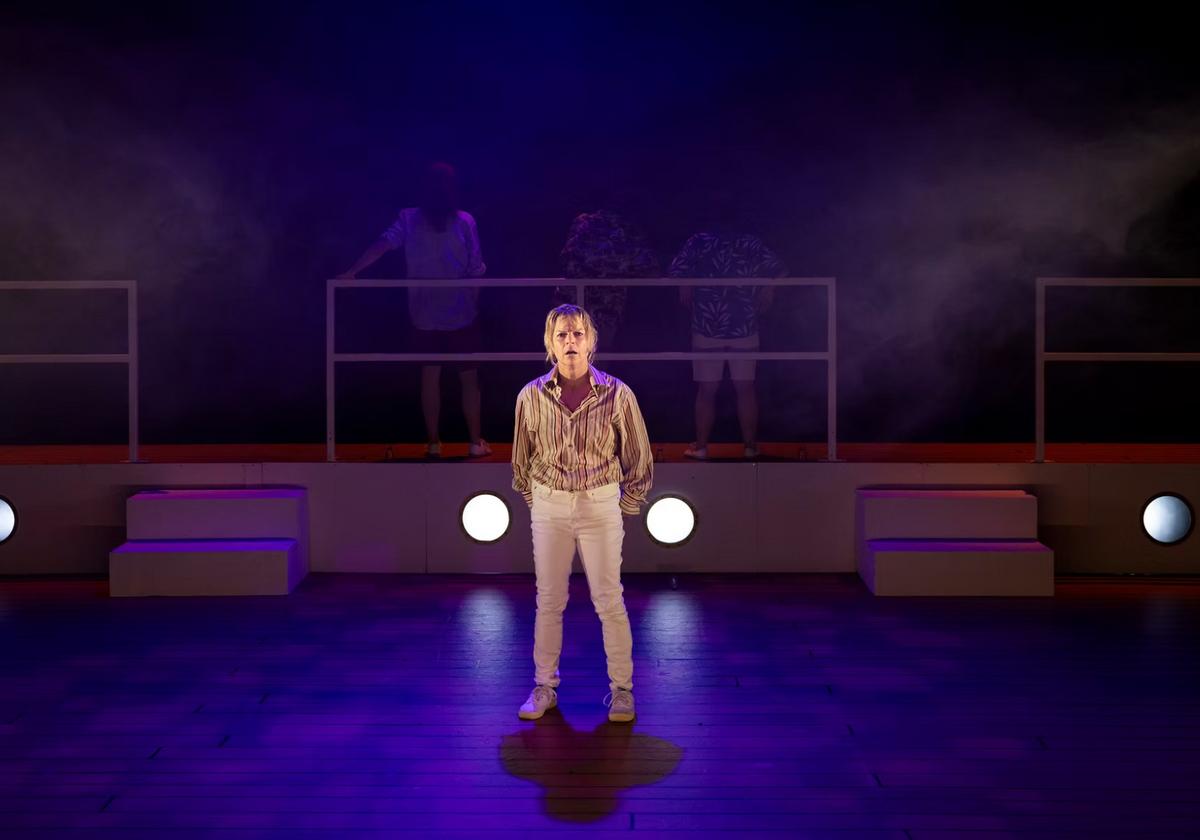
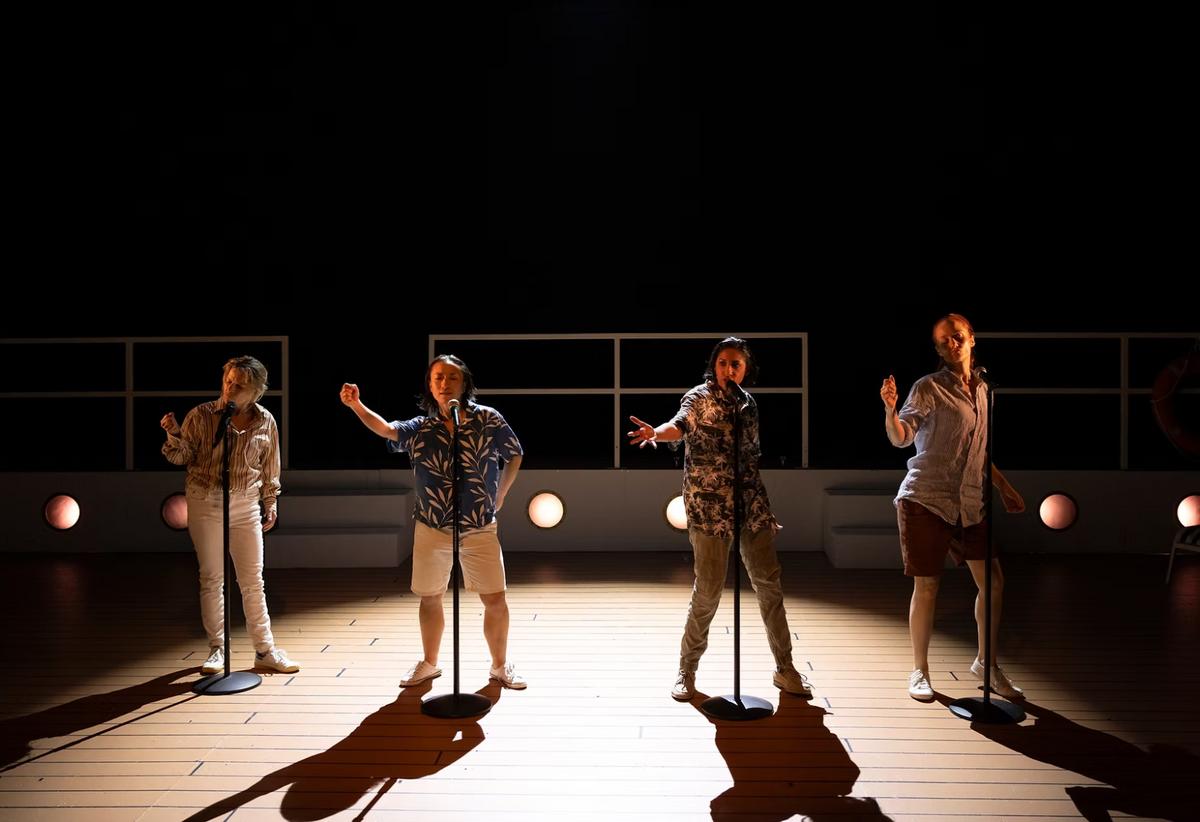
When a dramatically-drawn stage, set impressively as a stark deck of a cruise ship is cast in blue lighting, with unnerving music pounding from the speakers, I know I have arrived immediately in an undercurrent of something I can’t quite put my finger on. A backward feeling descending on my conscience; that once this cruise ship sets sail, there is nowhere I can escape from.

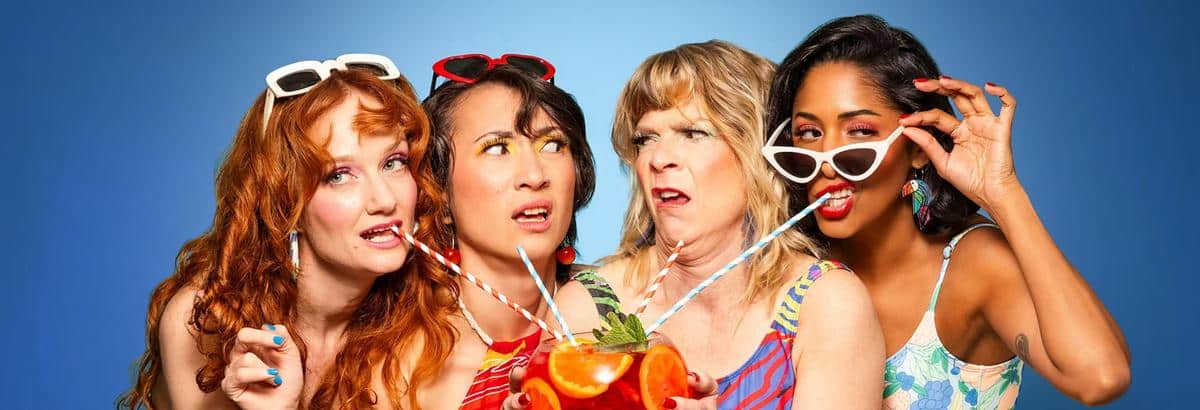
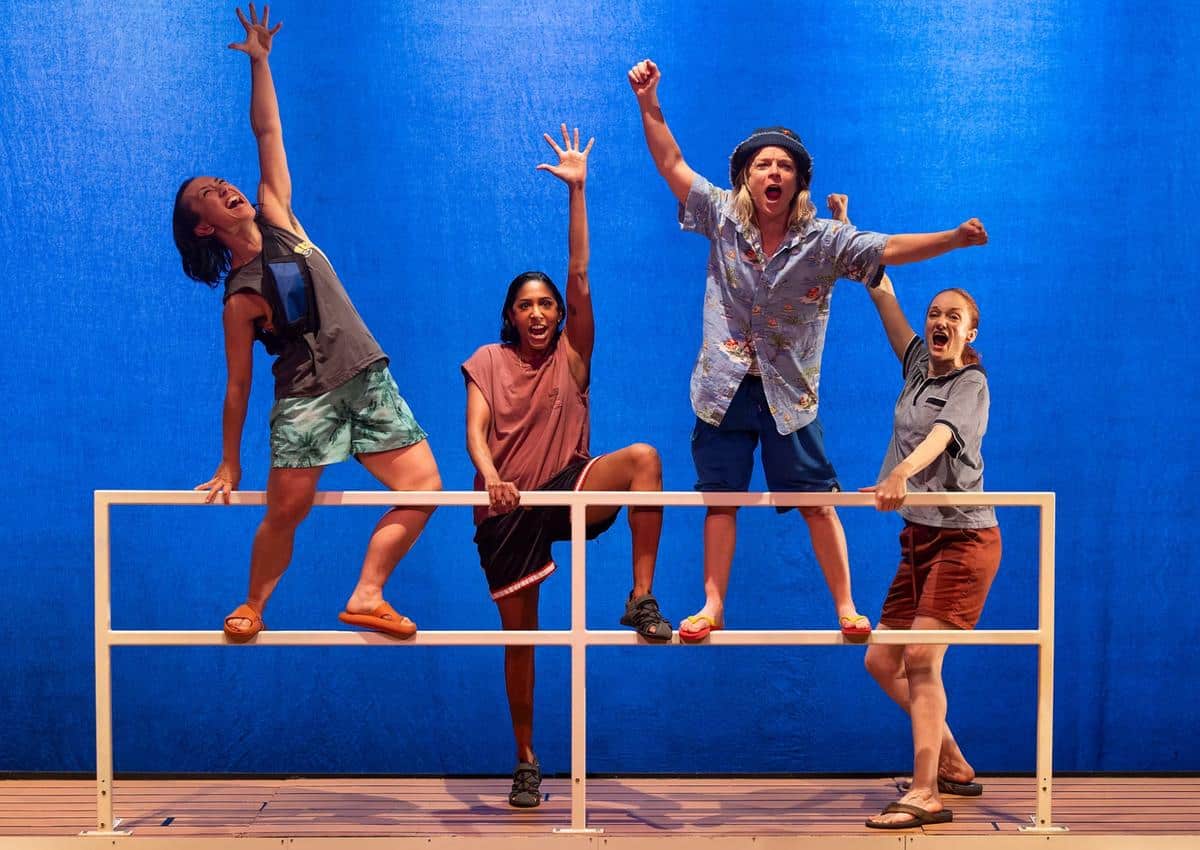
For this feeling of unbreathable submersion is Patricia Cornelius’ brilliant reimagined work, Savages, a play about four men immersed in tight mate-ship, climbing aboard a cruise and leaving their worries behind – heading off on ‘a holiday of a lifetime’, not yet knowing how their yearning for liberation will slowly spill out of control and descend into a night of chaos.

Thirteen years after this play originally took the stage, the decision to cast this show with women and non-binary people takes this piece to a whole other level, particularly where we currently sit with toxic masculinity and misogyny. How, in 2026, we still hear of men, particularly those ranking in high positions, still feeling entitled to disrespect women. How women still have to be guarded, even on cruise ships. Where there may lie a toxic breeding ground of expectation, ire, and unfathomable disrespect when it comes to our gender.

To examine the seemingly complex wiring of savage behaviour in 2026, Cornelius and the show’s director, Kitan Petkovski, thought to cast four incredibly agile women and non-binary actors, who symbolically leave their identities behind at the dock. Who immediately transform into four male characters with great humour, precise physicalities, and emotional complexities; exposing how underneath bravado and immoral behaviour, may lie simmering undercurrents of sadness and depression. Keen to liberate themselves from these emotional waves, these men continue to fight their way through: choosing pure self-satisfaction over what is morally right.


The cast all do a brilliant job of taking on their individual roles. Nicci Wilks is the humorous pick of choice, playing Runt with great comedic timing, delivering the performance of an Aussie bloke with a growl and groan, giving as much as he gets.

But AYA, delivers the level of acting not seen in years. Conveying the despicable character such as Rabbit is no easy feat, and AYA takes it to an expansive level – blending low-brow waywardness with complex pathos and vulnerability. For AYA is the epitome of what I would define as a gifted vessel, for any trued-and-true storyteller.

The set and lighting, both designed by Bianca Pardo and Harrie Hogan respectively, is novel and innovative. Minimal, clean, and with very few props, this set is paired beautifully with the tones of light weaving in and out through the show – symbolising a ‘sea of emotions’, setting the tone of each character’s mood— spotlighting the colour blue for sadness and depressive thoughts; red for anger and aggression; and even the colour pink, celebrating women.

The key to great writing, especially in the case of Patricia Cornelius, is in the simplicity of her language, how so few words can mean so much. How, in much of the play, it sounded sung, like poetry. A call to arms perhaps, in light of what women are still struggling with.

Thankfully, by its rousing end, we see beams of pink light shining through the cracks of toxic culture, a stark vision of hope – in highlighting the vulnerabilities all genders share. That sometimes they can rule our lives in the most harmful of ways. That only time will tell – when old ideas of women will disappear and re-emerge triumphantly. Where entitled misogyny will be a thing of the past.

To book tickets to Savages, please visit https://www.theatreworks.org.au/2026/savages.

Photographer: Pia Johnson

Spread the word on your favourite platform!

Subscribe to What's The Show

Reviews, show news and what is on, straight to your inbox.