Ireland The Voyage

Ireland The Voyage

Ireland The Voyage Rating

Click if you liked this article

2

From the producers of Celtic Illusion, comes a powerful new theatrical experience in Ireland: The Voyage, an epic celebration of Ireland’s history, heart, and heritage brought to life through authentic voices, live music, and world-class Irish dance. Emotional, exhilarating, and deeply immersive, Ireland: The Voyage invites audiences to feel the pulse of a nation – it’s triumphs, its tragedies, its music, and its unbreakable spirit, in a live experience you will never forget!

I was fortunate to be able to delve into this world of all things Ireland currently touring all around our country.

Firstly, in all my years in dancing (over five decades) I’ve only ever seen Irish dancing twice in my life before (shameful I know!). Once at a high school talent show, and once when I organised a display floorshow at one of our dance fundraisers (everyone commented afterwards how good it was).

This style of dance has sustained as entertainment for decades in theatres around the world, on cruise ships, feature festivals and more. And certainly now I can fully understand why. Whether or not you are Irish, love Irish dancing or music, or just enjoy any stage performances generally; Irish vibes are contagious and captivating!

This show however is much more than just an Irish jig to a whistling tune; it is a real journey of shared stories, history and spirit.


We learn in detail from our host Giselle about the interesting Irish instruments being played in the traditional Irish band, which remains in full view throughout the show on stage. Each band member is also introduced by name with a little of their Irish background and musical accomplishments. They are all simply brilliant musicians and together bring this show wholly to life.

Irish songs sung both in English and traditional language by Giselle O’Meara are truly unforgettable. Her superior voice carries off each and every note like a fine instrument you could easily listen to for hours. Not loud and showy, but gentle and sweet; welcoming and inviting us to just enjoy!

I closed my eyes a number of times purposefully to listen and take it all in. Not only am I learning along the way about Ireland, a place I loved visiting 25 years ago, I am growing a great appreciation for this music and sound.

Shining stars are evident in the Irish dance champions – a trio mesmerize us with unbroken unison of speed and grace, extraordinary flexibility and control in traditional Gaelic; skillful solo features of rapidly increasing intricate footwork are an honour to witness, and later in the show we will clap along to particular beats in joyful harmony encouraged.

This beautiful show was such a lovely relaxing night out, and my Mum who came with me went home to try and find the great Irish love song ‘Grace’ to add to her playlist.

Thank you so much to the cast, musicians and team at Base Entertainment for this chance to broaden my knowledge of Ireland whilst at the same time tapping my foot along to some incredible music and songs from this voyage on stage transporting us all in the lucky audience to the Emerald Isle afar.

Ticket link: https://www.irelandthevoyage.com/

INSTAGRAM: @ireland_thevoyage

Tour includes cities and towns all over Australia and New Zealand.

Cast:
Giselle O’Meara (Champion Irish dancer and former lead vocalist for Michael Flatley’s global phenomenon Lord of the Dance Arena Tour)
Sara O’Hara (World Top 20 Irish Dancing Championship)
Liam Mcweeny (former quadruple Australian National Champion Irish Dancer)
Corey White (runner-up Australian International Oireachtas)

Musicians:
Tim Gleeson (guitar and Irish drum, the bodhrán)
Cormac O’Hanlon (concertina)
Ciara McGoldrick (low and high pitch whistles)
Muireann O’Dwyer (harp)

To book tickets to Ireland The Voyage, please visit https://www.irelandthevoyage.com/australia.

Spread the word on your favourite platform!

Kokuhō Opens the 2025 Japanese Film Festival With Power, Precision and Pure Theatrical Brilliance

Kokuho (Opening Night Reception - Japanese Film Festival)

Kokuho (Opening Night Reception – Japanese Film Festival) Rating

Click if you liked this article

The Japanese Film Festival is in its twenty-ninth year, and the festival continues to build its reputation as one of the most significant celebrations of Japanese cinema outside Japan. What began in 1997 with three small community screenings has grown into a nationwide cultural program that brings together new releases direct from Japanese cinemas, rare 35 millimetre prints, guest appearances, Q and A sessions and opportunities to experience both traditional and contemporary Japanese culture.

Opening night in Melbourne this year was buzzing from the moment the audience arrived. There was a warm sense of community at this festival, and that feeling was matched by a spread that included some of the best mochi I have ever had, generously provided by Roboto. The mood was festive, the theatre was full, and the anticipation for the flagship film was high.

This year’s opening film is Kokuhō, directed by Lee Sang il. The title means National Treasure, a fitting name given the cultural impact the film has had in Japan. Based on the best-selling novel by Shūichi Yoshida, Kokuhō stormed the Japanese box office in mid-2025 and continued to grow in popularity throughout the year. Audiences flocked to it repeatedly, word of mouth turning it into a major cultural milestone.

Unusually for a live-action drama, Kokuhō also became a major force on the international festival circuit. While Japanese films that break into global award categories are often animated features, Kokuhō made waves at Cannes and several other significant festivals. It was one of the most awarded and widely discussed Japanese films of the year, raising expectations ahead of its arrival in Australia.

A Story Shaped by Lineage, Ambition and Art

The story begins in Nagasaki in 1964 with a moment of shocking violence. Young Kikuo witnesses the murder of his father, a powerful leader of a yakuza organisation. This trauma marks him for life and shapes his intense desire to build a new future for himself. After his father’s death, Kikuo is taken in by the great kabuki master Hanjirō Hanai, played by the legendary Ken Watanabe. Under Hanai’s strict yet compassionate guidance, Kikuo begins to train as a kabuki performer alongside the master’s own son, Shunsuke.

The film follows the intertwined destinies of the two boys as they grow into men and into rivals. Their training is demanding. Their devotion to kabuki becomes an all-consuming pursuit that demands sacrifice, emotional depth and personal transformation. The film spans several decades, charting their rise through acting schools, rehearsal rooms and eventually onto Japan’s most prestigious kabuki stages.

Ryō Yoshizawa gives a powerful performance as Kikuo. He carries the weight of grief, ambition and longing with remarkable nuance. Ryūsei Yokohama as Shunsuke provides the perfect counterpoint, the son of a famous master who must grapple with the burden of legacy and expectation. The complex relationship between the two men provides the emotional core of the film. They are raised like brothers, yet they push and pull against each other constantly as their shared ambition becomes a source of love, frustration and pain.


Drama in Every Sense of the Word

Kokuhō is a drama in the richest sense. It is a story about artistic excellence, intense rivalry and deep emotional turmoil. It is also a story about Japan itself. The film is set during a period of enormous cultural transition. The country was emerging from the aftermath of the Second World War and moving into a modern future. This tension between old and new plays out both on the stage and in the characters’ lives.

One of the most impressive achievements of the film is the way it integrates kabuki into the narrative. Kabuki is known for its bold makeup, elaborate costumes, stylised movement and heightened delivery. For audiences unfamiliar with it, the artform can at first seem exaggerated. The film teaches viewers how to understand its emotional language. Rehearsal scenes show how performers learn to express pain, longing and joy through intonation and precise physicality. As Kikuo and Shunsuke train, we begin to see how their real lives mirror the classic tales they perform on stage.

The kabuki performances are staged with extraordinary visual beauty. The cinematography captures the richness of the costumes, the elegance of the sets and the commanding presence of the actors. The film allows several kabuki scenes to unfold in full, giving the audience a chance to experience the art form as though sitting in the theatre. These scenes also run in parallel with the offstage story, heightening the emotional impact.

A Film That Welcomes Newcomers to Kabuki

One of the film’s great strengths is its accessibility. Even if you have never seen kabuki before, Kokuhō draws you gently into its world. The characters learn and rehearse in ways that reveal the mechanics of the art. As the audience sees them refine their craft and receive feedback from Hanai, kabuki becomes easier to follow and understand. By the time the major stage scenes arrive, the heightened style feels entirely natural because the film has taught us how to read it.

This makes Kokuhō not only a gripping drama but also a cultural education. It provides a rare cinematic window into an artform that has survived for centuries and continues to hold a revered place in Japanese cultural identity.

A Rich Tapestry of Old and New Japan

The film also explores the social and cultural tensions of the era. Kikuo’s yakuza background places him at odds with the traditions and purity expected of kabuki performers. Meanwhile, Shunsuke must contend with the expectations placed upon him as the heir to a master performer. Japan itself is changing, and so are the worlds these men inhabit. The clash between traditional norms and a rapidly modernising society gives the film an added depth.

Verdict: A Masterwork of Emotion and Artistry

Kokuhō is a triumph of storytelling, performance and direction. It is a sweeping epic that never loses sight of the intimate emotional journeys at its heart. The performances are sublime, the direction confident, and the visual experience unforgettable. It balances scale, beauty and emotional truth.

As the opening feature for the 2025 Japanese Film Festival, it could not be more fitting. It embodies the richness and diversity of Japanese cinema and highlights the festival’s commitment to showcasing films that push artistic boundaries and capture the imagination.

The Japanese Film Festival runs nationwide from October to December 2025. To explore the full program, visit the festival website and enjoy a celebration of Japanese cinema that continues to grow in scope, ambition and cultural impact.

To book tickets to Kokuho (Opening Night Reception – Japanese Film Festival), please visit https://japanesefilmfestival.net/film/kokuho/.

Spread the word on your favourite platform!

Hysteria – A Thriller That Burns Through the Lies

Hysteria

Hysteria Rating

Click if you liked this article

The German Film Festival previewed at Palace Cinemas with the Australian première of Mehmet Akif Büyükatalay’s Hysteria. This 104-minute political thriller left the crowd hushed and visibly rattled on the way out. On a film set that unravels after a burned Quran is discovered, Hysteria is equal parts whodunnit, social essay, and psychological pressure cooker.

Büyükatalay wastes no time striking the match. When the sacred text is smouldering among the props, blame ricochets between the director, the star, a slippery producer and a van-load of asylum-seeker extras. Class, faith and power lines are drawn in seconds; alliances fray just as quickly. This film proves you don’t need a big budget to create tension. The tension comes from the people, not the pyrotechnics.

One of Hysteria’s thrills (and frustrations) is its refusal to hand you a neat answer. Every scene forces you to ask: whose version of events do I believe, and what does that say about me? Büyükatalay is less interested in solving the mystery than in showing how easily images of “the Other” override the human being standing before us. That makes for an unsettling watch, but it’s precisely the point. Cineuropa praised the film’s “important inquiry into the representation of migrant minorities”, even as it noted the narrative leaves viewers “confused”. Confusion about how you want the story to pan out and who turns out to be the protagonist and the antagonist.

As a 24-year-old intern, Elif Devrim Lingnau anchors the film with wide-eyed resolve that gradually hardens into fury. Refugee extra Said (Mehdi Meskar) and Director Yigit (Serkan Kaya) spar with her in tightly coiled exchanges that feel one breath away from violence. Nicolette Krebitz steals scenes as a calculating producer who knows exactly how far an image can travel once uploaded. The casting is strong, there are no weak links.

The use of close-ups in Hysteria traps the audience inside green-screen warehouses and cramped caravans. The pacing is fast; the 104 minutes fly by. Cinematographer Julian Krubasik ensures we feel connected to every character in every shot.

This film may leave you feeling cold if you love films that end all tied up neatly with a little bow. Hysteria is a must-see for viewers who relish cinema that sends them out into the foyer to debate morality, identity, and media manipulation. Behind every flame lies a darker truth.

Büyükatalay’s sophomore feature doesn’t just hold up a mirror; it shatters it, then asks us to pick up the shards and see which reflection we choose. Catch it while the German Film Festival programme runs nationwide, and check session times via the Palace Cinemas website. Take a friend; you’ll need someone to argue with on the tram ride home.

The HSBC German Film Festival presented by Palace runs from 2 May – 21 May, in association with German Films. In 2025, the festival will showcase the best contemporary German cinema direct from major festivals in Europe, plus a selection from its German-speaking neighbours, Austria and Switzerland.

To book tickets to Hysteria, or for date and session information for any other films in the festival, please visit https://germanfilmfestival.com.au/.

Spread the word on your favourite platform!

Film Review: Weekend In Taipei

Weekend in Taipei

Weekend in Taipei Rating

Click if you liked this article

2

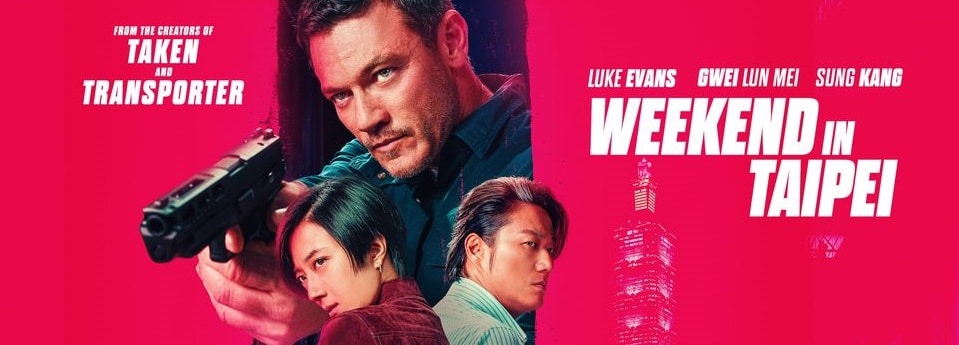
From the visionary creator of The Fifth Element, Luc Besson comes the exhilarating action film Weekend in Taipei.

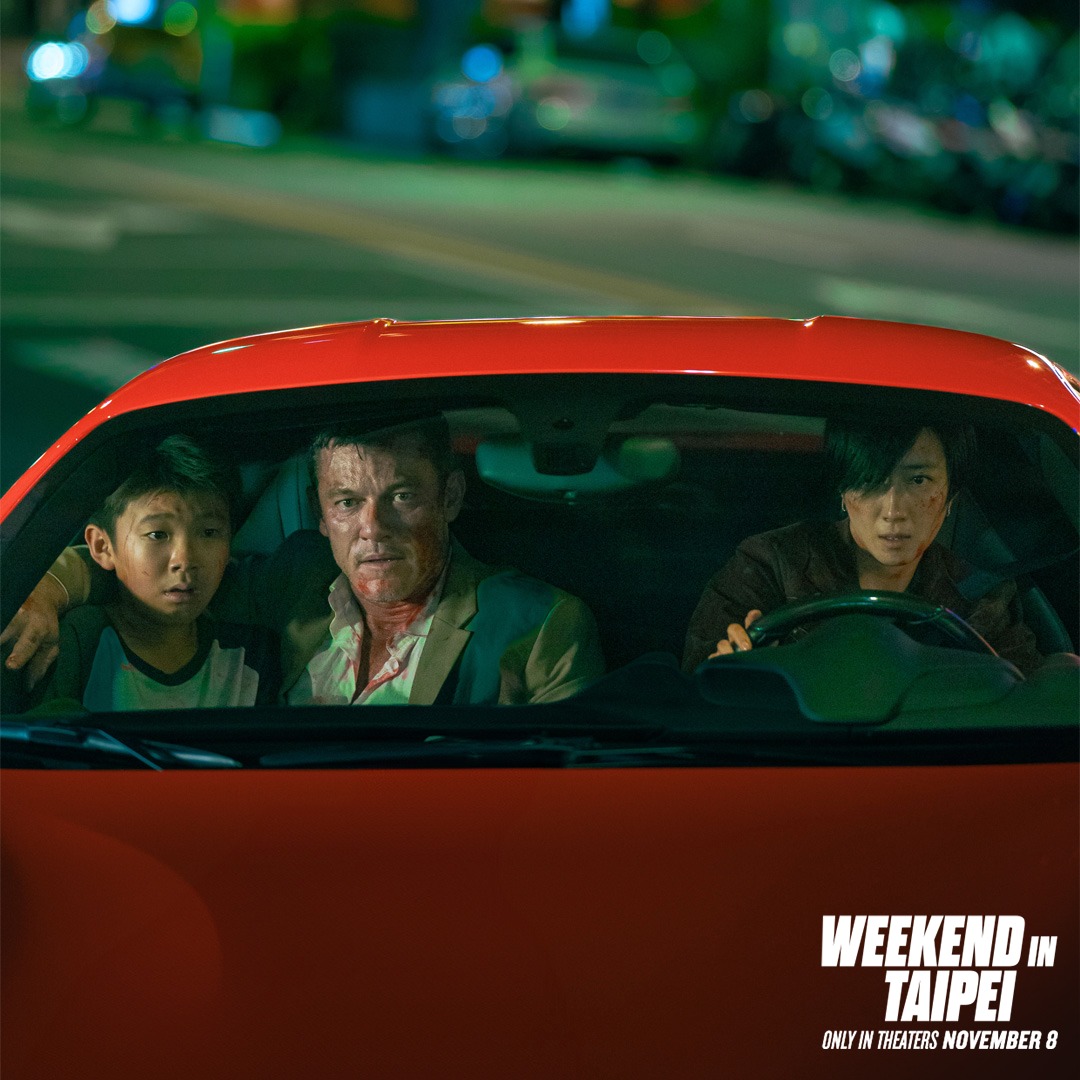
You don’t have to wait for long before the first action scene begins, 5 minutes in fact, where a brand new Ferrari takes you on a high-speed joyride through Taiwan’s capital, Taipei. 

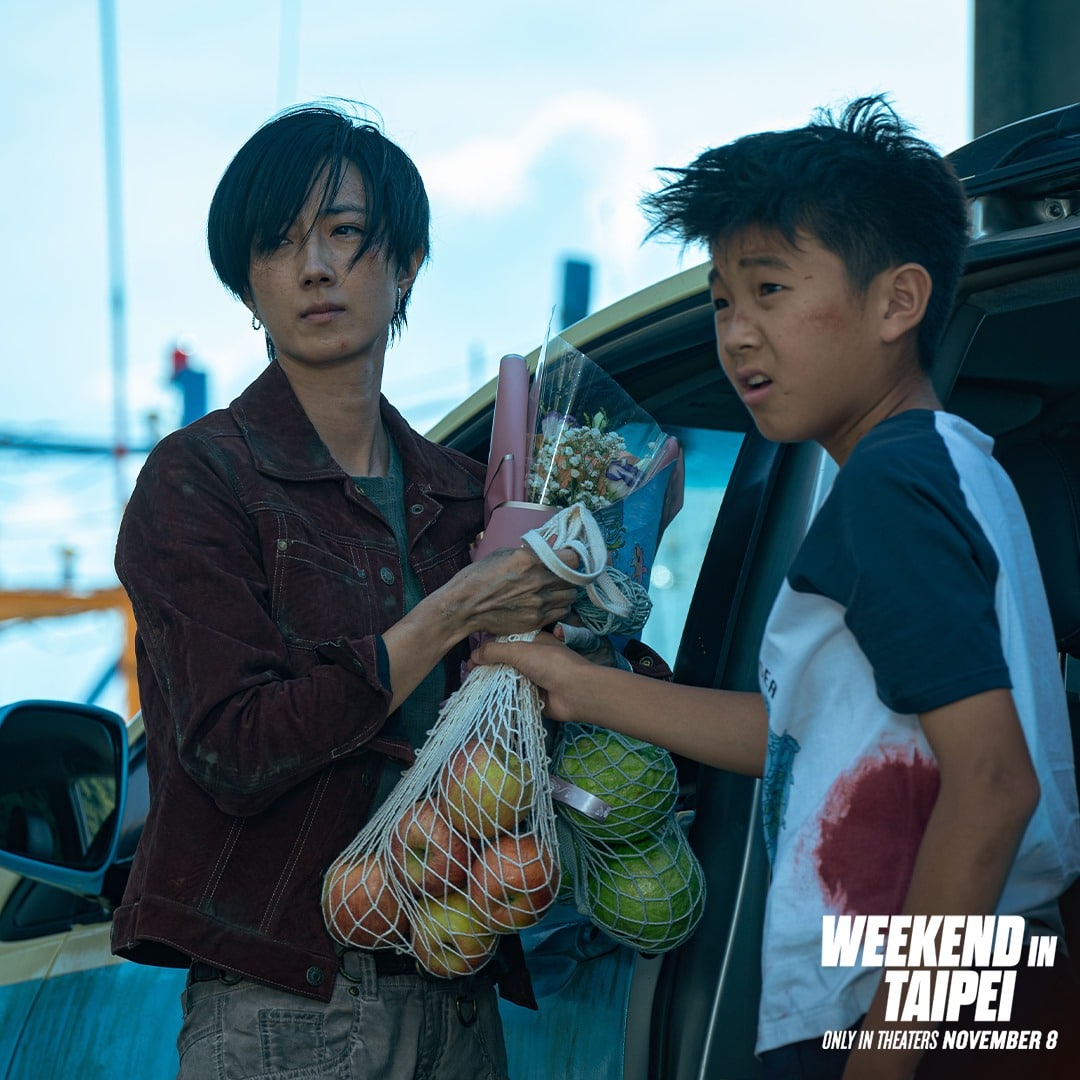
The film centers around a DEA agent, portrayed by Luke Evans, who is on a relentless mission to dismantle a formidable drug lord’s operation. Unbeknownst to him, this notorious criminal is married to his former love interest, adding an emotional layer to the narrative.

The plot takes viewers on a journey from the United States to Taiwan, where the reunion between the long-lost lovers sparks unresolved feelings and secrets. This rekindling of romance unveils a love triangle that complicates the agent’s mission, leading to a gripping confrontation between good and evil.


The combination of Luke Evans, known for his roles in Hollywood Blockbusters such as Clash of the Titans, a very likeable leading lady, played by Gwei Lun-mei, hailing from Taiwan, and ‘bad guy’, Sung Kang, who starred in the Fast & Furious franchise, makes for a strong cast. 

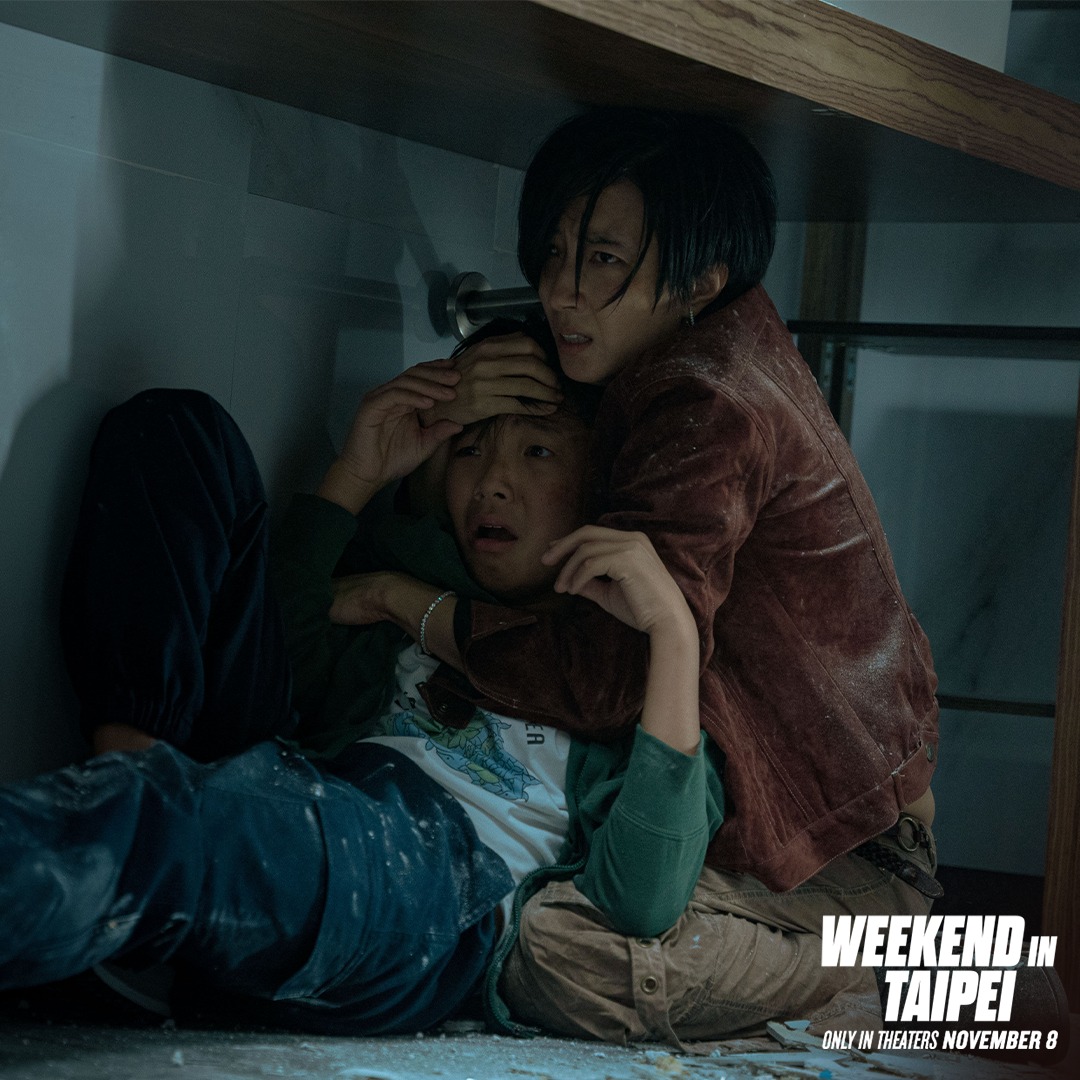
Where the film lacks a strong story, it definitely overachieves in superbly choreographed fight scenes, with lots of humour thrown in. With the addition of a killer soundtrack, some gorgeous cinematography, and good duration, this film is perfect for an entertaining cinematic experience without the need for deep contemplation.

Weekend In Taipei will open in Australian cinemas in the coming weeks. Check your local cinemas for session details.

Spread the word on your favourite platform!

Spread the word on your favourite platform!