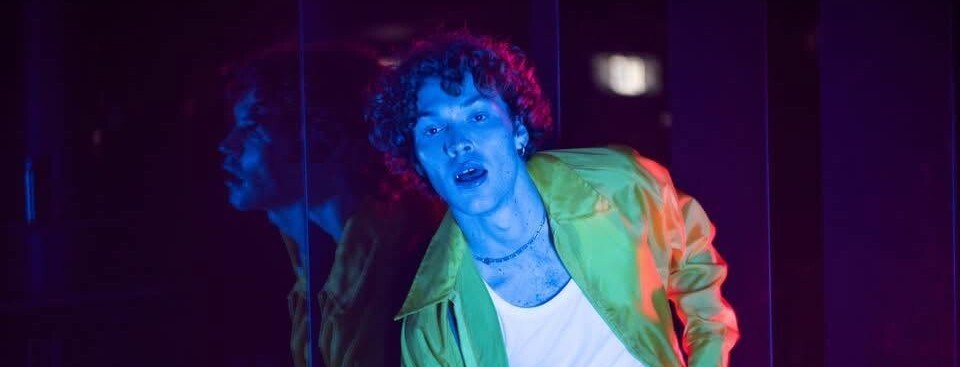
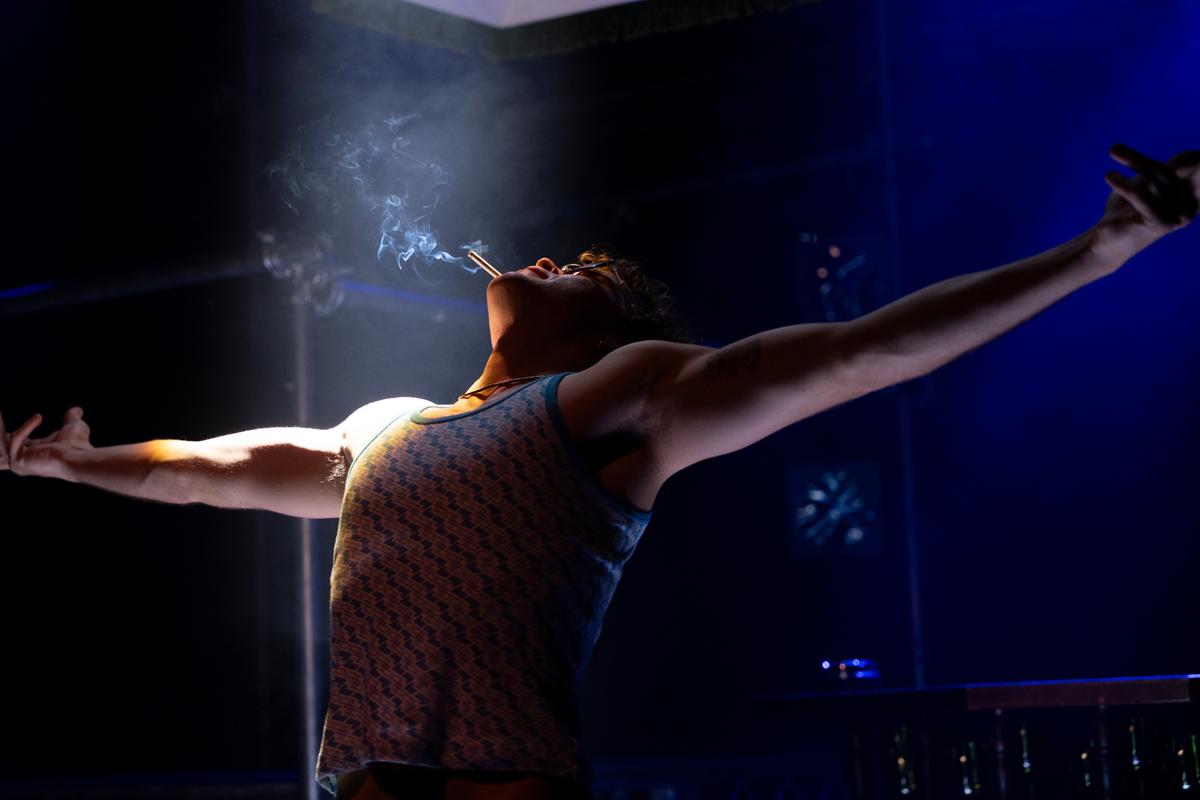
Written by Jack Holden, the solo play ‘Cruise’ begins by following Jack, a clueless young gay man who volunteers for a queer helpline and is far out of his depth. He’s incredibly nervous about saying the wrong thing, he thinks his older co-worker is a slight creep, and it becomes increasingly obvious he knows nothing about his queer history. On a disastrous weekend shift, Jack picks up a call from Michael, who after a bit of prodding, retells the adventures he got up to in Soho as the AIDs crisis began.
Leading us through the events is Fraser Morrison, any director’s dream actor. As one would hope in any solo performance, his character work is executed with mechanical precision. Morrison’s voice work, aided by Linda Nicholls-Gidley, is without fault. Each character’s accent was crafted distinctly and has their own rhythm, speed and inflection. Further, Morrison is a beautiful mover. Enriched by movement director Jeremy Lloyd, Morrison’s body somehow manages to contain all the characters in this ever-shifting nightlife. From older and regal singers, to annoying twinks, Morrison shapeshifts before our eyes.
Although the character switching is a feast, my favourite moments were when Morrison was able to sit in the quiet and silent moments of these characters, letting us watch the internal ticking before the clubbing returned. I was especially struck by his performance of Dave, Michael’s boyfriend, and the restraint and gentleness that exuded a presence that was both erotic and warm. Sean Landis’ direction leads with the softness of these gay men, who were/are too tired to be angry or even upset. The grief held by these characters, like Michael and Jack’s co-worker Kevin, is cradled delicately and is never made into a spectacle.
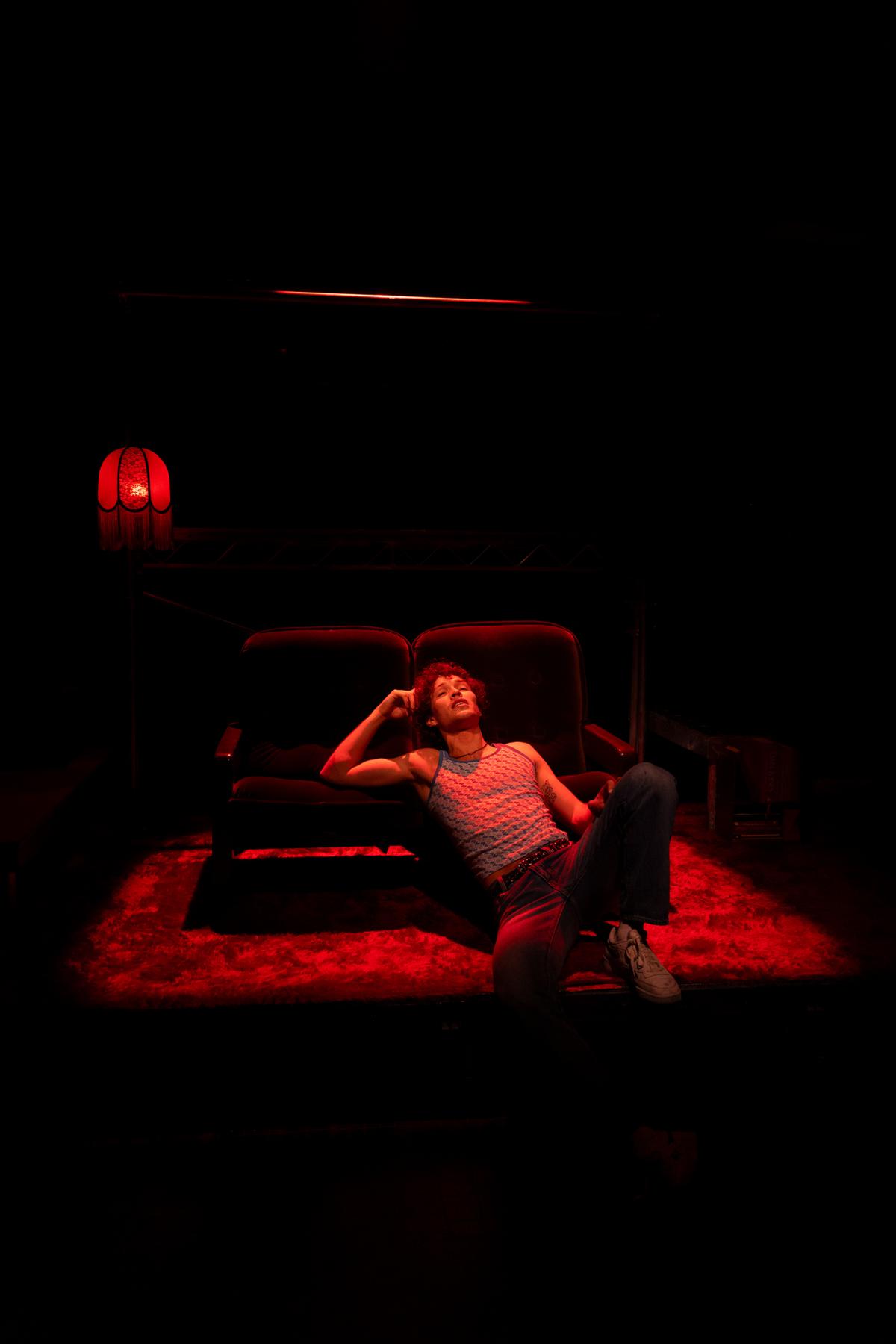
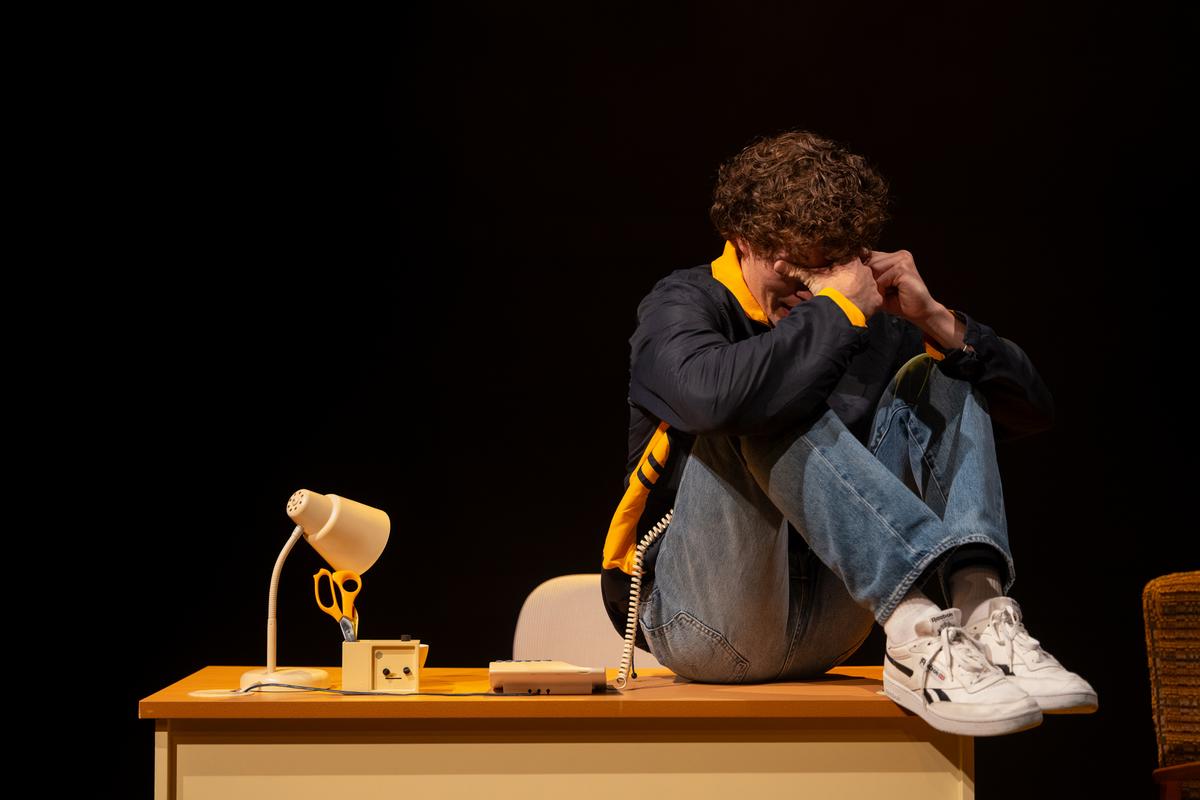
Landis keeps Morrison moving across the exquisite and fragmented set designed by Chelsea Wheatley. The set is broken up into four spaces, the office, bar, studio and raised dance platform. Each is drenched in a signature colour, furthered by Tom Hicks lighting. It reminds me of the bold and block colouring of 80s films and fashion, creating an almost technicolour and campy saturation. Most of the spaces manage to evade concrete definition, being vague enough in purpose to transform into something else; the music studio becomes an underground cinema, a helpline office becomes a home.
The sound design by Wheatley keeps us right in the centre of the clubs and bars while being accurate to the period and carefully manoeuvring us through the story. The composition builds beautifully and is amplified by the in-story creation of music that makes everyone want to join Morrison on the floor (in fact someone a few seats over from me tried to Shazam it). I want to highlight the manipulation of Morrison’s mic and his melting in and out of the music as Michael’s story comes to an end which was necessary in that scene’s ability to bring me to tears.
Though Holden writes beautifully, there are some scenes that feel unnecessary and even detractive as the show goes on. After a major event two thirds through the play, the show begins to lose steam. Slowed down by a conversation with a character we haven’t met, it has to once again build up momentum. The final stretch doesn’t tell me anything I didn’t already know, and distils the tragedy without giving us the time to feel the weight. While this was mainly an issue I had with the script, I do wonder if there was a way to revitalise and reinvent the repetitive staging of the traveling of club to bar to club to bar. The ending also feels like a bit of a fairy-tale wrap up when we come back to Jack, playing out the implications it already meticulously constructed.
‘Cruise’ is not just about the loss of queer history, culture and people that were lost in the AIDs crisis, but the grief of surviving it. The loss was so monumental that it feels difficult to enjoy sticking around. Michael says he now has a simple life and “a handful of friends,” which Jack obliviously calls “a nice life,” illuminating the generational chasm between them. Fruit Box Theatre has done a wonderful job of making me feel this to my core.
‘Cruise’ will most certainly be a show people will continue to talk about and you’ll be annoyed to have missed. I sincerely hope we’ll be blessed by future Fruit Box productions touring down from Sydney to continue to show us the skill of their team.
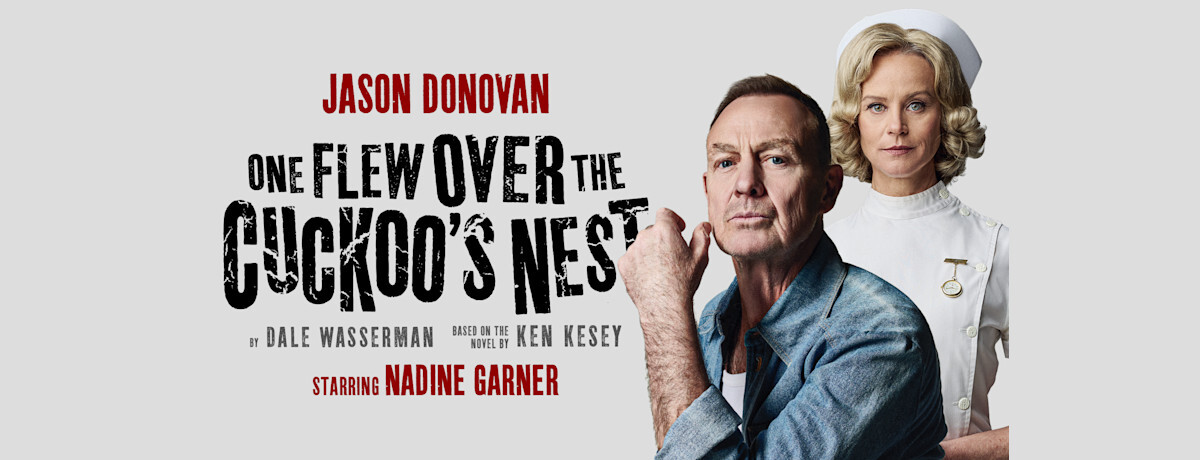
Melbourne audiences are in for an electrifying treat this season, with a bold, brazen and bespoke stage production of One Flew Over the Cuckoo's Nest treading our shores at the glorious Athenaeum Theatre in Melbourne. This thrilling piece is as poignant as ever, gripping us with masterful performances by Australia's great acting pool of theatrical talent, led by iconic stars Jason Donovan and Nadine Garner.
Historically speaking, this mesmerising play is based on Ken Kesey's 1962 landmark novel, One Flew Over the Cuckoo's Nest. It was then adapted by Dale Wasserman and premiered on Broadway in 1963 (starring Kirk Douglas). Smelling a surefire hit, Douglas secured the stage and film rights, envisioning a theatrical debut that would lead to feature film success. In 1975, an iconic film was mounted: directed by Miloš Forman and starring Jack Nicholson as McMurphy. It went on to sweep the Oscars that year, winning for Best Picture, Best Actor, Best Actress, Best Director, and Best Adapted Screenplay. It is still regularly performed to packed houses all around the world, and to this day, still speaks to modern audiences everywhere.
Why is One Flew Over the Cuckoo's Nest such a modern classic? It touches on complex subject matters of the human condition, at a time when free-thinking was deemed irrational and downright dangerous. Where fear-mongering was de rigueur. Where mental illness was treated with such disdain, even in psychiatric systems who deemed to 'heal' their patients in a myriad of demeaning ways. Breaking a patient down to dust - physically, emotionally and spiritually.
Theatregoers, you are in for a voracious treat - One Flew Over the Cuckoo's Nest is not for the faint-hearted. It is a mélange of emotional rawness. A bit gritty in nature, and yet, hilarious moments too, creeping in at every turn. As an audience, we are witness to a beehive of beguiling humans trying to stay above water, locked inside the cold systematic environs of an Oregon psychiatric hospital. Governed by an equally cold Nurse Ratched, who rules with an iron fist. Where the patients have learned not to question anything, but to live by her rules.
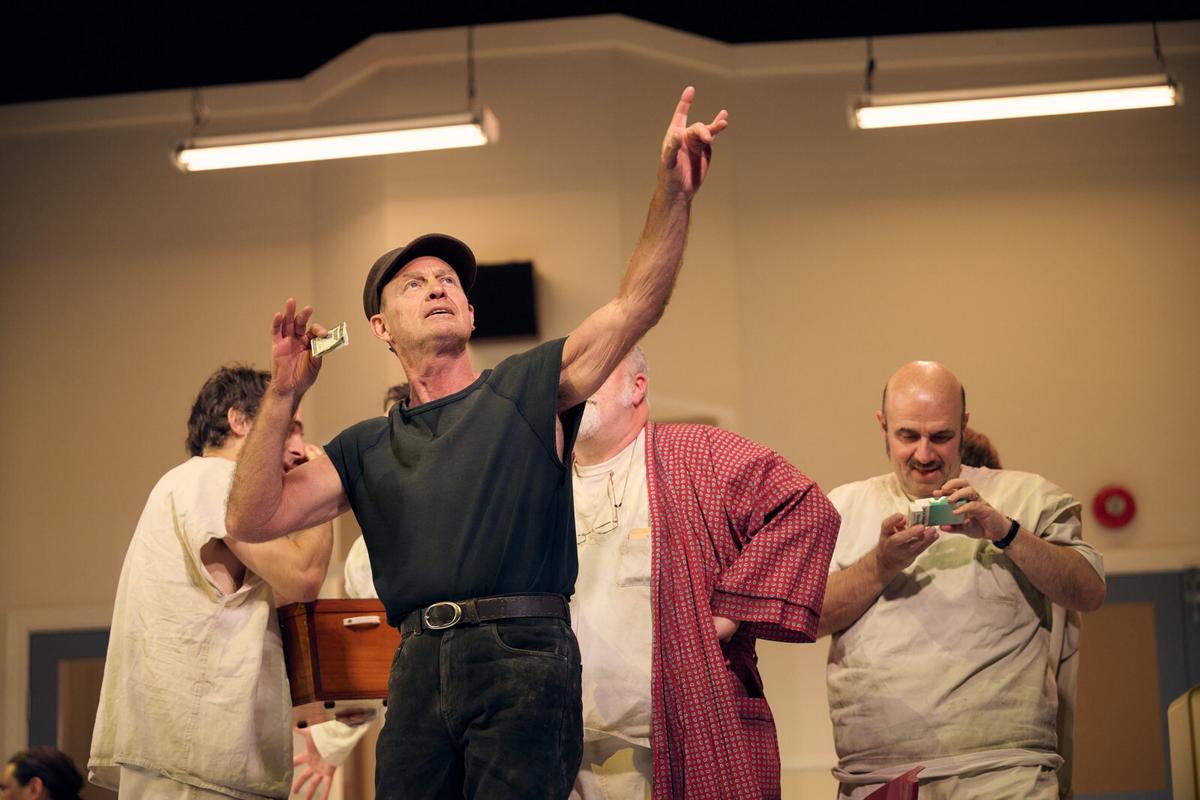
Into this unbreathable setting we meet a new patient - rebellious soul Randle Patrick "Mac" McMurphy, exquisitely played by Jason Donovan. A gravely, in-your-face upstart. A man, who incidentally, is only there for an easy ride - faking insanity to avoid hard labour on a prison farm. Expecting to sit back and relax in the 'charming confines' of a mental health ward.
Yet McMurphy is irked by this environment, and by the robotic conformity around him. So, he refuses to submit and leads his own revolution-of-sorts. He finds himself a mission to help these wounded souls by inspiring them to go against the grain. To rediscover their own voices, wants and needs: by giving them back their dignity - while turning the ward upside down, despite the consequences.
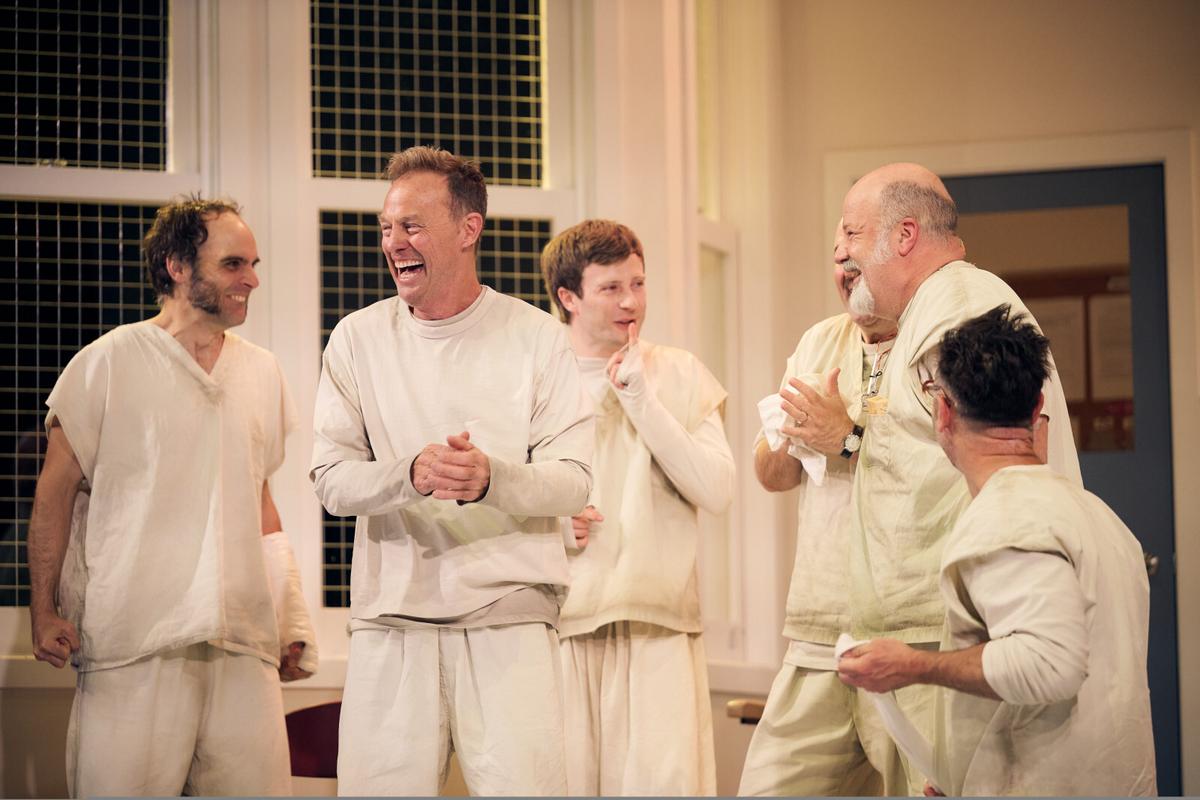
Sneaky chaos ensues on every hilarious corner. There are erotic playing cards that provoke even the most upstanding of male hospital staff. There is a vote staged to watch the World Series. There is a basketball game with an ingenious human basket holder. And last but not least - McMurphy's ultimate pièce de résistance? Hosting a late-night sex-positive party to celebrate a fellow inmate's loss of virginity.
As to be expected, McMurphy's rebellious nature clashes with Nurse Ratched. What ensues is a battlefield of wills that is tantalising to watch. Akin to a psychological tête-à-tête - a wrestling match that slowly unveils the truly twisted underpinnings of a psychiatric system bound by unjust, immovable conduct.
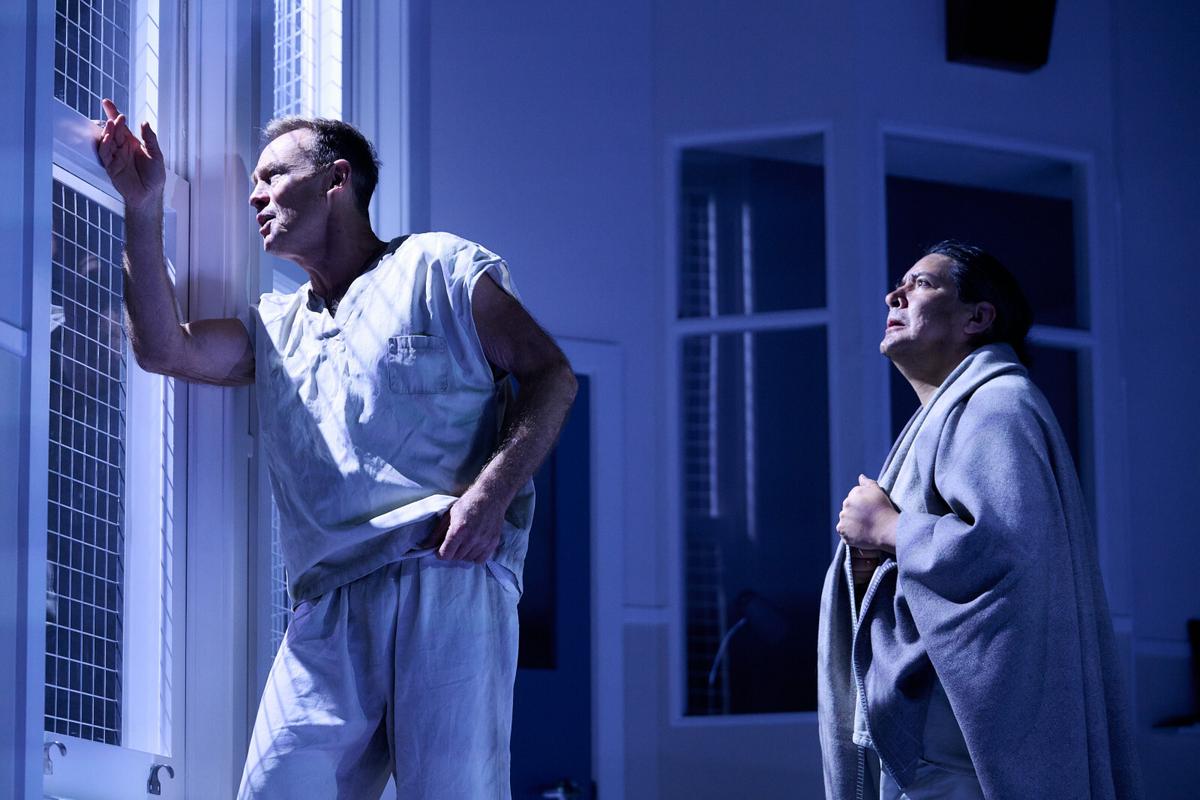
Produced as a bespoke, all-Australian production by the innovative team at StoreyBoard Entertainment, the Stoddart Entertainment Group & Jason Donovan himself, One Flew Over the Cuckoo's Nest's production team all bring their A-game in terms of stage mastery. The set design by Richard Roberts is on-the-money - pasty, cold and reeking of clinical; oozing a universal, stomach-churning, anxiety-inducing fear of hospital phobia. The costumes, designed by Ella Butler, all in uniformed shades of white, are cleverly designed in a more flexible fashion; so that they could be adapted through each character's journey, and moulded and adapted to the more erratic scenes that require more movement. The lighting design by Niklas Pajanti was illusionary and dreamily delivered, particularly in Chief Bromden's hallucinatory moments, bravely designing a sensitive, damaged and inflamed nervous system with originality and precision. The sound design by Marcello Lo Ricco was clear, alarming and bursting through the theatre with electrifying speed, with an aim to draw the audience in. And lastly, kudos to the original music composition by Kohan Van Sambeeck, who clung to a fortified mission - to unbalance the audience in deliberate disorientation - mixing different rhythms and synthesized sounds, including my most favourite of all - the traditional native scale, to set a spiritual tone against a hard-wired piece of theatre.
Every nuance, every silence, every scene, every output of characterisation from every single cast member in One Flew Over the Cuckoo's Nest was amplified and breathlessly crafted under the masterful eyes of director Roger Hodgman. Darcey Eagle as Candy Starr, and Mia Dabkowski Chandler as both Nurse Flynn and Sandra, both depicted the sexy 60s siren archetypes to the hilt, breaking up the chilled ward environment with Ann-Margret, cougar-ish fun. Jack Scott and Deep Sroa, as Aide Williams and Aide Warren, were equally cunning and menacing; depicting the evil treatment that belied mental ward patients of that time - akin to schoolyard bullies. Harvey Almond as Dr. Spivey, displayed the see-sawing consciousness of a man caught in between his ethics and the rules of a broken institution, while Chris Connelly brought a great deal of comedy to his scenes, doubling up seamlessly as lobotomy patient Ruckley, as well as Aide Turkle, the ward's most questionable nighttime orderly.
A multifaceted ensemble bring next-level patient humour in One Flew Over the Cuckoo's Nest with laughter at every delusional turn. Being the cherry on top was John Xintavelonis as endearing hallucinatory patient Martini, loosening the audience up with booming laughter. Another is Martin Blum's role as explosive-obsessed Scanlon, unknowingly to himself an unhinged bomb just waiting to go off. Another sympathetic nod goes to David James as Harding, the ward's leader and an intrinsically complicated man bound by his insecurities, expressed beautifully with exceptional well-roundedness.
A well-deserved accolade must go to Daniel R. Nixon, who plays Billy Bibbit, whose acting was simply supreme. Every time he spoke, the audience struggled with him. When his emotions pierced the stage, the audience fell silent and fought with him. His voice not only carried throughout the theatre like a crystal-clear bell, but urged us to run up and embrace Bibbit's wounded soul. For this reason alone, Nixon is the example of a brave new talent - who is a privilege to behold.
Gyton Grantley as exuberant, child-like Cheswick is a joy to watch. His wide-eyed, wondrous energy gives light to every scene, blending humour with bounce. He brought his character to life with a renewed physicality that simply shone, reminding Australian audiences why he is such a well-rounded star in any medium he appears in.
Jeremy Proulx, as half-Native American patient Chief Bromden in One Flew Over the Cuckoo's Nest brings the deep-rooted, spiritual aspect to this piece - playing a hallucinatory narrator that introduces the audience to the depraved actions of a psychiatric ward. Central to his role, acting like a so-called deaf and dumb patient in order to be left alone, Chief Bromden is essentially the observer, an eye in the sky, a gentle giant seeking to escape the ward he is chained to and reclaim his Native American identity. Proulx plays the juxtaposition of his character's complexity with expertise; embodying a tearful lost boy one minute, and an imposing, lonesome figure the next, who finally grows in stature and flies away from his confines.
Nadine Garner, as Nurse Ratched, the foe-of-the-show, holds her role with clipped precision. Yet, instead of playing to strictness, Garner does the opposite, using a manipulative sense of playfulness, a cat-like meow - to tease the patients, as well as surprise us. Kudos to Garner for making this interesting acting choice, to play Nurse Ratched's feline power to trump her male patients, for her own personal benefit. Using allure as prey, for inevitable dominance: without a care in the world.
But Jason Donovan, as Randle P. McMurphy? Is simply born to play this role. From the moment Donovan arrives on stage, he is a force to be reckoned with. Donovan morphs into a performance of a lifetime with gusto, as a menacing hero, a man destined to be a seed of hope; creating a ripple effect by daring to stand up against a broken system of control and break free from society's rules. An iconic star, Donovan expertly knows who he is, and passionately expresses how the craft of acting is really done, by incorporating McMurphy into his whole entire being, mentally, physically and so severely. He gives a no-holds-barred approach towards making McMurphy in One Flew Over the Cuckoo's Nest a legendary, unforgettable soul who is equally bad as he is good; teaching us that even within the chaos of man, there still lies a heart and spirit that can serve as a guiding force for others, beyond life's confines.
Why is One Flew Over the Cuckoo's Nest the perfect show for Melbourne audiences? It has a language and legacy beyond its time. It not only examines the frailties of the human condition; but examines institutional injustice itself - be it educational, religious or political. It is a story about human beings fighting for their own authenticity.
A challenge that any of us, at some point in our lives, can empathise with.
One Flew Over the Cuckoo's Nest is exclusively showing at Melbourne's Athenaeum Theatre from now until December 20th 2026, for a strictly limited season, and is a classic masterpiece that is worth its weight in gold. It is raw, revolutionary, funny, and in many moments, truly confronting. If you are in the mood to see a groundbreaking work teamed with an unforgettable night of electrifying performances, then go see this once-in-a-lifetime, extraordinary piece of work. It's a night you won't forget.
The latest Halloween instalment of Scary Goats Theatre’s Twilight Zone pastiche is a successful reminder of how strong acting can elevate the simplest of stories and genres.
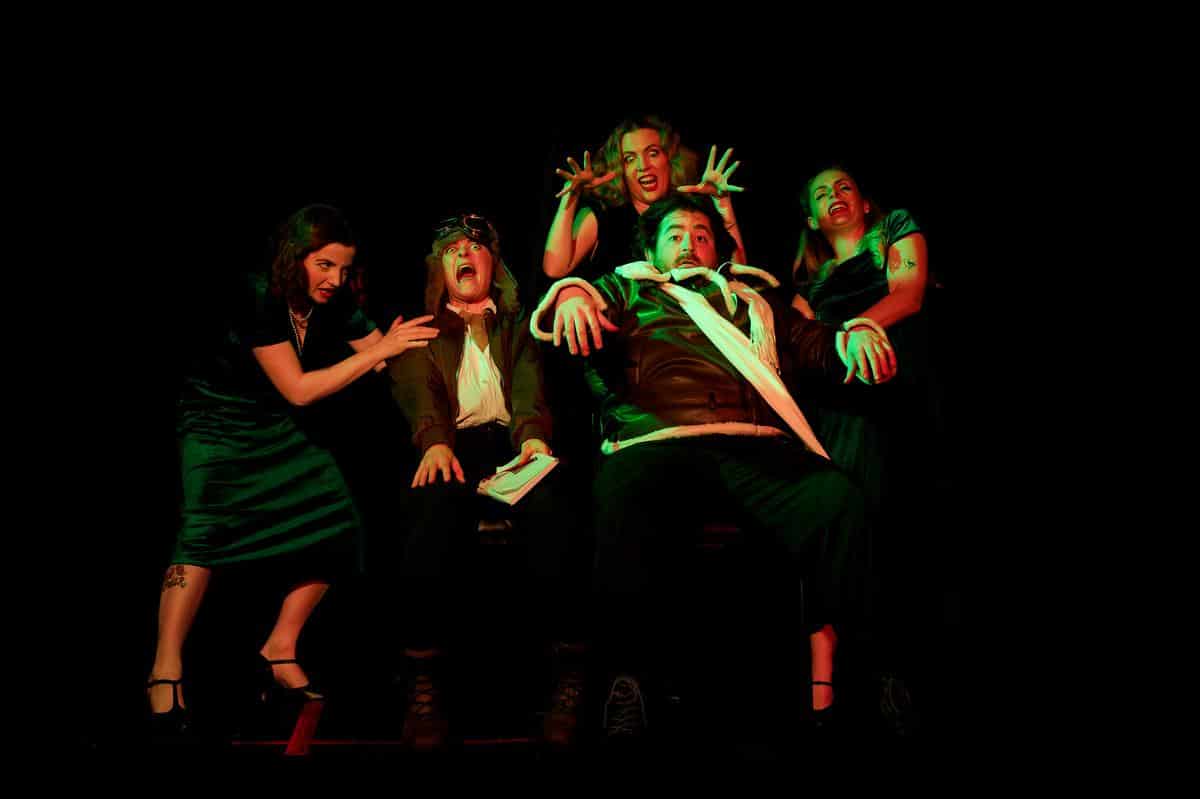
The evening’s first story was Count on It, written by Liliana Braumberger and Chloe Towan. Major Roger Hart is a WWII fighter pilot who is intercepted by three sirens: a strange cross between the Weird Sisters and the Andrews Sisters, who have come to judge whether Hart is as good a soldier as he appears.
The actors’ energy and timing make this an engaging opener to the night’s events. The trio of actresses who play the sirens show remarkable synchronicity as they finish each other’s lines and sing seductive harmonies. Their playful menace made me equally intrigued and intimidated. I do feel, however, that this story could have benefitted from a full-length runtime to properly unpack how Hart’s choices impact the next generation of soldiers.
The second play, The Dollhouse by Jack Bengough, demonstrates a strong emotional throughline that I feel Count on It could have better developed. 13 children have disappeared from the town of Bent, and two agents of the crown have been sent to resolve this bizarre mystery. Their investigation leads them to the home of a strange old woman, where our heroes must sacrifice something of great value to them to save the missing children.
First-time Scary Goats Theatre actors, Jack Farley and Lauren Sewell, effortlessly convinced me of their characters’ years of companionship with likeable line deliveries and subtle gestures. Their believable chemistry made the twist ending, I believe, one of the most poignant twists this anthology has given us so far.
Hayley Richards provides great versatility as the old lady, showcasing her skill as an antagonist after mostly starring in heroic and neutral roles. I know personally that Richards is a very experienced actress, so it’s a testament to good direction that her performance doesn’t overshadow the all-important chemistry between Sewell and Farley.
The Itch by Savier D’Arsie Marquez centres around a couple of struggling artists and romantic partners named Joan and Fi. Joan takes a real estate job to support Fi’s dream of touring the country, but it’s not long before the allure of stability and success begin to change Joan into something her partner scarcely recognises, something monstrous.
This is another great example of a compelling central relationship making a story’s twist ending impactful. The script’s witty, sardonic dialogue accurately captures the passive-aggressive verbal jousting with which young couples approach conflict. The conflict between a career vs. a relationship is a time-worn story, but Tayla Harry and Chloe Towan, as Joan and Fi respectively, give these doomed lovers a good amount of nuance.
The play’s final scene is a triumph of Twist of Fate’s ability to balance varied tones. The scene deftly transitions from amusingly hammy physical acting and costume work to an emotionally devastating loss. In a story about the collapse of sincere communication between lovers, supposed monsters become unexpected victims and supposed victims become guilt-stricken tormenters.
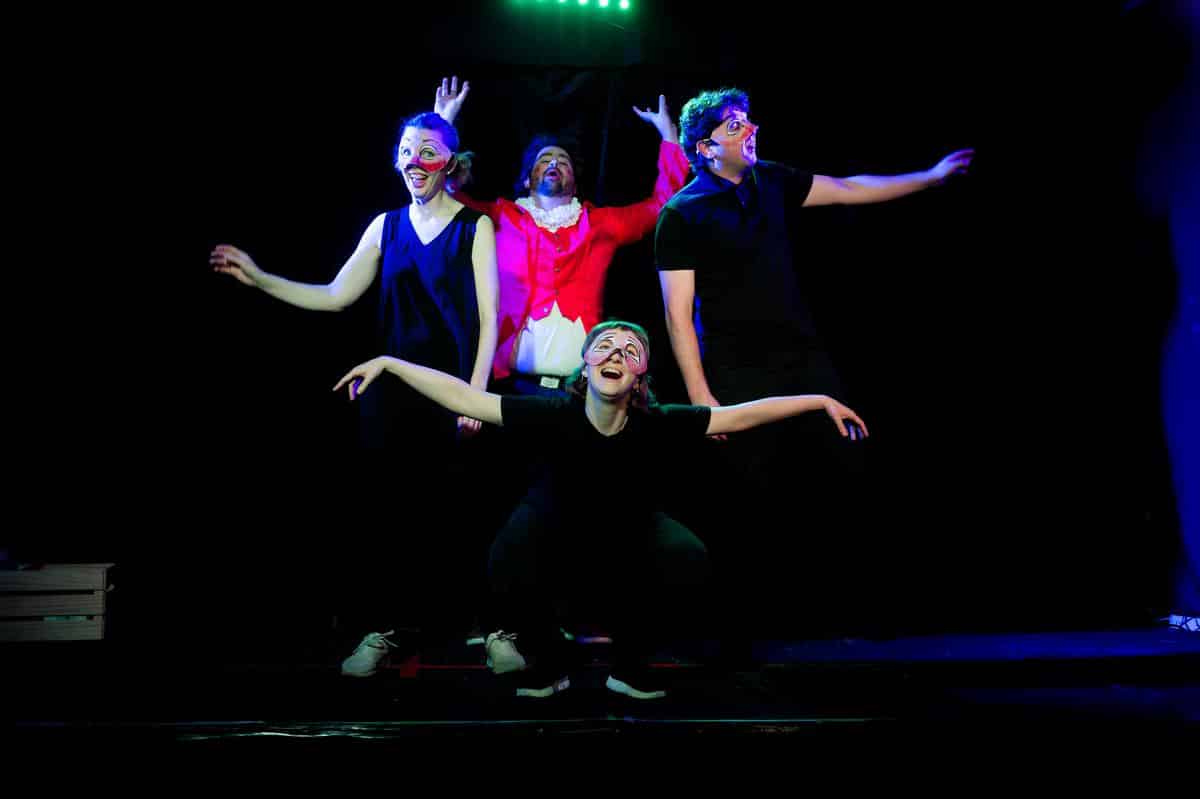
The evening concluded with my personal favourite of the four plays: Soot by Emily Morey. Bing, Bang and Bong are three performance artists who attempt to overcome their crippling perfectionism with the help of an enchanted hand puppet. But what will their pursuit of a groundbreaking show cost them?
Soot is the funniest of the four stories, due to impeccable physical clowning. Bing, Bang and Bong are the most over-the-top theatre brat cliches you can imagine, and Richard Mealey is delightfully outrageous as he tumbles around the stage as a humanised Soot. Fortunately, the comedy doesn’t smother the show’s strong, clear message. The risk of becoming too wrapped up in your imagination is relatable for any creative type and our three lead actors – Liliana Braumberger, Ben Fox and Kate Weston – know when to inject genuine fear and despair into their largely comical characters.
Twist of Fate Season 6(66) is a strong instalment that encapsulates this anthology’s ability to inject familiar genres with a refreshing, human-focused pathos. The four scripts tonight are a perfect balance of laughs and terror. Here’s to another year of Twist of Fate.
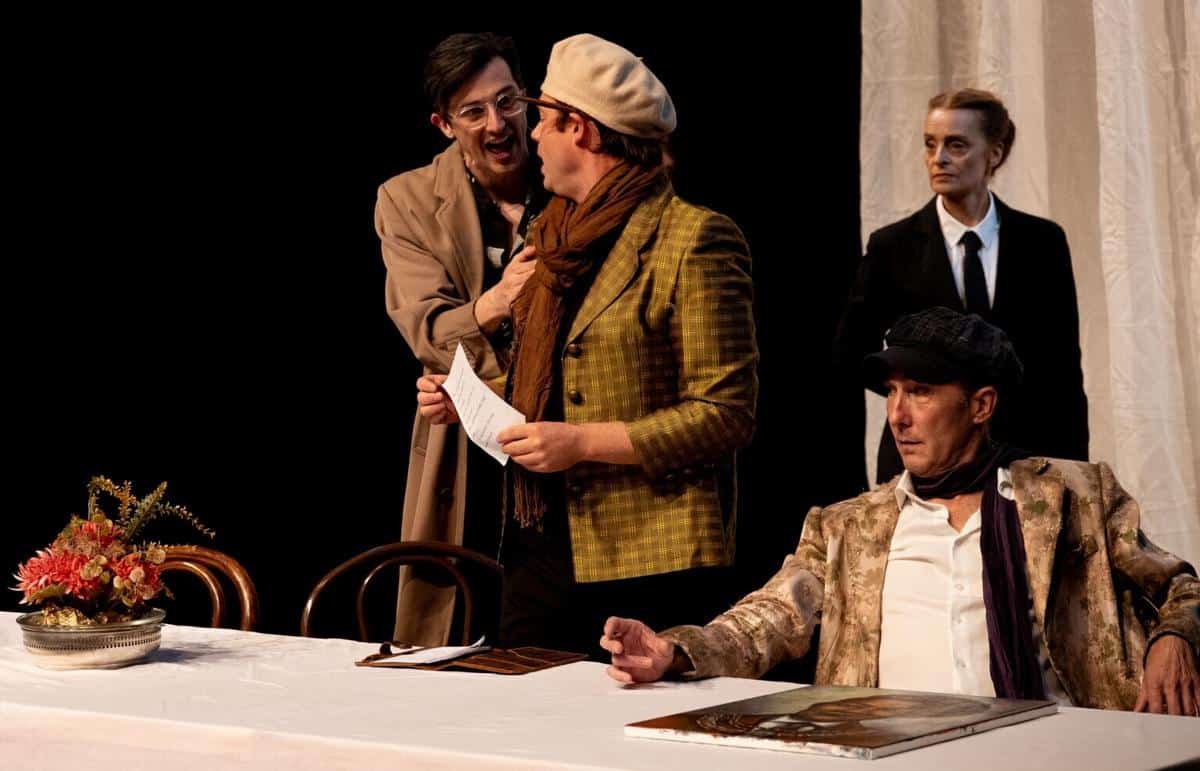
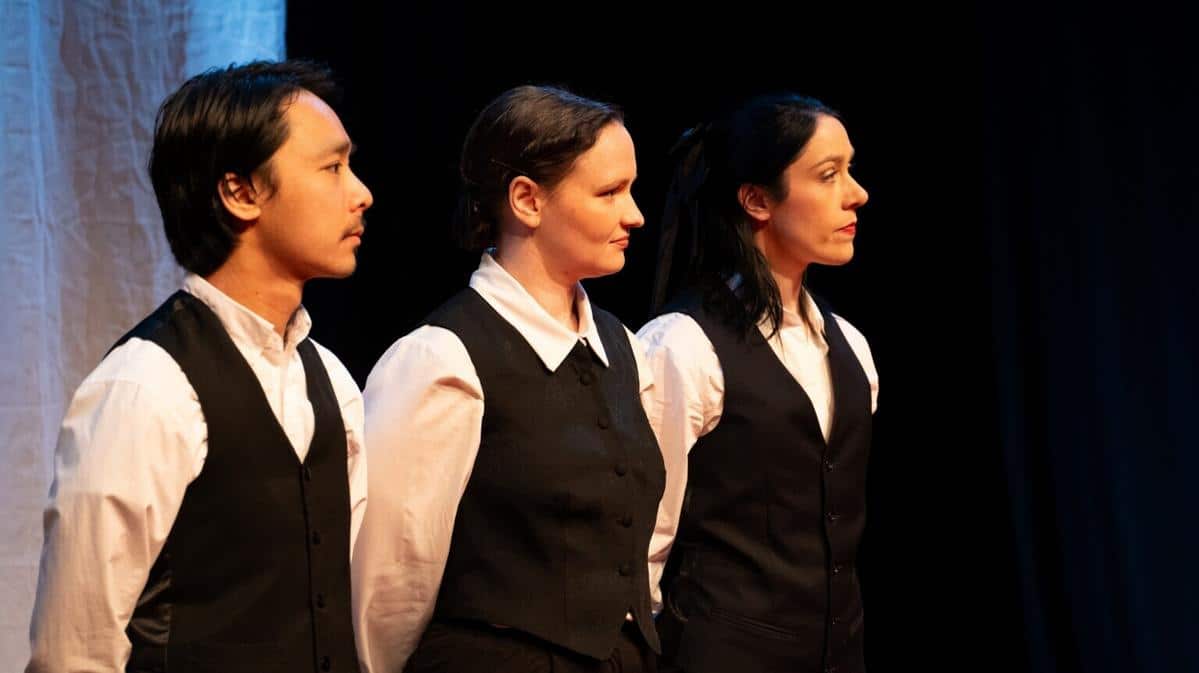
A large, opulent curtain sits upstage centre. Welcoming a long, lustrous dining table enveloped by an ivory tablecloth. Underneath it, a majestic round red carpet, fit for royalty. Staff in uniform stand to order. Staring straight ahead.
As if butter wouldn’t melt in their mouths. As if, we are in the enclosure of a bountiful environment.
Blue lights flicker on and off, ominously. Like thunder from the gods. As they do, staff move forward and back; in different directions.
Signifying perhaps, that there are cracks in these foundations.
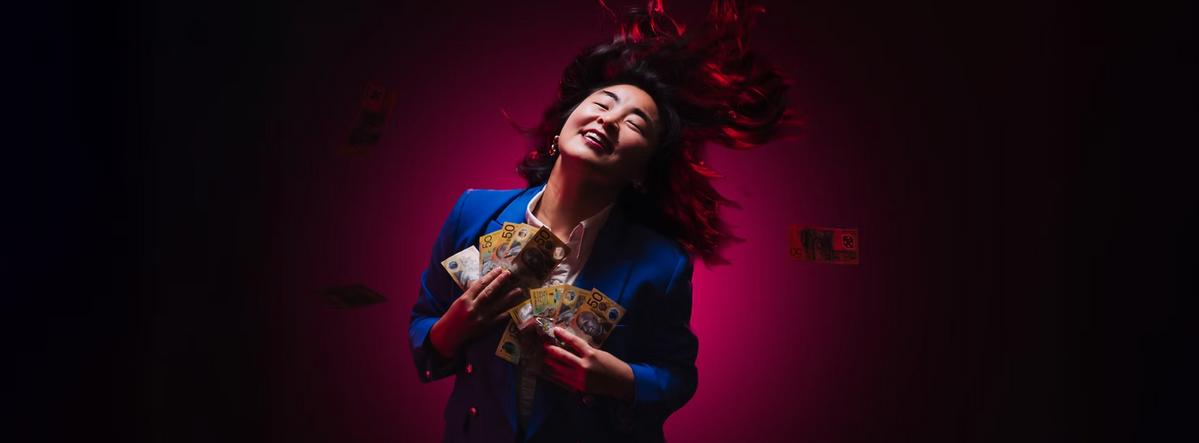
At each surge, movements of the staff continue to jerkily bend and twist. Someone lies down on the table, as if resting after a long hard day. As this lonesome figure sleeps, the staff move and swerve closer and closer to the audience. We watch in awe as the rest of the cast emerge from underneath this table like vultures, as they catch money thrown around freely. As they in turn, give out this printed money to us in the audience.
So we can breathe in the opulent energy of Athens. Of the language of its secret benefactor, Timon.
An ultra-generous philanthropist and restaurateur. A public figure for all-things-good. A patron of the arts. A genuine human who loves his community and has great aspirations for his city. His high-octane restaurant serves up bountiful meals to the elite. He doles out money equally to statesmen as he does to bail out petty criminals. From artists to painters to influencers. Everyone in high positions are given Timon’s riches.
So naturally, Timon believes wholeheartedly, that these people appreciate his generosity. That they also mean well. That universally speaking, ‘humans are genuinely loving and appreciative.’ Timon is convinced that to whom he gives, is a blessing he will ‘receive back in kind’.
That camaraderie is everything.
And Timon, according to his ‘smoke and mirrors’ circle? Is indeed a gift from the Grecian gods. He’s the gift that keeps on giving. So much so, that Apermantis, the town’s paparazzi photographer, and keen observer of human behaviour, views these gatherings with disdain. Shamelessly calling out these freeloaders to Timon. Warning Timon that they are deceiving him, and in turn, refuses to dine with them.
Timon just laughs this off.
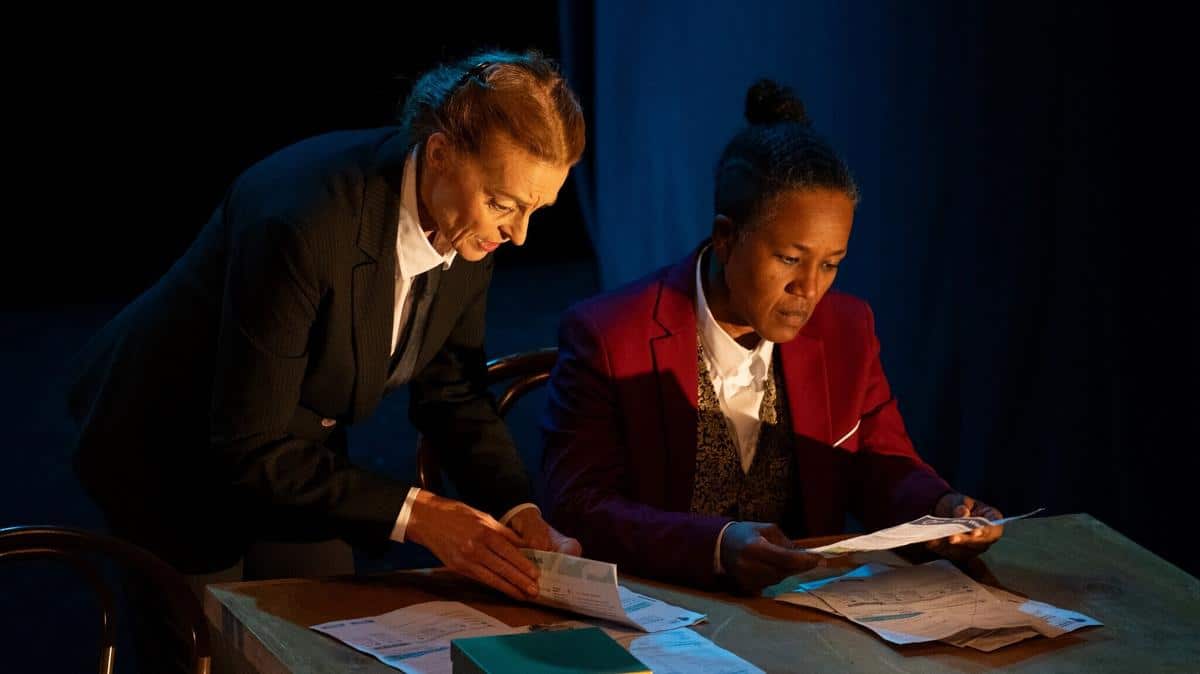
That is, until Timon’s assistant Flavius points out that he has no more money to give anybody. For Timon is in debt. He has accidentally bankrolled the state ‘a little too much’. His funds are being spent by his ‘well-healed friends’ for corruptive means. His flashy restaurant will be no more. His business is in economic crisis.
Timon’s otherworldly state of Greek god-like generosity? Comes crashing down to earth like a crack of flickering thunder.
Flavius, in a state of distress, suggests that Timon ask his friends to pay him back the monies he gave them (to service the public). Instead of coming to his rescue? His friends are instead repulsed by this act and refuse to dig into their pockets.
What ensues? Is a lesson for Timon. A tuition about division. That when it comes to someone’s generosity in society, humanity can be divided in their actions.
There are the givers, and there are the takers.
How, when it comes to money or kindness - ‘the takers’ will receive, but behind our backs? Be our secret foes, wrestling with resentment. That takers use individuals for their own greed. And that greed, on a higher-level playing field?
Can lead to corruption.
Which is what consumes the mind of Timon as he struggles through this point. So much so, that Timon becomes a recluse, unable to deal with the corrupt minds of his once beloved city.
But more importantly, this story is about how the shocking effects of betrayal, especially from those he believed he could trust - can sometimes have devastating consequences.
This modern-day version of William Shakespeare and Thomas Middleton’s Timon of Athens is a well-rounded, humorous satire. Introspectively directed by Claire Nicholls and Kevin Hopkins, it is a wine-and-dine fest of music, dance and physical delights. The main roles are non- binary, which I loved, creating a fresh, empowering take on Shakespeare’s iconic works, (which in the past, was largely reserved only for males). And the quality of acting, especially from the seasoned ensemble, was sharp, precise and exciting to watch.
The set design, also created by directors Claire Nicholls and Kevin Hopkins— was minimalistic, yet the colours on stage resembled familiar colours of world leadership. The red, white and blue of the American and Australian flags, to start. Perhaps representing our modern global capitalist systems. The dolling out of $100 Australian dollars to each audience member? Perhaps to immerse us in the folly of money, that often has the potential to weaken our perspective, not strengthen it. Much like those in power in our current climate. They too have the potential to create serious economic disaster, if they have not done so already.
Also equally impressive was the physical movements onstage that tied in seamlessly with the actions. The miming of the three-piece band in the background of Timon’s dinner parties. The rebellion of Timon’s friendship clan turning against him in slow motion via the news. And the military coup that takes place at the end of the play, with slow-motion movements of warfare. An overthrow of a corrupt state, to create order in Athens once again.
There are a few actors in this riveting show worth their weight in gold.
Scott Jackson, as Lucius the poet, deliciously brims with cheeky wit. His crisp consonants elevating the stage alongside his hilarious antics, electrifying outfits, slick physicalities, and oozing Athenian pretentiousness.
Helen Hopkins is sensational as Timon’s most trusted advisor Flavius. She has a focused intensity, commanding firmness, and a tender-yet-sturdy quality to her performance that is riveting to watch.
And finally, Jovanna Hepburn sets the theatre ablaze as Timon. From start to finish, she pillars this production with a force beyond words, exemplifying the heartbeat of excellence for modern Shakespearean works. Her rhythmic resonance booms with every pentameter. Her physicality embodying overflowing emotions of despair. Her stamina and emotional architecture exemplifying the innate qualities needed to bring a history of theatrical greatness to life.
Proudly developed as part of the Prague Shakespeare Company's 2025 Summer Shakespeare Intensive program, Th'UnGuarded Duncan should consider themselves mighty proud to co-present a lessor-known Shakespearean work that hold great relevance to today’s world, for the 2026 Theatreworks season.