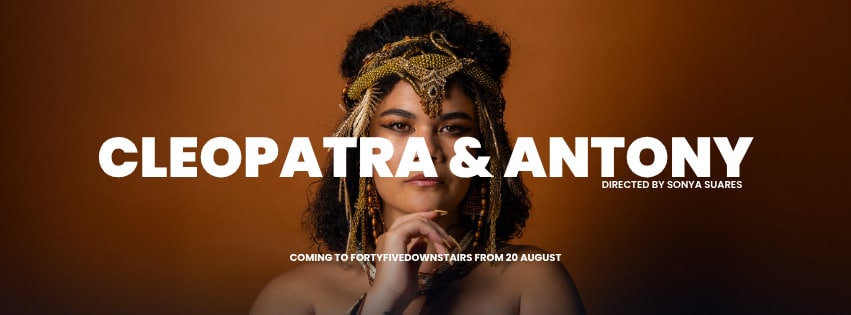
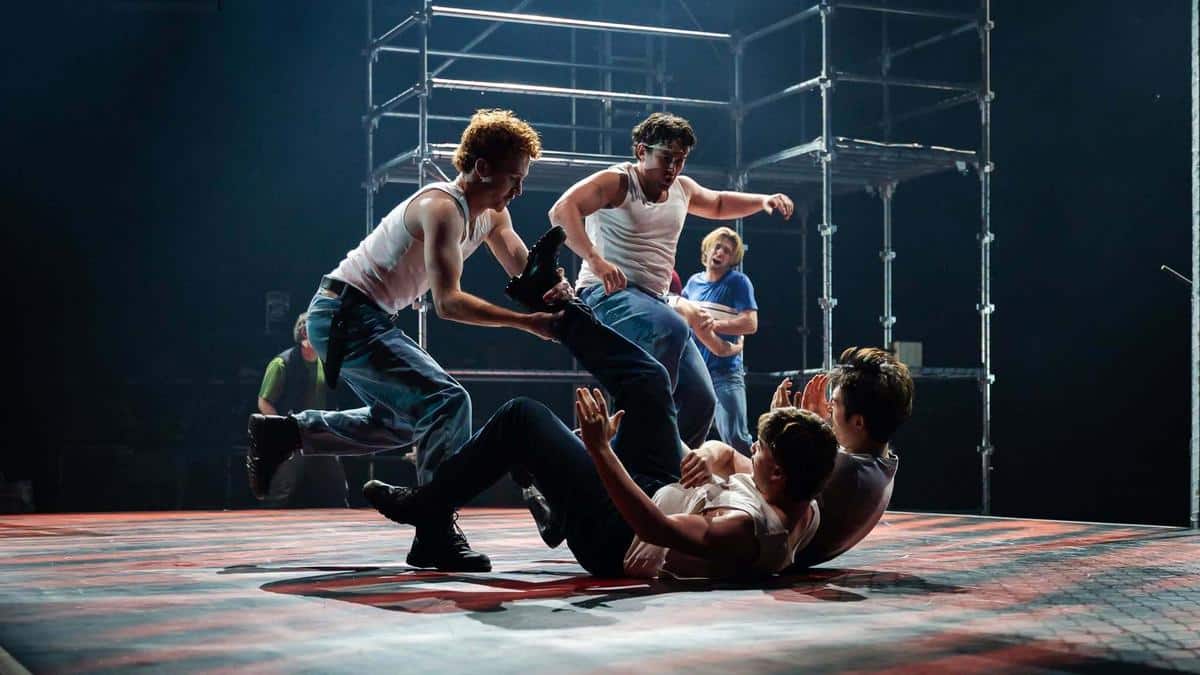
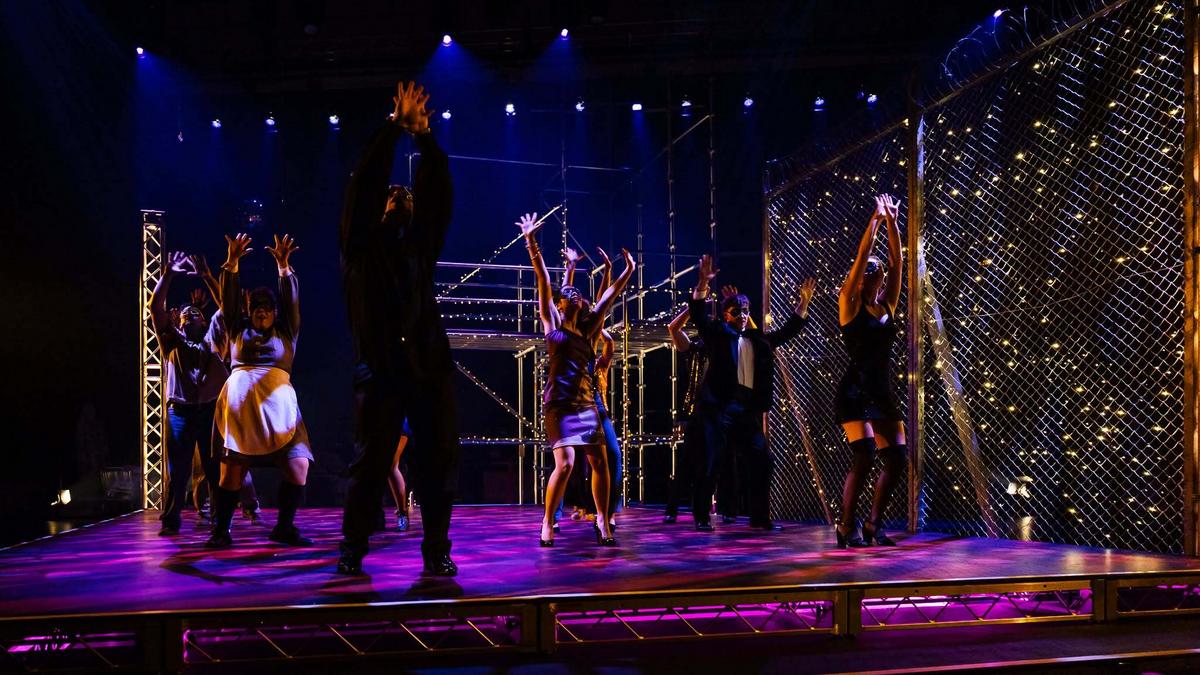
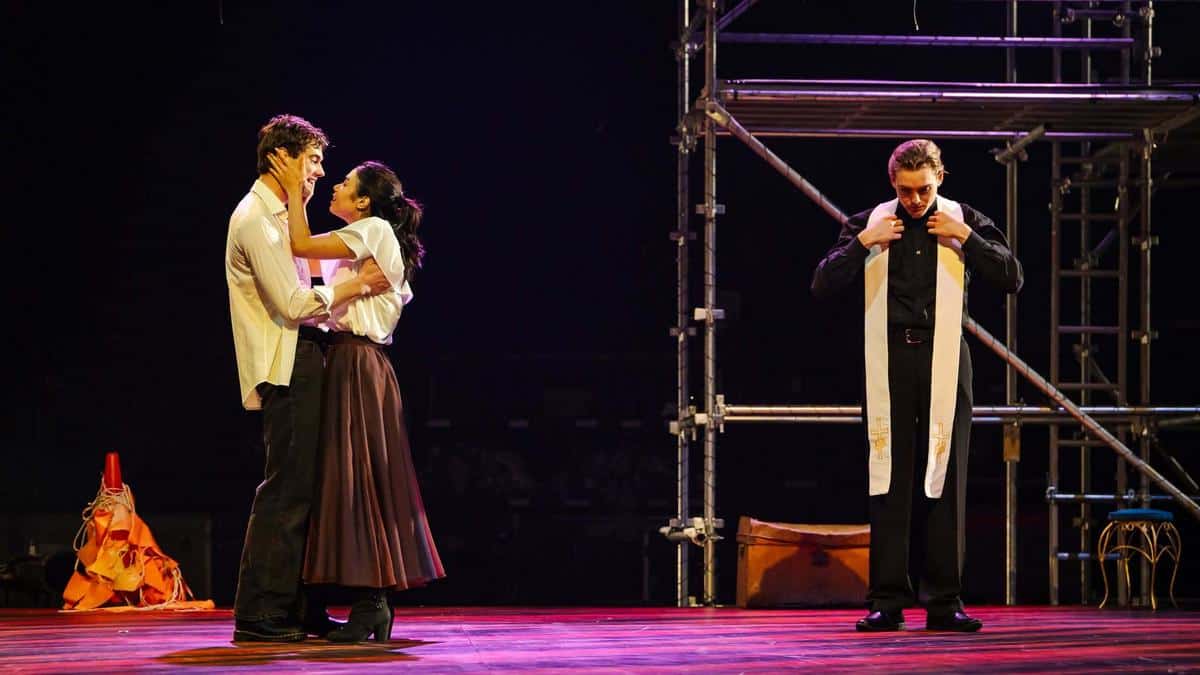
With a simple reframe, the Melbourne Shakespeare Company’s ‘Cleopatra & Antony’ signals a deviation from the norm long before curtains up. Shakespeare’s original play centres the Roman general Mark Antony, but this production flips the script to spotlight his infamous beau, the Egyptian queen Cleopatra.
Shakespeare’s ‘Antony & Cleopatra’ follows the powerful relationship between Cleopatra and Mark Antony and their tragic demise as casualties of the crowning Roman Empire. The tragedy is one of Shakespeare’s more ambitious works, notorious for its numerous scenes spanning scores of characters, relationships and locales. On paper, it’s a bit of a slog, so it’s the direction that makes or breaks this production.
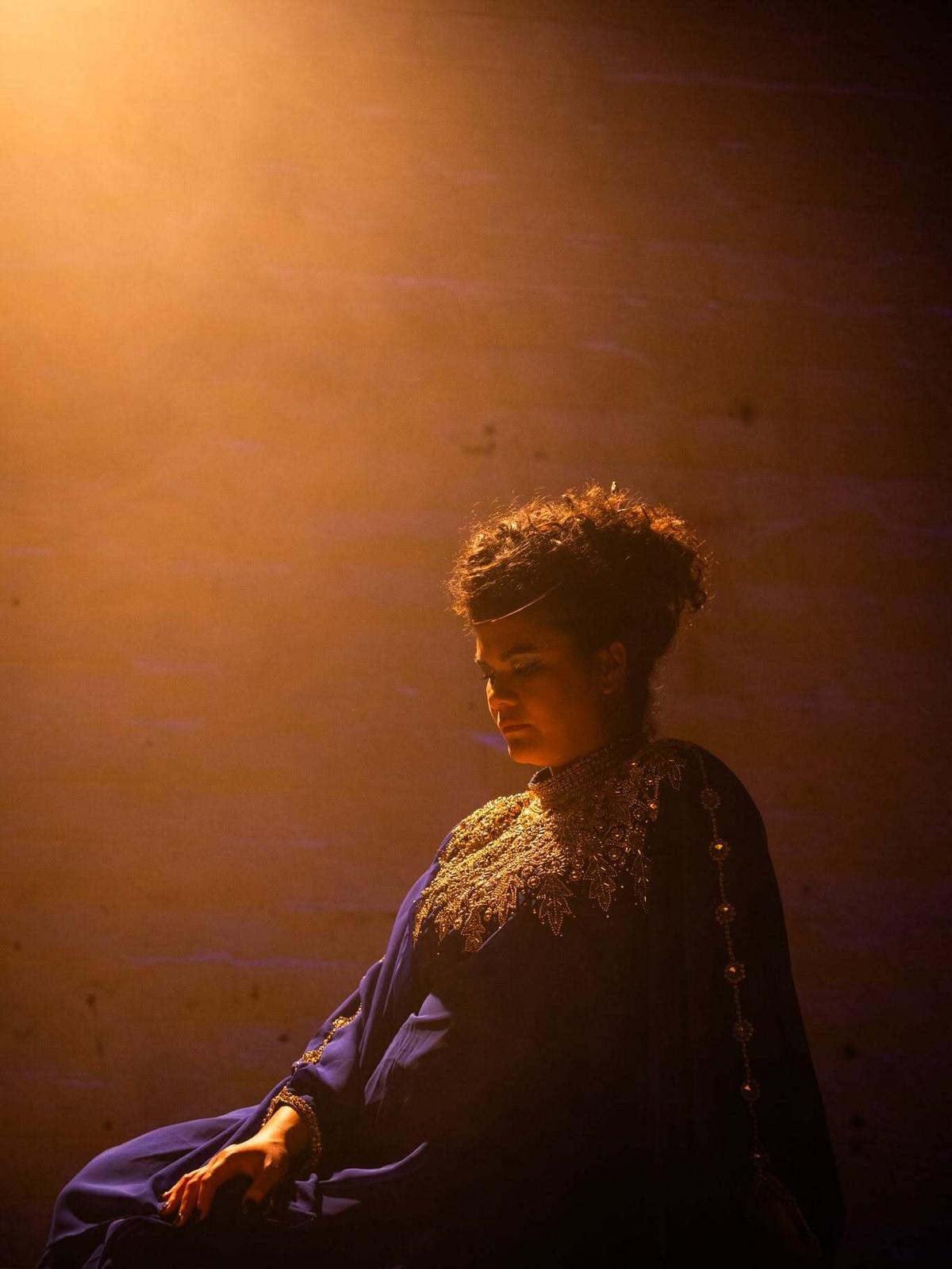
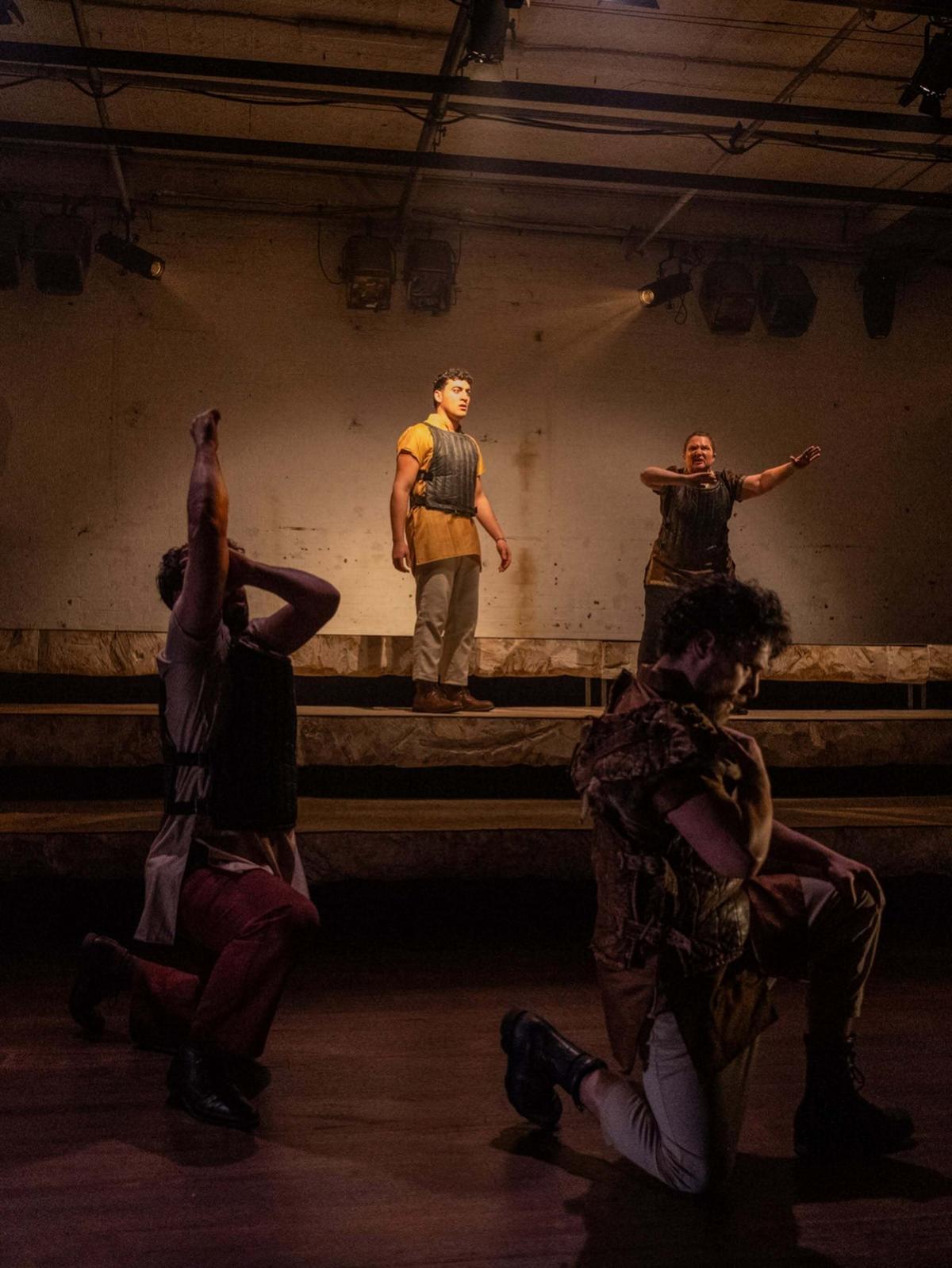
The Melbourne Shakespeare Company’s adaptation sat dreamlike between traditional and contemporary. On stage, the set (designed by Eloise Kent) was pared back, with organic splays of linen, stone and smoke; pale fawns and ochres evoking a dusky Mediterranean villa.
Crazy, stupid love is the one luxury Cleopatra and Antony can’t afford; their chaotic affair begets a doubly chaotic state of affairs. Sonya Suares directs ‘Cleopatra & Antony’ with that restless, impulsive passion which grated at times to watch, but only for its bitter truth. That’s where tragedy lives, in the oh-so-avoidable. We’re meant to shake our heads at the foolishness of these characters because we aren’t the fools in love (until we are).
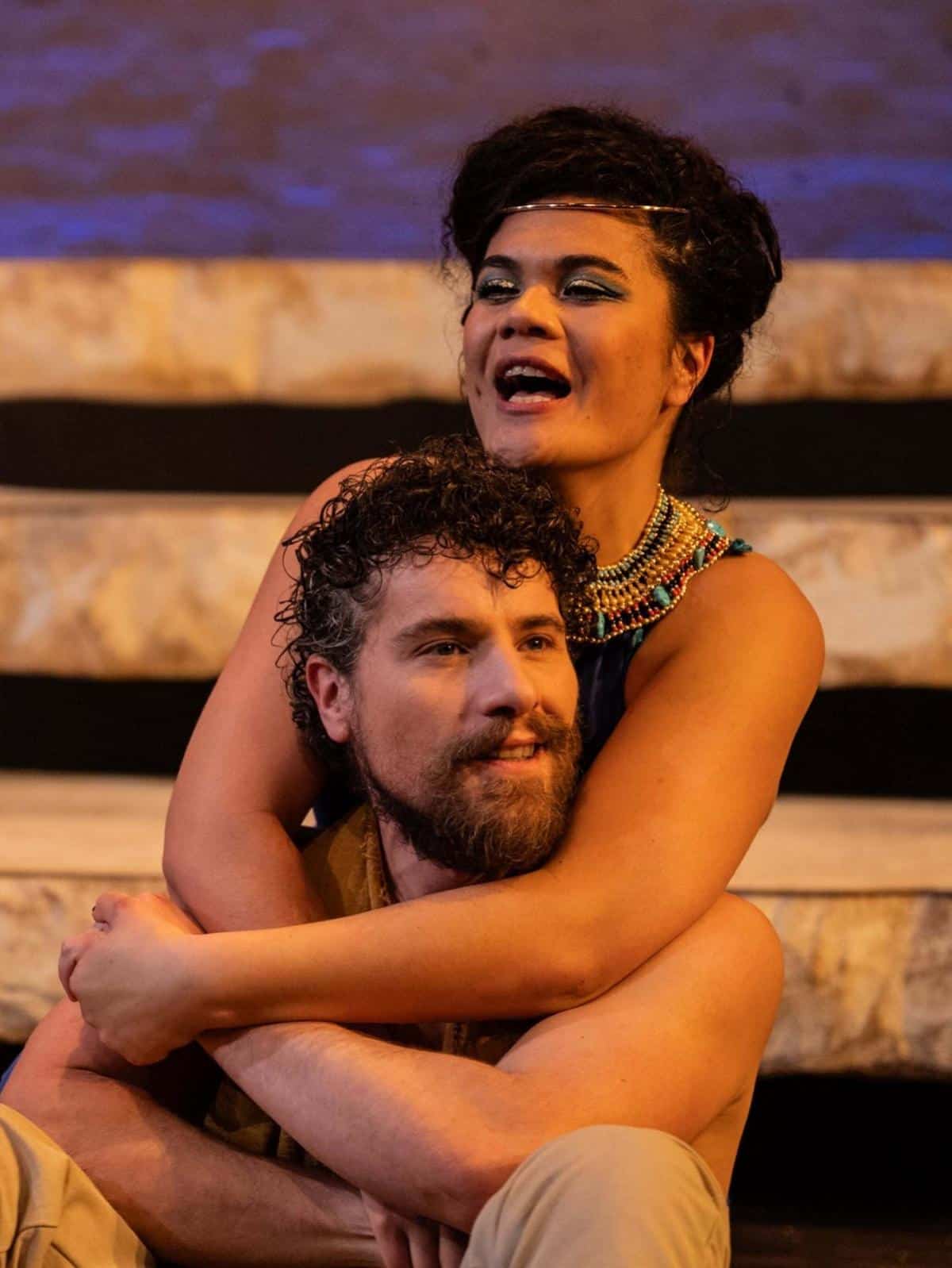
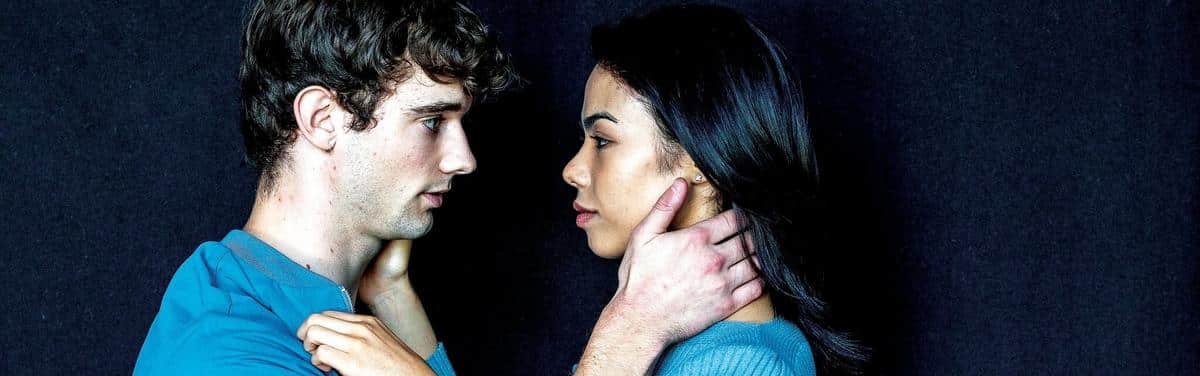
Akina Edmond’s Cleopatra and Louis Lucente’s Antony were forces in their own right and all the more powerful together. Intense, playful and hotblooded, the two moved as if in orbit and fed off each other’s boundless energy until their final devastating moments. Supported by strong characters from Tsungirai Wachenuka’s Charmian to Jennifer Vuletic’s Agrippa, Laura Iris Hill’s Enobarbus and the multifaceted ensemble, the chemistry on stage was palpable.
I appreciated the intention to make the content more digestible, but I’m unsure if Charmian’s metatextual narration answered this adaptation’s purpose. The play stretches itself across so many histories and contexts that I wonder what—if any—method there would be to compensate for gaps in audience knowledge. For a lesser-known play, it struggles to reap the benefits of contemporary direction. Strip off the frills, let us relish in the madness.
I’m similarly undecided if anything new was added for me in the reframing of Cleopatra’s role, though I will say this: there’s a power in perception and Cleopatra is one of history’s most misunderstood figures. Even if the story remained the same, the Melbourne Shakespeare Company’s adaptation extends an invitation to its audience to recontextualise a previously fixed character, wielding the transformative power of narration to ask a critical question: who is telling the story?
ONE MONTH TO GO
Shakespeare’s greatest plays retold with a Dettol bottle, a jar of marmalade and a set of salt and pepper shakers at Sydney Opera House
World-renowned, Ibsen award-winning UK company Forced Entertainment brings its acclaimed production, Table Top Shakespeare, to Sydney for the first time this September – a genuinely accessible, laugh-out-loud way into the Bard for anyone who finds his works intimidating or a slog at school. Suitable for ages 14 and up.
With exactly one month until opening, the Sydney Opera House is counting down to the Sydney premiere of Table Top Shakespeare, presented by internationally acclaimed ensemble Forced Entertainment – the company The Guardian has called “Britain’s most brilliant experimental theatre company” and The Times says is “confounding conventions and exploding audience expectations.”
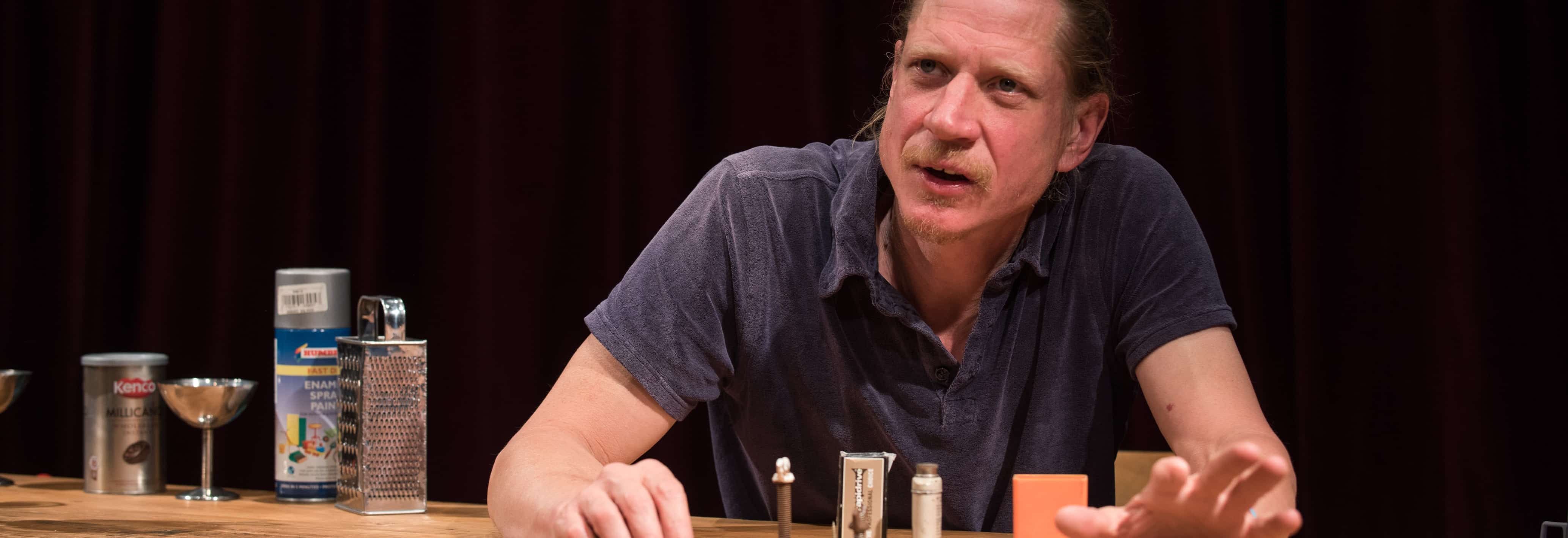
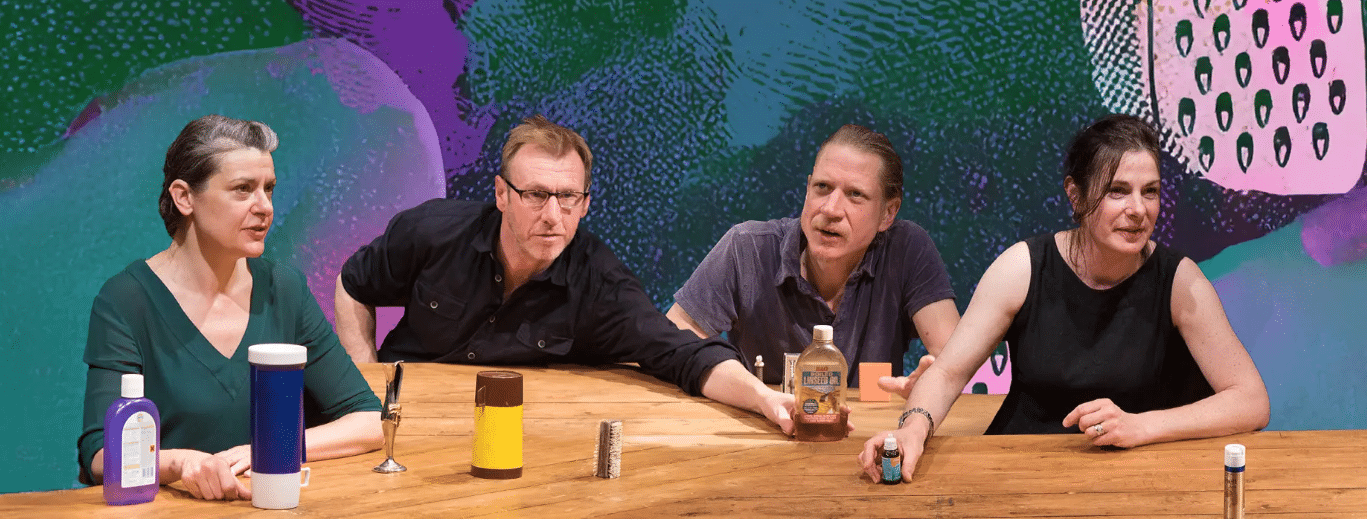
Six performers take on the whole of Shakespeare’s canon using nothing but everyday household objects – a vase becomes a prince, a jar becomes Juliet, a Dettol bottle plays her nurse, and salt and pepper shakers rule an entire kingdom. Narrated live and entirely from memory, with no fixed script, each retelling strips Shakespeare’s comedies, tragedies and histories back to their essential drama, wit and plot – no prior knowledge of the plays required.
It’s a genuinely different way in for audiences who find Shakespeare’s language intimidating or who haven’t engaged with his work since school, as well as a fresh, funny lens for seasoned theatre-lovers. Forty years into a career built on pulling apart theatrical convention, this marks Forced Entertainment’s first-time tackling Shakespeare – and their first time performing them in Sydney.
Table Top Shakespeare: Selected Works is presented as double bills across the season – two plays per evening over one week, covering comedies, tragedies and histories including Hamlet, Macbeth, Romeo and Juliet, Othello and A Midsummer Night’s Dream.
SHOW INFORMATION: WHAT: Table Top Shakespeare WHEN: 22 – 27 September 2026 (one week only) WHERE: Studio, Sydney Opera House FOR: Ages 14 and up PRICES: Tickets from $75 + booking fee.
ABOUT FORCED ENTERTAINMENT Forced Entertainment is an ensemble of artists founded in 1984, recognised as one of the world’s most influential experimental theatre companies. Winners of the International Ibsen Award, the company has spent over 40 years pulling apart the conventions of narrative, genre and theatre itself, touring their work across the UK, Europe, North America and Japan. Led by Artistic Director Tim Etchells, with performers Robin Arthur, Jerry Killick, Richard Lowdon, Claire Marshall, Cathy Naden and Terry O’Connor.
Few directors describe their vision as muscular, but that is exactly how Sonya Suares approaches Melbourne Shakespeare Company’s Cleopatra & Antony. She is tackling one of the Bard’s most ambitious works; a play that refuses to sit neatly within any single genre, blending tragedy, history, romance and action-adventure into something genuinely wild.
Meet The Director – Sonya Suares
What is this production about?
What is it not about? Empire, politics, love, war, legacy, factions, strategy, betrayal … and getting across the chess board of life on your own terms/ with what you hold dear intact.
What drew you to this particular work, and why now?
This play is one of the Bard’s most genre-bending works. It’s simultaneously a tragedy and a history and a romance and an action-adventure epic. It’s absolutely wild staging this work at this particular geopolitical moment, given its conceit: a contest of empire and ambition that famously reaches its climax with a naval-impasse-turned-all-out-showdown in a narrow body of water – one not so far away from the Strait of Hormuz.
How would you describe your directorial vision for this production?
Muscular. For all our fascination with the titular characters, this is an ensemble work. And we have a rockstar ensemble – this cast are already deep into the world-building that has to happen for audiences to invest in the fates of Cleopatra and Antony.
What is your process for working with actors to find the truth in a scene?
With heightened text, I tend to sketch on the floor first so we can all feel free to work in draft, and feel into the rhythm and dynamic of the world we’re building together. That way, actors are able to make offers that resonate both within framework of the play and that tap into their own experience as humans. Actors are very good at mining for truth if you get the parameters right.
Is there a moment in the show that has surprised you in how it has come together?
We’re just getting started but already the physical score of this work is gripping. It electrifies and energises the actors in the room – I think it’s going to be the same for audiences.
How do you balance your vision with the creative contributions of your cast and team?
Theatre is a collaborative endeavour and I love an offer. I mean, not every single offer is gold but if you get the right folk in the room, I believe you benefit from the many eyes, ears and minds attuned to making your vision for the production as taught and multi-faceted as possible.
What do you hope audiences are thinking about on the drive home?
That these seemingly distant moments in history are closer to us than we think. That we repeat and relive them over and again. Of what it means when a whole way of life is at stake, or a civilisation is destroyed. Of whose voices are heard and whose are lost.
On a nerdy note, I hope audiences are stirred to know more about Cleopatra and Antony. Their fate unfolds within the context of the world’s first all-out propaganda war and a real sliding doors moment in history. I mean, the very name we use for the month our show opens – August – is an honorific tied directly to the events in this play. It’s uncanny – and endlessly fascinating.
Our thanks to Sonya Suares for sharing her perspective on this fascinating production. For anyone curious about the propaganda wars, sliding doors moments and historical echoes she describes, tickets for Cleopatra & Antony at fortyfivedownstairs are available now.
Shakespeare is too often treated as something reserved for the “smart kids”. For many of us, our entire experience of Shakespeare amounts to a few compulsory weeks in Year 9 English before we leave it behind forever – a confusing whirlwind of unfamiliar language that never quite comes alive. What I admire most about Tom Healey’s production of Romeo and Juliet is that it refuses to accept that this is how Shakespeare should be experienced.
This is Shakespeare for everyone.
I attended the schools’ performance, with numerous school groups filling the theatre, and spent almost as much time watching the audience as I did the stage. What struck me was the diversity of those attending. Students from a wide range of schools across Perth filled the theatre. Yet regardless of background, there were no yawns, no glazed expressions and no restless fidgeting. Instead, students were engaged, laughing, reacting to the action and leaning into the story.
I also attended with my 10-year-old son and, despite the recommended age of 14+, found the production entirely appropriate for younger theatre-goers. He was captivated throughout, with the energetic fight scenes proving a particular favourite.
Get the kids in early. Get them watching. Get them understanding.
This is what Shakespeare was always meant to be: living theatre. Not something admired from afar, but something experienced, debated, laughed at and felt.
WAAPA’s graduating acting students, under Healey’s direction, deliver a vibrant, accessible and highly entertaining interpretation that brings Shakespeare’s most famous love story firmly into the 21st century.
From the outset, it is clear that movement will be central to the storytelling. Tyrone Earl Lraé Robinson’s choreography and movement direction are standout features, infusing the production with energy, sensuality and visual excitement. More than simply providing spectacle, the movement becomes a storytelling language in its own right. Relationships, power struggles and emotional shifts are often communicated physically before a word is spoken. The result is a production that feels constantly alive and in motion.
The dance sequences are a particular highlight, providing moments of joy, connection and visual flair that offer a welcome counterpoint to the production’s violence. Beautifully performed and seamlessly integrated into the action, they elevate the storytelling and rank among the afternoon’s most memorable moments.
Before the performance even began, a heartfelt Welcome to Country set an authentic and respectful tone for the afternoon. Rather than feeling procedural or rehearsed, it felt genuine and sincere, creating an immediate connection with the audience. The ensemble is consistently strong, with several performances standing out.
Tom Kelly’s Mercutio is undoubtedly one of the production’s greatest assets. Taking bold risks both physically and emotionally, Kelly creates a character bursting with charisma, humour and unpredictability. His comic timing is impeccable, and his stage presence is magnetic. Even in scenes packed with talented performers, it is difficult to look away from him. Mercutio provides much of the production’s comic relief, but Kelly also ensures there is depth beneath the bravado, making the character’s fate all the more impactful.
Daniel Halmarick impresses as Benvolio and may well be the most technically accomplished performer on stage. Possessing a rich, resonant voice and exceptional clarity of speech, he handles Shakespeare’s language with confidence and ease. He has the kind of vocal authority and textual command that bodes well for a successful future on the stage.
Sarah Hindle’s Nurse is another standout. Endearing, funny and instantly recognisable, she feels less like a Shakespearean archetype and more like someone we all know. The broad Australian accent is a fun touch, helping bridge the gap between Renaissance Verona and contemporary Perth. Hindle brings warmth, humour and heart to every scene she inhabits, quickly becoming an audience favourite.
Griffin McLaughlin delivers a thoughtful Romeo, bringing emotional depth and welcome variety to a role that can sometimes become one-note. His performance balances youthful impulsiveness with genuine vulnerability and sincerity, giving the character substance beyond romantic idealism.
Holly Samaniego’s Juliet takes a little time to fully settle into the role. While her early scenes occasionally lack the spark and emotional urgency needed to fully ignite the character, she steadily grows in confidence throughout the performance. By the final act, she has won over the audience, bringing strength to Juliet’s tragic journey. The chemistry between the young lovers remains believable throughout and there are some funny scenes where they simply cannot keep their hands off each other.
Among the supporting cast, Sofia Watts deserves special mention for her portrayal of Lady Capulet. Despite being close in age to many of her fellow performers, she convincingly embodies Juliet’s mother, bringing authority, maturity and impressive vocal clarity to the role.
More significantly, the final scene lacks the emotional devastation the production has spent two hours building towards.
Throughout the play, blood packs are used symbolically. For much of the production, this visual motif works well. However, in the closing moments, the decision to rely on this symbolism rather than Juliet’s traditional knife proves less successful. Rather than heightening the tragedy, it creates a degree of theatrical distance at precisely the moment the audience most needs emotional connection.
Compounding this issue is the omission of Romeo’s final speech. Together, these choices diminish the impact of the ending. The final moments should leave the audience heartbroken. Instead, I found myself admiring the concept more than feeling the tragedy. I wasn’t reaching for a tissue; rather, I felt somewhat short-changed by a conclusion that lacked the emotional force the preceding scenes had so richly earned.
Yet these criticisms are relatively minor in the context of an otherwise impressive production.
Healey’s Romeo and Juliet understands something fundamental: Shakespeare survives not because he belongs to academics, teachers or literature students, but because his stories continue to speak to ordinary people. By prioritising clarity, accessibility, movement and a fresh look, this production throws the doors wide open and invites everyone inside. And judging by the students who filled the Heath Ledger Theatre, many were more than happy to accept the invitation.
For students encountering Shakespeare for the first time, seasoned theatre-goers and even younger audience members, this production demonstrates that these plays remain as powerful and relevant as ever. Judging by the response of the students around me – and one very enthusiastic 10-year-old theatre-goer – WAAPA’s graduating actors have ensured that Shakespeare’s spark remains very much alive.