Mara

Mara

Mara Rating

Click if you liked this article

1

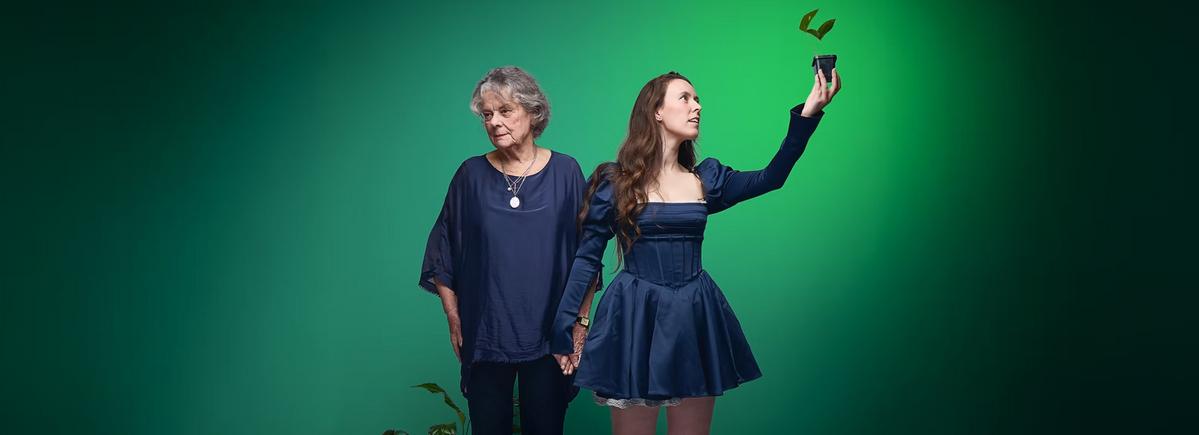
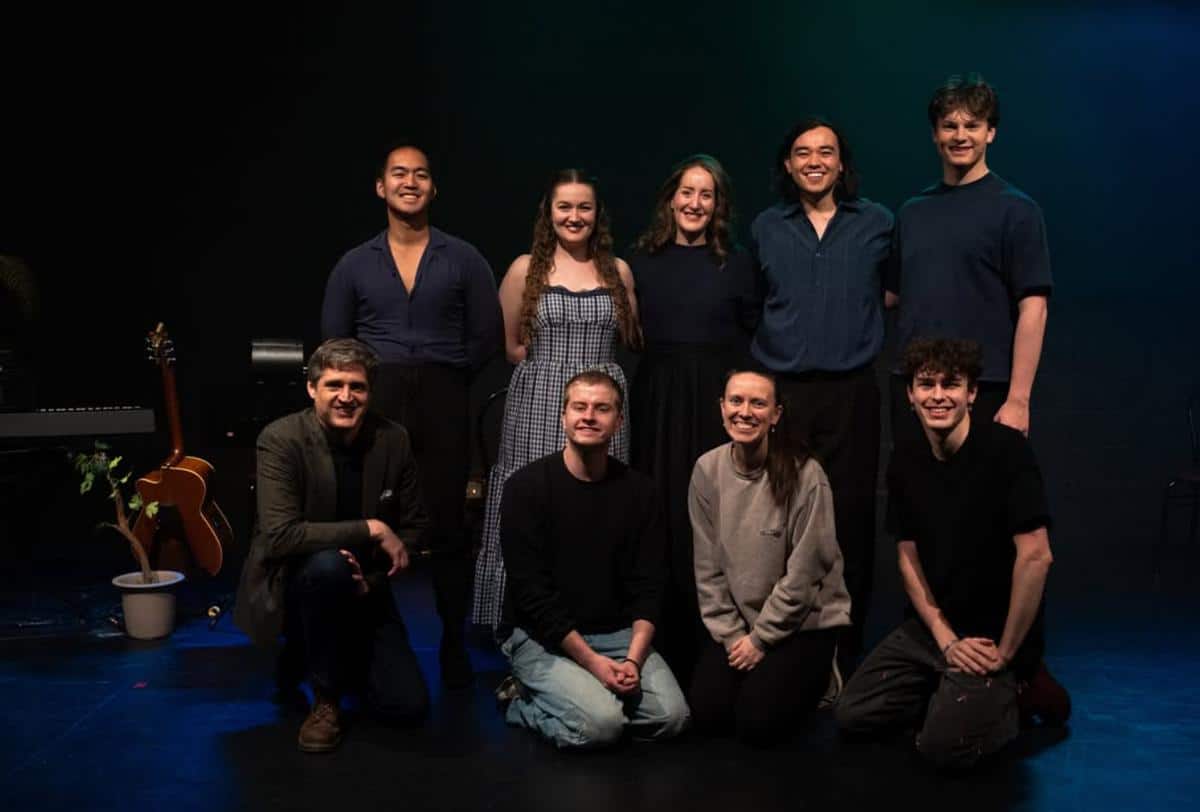
Last night, I had the pleasure of attending the opening night of the newest production at Theatre Works. ‘Mara’ is a triumph of re-imagining, cleverly talking and twisting is audience through the story of Cinderella, from the perspective of the so called evil step-mother.

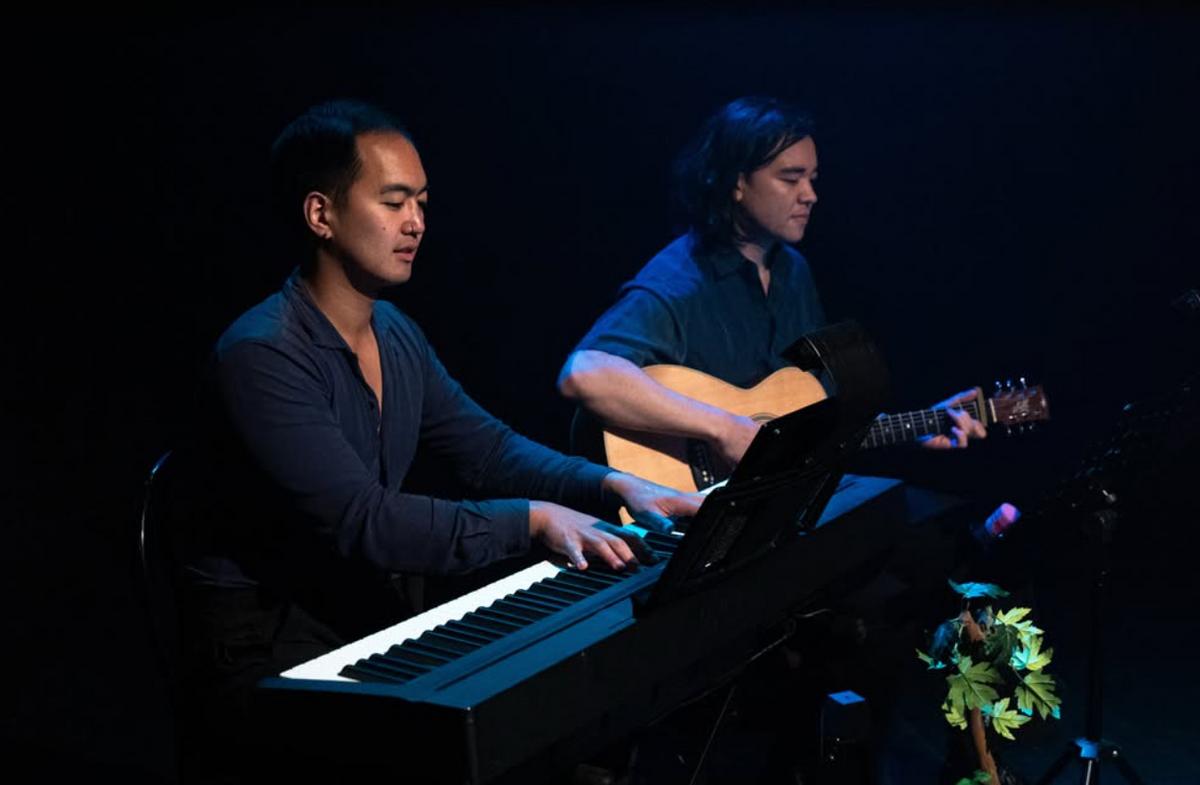
Upon entry to the theatre, audience members are greeted by low lighting and haunting live music (courtesy of Asia Reynolds) that instantly sets the tone for the show to follow: a tactile exploration of words and visuals that transports you into the inner mind of a woman very much on the edge.

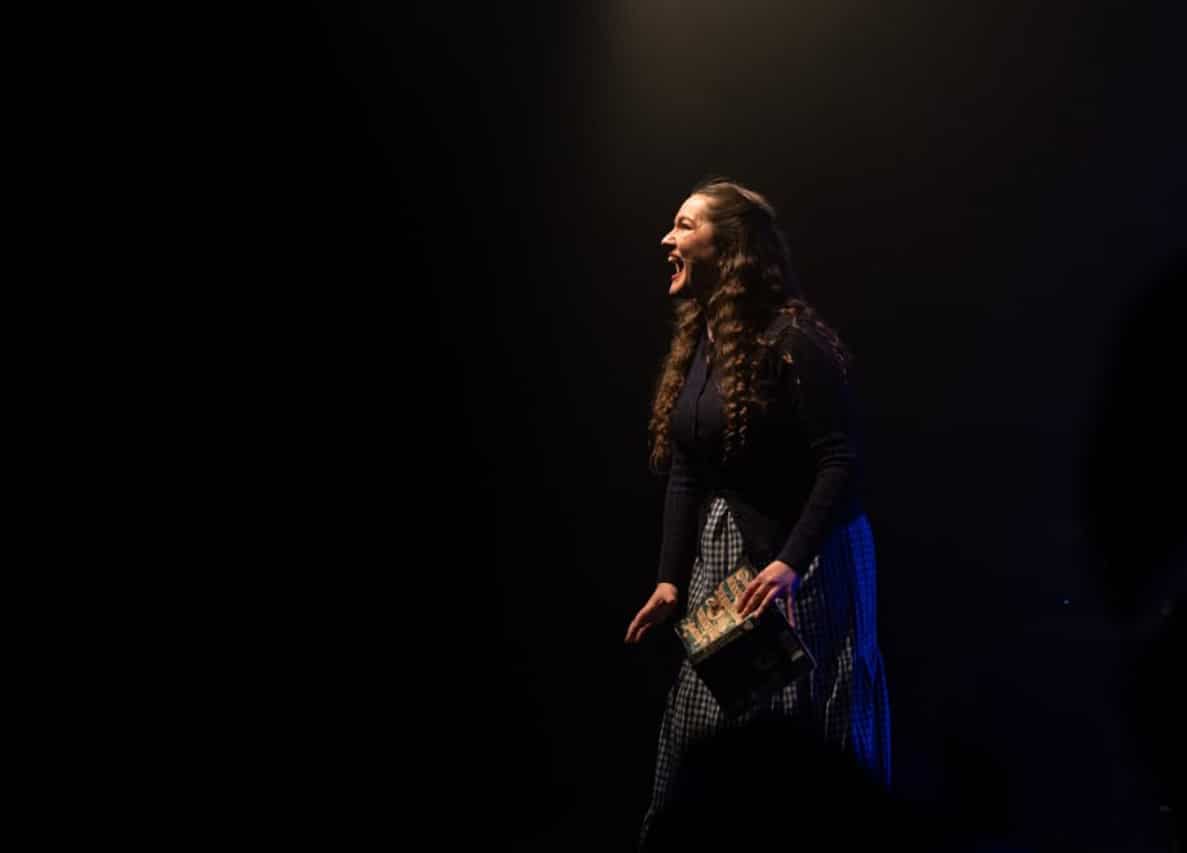
It would be remiss to review this show without applauding the massive efforts of actress Aurora Kurth. Aurora steps on the stage and does not simply act, she becomes. Babe, daughter, mother, lover, maid, footman, friend, martyr, baddie and even daddy. She becomes all of them right in front of your eyes, through accent, tone and physicality, talking and singing her way through rhythmic lines filled with repetition, onomatopoeias, metaphors and double entendres (“You have put a step between us” made me literally gasp out loud, I apologise to the gentleman sitting next to me).


The other standout moments of the show were the visuals and soundscape. On a beautiful designed set with carousel horses and doll houses (thank you Jacques Cooney Adlard), every choice felt incredibly deliberate from the colours of Mara’s dresses to the clinking of her teacups. All choices designed to surround the audience and draw them into the mindset of Mara, a woman desperately trying to bring security into her world, against all odds.

And yet, this show does not shy away from the more brutal elements of Cinderella. After delicately toeing the line between whimsical and gruesome, the show takes a direct turn into the macabre with one of the best representations of foot mutilation I have ever seen onstage (and I’ve seen surprisingly many).

Did I come away from the show on the step mother’s side? Not quite but I don’t think I was supposed to. Instead I came away from Mara with a deep appreciation for the journey she has gone through and an understanding of her character. She is desperate, she is a mother, she is alone, she is unloved, she is lost. She has struggled and climbed, she has made mistakes and paid for some of them. She has loved and lost, she has envied, she has feared. She is so much more than a caricature of ‘The Evil Stepmother.’

To book tickets to Mara, please visit https://www.theatreworks.org.au/2026/mara.

Photographer: Sarah Clarke

Spread the word on your favourite platform!

The Effect – Dopamine, Love, or Both?

The Effect

The Effect Rating

Click if you liked this article

I’m already fairly familiar with The Effect by Lucy Prebble when I sit down in the Theatre Works audience, the play having first debuted in 2012 at the National Theatre in London and been played across the world since. More than a decade later the show has made its way down to Key Conspirators and I’m curious what they’ll do with it. The four-hander mainly follows two participants in an antidepressant drug trial, Connie and Tristan, as they begin to fall in love – but whether it’s caused by the supplementary dopamine coursing through their veins is troublingly unknown to them and the doctors alike.

As needed for any tight cast show, the ensemble is near flawless. Directed superbly by Alonso Pineda, each actor embodies their character to their utmost limits.

Emma Choy, playing Dr Lorna James, has wrapped everything she does in anxiety. Her vocal tone, her gaze, her slight shifting, all build to a near pitiful portrayal of the doctor until it reveals a spine that stands straight throughout all the chaos. Choy is endearing and heart-breaking all at once, honing in on the lovable awkwardness so we can watch it be torn apart.

Jessica Martin finds an unexpected confidence in Connie instead of the bashful and desperate versions I’ve previously seen. Martin lets Connie discover a self-aware power which becomes fascinating to watch be desperately clung to and employed against Tristan and Dr James. It also got to rear its head beautifully well within the intimate and vulnerable relationship with Damon Baudin’s Tristan that made me blush to watch.


Baudin’s physicalisation is intoxicating to watch. His bounces, his fidgets, his careful curation of presence are all highly rendered. Tristan feels real. He’s able to slip from small and helpless to explosive in the blink of an eye, weaving a carefully constructed pathos through a character that could easily become scarily dominating and uncomfortable. To balance such crassness with an earnest love that you root for, proves Baudin is a master of his craft.

Similarly, Philip Hayden as Dr Toby Sealey carefully toes the line between a pretentious dickhead and a man genuinely trying his best. The role of Dr Sealey is one that can quickly slip into caricature or downright evil, but Hayden brings a needed empathy. You trust that he believes his own words, even if you vehemently disagree with them.

Pineda has intelligently leant into the repetition and isolation of the text. People are scattered across large spaces, making them feel simultaneously alone and claustrophobic. We want to escape the trial as much as they do. There is also an employment of voyeurism by both the characters and the audience that creates a layered effect of examining the show as its own experiment. Occasionally during the longer scenes between Connie and Tristan, the staging did start to feel a bit static, mainly because I was desperate for more play as soon as the characters could escape the rigidity.

Vulcan is meticulous in his design, the aesthetics feel entirely in tune with the clinical and desaturated nature of the text. The stage is split into three distinct areas. We have the main downstage area acting as the facility where only the actors can bring it colour and life, amplified by the grey-scale costumes. Then we have the two-story set up where below are realistically rendered medical facilities and above is a transient play space that moves from bedroom, to stage, to a platform for the watchful eye. This two-story set up smartly allows itself to be hidden away, only visible when lit, letting us sit in the dark, unstimulating emptiness with Connie and Tristan.

Additionally, Vulcan has built an absolute spectacle of lighting into the membranes of the set. The set is the lighting and the lighting is the set: it’s symbiotic. Using an array of lighting bars, Vulcan had created lighting that breathes and has a life of its own, almost reacting organically to actors. Vulcan is not afraid of the dark either. Light is only introduced when it’s absolutely required, the haunting scene of Dr Lorna James sitting quietly in the dark comes to mind.

The Effect is a tight production that doesn’t do more than it needs to, threading all production areas together to prioritise the themes of the text. With a wicked ensemble and beautiful design, the show is not to be missed!

To book tickets to The Effect, please visit https://www.theatreworks.org.au/2026/the-effect.

Spread the word on your favourite platform!

Beyond The Neck

Beyond The Neck

Beyond The Neck Rating

Click if you liked this article

2

None of the characters in Tom Holloway’s Beyond The Neck have names. This may seem like an odd choice for a play about the aftershocks of the 1996 Port Arthur massacre, given recent efforts in the USA to publicize the names of mass shooting victims, but not the perpetrators. A play about a subject that epitomizes ‘personal meets political’ makes a decision that could easily alienate us from its characters. Theatre Works’ production (directed by Suzanne Chaundy) feeds into this alienation with a bare set of four chairs and a painting of Port Arthur, and actors who seem aware that they are telling a story, speaking out to us more than each other. It’s a little Brechtian, quite funny in some parts and very dark in others.

And yet, the connection was palpable, the audience always laughing, sighing and silent when intended. The Old Man (Francis Greenslade), The Young Mother (Emmaline Carroll Southwell), The Boy (Freddy Colyer) and The Teenager (Cassidy Dun) have such specific backstories and distinct voices, but they also become archetypes of the people who were there when the shooting happened, and who are in the audience now. Some of the characters don’t have direct connections to the massacre but simply being at the site forces them to confront other traumas that have plagued their lives. This is despite the strange façade that the first half of the play is built around: a tour of Port Arthur in which the massacre is never mentioned. When that façade breaks down and our characters are plunged to their lowest points, it is truly heartbreaking.


With the sparse and static staging, this iteration of Beyond The Neck lives and dies on the strength of its actors, and they more than pull their weight. Putting the focus on them was a very smart directorial decision because their work as an ensemble is meticulous and enrapturing. Four characters telling four stories at once could be confusing in the wrong hands, but there’s an almost magical direction of the audience’s attention in every actor’s use of gesture and voice. We always know whose story we’re in and what their character is like, and when the fourth wall goes up and the characters start interacting with each other properly and being honest about their stories, it feels well earned. The Young Mother did get somewhat lost in the shuffle, but I think that has more to do with the pacing of the writing than this specific production – it would have been nice to have more time given to her response to grief. Ultimately, the cast’s chemistry perfectly suited a play about the intermingling of personal and group trauma.

It’s sobering to think that in the wake of the Bondi shooting, Beyond The Neck may be more relevant now than Holloway ever envisioned when he wrote the play in 2008. But what has also stayed relevant is the sense of community and love that the play ends with. In a way, good theatre is an embodiment of that experience, and this provocative production created an intensely beautiful atmosphere. It’s a reminder that no matter what we face – death, grief, nightmares, abuse, isolation – we are never truly alone, and there is life on the other side.

To book tickets to Beyond The Neck, please visit https://www.theatreworks.org.au/2026/beyond-the-neck.

Spread the word on your favourite platform!

Femoid

Femoid

Femoid Rating

Click if you liked this article

3

‘The Manosphere’ is a hot topic right now. YouTube video essays, long form news features, a new Netflix documentary series hosted by Louis Theroux, and even another recent Theatre Works show (Blackpill: Redux) delve into the depths of modern misogyny in an attempt to understand: what is happening, are men okay, and why are incels…The Way That They Are?

FEMOID. reveals a blind spot that should be obvious but is often a footnote in these conversations: misogyny maims and kills women. Almost a quarter of Australian women have experienced intimate partner violence at some point from age 15. Globally, this number balloons to a third of all women. The set of three grey blocks and a screen is bordered by various bunches of flowers, and if you look closely at them after the show, each has a nametag – each is dedicated to an Australian femicide victim. These flowers encapsulate FEMOID.’s strengths in a nutshell: it is a thoughtful, brutal and cathartic show, loaded with powerful symbolism.

The play follows three teenage girls – Rory (Roisin Wallace-Nash), Piper (Natasha Pearson) and Olive (Iris Warren, who also wrote the show) – in light-hearted school playground conversations about boys, relationships and sex. Despite their carefree and honest love for each other, we learn that a clock is counting down. We sometimes skip forward in time (or perhaps outside it?) to sombre discussions about an unnamed event, and Olive is conspicuously absent. And throughout the show, white text flashes on a screen behind them: verbatim posts from incel forums that are almost too vile to believe.


Portraying the sexual curiosity of teenage girls without objectifying or patronizing them is a tricky needle to thread, but Warren’s writing and Izabella Day’s direction pull it off perfectly. The characters’ discussions about sex are innocent yet emotionally intelligent, which makes the juxtaposition with the text behind them about ‘sluts’, ‘foids’, ‘whores’ and worse all the more chilling. The cast functions more as an ensemble than individual characters with distinct voices, but this makes sense for a show concerned with violence against women as a collective. We laugh with the girls’ naivety, not at it, and the contrast created between scenes with and without Olive never stops being jarring.

Along with a unique perspective on the manosphere, FEMOID. stands out in its attention to detail. The use of symbolism and motifs is masterful, but difficult to talk about without spoilers. I’ll only say that everything seen and said on stage feels meticulous and pointed. There are many details to ruminate on, from the name tags on the flowers (which I wouldn’t have noticed if I hadn’t read one of the venue posters) to the fact that the female main characters all have gender neutral names. The lighting was also a highlight in terms of giving a sense of place and occasionally glitching to further the constant sense of foreboding. The only snags for me were that the text projections were fuzzy and often difficult to read, and there were a few lines that felt too blunt in foreshadowing what was to come. Otherwise, the show felt as bold and precise as its subject matter called for.

There has been much speculation and information about why so many men hate women so much. The bitter irony is that this discourse often sidelines or desaturates the concrete consequences of this hatred. FEMOID. reminds us why we care and who we are fighting for. It is a very confronting and well-crafted show on every level, which will leave you with a lot of rage and a glimmer of hope.

To book tickets to Femoid, please visit https://www.theatreworks.org.au/2026/femoid.

Spread the word on your favourite platform!