Proof Of Concept

Proof Of Concept

Proof Of Concept Rating

Click if you liked this article

2

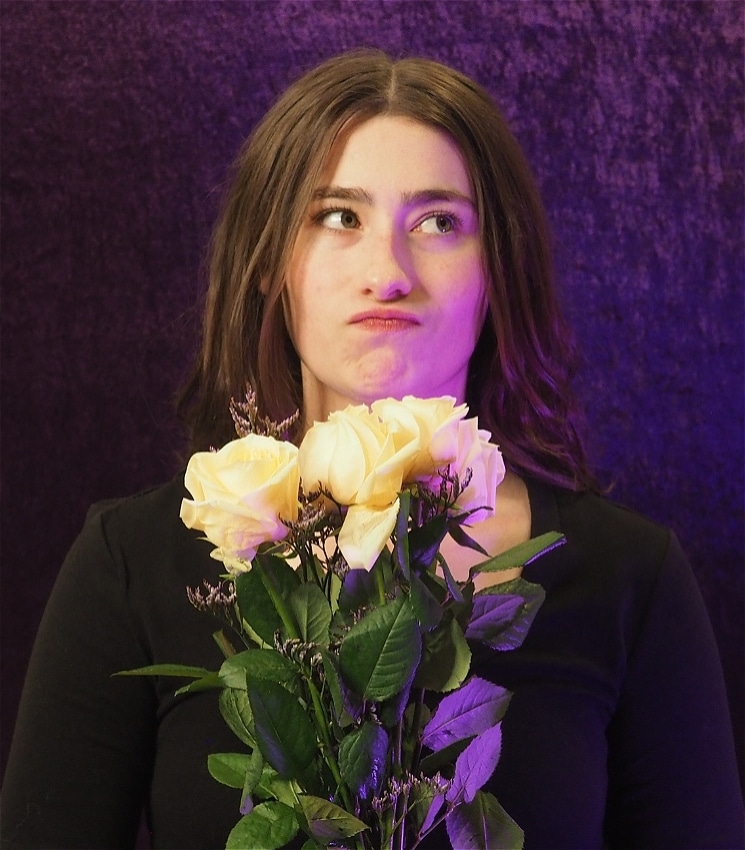
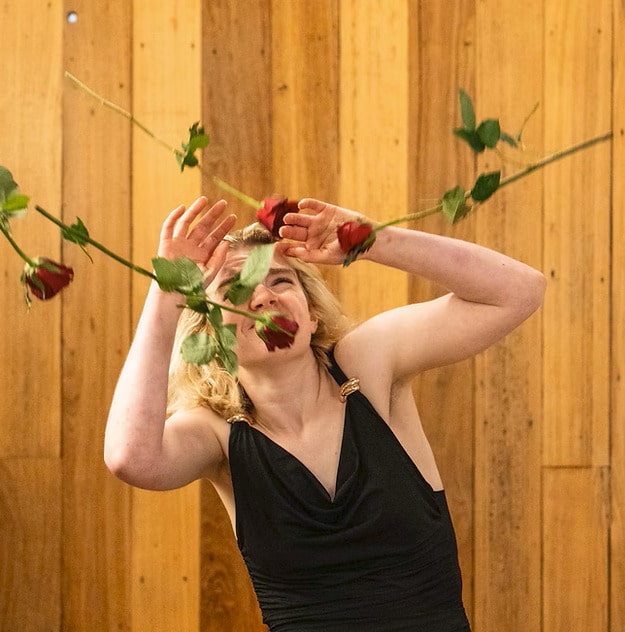
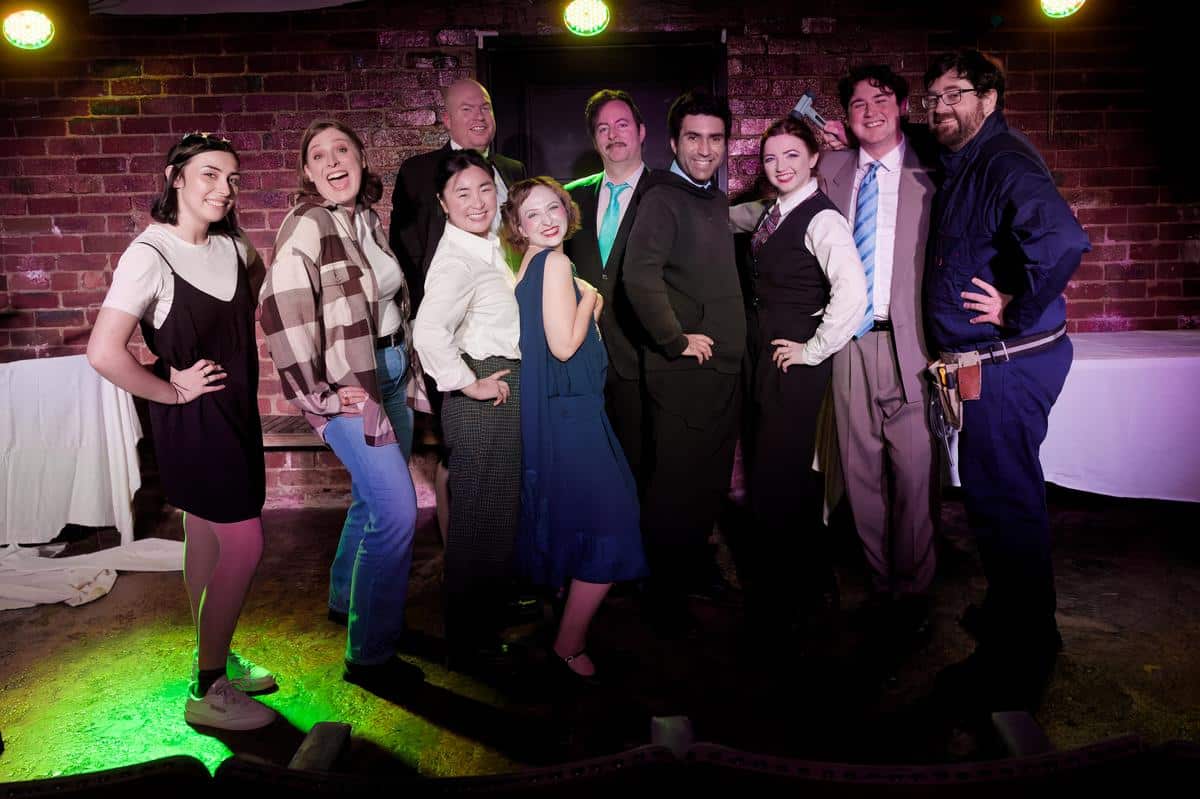
Due to the nature of what these works are meant to be, this review might be a little tight on the finer details. Proof of Concept was presented as part of The Motley Bauhaus’ Netherworld festival, a program deliberately built around discovery, experimentation and unexpected one-off performances.

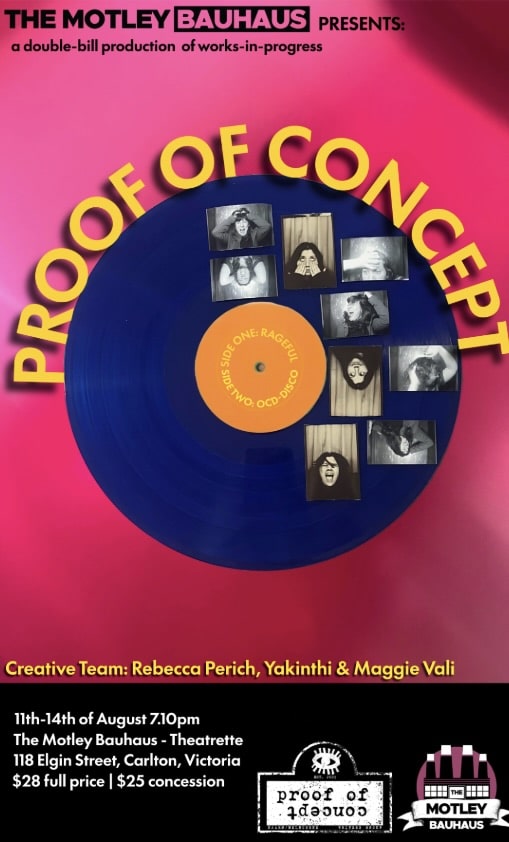
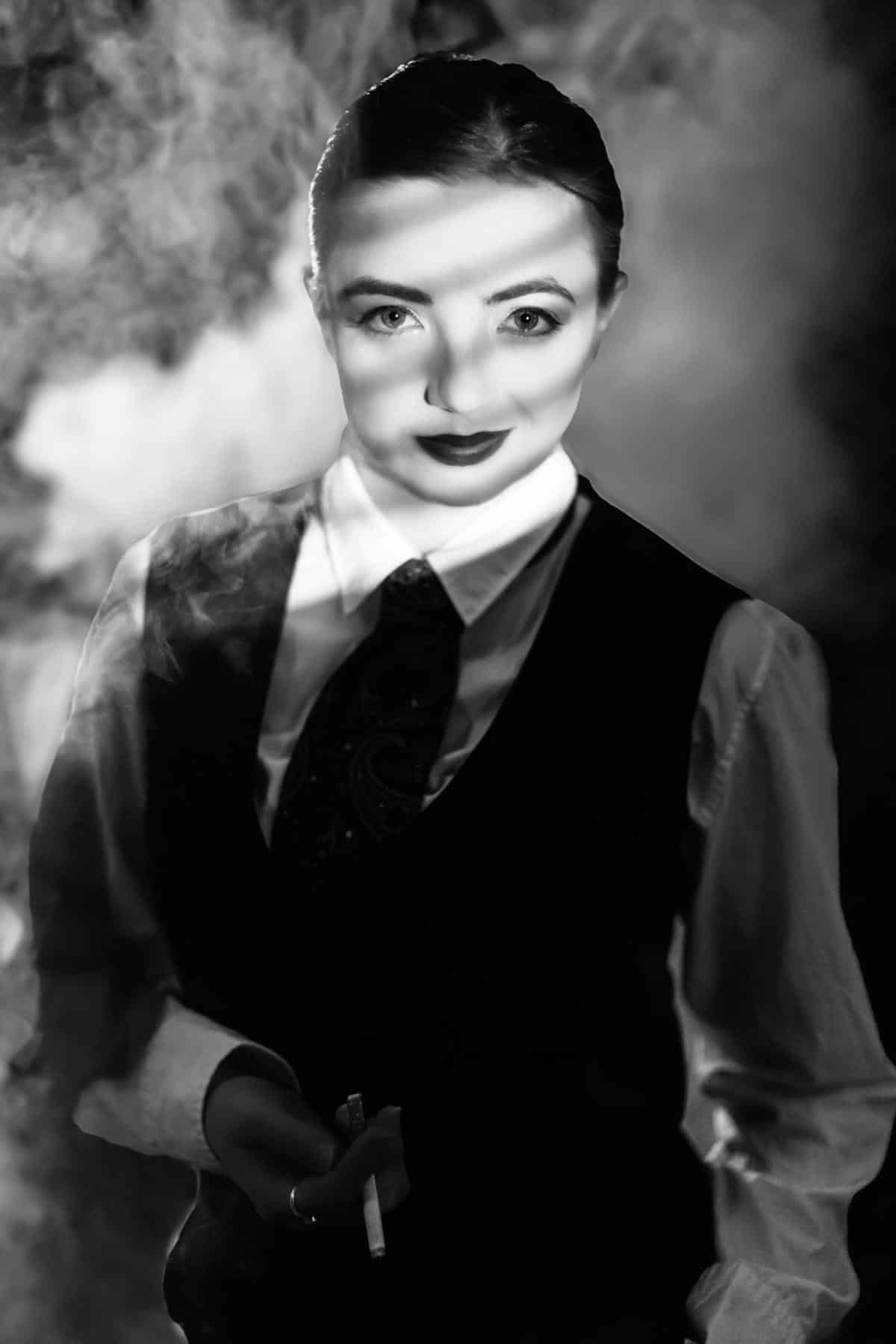
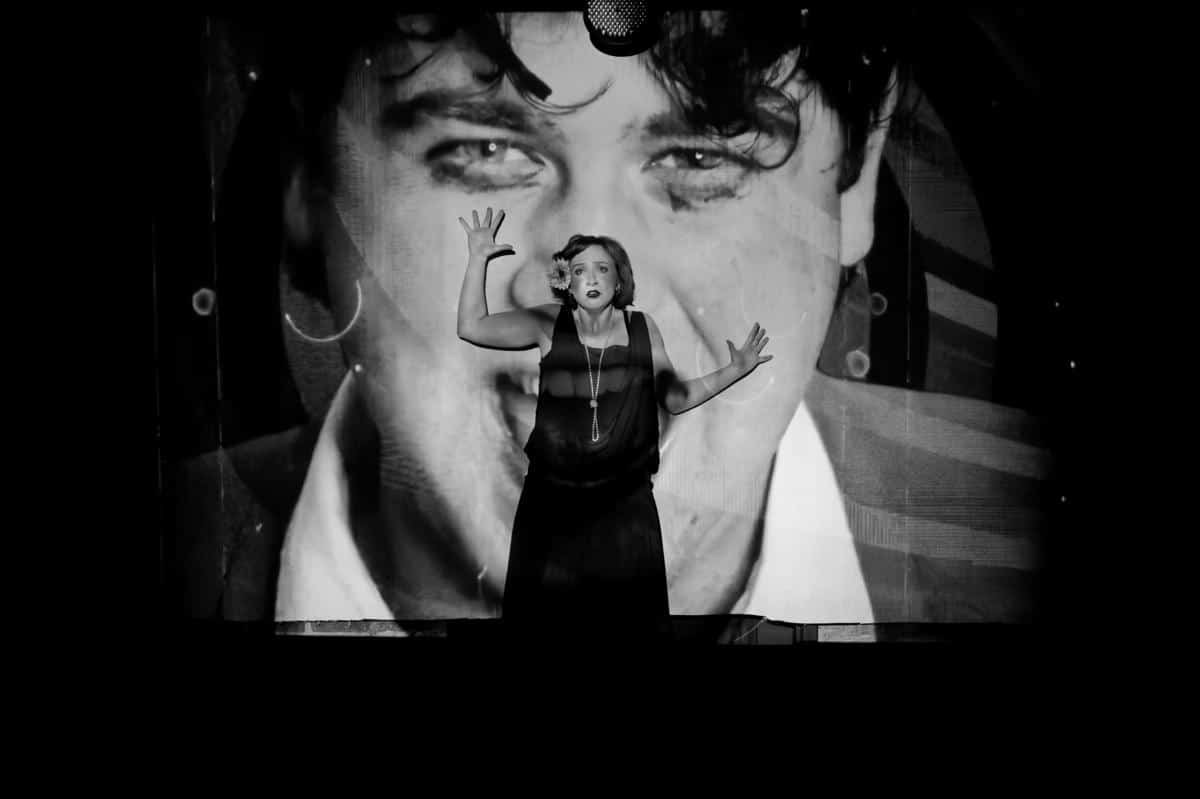
‘Proof of Concept’ is a 60 minute double feature of two short plays, presented as a sort of works-in-progress experiment. ‘RAGEFUL’, written by Rebecca Perich, one-third of the creative team alongside performer/producer Maggie Vali, is a dystopian Black Mirror-esque glimpse into a reality where medical misogyny has gone too far. Women who express themselves and their emotions are sent to “therapy” to be “treated”. In other words, they are Pavlov’d with shock therapy into submission. The latter, OCD-Disco, written by Yakinthi, sees two strangers with OCD thrust into a bizarre race against the clock. Their respective OCD becomes a major driving force for the events of the play, and ultimately becomes a connective element as the action progresses.

As you can probably gather, the overall presentations of ‘RAGEFUL’ and ‘OCD-Disco’ as they currently stand are very much still in their infancy. Cues will go off seemingly at random, lines and blocking feel freshly-walked through, there are bits of dialogue that don’t seem to be enforced by neighbouring sections. It is very much like I’ve walked into their very first tech and dress rehearsal, and they’ve just recently gone off prompt. That chaos certainly lends a sense of explorative play to each piece, and as such, there is a refreshing level of spontaneity in the performances. Considering the minimal space and resources these two plays are working with, it is rather impressive how much atmosphere is generated by some nifty lighting design and sound usage.


I think my biggest reservations belong on the writing and conceptual side of things. While I believe that there is plenty of fertile soil laid in both, I did find that there was an overall lack of consistency in the materialising of these ideas. RAGEFUL felt like it had way more gas in the tank, but it spent a lot of its already restricted time spinning its wheels, leading us to an ending that felt like it could’ve continued on. I was particularly confused as to what was meant to be happening in OCD-Disco. I can only assume it was intended to be a finding-friendship-in-unlikely-situations kind of deal, but the action and dialogue was a bit too scattered to make that fully work by its conclusion. Sitting down and delineating more cogent plotlines will greatly benefit these two plays.

The depiction of OCD also felt somewhat stereotypical at times, given the complexity of the disorder. As the work develops, further consideration of how these experiences are represented could add greater nuance and depth to the characters and broaden the scope of the piece.

Overall though, I see Proof of Concept as a spirited attempt at creating sharp, lightning-in-a-bottle theatre, with quite a bit of room for improvement. I would love to see these two pieces get fleshed out more down the line, and the sky really is the limit in terms of possibilities. Certainly a larger space, an abundance of time, and full commitment to these visions will strengthen the muscles. I encourage these three to keep exploring and go as large as possible. I’ll be keeping an eye out for the results.

To book tickets to Proof Of Concept, please visit https://www.eventfinda.com.au/2026/proof-of-concept/melbourne/carlton.

Photographer: Callan Trewenack

Spread the word on your favourite platform!

Too Much Light Makes The Baby Go Blind

30 Neo-Futurist Plays From Too Much Light Makes The Baby Go Blind (30 Plays In 60 Minutes)

30 Neo-Futurist Plays From Too Much Light Makes The Baby Go Blind (30 Plays In 60 Minutes) Rating

Click if you liked this article

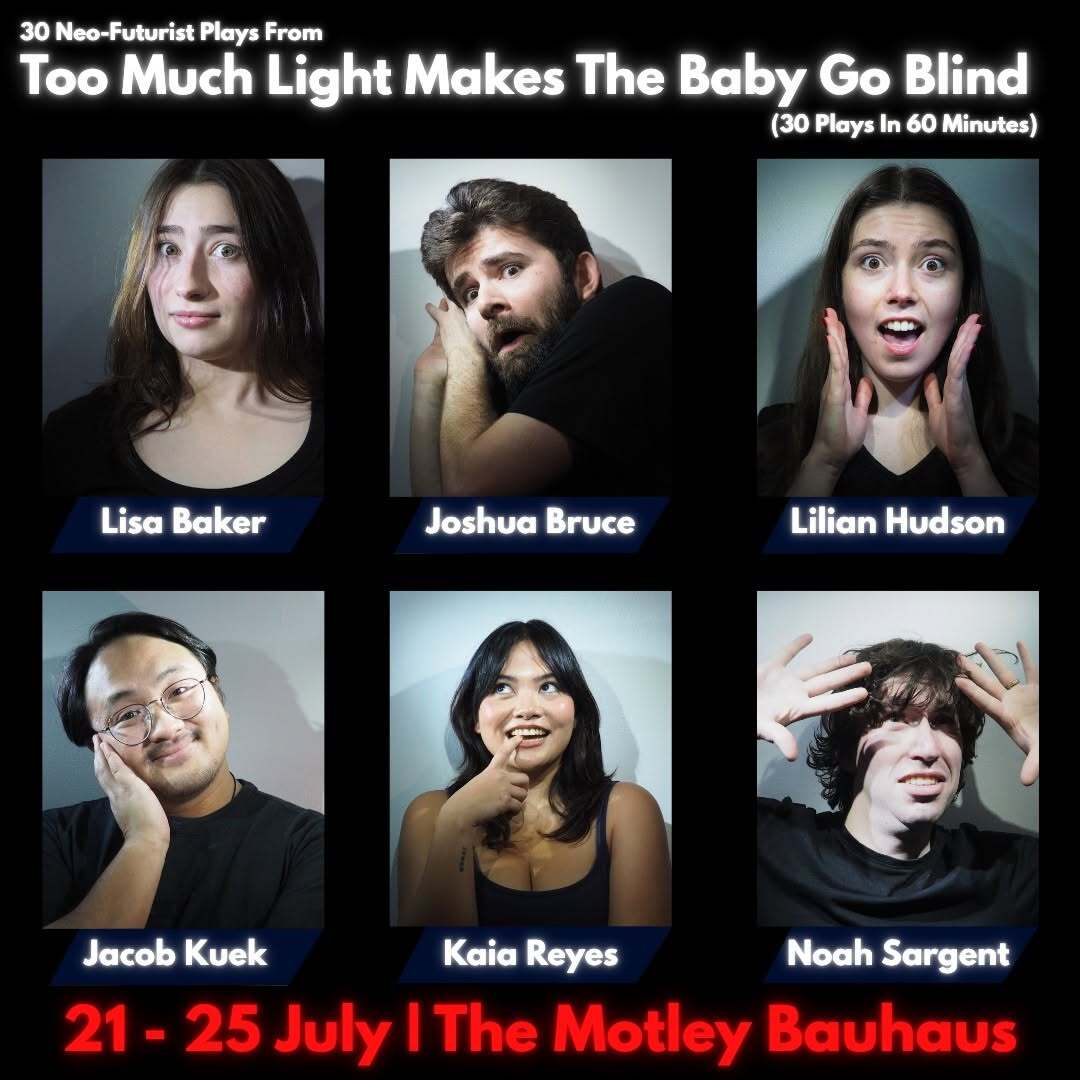
As soon as we walk in, the game begins. The Lost Theatre Co. cast members mill about the theatre and greet us, wearing black T-shirts emblazoned with their (real) first names – Joshua, Lilian, Jacob, Kaia, Noah and Lisa. We each receive a lanyard with a red/green card and a ‘menu’ of thirty short play titles to choose from. The house lights stay up as they get our attention and begin. We have a role, a responsibility and an immediate sense of comradery.

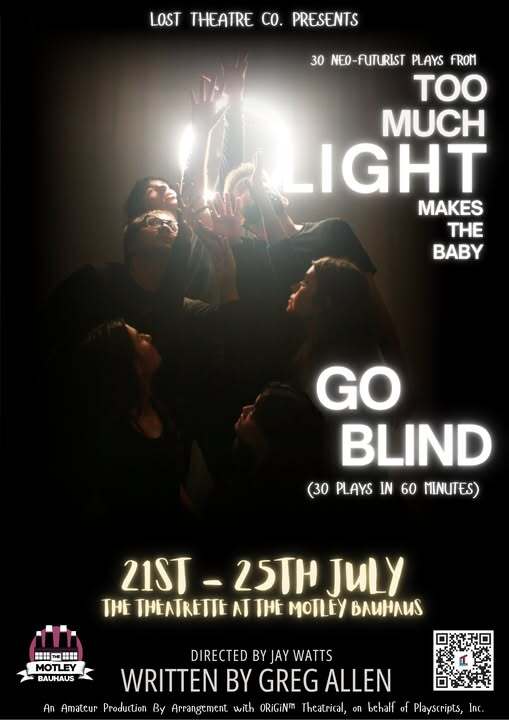
Too Much Light Makes The Baby Go Blind is a proudly absurd meta theatre game. The aim is to perform all thirty plays on the menu within an hour – once the hour is up, that’s all we get; they’ll stop mid-scene if they must. Audience members call out a number to indicate what play we want to see, it’s performed, then it’s on to the next one. It’s the epitome of controlled chaos.

The ensemble’s confidence, chemistry and enthusiasm absolutely carry the show. Even though all the shows are obviously scripted, there’s a constant feeling of spontaneity, like we’ve walked in on actors messing around while on break. This makes it easy to forgive some weaker performances during the micro-plays themselves, though it would’ve been nice to see more range in the genres and characters within the shows. Still, with thirty distinct plays, it’s almost guaranteed nobody will click with everything, and there were definitely more hits than misses.


It’s difficult to comment on the show’s writing. The plays move so fast and there’s so many of them that to single out anything feels like either nitpicking or a matter of personal taste. Plus, the tone is so silly that deeper analysis of themes almost feels like missing the point. Even so, the whole premise raises interesting questions about what ‘counts’ as theatre and how much or little time you need to tell a story. These ideas are highlighted in how the actors use the set. The lack of costumes, the simple props and set pieces strewn around seemingly at random and the constant timer on the wall counting down the hour deliberately make it difficult to fully focus on the plays. This could be a drawback for some, but I like that Jay Watts’ direction kept us focused on the gamification of it all, constantly drawing attention to how we as an audience had a huge part to play in the fun.

Consent and safety were clearly priorities for the troupe, and it was impressive how seamlessly they incorporated these essentials into the show. The lanyards we were given let us show either a green or red card to indicate if we wanted to be interacted with, and we were assured we could flip the card at any time, even while the actors were speaking to us. This did happen once or twice, and they kept their word, stopping immediately and moving on to somebody else. There were content warnings on the menu, but on the other side from the titles so we could be surprised if we wanted to. The instructions they gave to participants were snappy and clear, and they rolled equally well with awkwardness and enthusiasm from the audience. Overall, it’s probably the best handling of audience interaction that I’ve ever seen; whether your card’s green or red, it’s so fun to watch and play along.

Although we didn’t win the game (we got close but had to stop in the middle of the thirtieth play), there wasn’t any sense of disappointment or missing out. If anything, the lack of closure felt appropriate. If you enjoy the fresh frenetic energy of improv, theatre about theatre and/or being involved in the unfolding action, this is definitely the show for you. And if anything about the audience participation seems daunting, don’t worry. You’re in good hands and no matter which plays you do or don’t see, you’re in for a great time.

To book tickets to 30 Neo-Futurist Plays From Too Much Light Makes The Baby Go Blind (30 Plays In 60 Minutes), please visit https://www.losttheatreco.com/.

Spread the word on your favourite platform!

A Twist Of Fate – Season 5

A Twist Of Fate Season 5

A Twist Of Fate Season 5 Rating

Click if you liked this article

2

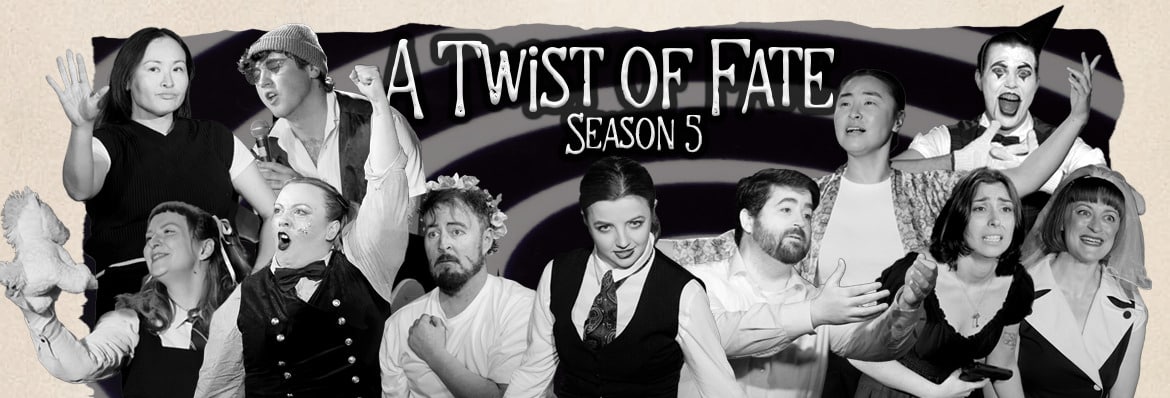
I’ve now seen three iterations of Scary Goats Theatre’s A Twist Of Fate series. The conceit – short Twilight Zone-esque plays, each built around a game-changing plot twist – is reliably entertaining and capacious. Every season I’ve seen has had a different tone and a wide range of premises and themes in the showcased plays. And yet, season 5 started with a delightful surprise that nobody in the audience could have expected: a short film.

Not So Black And White is a mixed media pastiche of black-and-white silent films. You’ve seen or are at least aware of the kinds of characters featured. Nelle Nilson is a clever young woman, dainty and desired by her fiancée Steadfast Sam. Her father is a renowned physicist and the villain, Hardluck Harry, hatches a plan to get close to Nelle and steal her father’s work. Stereotypical shenanigans ensue…until they don’t. The slapstick and physicality are comedically stilted in exactly the way you’d expect from silent films, and while the jokes clearly send up the genre, they don’t feel like retreads of other parodies. There are multiple twists in the plot and character arcs, and they each feel jarring in an arresting and calculated way. Chloe Towan wrote, directed, choreographed, shot and edited this show, and she along with the cast have created a fantastic vehicle to show the beauty and flaws in these kinds of stories.

Riding on the high of the first show is We Live To Serve, written by Charlie Simmons. In a future where the earth is near uninhabitable due to extreme heat, two workers – a butler named Calvin and a custodial worker named Alvin – are desperate to get hired on one of the spacecraft leaving the planet. The poor job interviewer has no idea how far the duo’s desperation will push them. The performances from Patrick Slee, Richard Mealiey and Corey M. Glamuzina are great; their characters are loveable, mischievous and easy to empathize with. I also appreciated the commentary on technological dependence and the concept of disposability, as some lines felt downright chilling in the context of the world’s increasing reliance on generative AI. I think this script would have benefitted from a longer runtime, since the context and exposition felt jam-packed and hard to follow at first. Still, it was an enjoyable show with engaging characters and a sweet, hopeful ending.


The third show, Muffin Day by Richard Mealey, presents a nightmarish Groundhog Day scenario. Ronnie is stuck reliving the worst moment of their life: their death. Over and over, they come into their work at a bank, chat with their bubbly colleague Chris, and get shot by an intruder named Lou looking for revenge. It takes a lot of energy and planning to craft a script like this, where information is slowly drip-fed and elements have to be repeated without getting tedious. Mealey pulls it off perfectly, creating a constant sense of progression and perfectly balancing comedy and tragedy. Developing Chris and Lou more as side characters is a simple yet effective way to subvert this kind of story and foreshadow the twist that comes later. Even if you guess what’s coming, the acting and tone of the payoff makes it both satisfying and harrowing.

The final show, Two Characters In Search Of A Story, is about exactly what is written on the tin. Two characters wake up in a locked room with numerous concealed objects, having no memory of who they are. While transitioning into this show, Towan mentioned that her script was originally going to be saved for a season next year and to be honest, I wonder if that might have been for the better. The two lead performances are strong and full of chemistry, and the way that set pieces were revealed and recontextualized over time was really clever. However, I feel like the title set us up for a more ‘meta’ revelation than the twist turned out to be, and overall, the pacing felt uneven and the emotional arc of the characters didn’t quite sit right with me. Still, many audience members seemed to find it moving, and it was definitely an interesting watch.

A running theme in this season of A Twist Of Fate is breaking expectations. Comedic settings are more multi-dimensional than expected, the assumptions underpinning a familiar premise are knocked out from under it, and characters seek to find their place in their own story. If this reflects what Scary Goats Theatre seeks to do with their work going forward, then I’m sure they are more than capable of rising to the challenges they set themselves. If you haven’t already, definitely come and see at least one season of this show. Whether you guess what’s coming or have your mind blown, you’ll still have a great time with some thoughtful, diverse and entertaining theatre.

To book tickets to A Twist Of Fate Season 5, please visit https://www.eventfinda.com.au/2026/a-twist-of-fate-season-5/melbourne/carlton.

Photographer: Kieran McNamara

Spread the word on your favourite platform!

Daddy Daycare

Daddy Daycare

Daddy Daycare Rating

Click if you liked this article

2

Imagine: you walk into the Motley Bauhaus Theatrette (a place well renowned for its indie theatre) to the tune of the Playschool theme song, as well as other childhood classics like Twinkle Twinkle Little Star and The Lion Sleeps Tonight. In front of you sits a cosy children’s set complete with plastic kids teapot and painted field back drops. That’s right, it’s Daddy Daycare time, a place where lost daddies go to get their working with womens check whilst discussing consent, anatomy and having fun all at the same time!

After sitting down, what followed was an hour of the most raucous children’s entertainment I have ever seen! Not only was our host (Steph Crothers) beyond hilarious, energetic and devilishly suggestive, but she also really, ah, took care of us, if you catch my drift.

Now heads up, this is a show that features a lot of audience participation. But if you are happy to moan, yell ‘YES MUMMY’ and sing songs about the more delicate parts of a woman’s physique, then you are in the right place. And as part of the audience, it was hard not to get swept up in the energy of it all. Crothers perfectly breached the line between suggestion and play, bringing forward act after act that had myself and the viewers around me gasping for breath in between laughter. Her skills with clowning and comedic timing left even me (one trained in such skills) a little bit speechless!


The tech of the show also strongly enhanced the whole experience. When things were light and playful, so was the sound. When things got darker, so did the lights. And the prerecorded sounds used in the show perfectly complemented what was happening on stage. It was a master class in not too complex tech and how it can truly bring a show together. Thematically, this show also explores that intersection between child and adult, taking me back to a nostalgic period with an adult twist. And boy, would I visit there again!

In total, this is a show that is great fun, but it has more substance than just this. It does bring up real questions of the consent culture within our society. And it did make me think afterwards, but I also just had a really excellent time with it. And my stomach and mouth hurt from smiling and laughing which is never a bad thing.

But look at that, it’s time on the rocket clock for this review to end! As a general rule, do go see this show, bring your friends (especially those of the sheltered persuasion just to watch their little minds be blown) and get up on stage! This is a show that deserves a whole lot of love.

To book tickets to Daddy Daycare, please visit https://www.eventfinda.com.au/2026/daddy-daycare/melbourne/carlton.

Photographer: Nick Robertson

Spread the word on your favourite platform!

Subscribe to What's The Show

Reviews, show news and what is on, straight to your inbox.