Turning Pain Into Power: The Radical Hope of How To Eat Rabbit

How To Eat Rabbit

How To Eat Rabbit Rating

★★★★★

Click if you liked this article

2

The world is coming to an end. Life feels inconceivably unfair and beyond your control. So how would you choose to cope?

Would you adopt ‘a survival of the fittest’ mentality? Would you suffer in silence? Or would you fall into despair in a constant state of lack?

In a bid to connect Australian audiences with human compassion and understanding, playwright Jamila Main excites us with her new production, ‘How To Eat Rabbit’, as part of La Mama’s Hope Punk Climate Festival.

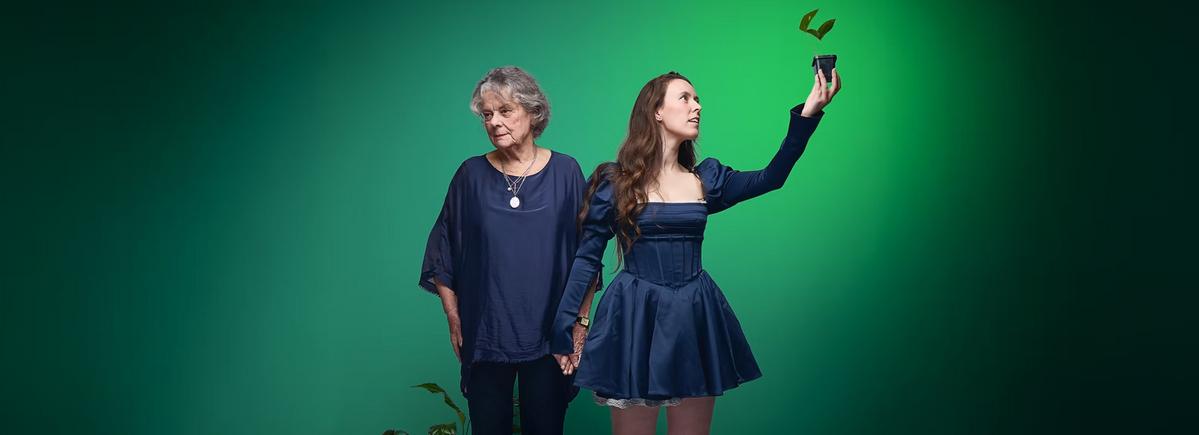
In this independent dark comedy, we come upon a dystopian world suffering from climate change, where two friends, Alex and Cam, decide to bunk together in a burrow. There, they try to persist beneath a world that is literally caving in on them, inch by inch, and metre by metre.

Promising to keep one another safe and sane, they tackle their situation head-on – creating innovative ways to keep to a sound routine. The counting and recounting of tins of beans, stacking them in curious little piles all over the stage: like magical sandcastles. Handpainting pleasurable scenes on the walls of the cave. Daily training activities on repeat to keep boredom at bay. Frequent food and supply runs to keep their health intact.


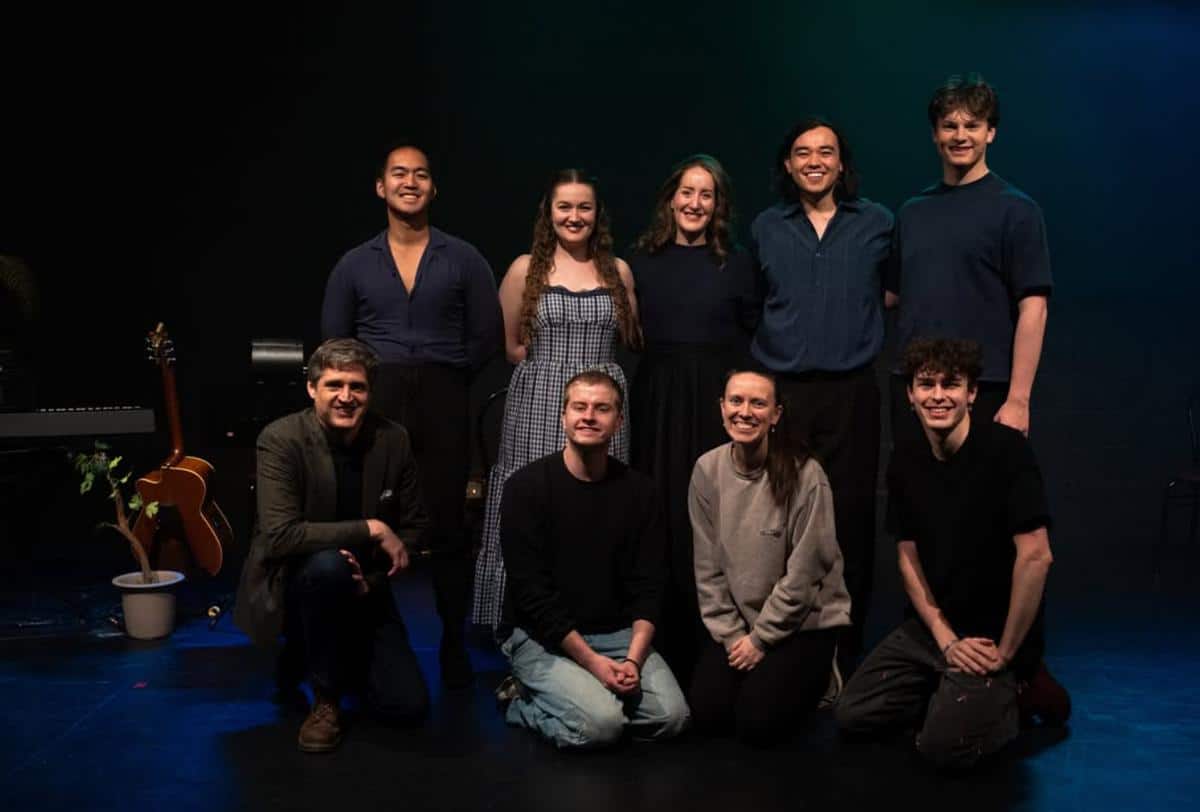
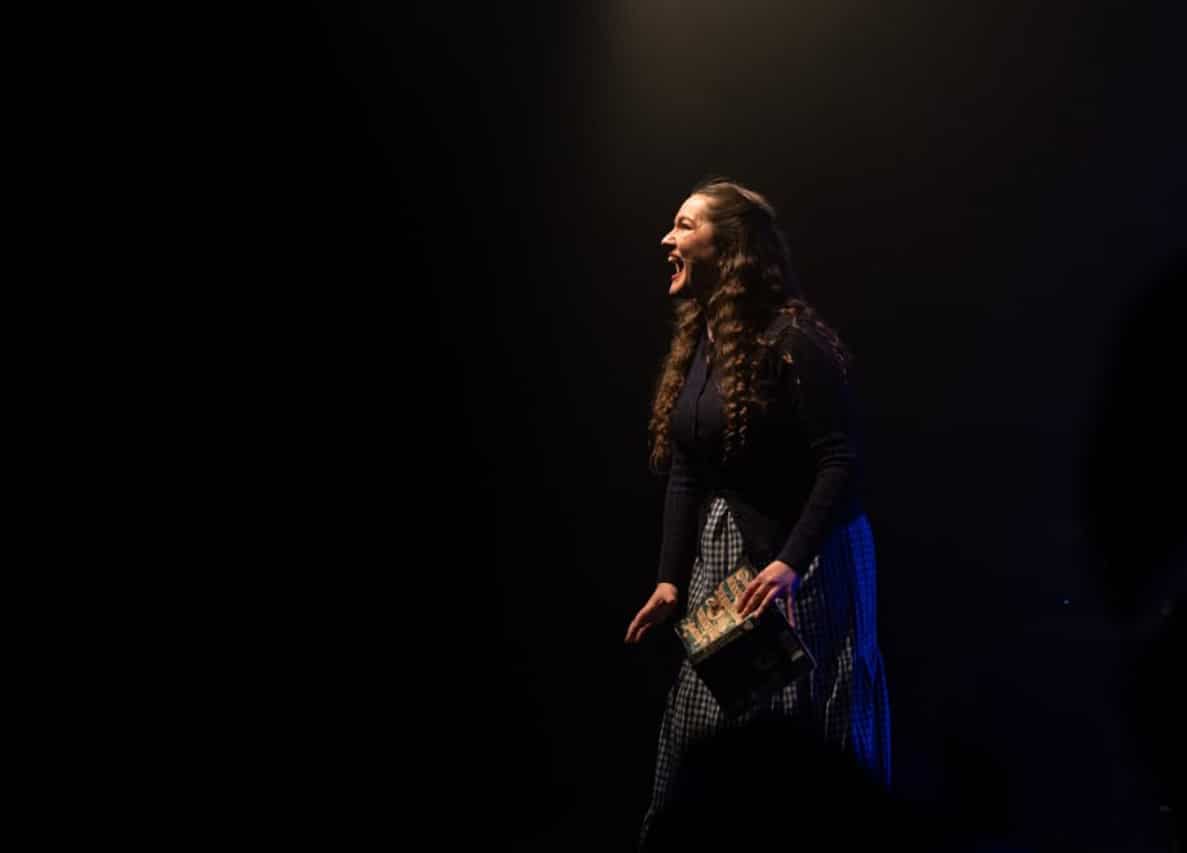
As time rolls on, the atmosphere intensifies, for we are only human after all. A power struggle between the pair. Alex, wonderfully played by Nory Gretz, the more dominant of the pair, takes comfort in controlling the nest, while Cam, seamlessly portrayed by Jamila Main herself, is struggling to physically keep up, desperately hiding a secret about her health – internally collapsing to keep Alex comfortable.

In truth, this show is extremely spontaneous, confronting and radically shocking; depicting desperate, irrational behaviour at the hands of quiet desperation. Keeping us riveted from the get-go – even spotlighting the script onto the back wall of the stage – to not only guide the audience, but to digest and immerse us into the lived experience of these two characters.

But what is most impressive about this show? Is its revolutionary purpose beyond climate change. For Jamila Main is truly on a crusade – to make theatre a platform for greater understanding. For Main, theatre is more than a stage: it is the foundation of community. Where one can share personal struggles via inventive storytelling.

That we can still persevere despite the challenges one faces in life. That we can turn pain into power: with a courageous war cry, every single day.

To book tickets to How To Eat Rabbit, please visit https://www.lamama.com.au/whats-on/la-mama-hope-punk-climate-festival/how-to-eat-rabbit.

Photographer: Darren Gill

Spread the word on your favourite platform!

Roisin McAlinden: Why a Disney Crush Led Her Back to Therapy

Feature-Fairytale: Ending

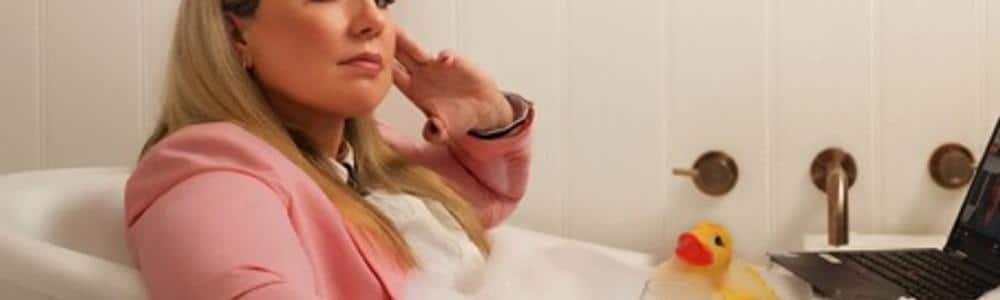
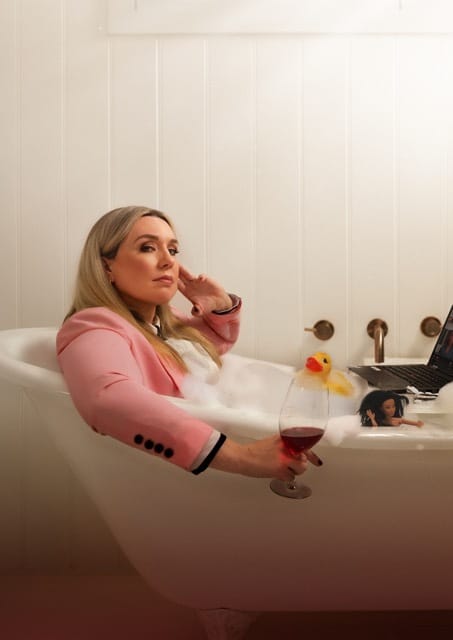
Some revelations come from the therapist’s couch; others arrive mid-rehearsal when your director points out an uncomfortable truth. Comedian Roisin McAlinden brings her cheeky, confessional style to Melbourne Fringe in a show exploring how fairytales shape our romantic disasters.

Meet The Comedian – Roisin McAlinden

What is this show about?

I think a lot of us can relate to getting out of a relationship and then looking back at it and asking ‘why did I put up with that?’

This show is a playful and personal look at the reasons we sacrifice ourselves for love, told through the story of a fairytale romance that turned into a nightmare.

Fairytales fascinate me because they shape our ideas of love before we are even old enough to talk, and this show explores how these ideas continue to play out in our adult relationships. While writing, I learnt that before Disney or even the Brothers Grimm got their hands on these stories, the first person to ever tell a fairytale was a woman, Madame D’Aulnoy. Through this show, I wanted to explore how different our ideas of love would be if women had been able to tell our own stories.

How would you describe your comedy style to someone who has never seen you perform?

My style is cheeky and playful. There’s a childish innocence to my on stage persona that allows me to poke fun at the absurdities of adult life. It’s also deeply intimate and confessional. There are things I wouldn’t even tell my closest friends and family that I have no trouble saying on stage to a room full of strangers. It’s always fun when you say your deepest, weirdest inner experiences out loud and someone in the audience goes “no way, me too!”

Roisin McAlinden

Where do you find your material, and how does a new bit begin?

I keep my notes app on hand, and whenever I have a funny thought or idea, I will jot it down. Then my brain will keep ticking over it until I find a punchline (usually in the shower). At that point I’ll sit down and write it out, get up on stage and try it out, and then cut half of the things I thought were funny and the audience did not, until eventually you hone it into something great.

Who are the comedians who shaped the way you think about performance?

I grew up in the UK so my comedy stylings are heavily shaped by that. There is an amazing generation of women comedians in the UK using comedy to explore their personal life experiences and mental health – Helen Bauer, Ania Magliano, Catherine Bohart, to name just a few. I am so inspired by comedians who can reflect on their inner experiences in a way that helps you to understand yourself better, while also bringing down the house with laughter.

What is the most personal thing you have put into this show?

The biggest personal realisation in this show actually came from a conversation with my Director, Penny Greenhalgh. I was talking about a childhood crush I had on a problematic Disney character, when my Director pointed out that the way I described him sounded like I was talking about my Dad. At that point I had to up her rate, because she helped me realise something about myself my therapists never had.

What do you want the audience to walk away thinking or feeling?

‘That was so funny!’

But I also hope that this show will encourage people to reflect on what they are seeking out in their own romantic relationships, and whether they can learn to give themselves some of the love that they are seeking elsewhere.

A huge thank you to Roisin for sharing the deeply personal origins of this show and the surprising discoveries that came with writing it. If you’re ready to laugh while reconsidering everything you learned about love from Disney, catch Fairytale: Ending at Melbourne Fringe – tickets are available now at the festival website.

Spread the word on your favourite platform!

Savages: Drama Below The Decks

Savages

Savages Rating

★★★★★

Click if you liked this article

2

When a dramatically-drawn stage, set impressively as a stark deck of a cruise ship is cast in blue lighting, with unnerving music pounding from the speakers, I know I have arrived immediately in an undercurrent of something I can’t quite put my finger on. A backward feeling descending on my conscience; that once this cruise ship sets sail, there is nowhere I can escape from.

For this feeling of unbreathable submersion is Patricia Cornelius’ brilliant reimagined work, Savages, a play about four men immersed in tight mate-ship, climbing aboard a cruise and leaving their worries behind – heading off on ‘a holiday of a lifetime’, not yet knowing how their yearning for liberation will slowly spill out of control and descend into a night of chaos.

Thirteen years after this play originally took the stage, the decision to cast this show with women and non-binary people takes this piece to a whole other level, particularly where we currently sit with toxic masculinity and misogyny. How, in 2026, we still hear of men, particularly those ranking in high positions, still feeling entitled to disrespect women. How women still have to be guarded, even on cruise ships. Where there may lie a toxic breeding ground of expectation, ire, and unfathomable disrespect when it comes to our gender.

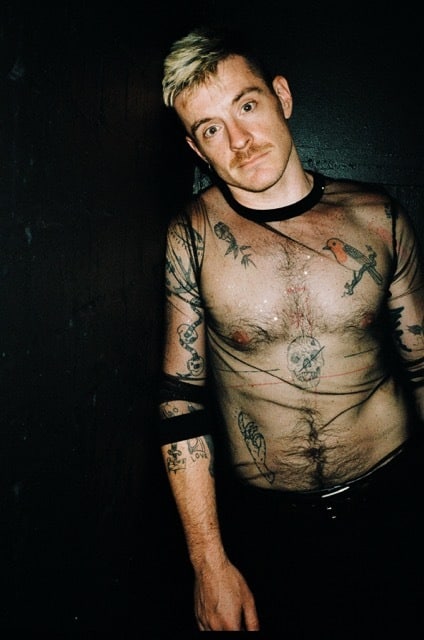
To examine the seemingly complex wiring of savage behaviour in 2026, Cornelius and the show’s director, Kitan Petkovski, thought to cast four incredibly agile women and non-binary actors, who symbolically leave their identities behind at the dock. Who immediately transform into four male characters with great humour, precise physicalities, and emotional complexities; exposing how underneath bravado and immoral behaviour, may lie simmering undercurrents of sadness and depression. Keen to liberate themselves from these emotional waves, these men continue to fight their way through: choosing pure self-satisfaction over what is morally right.


The cast all do a brilliant job of taking on their individual roles. Nicci Wilks is the humorous pick of choice, playing Runt with great comedic timing, delivering the performance of an Aussie bloke with a growl and groan, giving as much as he gets.

But AYA, delivers the level of acting not seen in years. Conveying the despicable character such as Rabbit is no easy feat, and AYA takes it to an expansive level – blending low-brow waywardness with complex pathos and vulnerability. For AYA is the epitome of what I would define as a gifted vessel, for any trued-and-true storyteller.

The set and lighting, both designed by Bianca Pardo and Harrie Hogan respectively, is novel and innovative. Minimal, clean, and with very few props, this set is paired beautifully with the tones of light weaving in and out through the show – symbolising a ‘sea of emotions’, setting the tone of each character’s mood— spotlighting the colour blue for sadness and depressive thoughts; red for anger and aggression; and even the colour pink, celebrating women.

The key to great writing, especially in the case of Patricia Cornelius, is in the simplicity of her language, how so few words can mean so much. How, in much of the play, it sounded sung, like poetry. A call to arms perhaps, in light of what women are still struggling with.

Thankfully, by its rousing end, we see beams of pink light shining through the cracks of toxic culture, a stark vision of hope – in highlighting the vulnerabilities all genders share. That sometimes they can rule our lives in the most harmful of ways. That only time will tell – when old ideas of women will disappear and re-emerge triumphantly. Where entitled misogyny will be a thing of the past.

To book tickets to Savages, please visit https://www.theatreworks.org.au/2026/savages.

Photographer: Pia Johnson

Spread the word on your favourite platform!

Magical Storyteller, Roisin Mcalinden Highly Anticipated Return To Melbourne For Fringe With Fairytale: Ending

Feature-Fairytale: Ending

In a fairytale-turned-nightmare, Roisin McAlinden was swept off her feet by a knight in shining armour, but she quickly found a darker side to the saviour fantasy.

Fairytale: Ending sees British-born comedian, Roisin McAlinden, blend dark humour and intimate storytelling into a cheeky satire of the stories that shape our ideas of love. After critically acclaimed runs at Perth Fringe World, Melbourne International Comedy Festival and Sydney Fringe, McAlinden will return to Melbourne playing at Bard’s Apothecary from 6-10 October 2026.

“Why did you stay?” A common question asked of women after a bad relationship. McAlinden answers, exploring how these love stories lead women to believe that the only path to happiness is being chosen by a man. Even if that man is an angry loner who lives in a dusty tower with only furniture for friends (looking at you, Belle). Better to be like Snow White, perhaps. On the surface a typical housewife, McAlinden reframes her as a savvy business woman who strategically bakes pies for seven wealthy diamond miners.

Directed by Penny Greenhalgh (writer of URZILA starring Urzila Carlson), Fairytale: Ending is a personal and playful exploration of feminism, gender roles, queer identity and the power of women telling their own stories. “Before the Brothers Grimm, the first person to coin the term fairytale was a woman, Madame D’Aulnoy.” McAlinden enlightens. “She was arrested for revolutionary activities. These stories were once used to fight against forced marriage, warn women of the dangers of the world, and build hope for a better future. How different would our ideas of love and happiness be if women had been able to tell our own stories?” Fairytale: Ending is the answer.

Spread the word on your favourite platform!

Subscribe to What's The Show

Reviews, show news and what is on, straight to your inbox.