The Importance of Being Earnest

The Importance of Being Earnest

The Importance of Being Earnest Rating

Click if you liked this article

1

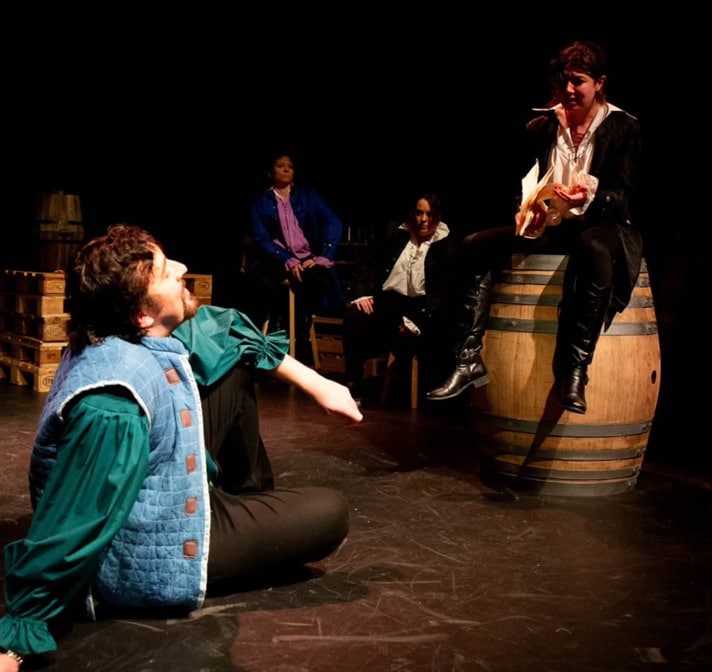
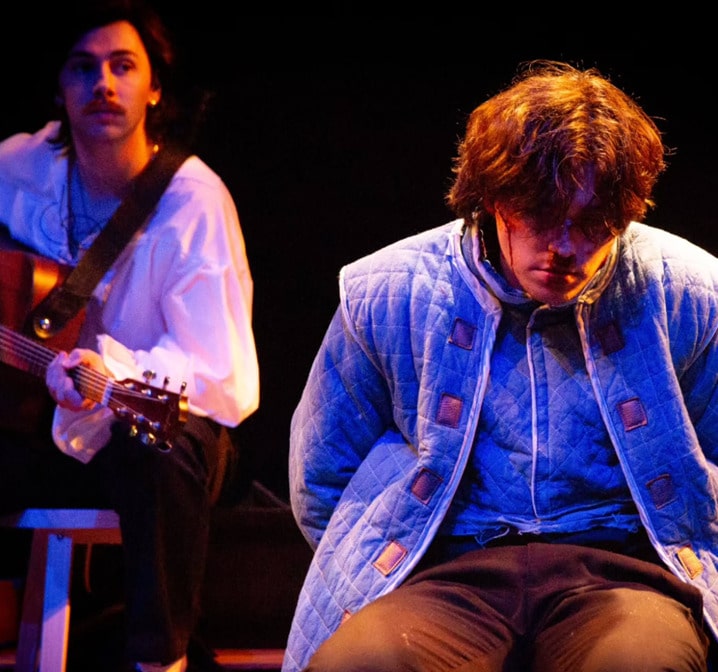
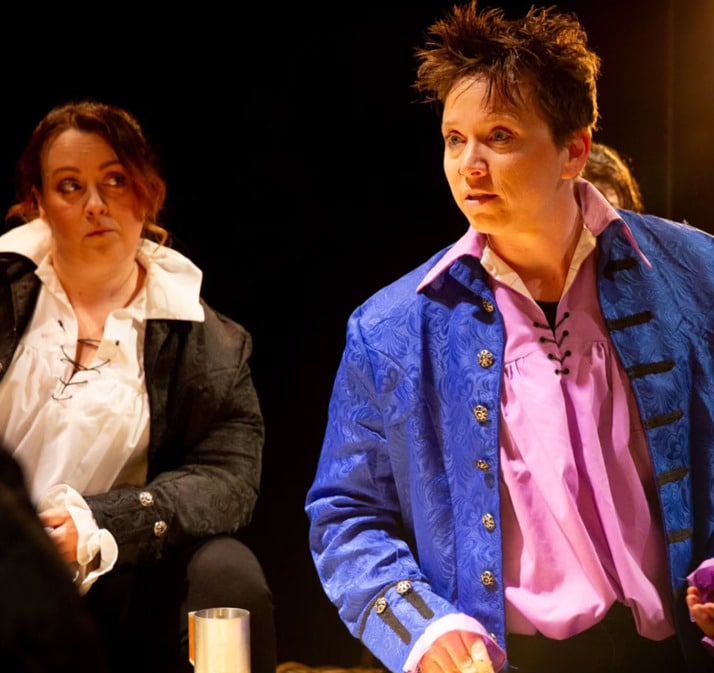
Brendan Jones’ direction for The Guild Theatre’s production of The Importance of Being Earnest takes a deliberately restrained, actor-focused approach to Oscar Wilde’s celebrated comedy of manners. A single adaptable set serves the entire evening, with shifts in furniture, props, and lighting indicating changes of location while maintaining the rhythm of the play. Period costumes establish the late Victorian setting without drawing undue attention to themselves, subtly marking the passage of time while keeping the focus squarely on the performances.

At the centre of the play is Christiane Brawley’s commanding performance as Lady Bracknell, which provides the production with its gravitational force. Brawley resists exaggeration, instead building the character through carefully controlled presence, voice, and movement. Her Lady Bracknell commands the room not through volume but through absolute certainty, delivering Wilde’s lines with the authority of social judgement. Particularly striking is her use of the character’s walking stick, wielded almost like a rapier, slicing through the surrounding absurdities and, in the final act, restoring order to the increasingly chaotic situation.

The comic partnership between Jack Worthing and Algernon Moncrieff proves equally strong. Simon Pearce’s Jack projects confidence and control, yet allows the cracks in that composure to appear as the plot tightens around him. The result is a performance in which Jack’s comic energy bursts sideways whenever the carefully maintained façade begins to slip, often expressed through sharply physical reactions. In contrast, Harry Rutner’s Algernon moves through the play with gleeful poise, seemingly delighted to dance along the knife-edge of Wilde’s social absurdities. Their contrasting energies play off each other beautifully, creating a lively tension that drives many of the play’s comic exchanges.


Julia Burns and Isla Harris bring similar clarity to their performances as Gwendolen Fairfax and Cecily Cardew. Both actresses initially lean into the romantic enthusiasm and social niceties expected of their characters, presenting Gwendolen’s polished confidence and Cecily’s imaginative warmth with equal charm. The famous tea scene, however, allows them to demonstrate impressive range as the tone shifts repeatedly within a single encounter. What begins as cordial conversation cools rapidly once the two women realise they are engaged to the same man. The atmosphere turns first cold, then openly combative, with politeness weaponised through smiles, teacups, and carefully chosen words. Burns and Harris navigate these transitions with precision, and the final moment—when the two women instantly unite against the men responsible for the confusion—provides one of the evening’s most satisfying releases of tension.

Leigh Scanlon’s dual performance as Lane and Merriman offers a neatly observed contrast. Lane appears as a figure of calm control, the perfectly composed manservant quietly maintaining order in Algernon’s household, while Merriman carries a dry affability that suggests a man well accustomed to accommodating the oddities of country house life. Scanlon keeps the two characters distinct, highlighting how the servants calmly adapt as the increasingly absurd events of the play unfold around them.

Lyn Lee and Kevin Tanner bring warmth to their roles as Miss Prism and Canon Chasuble, playing their mutual flirtation with straightforward sweetness. That sincerity makes the later revelation of Miss Prism’s role in the play’s central mystery all the more effective, as the gentle respectability of the characters contrasts sharply with the absurdity that ultimately resolves the plot.

Taken as a whole, The Guild Theatre’s production succeeds through the clarity of Brendan Jones’ direction and the strength of its ensemble. By keeping the staging deliberately restrained and allowing the performers to take centre stage, the production lets Wilde’s intricate social comedy unfold with confidence and precision. The result is an evening that captures both the elegance and the absurdity at the heart of the play, and one that reminds audiences why this mischievous comedy continues to reward performance more than a century after its first appearance on the stage.

To book tickets to The Importance of Being Earnest, please visit https://www.guildtheatre.com.au/featured-shows/the-importance-of-being-earnest/.

Photographer: Grant Leslie Photography

Spread the word on your favourite platform!

Now

Now

Now Rating

Click if you liked this article

Now is a show exploring a family and how they move through Now- a virtual reality that pulls the one (or i call him the child) into it, as the one feels it is the future, and the only way forward. The one’s parents, like many parents, don’t understand what he’s doing in the Now, and the disconnection of the familial dynamics are central to the show. Although awkward in a review, the namelessness of the characters makes much more sense within the context of the show.

Now is set after COVID, in a dystopian future. Slowly paced, X (Helene Tardif) tries to come to terms with how her son, the One (Andrew Drava) lives his life. X and her husband (Marc Opitz) tell the audience how COVID made the other one selfish, and it becomes clear immediately that the relationship between X and her husband lacks a foundation of respect and trust. This is an issue that continues to plague the show.


The One finds everything he needs online, including a partner (Georgina Scott). The One’s partner introduces herself to the audience whilst singing happy birthday to herself, a sad representation of the future where somewhere like the Now brings people together, but also isolates us from each other. The One and his partner enter the Now using their glasses, and continue to spend all their time in the Now.

The show established a tense relationship between the parents from the beginning, with the father being particularly disagreeable, inflexible and stubborn. A point of conflict for X, the One, and the Father, is how the One enjoys and finds success in the Now. The Father loses his job and the dynamic between father and son becomes tense and frustrating. The Father is rude, and the One is dismissive. Neither are willing to talk to the other. The Father’s behaviour continues to escalate, until he has an outburst that impacts the whole family.

Now dove into dystopia and family dynamics. Some of the behaviours of the characters felt unearned, aggression (in particular from the father) felt like it appeared out of nowhere, with little base. Similarly X and the One forgive the Father, which feels unearned, given how little the Father reflected on his behaviour and the impact it has on his family. This show tried to explore dynamics of a family falling apart, but only shallowly explores motivations and drive behind each character’s actions.

To book tickets to Now, please visit https://www.theatreworks.org.au/2026/now.

Spread the word on your favourite platform!

Coco: The Time-Travelling Tart

Coco: The Time-Travelling Tart

Coco: The Time-Travelling Tart Rating

Click if you liked this article

2

Fast-paced, a little unhinged, and riotously funny, Coco takes audiences on a journey through the raunchier side of historical events. Already known and loved in the UK, Coco has boldly come to Australia in 2026 to give a sneak-peak into what really happened with many iconic figures such as Napolean, Queen Elizabeth the first, and right back to the original apple-tart herself, Eve.

Typically, there’s the expectation in Fringe season that everyone lets their hair down and just enjoys some entertainment. Intimately seated in the Yurt of the Courtyard of Curiosities at the Migration Museum, audience participation is an absolute must rather than just an option, as your hesitation or failure to respond will often lead you to take a bigger role in the evening’s entertainment that you might have planned. A delightful combination of Clowning, storytelling, and character comedy, Coco feeds off her audience’s laughter, shock, and heckles. Coco, a highly absurdist persona of comedian Max Norman, is a self-proclaimed enthusiast for champagne and shenanigans of the salacious variety throughout her historical ventures. Joyous and irreverent, she channels Patsy from Absolutely Fabulous with her statuesque frame, blonde hair, sunglasses, but with a much cheekier and more devious undertone. Drawing her audiences in with her smooth voice and cheeky grin, she cleverly keeps them engaged through courage and connection as the show progresses. From collaboratively creating pyramids in Ancient Egypt to electing a new Pope, this raucous expedition across time will have you complicit in some of the historical shenanigans that occur.


While the set is largely minimal, Coco certainly more than makes up for it through charisma and movement through the space. The sound and lighting do play large parts in moving the story along, predominantly through the initial setting of each era and the all-important time travelling taxi. From coloured lights and mini torches, simple sound cues, dry ice, and apples suspended on string, these subtle elements only enhance the performer’s efforts in storytelling.

While the later timeslot may deter some people, it certainly ensures that no one under 18 will likely wander this way. With a couple of warnings and a maturity rating for 15+, it assuredly indicates that this is not the show to bring your family to – unless you’re all adults with a quirky sense of humour. If you’re looking for something fresh, chaotic, and queer this Adelaide Fringe, Coco the Time Travelling Tart will have you laughing from shock and hilarity throughout.

To book tickets to Coco: The Time-Travelling Tart, please visit https://adelaidefringe.com.au/fringetix/coco-the-time-travelling-tart-af2026.

Spread the word on your favourite platform!

Marjorie Prime

Marjorie Prime

Marjorie Prime Rating

Click if you liked this article

2

Marjorie Prime speaks to our deeply human longing for connection and prompts us to reflect on how much of our past we would choose to preserve, and what memories we might leave.

It’s the fragile humanity at the centre of this play that gives power to the storytelling. In an imagined future, we can turn our lost loved ones into ‘Primes’. These realistic holographic recreations provide emotional support as we navigate our grief and move forward with our lives. It’s an intriguing concept that leaves us questioning how far we would go when gripped by uncertainty and grief.

The story introduces Marjorie, an elderly woman living with dementia. Her daughter Tess and son-in-law Jon give her a ‘Prime’ of her late husband Walter to provide comfort. This holographic Walter appears eternally youthful and endlessly patient, sitting perfectly upright, attentive and still as he listens to stories about Marjorie’s life. Each day he absorbs new anecdotes, ready to repeat them later, gradually constructing a version of the man he once was through the memories of others.

The effect is both touching and unsettling. Walter’s kindness is constant, and he pays utmost attention to Marjorie. As she interacts with him, her daughter Tess watches with unease. She struggles with complicated feelings, sometimes resentful of the gentleness her mother shows the Prime, the same warmth she herself longed for growing up. At the same time, Tess is determined to shield certain painful memories from the Prime, hoping to spare Marjorie distress. Her husband Jon, however, sees value in honesty, even if the memories are difficult.


Moments of humour slip gently into the narrative too. At one point Marjorie persuades Walter to embellish the story of their engagement by inserting a movie-theatre outing to Casablanca, improving the memory just a little. It’s a small moment, but one that neatly illustrates how fluid and fragile memory can be.

Between scenes, blackouts punctuate the action, echoing the gaps forming in Marjorie’s mind. As the story unfolds, time begins to stretch and shift. After Marjorie’s death, she herself returns as a Prime. Yet instead of offering comfort to a grieving Tess, she seems to deepen the pain. Years pass in quiet leaps, and while people age and die, the Primes remain with their distorted, incomplete memories of the past.

When the play debuted in 2014, its exploration of artificial intelligence and memory felt speculative. Watching it now in 2026, with AI firmly embedded in everyday life, the questions it raises create discomfort. Is recreating the dead a source of solace, or does it blur the boundaries of grief in ways we may not yet understand?

This production at Roxy Lane Theatre brings the story beautifully to life. Janet Dickinson is compelling as Marjorie, capturing both vulnerability and warmth, while Finn Happ’s youthful Walter embodies the eerie calm of the Prime. Liza Black, who also directs the production, gives Tess a moving emotional depth and is supported by Chris Harris as the steady and kind-hearted Jon.

Short-listed for the Pulitzer Prize for Drama in 2015, Marjorie Prime remains as thoughtful and moving as ever. It’s a tender reflection on memory, technology and the enduring complexity of love.

Congratulations to the cast and crew on a heartfelt and thought-provoking performance. Marjorie Prime is currently showing at the Roxy Theatre from Friday to Sunday at 7.30pm, with Sunday matinee performances at 2.30, until 22 March.

To book tickets to Marjorie Prime, please visit https://www.taztix.com.au/event/roxylanetheatre/.

Spread the word on your favourite platform!