Secret Life of Humans

Secret Life of Humans

Secret Life of Humans Rating

Click if you liked this article

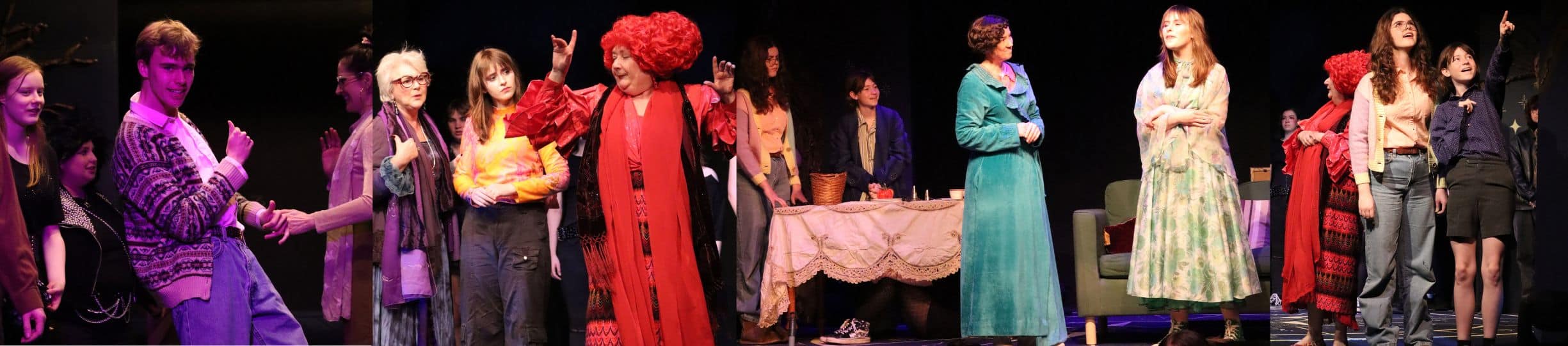
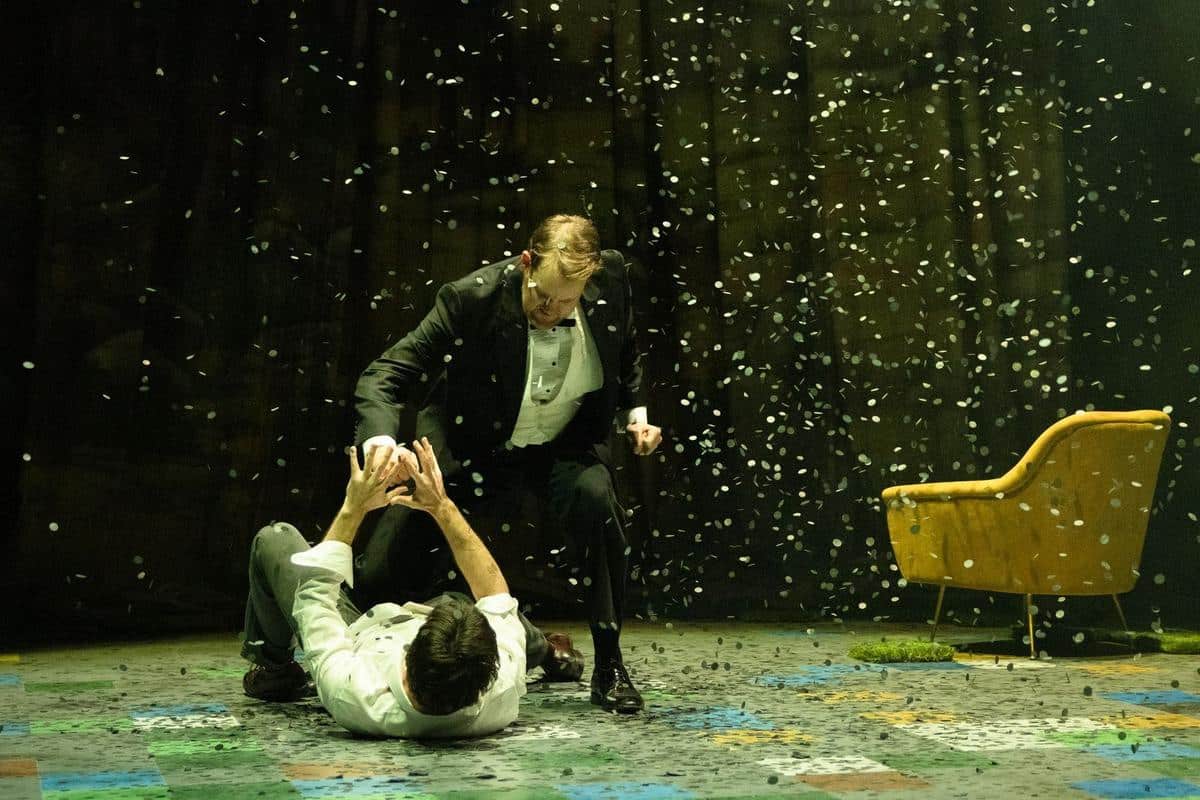
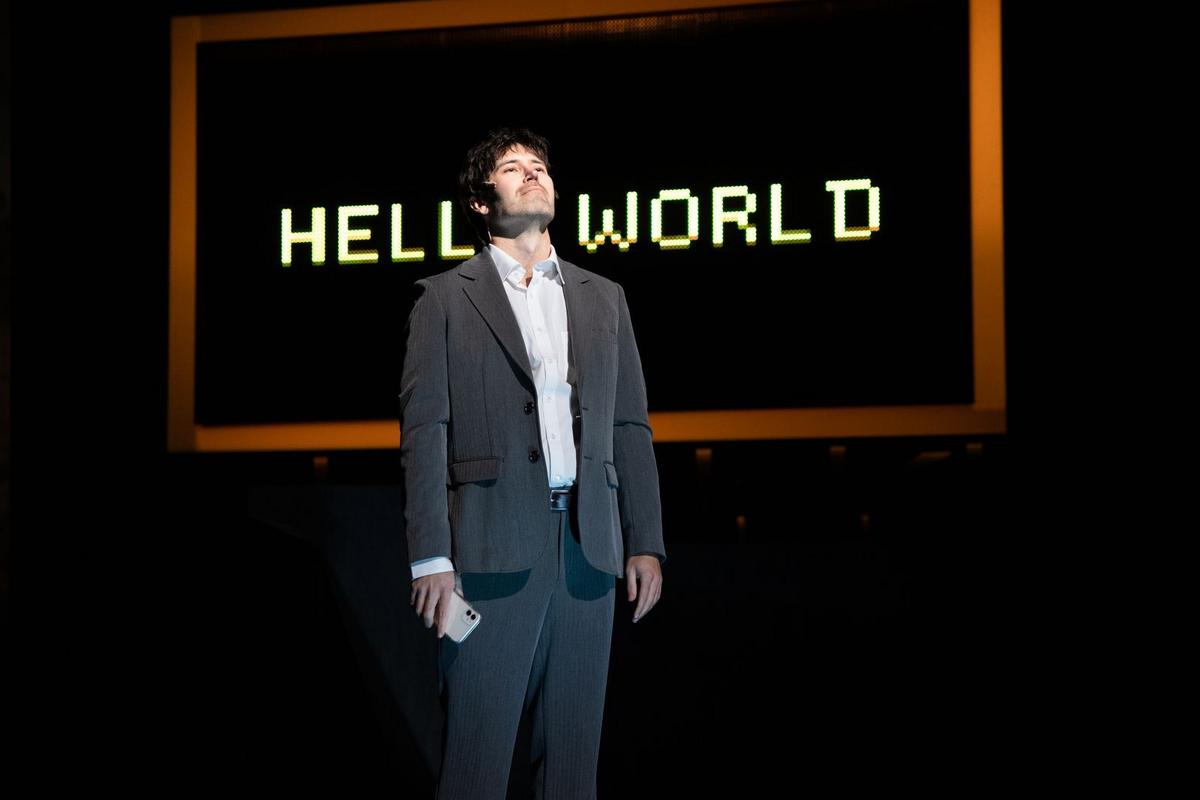
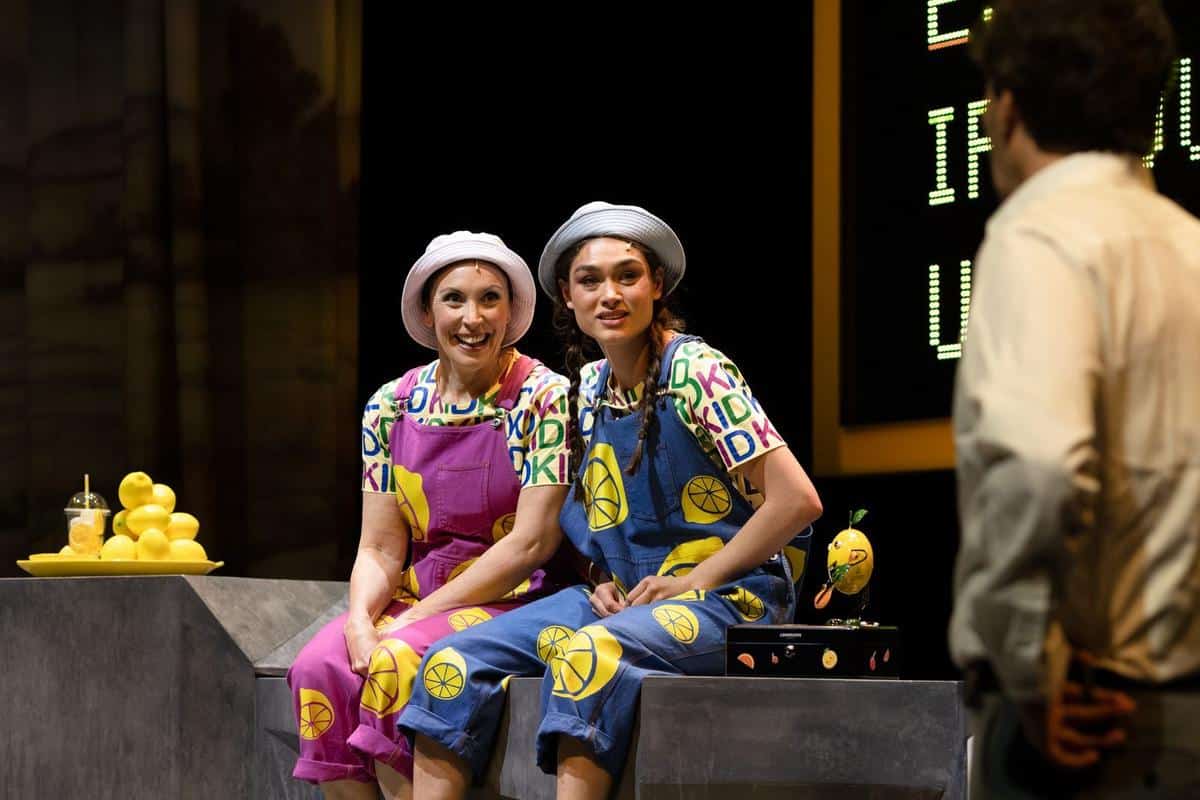
Secret Life of Humans is an award-winning play by David Byrne that explores six million years of human history through the lens of a personal family mystery. Directed by Audrey Poor, the Joondalup Encore Theatre Society launched their first show last night to an intimate but captivated audience at the St. Stephens Theatre.

The story follows Jamie Bronowski (played by Jash Kapoor), the grandson of the famous scientist and broadcaster Dr. Jacob Bronowski (Oliver Rogers) known for the Ascent of Man). In the present day, Jamie goes on a Tinder date with Ava (Melissa Humphries), a research scientist who is secretly an expert on his grandfathers work.

Ava introduces the show by speaking directly to the audience, where we sit as students in a lecture room. The plot unfolds as Ava takes us back two weeks-on a Tinder date. She fakes an interest in Jamie, in order to retrieve his grandfather (Dr. Bronowski’s) secret files, hidden in his old family house which Jamie is conveniently staying at. Locked since 1949, they now discover documents revealing Bronowski’s hidden role in World War 2. The shocking revelation exposes Bronowski, as a significant influence in the deaths of hundreds of thousands of innocent civilians due to his work calculating the mathematics behind ‘saturation bombing’ to maximise civilian casualties, the opposite of his public image as a humanistic, progressive scientist.


Oliver was brilliant in capturing the essence Jacob in his younger years, a mid-century mathematician, supported by his colleague, George (Zai Cook) and wife, Rita (Leila Le Map). The trio danced around a subtle side story that moved attention away from the impact of the conflict and more towards possible secrets of his personal life. Due to the turning point of the story it begged to question, which revelation was more threatening for his grandson, Jamie? It poses questions on the morality and ethics of the human condition.

The staging beautifully captures The Secret Life of Humans as a collision between intellect, memory, and lived experience, all cleverly put together by before-mentioned, Audrey Poor.

The set is split into three distinct worlds, all existing at once. Upstage, the raised platform functions as a professor’s study or scientific archive, with a formal desk, globe, bookshelves, and a blackboard-like wall covered in equations and symbols. It suggests the space of the deepest thinking intellectuals, on the cusp of answering life’s great questions, leading the modern day human into the new world.

It contrasts with downstage, representing today, and more familiar territory, a smaller kitchen-style table used for reading, working, drinking coffee. The scattered storage boxes bridging the two levels feel symbolic of memories, generations and stories yet to unpack.

Together, along with the performers standing in different times, create a visual metaphor for the many layers of human existence—the personal, the intellectual, and the social. The wide open central floor becomes a space where these worlds can intersect and eventually does. It’s a thoughtful, atmospheric design that feels perfectly aligned with a show about what it means to be human.

To book tickets to Secret Life of Humans, please visit https://www.taztix.com.au/event/jets/.

Spread the word on your favourite platform!

The Friendships We Let Go

For The Best

For The Best Rating

Click if you liked this article

For The Best, playing at the Melville Main Hall, is a heartbreaking, yet relatable piece of verbatim theatre created by Jeffrey Jay Fowler, Mark Storen, and Georgia King. The show focuses on friendships from the community that have fallen apart in one way or another. From the minute the show began, I knew that it would be relatable in more ways than one and really had me thinking about who my close friends are. The set is simple with three performers sitting at the front of the theater, with only music stands for their scripts and microphones, which allows you to focus on the stories. A handful of chairs were lined up on either side of the performers with the musician, Luke Dux, amongst them. Soft live music compliments the stories but isn’t overpowering and the lighting is simple but effective. The house lights never fully go out. From the minute you sit down, you feel as though you are a part of the show, that you are listening to a friend. We are asked to think of a friend we no longer know.

The performers, Mark Storen, Georgia King, and Alexandra Nell do a fantastic job embodying different characters convincingly. If you were to close your eyes, you wouldn’t realize that there were only three performers. Their tones offer humor when necessary that had the audience chuckling. The stronger lines are said in sync by the performers, reflecting how well the stories have been rehearsed. You begin to feel even closer to the performers when they tell their own personal stories of betrayal and lost friendships. During the intense parts of the stories, the music intensifies with the performers’ words. The stories are little heartaches that will make you feel for the people they belong to.


It is also made clear of how much research went into collecting the stories. It was said that in a lifetime, a person has 150 stable relationships but only three to five close relationships. Interviews were held at the Melville Library and a trend was quickly set: Women were more clearly confident with their stories, like they had told their story multiple times while men sometimes hadn’t realized that a friendship had ended until they sat down and thought about it. After the show, we were invited to the foyer, where the performers would collect stories for the following performance.

This show will truly make you think about who your close friends are. It is a profound and thought provoking piece of theatre that will leave you thinking about your own friendships and relationships. This is a story that stays with you long after you leave the venue.

To book tickets to For The Best, please visit https://www.thelastgreathunt.com/.

Spread the word on your favourite platform!

The Woman Behind the Canvas

Red Ticket

Red Ticket Rating

Click if you liked this article

6

Disclaimer: This production has strobe lights and covers topics of mental health issues.

Ask any Western Australian resident about the Fremantle Art Centre and they’ll all ask you the same thing. “Isn’t that the place that’s haunted?”

That’s where our story takes place. Red Ticket, written and directed by Josie Walsh, is about a woman named Lily, played by Krysia Wiechecki, who is struggling with postpartum depression as she learns about the history of the Fremantle Art Centre. The second you walk into the theatre, you are immersed into Lily’s life. A flickering light hangs above an easel and music plays while you wait for the show to begin. The set is very simple with only a giant canvas as a backdrop as well as the easel as a prop. As the show progresses, Lily’s art transforms the stage, bringing you into Lily’s world even more. Words and pictures are drawn on the floor and Lily’s art is hung up around the theater.

The show opens with a distressing monologue from Lily. Sound effects, red light, and a smoke machine are used as she describes a recurring nightmare. The play begins after the monologue, with Janice, played by Hannah-Mary Anderson, who offers humor as a contrast to the dark monologue that we’ve just heard and takes place in the Fremantle Art Centre. Lily becomes obsessed with learning about the lunatic asylum that the Art Centre used to be and learns about a woman named Poppy, played by Kate Naunton Morgan, who was admitted to the asylum in the early 1900s several times while suffering from postpartum depression.


Both of the leading actresses do a remarkable job in capturing your attention during their monologues. I felt truly pulled in by their emotions and my heart strings tugged as Lily fell deeper into her depression and Poppy cried, unable to receive the same help that Lily is able to get at the end of the play. The ending is hopeful, letting others know that not only are they not alone but that help is available.

When Lily takes the stage alone, the theatre is dark, just like her thoughts. When she is joined by Janice, the lights are bright until finally darkness surrounds her at all times.The lighting designer, Topaz Knodel, has outdone herself in creating Poppy’s silhouette on the canvas as we learn about her and has a meticulous understanding on how to cleverly use light to tell a story. I also enjoyed the sound design and music, created by Zoe Garciano, who did an excellent job creating the perfect touch to complete the story and fully immerse the audience.

Red Ticket is playing at the Blue Room Theatre until 18 April. I highly recommend this play to anyone, but especially those who have struggled with mental health issues as they will find the story relatable.

To book tickets to Red Ticket, please visit https://blueroom.org.au/events/red-ticket/.

Spread the word on your favourite platform!

The Local

The Local

The Local Rating

Click if you liked this article

7

St Patrick’s Day may be over but the Irish charm and fun continues with a play written and directed by WA’s Siobhan Wright called The Local.

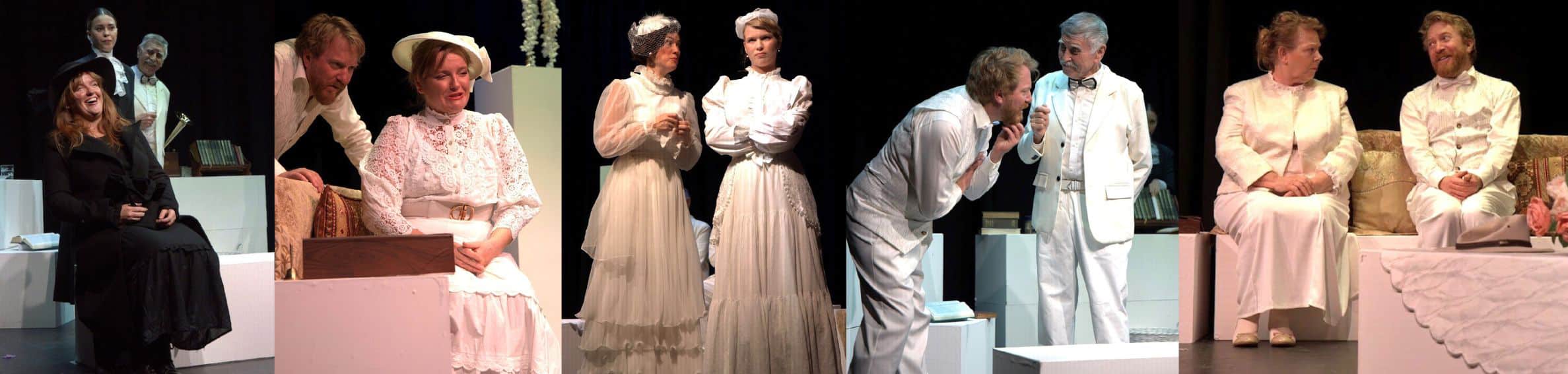
Set in a Dublin pub, where unemployed plumber Paddy Branigan, visits every night for his favourite beverage Guinness, it’s the same routine until one night that all changes. Paddy is presented as someone resistant to change, comfortable in the familiar patterns of daily life, until one evening where he either must change his ways or continue down his destructive path and live with the consequences. There is a point in the story where Paddy genuinely tries to turn his life around much to the amusement of the audience.

At the pub there is the regular elderly patron Joe who loves to retell the same stories and the accommodating bar tender Jack who both endure Paddy’s brashness and boastful nature. One evening a stranger walks in but he is not as much of a stranger as they all think. Having grown-up in Dublin but now residing in the south coast of Western Australia, the stranger has returned to wrap up some unfinished business. This unfinished business is linked to Paddy and triggers Paddy’s desire to change.
There are some productions where the venue does more than merely host the performance, it becomes part of the story itself. The Local, now playing at the Irish pub Mons O’Shea in Fremantle, is one such work. What makes the production especially effective is the natural fit between the play and its venue. Mons O’Shea provides a cosy backdrop that feels entirely authentic to the story being told. Rather than watching a pub recreated on stage, the audience is immersed in one. That immediacy lends the production a particular charm and credibility.


The atmosphere before the performance also deserves mention. Audience members were treated to Irish singing prior to the show, with everyone encouraged to join in. By the time the play began, the audience had already been drawn into the spirit of the setting, creating a sense of shared participation.

Overall, The Local offers an engaging theatrical experience grounded in character and atmosphere. It’s a story of a man shaken from complacency by an unexpected encounter. With its lively pre-show entertainment, welcoming environment and intimate staging, this production delivers a night that feels both theatrical and social. Less like attending a conventional play and more like stepping directly into Paddy Branagan’s world.

All the actors delivered superb performances. Dublin native, Carl Flynn as Paddy Branigan, Declan Byrne as bartender Jack, Joe Purcell as regular patron Joe, Roxanne O’Connor as Sky the influencer, Peter O’Connor as the stranger and a special appearance from the director Siobhan Wright as Dot.

To book tickets to The Local, please visit https://www.taztix.com.au/event/thelocal/.

Spread the word on your favourite platform!