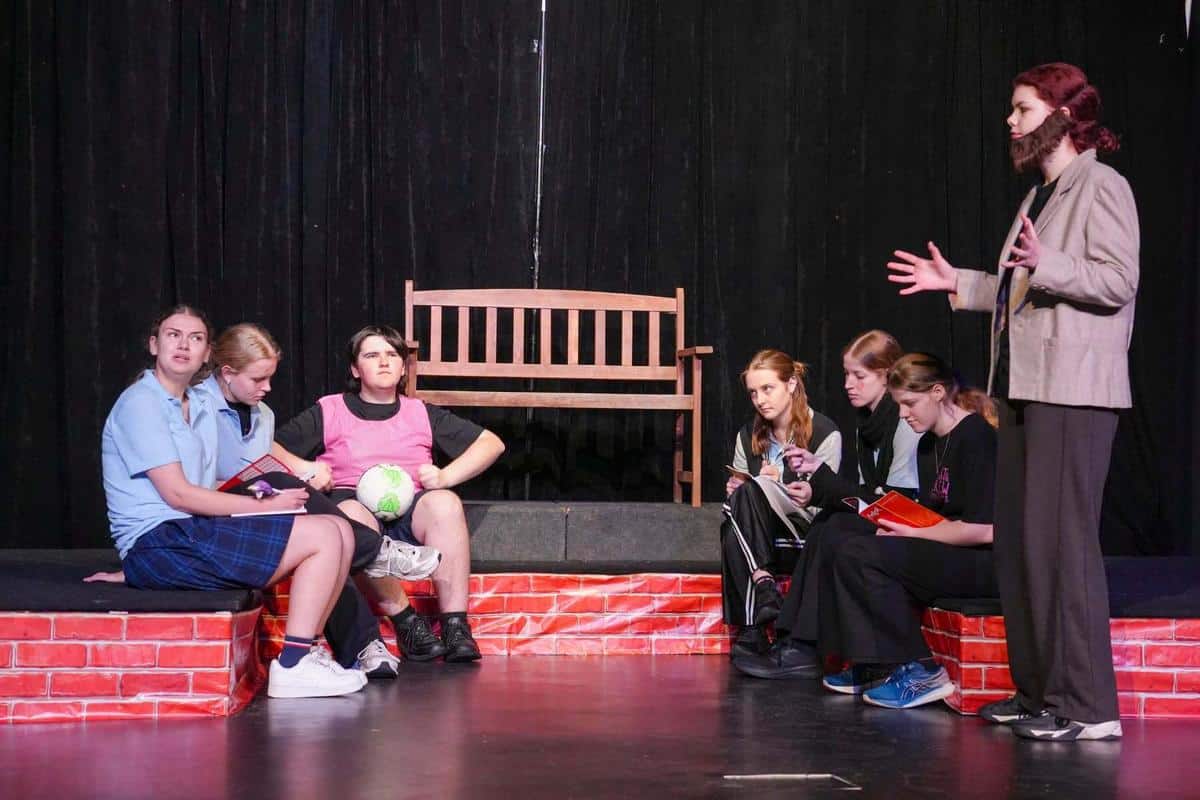
Metropolis Monologues: Showcase One

Metropolis Monologues Showcase One

Metropolis Monologues Showcase One Rating

Click if you liked this article

1

(Note: Metropolis Monologues is presented in two groups, and each night the monologues are followed by the play Who I’m Doing This For by Peter Farrar. This is a review of the first group of monologues – Who I’m Doing This For and the second group will be reviewed separately.)

Metropolis Monologues is an exciting prospect for anybody interested in fresh, diverse works by fresh, diverse writers. Ten monologue performances are split over two instalments, each lasting ten minutes, each with a totally different self-contained story. This spotlighting of new work is to be expected from Melbourne Writers’ Theatre (MWT), who produce numerous annual initiatives to get new work staged and seen. One would expect a mixed bag with so many scripts involved, and some of the writing and performances did work better for me than others. Overall, though, the work was of very high quality and a great springboard for a talented group of theatre makers.

Metropolis Monologues’ director, Karyn Lee Greig, clearly emphasizes physical action as a path into story and character. The first monologue, Run (written by Jennifer Beasley), makes this obvious, as an Olympic runner prepares for her first race after recovering from an injury. Words like ‘run’ and ‘double-back’ take on new meaning as she flashes back to a traumatic past that she tries her hardest to outrun. Emerson Hansford gives a lot of life to this character, especially when she’s imitating other people, and the near-novelistic writing and punchy ending made for a very strong start to the show.

James Hassett’s The Reckoning is shrouded in mystery, as Stephen Najera’s character castigates an unnamed group of criminals for their complicity in the face of wrongdoing. Najera plays the role with an interesting, slippery edginess, and there are many lines that feel cathartic and sadly relevant. While some people might like the ambiguous writing (who is this person exactly? who is he talking to? what did they do?), I felt that without specifics, the monologue lost quite a bit of the power it could otherwise have had. A clearer arc for the main character could have also made the themes hit harder.


In The Decision (written by Kat Adams), Natasha Broadstock plays an older woman deciding whether to leave her husband. Broadstock plays frustration very well, and it seemed from the audience’s reactions that many people resonated with the description of a marriage that, while not terrible, isn’t very fulfilling or loving either. The back-and-forth did feel a bit one-note and I wish both character and actor were pushed into other emotional territory. The ending, without spoiling it, also felt like a bit of a cop-out to the character’s dilemma.

Louisa’s main character is also in a complex relationship with her husband, but Christine Croyden takes us to another time period entirely. Louisa (played by Sarah Hamilton) is a housewife and mother in the Gold Rush era, and both character and performance were incredibly likeable. Out of all five monologues, this one gave me the greatest sense that I was being spoken to directly, as if I were an old friend chatting with her over the fence. The commentary on gender roles is subtle but ever-present, there is a great balance between light-hearted and tragic moments, and the ending has a fun twist that brings home the themes and character journey perfectly.

The last monologue, The Man Behind The Mask, is also a historical piece, but its themes about accepting difference and disability still ring true today. Alison Knight’s monologue follows a war veteran (played by Asher Griffith-Jones) who was left facially disfigured after combat. Griffith-Jones is perfectly cast for the role; his poise and charisma clearly hide deep wells of fear and anger, and the script is peppered with humour so dark that only the main character finds it funny. While the literal mask that the character switches into before the end doesn’t fit well (which does spoil the emotional climax somewhat), it is immediately followed by the best use of screen projections in the whole show. It was a very moving end to a set of well-crafted performances and texts.

Overall, I enjoyed all five monologues and felt the freedom and joy of the actors and writers as they explored thought-provoking, diverse scripts. It’s great that Melbourne has organizations like MWT providing platforms for small-scale productions of new work, and I’ll definitely be looking out for the names listed above in future shows I go to.

To book tickets to Metropolis Monologues Showcase One, please visit https://melbournewriterstheatre.org.au/.

Photographer: Mina Shafer

Spread the word on your favourite platform!

The Graduate

The Graduate

The Graduate Rating

Click if you liked this article

3

A comedic stage adaptation of the infamous coming-of-age story, The Graduate follows wide-eyed and woefully awkward Benjamin Braddock (Mitch Doran) as his Beat Generation ennui clashes with the exacting and often contradictory expectations of the adults around him. His search for meaning spirals out of control when he is lured into a disastrous age-gap affair with Mrs Robinson (Margareta Moir), “the most attractive of all [my] parents’ friends,” going from bad to worse when he instead falls in love with Mrs Robinson’s daughter, Elaine (Brooke Salisbury).

The production opens with a striking scene that sets the tone for the rest of the show; a young man, Benjamin, sits on what is clearly his childhood bed in a full wetsuit and snorkelling kit, breathing heavily into the snorkel as sounds of a party echo in the distance. His father, Mr. Braddock (Brendon Stone) enters and demands that Benjamin parade downstairs in the wetsuit so that all his work friends can admire the expensive graduation gift, creating an immediate and hilarious contrast between childhood and adulthood.

The wetsuit is more than just a fantastic opening joke. The costuming in this production has been carefully curated to visually demonstrate the show’s themes. Each character has been assigned a colour palette, serving as constant reminders of the power imbalances that drive the narrative. Mrs. Robinson is always seen in striking reds and glamorous blacks with pops of leopard print and glittering diamonds, while Elaine’s youth and innocence is highlighted by her palette of crisp white and classic blue with moments of green. Benjamin’s bumbling nature is demonstrated by his ill-fitting brown suit jackets, contrasting terribly with the converse shoes he dons that make him seem even younger.


The sets and lighting for this production are incredible. The stage transforms into multiple bedrooms with lush blankets and headboards, historically accurate furniture, and windows with intense orangey/yellow sunlight streaming through, alongside a hotel lobby complete with a lift, a strip club, a psychiatrist’s office, and a church. Benjamin spends his time onstage stumbling between these sets and flopping onto these beds, never resting for more than a few moments before another character comes barging into his space to command or manipulate.

I also particularly enjoyed watching the relationship between Mrs. Robinson and Elaine develop on-stage. Moir and Salisbury were able to present brief flickers of similarity between mother and daughter (beyond the obvious shared boyfriend) that shone through their notable differences, adding an interesting layer of complexity to an otherwise farcical story.

The Graduate presents the prickly awkwardness of young adulthood, showcasing Ben and Elaine’s fumbling attempts at playacting as adults despite knowing nothing of life beyond a school routine. The Castle Hill Players have taken a 1960’s fable and wonderfully applied it to a 21st-century audience, lifting a timeless and universally relatable experience of one’s early 20s from an American suburbia at the height of its conformist culture. Whether reminiscing on early adulthood or currently experiencing it, The Graduate has something for everyone.

Please be advised that this production contains partial nudity and adult themes.

To book tickets to The Graduate, please visit https://paviliontheatre.org.au/the-graduate/.

Spread the word on your favourite platform!

Bette & Joan: Exquisite Acting From Two Top Dames

Bette & Joan

Bette & Joan Rating

Click if you liked this article

The theatre was abuzz as the audience took their seats, anticipating the legendary cat fight ahead.

Two dressing tables, both alike in dignity, face the audience. Behind them – a facade – flats from the film set of “Whatever Happened to Baby Jane” are standing, reverse side towards the audience. We are invited into their private world, to peak behind the scenes.

They were leading ladies of the silver screen so why was “Whatever Happened to Baby Jane” the only picture they ever made together?

A New York Times critic once wrote that to reach their level of stardom, a woman “needed the constitution of a horse and the temperament of a wildcat.”

The rivalry between Bette Davis and Joan Crawford is the stuff of Hollywood legend. Tinseltown was rocked by their personal feud for years. Even at age 79 Davis would say of Crawford: “We’re very different kinds of women, different kinds of actresses… she was a fool… she wasn’t very smart.”

Jeanette Cronin and Lucia Mastrantone reign supreme as the battling pair, both fulfilling the writer’s words with admirable physical and vocal skill.


The clash of personality styles is fully realised – Bette Davis (Cronin) as the consummate artist striving for the pinnacle of performance and Joan Crawford (Mastrantone) the OCD actress obsessed with beauty who clawed her way to the top via the casting couch.

Cronin and Mastrantone are well cast and their characterisations specifically detailed, with excellent dialect work by Linda Nicolls-Gidley.

Joan: “Even close to death one must always resemble a star.”

The fourth wall is broken throughout, except in the moments of interaction between the two. This device works brilliantly as we are included in the Machiavellian plots as well as the moments of poignancy.

Direction by Liesel Badorrek is tight, scenes detailed. Exquisite choices using black and white video imagery, some live, some recorded, designed by Cameron Smith, enhance the Golden-Age Hollywood feel. Dialogue is paced well, with great rhythm and timing.

Costumes and sets by Grace Deacon are fabulous, immersing the audience. Kelsey Lee’s lighting design is flawless. The Ensemble Theatre becomes a backstage corner of a 1960s Hollywood lot.

The scenes turn on a dime, one moment we are brought to tears, the next – gaffaws as one of our divas drunkenly stumbles. But it is the painful moments, as their traumatic history is revealed that are truly moving.

Highly recommended. Sharpen your claws and get a ticket.

To book tickets to Bette & Joan, please visit https://www.ensemble.com.au/shows/bette-and-joan/.

Photographer: Prudence Upton

Spread the word on your favourite platform!

Arawarra

Arawarra

Arawarra Rating

Click if you liked this article

4

The opening night of ‘Arawarra’ at the Illawarra Performing Arts Centre saw a sold-out theatre and a standing ovation for the brilliant work and performance of Jake Māra.

‘Arawarra’ tells the story of a First Nations leader and hero of the South Coast, at the time of colonisation. This is the legacy left behind from a prominent figure who was erased from the history books, and it is a story that everyone should be told, especially if you’re from the Illawarra and South Coast.

It’s not often that one person can command a room for an hour with two props and stagnant set of a table and chairs, some boxes and a teacup, but Jake Māra did exactly that. He had the entire audience enthralled in his performance. It was captivating like nothing else. Māra’s storytelling was simple and beautiful, filled with soul and just outstanding. He embodied each character with such grace and ease that it was easy to forget that he was the only one on stage. The story itself was woven through the voice of his uncle, Arawarra himself, and his ancestors. Whether he was sat at the kitchen table, or commentating and dissecting moments from history, it felt just like a friend sitting down and talking about their life. It was warm and inviting and had the audience laughing and sympathising throughout. I have found it to be quite rare to have a gift like that, scripted or not. I simply cannot praise this performance and this story enough.


Technically it was stunning. The use of lighting and occasional images across the cyc (the white curtain at the back of the stage) at pivotal moments was just perfect. Red lighting flashes in time with swift acts of violence, the black and white image of the sacred mountain, displaying the handwritten words of Alexander Berry, all of it was simple and yet, so incredibly effective. It’s easy to be lost in amongst sound and lighting, particularly when it is just one person, but the creative team found the exact balance to do this so well.

I really enjoyed the mix of native language and English that was so seamlessly used throughout the performance. Even if you did not know the language, you could still understand what was happening within the story. The emotion and the characterisation took you through each moment the same way it does watching an opera in a foreign tongue.

This is not a show you should miss. Thankyou to Lincoln Smith and Jake Māra for bringing this story onto the stage and sharing this piece of history and culture with us. You should be incredibly proud of what you have created.

Arawarra has now sold out, but keep any eye out for any repeat performances in your area.

Photographer: Tracey Leigh Images

Spread the word on your favourite platform!