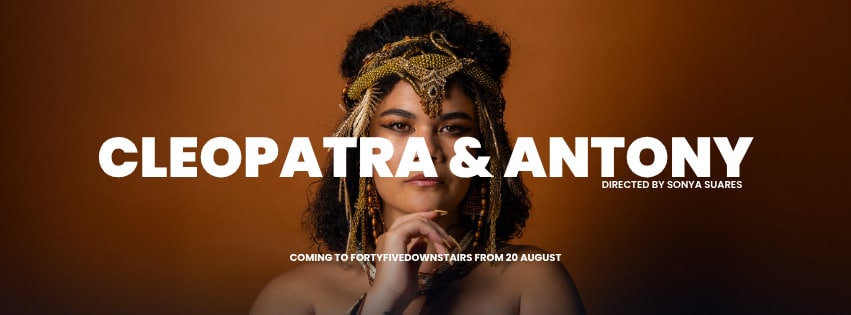
With a simple reframe, the Melbourne Shakespeare Company’s ‘Cleopatra & Antony’ signals a deviation from the norm long before curtains up. Shakespeare’s original play centres the Roman general Mark Antony, but this production flips the script to spotlight his infamous beau, the Egyptian queen Cleopatra.
Shakespeare’s ‘Antony & Cleopatra’ follows the powerful relationship between Cleopatra and Mark Antony and their tragic demise as casualties of the crowning Roman Empire. The tragedy is one of Shakespeare’s more ambitious works, notorious for its numerous scenes spanning scores of characters, relationships and locales. On paper, it’s a bit of a slog, so it’s the direction that makes or breaks this production.
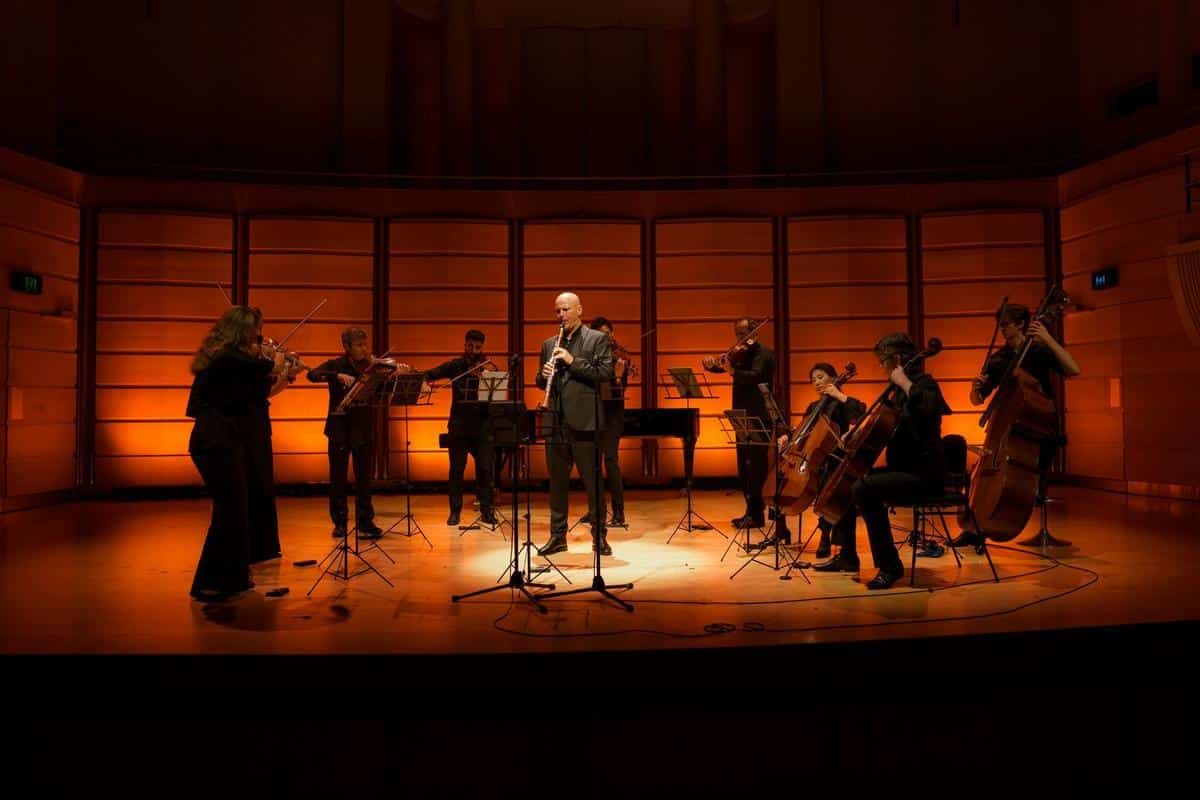
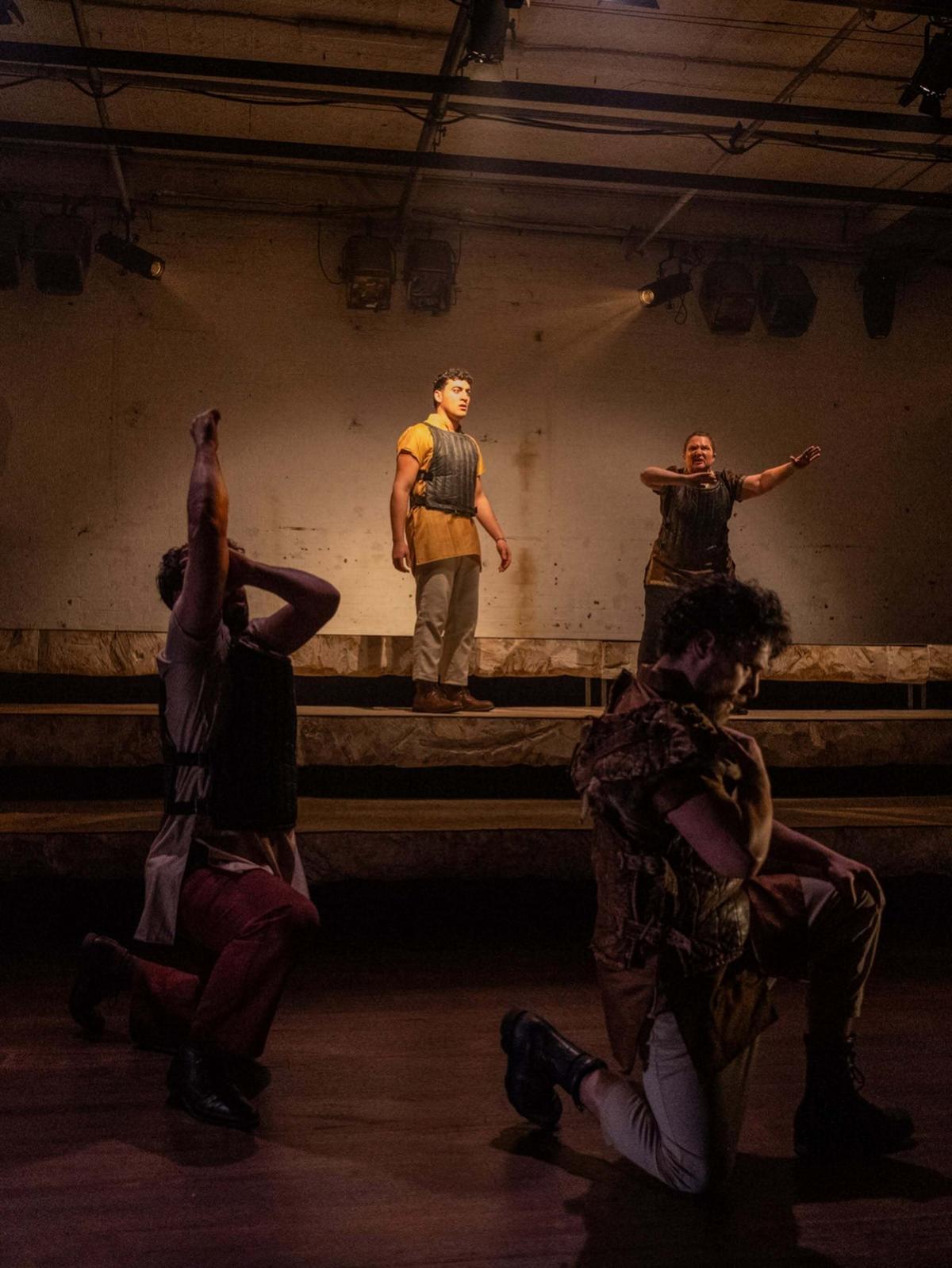
The Melbourne Shakespeare Company’s adaptation sat dreamlike between traditional and contemporary. On stage, the set (designed by Eloise Kent) was pared back, with organic splays of linen, stone and smoke; pale fawns and ochres evoking a dusky Mediterranean villa.
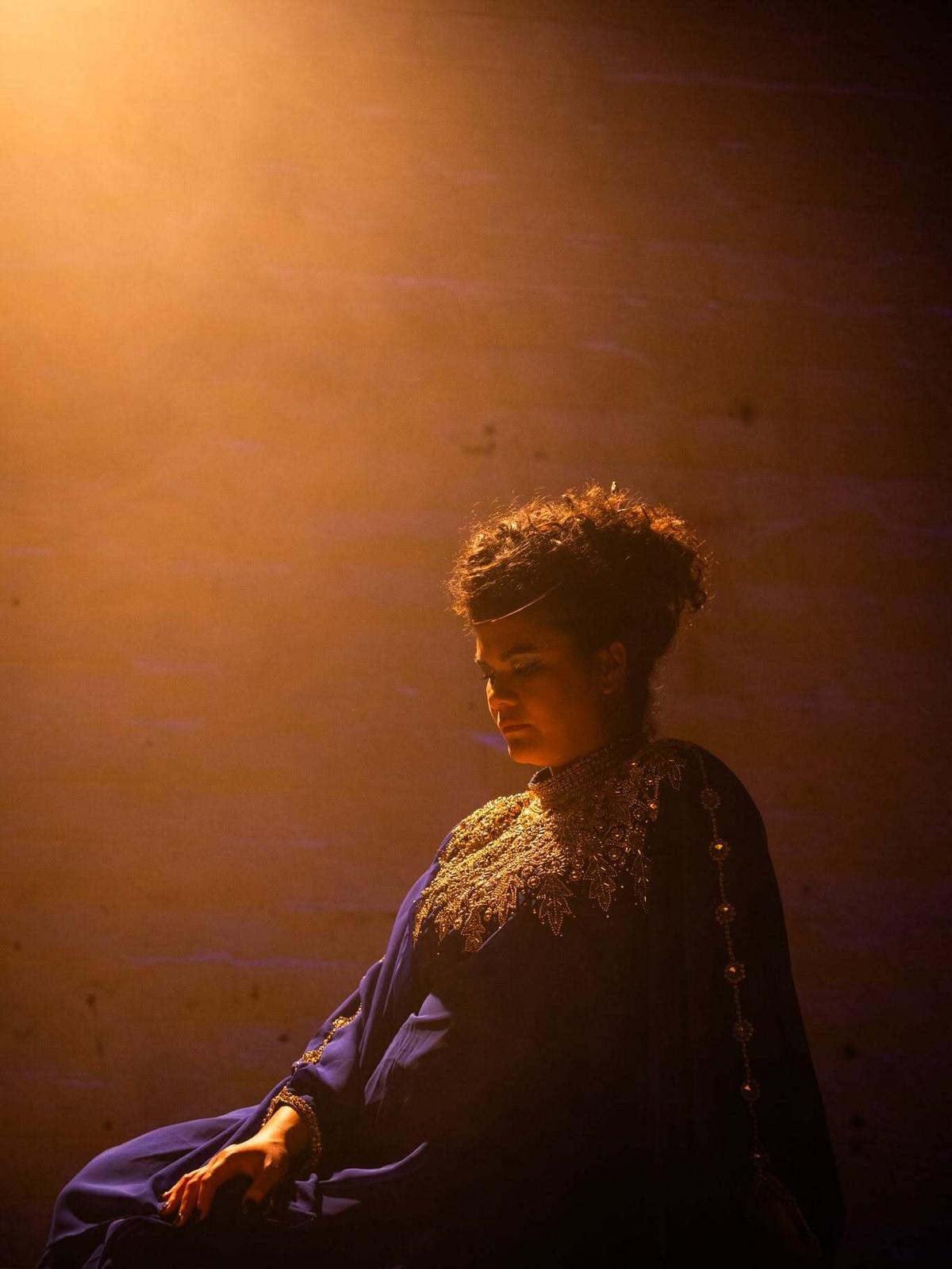
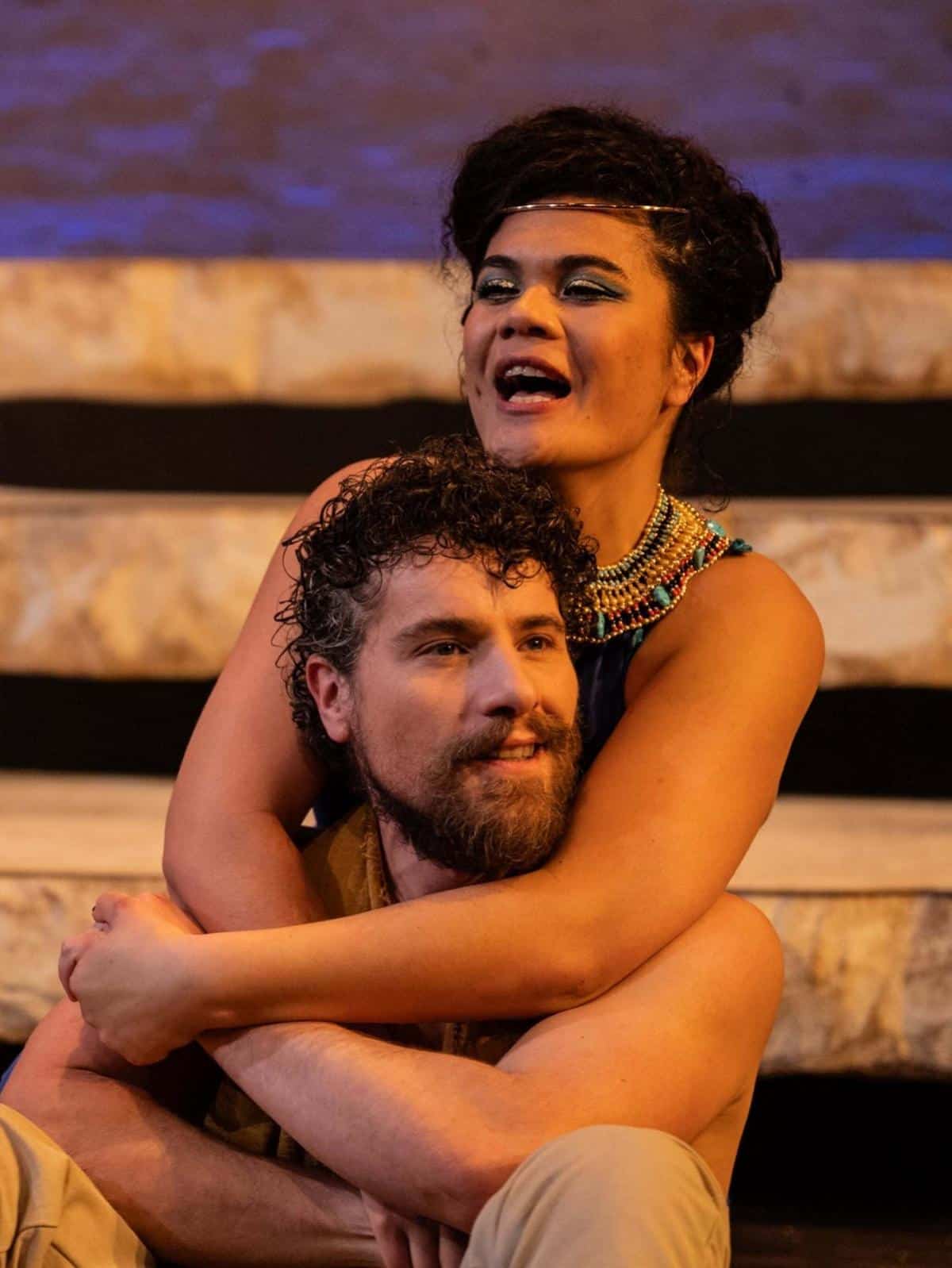
Crazy, stupid love is the one luxury Cleopatra and Antony can’t afford; their chaotic affair begets a doubly chaotic state of affairs. Sonya Suares directs ‘Cleopatra & Antony’ with that restless, impulsive passion which grated at times to watch, but only for its bitter truth. That’s where tragedy lives, in the oh-so-avoidable. We’re meant to shake our heads at the foolishness of these characters because we aren’t the fools in love (until we are).
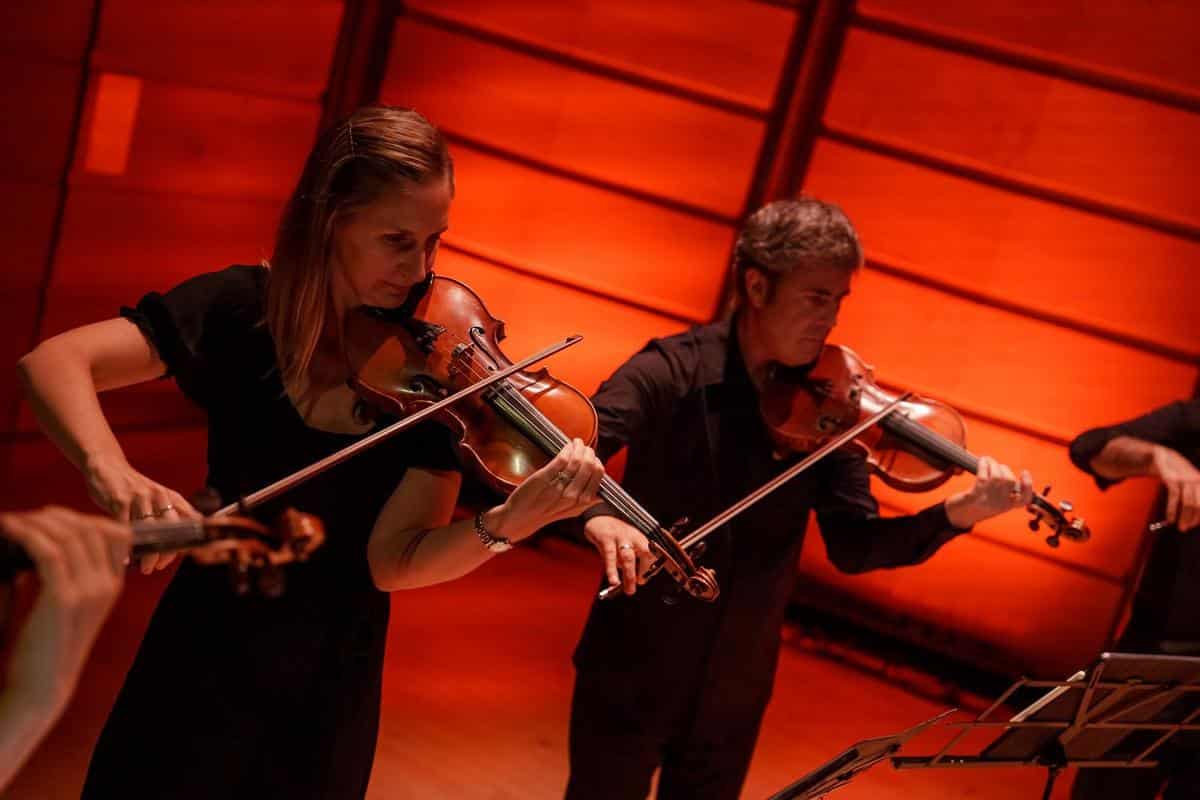
Akina Edmond’s Cleopatra and Louis Lucente’s Antony were forces in their own right and all the more powerful together. Intense, playful and hotblooded, the two moved as if in orbit and fed off each other’s boundless energy until their final devastating moments. Supported by strong characters from Tsungirai Wachenuka’s Charmian to Jennifer Vuletic’s Agrippa, Laura Iris Hill’s Enobarbus and the multifaceted ensemble, the chemistry on stage was palpable.
I appreciated the intention to make the content more digestible, but I’m unsure if Charmian’s metatextual narration answered this adaptation’s purpose. The play stretches itself across so many histories and contexts that I wonder what—if any—method there would be to compensate for gaps in audience knowledge. For a lesser-known play, it struggles to reap the benefits of contemporary direction. Strip off the frills, let us relish in the madness.
I’m similarly undecided if anything new was added for me in the reframing of Cleopatra’s role, though I will say this: there’s a power in perception and Cleopatra is one of history’s most misunderstood figures. Even if the story remained the same, the Melbourne Shakespeare Company’s adaptation extends an invitation to its audience to recontextualise a previously fixed character, wielding the transformative power of narration to ask a critical question: who is telling the story?
To book tickets to Cleopatra & Antony, please visit https://www.melbourneshakespeare.com/cleopatra-and-antony.