“Pleasure” is a concept humanity has pursued, defined, and debated for millennia—from Early Greek philosophers musings to Freud’s theories, from ancient Chinese philosophy to Egyptian mysticism.
In her deeply personal and compelling one-woman show, Pursuing Pleasure, opera singer Piera Dennerstein steps into this lineage of inquiry, offering her own story as both case study and celebration. Through an eclectic mix of musical selections—from Puccini to Cardi B—Dennerstein examines the rigid structures of her profession, the silencing of her voice, and the hard-won rediscovery of her personal joy.
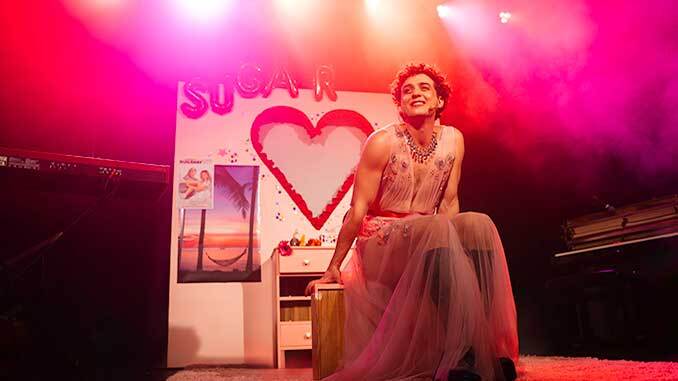
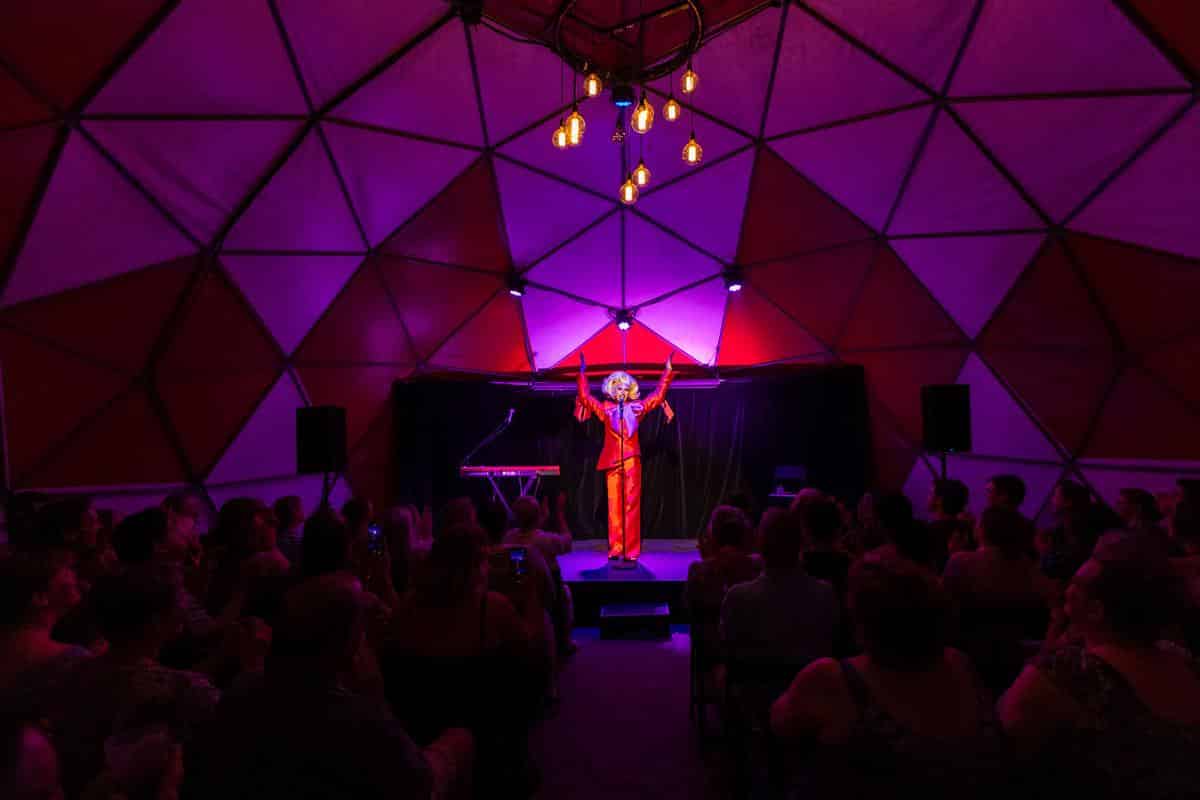
The moment the audience enters the small, intimate theatre, they’re immersed in a world that feels equal parts boudoir and dreamscape. Soft pink lighting bathes the space; feathered chairs and velvet accents suggest sensuality and softness. A lone piano waits like a co-conspirator in the corner. The atmosphere is one of warmth and openness, setting the tone for the confessional yet theatrical journey ahead.
Dennerstein makes her entrance like a vision: glamorous, confident, and possessed of a voice that commands immediate attention. She opens with an aria from Carmen, a dramatic choice that immediately showcases her operatic prowess and establishes her as a powerful stage presence. Her voice—a heavy soprano—fills the room with depth and resonance, but it’s her storytelling that truly pulls us in.


As she begins to speak, Dennerstein draws back the velvet curtain on the world of opera, revealing a system that to outsiders can feel like an elegant but arcane secret society. With sharp wit and heartbreaking clarity, she explains how singers are typecast according to vocal “fach”—a system of classification that determines what roles a singer can audition for. It’s a rigid framework that values tradition above individuality, and Dennerstein invites us to see how such a system is also a gatekeeper of artistic expression. In this world, a single note sung incorrectly can mean losing a role; personal taste, emotional connection, or daring interpretation are often secondary to the mechanics of tone and volume.
Dennerstein’s own experience as a dramatic soprano—destined to sing the tragic, the regal, the doomed—becomes a metaphor for confinement. When she delivers a searing excerpt from Wagner, it’s clear she inhabits these roles with mastery. But when she speaks of her desire to sing something joyful, light, or flirtatious—and how the opera world deems these pleasures off-limits for her voice—we see the emotional cost of that confinement.
In the show’s second half, she shifts from analysis to revelation, sharing stories of rejection, emotional abuse, and the slow, courageous return to herself. Through pop music, humor, and fierce vulnerability, Dennerstein stages a rebellion against the rules she was trained to follow.
Pleasure is more than a performance—it’s a quiet revolution. In just an hour, we witness an artist stepping out of the roles the world assigned her and into the one she’s written for herself. By the end, Piera Dennerstein doesn’t just sing—she reclaims her voice. And that, in every sense, is a pleasure.
To book tickets to Pursuing Pleasure, please visit https://www.oldfitztheatre.com.au/pursuing-pleasure.
Photographer: Olivia Charalambous