
If These Walls Could Speak

Dixon And Daughters

Dixon And Daughters Rating

★★★★★

Click if you liked this article

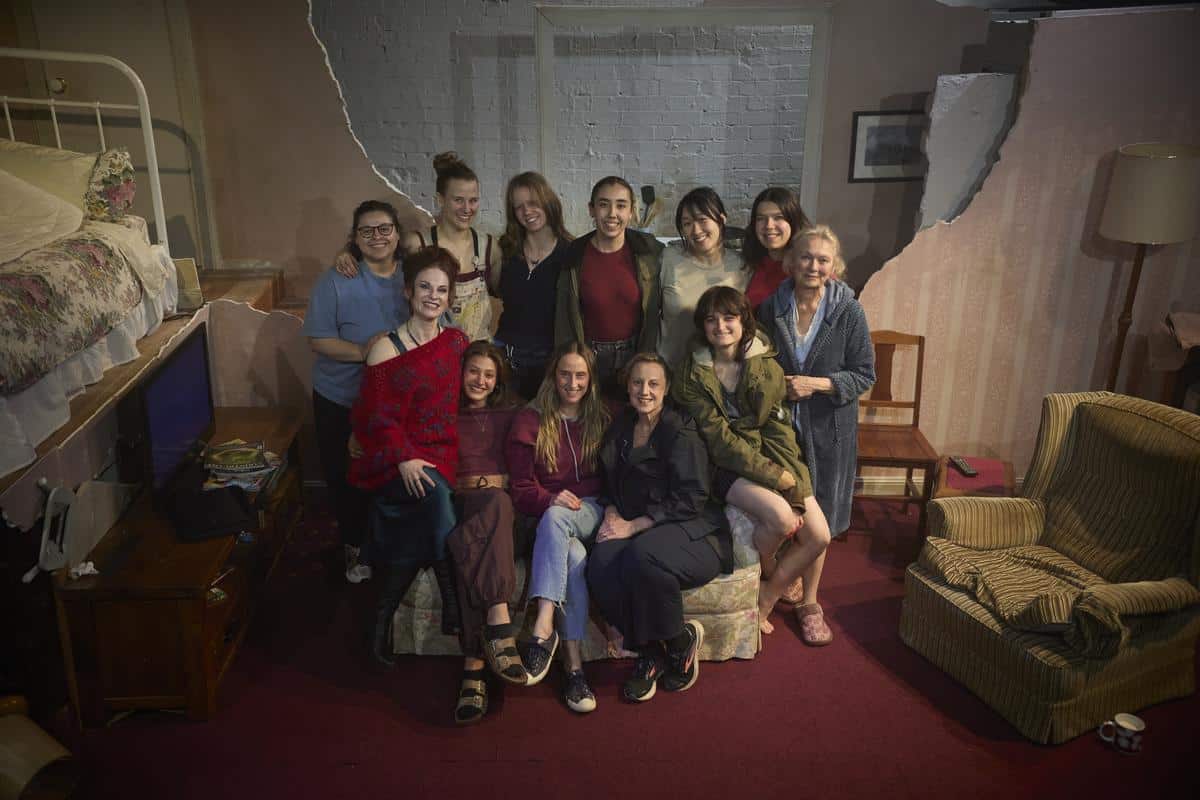
I will never cease to be amazed at what can be done with the right amount of creative genius, even in a small space, and I was particularly blown away as we entered the theatre at Old Fitz. Mia MacCormick's Dixon & Daughter’s set was immediately impressive with a two-storey set up with two upstairs bedrooms, one open to us with the double bed clearly belonging to someone who has lived there for many years and the familiar bedspread that told the same story. There’s a kitchen in the background, an old style living room (again, with the iconic upholstery of the era on the sofa). We see all the childhood remnants such as rocking horse in storage underneath. It’s a typical house that has seen generations. A house we might all remember but the shell of it is peeled away in parts, symbolic of the here and now and fuzzy, messy, reminiscing that we are about to be pulled into.

Topaz Marlay-Cole's lighting and Nicky Pardesi's sound design engage throughout. Darkness pools around the moments that need it most, and characters are isolated by a single source when they are at their most exposed and vulnerable. The transitional soundscapes hold us in the uncomfortable space between scenes, refusing to let us settle, while the pauses punctuated by light shifts carry their own quiet weight. Clever and intentional.

Mary, played by Vanessa Downing, has just returned home. Her granddaughter Ella and daughter Julie are ready to surprise her, while youngest daughter, Bernie quietly prepares them for the reality that Mary is "in a mood." In these early scenes, Deborah Bruce's script establishes the architecture of the family with deceptive lightness: Julie as the scapegoat fleeing a bad relationship and fighting an alcohol dependency; Ella as the playful peacemaker trying to offset the formidable dark cloud her grandmother carries into the room. Mary is no-nonsense, wanting nothing more than to get home and back to life. We soon discover she has served six months in prison for something connected to her deceased husband, and from that moment, the unravelling begins.
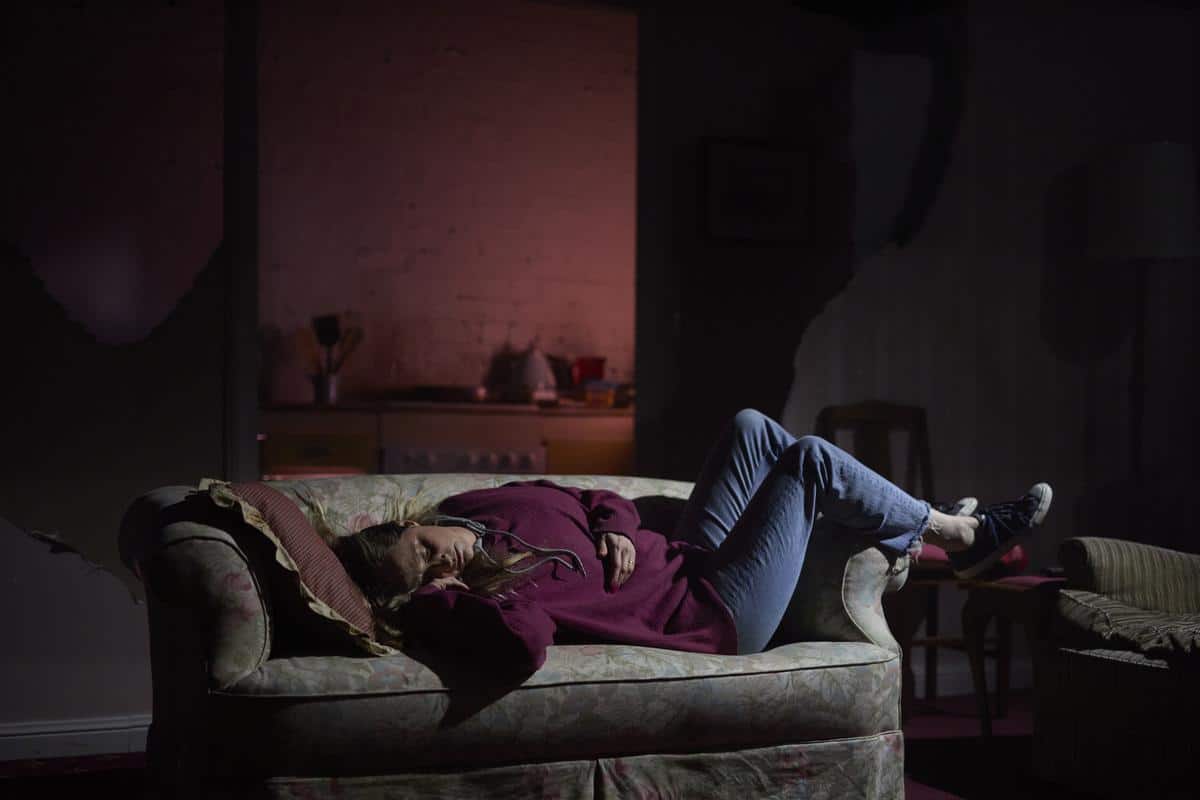
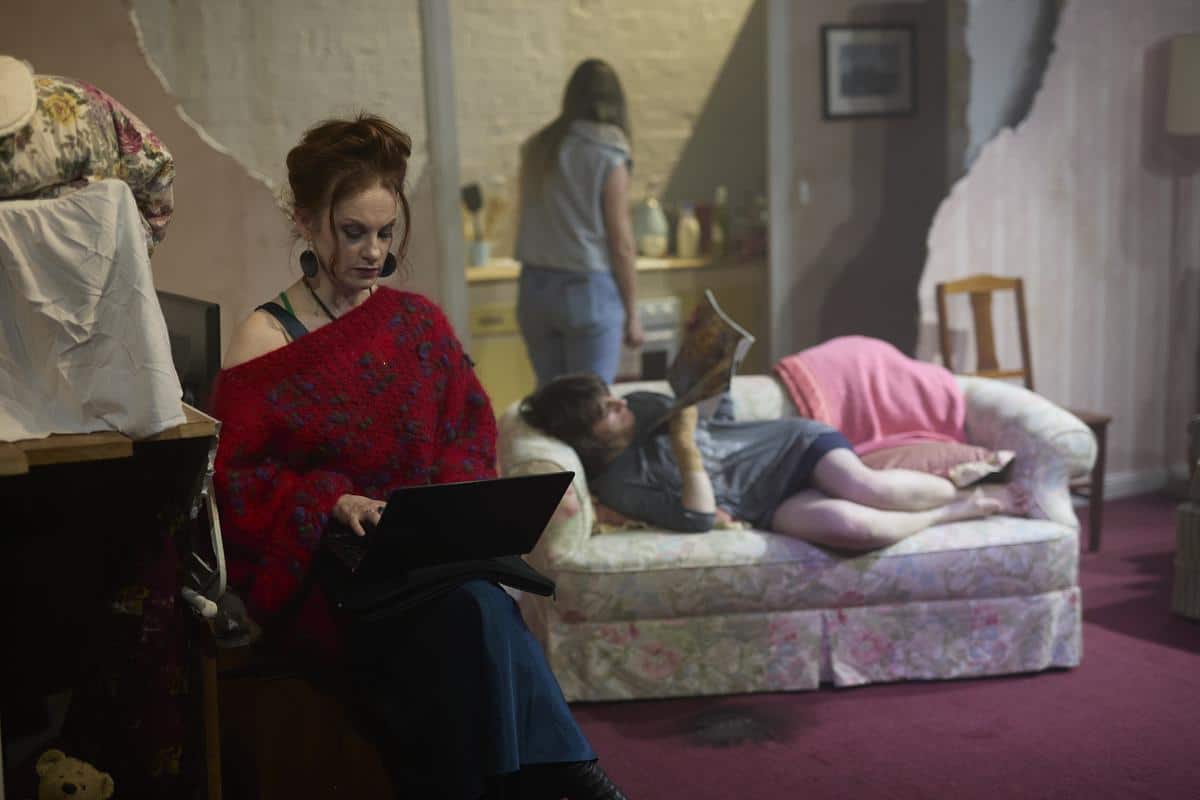
 

Downing's Mary is formidable. There is no softening of the character's abrasiveness, no easy bid for sympathy, just a woman carrying decades of damage and struggling to articulate the remorse beneath the bluntness.

Linda Nicholls-Gidley as Bernie embodies the daughter who must hold it together at all costs, and we see that fight written into every moment. Sarah Jane Starr arrives as the estranged stepdaughter Tina/Briana, larger than life and glamorous, having stepped into her power and intent on helping Julie do the same. Starr plays the light and shade with real skill, making Briana's complicated journey entirely her own. Romney Hamilton's Julie is the loveable screw-up, all flightiness and docility in the early scenes, and then, when the drama reaches its peak, Hamilton delivers a performance that takes your breath away. You genuinely do not see it coming.

Danette Potgieter's Ella makes her own quiet pivot, moving from the warmth and playfulness of the opening to something altogether more grounded and affecting when the moment demands it. Leigh is a character that Mary introduces into the mix, at first I wondered about this writing choice, I wasn’t sure we needed this character from the school of hard knocks who was providing a lot of comic relief (played joyfully by Rylea Ellis), but I realised that Mary had to bring this outsider in to disrupt the roles and stories running and Rylea plays this very well.

Director Kim Hardwick's work is full of specificity. Every exchange feels immediate, every relationship fully inhabited. But what struck me most was the blocking. Each character had their physical place within the history of this intergenerational story, allocated to a particular space unless the action required something different. They were connected but always isolated, until they weren't. It was a brilliant choreography of power and position, making visible what the dialogue could only gesture at.

An all-femme cast is its own kind of power, and this one is clearly working together and holding one another with real care. The dark themes are handled with tenderness and unflinching honesty in equal measure.

Dixon and Daughters is not an easy watch, but it is an important one. It will speak to anyone who has lived as a woman, and to anyone who has loved, nurtured or been shaped by one. This is a story that needs to be told, and the Tiny Dog Productions team has told it with exactly the courage and care it deserves.

To book tickets to Dixon And Daughters, please visit https://purchase.oldfitztheatre.com.au/EventAvailability?EventId=1201.

Photographer: Campbell Parsons

Spread the word on your favourite platform!

Still Sitting In The Afterglow

Afterglow

Afterglow Rating

★★★★★

Click if you liked this article

2

Belvoir was buzzing with an eclectic mix of people heading towards two different shows. It was difficult to discern who was headed where, but it was a delightful mix from varied walks of life, all excited for a night of theatre.

Afterglow was in the downstairs theatre, one I hadn't yet visited, and I was immediately put at ease by the intimacy of the space. I love intimate theatre.

I had seen two songs from this show at Homo Grown, and I am also a massive fan of Cassie Hamilton. I had been wilfully declining theatre trips due to my own rehearsals making this an incredibly busy time for me, but I was already getting FOMO seeing it advertised when the review request came in, and my arm was officially twisted. Let's just say, thank God for that.

The space is black box style and the set is a lounge bar we come to know as Afterglow. This theatre is warm and welcoming, but it has some limitations. As a singer, I was initially concerned for the performers singing without microphones, but they were so exceptional at their craft that you quickly forgot it. I imagine they are being given some great coaching to help with this challenge. However, there is a unique privilege in seeing a show like this in such an intimate setting while knowing, without doubt, that future runs will be on a much bigger scale.

Afterglow is a world premiere by Purple Tape Productions, presented as part of Griffin Theatre Company's Lookout program. Written by playwrights Sheanna Parker Russon and Dr Lillian M. Hearne, and co-directed by Cassie Hamilton and Lily Hayman, it is a barbershop rom-com following Michael through a coming-of-age, and the unlikely community of people that play a part in it.

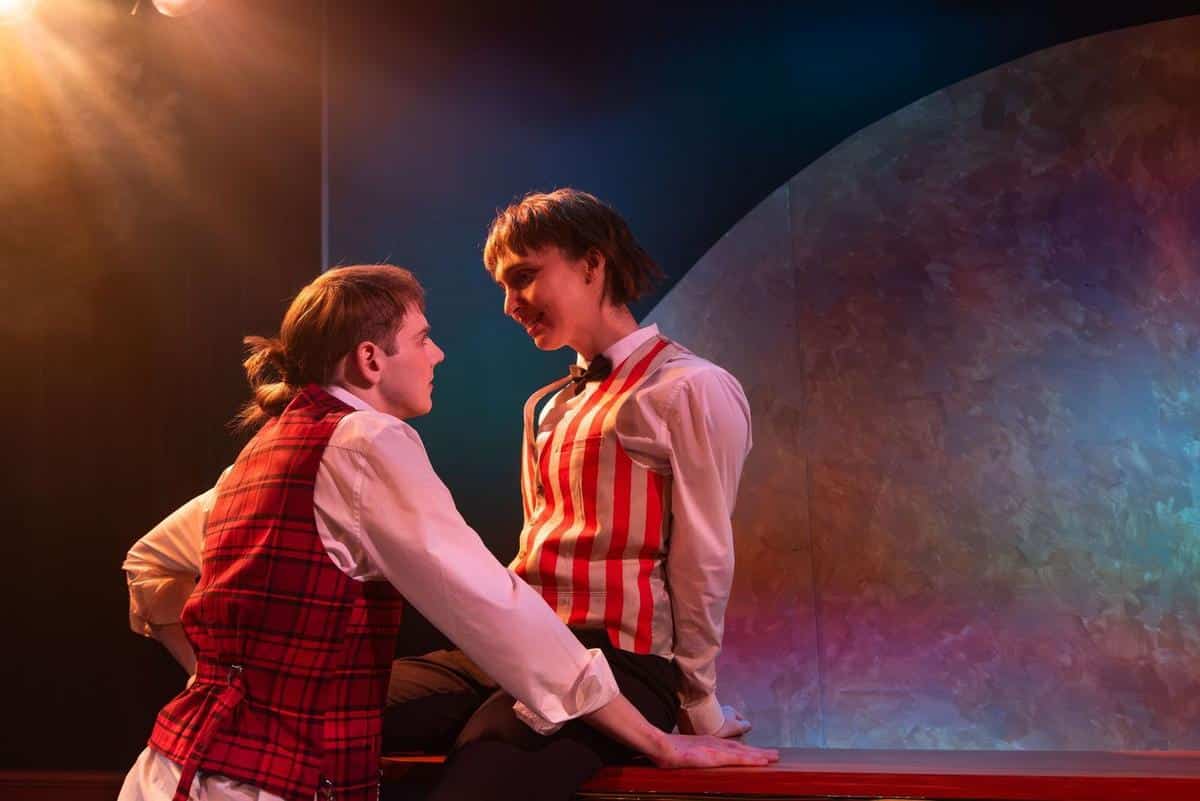
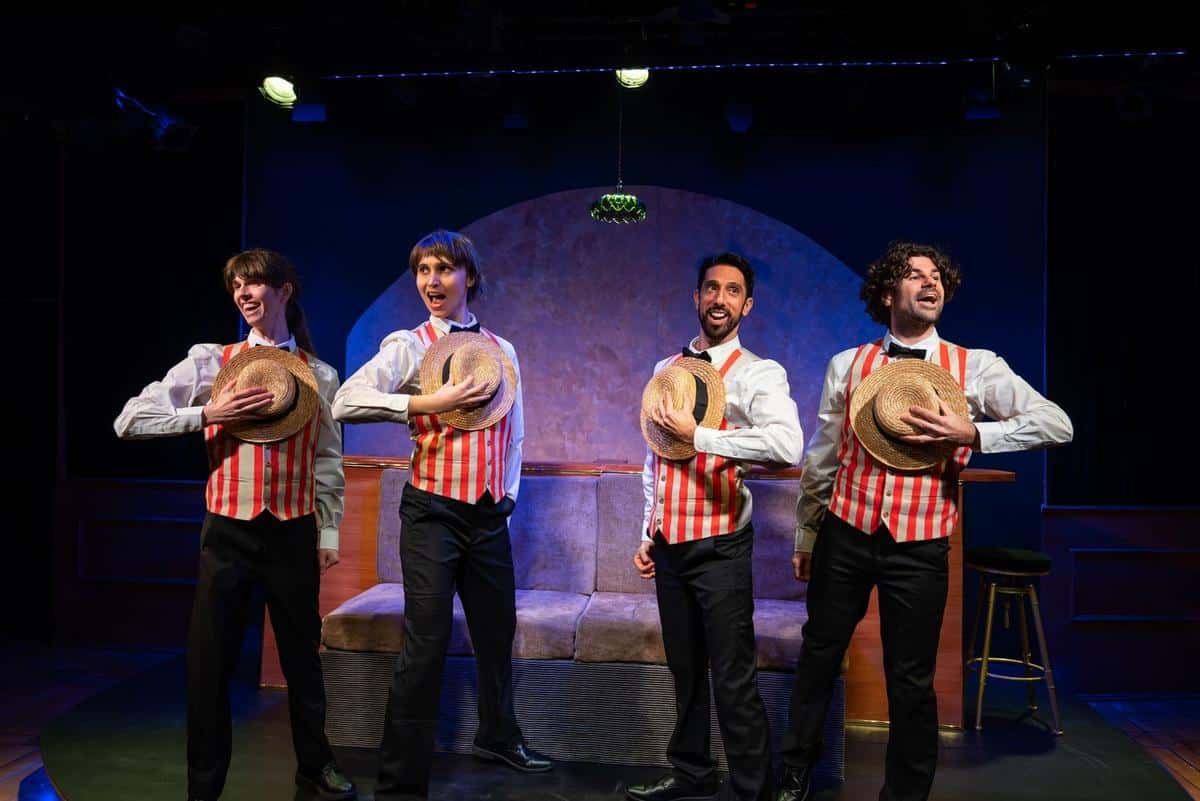
We begin with the barbershop quartet singing about manliness and the importance of keeping barbershop purely for the boys. We note Michael, played by Cassie, is uncomfortable, making small mistakes then berating himself through a song about the desire to be normal. It's 2012, he's 21, and this is his only aspiration.


Nat Jobe leads the quartet as the old-skool male who is a feminist purely by virtue of having married a woman, yet believes fiercely in upholding traditional male spaces. The character becomes the vehicle for exploring what it means to be a man and the awkwardness of trying to connect when social norms keep restricting you. Jobe plays it with tremendous warmth and comic precision.

There is beautiful a-cappella accompaniment scattered throughout in the barbershop style, with Dr Hearne playing Trevor and taking to the keys at poignant moments. The harmonies are infectious.

Nic Prior's character T gets a stunning solo that takes us into the depths of an interior world that is tender and enormous. The voice is breathtaking; there is a fragility to the emotional delivery that sits in complete contrast to its power. When Michael and T reconnect two years later, the connection deepens, and Cassie delights with a goofy, gorgeous spiral as Michael tries to navigate T's vulnerability while still performing what it means to be "one of the boys."

The lighting design by Tyler Fitzpatrick feels deceptively simple, but the choices are anything but. Moving from the full wash which made us all visible to one another (leaning into the metaphor of trying to blend in), to a single spotlight when characters turned inward was quietly brilliant. Clare Hennessey's sound design holds the space with equal care.

I've said it before and I'll say it again: Cassie Hamilton is a powerhouse, and her character’s big solo moment is elevated by the voice belting behind it, leaving me teary. The first of many times.

By 2016 things have gotten messy, and the boys are doing their best to show up for their friend while not quite knowing how to communicate outside of messy metaphors. The important thing is that they are trying, and learning that vulnerability might actually make them better.

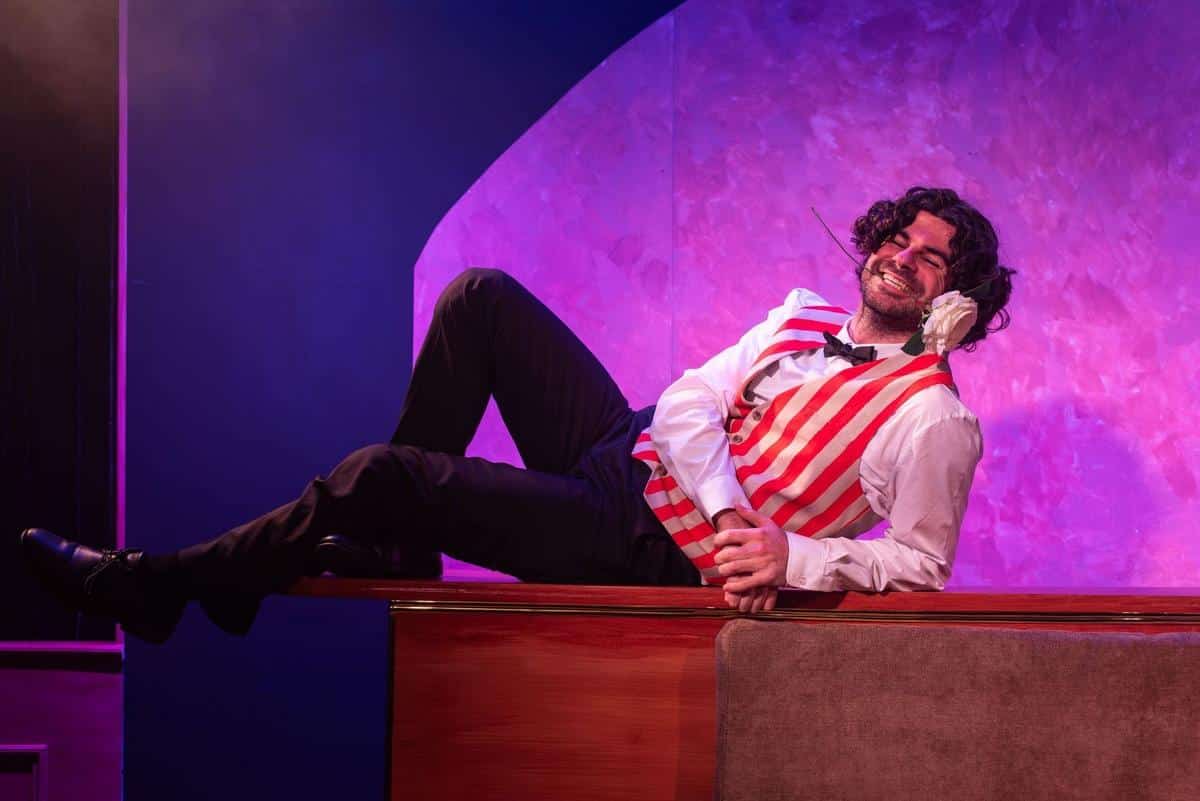
Lincoln Elliott as Matt is great fun, and I genuinely do not know how Elliott manages to be in so many wonderful things at once. The whole ensemble moves together with a generosity that speaks to the room Cassie Hamilton and Lily Hayman have created.
Afterglow is a bittersweet, joyful, poignant romp; full of heartache and, most importantly, trans joy. Sheanna and Lillian's joint journey and shared heart make this a uniquely beautiful story.

I was in tears at the end. Tears of sadness, hope, joy, and just the deep appreciation of a wonderful shared experience.
Go share in it. You will sit in the afterglow for days.

To book tickets to Afterglow, please visit https://griffintheatre.com.au/whats-on/afterglow/.

Photographer: Lucy Parakhina

Spread the word on your favourite platform!

This Talent Is Not Normal, Not Even Next To It… It’s On Another Level Altogether!

Next To Normal

Next To Normal Rating

★★★★★

Click if you liked this article

6

First of all, the auditorium at Greenhalgh Theatre is amazing. I wasn’t expecting that at a high school. We noticed the classic red theatrical seats with the contrasting pine paneling, and then zoned in on an epic set. With a lounge area stage right and a home bar to the right. In the middle you first think you are clapping eyes on the perfect family kitchen, and soon notice the cracks and wonkiness. Not normal, but next to it.

It's a quietly brilliant piece of design, and it sets up the entire emotional landscape of Tom Kitt and Brian Yorkey's extraordinary musical before the overture begins. Above it all, a jaunty window frames the pit orchestra in full view; a choice that pays dividends throughout the night, not least because conductor Tom Borbilas has such a smooth, unhurried way of pulling everything together that watching him became its own quiet pleasure.

Director Sarah Shanahan's note in the programme speaks of this show as a genuine healing journey for her, and that care is evident in every aspect of the production. The opening number establishes the Goodman family's "perfect" facade with precision with each performer locked into their role in the dynamic, every smile doing a little too much work.

Izzy Tilden as Diana is the gravitational centre of the evening, and the performance is exceptional. Tilden navigates the full emotional spectrum of a woman locked in a long battle with her mental health delicately demonstrating the manic highs, the medicated numbness, the moments of devastating clarity, with intention and artistry. The depiction of what it feels like to be flattened by pharmaceuticals is handled with particular care; Tilden finds the absence of emotion as precisely as the presence of it. And that belt. The singing in this production is something else entirely, but Tilden's voice is a force.


Simon Donovan as Dan anchors the family with a restrained anguish that only cracks when it absolutely has to, and the harmonies between father and son are among the most affecting moments of the night. Raven Swinkels is magnetic as Natalie, bringing a raw energy to Natalie's fight to meet everyone's expectations while figuring out who she actually is. The solo that unpacks this is heart-wrenching in the best possible sense. Nye Morrison as Henry; the friend, the hopeful lover, the only one who seems to truly see Natalie, finds the gentle persistence of that role beautifully, and the chemistry between Morrison and Swinkels carries us right through to the curtain call.

Hugh Arthur brings a quiet, specific presence to Gabe, and the mother-son harmonies are also sublime. Brayden Macfarlane-Walker as Dr. Madden/Dr. Fine brings nuance to both characters and also creates a unique chemistry with each character they interact with.

The ensemble work is strong throughout, and the pit (led by Borbilas with Kai Azoum, Hayden White, Alana Wood, Daniel Enriques, Nick Drescher, Dylan Maclean and Zac Nisbet) moves in genuine sync with the performers on stage. Sarah Shanahan's lighting design, alongside the projections, is fluid and responsive; smooth when it needs to be, deliberately fractured when it doesn't.
This production of Next to Normal is powerful and heartwrenching. It asks hard questions and sits with them rather than rushing to answers. Leaving us to continue to ponder which is worse… the symptom or the cure? That this company has staged it with such emotional intelligence and technical ambition is genuinely impressive.

Do see it. And bring tissues. You'll need them.

To book tickets to Next To Normal, please visit https://www.sydneymusicaltheatre.com.au/.

Spread the word on your favourite platform!

Get Yourself Along To See It - These Are Stories That Deserve To Be Witnessed

Sheltering

Sheltering Rating

★★★★★

Click if you liked this article

Sheltering was enthusiastically introduced by Artistic Director and Co-CEO Frances Rings, alongside Director of Community Relations Kirk Page, whom I was already a fan of from Dear Son at Belvoir earlier this year. It was a warm, personal welcome that set the tone perfectly for what followed.

Sheltering is a triple bill that beats with the heart of Bangarra's community spirit, truth-telling and connection to culture. All three works were developed through Bangarra's Dance Clan program, founded in 1998, to nurture community-focused, choreographic storytelling, empowering dancers and creators to dream up and express in their own language, under expert mentorship. This season marks Bangarra's first national tour since being awarded the prestigious Golden Lion for Lifetime Achievement in Dance by the Biennale Danza 2026. That context matters. This is a company at the peak of its legacy, and also looking boldly forward.

"Keeping Grounded", choreographed by Indjalandji-Dhidhanu and Alyawarre person Glory Tuohy-Daniell, is a fascinating piece. The dancers move between the net, the suspension and shakiness of which requires their deep attention, care and uses their energy. In contrast, they move fluidly in tandem with one another when they connect with the ground and their roots.Composer Brendon Boney's score is a beautiful element throughout, and Karen Norris' lighting sculpts the space, allowing the dancers to meet each shift in the music with precision and presence. As Tuohy-Daniell writes, this work is "an invitation to notice. To consider how small, almost forgotten actions can create an effect through the body and mind. A step barefoot. A moment of stillness. A return."


"Brown Boys", co-directed by Daniel Mateo and Cass Mortimer Eipper, with Mateo performing, is an exquisite piece of dance poetry presented on screen. In just six minutes, Mateo takes us on a journey through the holistic, physical and spiritual experience of brown men navigating identity, belonging and the perceptions imposed upon them, and the quest to come home to themselves. Composer Leon Rodgers' soundscape holds the film in something both tender and expansive. It is beautiful, and it is genuinely moving. Mateo puts it simply: "I want to give this film to boys who grew up like me, so they can connect, and through that, the village expands."

"Sheoak", choreographed by Frances Rings and originally premiering in 2015, closes the evening. Created in response to the deeply offensive "lifestyle choice" comments made by a former Prime Minister about remote Aboriginal communities, it is a work of reclamation; those words taken back, rebuilt, and transformed. Jacob Nash's set design and Jennifer Irwin's costuming are impeccable; the visual world of this piece is as layered as its emotional one. Across its three sections; Place, Body, Spirit… we witness systemic trauma, rupture, and ultimately, renewal. It is a deep, at times dark, emotional ride, with movement and choreography that created many audible gasps and intakes of breath.

Afterwards, we were lucky enough to meet the dancers and hear about each of their origins and their time with Bangarra; a reminder that these are not just extraordinary performers but custodians of living stories.

Bangarra has long held a reputation for Black excellence, magnificent storytelling, and uniquely impressive talent. Sheltering doesn't just add to that history; it extends it, with one eye firmly on the next generation of First Nations creatives being given the space and mentorship to bring their own stories to the stage.

Get yourself along to see it. These are stories that deserve to be witnessed.

To book tickets to Sheltering, please visit https://www.bangarra.com.au/productions/sheltering/.

Photographer: Daniel Boud

Spread the word on your favourite platform!

Subscribe to What's The Show

Reviews, show news and what is on, straight to your inbox.