If These Walls Could Speak

Dixon And Daughters

Dixon And Daughters Rating

★★★★★

Click if you liked this article

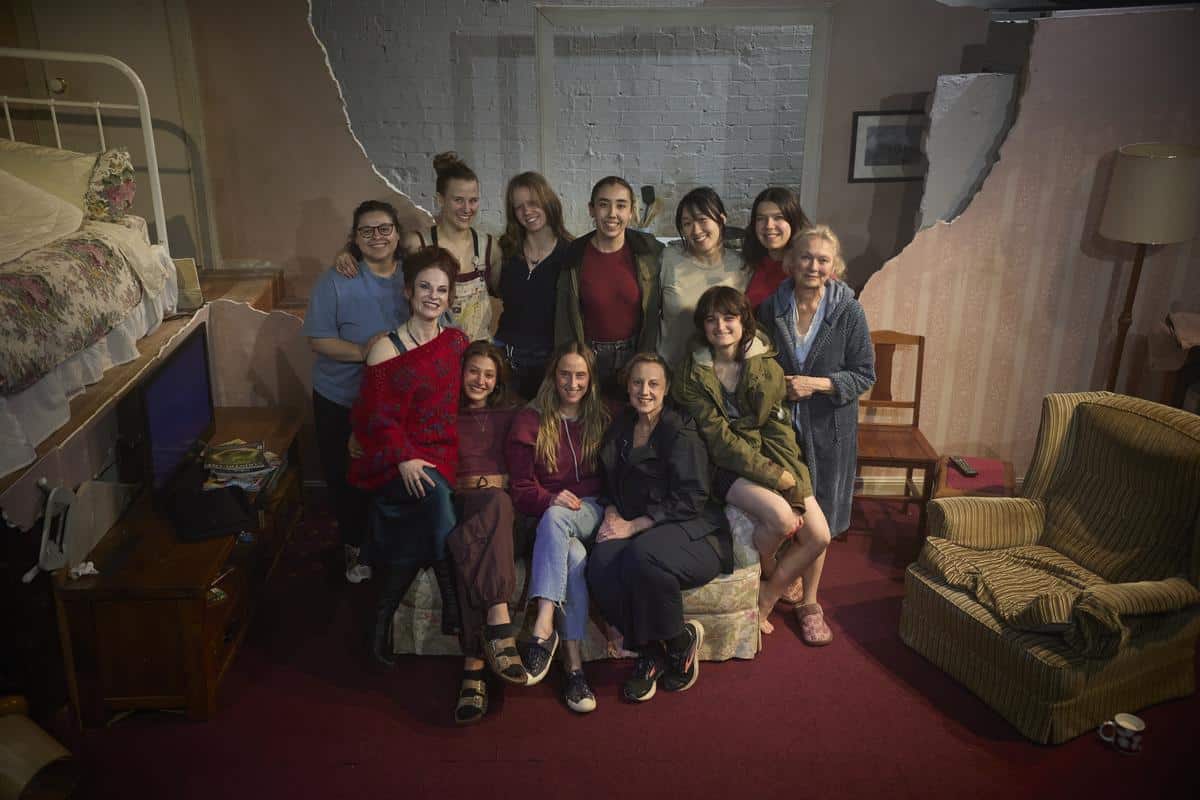
I will never cease to be amazed at what can be done with the right amount of creative genius, even in a small space, and I was particularly blown away as we entered the theatre at Old Fitz. Mia MacCormick’s Dixon & Daughter’s set was immediately impressive with a two-storey set up with two upstairs bedrooms, one open to us with the double bed clearly belonging to someone who has lived there for many years and the familiar bedspread that told the same story. There’s a kitchen in the background, an old style living room (again, with the iconic upholstery of the era on the sofa). We see all the childhood remnants such as rocking horse in storage underneath. It’s a typical house that has seen generations. A house we might all remember but the shell of it is peeled away in parts, symbolic of the here and now and fuzzy, messy, reminiscing that we are about to be pulled into.

Topaz Marlay-Cole’s lighting and Nicky Pardesi’s sound design engage throughout. Darkness pools around the moments that need it most, and characters are isolated by a single source when they are at their most exposed and vulnerable. The transitional soundscapes hold us in the uncomfortable space between scenes, refusing to let us settle, while the pauses punctuated by light shifts carry their own quiet weight. Clever and intentional.

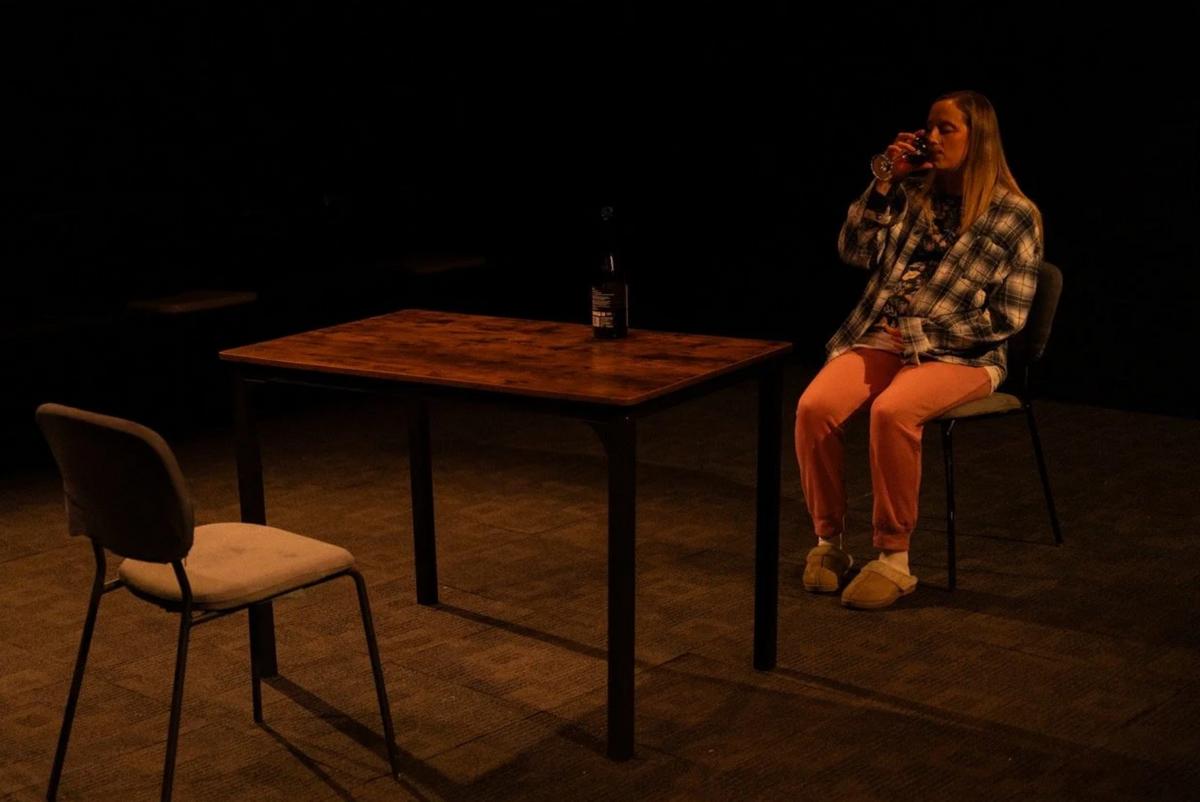
Mary, played by Vanessa Downing, has just returned home. Her granddaughter Ella and daughter Julie are ready to surprise her, while youngest daughter, Bernie quietly prepares them for the reality that Mary is “in a mood.” In these early scenes, Deborah Bruce’s script establishes the architecture of the family with deceptive lightness: Julie as the scapegoat fleeing a bad relationship and fighting an alcohol dependency; Ella as the playful peacemaker trying to offset the formidable dark cloud her grandmother carries into the room. Mary is no-nonsense, wanting nothing more than to get home and back to life. We soon discover she has served six months in prison for something connected to her deceased husband, and from that moment, the unravelling begins.
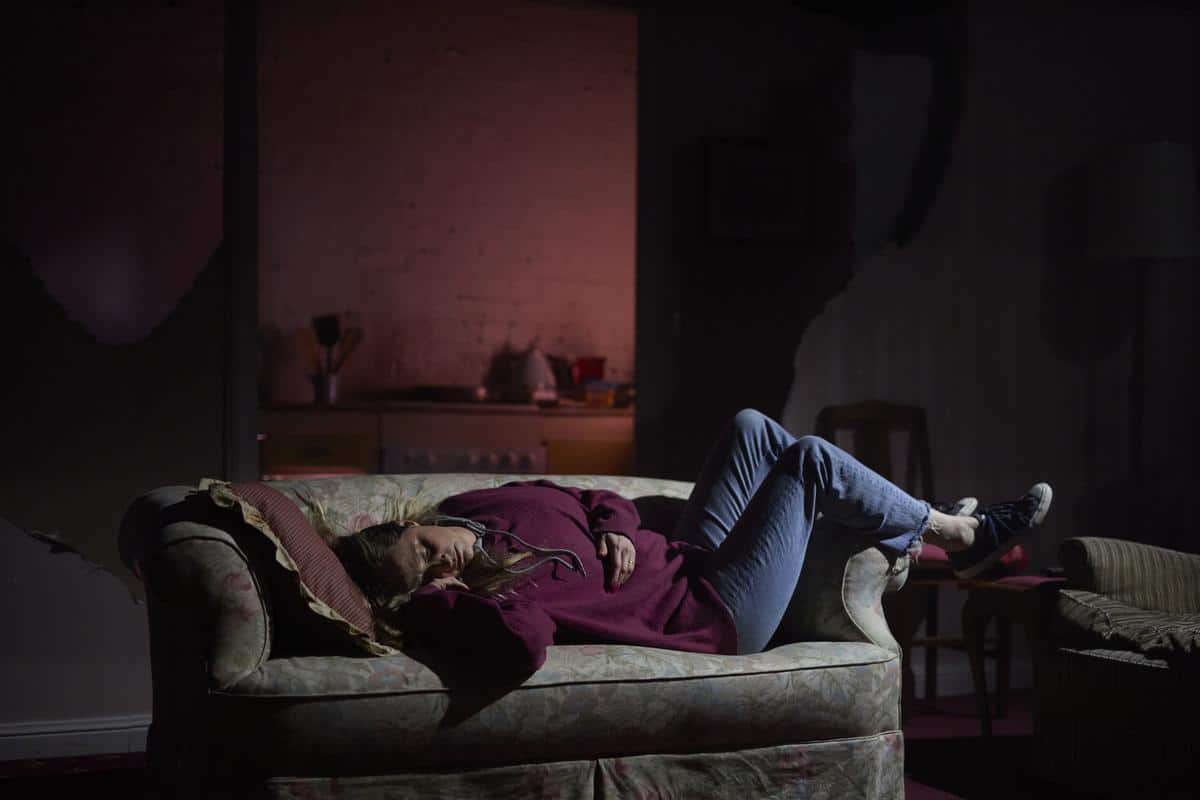
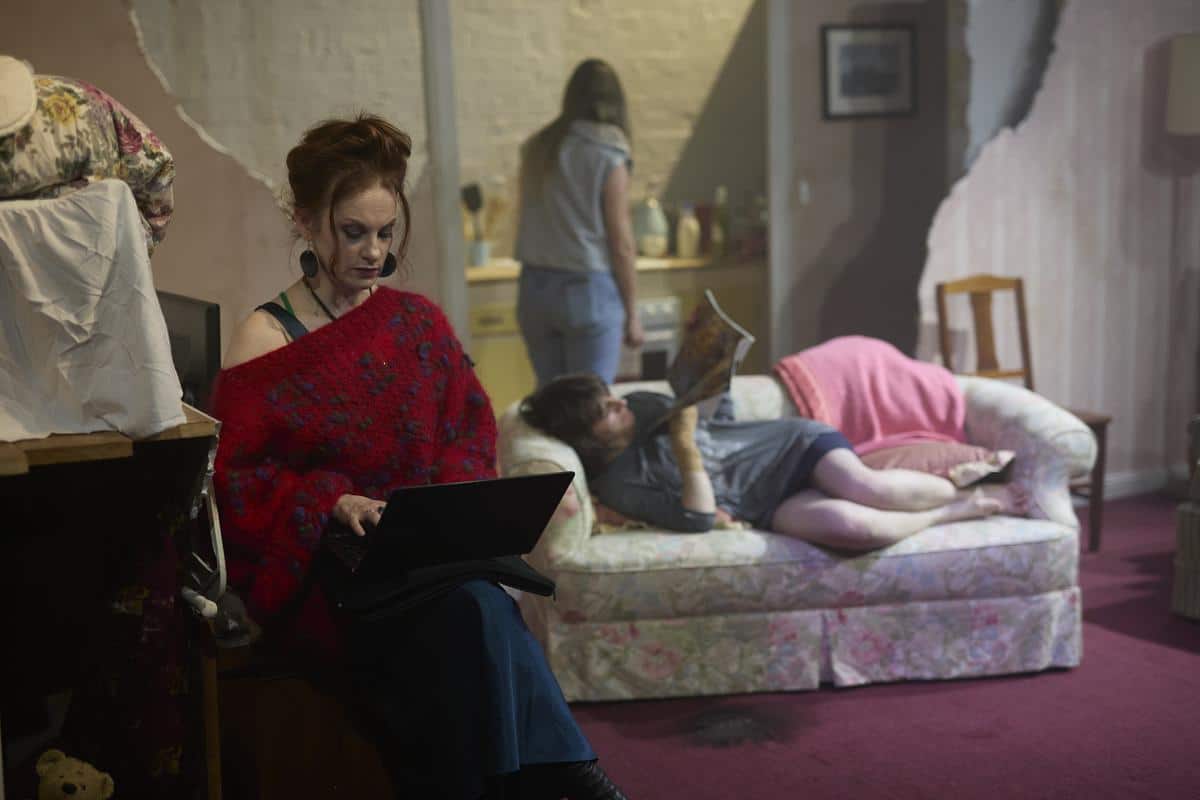
 

Downing’s Mary is formidable. There is no softening of the character’s abrasiveness, no easy bid for sympathy, just a woman carrying decades of damage and struggling to articulate the remorse beneath the bluntness.

Linda Nicholls-Gidley as Bernie embodies the daughter who must hold it together at all costs, and we see that fight written into every moment. Sarah Jane Starr arrives as the estranged stepdaughter Tina/Briana, larger than life and glamorous, having stepped into her power and intent on helping Julie do the same. Starr plays the light and shade with real skill, making Briana’s complicated journey entirely her own. Romney Hamilton’s Julie is the loveable screw-up, all flightiness and docility in the early scenes, and then, when the drama reaches its peak, Hamilton delivers a performance that takes your breath away. You genuinely do not see it coming.

Danette Potgieter’s Ella makes her own quiet pivot, moving from the warmth and playfulness of the opening to something altogether more grounded and affecting when the moment demands it. Leigh is a character that Mary introduces into the mix, at first I wondered about this writing choice, I wasn’t sure we needed this character from the school of hard knocks who was providing a lot of comic relief (played joyfully by Rylea Ellis), but I realised that Mary had to bring this outsider in to disrupt the roles and stories running and Rylea plays this very well.

Director Kim Hardwick’s work is full of specificity. Every exchange feels immediate, every relationship fully inhabited. But what struck me most was the blocking. Each character had their physical place within the history of this intergenerational story, allocated to a particular space unless the action required something different. They were connected but always isolated, until they weren’t. It was a brilliant choreography of power and position, making visible what the dialogue could only gesture at.

An all-femme cast is its own kind of power, and this one is clearly working together and holding one another with real care. The dark themes are handled with tenderness and unflinching honesty in equal measure.

Dixon and Daughters is not an easy watch, but it is an important one. It will speak to anyone who has lived as a woman, and to anyone who has loved, nurtured or been shaped by one. This is a story that needs to be told, and the Tiny Dog Productions team has told it with exactly the courage and care it deserves.

To book tickets to Dixon And Daughters, please visit https://purchase.oldfitztheatre.com.au/EventAvailability?EventId=1201.

Photographer: Campbell Parsons

Spread the word on your favourite platform!

Monster

Monster

Monster Rating

★★★★★

Click if you liked this article

0

Performance theatre is often most effective in the context of a paired back stage and minimal props. In Monster – Directed by Kim Hardwick – a talented cast give compelling performances and bring Duncan Macmillan’s cracker of a script to life. This is the first time his characters have come to Sydney, and the intimate setting of KXT Theatre in Broadway was the perfectly suited venue to see them play out. Audience members bear witness to the type of theatre in which the flicker of a flame sparked makes a room to hold its breath, and a small box on the dinner table transforms the promise of engagement into a complex and foreboding omen.

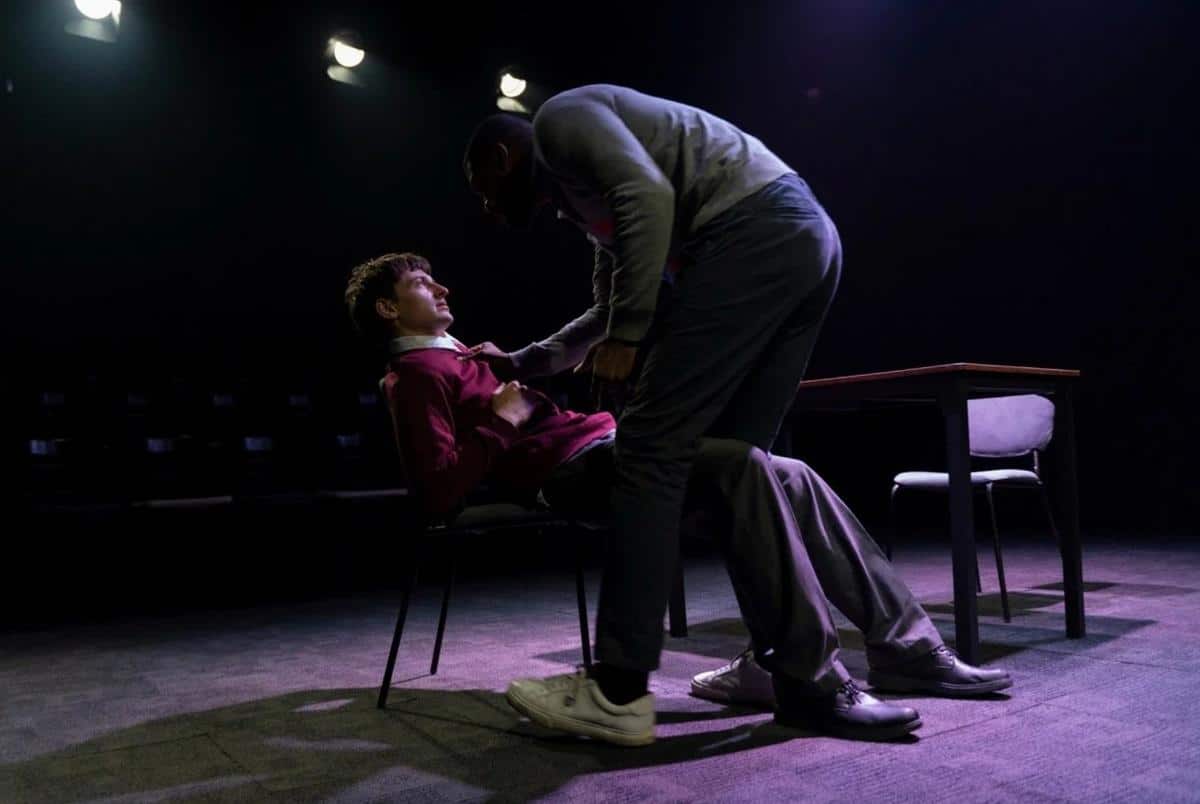
The “Monster” in Macmillan’s play is seemingly clear from the moment that stage lighting illuminates the youngest face of the cast. Campbell Parsons is electrifying as Darryl, a budding psychopath who speaks with convincing intensity about burning buildings, setting off fire extinguishers and playing with knives. Darryl idolises notoriously evil figures like Charles Manson and Jack the Ripper and informs his new teacher Tom (Tony J Black) – or as he calls him – “Agency” that he has aspirations to be just like these people one day. Daryll seems to have an eerie level of unspoken insight into his situation, and Parsons – as an actor – is able to use physicality and tone to accurately command the audience’s attention.

Darryl is a child whose pain has rendered him so incapable of anything productive beyond creating a spectacle of it. He exposes his new teacher’s vulnerabilities with ease; collecting them as ammunition to be inflicted at the right time. Black holds the character of the frustrated teacher well, and when he is regrettably drawn into comments about his race and level of affluence, it is clear that Darryl has successfully projected his own feelings of difference and shame onto his next unwitting victim. Darryl’s feelings seem to be so unbearable that even his Nan is not safe, evident by a moment in which he expresses to Tom that he fantasises about stabbing her in the back when she cooks his dinner each night.

The themes in this play are not for the faint of heart. Mental illness, social class, trauma and despair bounce around the room, as the stellar acting exposes the machinations of truly flawed people. Grey areas in moral culpability are explored, and when new characters enters the stage, they serve only to ask more questions than to answer them.


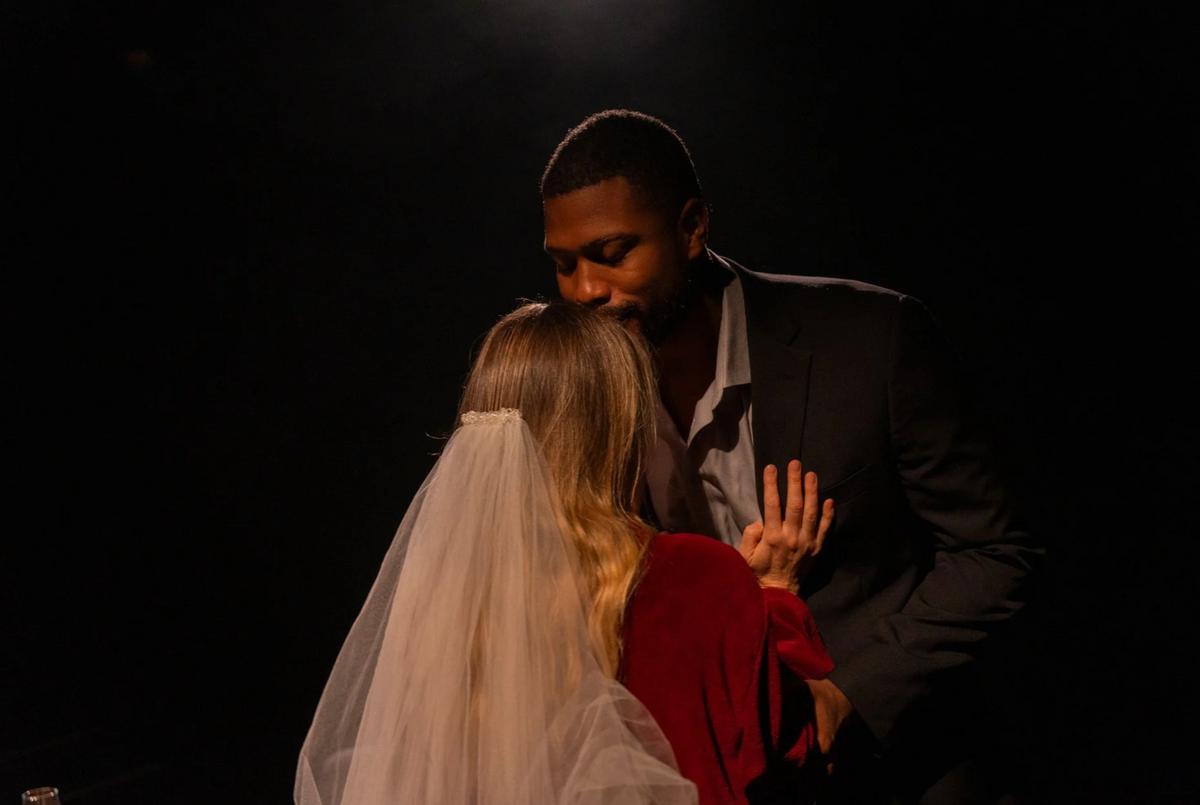
Tom’s soon to be wife Jodie (Romney Hamilton), as well as Darryl’s Nan ‘Ms Clarke’ or Rita (Linda Nicholls-Gidley), both do justice to the part of people who are trapped and out of their depth. Rita’s constant and fraught attempts to avoid associations with her surname – or to take any accountability for her grandson’s behaviour – are revealing aspects of the script. It is clear that despite being lonely, Rita does not want to be bound to the responsibility with which she is endowed, and she instead chooses to find what little solace she can in her “faith”. Her partner Carl – who only ever appears as a name in this play – is a character that seems to supersede all evil that Darryl mentions he is capable of to Tom.

There are glimmers of hope and humour in the performance and in one scene, Darryl hints of the notion that a child who has been written off as “inherently bad” may perhaps be capable of empathy (or at very least guilt) if someone were to truly care for him. However, what follows this scene adds an even greater depth to the plot, in the idea that people can inflict ferocious pain onto others when their own has gone completely unchecked.

In its intimate exploration of familiar but profound themes, this is a play – and venue – that allows for a communion of thought from an invested audience. The Director and cast treat the subject matter with respect, which means the themes are capable of reaching a thinking and feeling audience. It was – at some stages in this performance – difficult to avoid exchanging furtive glances with audience members on the opposite side, as they navigated their own visceral reactions to the many transfixing moments in the play.

More than ever, it is important that human beings continue to explore the puzzling moral issues within this play. Conversations ignited after this version of Monster are likely to spill out of the theatre bar and onto the streets well after the last scene. Don’t miss out on this one, and be sure to take a good friend or family member to yarn with after the show.

I give this one 4 stars (and a fantastic director)!

To book tickets to Monster , please visit https://www.kingsxtheatre.com/monster.

Photographer: Abraham de Souza

Spread the word on your favourite platform!

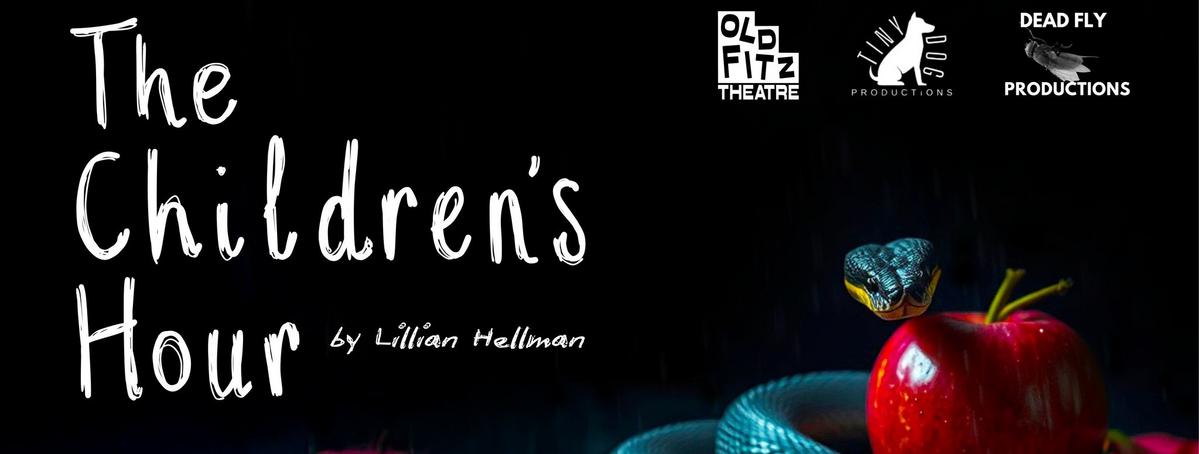
The Children’s Hour

The Children's Hour

The Children’s Hour Rating

★★★★★

Click if you liked this article

2

What damage can one lie do?

Can it ruin lives? Destroy relationships? Tear apart businesses? Or even cause death?

In The Children’s Hour, one girl’s lie causes all of the above.

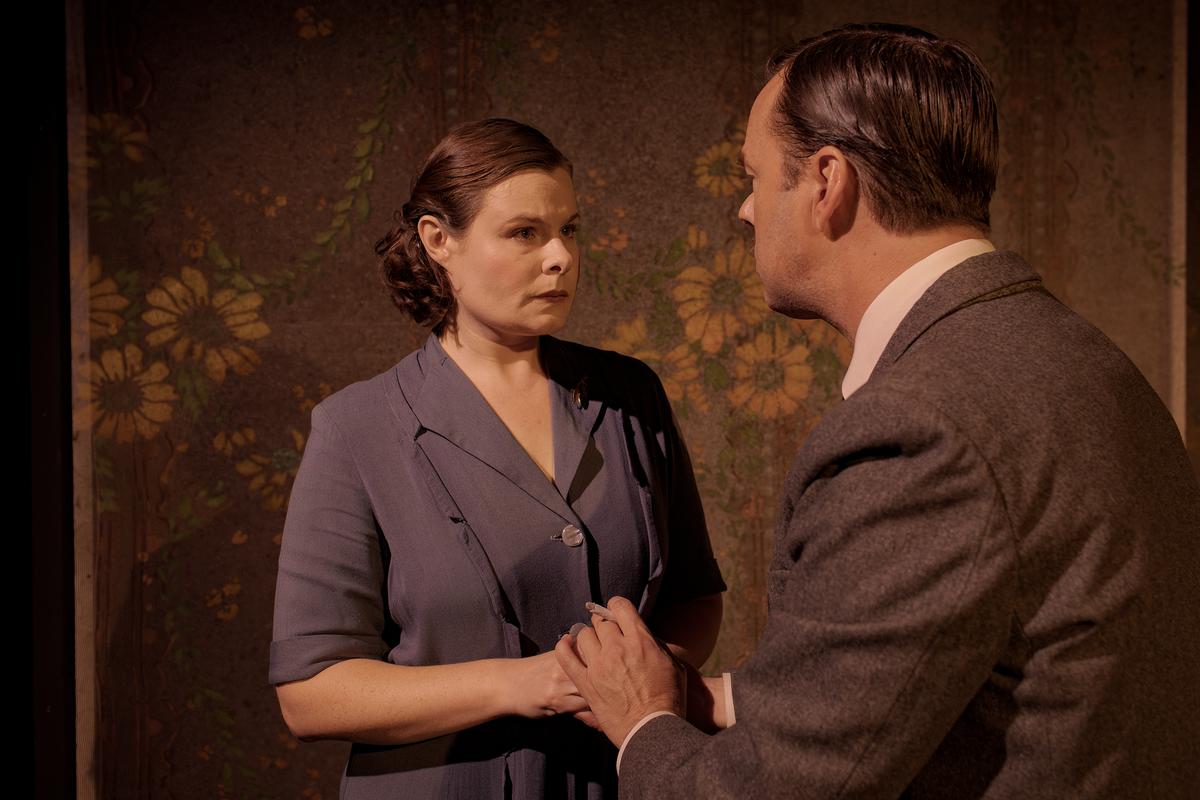
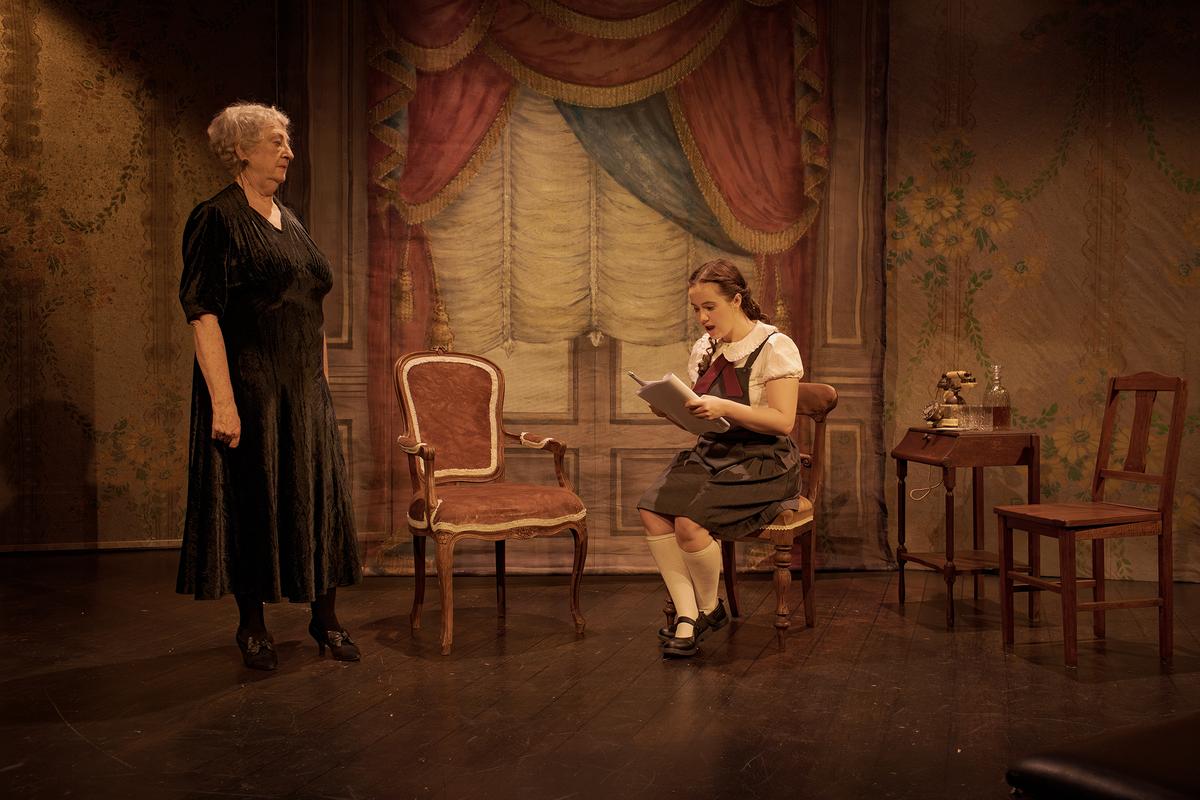
The play, based on an actual 1810 court case in Scotland, presents a gut-wrenching and emotional story of a cruel and manipulative student who fabricates a tale of a lesbian affair between her two school mistresses. The fallout is catastrophic—lives are destroyed, trust is shattered, and a community is torn apart.

First performed in 1934, The Children’s Hour remains strikingly relevant today. Its exploration of human nature touches on themes we still face: the cruelty of a lie, the vulnerability of truth, and the devastating consequences of a malicious word.

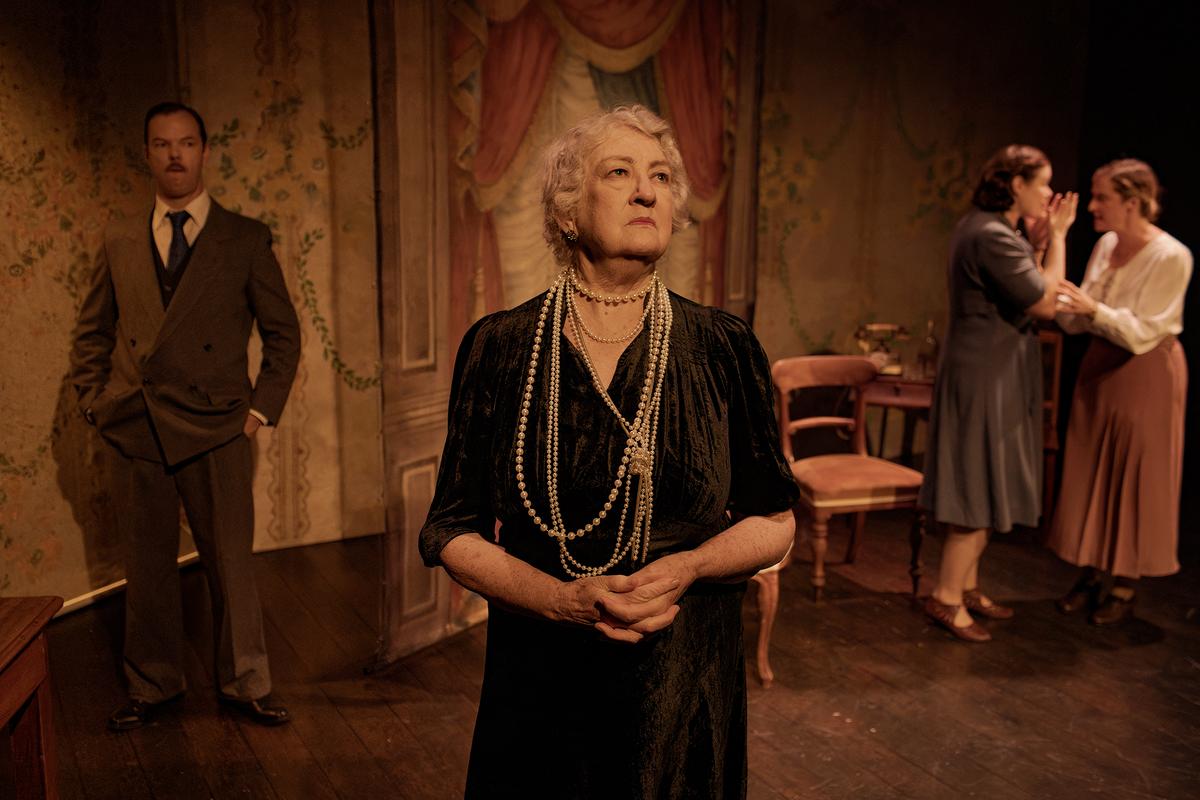
The characters are people we have encountered at some point in our lives—from a young girl desperate for attention at any cost to a grandmother trying to spoil her grandchild and women trying to create a future for themselves, only to be cut down before they get there.


The strength of the play lies not just in the harrowing story but in its perfectly cast ensemble. The entire cast is extremely strong, with raw emotion and realistic portrayals bringing each character to life. Special mention would have to go to the three generations of women: the conniving Mary, played by Kim Clifton; the wronged school mistress, Martha, played by Jessica Bell; and the matriarch grandmother who unwittingly sets the lie free into the world, played by Annie Byron.

By the time the final curtain falls, the severity of the play’s message lingers in the air as you exit the safety of the theatre walls. The Children’s Hour forces the audience to confront the consequences of dishonesty and the fragility of truth. The question remains: would you ever lie again, knowing the damage it could cause?

The Children’s Hours runs until the 1st of March, this powerful production is a must-see. Don’t miss it.

To book tickets to The Children’s Hour, please visit https://www.oldfitztheatre.com.au/the-childrens-hour

Photographer: Phil Erbacher

Spread the word on your favourite platform!

Subscribe to What's The Show

Reviews, show news and what is on, straight to your inbox.